Economic and development analysis: Perspectives on economics, society, development, freedom & social justice. Leading issues in Oromo, Oromia, Africa & world affairs. Oromo News. African News. world News. Views. Formerly Oromia Quarterly
Listen to this African Union – if you go to bed with dogs then you will wake up with flies!
Africans revere wise-saying and proverbs. I am African and the AU is as African as it can get. So, surely the regional body must listen up when I introduce my ranting with yet another popular saying – He who goes to bed with an itchy bottom wakes up with smelly fingers.
Does the AU have smelly fingers?
Yes! I will tell you why.
The majestic African Union, formerly the Organisation of African Unity has been sitting in the bosom of the tyrant, quietly hiding its shame from the world as one of its very own perfects the art of torture and repression.
The AU sits in Addis Ababa, Ethiopia. It glows and gloats about being the regional master for a liberal and fairly democratic Africa while its host, the Ethiopian regime has thrived over decades stifling descent and beating to a pulp the people of Oromia region.
The Oromo from Ethiopia’s Oromia region are a sad story of cruelty and gross human rights violations that has persisted unabated for years.
There is no sugar-coating the testimonies of brutality that flow from generations of Oromo descent.
As you read this, you may need to quickly grab a copy of a report that has just been released by Amnesty International on the plight of the Oromo of Oromia region in Ethiopia.
The report Because I am Oromo is a summary of human ruthlessness at its worst. It reads like a rendition from the slavery years when Africa was wilting under the colonialism invasion, only that this time, the perpetrator is African.
It is a scenario that is all too familiar with the region. A regime in power aspires to stay in power and clamps down on any voice of dissent especially from within. If the dissenter is a community, then woe unto them because the regime will victimise the community from generation to generation and make it a crime to be born in such.
And to imagine that this is something that the African Union is aware of and has been aware of ever since and yet still persists is sacrilegious to say the least.
Because I am Oromo is a painful walk into the reality of the sufferings of one of the biggest ethnic communities in Ethiopia for the mere reason of dissenting with the government.
This reality is beyond comprehension because sadly, torture to the Oromo almost comes as second nature, thanks to an oppressive regime.
“We interviewed former detainees with missing fingers, ears and teeth, damaged eyes and scars on every part of their body due to beating, burning and stabbing – all of which they said were the result of torture,” said Claire Beston of Amnesty International.
Claire was referring to the myriads of real-life testimonies given to the researchers on condition of anonymity.
In Oromia it seems, almost every house-hold of the Oromo has experienced the wrath of torture and police brutality.
In the streets and in the village squares in the Oromia region sits the shadows of men and women who have been physically brutalised and maimed while emotionally and psychologically scarred for life in the hands of Ethiopian security forces.
When I speak of torture, I speak of state-sanctioned gang rapes to both men and women, electrical shocks, water-barding, thorough beatings, detentions without trial, forced disappearances and arbitrary killings that continue with shocking impunity. And this list is not exhaustive of the actual violations as detailed in the report.
The profiles of brutality are vast in Because I am Oromo. Infact, Amnesty International says they spoke to more than 240 victims of this brutality in a period of one year.
It is these heart-wrenching testimonies and the impunity of how the violation is meted that leaves a real bad taste in my mouth when I think of the AU sitting pretty in its headquarters in Addis Ababa as if absolutely nothing wrong is going on in its backyard.
The truth is that the people of Oromia region have been under siege for almost three decades now. The OAU knew this and the AU knows it too for they are one and the same, right?
So when the AU focusses the world’s attention to the many wonderful things that the continent seems to be getting right and totally ignores the situation of the Oromo people its pretence stinks to the high moon of repression.
Somebody please tell the AU that with every sip of Ethiopian coffee they take from their air-conditioned Chinese-built headquarters, the blood of the Oromos is spilling on the floor under their feet, enlivened by the silence they have mastered over the atrocities committed by the Ethiopia government against the Oromo community.
Somebody tell the AU that its emblem and its flag, and its national anthem means absolutely nothing to the children of the continent for as long as the children of Oromia weep at the graves of their executed fathers and quiver at the feet of their physically tortured and traumatised mothers.
Somebody tell the AU, that the Clarion call – ” Oh sons and daughters of Africa, flesh of the sky and flesh of the sun, let us make Africa the tree of life” is utterly nonsensical if it does not flinch as the sons and daughters of Oromia are crushed under the whims of repression.
Somebody, please remind the AU that Africa’s children do not give up on liberty struggles. They, as member states, never gave up on the colonial liberation struggles so why do they imagine that the people of Oromia are any different?
Like I have said, there is blood on the floor of the AU as Africa’s leaders meet to deliberate and panel beat the continent to shape and as they do it sleeping on the bed of the hospitality of the Ethiopian government, they know that they sleep with an itch in their bottoms which they cannot ignore for they will surely wake up with smelly fingers!
This paper deals, among others, with the development of Meroitic studies, the Meroitic civilization, the destruction of the city of Meroe, the dispersal of the Meroitic people after the collapse of their state, the Christianization of the post Meroitic states in Ethiopia (i.e. Northern Sudan / it is to be reminded that the modern state of Abyssinia is fallaciously, illegally and criminally rebaptized ‘Ethioipia’), the migration of the remnants of the Meroitic people in the direction of the Blue Nile, and their possible relation of ancestry with the modern Cushitic language speaking Oromo nation. It must be stated clearly at the outset that the issue of Meroitic ancestry of the Oromo nation has not yet been considered, much less published in an academic journal or scholarly books. The paper was first presented in an academic conference organized by the Oromo Studies Association. Footnotes have been added in view of the aforementioned publication (see Pdf).
1. The Development of the Meroitic Studies, the History of Kush and Meroe, and the Efforts to Decipher the Meroitic Writing
Interest in what was Ethiopia for the Ancient Greeks and Romans, i.e. the Northern territory of present day Sudan from Khartoum to the Egyptian border *1, led to the gradual development of the modern discipline of the Humanities that long stood in the shadow of Egyptology: the Meroitic Studies.
Considerable advances had been made in academic research and knowledge as the result of the exploratory trips of the Prussian pioneering Egyptologist Richard Lepsius *2 (1842 – 1844) that bestowed upon modern scholarship the voluminous ‘Denkmaeler aus Aegypten und Aethiopien’ (Monuments from Egypt and Ethiopia), and as the direct consequence of the series of excavations undertaken by E. A. Wallis Budge *3 and John Garstang *4 at Meroe (modern Bagrawiyah) in the first years of the twentieth century, by Francis Llewellyn Griffith *5 at Kawa (ancient Gematon, near modern Dongola, 1929 – 1931), by Fritz Hintze *6 at Musawwarat es Sufra, by Jean Leclant *7 at Sulb (Soleb), Sadinga (Sedeinga), and Djebel Barkal (ancient Napata, modern Karima) in the 1950s and the 1960s, by D. Wildung *8 at Naqah, and by Charles Bonnet at Kerma. The pertinent explorations and contributions of scholars like A. J. Arkell *9, P. L. Shinnie *10, and Laszlo Torok *11 that cover a span of 80 years reconstituted a large part of the greatness and splendor of this four millennia long African civilization.
Yet, due to the lack of direct access to original sources and genuine understanding of the ancient history of Sudan, the legendary and historical Ethiopia of the Greeks and Romans, which corresponds to what was ‘Kush’ for the Hebrews (mentioned many times in the Bible) and ultimately ‘Kas’ for the ancient Egyptians *12 (mentioned in thousands of hieroglyphic, hieratic and demotic texts), we face a serious problem of terminology when it comes to Ancient Sudan’s earlier historical periods.
We are confined to such terms as Period (or Group) A (3100 – 2700 BCE), *13 Period B *14 (2700 – 2300 BCE that starts with Pharaoh Snefru’s expedition, *15 which marks indeed the beginning of the time-honored and multi-faceted relationship between Kemet-Egypt and Kush), and Period C *16 (2300 – 2100 BCE), for one millennium of Ancient Sudanese (Ethiopian or Kushitic) History. For the said period, thanks to Ancient Egyptian texts, we have a plethora of ethnic names and state names referring to populations living in North Sudan’s territory (notably Wawat, Irtet, Setjiu,Yam, Zetjau, and Medjay *17); but we fail to correctly establish to whom these names exactly refer as ethno-linguistic groups (Kushitic? Nilo-Saharan? Western Hamitic?).
Subsequent periods of Ancient Sudanese History are also denoted in conventional manner, as this is highlighted by the term Period of Kerma *18 (2100 – 1500 BCE); this period is named after the modern city and archeological site, 500 km in the south of the present Sudanese – Egyptian border.
What we know for sure is that, when the first Pharaohs of the New Empire invaded and colonized the entire area down to Kurgus *19 (more than 1000 km alongside the Nile, south of the present Sudanese – Egyptian border), they established two top Egyptian administrative positions, namely “Viceroy of Wawat” and “Viceroy of Kush/Kas”. Wawat is the area between Aswan and Abu Simbel or properly speaking, the area between the first and the second cataracts, whereas Kas is all the land that lies beyond. With the collapse of the Kerma culture, comes to end a first high-level culture and powerful state in the area of Kush.
We employ the term ‘Kushitic Period’ *20 to refer to the subsequent periods:
a) the Egyptian annexation (1500 – 950 BCE), which involved a permanent effort to egyptianize Kush that triggered in turn ceaseless Kushitic revolutions against the Pharaohs,
b) the Kushitic independence (950 – 800 BCE), when a separate state was formed around Napata *21, present day Karima, 750 km south of the Sudanese – Egyptian border,
c) the Kushitic expansion and involvement in Egypt (800 – 670 BCE, which corresponds mostly to the XXVth – ‘Ethiopian’ (meaning literally Sudanese) according to Manetho *22 – dynasty of Egypt, when the Theban clergy of Amun made an alliance with the Kushitic ‘Qore’, i.e. the Kings of Napata, who ruled Kush and Upper Egypt based on their two capitals, Napata and Thebes *23, (the alliance was directed against the pact that the Heliopolitan clergy of Ra had made with the Libyan princes who thus strengthened the separate state of Lower Egypt),
d) the Kushitic expulsion from Egypt, following the three successive invasions of Egypt by Emperors Assarhaddon *24 (in 671 BCE) and Assurbanipal *25 (in 669 BCE and 666 BCE) of Assyria, who made an alliance with the Heliopolitan *26 priesthood and the Libyan princes against the Theban clergy and the Kushitic kings, and
e) the subsequent Kushitic state’s decline – period during which took place the successive invasions led by Psamtik/Psammetichus II of Egypt *27 (in 591 BCE) and by the Achaemenid *28 Persian Shah Kambudjiyah / Cambyses *29 (in 525 BCE).
The entire Kushitic period is considered as terminated with the completion of the transfer of the capital city at a much safer (and more distant from Egypt) location far in the south, namely at Meroe, in the area of present day Bagrawiyah beyond the point whereby Atbarah river unites with the Greater Nile. This event occurred at the end of the reign of Qore (King) Nastasen *30 between 335 and 315 BCE.
We call ‘Meroitic’ the entire period that covers almost 700 years beginning around 260 BCE with the reign of the successors of Nastasen, notably Arkamaniqo / Ergamenes *31 (the most illustrious among the earliest ones and the first to be buried at Meroe / Bagrawiyah), and ending with the end of Meroe and the destruction of the Meroitic royal cities by the Axumite Abyssinian Negus Ezana *32 (ca. 370 CE). It is easily understood that the ‘Kushitic’ period antedates ‘Meroitic’ period, but both appellations are quite conventional.
The ancient people of Kush (or Ethiopia) entered into a period of cultural, intellectual, and scriptorial radiation and authenticity relatively late, around the third century BCE, which means that the development took place when Meroe replaced Napata as capital of the Kushites / Meroites. Before that moment, the ancient people of Kush (or Ethiopia) used Egyptian hieroglyphic writing for all their scriptorial purposes, be they administrative, economic, religious and/or monumental – royal. The introduction of the Meroitic alphabetic hieroglyphic writing spearheaded the development of a Meroitic cursive alphabetic scripture that was used for less magnificent purposes than palatial and sacred relief inscriptions. The first person to publish copies of Meroitic inscriptions (then unidentified) was the French architect Gau *33, who visited Northern Sudan as early as 1819. Quite unfortunately, almost two centuries after the discovery of the first Meroitic inscriptions, we are left in mysteries with regard to the greatest part of the contents of the epigraphic evidence collected in both scriptural systems.
The earliest dated Meroitic hieroglyphic inscriptions belong to the reign of the ruling queen Shanakdakheto *34 (about 177-155 BCE), but archaeologists believe that this scripture represents the later phase of a language spoken by Kushites / Meroites at least as far back as 750 BCE and possibly many centuries or even millennia before that (hinting therefore at a Kushitic / Ethiopian continuity from the earliest Kerma days at the end of the 3rd millennium BCE). The earliest examples of Meroitic cursive inscriptions, recently found by Charles Bonnet in Dukki Gel (REM 1377-78) *35, can also be dated in the early 2nd century BCE. The latest text is still probably the famous inscription from Kalabsha (Ancient Egyptian Talmis) mentioning King Kharamadoye (REM 0094) *36, which dates back to the beginning of the fifth century CE, although some funeral texts from Ballana *37 could be contemporary or even posterior.
Despite the fact that F. L. Griffith identified the twenty three (23) Meroitic alphabetic writing signs already in 1909, not much progress has been made towards the ultimate decipherment of the Meroitic *38. Scarcity of epigraphic evidence plays a certain role in this regard, since as late as the year 2000 we were not able to accumulate more than 1278 texts in all types of Meroitic writing. If we now add to this fact the lack of lengthy texts, the lack of any bilingual text (not necessarily Egyptian /Meroitic, it could also be Ancient Greek / Meroitic, if we take into consideration that Arkamaniqo / Ergamenes *39 was personally well versed in Greek), and a certain lack of academic vision, we understand why the state of our knowledge about the history of the Ancient Meroites is still so limited.
Linguistics and parallels from other languages have been repeatedly set in motion in order to help the academic research. Griffith and Haycock *40 tried to read Meroitic, through use of (modern) Nubian – quite unsuccessfully. K.H. Priese *41 tried to read the Meroitic texts, using Eastern Sudanese (Beja *42 or Hadendawa *43) languages – also unsuccessfully. On the other hand, F. Hintze *44, attempted to compare Meroitic with the Ural-Altaic group (Turko-Mongolian languages) to no avail. More recently, Siegbert Hummel *45, compared the “known” Meroitic words to words attested in languages of the Altaic family which he believed was a substrate language of Meroitic; as this hypothesis is totally wrong, no result came out of this effort. At times, scholars (like Clyde Winters *46) were driven to farfetched interpretations, attempting to equate Meroitic with Tokharian, after assuming a possible relationship between the names Kush and Kushan *47, the latter being the appellation of a sizeable Eastern Iranian state of the late Arsacid *48 (250 BCE – 224 CE) and early Sassanid *49 (224 – 651 CE) times. However, one has to conclude that the bulk of the researchers working on the Meroitic language never believed that the language of the Ancient Sudanese (Ethiopians) could ever be a member of the so-called Afro-Asiatic group of languages (the term itself being very wrong and quite fraudulent).
So far, the only Meroitic words for which a solid translation had been given by Griffith and his successors are the following: man, woman, meat, bread, water, give, big, abundant, good, sister, brother, wife, mother, child, begotten, born, feet. The eventual equivalence between Egyptian and Meroitic texts was a strong motivation for any interpretational approach, recent or not. More recent, but still dubious, suggestions are the following: arohe- ‘protect’, hr- ‘eat’, pwrite ‘life’, yer ‘milk’, ar ‘boy’, are- or dm- ‘take, receive’, dime ‘cow’, hlbi ‘bull’, ns(e) ‘sacrifice’, sdk ‘journey’, tke- ‘love, revere’, we ‘dog’. It is clear that vocalization remains a real problem *50.
Through the aforementioned we realize why collective works, like Fontes Historiae Nubiorum. Textual Sources for the History of the Middle Nile Region (vols. I – IV, edited by T. Eide, T. Haegg, R.H. Pierce, and L. Torok, University of Bergen, Bergen 1994, 1996. 1998 and 2000), are still seminal for our – unfortunately indirect, as based on Ancient Egyptian, Greek, Latin and Coptic texts – knowledge of Ancient Meroe.
2. The End of Meroe
Amidst numerous unclear points of the Kushitic / Meroitic (Ancient Sudanese / Ethiopian) History, the end of Meroe and the consequences under which it happened still remain a most controversial point among scholars. Quite indicatively, we may mention here the main efforts of historical reconstitution.
A. Arkell, Sayce and others asserted that Meroe was captured and destroyed, following one military expedition led by Ezana of Axum.
B. Reisner insisted that, after Ezana’s invasion and victory, Meroe remained a state under another dynasty tributary to Axum.
C. Monneret de Villard and Hintze affirmed that Meroe was totally destroyed already before Ezana’s invasion, due to another, earlier Axumite Abyssinian raid.
D. Torok, Shinnie, Kirwan, Haegg and others concluded that Meroe was defeated by a predecessor of Ezana, and continued existing as a vassal state.
E. Bechhaus-Gerst specified that Meroe was invaded prior to Ezana’s raid, and that the Axumite invasion did not reach further lands north of Meroe *51.
With two fragmentary inscriptions from Meroe, one from Axum, two graffitos from Kawa and Meroe, and one coin being all the evidence we have so far, we have little to properly reconstruct the details that led to the collapse of Meroe. One relevant source, the Inscription of Ezana (DAE 11, the ‘monotheistic’ inscription in vocalized Ge’ez), *52 remains a somewhat controversial historical source to be useful in this regard. The legendary Monumentum Adulitanum *53, lost but copied in a confused way by Cosmas Indicopleustes *54, may not shed light at all on this event. One point is sure, however: there was never a generalized massacre of the Meroitic inhabitants of the lands conquered by Ezana. The aforementioned DAE 11 inscription mentions just 758 Meroites killed by the Axumite forces.
What is even more difficult to comprehend is the reason behind the scarcity of population attested on Meroitic lands in the aftermath of Ezana’s raid. The post-Meroitic and pre-Christian, transitional, phase of Sudan’s history is called X-Group *55 or Period, and also Ballana Period; this atypical appellation underscores the lack to historical insight that happens once more in the History of Ancient Sudan (Ethiopia).
During the Ballana Period (X-Group) and contrarily to what happened for many centuries of Meroitic History, when the Meroitic South (the area between today’s Shendi *56 and Atbarah *57 in modern Sudan with the entire hinterland of Butana that was called Insula Meroe / Nesos Meroe, i.e. Island Meroe in the Antiquity) was overpopulated comparatively with the Meroitic North {the area between Napata / Karima and Abu Simbel *58 or further in the North, Aswan *59 (the area between Aswan and Abu Simbel was then called Triakontaschoinos *60 and politically, it was divided between Meroe and the Roman Empire)}, the previously under-populated area (i.e. the Meroitic North) gives us the impression of a more densely peopled region, if compared to the previous center of Meroitic power and population density (the Meroitic South). The new situation contradicts therefore the earlier descriptions and narrations by Dio Cassius *61 and Strabo *62.
Furthermore, the name ‘Ballana period’ is quite indicative in this regard, because Ballana is located on Egyptian soil, whereas not far, south of the present Sudanese – Egyptian border, lies Karanog with its famous tumuli that bear evidence of Nubian (not Kushitic / Meroitic) upper hand in terms of social anthropology. The southernmost counterpart of Karanog culture can be found in Tangassi (nearby Karima, which represented the ‘North’ for what was the center of the earlier Meroitic power). This means that for the period immediately after the destruction of Meroe (ca. 370 CE), the Meroitic North offers the archaeological evidence that serves to name the entire period (Ballana Period), whereas the Meroitic South seems to have been totally uninhabited.
In addition, in terms of culture, X-Group heralds a total break with the Meroitic tradition, with the Nubians and the Blemmyes/Beja outnumbering the Meroitic remnants and imposing a completely different cultural and socio-anthropological milieu out of which would later emanate the first and single Nubian state in the World History: Nobatia.
Much confusion characterized modern scholars when referring to Kush or Meroe by using the modern term ‘Nubia’. By now, it is clear that the Nubians lived since times immemorial in both Egypt and the Sudan, being part of the history of these two lands. However, the Nubians are a Nilo-Saharan ethno-linguistic group different from the Hamitic Kushites / Meroites. At the times of X-Group and during the long centuries of Christian Sudan, we have the opportunity to attest the differences and the divergence between the Nubians and the Meroitic remnants.
Following the collapse of the Meroitic state, the epicenter of the Nubian land, i.e. the area between the first (Aswan) and the third (Kerma) cataracts, rose to independence and prominence first, with capital at Faras, nearby the present day Sudanese – Egyptian border, around 450 CE. Nobatia institutionalized Coptic as religious (Christian) and administrative language, and Nubian language remained an oral only means of communication. The Nobatian control in the areas south of the third cataract was vague, nominal and precarious. Nobatia was linked with the Coptic (‘Monophysitic’) Patriarchate of Alexandria.
This means something very important for the Christian History of Sudan (Ethiopia); Christianization did not come from Abyssinia, and there was no cultural or religious impact exercised by Axum on (Ethiopia) Sudan. As in pre-Christian times, Ethiopia remained the absolute opposite of Abyssinia. In the true, historical Ethiopia (Sudan), Christianization came from the North (Egypt). Abyssinia (which cannot be called ‘Ethiopia’ and which has absolutely no right to the name of Ethiopia) was a marginal and isolated, tiny and mountainous state that basically controlled the land between Axum and Adulis (on the Red Sea shore). And King Ezana’s invasion and destruction of Meroe was an occasional and inconsequential event that did not bring forth any immediate major result.
The Meroitic remnants underscored their difference from the Nubians / Nobatians, and the depopulated central part of the defunct state of Meroe rose to independence only later, in the first decades of the sixth century. Its name, Makuria, is in this regard a linguistic reminiscence of the name ‘Meroe’, but we cannot know its real origin and meaning. The remnant of the Meroitic populations inhabited the northern circumference of Makuria more densely, and the gravitation center revolved around Old Dongola (580 km south of Wadi Halfa), capital of this Christian Orthodox state that extended from Kerma to Shendi (the area of the sixth cataract), so for more than 1000 km alongside the Nile. But beyond the area of Karima (750 km in the south of Wadi Halfa) and the nearby famous Makurian monastery at Al Ghazali we have very scarce evidence of Christian antiquities. The old African metropolis of Meroe remained at the periphery of both, the Kushitic Ethiopian states of Makuria and Alodia and the Semitic Abyssinian state of Axum.
Makurians highlighted their ideological – religious divergence from the Nubians, by adopting Greek, not Coptic, as religious language. They even introduced a new scripture for their Makurian language that seems to have been a later phase of Meroitic. Makurian was written in alphabetic Greek signs. Risen at a time of Christological disputes and theological conflicts that brought about a forceful polarization between the Greek Orthodox and the Coptic ‘Monophysitic’ Patriarchates of Alexandria, the state and the Christian church of Makuria sided with the Greek Patriarchate of Alexandria, in striking opposition to the Nobatian state and church that allied themselves with the Coptic Patriarchate of Alexandria.
Further in the South, Alodia has long been called by modern scholars as the ‘third Christian state’ of Sudan, but recent discoveries in Soba, its capital (15 km at the east of Khartoum), suggest that Alodia rose first to independence (around 500 CE) and later adhered to Christianity (around 580 – 600 CE), following evangelization efforts deployed by missionary Nobatian priests (possibly in a sort of anti-Makurian religious diplomacy). In general, we know little about Alodia (or Aluwah or Alwa), and we actually don’t know whether they used a particular Alodian writing system.
The later phases of the History of Christian Ethiopia (Sudan) encompass the Nobatian – Makkurian merge (around 1000 CE), which was necessary for the two Christian states to defend themselves against the Islamic pressure coming manly from the North (Egypt), the islamization of Makkuria in 1317, and finally, the late collapse of Christian Alodia in 1505.
The question remains unanswered until today:
– What happened to the bulk of the Meroitic population, i.e. the inhabitants of the Insula Meroe, the present day Butana? What occurred to the Meroites living between the fourth and the sixth cataracts after the presumably brief raid of Ezana of Axum, and the subsequent destruction of Meroe, Mussawarat es Sufra, Naqah, Wad ben Naqah, Basa and all the other important cities of the Meroitic heartland?
3. Reconstruction of the Post-Meroitic History of the Kushitic Oromo Nation
Certainly, the motives of Ezana’s raid have not yet been properly studied and assessed by modern scholarship. The reasons for the raid may vary from a simple nationalistic usurpation of the name of ‘Ethiopia’ (Kush), which would give a certain Christian eschatological legitimacy to the Axumite Abyssinian kingdom, to the needs of international politics (at the end of 4th c. CE) and the eventuality of an Iranian – Yemenite (Himyaritic) – Meroitic alliance at the times of Shapur II (310 – 379), aimed at outweighing the Eastern Roman – Abyssinian bond.
Yet, this Iranian – Sudanese political alliance may have been only the later phase of a time-honored Iranian infiltration that could have taken the form of an (easily assessable by both civilizations and nations, the Meroites and the Iranians) heliocentric theology and imperial ideology. No less than 300-350 years before Ezana’s raid and destruction of Meroe, the famous Jebel Qeili reliefs of Shorakaror mark an impressive penetration of Mithraic artistic and religious concepts and forms.
Whatever the reasons of Ezana’s raid may have been, we can be quite sure, when it comes to the destruction of Meroe, about two determinant points that impose a fresh approach and interpretation of the historical development:
a) the absence of any large-scale massacre is evident, and
b) the impressive scarcity of population in the old, central Meroitic provinces is a fact for the period that follows Ezana’s raid and the destruction of Meroe.
The only plausible explanation is that the scarcity of population in the Meroitic mainland after Meroe’s destruction must be due to a large scale migration to safer areas far from the reach of the king of Axum.
The only explanation to match the historical facts and the archeological evidence is that, following Ezana’s raid, the Meroites in their outright majority (at least for the inhabitants of Meroe’s southern provinces) fled and migrated to areas where they would stay independent from the Semitic Abyssinian kingdom of Christian Axum. This explanation hinges on the best utilization and interpretation of the already existing historical – archaeological data.
From archeological evidence, it becomes clear that during X-Group phase and throughout the Makurian period (so for many long centuries) the former heartland of Meroe remained mostly uninhabited. The end of Meroe is definitely very abrupt, and this makes obvious that Meroe’s driving force had gone elsewhere. The correct question would then be ‘where to’?
There is no evidence of Meroites sailing the Nile downwards to the area of the 4th (Karima) and the 3rd (Kerma) cataracts, which was earlier the northern circumference of Meroe and remained totally untouched by Ezana. There is no textual evidence in Greek, Latin and/or Coptic to testify to such a migratory movement toward the North. Christian Roman Egypt would certainly be an incredible direction, but if this had been the case, the migration would have been recorded in some texts and monuments due to its importance. To the above, we have to add the impossibility of marching to the heartland of Abyssinia, because this must have been for the migrating Meroites the only direction to avoid, and again if it had occurred, it would have been mentioned in some historical sources, Ge’ez, Coptic, Syriac, Greek or Latin.
Having therefore excluded all the migration alternatives as per above, we can examine the remaining possibilities. The migrating Meroites could therefore have a) gone either to the vast areas of the Eastern and the Western deserts , b) entered the African jungle or c) ultimately searched for a possibly free land that, being arable and good for pasture, would keep them far from the sphere of the Christian Axumites.
It would be very erroneous and highly unlikely to expect settled people to move to the desert. Such an eventuality would be a unique oxymoron in the History of the Mankind. Nomadic peoples move from the steppes, the savannas and the deserts to other parts of the steppes, the savannas and the deserts or preferably to fertile lands and settle there, at times crossing really long distances. However, settled people, if under pressure, move to other fertile lands that offer them the possibility of cultivation and pasture. When dispersed by the invading Sea Peoples, the Hittites moved from Anatolia to Northwestern Mesopotamia, crossing long distances; they did not cross shorter distance to settle in the small part of Central Anatolia that happened to be desert. The few scholars, who may think that Meroitic continuity can be found among the present day Beja and Hadendawa, are oblivious to the aforementioned reality that was never contravened throughout World History. In addition, the Blemmyes had never been friendly to the Meroites. Every now and then, they had attacked parts of the Nile valley and the Meroites had had to repulse them thence. It would rather be inconceivable for the Meroitic population, after seeing Meroe sacked by Ezana, to move to a land where life would be far more difficult and, in addition, enemies would wait them!
At this point, we should briefly examine Meroe’s surrounding environment, how it is today, and how it was before 1650 years, at the times of king Ezana’s raid. Modern technologies help historians and archeologists better reconstruct the ancient world; paleo-botanists, geologists, geo-chemists, paleo-entomologists, and other specialized natural scientists are of great help in this regard. It is essential to stress here that the entire environmental milieu of Sudan was very different during the times of the Late Antiquity that we examine in our approach. Butana may look like a wasteland nowadays, and the Pyramids of Bagrawiyah may be sunk in the sand, whereas Mussawarat es Sufra and Naqah truly demand a real effort in crossing the desert. However, in the first centuries of Christian era, the entire landscape was dramatically different.
During the Meroitic and Christian times, the entire Butana region, delineated by the rivers Atbarah in the northeast, United Nile in the north-northwest, and Blue Nile in southwest, was not a desert, but a very fertile and extensively cultivated land. We have actually found remains of reservoirs, aqueducts, various hydraulic installations, irrigation systems, and canals in Meroe and elsewhere. Not far from Mussawarat es Sufra there must have been an enclosure where captive elephants were trained before being transported to Ptolemais Theron (present day Suakin, 50 km south of Port Sudan) and then further on to Alexandria. Desert was in the vicinity, certainly, but not that close.
We should not imagine that Ezana crossed desert areas, moving from the vicinities of Agordat, Tesseney (both cities being located in Eritrea), and Kessala (in Sudan) to Atbarah and Bagrawiyah, as we would do today. These lands were either forested or cultivated and used as pasturelands. For what the Meroitic Ethiopian state was in the middle – second half of the 4th c. CE, its capital was located quite close to the Abyssinian borders in the mountains beyond the modern Sudanese city of Kessala; the distance between the two capitals, Meroe and Axum, was much smaller than the distance between Meroe and its northern borders with the Christian Eastern Roman Empire.
In fact, the end of the Meroitic state is a historical irony; it was established with the transfer of capital from Napata to Meroe, ca. 750 years earlier, an act which was due to defense reasons and imposed only after the 6th c. BCE attacks that originated from the North (Egypt). By transferring their capital far to the southeast, the Ancient Kushites / Meroites of Ethiopia (Sudan) made it impregnable from the North; but by so doing, they exposed their capital to an attack from the southeast. However, one has to admit that, at the times of the Ethiopian – Kushitic capital transfer to the southeast (5th – 4th c. BCE), the presence of the Yemenite tribe of Habashat in the African coast land of Eritrea was insignificant and Axum did not exist.
Further expanding on the natural environment of the Ancient Meroites, we have to add that it would be highly unlikely for anyone to attempt to cross at that time the lands south of present day Khartoum, alongside the White Nile. In ancient times, impenetrable jungle started immediately in the south of Khartoum, and cities like El Obeid, Kosti, Sinnar, and Jabalayn are today located on deforested soil.
Contrarily to the aforementioned improbabilities (desert, jungle), the southernmost confines of the Meroitic state offered a certain possibility for migration, since pasturelands and arable land could be found alongside the Blue Nile Valley. Reaching that area, they would achieve safety from Axumite Abyssinia due to the greater distance.
Jungle signified death in the Antiquity, and even armies feared to cross forests and be forced to stay overnight there. We therefore have good reason to believe that, following Ezana’s raid, the Meroites, rejecting the perspective of forced christening, moved first southwestwards up to Khartoum. From there, they proceeded southeastwards alongside the Blue Nile in a direction that would keep them always safe and far from the Axumite Abyssinians whose state did not expand at those days as far in the south as Gondar and Tana Lake. Proceeding in this way and crossing successively areas of modern cities like Wad Madani, Sennar, Damazin, and Asosa, and from there on, they expanded in later times over the various parts of Biyya Oromo.
We do not imply that the migration was completed in the span of one lifetime; quite contrarily, we have reasons to believe that the establishment of Alodia (or Alwa) is rather due to the progressive waves of Meroitic migrants who settled first in the area of Khartoum that was out of the southwestern confines of the Meroitic state. Only when Christianization became a matter of concern for the evangelizing Nobatians, and the two Christian Sudanese states of Nobatia and Makuria were already strong, the chances of preserving the pre-Christian Meroitic cultural heritage in the area around Soba (capital of Alodia) became truly poor. Then, perhaps more than 100 years after the first migration, another wave of migration took place with the early Alodian Meroites proceeding as far in the southeast as Damazin and Asosa, areas that remained always beyond the southern border of Alodia (presumably between Khartoum and Wad Madani). Like this, the second migratory Meroitic Alodian) wave may have entered around 600 CE in the area where the Oromos, descendents of the migrated Meroites, still live today.
A great number of changes at the cultural – intellectual – behavioral levels are to be expected, when a settled people migrates to faraway lands. The Phoenicians had kings in Tyre, Byblos and their other cities – states in today’s Lebanese and Syrian coast lands, but they introduced a democratic system when they sailed faraway and colonized various parts of the Mediterranean. In their colonies, there were no more kings.
Ezana’s raid ended up with the extermination of some garrison and the Meroitic royal family. The collapse of the Meroitic royalty was an unprecedented event and a greater shock for the Nile valley. The Christian kingdoms of Nobatia, Makuria and Alodia were all ruled by kings whose power was to great extent conditioned and counterbalanced by that of the Christian clergy.
With the Meroitic royal family decimated by Ezana, it is quite possible that high priests of Apedemak and Amani (Amun) took much of the administrative responsibility in their hands, inciting people to migrate and establishing a form of collective and representative authority among the Meroitic – Alodian Elders who thus retained the sacerdotal heritage without a royal – palatial contextualization. They may even have preserved the royal title of Qore within completely different socio-anthropological context and thus made it known to the ancestors of today’s Somalis when the next waves of migration brought the two Kushitic nations close to one another; and the Somalis preserved the term a Boqor within their language until our times.
4. Call for Comparative Meroitic-Oromo Studies
How can this approach, interpretation, and conclusion be corroborated up to the point of becoming a generally accepted historical reconstitution at the academic level? On what axes should one group of researchers work to collect detailed documentation in support of the Meroitic ancestry of the Oromos?
Quite strangely, I would not give priority to the linguistic approach. The continuity of a language can prove many things, and at the same time, it can prove nothing. Today’s Bulgarians are of Uralo-Altaic Turco-Mongolian origin, but, after they settled in Eastern Balkans, they were linguistically slavicized. Most of the Greeks are Albanians, Slavs, and Vlachians, who were greecized linguistically. Most of the Turks in Turkey are Greeks and Anatolians, who were turkicized linguistically.
People can preserve their own language in various degrees and forms. For the case of languages preserved throughout millennia, we notice tremendous changes and differences. Within the context of Ancient Greece, Plato who lived in the 5th – 4th c. BCE could never understand the Achaean Greek dialect which was spoken 800 years earlier at Myceanae and written by means of what we call today ‘Linear B’ (a syllabic, not alphabetic, writing system).
Egyptian hieroglyphics as a Holy Language (the Ancient Egyptian name of this writing system was ‘medu netsher’ which meant ‘the words of the God’) and as a sacerdotal scripture favored a certain archaism and a constant linguistic purification. However, we can be sure that for later Pharaohs, like Taharqa the Kushite (the most illustrious ruler of the Kushitic – Sudanese / Ethiopian dynasty), Psamtik and Nechao (the rulers of the ‘Libyan’ dynasty), and Ptolemy II and Cleopatra VII (of the Macedonian Ptolemaic dynasty), a Pyramid text (that antedated them by 1700 to 2300 years) would almost be incomprehensible.
A. National diachronic continuity is better attested and more markedly noticed in terms of Culture, Religion and Philosophical – Behavioral system. The first circle of comparative research should encompass the world of the Kushitic / Meroitic and Oromo concepts, anything that relates to the Weltanschauung of the two cultural units/groups under study; this should involve a religious-historical comparison between the Ancient Kushitic / Meroitic religion and Waaqeffannaa. A common view of basic themes of life and a common perception of the world, same virtues and values, shared concepts and principles would bring a significant corroboration of the Meroitic ancestry of the Oromos. So, first it is a matter of history of religions, African philosophy, social anthropology, ethnography and culture history.
B. Archeological research can help tremendously too. At this point, one has to state that the critical area for the reconstruction of the suggested Meroitic migration did not attract the interest of Egyptologists, and of archaeologists specializing in Meroitic and Sudanese Antiquities. The area was indeed marginal to both civilizations, and to some extent it is normal that it did not attract scholars who could easily unearth other monumental sites elsewhere and have more spectacular results. The Blue Nile valley in Sudan and Abyssinia was never the subject of an archeological survey, and the same concerns the Oromo highlands. Certainly modern archeologists prefer something concrete that would lead them fast to a great discovery, being therefore very different from the pioneering 19th c. archeologists. An archeological surface survey would therefore be necessary in the Blue Nile valley and in the Oromo highlands in the years to come.
C. A linguistic – epigraphic approach may bring forth even more spectacular results. It could eventually end up with a complete decipherment of the Meroitic, and of the Makurian. An effort must be made to read the Meroitic texts, hieroglyphic and cursive, with the help of Oromo language. Meroitic personal names and toponymics must be studied in the light of a potential Oromo interpretation. Comparative linguistics may unveil affinities that will lead to reconsideration of the work done so far in the Meroitic decipherment.
D. Last but not least, another dimension would be added to the project with the initiation of comparative anthropological studies. Data extracted from findings in the Meroitic cemeteries must be compared with data provided by the anthropological study of present day Oromos. The research must encompass pictorial documentation from the various Meroitic temples’ bas-reliefs.
To all these I would add a better reassessment of the existing historical sources, but this is not a critical dimension of this research project.
I believe my call for Comparative Meroitic – Oromo Studies reached the correct audience that can truly evaluate the significance of the ultimate corroboration of the Meroitic Ancestry of the Oromos, as well as the magnificent consequences that such a corroboration would have in view of
a) the forthcoming Kushitic Palingenesia – or Renaissance if you want – across Africa,
b) the establishment of a Post -Colonial African Historiography, and – last but not least –
c) the Liberation of Oromia and the Representation of the Ancient Kushitic Nation in the United Nations.
Notes
1. To those having the slightest doubt, trying for purely political reasons and evil speculation to include territories of the modern state of Abyssinia into what the Ancient Greeks and Romans called ‘Aethiopia’, the academically authoritative entry Aethiopia in Pauly-Wissowa, Realenzyklopadie der klassischen Altertumwissenschaft consists in the best and irrevocable answer.
4. Mythical figure of the British Orientalism, Garstang excavated in England, Turkey, Syria, Palestine, Egypt and the Sudan; Albright, William Foxwell: “John Garstang in Memoriam”, Bulletin of the American Schools of Oriental Research, No. 144. (Dec., 1956), pp. 7-8; Garstang’s major articles on his Meroe excavations are the following: ‘Preliminary Note on an Expedition to Meroe in Ethiopia’, Annals of Archaeology and Anthropology 3 (1911 – a), ‘Second Interim Report on the Excavations at Meroe in Ethiopia, I. Excavations’, Annals of Archaeology and Anthropology 4 (1911 – b), ‘Third Interim Report on the Excavations at Meroe in Ethiopia’, Annals of Archaeology and Anthropology 5 (1912), ‘Forth Interim Report on the Excavations at Meroe in Ethiopia’, Annals of Archaeology and Anthropology 6 (1913), and ‘Fifth Interim Report on the Excavations at Meroe in Ethiopia’, Annals of Archaeology and Anthropology 7 (1914). His major contribution was published in the same year under the title ‘Meroe, the City of Ethiopians’ (Oxford). A leading Meroitologist, Laszlo Torok wrote an entire volume on Garstang’s excavations at Meroe: Meroe City, an Ancient African Capital: John Garstang’s Excavations in the Sudan.
5. Griffith was the epigraphist of Grastand and had already published the epigraphic evidence unearthed at Meroe in the chapter entitled ‘the Inscriptions from Meroe’ in Garstang’s ‘Meroe, the City of Ethiopians’. After many pioneering researches and excavations in various parts of Egypt and Northern Sudan, Faras, Karanog, Napata and Philae to name but a few, Griffith concentrated on Kerma: ‘Excavations at Kawa’, Sudan Notes and Records 14.
6. Basically: http://www.sag-online.de/pdf/mittsag9.5.pdf; among other contributions: Die Inschriften des Loewentempels von Musawwarat es Sufra, Berlin (1962); Vorbericht ueber die Ausgrabungen des Instituts fuer Aegyptologie der Humboldt-Universitaet zu Berlin in Musawwarat es Sufra, 1960-1961 (1962); ‘Musawwarat es Sufra – Preliminary Report on the Excavations of the Institute of Egyptology, Humboldt University, Berlin, 1961-1962 (Third Season)’, Kush 11 (1963); ‘Preliminary Note on the Epigraphic Expedition to Sudanese Nubia, 1962′, Kush 11 (1963); ‘Preliminary note on the Epigraphic Expedition to Sudanese Nubia, 1963′, Kush 13 (1965)
7. As regards my French professor’s publications about his excavations at Sudan: Soleb and Sedeinga in Lexikon der Aegyptologie 5, Wiesbaden 1984 (entries contributed by J. Leclant himself); also J. Leclant, Les reconnaissances archéologiques au Soudan, in: Etudes nubiennes I, 57-60.
8. His recent volume Sudan: Ancient Kingdoms of the Nile, Paris/New York (1997) contains earlier bibliography.
9. Some of his most authoritative publications: ‘A History of the Sudan from the Earliest Times to 1821′, 1961 (2nd Ed.), London; ”The Valley of the Nile’, in: The Dawn of African History, R. Oliver (ed.), London. Arkell is mostly renowned for his monumental ‘The Royal Cemeteries of Kush’ in many volumes.
24. Basics: http://en.wikipedia.org/wiki/Assarhaddon; the edition of the Assyrian emperor’s annals by R. Borger (Die Inschriften Assarhaddons, Koenigs von Assyrien, AfO 9, Graz, 1956) remain our basic reference to formal sources. More recently, F. Reynolds shed light on private sources, publishing ‘The Babylonian correspondence of Esarhaddon, and letters to Assurbanipal and Sin-Sarru-Iskun from Northern and Central Babylonia’ (SAA 18, 2004).
25. For the Greater Emperor of the Oriental Antiquity:http://en.wikipedia.org/wiki/Ashurbanipal; http://en.wikipedia.org/wiki/Shamash-shum-ukin;http://web.utk.edu/~djones39/Assurbanipal.html; until today we have to rely mostly on the voluminous edition of Assurbanipal’s Annals by Maximilian Streck (Assurbanipal und die letzten assyrischen Koenige bis zum Untergang Niniveh, Leipzig,1916); see also M. W. Waters’ Te’umman in the neo-Assyrian correspondence (Journal of the American Oriental Society, 1999, vol. 119, no3, pp. 473-477)
26. Heliopolis (Iwnw in Egyptian Hieroglyphic, literally the place of the pillars; On in Hebrew and in Septuagint Greek) was the center of Egyptian monotheism, the holiest religious center throughout Ancient Egypt; it is from Heliopolis that emanated the two foremost Ancient Egyptian theological systems, namely the Isiac ideology and the Atum Ennead. Basic readings: the entry Heliopolis in Realenzyklopaedie and in Lexikon der Aegyptologie; more recently:http://en.wikipedia.org/wiki/Heliopolis_%28ancient%29.
28. Hakhamaneshian is the first Persian dynasty; it got momentum when Cyrus II invaded successively Media and Babylon. Readings: http://en.wikipedia.org/wiki/Achaemenid_dynasty(with selected bibliography); the 2nd volume of the Cambridge History of Iran is dedicated to Achaemenid history (contents: http://www.cambridge.org/uk/catalogue/c … 0521200911.
29. Readings: http://en.wikipedia.org/wiki/Cambyses_II_of_Persia (with bibliography and sources). Cambyses invaded Kush and destroyed Napata at the times of Amani-natake-lebte, but his embattled army was decimated according to the famous narratives of Herodotus that still need to be corroborated. What seems more plausible is that, having reached in an unfriendly milieu of the Saharan desert where they had no earlier experience, the Persians soldiers, at a distance of no less than 4000 km from their capital, faced guerilla undertaken by the Kushitic army remnants and their nomadic allies.
30. Nastasen was the last to be buried in Nuri, in the whereabouts of Napata. Contemporary with Alexander the Great, Nastasen fought against an invader originating from Egypt whose name was recorded as Kambasawden. This led many to confuse the invader with Cambyses, who ruled 200 years earlier (!). The small inscription on the Letti stela does not allow great speculation; was it an attempt of Alexander the Great to proceed to the south of which we never heard anything? Impossible to conclude; for photographical documentation:http://www.dignubia.org/bookshelf/ruler … 00017&ord=. Another interpretation:http://www.nubia2006.uw.edu.pl/nubia/ab … 94e6349d8b.
32. For Abyssinia’s conversion to Christianity: http://www.spiritualite2000.com/page.php?idpage=555, and http://www.rjliban.com/Saint-Frumentius.doc. The Wikipedia entry (http://en.wikipedia.org/wiki/Ezana_of_Axum) is written by ignorant and chauvinist people, and is full of mistakes, ascribing provocatively and irrelevantly to Ezana’s state the following territories (using modern names): ‘present-day Eritrea, northern Ethiopia, Yemen, southern Saudi Arabia, northern Somalia, Djibouti, northern Sudan, and southern Egypt’. This is just rubbish. All this shows how misleading this irrelevant ‘encyclopedia’ can at times be. Neither southern Egypt, nor northern Sudan, nor northern Somalia, nor Djibouti, nor Yemen, nor southern Saudi Arabia ever belonged to Ezana’s small kingdom that extended from Adulis to Axum. It is only after that king’s victory over Meroe that his kingdom included also a tiny portion of modern Sudan’s territories, namely the region between Kessala, Atbara and Bagrawiyah where the site of Ancient Meroe is located. But this was quite precarious and soon the Abyssinian control over that part of Ethiopia (: Sudan) ended.
33. Richard A. Lobban, ‘The Nubian Dynasty of Kush and Egypt: Continuing Research on Dynasty XXV’: http://209.85.129.104/search?q=cache:4F … clnk&cd=2; these inscriptions were published as early as 1821: E. F. Gau, Nubische Denkmaeler (Stuttgart). Other early publications on Meroitic antiquities: E. Riippell, Reisen in Nubien, Kordofan, & c. (Frankfort a. M., 1829); F. Caillaud, Voyage a Meroe (Paris, 1826); J. L. Burckhardt, Travels in Nubia, e5fc. (London, 1819); G. Waddington and B. Hanbury, Journal of a Visit to some parts of Ethiopia (London, 1822); L. Reinisch, Die Nuba-Sprache (Vienna, 1879); Memoirs of the Societe khediviale de Geographic, Cairo.
34. Readings: http://www.homestead.com/wysinger/candace.html;http://en.wikipedia.org/wiki/Shanakdakhete; more analytically:http://www.arkamani.org/arkamani-librar … graphy.htm. The only inscription giving her name comes from Temple F in Naga (REM 0039A-B). The name appears in Meroitic hieroglyphics in the middle of an Egyptian text. See also: Laszlo Torok, in: Fontes Historiae Nubiorum, Vol. II, Bergen 1996, 660-662. The first attempts to render full Meroitic phrases into hieroglyphs (not only personal names, as it was common earlier) can be dated from the turn of the 3rd / 2nd century BCE, but they reflect the earlier stage of the development.
35. C. Rilly, ‘Les graffiti archaiques de Doukki Gel et l’apparition de l’ ecriture meroitique’. Meroitic Newsletter, 2003, No 30: 41-55, pl. IX-XIII (fig. 41-48).
38. His publications encompass the following: ‘Karanog: the Meroitic Inscriptions of Karanog and Shablul’, (The Eckley B. Coxe Junior Expedition to Nubia VI), Philadelphia, 1911; ‘Meroitic Inscriptions, I, Soba to Dangul, Oxford, 1911; ‘Meroitic Inscriptions part II, Napata to Philae and Miscellaneous’, Egypt Exploration Society, Archaeological Survey of Egypt, Memoirs, London, 1912; ‘Meroitic Studies II’, in: Journal of Egyptian Archaeology, vol. 3 (1916).
40. B. G. Haycock, ‘The Problem of the Meroitic Language’, Occasional Papers in Linguistics and Language Learning, no.5 (1978), p. 50-81; see also: http://www.arkamani.org/arkamani-librar … nology.htm. Another significant contribution: B. G. Haycock, ‘Towards a Data for King Ergamenes’, Kush 13 (1965)
41. See: K. H. Priese, ‘Die Statue des napatanischen Koenigs Aramatelqo (Amtelqa) Berlin, Aegyptisches Museum Inv.-Nr. 2249 in: Festschrift zum 150 jaehrigen Bestehen des Berliner Aegyptischen Museums, Berlin; of the same author, ‘Matrilineare Erbfolge im Reich von Napata’, Zeitschrift fuer Aegyptische Sprache und Altertumskunde, 108 (1981).
43. Basic reading: Egeimi, Omer Abdalla, ‘From Adaptation to Marginalization: The Political Ecology of Subsistence Crisis among the Hadendawa Pastoralists of Sudan’, in: Managing Scarcity: Human Adaptation in East African Drylands, edited by Abdel Ghaffar M. Ahmed and Hassan Abdel Ati, 30-49. Proceedings of a regional workshop, Addis Ababa, 24-26 August 1995. Addis Ababa: OSSREA, 1996 (http://www.africa.upenn.edu/ossrea/ossreabiblio.html).
45. In various publications; see indicatively: ‘Die meroitische Sprache und das protoaltaische Sprachsubstrat als Medium zu ihrer Deutung (I): Mit aequivalenten von grammatikalischen Partikeln und Wortgleichungen’, Ulm/Donau (1992).
61. http://en.wikipedia.org/wiki/Dio_Cassius; see details of the early Roman rule over Egypt here: Timo Stickler, ‘Cornelius Gallus and the Beginnings of the Augustan Rule in Egypt’
Celebrate Qubee & Afan Oromo: 23 Years of Success Since the Nov. 3, 1991 Adoption of Qubee
As November 3 (Qubee Day) is fast approaching, it’s important to celebrate and understand the significance of November 3, 1991 – the day Qubee was adopted as the alphabet of Afan Oromo, after being endorsed by Oromo as well as other international linguists. WithQubee, Afan Oromo, the language so many fought and died to keep alive and legal, was sprung into its current revival period.
Afan Oromo is Africa’s fourth most widely “spoken” language, and since the November 3, 1991 adoption of Qubee, it’s also becoming one of the top “written” languages in Africa.
The history of Oromo shows that the Abyssinian successive ruling classes, emboldened by ignorance and arrogance, had the mission to wipe out this language; and their mission failed by the relentless national struggle of many Oromo generations before 1991 and after 1991.
When November comes, we are also reminded of the sacrifices paid by the Oromo youth during the 2005 FDG, which broke out on November 9, 2005 to fight against the subjugation of the Oromo people by the Tigrean TPLF regime.
The sacrifices of the Oromo youth have been seared into the Nation’s memory forever. Kabada Badhassa, Jagama Badhane, Alemayehu Garba, Gaddisa Hirphasaa, Morkata Idosa, Gemechu Benesa Bula, Lelisa Waqgari Bula, Yaasiin Muhaammad, Dirribee Jifaar, Simee Tarrafaa, Shibbiruu Damisee and many many others – died for Oromo’s national liberation and national pride, and to uphold Oromo’s national heritage, such as Qubee, the Gadaa System, Aaddaa Oromoo, to mention just a few of the Oromo national heritage.
Ethiopia has been ranked 47th out of 52 countries in Africa by the Mo Ibrahim 2014 governance index on Human Rights. Ethiopia’s score in this category is 28.8/100. Ethiopia (28.8), CAR (27.9), Gambia (26.2), Equatorial Guinea (10.5), Eritrea (8.6) and Somalia (7.3) are the worst performing in this category. Ethiopia has been one of the most deteriorating trend for the last five years with score for change of -6.3. Top 5 performing countries in this category are: Cabo Verde (84.4), Mauritius (81.7), Ghana (78.1), Senegal (74.7), Namibia (73.3). Average African score for human rights category has been 49.4. The 2014 Ibrahim Index of African Governance, launched on 29 September 2014.
In accountability which includes corruption in government and public officials, Ethiopia has scored 38.9 and has been ranked 25th with deteriorating trends. The highest performing Botswana has scored 77.3. The average for all Africa is 38.9. See Chart @http://www.moibrahimfoundation.org/interact/#srl;root
Ethiopia ranks 32nd in over all Ibrahim Index of 2014 African Governance with score of 48.5/100. The top 5 scorers are Mauritius (81.7), Cabo Verde (76.6), Botswana (76.2), South Africa (73.3) and Seychelles (73.2).
According to the Index, governance is defined as:
“The provision of the political, social and economic goods that a citizen has the right to expect from his or her state, and that a state has the responsibility to deliver to its citizens.”
The foundation conducts its assessments with four main conceptual categories: Safety & rule of law, participation and human rights, sustainable economic opportunity and human development.
There is nothing more powerful than an idea whose time has come. People can no longer be cheated (for long) out of their legitimate aspirations for self-rule.
With all the world’s terrain claimed, one’s gain (of independence) must equal another’s loss (of territorial integrity). Borders can therefore either change violently, or can be softened through devolution.
The map of the world is in perpetual flux, with territories splintering and combining in various configurations. North and South Yemen merged in 1990; Czechoslovakia divorced in 1993. South Sudan seceded in 2011; now there’s talk of North and South Korea reunifying along the model of East and West Germany. The fundamental search for more coherent political entities can bring turbulence, but not always violence.
The Scottish precedent is a harbinger of neither global chaos nor the end of multi-national harmony. In fact, devolution’s dialectical opposite is aggregation. The world may splinter, but it also comes together in new combinations such as the European Union, which ultimately absorbs all the continent’s micro-states into a truly multinational federation. Witness the Balkans, where two decades on from the bloody wars of Yugoslavia’s dissolution, all its former republics have become or are candidates for EU membership. If the world wants to see global solidarity of nations, the tribes may need to win first.
How Decentralized Power, Not Democracy, Will Shape the 21st Century
ByParag Khanna @ The Atlantic, 26 September 2014
Last week, the world’s most globe-spanning empire until the mid-20th century let its fate be decided by 3.6 million voters in Scotland. While Great Britain narrowly salvaged its nominal unity, the episode offered an important reminder: The 21st century’s strongest political force is not democracy but devolution.
Before the vote was cast, British Prime Minister David Cameron and his team were so worried by voter sentiment swinging toward Scottish independence that they promised a raft of additional powers to Edinburgh (and Wales and Northern Ireland) such as the right to set its own tax rates—granting even more concessions than Scotland’s own parliament had demanded. Scotland won before it lost. Furthermore, what it won it will never give back, and what it lost it can try to win again later. England, meanwhile, feels ever more like the center of a Devolved Kingdom rather than a united one.
Devolution—meaning the decentralization of power—is the geopolitical equivalent of the second law of thermodynamics: inexorable, universal entropy. Today’s nationalism and tribalism across Europe, Africa, and the Middle East represent the continued push for either greater autonomy within states or total independence from what some view as legacy colonial structures. Whether these movements are for devolution, federalism, or secession, they all to varying degrees advocate the same thing: greater self-rule.
In addition to the traditional forces of anti-colonialism and ethnic grievance, the newer realities of weak and over-populated states, struggles to control natural resources, accelerated economic competition, and even the rise of big data and climate change all point to more devolution in the future rather than less. Surprisingly, this could be a good thing, both for America and the world.
* * *
Woodrow Wilson brought his fierce anti-colonialism to the Paris Peace Conference after World War I, insisting on national self-determination as one of his famous “Fourteen Points.” But stubborn Western Europeans held on to their imperial possessions until World War II bankrupted them. The dismantling of the British and French empires over the course of the 20th century gave birth to more than 75 new countries within four decades. Decolonization was followed by the collapse of the Soviet Union, which created 15 independent states. All told, the jackhammer of devolution has more than tripled the number of countries around the world, from the 51 original member states of the United Nations to its 193 members today.
Strangely, international law as enshrined in the UN Charter appears to work against these trends, strongly privileging state borders as they are as if to freeze the world map in time. But to paraphrase Victor Hugo, there is nothing more powerful than an idea whose time has come. People can no longer be cheated (for long) out of their legitimate aspirations for self-rule.
Devolution helps to sensibly reorganize large and unwieldy post-colonial states. Take the example of India, where more than 60 years of independence have brought little development to peripheral and rural states in the east and northeast of the country. Rather than fostering economic growth outside the capital, New Delhi’s priority instead has been imposing either the Hindi (Mahatma Gandhi’s preference) or English languages across the country. But such malign neglect has only stoked devolutionary pressures. Since 1947, the number of states in the Indian federation has doubled, with the 29th (Telangana) created earlier this year. As state boundaries better conform to ethnic and linguistic boundaries, provincial units can focus more on their internal growth, rather than on having to defend themselves against the center. Notice how the second-largest contributor to Indian GDP besides Mumbai’s Maharashtra state is Tamil Nadu, the state that is geographically farthest from notoriously corrupt New Delhi.
Another accelerant of devolution is ubiquitous data. Much as modern nation-states seem to have lost their monopoly on armed forces, so too has evaporated their dominance of information flows and narratives. Call it the triumph of transparency: Whether through free media, leaks, hacks, democracy, or legal pressure, people increasingly know how their countries are run—and crucially how their money is spent. This March, participants in a nonbinding online referendum in Venice overwhelmingly supported an unofficial “declaration of independence” from Italy. The reason? Venice pays 70 billion euros in taxes per year, but receives only a fraction back in fiscal transfers, meaning support from the capital.
Catalonia, with its unique language and centuries of cultural traditions, made similar calculations with respect to Madrid and is set to vote on independence in November. Spain and Italy’s constitutions forbid secession, but to avoid severe internal unrest beyond that which has already beset them since the financial crisis, both governments will likely grant more autonomy to these important provinces. Ultimately, these upstart—or start-up—regions want the “devo-max” deal the Basques of northern Spain have: complete fiscal autonomy with no taxes paid to the capital.
Even global warming can drive devolution: As Greenland’s ice sheet melts, its 60,000 Inuit have greater access to abundant and valuable reserves of resources such as uranium and natural gas. This creates an incentive for Greenlanders to hoard the potential windfall rather than send it to Copenhagen, which has retained some governing authority over the island since Denmark seized and colonized Greenland nearly three centuries ago. The 2021 date proposed for a Greenland independence vote provides an eerie parallel to Scotland’s referendum, which took place roughly 300 years after that country joined the United Kingdom. Unlike Scotland, however, Greenland’s vote for independence wouldn’t even be close. Make way for another seat at the UN.
* * *
Shrill warnings against devolution ignore the evidence that it is also a logical consequence of connectivity. In the days before Scotland’s independence referendum, Gordon Brown, the Scotland-born former British prime minister, made a passionate appeal to his countrymen to choose unity over independence. Scotland’s “quarrel should be with globalization, rather than England,” he said. But on whose terms should that tug-of-war for jobs be waged? Smaller states and smaller economies have less of a margin for error when it comes to their own survival. Would Scotland have outsourced its manufacturing base to Asia in the way that far-off London capitalists so enthusiastically did? Would Scotland, as politicians in London warned, really have been unable to establish its own currency within 18 months? As even the anti-independence Economist noted, 28 new central banks have been created in the past 25 years; Estonia set up its own central bank and currency in a week. A connected world—the result of Brown’s bogeyman of ‘globalization’—has turned such bureaucratic hurdles into commoditized tasks.
The more cities and provinces attain quality infrastructure—courtesy of investment from their own governments and foreigners—the more they can leverage these new capacities. In America, fiscal federalism is a crucial driver of economic dynamism. For example, Texas has made itself the most business-friendly state in the country by minimizing regulations and keeping taxes low; it now boastsan $8.8 billion surplus. California also experiments at the state level with immigration and greenhouse-gas emissions reduction policies that are best suited to its own needs and goals. Oil-rich British Columbia and gas-and-mineral-rich Western Australia have their own resource wealth funds that have propelled infrastructure investment and growth in cities such as Vancouver and Perth first, before a share of the profits is sent to the distant capitals Ottawa and Canberra.
In Europe, devolution has become a healthy form of competitive arbitrage—a perpetual negotiation to get maximum freedoms from under-performing national governments so that over-performing provinces can get on with their own priorities. An independence movement is brewing in Sardinia, for instance, that would see the already autonomous Italian island sell itself to landlocked (and far better governed) Switzerland as a maritime canton.
Can all devolution be handled so peacefully? With all the world’s terrain claimed, one’s gain (of independence) must equal another’s loss (of territorial integrity). Borders can therefore either change violently, or can be softened through devolution. Devolution is why the Basques and Quebecois are at peace today. To attempt to stem the pro-Russian rebel tide in Ukraine, the parliament in Kiev last week granted self-rule to the eastern provinces of Donetsk and Luhansk as a gesture to keep them within the Ukrainian orbit. Devolution today is thus not just a force of tribalism but a tool of peacemaking.
This kind of thinking will be necessary for remapping the Middle East as the century-old Sykes-Picot map of the region crumbles. The near-total dissolution of the Arab political cartography embodies the most severe entropy, fragmentation, and disorder. Today only the oil-rich micro-states of the Persian Gulf such as Qatar and the UAE have purchased long-term security. But we do not yet know what will replace the current Syria and Iraq—to say nothing of the Islamic State’s plans for Jordan, Lebanon, and beyond.
Yet if one rule of counterinsurgency is to find, protect, and build stable enclaves, that is also a bottom-up approach to replacing Arab colonial cartography with a more legitimate order based on smaller and more coherent islands of stability. Rather than artificial nations, the future Middle East order will likely consist of robust tribal states like Israel and Kurdistan, and urban commercial centers with mixed populations that will protect themselves and their trade routes.
Perhaps a world of smaller states would bring globalization more into balance, with each state maintaining the necessary production and jobs essential for social stability, even if not optimizing global comparative advantage. A world of smaller states might also be a more peaceful one as well, with none able to survive without importing food and goods from others. Such a world would embody the principle of anti-fragility that the author Nassim Taleb advocates: too small to fail.
The map of the world is in perpetual flux, with territories splintering and combining in various configurations. North and South Yemen merged in 1990; Czechoslovakia divorced in 1993. South Sudan seceded in 2011; now there’s talk of North and South Korea reunifying along the model of East and West Germany. The fundamental search for more coherent political entities can bring turbulence, but not always violence.
Thus, the Scottish precedent is a harbinger of neither global chaos nor the end of multi-national harmony. In fact, devolution’s dialectical opposite is aggregation. The world may splinter, but it also comes together in new combinations such as the European Union, which ultimately absorbs all the continent’s micro-states into a truly multinational federation. Witness the Balkans, where two decades on from the bloody wars of Yugoslavia’s dissolution, all its former republics have become or are candidates for EU membership. If the world wants to see global solidarity of nations, the tribes may need to win first. Read @http://www.defenseone.com/threats/2014/09/how-decentralized-power-not-democracy-will-shape-21st-century/95255/
“Once power is seen as a circle and not a pyramid, individuals can reimagine the possible. Once individuals and communities realize that “no one will give us our rights”, new opportunities for cooperation, solidarity and consent can be envisioned, for there is “no freedom in isolation”.”
The Unrepresented Nations and Peoples Organisation (UNPO) took part in the 4th New World Summit (NWS), entitled “Stateless State”, which was organised in the Royal Flemish Theatre of Brussels between 19 and 21 September 2014. The NWS was conceptualized as an attempt to combine art, performance and politicshosting organizations that currently find themselves unrepresented, unacknowledged or excluded from democratic processes due to various, but interconnected geopolitical, economic and political interests. The NWS provided an emancipatory space of innovative aspirations. The central question addressed by the speakers, respondants and the audience was whether the current concept of the ‘State’ is still capable of protecting the people’s right to self-determination in the 21st century.
During the summit, numerous stateless political organizations gathered to discuss the meaning, potential and obstacles that the concept of the ‘State’ carries, starting from their own unique experiences and perspectives and applying this view to the world in general.
Impassioned speakers spoke about aggressive nationalism and how it feeds exclusion and inequality, and together they found solidarity across the structurally different forms of oppressions they all face and continually resist. They questioned, examined and reimagined ‘self-determination’ and ‘independence’ in the free and expressive space of the NWS. They recognized that artistic thought is crucial for changing systems of oppression, boundaries and power.
Notable political representatives and activists considered how to reinstate the power back to the people, or rather, to include the marginalized and unrepresented ‘Stateless States’. Through dialogue and discussions, the NWS participants shared their experiences of transgressing man-made boundaries and recreating spaces of freedom. Times of crisis were seen as opportunities for change and the audience was urged to co-create new communities by using “a collective vision”, as well as employing the power and rights already protected by international and domestic law (although so rarely used in practice).
The first panel, “Oppressive State“, aimed to explore the ‘State’ as an oppressive construct that relies on processes of exclusion and artificial creation of a homogenous community of people, through the denial of historical and cultural elements that could contest it. Speakers of the first panel, Ms Rebiya Kadeer (President of the World Uyghur Congress), Mr Karim Abdian (Ahwazi-Arab Alliance) and Martin Gustav Dentlinger (Captain of the Rehoboth Baster Community) looked at how this happens concretely through the repression of the peoples or communities that do not identify themselves as part of the national community and seek recognition of their civil rights, self-governance and in some cases even independence.
The second panel, “Progressive State”, with contributions from Mr Josu Juaristi (Basque journalist and Member of the European Parliament), Ms Coni Ledesma (National Democratic Front of the Philippines) and Ms Rebecca Gomperts (founder and director of Women on Waves and Women on Web) explored the dynamics of the internationalist progressive struggles for individual self-determination, by developing movements across ‘borders’ as a step towards the articulation of a progressive internationalist commons, for example, though the creation of a parallel State, which includes women, gay and transgender communities as fighters and equals.
The third panel entitled “Global State”, Mr Nasser Boladai (Baluchistan People’s Party), Ms Ayda Karimli (Southern Azerbaijan Alliance) and Mr Adem Uzum (Kurdistan National Congress) tried to analyse the relationship between the State and globalisation, building solidarity beyond the State and a network of parallel States, and how the dialectic between the struggle for self-determination and common survival shapes regional movements.
The fourth panel looked at “New States” to understand which elements really characterize the concept in the 21st century and to what extent a ‘State’ can exist and function without formal international recognition. Mr Moussa Ag Assarid (National Movement for the Liberation of Azawad), Mr Simon P. Sapioper(Minister of Foreign Affairs of the National Government of the Republic of West Papua) and Mr Mohamoud Abdi Daar (Republic of Somaliland in Brussels), and a representative from the Women for Independence took the floor and introduced their claims to independence and liberation, coupled with the consequences of widespread unrecognition.
The last panel, entitled “Stateless State”, Ms Jonsdottir (Icelandic Pirate Party, spokesperson of Wikileaks) addressed the role of digital democratisation in developing post-statist models of democracy and the effects of the digital revolution on stateless internationalism. Ms Dilar Dirik, an activist of the Kurdish Women’s Movement, was the event’s last speaker. She explained how her movement fights for the liberation of the Kurds from State oppression, but also for the liberation of women from patriarchal shackles. For her movement, and for Democratic Confederalism (as an alternative to a nation-State solution), self-sustainability holds the key via 3 pillars: gender equality, radical grassroots democracy and ecology. For any sceptics in the room, she presented how this is not just a utopia, but a reality already implemented by Kurds; crossing borders to protect each other from common threats (such as IS), establishing autonomous organizations etc. She sees the concept of the ‘State’ as a replication of patriarchy, which must challanged with a strong commitment to gender equality as a prerequisite to freedom and democracy.
Once power is seen as a circle and not a pyramid, individuals can reimagine the possible. Once individuals and communities realize that “no one will give us our rights“, new opportunities for cooperation, solidarity and consent can be envisioned, for there is “no freedom in isolation“.
A Criminal State: The Blacklisting of the Oromo Liberation Struggle for Freedom and Democracy
By Dr. Shigut Geleta*, Oromia’s Representatives at the 4th New World Summit
The Oromo Liberation Front (OLF) is a political and militant organization that fights for the self-determination of the Oromo people against Ethiopian rule. As a result of the struggle that began after the Ethiopian colonization of Oromia in the late 19th century, the OLF was formed as a secular, military organization that ousted Emperor Haile Selassie during the Marxist-Leninist revolution in 1974. The OLF has also fought the subsequent Derg military regime (1974-1991) in coalition with other military nationalist organizations, such as the Ogaden National Liberation Front (ONLF), the Eritrean People’s Liberation Front (EPLF) and the Tigrayan People’s Liberation Front (TPLF). When the thirty-year civil war finally led to the toppling of the Derg regime in 1991 and the independence of Eritrea, the OLF participated in the mainly TPLF’s dominated Transitional Government of Ethiopia. As the TPLF consolidated its grip on power and continued to negate the political autonomy of the Oromo, the OLF left the Transitional Government in June 1992, which leads to a violent backlash against the Oromo population. Currently, despite being a democracy in theory, both the military regime as well as the political and economical sphere is dominated by the Tigrayan minority. As a consequence, other oppressed ethnicities such as the Ogaden and the Oromo continue their military and political struggle for self-determination. Following Ethiopia’s adoption of the restrictive Anti-Terrorism Proclamation in 2009, the OLF was blacklisted as a terrorist organization along with the ONLF and the Ginbot 7 movement, which lead to large-scale arrests and prosecution of prominent members of these groups, including parliament members and candidates.
This lecture addressed the manner in which blacklisting a political movement as ‘terrorist’ functions as an ideological cover-up of the enforced administrative construct of the Ethiopian state. Apart from the Oromo, who represent the largest ethnic group in the country, many other peoples struggle for independence from the contested state. At what level can we argue that the state of Ethiopia even exists, when its main legitimacy seems to be based on its capacity to suppress the very political majorities that constitute it? The blacklisting of a people’s history thus becomes a way of evading confrontation with the criminal dimensions of the state itself.
*Dr. Shigut Geleta is Head of the Oromo Liberation Front’s (OLF) Diplomatic Division.
In most of Africa, indigenous African religions have been pushed to the margin because of a number of factors. The implied and open relegation of indigenous African religions to the levels of inferiority and inconsequentiality in world affairs by colonial powers and post-colonial contemporary African states not only undermines and stereotypes the examination of the unique contributions of these religions to peacemaking, but also discards with them unique mythologies, values, laws, cultures and meaning-making systems. I argue that applying North American conflict resolution models, without considering African religious values that existed for many millennia before the arrival of world religions, will be an enormous hindrance to building lasting peace from the bottom-up in the vastly rural and agrarian Africa that is still steeped in traditions and rituals.
Contributing to a range of negative stereotypes about African religions (example, uncivilized, barbaric and conflict-generating) is the fact that many of them have been orally transmitted from generation to generation and lack written major holy books unlike the world religions. The purpose of this paper is to shift attention from common misconceptions about African religions to a productive examination of the constructive roles they can be made to play.
I will focus on the case of Waaqeffannaa, an Oromo indigenous religion of East Africa, and its core values and laws. It will be significant to examine Waaqeffannaa’s complex concepts, such as concept and view of Waaqaa (God), Eebba (prayers and blessings), safuu (the place of all things and beings in the cosmic and social order), issues related to cubbuu (sin) and other religious and ritual practices. Although there is no holy book forWaaqeffannaa thus far, I will obtain my data from published ethnographic books, journal articles, periodicals, relevant reports and press releases. The interactions between Waaqeffannaa and other organized religions, such as Christianity and Islam, will be examined in context.
The paper will seek answers to three related questions:
What are the contributions or lack thereof orally transmitted values and laws of Waaqeffannaa to peacemaking and relationship-building? If there are any contributions, how can they be compared to other forms of conflict resolution? What will be the role of Waaqeffannaa in peacemaking in the ever changing global and local contexts of religious diversity and difference?
The Concept of God in Waaqeffannaa’s Monotheistic System
In order to examine the hermeneutic advantages and disadvantages of Waaqeffannaa and compare it to modern or Western conflict resolution methods, it is essential to examine the concept of God (Waaqaa) in the religion in its own right. There is a consensus among researchers and observers of Waaqeffannaa—the most prominent of whom are pre-colonial European missionaries, explorers and anthropologists and local religious leaders and scholars—that Waaqeffannaa is one of the ancient indigenous African monotheistic religions.[1] The Oromo, the Cushitic African people of Ethiopia, among whom this religion emerged and developed, call their one God Waaqaa or more intimately and endearingly Waaqayyoo (good God). It is difficult to capture with one definition the complexity of the ways in which the followers of this religion (Waaqeffataas) relate to God and make sense of God (not gendered) is hard to capture just with one definition. The question of ways of understanding and relating to God is a question of Waaqeffannaa’s worldview that is indigenous and unique, in some ways, and thus, different from ways in which followers of major world religions understand and relate to God.
While monotheism is a key similarity it shares with Judaism, Christianity and Islam, Waaqeffannaa has the following worldview of its own:
We believe in God who created us. We believe in Him (sic) in a natural way … We believe in God because we can see what God has done and what he does: he makes rains and the rains grow greenery, and crops that we consume. He lets the sun shine. So believing in him is instinctive and inbuilt. It is as natural as the desire we have for food and drink, and as natural as the reproduction of living things. We go to the nature, the nature that He created: mountains and rivers to praise and appreciate Him impressed by His works … [2]
This contemporary declaration of the faith centers on nature and creation that can be pragmatically seen and experienced in daily life. There is no mention of “heaven” and “hell” here. Concerning the followers’ perceptions of the residence of God, Bartels writes, “They do not visualize Waaqaa(sic) existing outside this world in time or space … In this sense Waaqaa is as much of this world as the vault of the sky.”[3] Bokku concurs with Bartels findings that God exists among people on earth, but Bokku makes a radically different claim as follows: “Waaqeffataas don’t [sic] believe in after life. They don’t believe that God would come in the future to judge people and send the righteous to heaven and the sinful to hell. God is with us always.”[4] Bokku’s claims can be controversial because in much of the literature I reviewed, I found that the question of “after life” is either overlooked or ambiguously treated, except in the work of Father De Salviac whose much older field research (1901) explicitly states the existence of the belief in life after death among Waaqeffataas in eastern Oromia as follows:
They acknowledge three places destined to receive the souls after death. The paradise, which they call: the ‘Happiness of God’,Ayyaana Waaqaa; or the: ‘Response of God’, Bayanacha Waaqaa; or even Jenneta Waaqaa; ‘Paradise of God’, is reserved for the just who go there to enjoy the company and infinite blessings of the Lord … they say of death ‘That he passed on to Waaqaa;’ – ‘That he entered into Waaqaa,’ – ‘That he went to his eternal house with Waaqaa’.[5]
Reference to life after death, punishments and rewards in hell and heaven respectively are very rare features of the religion. Nonetheless, the argument that De Salviac makes about the existence of the belief in life after death in Oromo society is enough to make Bokku and other writers’ denial of the existence of “life after death” contested and curious. The issue of justice and how people relate to each other may hold for every writer. The question of relationships between peoples, and nature and justice will be treated in later sections for safuu.
Waaqeffataas generally view and worship Waaqaa based on their amazement with the ingenious works of Waaqaa’s hands that they experience and find them overwhelming to comprehend and explain. Even family prayers around the hearth contains many such instances: “UNIQUE AND SO GREAT GOD SUPPORT WITHOUT PILLAR THE DOME OF THE BLUE SKY.”[6]
Waaqeffataas view the earth as one of the major ingenious works of God. The earth is viewed inseparably from God. The image that followers of this religion have of the relationship between Waaqaa and the Earth “comes close to that of a human couple”[7]: ‘the earth is Waaqaa’s wife—Lafa niti Waaqaa,’[8] According to Bartels, there are four manifestations of the close connection between Waaqaa and the earth in four spheres of theWaaqeffannaa religious life:[9]
Blessings
May the Waaqaa and the earth help you.
May Waaqaa and the earth cause you to grow up (a blessing for children.) …
Curses
Be not blessed either by Waaqaa or the earth.
May Waaqaa and the earth burn [make dry] your kidneys and your womb (the curse is addressed to a woman).
Oaths
The man who takes the oath breaks a dry stick, saying:
‘May the earth on which I walk and Waaqaa beneath whom I walk do the same to me, if I have done such and such a thing.’
Rituals
There are rituals of slaughtering a bull or sheep for Waaqaa and making libation (dhibayyuu) under a tree for the earth.[10]
Waaqeffannaa rituals honor both God and the earth. Followers of the religion seem to take cue from God Himself, who created the earth, to inform their ways of relating to Waaqaa and earth (lafa). Evidence that suggests a relationship based on fears, intimidations or punishment between God and persons is less prevalent than those that are mostly based on respect for God, one another and for the earth. Waaqeffataas embrace and celebrate the egalitarian view of God and the diversity of names people call God. Despite some differences among people, research points to followers’ similar attitudes towards God. “… it has become clear that their attitude towards him [sic] is not only inspired by awe but also marked by familiarity and even, from time to time, by lack of respect. In his despair, a man may claim: ‘Waaqaa does not exist!’”[11] This just showsWaaqeffataas have a more liberal relationship with God. It does not mean that they are less pious as there is enough evidence to suggest many magnificent examples of humility, piety and obedience.
The question of Waaqeffataas’ acknowledgement of the oneness of God and the multiple names various religions call Him does not only show the openness of the concept of God to various interpretations, but it also shows the religion’s acceptance of religious diversity. It is easier to engage in interfaith or other conflict resolution activities when such an acknowledgement is extant than when religions claim “my way or the highway.” The ways some prayers are rendered testify to this progressive values of Waaqeffannaa: “O Black God who created the dark sky and the clean waters, who is one but called by multitudes of names, who has no competitor, the omniscient, the omnipotent, the omnipresent, who is eternal and ever powerful, whose power can never decline.”[12] Because of the view of God described here, Waaqeffataas believe that God is patient and that it is not in His nature to become angry if people believe in other things abandoning Him. Bokku holds the Waaqeffannaa God is too self-confident to be angered into punishing people who do not obey or defect to other religions.[13]
Prayers and Blessings
Boran society sometimes appears to float on a river of prayers and blessings…
Common to private, collective and family prayers is the focus of Oromo/Waaqeffataas’ prayers on the material conditions and well-beings of the self, the family and the group. Prayers mediate conditions of people to God so he can intervene and alter their current conditions.[15] The faithful pray for peace, health, deliverance from wrongdoing and harmful sprits and things, human and livestock fertility, growth of babies (little ones), long life for adults, for the goodness of the inside and the outside, rain, harvest and development, inter alia.
The Waaqeffannaa prayer is barely about inheriting the kingdom of heaven nor is it about seeking the help of God in a battle against Satan and sin. Evidence suggests that the concept of Devil/Satan does not exist in Waaqeffannaa while spirits that cause all kinds of suffering and misfortune or harm (ayyaana hamaa) are believed to exist.[16] Instances of talk about Devils by Waaqeffataas are generally understood as the borrowing of a religious vocabulary from the adjacent/co-existing major faiths, such as Christianity and Islam. For instance, Waaqeffataa pray to God to prevent them from wrongdoing and errors committed in ignorance. The religion has no room for addressing anxieties and fears arising from the imaginary realm of the devil/evil. For instance, words used in prayers include, “Prevent us from wrongdoing …” (dogogora nu oolchi). In terms of how people experience and understand misfortunes and fortunes (good things) Oromo proverbs capture the peoples’ dependence on Waaqaa. Indeed, the proverbs below indicate how Waaqaa is perceived as the source of good and bad things that happen in real life:[17]
A house that is built by Waaqaa will be completed.
It is Waaqaa who brings hunger;
It is Waaqaa who brings a full stomach.
The one Waaqaa clothes will not go naked.
Who trusts on Waaqaa will not lack anything.
Man wishes, Waaqaa fulfills.
Waaqaa is there [therefore] the sun rises.
It is Waaqaa who makes a person sick;
It is Waaqaa who restores him to health.
Waaqaa is never in a hurry;
But he is always there at the proper time.
There are standard prayers that have been codified in oral tradition and bequeathed down to generations. The codification of prayers, rituals and ceremonies in oral traditions serve the purpose of making Oromo worships definite and unarbitrary. The question of precise transmissions of spoken messages are always up for debates as there are obviously some room for improvisation and modification as the word of mouth (message) travels through time and space. I believe that the improvisation aspect of oral narratives will add an interesting dimension of dynamism to the hermeneutics of Waaqeffannaa.
De Salviac praises the endurance of Waaqeffannaa for many millennia in spite of the oral mode of transmission. De Salviac aptly critiques the West for generally believing that the sole sources of “valid” or “authentic” knowledge are written texts (books) as follows: “We, accustomed to the cycle of knowledge by turning pale over the books, our careless memory resting on the permanence of typography, we hardly take into account the power of tradition, which sufficed, for centuries, for the civilization of many peoples. With the Oromo, religious and secular traditions are formulated in thousands of short sentences …”[18]
What I understand from De Salviac is that Western or modern industrialized societies privilege written knowledge. His critique is on tangent because preference for written and formal communication in the West will certainly shape intervention policy-making, official diplomacy and the attitudes of interveners towards indigenous cultures. Third party interveners with fixed or rigid approaches are not only likely to disrespect and shun local knowledge systems, but they are also likely to impose rigid and unproductive conflict resolution processes developed in the context of limited civilizations.
One can only anticipate the stiff resistance that locals are likely to put up against Western models in today’s Africa where there is an increasing awareness about the importance of self-reliance and going back to the roots in order to solve indigenous problems. The true superficiality of strict Western models of dialogue, mediation, problem-solving workshop can be revealed by observing how in most of Africa’s peripheries cut of modern laws, bureaucracies and infrastructures, people thrive on the strong indigenous knowledge systems. This is how most conflicts are resolved and how people do communal work in either irrigating the land or protecting the environment. In the contexts of corrupt and partisan politics, these efforts by local people to overcome the daily challenges must be given credit because some of them are providing themselves important social services that that their governments have failed to provide them. In any effort of conflict resolution or peacemaking in such dire circumstances, it is imperative to bring local knowers (the wise men and women) into the sphere of diplomacy and peacemaking.
Prayers, sometimes synonymously called blessings or benedictions, in the form of litany and chants are integral parts of indigenous communities. Every communal activity whether it is weddings, funerals or dances and music begins with blessings or prayers. Eebba is aimed moderating the way people relate to each other at certain venues and beyond. They are about building constructive relationships even in times of wars. Here are some examples of Oromo prayers/blessings of different periods and crowds’ responses.
Gadaa (social system) is the system of rain and peace!
The year is the year of abundance/development and full stomach.
These contemporary prayers cited from the Waaqeffannaa magazine are powerful. They are usually used in order to open any public/communal gatherings secular and spiritual. This is how things are called to order. The religious prayers give authority or credibility to whatever event that is to take place. At the center of this messaging is reaching the hearts and minds of parties to an event by cleansing the air of any hard feelings and ensuring that the heart and minds are softened and ready for the secular or non secular events and exchanges that will proceed from that.
Historically, Oromos made ecumenical pilgrimages to holy sites of Abbaa Muudaa, Spiritual Father,[22]in order to receive blessings for them and to bring back blessings into their communities with them. Blessings are still considered serious religious activities that serve as glues of social life. Spiritual Fathers can give blessings to people on a range of personal and communal matters: such as long life, being alive, more property and wealth, peace in the household, on productions (calves, children, crops).
I have not come across modern mediation, negotiation or other third party intervention processes that start with prayers. Obviously, if blessings are not built into the processes, an attempt at conflict resolution in African societies, such as the Oromo, will be in vain. In the first place, people will not recognize what is not authorized and endorsed by their own knowledge system. Most importantly, empowering and funding Abbaa Mudaas or elders to engage in conflict resolution is likely to be accepted and bear fruit because of the tremendous reputations these people wield in society. They are highly regarded in society and leaving them out of official processes simply works against peace.
In Waaqeffannaa, one sees from the content of the payers and blessings above that most of them take on the nature of what Gopin succinctly characterizes as “Premordial prosocial moral/spiritual values.”[23] Although many of the conflicts in Ethiopia (Africa) are not religiously driven, the application of religious values will have a huge impact on conflicts driven by ethnicity, nationalisms and competition over resources and power. People listen when one reaches out and talks to them at their own level. Gopin provides a detailed critique of why current modern conflict resolution approaches fail to understand the importance of using prosocial religious values in the context of the Arab/Israel conflict in the Middle East, but his appraisal also holds true for the Horn of Africa region, where the volatility and intractability of conflicts are comparable to the ones in the Middle East. Among the important reasons Gopin cites are the West’s refusal to recognize non-Western models and knowledge systems. Gopin articulates the consequences of modern cultures failure to reckon with indigenous religious and cultural systems as follows:
As religion becomes more important in the lives of hundreds of millions of people, the political power generated by this commitment will either lead to a more peaceful world or to a more violent world, depending on how that power is utilized … Methods of peacemaking that continue to focus only on political and intellectual elites or that fail to address the broadest possible range of religious believers are leading to systematic and potentially catastrophic diplomatic failures in key areas of the world … [24]
Survival through Religious Diversification and Rituals
It is accurate that Waaqeffannaa and similar Africa indigenous religions are being reincarnated and are slowly starting to become explicitly important in the lives of so many people. Religious traditions, including those from indigenous religions, form the bedrock of the values of those Africans who converted to Christianity and Islam. Often these values moderate the foreign values associated with the cultures from which these major religions originated. It is not just the Waaqeffataas who only follow the indigenous religion, but a swathe peoples seem to have accepted double or triple religious lives. They shuttle between various religious and cultural values in their daily decision-makings so as to adapt to changing socio-economic circumstances. Pointing to the loose nature of individual’s and group’s negotiations between multiple religious identities, Aguilar[25] presents a case of the importance of “religious diversification for survival” among the Kenyan Boran/Oromo in northern Kenya. Aguilar provides the best illustration for survival and adaptation by accepting diverse religious values. He cites how Muslim and Waaqeffaannaa parents send their children to Catholic schools in northern Kenya and that the children do perfectly well shuttling between religious worldviews without facing physical dangers.[26] The same religious rituals performed by followers of Waaqeffannaa form the cores of the rituals and daily cultural practices of the followers of Islam and Christianity, as a mechanism of preserving and transmitting their identity. For instance, some of the religious traditions and rituals kept by Oromo communities who converted to major religions in north Kenya include similar types of blessings, prayers, and peacemaking through rituals of coffee beans-slaughtering and symbolic prayers.[27] These subtle practices of syncretism not only form the core identity of Oromo in north Kenya and connect them to the mainland (Oromia-Ethiopia), but they also play stabilizing roles in a families and communities there.[28]
The phenomenon of syncretism/ “religious diversification” serves as a survival strategy where minority communities cut off into another country from the mainstream because of colonial map-making try to cope with the alien majority they are swallowed up by. The case of Kenyan Oromos imitating the Waaqeffannaa values of the mainland is an example of such an essential survival strategy. Aguilar puts this as, “It is clear that the strategy of diversification provides the household (and a manyatta [place of settlement]) with security should something happen to either of the herds.”[29]
It is no accident that somebody whom an outsider may perceive as a follower of one religion is actually found at the crossroads of multiple religious values. It takes a deeper look to discern such subtle and significant dynamics. For an intervener who has no interest or who is not patient to take time and learn, the subtlety of the power of tradition will ever remain inaccessible. Because one has no access to the right cultural tools, the very people he/she trying to reach and help will become inaccessible and unresponsive, especially if one attempts to impose some ivory-tower (imported) conflict resolution framework or process on local situations. People have been handling their affairs everyday for centuries independently of outsiders. To assume that they somehow do not or their methods are not in par with modern approaches will defeat the purpose of thinking to help others in the first place.
Safuu in Peacemaking and Social Harmony
This section analyzes the role of Safuu as one of the key elements of Waaqeffannaa. Safuu is a prosocial variable that needs a deeper analysis to see its roles in indigenous peacebuilding. Safuu is a broad concept that governs relationship in and between families, communities, national groups and relationship between people and nature and things.
Bartels provides a nuanced anthropological definition of the term Safuu:[30]
Saffu is a fundamental and all-pervading concept in the Matcha’s [Oromo] life. It implies that all things have a place of their own in the cosmic and social order, and that they should keep this place. Their place is conditioned by the specific ayana [good spirit] each of them has received from Waaqaa. Every creature, and especially man, has to act according to its own ayana and to respect the others’ ayana. Saffu implies both rights and duties. In the people’s eyes wisdom is ‘knowing saffu and abide [sic] by it.’
Gemetchu Megerssa, a leading Oromo anthropologist and former research assistant to Lambert Bartels, probably influenced by Bartels himself, states that safuu is one of the key founding concepts in Oromo culture and Waaqeffannaa tradition.[31] Bartels’ definition is more encapsulating, while it shares one central common feature with Megerssa’s definition, “… the concept of saffu(mutual relationship between elements of the social and cosmic orders) which maintains practice obligatory [sic] through ethical conduct.” They both agree that safuu governs relationships between people and people, and people and nature, but Megersa introduces a newer and more specific idea of safuu as “an ethical conduct.”
Another leading expert on Waaqeffannaa, Bokku quotes Bartels directly and extends the concept of Safuu to broad areas of “morality”, “norm” and “laws” that govern social and ecological order.[32] Bokku states his extended definition building on Bartels: “Safuu is the understanding of differences and appreciation of differences for the peaceful coexistence of all natural things.” For Bokkuu, as opposed to man-made laws “safuu is not subject to change.” He concludes that safuu as laws of nature is necessary for the “smooth operation of life”, which is harmony. Everyone invokes the notions that Safuu owes its authority over social relationship because it derives from the will or the spirit of God (ayyaanaa). Thus, experts agree that Safuuis one of the fundamental principles of Oromo culture that governs relationships and keeps society together.
In Waaqeffannaa in particular and Oromo culture in general, it is believed that “breaking safuu would cause some sort of trouble.”[33] Breaking safuulaws is seen as committing sin. The consequences of breaking various categories of safuu are understood as generating unhappy reactions from God. In Waaqeffannaa when someone sins, God turns His back on him/her. The meaning behind this is that if one misses the face of God, it means that one lacks ayyana (a guardian, blessings or will of God). This core law encourages people to maintain friendly relationships between themselves and with nature. Safuu is a law of rights and obligations. Since Safuu is not something in people, but something between them, it is assumed to promote collective harmony. Paying attention to the concept of “sin” in the meaning system of Waaqeffannaa is important because it comes from the Oromo word, “‘balleessuu’, which actually means ‘to destroy, to damage, to spoil’”[34]
When one engages in destructive activities one is considered to be destroying, damaging, and spoiling relationships between at least three parties: God, creation (nature) and other human beings. In Oromo life, not damaging relationship between oneself and creations is given more importance than not damaging relationship between human and God.[35]
The Dynamisms of the Indigenous Faith System
It is hard to understand how one can be effective in conflict resolution in Africa without having at least the working knowledge of important key principles governing all-rounded relationships, such as safuu. Religious values of Waaqeffannaa may not require so much hermeneutic transformation because they already exist in pro-social form. Keeping natural and social orders is already a stringent requirement on top of acceptance for differences of any sort.
In Waaqeffannaa, destroying (for example killing humans in conflict) is prohibited by the religion’s laws. Those who violate traditional laws and destroy anything will face alienation and banning from God as well as from fellows humans. They are denied opportunities to sit and eat at a table with family members and others; they become social outcasts. My evidence does not suggest any anti-social principles/laws in the Waaqeffannaaworldview so far. Even some of the curses that are put on people have the goal of ensuring social harmony and can be viewed positively. If I had come across anything that says, “if you kill your enemy or someone, God will reward you with heaven or sainthood or some other rewards,” I would have paused and thought, this is a justification for war and destruction that needs to be hermetically transformed. Transformation may be due if violence is made into something sacred. In my opinion the values of this religion particularly those about safuu are poised to play important peacebuilding and relationship-building roles at least in Ethiopia and the Horn of Africa.
One can think of the lack of written scriptures (there are oral ‘scriptures’) for African religion as both advantages and disadvantages. In terms of the creativity and improvisation of transmissions of oral values/laws, the lack of written scriptures is an advantage because followers or leaders of indigenous religions will have the ability to interpret the concepts in ways that meet the physical and spiritual needs of their time. But that can also be a disadvantage since some lament that African could not have converted to Christianity and Islam if they had written scriptures and transformed their religions into organized faith systems.[36]
The question of whether Africans had concepts of God or not or whether they were ‘pagan hordes’ as the colonialists viewed them is now an outdated and irrelevant question because a number of scholars have produced research revealing that indeed Africans had believed in one God even before the advent of Middle Eastern religions.[37] Mbiti’s findings are credible because he stayed in Africa for 15 years and conducted studies on about 300 African communities and their belief systems.
Because indigenous African religions, including Waaqeffannaa, lack written scriptures, culturally biased scholars who judge everything according to Western standards may think religions, such as Waaqeffannaa, are inferior, static and things of the past. In rebuttal, one can respond to that arguing that oral mode of transmission makes African religions dynamic, ever-changing and ever-adapting to social changes even after some converted to other faiths. This happens because African religions do not punish defections and because their religious leaders are less likely to make claims to the permanence of specific oral texts or think of the values/traditions of their religion as the only “Truth” to die for.
About the locus of the existence of African religions, Mbiti writes, “Religion in African societies is written not on paper but in people’s heart, minds, oral history, rituals, and religious personages like the priests, rainmakers, official elders … African religions have neither founders nor reformers.”[38]Mbiti’s notion of the lack of founders and reformers can be contested because it could be that founders and reformers might have existed millennia ago and simply no written records were kept about them. The key point here is that words of mouth are dynamic. The best way to reach the hearts and minds of the vast peoples of rural Africa should be through oral traditions and spoken language. The prevalent practice by third party interveners shows an opposite tendency of bureaucratizing everything and transmitting messages via the written medium (forms and documents) through the agency of “rational professionals”.
Authors caution against viewing Waaqeffannaa religious traditions as part of a static tradition of the past[39], and encourage us to view them as dynamic traditions that are continually changing based on wider experiences that are part of their present. Aguilar is succinct about the advantages of the dynamism of Waaqeffannaa’s hermeneutics: “… traditions are transmitted, never as static forms but as changeable manifestations of an Oromo religion [Waaqeffannaa] that interacts [sic] with other traditions and other ethnic groups, and therefore becomes capable of reshaping society itself.”[40]
Lessons for Conflict Resolution
The values and laws of Waaqeffannaa identified and analyzed in this research suggest the importance of recognizing African indigenous religious systems and the prosocial contributions of their values and laws to conflict resolution.
I deliberately tried not to impose a theoretical framework over my analysis although my approach was influenced by hermeneutics.[41] Engaging in peacemaking in indigenous African communities requires the use of what Gopin, drawing on Lederach, calls “elicitive and cross-cultural methods.”[42] Concepts such as safuu, the Waaqeffannaa worldview, prayers, blessings, harmony are predominantly about building relationships between people and people, and them and nature. The most effective way of arriving at these principles and using them in interventions is to do one’s best to involve indigenous peoples, religious leaders, elders and parties to conflict and to elicit from them the best practices they have evolved over centuries in peacemaking.
Indigenous African religions are caught up in multipronged challenges, such as lack of recognition from interveners, states and richer and more organized religions despite their prevalence and appeal to many African communities. Established conflict resolution methods, such as mediation, negotiation, facilitation, problem-solving workshop and dialogue, are often too Western, rationalistic, elitist and foreign to accommodate other grassroots approaches to peacemaking, such as obeying safuu. If we look at official mediation, for instance, we find the reliance on rigid processes and professionals as its main features. Such formal stages may include collecting data, building hypothesis about a conflict, searching for theories, selecting theory, making intervention, and verifying and nullifying hypothesis.[43] It is not necessarily bad to prepare for mediation in stages, but when everything is prefigured, there is a danger of learning very little on the field while doing the intervention itself. In most rationalistic conflict resolution methods listed above, the immediate settlement of conflict is desired. This may turn out to be a shortcoming because long-term relationship-building and peacemaking, which is the hallmark of indigenous systems, are and sidelined.
Limitation of the Indigenous Religion
The most important limitation of many African indigenous religious values and traditions, including Waaqeffannaa, is that the practice of peacemaking is inbound to groups in which these traditions originated. There are also perceptions and tendencies to associate the good prosocial aspects of religious principles this religion with ethno-nationalist competitions of the day, and therefore, to readily dismiss them as unrepresentative of the whole. A much productive approach, however, is to see the commonalities of multiple African religious traditions and to take key principles from each of them and combine them in order to make everyone feel good about their faiths. There is so much to learn from this culture if one is willing to follow the elicitive path to conflict resolution.
The second obvious limitation is the lack of written scriptures and the challenges of accessing oral scriptures for outsiders due to language barriers, but which can still be overcome with translators and interpreters.
Thirdly, African indigenous religions have not been given the places they deserve in some continental interfaith organizations whose member religions tend to be organized and rich major religions. For instances, the United Religious Initiative (URI) Africa chapter, an international faith network that operates in 25 African countries, professes that it aims to look for solutions to Africa’s challenges at community levels in the areas of corruption, human rights violation, poverty and HIV/AIDs[44], but unfortunately no indigenous African religious tradition from any community is represented by such an important organization. The network carries it activities in Africa through major faiths, such as Christianity and Islam. Another domestic (Ethiopian) interfaith network, Interfaith Peace-building Initiative (IPI), a member of the URI, has no indigenous Ethiopian religions (Waaqeffannaaincluded) as its members.
The problem with URI and IPI is not only a simplistic and envious question of who is represented or who is not, but it appears that the mentioned interfaith networks have been systematically coopted and used to advance the interests of the Ethiopian state since Ambassador Mussie Hailu is serving simultaneously as the Regional Director of URI and the Board Chair of IPI.[45] The more intractable and absurd aspect of IPI is that it is an interfaith organization as far as the major religions are concerned, but the founders and its leaders are members of a single ethno-national group who are publicly known to lean toward the ruling party from the same group. This is a clear negative messaging to others in Ethiopia where the issues of ethnicity are sensitive. To be sure, it is possible to have an interfaith organization with wonderful goals like IPI, but with ethno-nationalist ideological agenda at same time. That will do more to keep peoples apart than bring them together.
Despite its growing popularity in Oromiya regional state, the most populous in Ethiopia, Waaqeffannaa’s attempts to transform itself into an organized religion have failed many times so far because the Ethiopian state has first denied and then revoked the license of the group citing that its leaders sympathize with the Oromo Liberation Front[46], a secular rebel group in conflict with the government on the question of autonomy and self- determination for Oromiya.
Conclusion
Waaqeffannaa’s pro-social principles, laws and values did and will contribute to building constructive relationships between communities. In addition to improving human relations, laws, such as safuu, that emphasize the need to maintain good relationship with nature, can be extended and used in areas of environmental conflict resolution, specially where climate change is threatening pastoralist and agrarian communities in many observable ways today.
I explored and discussed the ways in which the egalitarian but respectful views of God by Waaqeffataas can be helpful in curbing extremist tendencies. Neither oral scriptures of the religion nor its leaders condone acts of violence as something leading to rewards or sainthood. Prayers and blessings function as authoritative moderators and they can be used in opening and closing any intervention efforts. Waaqeffannaa is a very pragmatic religion whose most themes are linked to and earthbound to the material conditions of people. Therefore, people in conflict may have the same questions they want answered through prayers to be answered through interventions.
The potential and capacity of the religion in national or regional peacemaking is promising if it be recognized and the multi-pronged obstacles in its way are removed.
=======================================
References
Abu-Nimer, Mohammed. Nonviolence and Peace Building in Islam: Theory and Practice. Gainesville: University Press of Florida, 2003.
Aguilar, Mario I. The Politics of God in East Africa: Oromo Ritual and Religion. Trenton, N.J.: The Red Sea Press, 2009.
Appleby, Scott R. “Retrieving the Missing Dimension of Statecraft: Religious Faith in the Service of Peacebuilding.” In Faith-Based Diplomacy: Trumping Realpolitik, ed. Douglas Johnston, 2003. Oxford: OUP.
____ The Ambivalence of the Sacred: Religion, Violence and Reconciliation. Lanham: Rowman & Littlefield Publishers, 2000.
Bartels, Lambert. Oromo Religion: Myths and Rites of the Western Oromo of Ethiopia-An Attempt to Understand. Berlin: Dietrich Reamer Verlag, 1983.
Bokku, Dirribi Demissie. Oromo Wisdom in Black Civilization. Finfinne, Ethiopia: Finfinne Printing & Publishing S.C., 2011.
De Salviac, Martial. An Ancient People: Great African Nation: the Oromo. Translation from the 1901 original French edition by Ayalew Kanno. Paris, the French Academy, 2005.
Gopin, Marc. Between Eden and Armageddon: The Future of World Religions, Violence and Peacemaking. Oxford: Oxford University Press, 2000.
____ Holy War, Holy Peace: How Religion Can Bring Peace to the Middle East. New York: Oxford University Press, 2002.
Megerssa, Gemetchu. “Oromumma: Tradition, Consciousness and Identity.” In Being and Becoming Oromo: Historical and Anthropological Enquiries, Edited by P.T.W. Baxter, Jan Hultin and Alessandro Triulzi. Lawrenceville, N.J.: The Red Sea Press, 1996.
Montville, Joseph V. “Psychoanalytic Enlightenment and the Greening of Diplomacy.” In The Psychodynamics of International Relationships, Eds. Vamik D. Volkan, Demetrios A. Julius, and Joseph V. Montville. Lexington Mass.: Lexington Books (1990-1991): 177-192.
Moore, Christopher W. The Mediation Process: Practical Strategies for Resolving Conflict. 3rd Ed. San Francisco: Jossey-Bass, 2003.
MTA. Waaqeffannaa: Ayyaana Irreechaa Birraa, 2010.Vol. V. No. 1. Finfinnee: MTA, 2010. (trans. Waaqeffannaa: Thanksgiving Holiday of Fall 2010.)
Sandole, Dennis J.D. “Paradigm, Theories, and Metaphors in Conflict and Conflict Resolution: Coherence or Confusion?” In Conflict Resolution Theory and Practice, Ed., Dennis Sandole. Manchester and New York: Manchester University Press, (1993): 3-24.
Stenger, Mary Ann. “Gadamer’s Hermeneutics as a Model for Cross-Cultural Understanding and Truth in Religion.” In Religious Pluralism and Truth: Essays on Cross-Cultural Philosophy of Religion, Ed., Thomas Dean. New York: State University of New York Press, (1995): 151-168.
Volkan, Vamik D. “Psychological Processes in Unofficial Diplomacy Meetings.” In The Psychodynamics of International Relationships, Eds. Vamik D. Volkan, Demetrios A. Julius, and Joseph V. Montville. Lexington Mass.: Lexington Books (1990-1991): 207-219.
=======================================
Footnotes
[1] De Salviac, 1901:43; Bartels, 1983:89; Bokku, 2011: 54). The two previous books on Oromo religion (now named Waaqeffannaa) by European missionaries are widely regarded as authoritative secular scholarly sources closest to the source ever to be published on an indigenous African religion of antiquity. Bokku adds his own recent perspectives on the religion and revises his predecessors’ perspectives without altering the essence of their work.
[12] Bokku, 2011: 66. The quote was an English translation the author provides from the Afaan Oromoo (Oromo language) version, which runs:“Gurraacha garaa garbaa, leemmoo garaa taliilaa, tokkicha maqaa dhibbaa, guddicha hiriyaa hinqabne, kan waan hundaa beeku, kan waan hundaa gochuu danda’u, kan bakka maraa jiru, kan hinkufine, kan hinduuneefi kan hincabne.”
[20] Translated by me from Afaan Oromoo into English from the Waaqeffannaa magazine, p i.
[21] Haroo Walaabuu is considered the origin of Oromo community and the source of all walking humans on earth. It plays an important symbolic/mythic role in standard prayers. Water bodies are considered sources of life.
UN experts urge Ethiopia to stop using anti-terrorism legislation to curb human rights
GENEVA (18 September 2014) – A group of United Nations human rights experts* today urged the Government of Ethiopia to stop misusing anti-terrorism legislation to curb freedoms of expression and association in the country, amid reports that people continue to be detained arbitrarily.
The experts’ call comes on the eve of the consideration by Ethiopia of a series of recommendations made earlier this year by members of the Human Rights Council in a process known as the Universal Periodic Review which applies equally to all 193 UN Members States. These recommendations are aimed at improving the protection and promotion of human rights in the country, including in the context of counter-terrorism measures.
“Two years after we first raised the alarm, we are still receiving numerous reports on how the anti-terrorism law is being used to target journalists, bloggers, human rights defenders and opposition politicians in Ethiopia,” the experts said. “Torture and inhuman treatment in detention are gross violations of fundamental human rights.”
“Confronting terrorism is important, but it has to be done in adherence to international human rights to be effective,” the independent experts stressed. “Anti-terrorism provisions need to be clearly defined in Ethiopian criminal law, and they must not be abused.”
The experts have repeatedly highlighted issues such as unfair trials, with defendants often having no access to a lawyer. “The right to a fair trial, the right to freedom of opinion and expression, and the right to freedom of association continue to be violated by the application of the anti-terrorism law,” they warned.
“We call upon the Government of Ethiopia to free all persons detained arbitrarily under the pretext of countering terrorism,” the experts said. “Let journalists, human rights defenders, political opponents and religious leaders carry out their legitimate work without fear of intimidation and incarceration.”
The human rights experts reiterated their call on the Ethiopian authorities to respect individuals’ fundamental rights and to apply anti-terrorism legislation cautiously and in accordance with Ethiopia’s international human rights obligations.
“We also urge the Government of Ethiopia to respond positively to the outstanding request to visit by the Special Rapporteurs on freedom of peaceful assembly and association, on torture and other cruel, inhuman or degrading treatment or punishment and on the situation of human rights defenders,” they concluded.
ENDS
(*) The experts: Special Rapporteur on the promotion and protection of human rights and fundamental freedoms while countering terrorism, Ben Emmerson; Special Rapporteur on the rights to freedom of peaceful assembly and of association, Maina Kiai; Special Rapporteur on the promotion and protection of the right to freedom of opinion and expression, David Kaye; Special Rapporteur on the situation of human rights defenders, Michel Forst; Special Rapporteur on the Independence of Judges and Lawyers, Gabriela Knaul; Special Rapporteur on torture and other cruel, inhuman or degrading treatment or punishment, Juan Méndez.
Special Procedures is the largest body of independent experts in the United Nations Human Rights system. Special Procedures is the general name of the independent fact-finding and monitoring mechanisms of the Human Rights Council that address either specific country situations or thematic issues in all parts of the world. Currently, there are 38 thematic mandates and 14 mandates related to countries and territories, with 73 mandate holders.
Hararqee, the vast land in Eastern Ethiopia, is where over 50% of Ethiopia’s (possibly including Horn of Africa)
rock paintings are found (Bravo 2007:137). Among these is the famous Laga Oda Site “dating to at least 16,000
BP” (Shaw and Jameson 1999:349) and comprising depictions of bovines and many different types of animals. This vast land of Hararqee is settled by the Oromo, the largest tribe of the Cushitic stock, and hence it is part of the Oromia National State. The Oromo people, one of the richest in ancient (oral) cosmogonal- social history , literature and especial owners of the unique socio-philosophico-political institution known as Gada or Gada System, consistently insist that theirs as well as human being’s origin is in the Horn of Africa specifically a place known as Horra βalabu/Ŵolabu ‘the Place of Spring-Water of Genesis of Humanity’ (Dahl and Megerssa 1990).
This and a plethora of Oromo social epistemology has been studied by the plausible Oromo historians (Gidada 2006, Hassen 1990, to mention a few) and non-biased European theologico-ethnologists (Krapf 1842; De Abbadie 1880; De Salviac 1980, Bartels 1983, to mention a few). Similarly, social semiosis is not new to the Oromo. Although Eurocentric archaeologists rarely acknowledge, “the identification of cultural themes and symbolic interpretation has revealed affinities between contemporary Oromo practices and those of other East African culture groups, both ancient and modern (Grant 2000: np.).In like manner, the Classical Greek philosophers wrote that the Ancient Ethiopians were “inventors of worship, of festivals, of solemn assemblies, of sacrifice, and of every religious practice” (Bekerie, 2004:114). The oral history of the Oromo states that it was Makko Billii, whom Antonio De Abbadie, one of the early European scholars who studied and lived with the Oromo, described as “African Lycurgus” (Werner 1914b: 263; Triulzi and Triulzi 1990:319; De Abbadie 1880) and son of the primogenitor of the Oromo nation (Raya or Raâ), who hammered out the antique, generation-based social philosophy known as Gada System (Legesse 1973, 2006; Bartels 1983; Gidada 2006). A key ingredient in Gada system is the For Oromo, the first Qaallu “Hereditary ritual officiant” and “high priest” was of “divine origin” and, as the myth tells us, “‘fell from the sky itself’…with the first black cow” and he was the “‘eldest son of Ilma Orma’” (Hassen 1990:6; Baxter, Hultin and Triulzi 1996:6). In its “dual[ity] nature”, Waaqa, the black Sky-God “controlled fertility, peace, and lifegiving rains… [hence] prayers for peace, fertility, and rain” are the core recursive themes in Oromo religion (Hassen 1990:7). Hence, the concept/word Qaallu refers at large to “Divinity’s fount of blessings in the world” (Baxter, Hultin and Triulzi 1996: 1996: 21). As De Salviac (2005 [1901]: 285) explicated “The Oromo are not fetishists. They believe in Waaqa took, a unique universal creator and master. They see His manifestations in great forces of nature, without mistaking for Him.” As a result of this ‘pre-historic’, Spinozaean like social epistemology, but unlike Martin Heideggerean “ancients” who never dared questioning or confronting ontology but endorsed only veneering it, for the Oromo social semiosis has never been new since time immemorial. Despite all these antique history and tradition, it is unfortunatel, the so-far few studies made on the Ethiopian ancient rock paintings and rock arts never consider—sometimes apparently deliberately isolate–the social history, tradition, culture or language of the Oromo people as a possible explanatory device. What the available few studies usually do is only positivist description of the paintings (types, size and/or number of the signs) rather than inquiry into and explanation of the social origin and the underlying social meaning, praxis or worldview. Partly, the reason is the studies are totally dominated by Eurocentric paradigms that de-Africanize and extrude the native people and their language, religion, social structure, material cultures and, in general, their interpretive worldview. Besides, some of the native researchers are no different since they have unconditionally accepted this Eurocentric, hegemonic epistemology (Bekerie 1997; Smith 1997; Gusarova 2009; Vaughan 2003). As a result, we can neither understand the social origin of these amazing ‘texts’ nor can we explain the underlying social semiosis.. Equally, under this kind of mystification or possible distortion of human (past) knowledge, we miss the golden opportunities that these ancient documents offer for evolutionary, comparative and interdisciplinary social science research and knowledge. Above all, the old Eurocentric view narrowed down the sphere of semiotics (archaeological, social) to only ‘the sign’, extruding the human agents or agency and the social context.
The aim of this paper is to use the ancient Qaallu Institution of Oromo as analytical ‘devices’ in order to understand and explain the underlying social epistemological, semiotical and rhetorical structures, i.e., expressed in all forms of linguistic and non-linguistic structures. In sharp contrast to the aforementioned positivist, narrow, colonial semiotics, in this analysis,
Theo van Leeuwen’s postmodern and advanced approach to social semiotics is adopted. Primarily, Van Leeuwen (2005: 3) expands “semiotic resource” as involving “the actions and artefacts we use to communicate, whether they are produced physiologically – with our vocal apparatus…muscles…facial expressions and gestures, etc. – or by means of technologies – with pen, ink and paper…computer hardware and software…with fabrics, scissors and sewing machines.”
Van Leeuven (2005: xi) introduces the changing semiosphere of social semiotics:
Just as in linguistics the focus changed from the ‘sentence’ to the ‘text’ and its ‘context’, and from
‘grammar’ to ‘discourse’, so in social semiotics the focus changed from the ‘sign’ to the way people use semiotic
‘resources’ both to produce communicative artefacts and events and to interpret them;
Rather than constructing separate accounts of the various semiotic modes – the ‘semiotics of the image’, the ‘semiotics of music’, and so on – social semiotics compares and contrasts semiotic modes, exploring what they have in common as well as how they differ, and investigating how they can be integrated in multimodal artefacts and events.
Indeed, the Classical Western dualism which separates the linguistic from the non-linguistic, the literary from the
non-literary, the painting from the engraved, the notional from the artefactual must be eschewed, especially when
we build evolutionary perspective to analyzing pre-historic arts.
CLEARING SOME CONFUSIONS
Scholars have already explicated and explained away the old de-Ethiopianization historiographies in social sciences
(Bekerie 1997; Smith 1997; Gusarova 2009; Vaughan 2003), humanities (Ehret 1979) and archaeology
(Finneran 2007). Therefore, there is no need to repeat this here. But, it is necessary to briefly show disclose some
veils pertaining to Hararqee pre-historic paintings. As usual, the ‘social’ origin of ‘pre-historic’, Classical or Medieval era Hararqee rock paintings is either mystified or hailed as agentry “Harla” or “Arla” (Cervicek and Braukämper 1975:49), an imaginary community:
According to popular beliefs Harla generally refers to a mysterious, wealthy and mighty people, (frequently even
imagined as giants!), who had once occupied large stretches of the Harar Province before they were destroyed by the supernatural powers through natural catastrophies as punishment for their inordinate pride. This occurred prior to the Galla (Oromo) incursions into these areas during the 16th and 17th centuries” (Cervicek and Braukämper 1975: 49; emphasis added).
In footnote, Cervicek and Braukämper (1975:49) quote Huntingford (1965:74) to on the identity of the Harla: “The
name “Harla” is first mentioned, as far as we know, in the chronicle of the Ethiopian Emperor ‘Amda Seyon in the
14th century (Huntingford 1965:74).” It is clear that this mystification prefigures in the usual gesture of de-Africanizing civilization of Black Africans to justify the so-called Hamitic myths, as explained well in the works of the aforementioned post-modern scholars. Thanks to Professor Claude Sumner (Sumner 1996: 26), today we know the fact of the matter, that it was not Huntingford who composed about the imaginary “Harla”. It was the French Catholic missionaries by the name
François Azais and Roger Chambard who reconstructed to fit it to their interest the imaginary ‘Harla’ (spelling it
rather as “Arla”) from an oral history told to them by an Oromo old man from Alla clan of Barentuu.The story itself
is about a “wealthy” Oromo man called “Barento” who was “very rich but very proud farmer” (Sumner 1996: 26).
For it is both vital and complex (in its ironic message, which cannot however be analyzed here) we have to
quote it in full:
There was in the Guirri country, at Tchenassen [Č’enāssan], an Oromo, a very rich but very proud farmer called Barento. A cloth merchant, an Arab who was also very rich, lived a short distance from there at Derbiga. The merchant’s daughter went one day to see the farmer and told him: “I would like to marry your son.”—“Very well, I shall give him to you,” he answered. The merchant in turn, gave his daughter and made under her daughter’s steps a road of cloth, from Derbiga to Tchenassen, residence of the rich farmer. The tailor replied to this act by making a road of dourah and maize under his son’s steps, from Tchenassen to Derbiga. But God was incensed by this double pride and to punish him, shaked Tchenassen Mountain and brought down a rain of stones which destroyed men and houses; it was then that the race of Arla [Alla] was destroyed (Sumner 1996: 26). Confirming the antiquity and unity of this story and the Oromo, similar story is found in Western Oromo as far closer to the Southern Sudan: “in interpreting certain of their [Oromo] myths about the beginning of things, it was because of man’s taking cultivation and pro-creation toomuch into his own hands, that Waqa[Waaqa] withdrew from him–a withdrawal resulting in a diminution of life on earth in all its forms” (Bartels 1975:512). As a part of the general social semiotics adopted in this study, onomasiology (the scientific analysis of toponyms, anthroponyms,ethnonyms as well as of semiotic metalanguages) is considered as important component for evolutionary social semiosis, particularly for any researcher on Oromo since these are coded or they code social epestemes, are cyclical, based on the principles of Gada System’s name-giving tradition, and, hence, are resistant to change (for detail on this see Legesse 1973). For instance, Cervicek and Braukamper (1965:74) described the Laga Gafra area and its population as: “The area of the site is part of the Gafra Golla Ḍofa village, and the indigenous Ala [Oromo] call it Gada Ba’la (“large shelter”)”, but appropriately, Baalli Gada. Here, let us only remember that Alla and Itťu clans are two of the Hararqee Oromo self-identificating by Afran Qalloo
(literally the Quadruplets, from ancient sub-moiety) who “provide[d] a basis for…construct[ing] models for
prehistoric land and resource use” (Clark and Williams:
Social semiosis, language and reality in the ancient ‘texts’ Social semiosis might be considered as old as homo
sapiens sapiens. But, for our analytical purpose, it is logical to begin from the Ancient Black Africans that some
19th century European missionaries and researchers referred to as ‘Ancient Egyptians’ (although still others
refer to them by Ancient Cushites, Ancient Ethiopians, Ancient Nubians or Meroes), who are the originators of
the first writing systems known as ‘hieroglyphics’. Chiekh Anta Diop (Diop 2000), Geral Massey (Massey 1907)
and other scholars have illuminated to us a lot about hieroglyphics. Initially, hieroglyphics was pictogram or semagram. That is, pictures of real world were ‘painted’ to communicate a sememe or motif, the smallest meaningful structure or concept, for instance, a picture of sitting man for their word equivalent to the English ‘sit’; a picture of man stretching his/her arms to the sky for ‘pray’; a lion for ‘great man’, etc., all or some of which is determined by
the lexical structures (phonological, syllabic, semantic, imagery they arise, etc) of their respective words. Based
on their social philosophy/paradigm, literary/figurative symbolism, and/or their word’s/language’s phonology/syntax, for instance, equivalent to the English ‘woman’, they might have also depicted a picture of a pigeon, or an owl or a cow. This zoomorphic mode of representation as the ‘Sign-Language of Totemism and Mythology’ was the first and early writing system in human history. The Ancient Egyptians used the principles of, among others, sound-meaning association, semantic and ontologic (what something/somebody can cause) similarization, physical resemblance, grouping (duplication or triplication of the same pictograms to represent meaning), aggregation (pictograms are combined in or around a spot or a pictogram is duplicated as many as necessary and congregated in or around a spot), sequencing vertically or horizontally (representing lexico-grammatic, syntactic, semotactic or stylistic structure) and so forth.
Some of these or similar principles or ‘stylistic features’ are observed, particularly, in the Laga Oda painting styles. Cervicek (1971:132-133 122-123), for instance, observed in Laga Oda paintings such stylized ‘discourse’ as ‘group of horseshoe-like headless bovine motifs’, ‘paired ‘soles of feet’ from Bake Khallo [Bakkee Qaallu ‘Sacred Place for Qaallu Ritual]’, ‘oval symbo accompanied as a rule by a stroke on their left side’, sun-like symbol, in the centre with animal and anthropomorphic representations grouped around it’, paired ‘soles of feet’, carefully profiled styles (overhead, side, back point-of-view of bovines), zooming (large versus small size of bovine motifs), headless versus headed bovines, H-shaped anthropomorphic
representations with raised hands’, superimposition and so forth. Any interpretation that renders these as isolated
case, arbitrary or pointless marks can be rejected outright. Some of these ‘early spelling’ are found not only across the whole Horn of Africa but also in Ancient Meroitic-Egyptian rock paintings, hieroglyphics and, generally, organized social semiosis.By the same token, Oromo social semiotical ‘texts’, like any ancient texts, textures “intimate link…between form,
content and concrete situation in life” (Sumner 1996:17-18). Professor Claude Sumner, who produced three volume analysis of Oromo wisdom literature (Sumner 1995, 1996, 1997), sees that like any “ancient texts”, in Oromo wisdom literature, “a same unit of formal characters, namely of expressions, of syntactic forms, of vocabulary, of metaphors, etc., which recur over and over again, and finally a vital situation…that is a same original function in the life of [the people]” (Sumner 1996:19). An elderly Oromo skilled in Oromo wisdom speaks, to use the appropriate Marxian term, ‘historical materialism’, or he speaks “in ritual language, as it was used in old times at the proclamation of the law” (Bartels 1983:309).
Moreover, he speaks in rhythmatic verses, full of “sound parallelism” (Cerulli 1922), “parallelism of sounds” or
“image” or “vocalic harmony” (Bartels 1975: 898ff). Even Gada Laws used to be “issued in verse” (Cotter 1990:
70), in “the long string of rhyme, which consists of repeating the same verse at the end of each couplet” or “series of short sententious phrases” that are “disposed to help memory” (De Salviac 2005 [1901]: 285). The highly experienced researchers on the ancient Oromo system of thought, which is now kept intact mainly by the Booran Gada System, emphasize that “‘the philosophical concepts that underlie the gadaa system’…utilize a symbolic code much of which is common to all Oromo” (Baxter, Hultin and Triulzi 1996: 21). Long ago, one scholar emphatically stated, this is a feature “surely has developed within the [Oromo] language” and “is also only imaginable in a sonorous language such as Oromo” which “as a prerequisite, [has] a formally highly developed poetical technique” (Littmann 1925:25 cited in Bartels 1975:899).
Claude Sumner formulates a “double analogy” tactic as prototypical feature of Oromo wisdom literature, i.e., “vertical” and “horizontal” parallelism style (Sumner 1996:25), known for the most part to linguists, respectively, as ‘paradigmatic’ (‘content’ or ‘material’) and ‘syntagmatic’ (‘form’ or ‘substance’) relations or in both literature and linguistics, as contextual-diachronic and textual-synchronic, relations. Oromo social epistemological concepts/words/signs offers important data for historical and evolutionary social sciences for they recycle and, consequently, are resistant to change both in form and meaning (Legesse 1973). In the same way, in this analysis of the ancient rock paintings of Hararqee, an evolutionary and multidisciplinary analysis of the interrelationship among the traditional ‘semiotic triangle’—the sign (sound or phonon, word or lexon, symbol or image), the signified (the social meaning, ‘semon’, episteme or theme) and the referent (cultural-historical objects and ritual-symbolic actions)——and among the metonymic complex (referring here to layers and clusters of semiotic triangles in their social-natural contexts) is assumed as vital meta-theoretical framework.
METHODS AND THE SEMIOTIC RESOURCES
For this analysis, both archival and field data or semiotic resources are collected. In 2012 visits were made to the
some of the popular (in literature) ancient rock painting sites in Hararqee (Laga Oda, Goda Agawa, Ganda Biiftu,
etc.; comprehensive list of Ethiopian rock painting sites is presented by Bravo 2007). Also, field visits were made to
less known (in literature) ancient to medieval era painting sites were made in the same year (e.g., Goda Rorris,
Huursoo, Goda K’arree Ǧalɖeessa, Goda Ummataa, Goda Daassa, etc). Huge audiovisual data (still and
motion) of both paintings and engravings were collected, only very few of which are used in this paper. On the one
hand, the previously captured data (as photos, sketches or traces) from some of the popular sites, for instance
Laga Oda and Laga Gafra (as in Cervicek 1971; Cervicek and Braukamper 1975), are sometimes found to be
preferably clearer due to wear-off or other factors. On the other hand, from the same sites, some previously
unrevealed or undetected motifs (painted or engraved) were collected. Therefore, both field and archival data are
equally important for this analysis. However, since the Qaallu Institution , and its sub-themes, is used as sensitizing device or a means rather than end— hence is capitalization upon social semiotic and linguistic aspects–there is an inevitable risk of undermining these complex philosophical notions. Yet, for the pertinent (to Qaallu Institution) anthropological-ethnological archivals used as additional secondary data or, to use Theo van Leeuwen’s term, as “semiotic resource”, original and influential references are indicated for further reading. More importantly, two old men skilled in Oromo social epistemology, customarily referred to as ‘walking libraries’, are used as informants. Taaddasaa Birbirsoo Mootii, 87, from Wallagga, Western Oromia (Ethiopia) and Said Soddom Muummee, 85, from Hararqee Eastern Oromia (Ethiopia). Mootii, Addoo Catholic Church Priest (‘Catechist’ is the word they use), was one of the infor- mants and personal colleagues of Father Lambert Bartels, who studied in-depth and wrote widely on Oromo religion, rituals and social philosophy. His scholarly and
comparative (with Biblical) analysis of Oromo religion and world view, child birth custom, praise song for the cow,
Qaallu Institution, Gada system geneaological-social hierarchy are among his seminal works. Although Bartels
only indicated Mootii as “one priest”, he and his colleague Shagirdi Boko (one of the Jaarsa Mana Sagadaa ‘Old
Men of Church’) were among his informant colleagues. Muummee, is not only well seasoned wiseman, but he
still celebrates and identify himself as Waaqeeffata—believer, observer and practitioner of the pre-Christian
Oromo religion founded on Waaqa, the Black Sky-God.
ANALYSIS AND DISCUSSION
Qaallu Institution and the praise to the cattle Above, under Introduction section, we briefly touched upon the mythical-social origin of the Qaallu Institution and its relation with genesis and cow-milk. Qaallu comes from the gerundive qull (qul’qullu, intensive) ‘pure, holy, sacred, blameless; being black, pretty, neat’, pointing to the color and quality of Waaqa (see Bartels 1983; Hassen 1990 for detail).. The “ancient” Qaallu Institution of Oromo (Baxter 1987: 168 quoted and elaborated in Gidada 2005: 146-147) had been widely practiced in Eastern, Hararqee Oromo until the first half of the 20th century. It is as much cosmogonal, cosmological and ideological (identificational) as it is theo-political to the Oromo nation, in particular, and, at large, the pre-colonial (pre-Christian, pre-Islam) Cushite who uniformly believed in Water, as a source of life and on which life is unilaterally dependent, and in Waaqa–a concept/word that means, on the one hand, the abstract ‘Supreme Being, God, Devine, Heave’ and, on the other, the ‘concrete’ ‘Sky, Divinely Water (rain)’. For Oromo, the first Qaallu “a high priest”, the “spiritual leader” was of “divine origin”, as the myth tells us, “ ‘fell from the sky itself’…with the first black cow” and he was the “‘eldest son of Ilma Orma’” and in its “dual nature”, Waaqa, the black Sky-God “controlled fertility, peace, and lifegiving rains…[hence] prayers for peace, fertility, and rain” are the core recursive themes in Oromo religion (Hassen 1990: 6-7). For more on Oromo genealogical tree and history, see Gidada (2006), Bartels (1983), BATO (1998), to mention a few.
The Booran Oromo, who still retains the Qaallu Institution ‘unspoiled’:
The Booran view of cosmology, ecology and ontology is one of a flow of life emanating from God. For them, the benignancy of divinity is expressed in rain and other conditions necessary for pastoralism. The stream of life flows through the sprouting grass and the mineral waters [hoora] of the wells, into the fecund wombs and generous udders of the cows [ɢurrʔ
ú]. The milk from the latter then promotes human satisfaction and fertility (Dahl and Megerssa 1990: 26).
In this worldview, the giant bull (hanɡafa, hancaffa) is a symbol of angaftitti “seniority of moieties: stratification
and imbalance” (Legesse 2000: 134). Hence, the separation of the most senior or ancient moieties or the cradle land imitates hariera ‘lumbar and sacral vertebrae’ (other meaning ‘queue, line, suture’) or horroo ‘cervical vertebrae’ of the bull.
The primogenitors (horroo) of the Oromo nations (mainly known as Horroo, Raya, Booro) set the first ßala ‘moiety, split (from baɮ ‘to flame, impel, fly; to split, have bilateral symmetry’) or Ẃalaßu ‘freedom, bailing, springing’. The formation of moieties, sub-sub-moieties grew into baɭbaɭa‘sub-sub-sub-etc…lineages’ (also means ‘door, gate’; the reduplication showing repetitiveness). Jan Hultin, an influential anthropologist and writer on Oromo, states “Among the Oromo, descent is a cultural construct by which people conceive of their relations to each other and to livestock and land; it is an
ideology for representing property relations” (Hultin 1995: 168-169). The left hand and right hand of the bovine always represent, in rituals, the “sub-sections of the phratry” (Kassam 2005:105). That is, as the tradition sustains,
when the ancient matrilineal-patrilineal moieties sowed, dissevered (fač’á) from the original East (Boora), the
Booreettúma (designating matrilineality, feminine soul) took or went towards the left hand side, while the Hoorroo
(also for unclear reason βooroo, designating patrilineality, masculine soul) took the right hand side. Both correspond, respectively, to the directions of sunrise and sunset, which configure in the way house is constructed: Baa, Bor ‘the front door’ (literally ‘Origin, Beam, morning twilight’) always faces east, while the back wall (Hooroo) towards west (also Hooroo means ‘Horus, evening twilight’). This still governs the praxis that the backwall “is the place of the marriage negotiations and of the first sexual intercourse of sons and their bride [i.e., behind the stage]” (Bartels 1983: 296). For this reason, Qaallu Institution has had a special Law of the Bovine as well as Holiday of the Cattle/Bovine, Ǧaarrii Looni (Legesse 1973:96; Dahl and Megerssa 1990). On Ǧaarrii Loonii, cattle pen are renovated and embellished, and festivities and dances with praise songs to cattle was chanted (for more, Bartels 1975; Wako 2011; Kassam 2005). An excerpt from the praise song ‘talks’ about them with admiration (See also Bartels 1975: 911):
Chorus: Ahee-ee
Soloist: Sawa, sawilee koo–Cows, o my cows,
Bira watilee koo–and also you, my calves.
Ǧeɗ’e malee maali–Could I say otherwise?
Yá saa, yá saa—o cattle, o cattle!
saa Humbikooti–cattle of my Humbiland,
Saa eessa ǧibbu?–What part of cattle is useless?
Saa qeensa qičču–Our cattle with soft hoofs,
koṱṱeen šínii ta’e—from their hoofs, we make coffee-cups
gogaan wallu ta’e—from their skins, we make wallu
[leather cloth]
gaafi wanč’a ta’ee, — from their horns, we make wáɳč’a
[large beer cup]
faɭ
ʔ
anas ta’a!—as well as spoons! [See Fig.1A, B, C, D,
E]
Chorus: Ahee-ee
Lambert Bartels, a Catholic Father and scholar lived with the Oromo, writes “When they bless, they say: ɡurrači
ɡaraa ǧ’abbii siif ha kenu ‘May the dark one [God] with hail under his abdomen give you all (good things)’
(Bartels 1983:90-91). Cervicek (1971:124 Fig.10) wonders about the unexplained but recurrent “oval
representations… painted black [and] white-dotted” and consistently painted “below” the cow udder (see Fig.2B).
This can be compared with wáɳč’a ‘drinking horn-cup’ or č’óč’oo, č’iič’oo ‘milking (horn-)cup’ (see Fig.1D). On
Irreečča ritual of Thanking Waaqa the Black Sky-God, a line of the doxology mentions, among others, “Waaqa
č’iič’oo gurraattii” ‘God of the dark č’iič’oo milking-cup’ (Sabaa 2006:312). The deadjectival č’óč’orree means ‘white dotted (black background); turkey or similar white dotted bird’, while Waaɳč’ee is a proper name for white-dotted cow.
Qaallu as ecotheological concept
Qaallu is also an ontological concept referring to the spirit that resides in sacred realities, the mountain hills, seas, river
beds, pasture land, etc. As an important place for ritual place for immortalizing (primogenitors, ancestors), blessing
(children, the young), initiations (to Gada classes, power take-over), praying (for fertility, abundance, fortune, rain),
and praising (God, nature, cattle), the sacred land of spirituality must be mountain foot (goda) where there must
be, naturally, laga ‘lagoon, river’, č’affee ‘marshy area with green grasses’ (symbol of the parliamentary assembly),
χaɭoo ‘pasture land’, and the evergreen oɖaa fig sycamores. Oɖaa serves not only as “a depiction of a political power”,
but “is also a centre of social and economic activities” and “symbolizes the entire corpus of their activities, history,
culture and tradition” (Gutamaa 1997:14). Five Qaallu centres are known in Booran sub-moiety: (1) Qaallu Odiituu, (2) Qaallu Karrayyuu, (3) Qaallu Matťarii, (4) Qaallu Karaar, (5) Qaallu Kuukuu, (10) Qaallu Arsii (Nicolas 2010). These centers are like cities of (con-)federal states and simultaneously are (sub-)clan names. These names are codes and decoders of not only genealogical and landscapes, but also of ancient (sub)-moieties and settlement patterns. Since they are cyclical, based on the principles of Gada System’s name-giving principle, they are widespread across Oromia and resistant to change. Werner (1915:2) observed that in Booran Oromo, “every clan has its own mark for cattle, usually a brand (ɢuʋa [ɡuƀá ], which is the name of the instrument used, is an iron spike fixed into a wooden handle)”, a fact which is
significated in other parts of Oromia with different signifiers, for instance, pattern of settlement, which is determined by a
korma karbaʑaa ‘bull that bulldozes jungles’ or korma qallaččaa ‘kindling bull’ (Gidada 2006: 99-100) or bull’s
anatomy (BATO 1998). For instance, quoting Makko Billii, the ancient Gada System law maker, the Wallaga Oromo
recite their settlement pattern in the anatomy of Korma the virile ‘buffalo-bull’ or ‘macho man’: Sibuun garaača. Haruu č’inaacha, Leeqaan dirra sangaati, ‘The Sibuu [Sabboo] clan is the abdomen, the Haruu [Hooroo] is the ribs, and Leeqaa is the chuck of the bull’ (BATO 1998:164).
Qallačča bull as a kindler is related defined qallačča “a white patch between the horns of a cow running back down the
two sides of the neck; a charm” (Foot 1913:33). See Fig.2 A, B, C and D . It is the symbol of a Qaallu’s qallačča, here
meaning, an inherited, from ancestors, spiritual and intellectual grace or sublimity. This is quite related to of
book’a ‘a black cow or bull or ram that has a white mark upon the forehead’ (Tutschek 1844:135-136), a natural
phenomenon considered as a good omen. Adda isá book’aa qaba ‘his forehead has a blaze’ is an idiom appropriately
meaning the person has the natural capacity, inherited from ancestors, to prophesize, foreknow. For this reason, “white-headedness” or wearing white turban is a symbol of (passage to) seniority or superordinate moiety (Kassam 1999). As usual, there is “intimate link…between form, content and concrete situation in life” (Sumner 1996:17-18).
Qallačča as a mysterious metal
Qallačča is a key concept in Qaallu Institution. One instantiation of this complex concept is that it is a mysterious
sacred material culture (Fig.3). Informants tell us that true. qallačča worn on the forehead by the Qaallu was made of
iron that fell from sky as qorsa (comet, metorite); it was only recovered after pouring milk of a black cow on the specific
spot it dropped. For some ethnologists/anthropologists, it is a “white metal horn which is worn on the forehead” and is
“horn-symbolism” for “every man is a bull”, a symbol of virility (Bartels 1983: 146). For others it is just a ‘white
metal horn’ which is a symbol of fertility or just is “phallic ornament” (Haberland 1963:51 quoted in Bartels
1983:146). These argumentations share the root qaɾa ‘horn (sharp and tall), acute; graining fruit, granulate,
shoot’ and the inavariable qaɾ-ɳî ‘sex (characteristics)’. The very Oromo word for ‘sex (intercourse)’, namely
saala, also designates ‘horn, oryx, penis; awe, honor, esteem; shame, shameful’. But, these notions are only
part of the polysemantic and complex concept of qallačča. Amborn (2009: 401) might be wrong when he completely
rejects the “phallisphication” of qallačča by “some anthropologists”. He is right that qallačča is also a symbol
of “socio-religious mediator which is able to bundle positive and negative “cosmic” (for want of a better word)
energies” and rather “symbolizes a link between the human and the supernatural world; its function is to open
up this connection between different spheres.” Knutsson (1967:88-90 quoted in Bartels 1983:145) describes
qallačča as “a conically formed ‘lump’ of black iron…brought from the heaven by the lightening.” Plowman (1918:114), who took a sketch of qallačča (Fig.3 D), described it as “emblem” of the Qaallu “Chief Priest” or of the retired Abba Gadaa ‘the president’. Plowman fleshes out the components of qallačča: (1) “seven bosses superimposed on a raised rim running
round the emblem”; (2) “upright portion made of polished lead”; (3) “circular base of white polished shell-like substance resembling ivory”; (4) “leather straps for fastening emblem to forehead of weaver” (Plowman 1918:114). This mysterious cultural object has multifunction. Taaddasa Birbirsso Mootii, who is not only an informant, but, in the expression of the locals, ‘a man who has sipped mouthful’ (of Oromo traditional wisdom) explains the social epistemological structure underlying qallačča: During the time of Gada System, government by the people’s justice, the Waaqeeffataa used to pour out milk of black cow on Dibayyuu ritual and discover/see their qallačča [truth and abundance]. For it is a sacred object,
qallačča never moved [transported, communicated] withoutsacrificial blood of bulls. It must be smeared on
the forehead [See Fig.3A and P7B on the forehead]. How can urine/semen without water, child without blood, milk
without udder/teats be discovered [gotten]? In the aftermath of lengthy drought, too, they used to take
qallačča to depression/ford and hill-top to pray with one stomach [unanimously] to God with Qaallu the Spiritual
Father. Immediately, qallačča [God’s riposte] reconciled streaming milk from the sky [rains]. Hence, qallačča was
used for collective welfare. Qallačča is God’s qali ‘alethic truth, promise’. Note that from Laga Oda Cave, archaeologists (Brandt 1984:177) have found “‘sickle sheen’ gloss and polish”, which helped archaeologists to recover “possible
indications of intensive harvesting of wild grasses as early as 15, 000 B. P.”; “one awl”, “one endscraper” and
“one curved-backed flake” all “dated 1560 B.C.”; and, “a few microliths that show evidence of mastic adhering
close to the backed edges” which “strongly suggests” that by “1560 B.C…stone tools were being used (probably as components of knives and sickles).”
Qallačča and Gadaa—the generation-age-based sociopolitical system
Baxter (1979:73, 80) calls it “phallic” or “ritual paraphernalia”, which is worn on the head “by men at crucial stage in the gaada [gadaa] cycle of rituals”. Informants make distinction between two types of qallačča: qallačča laafa (of the soft, acuminous), which is worn by the Qaallu or Abba Gadaa; and qallačča korma (of the virile man or bull, macho). Viterbo (1892) defines “kallaéccia”, qallačča as ‘disciple, pupil’, which cuts para-llel with the anthropologist Baxter (1979: 82-84) who
states that, in Oromo Gada System, a young man’s grown tuft (ɡuuɗuu; see Fig.3D; we shall come back to Fig.3A in the final part of the discussion) is “associated symbolically with an erect penis” and discourses that he is “guutu diira”, which means a “successful warrior”, the one who has reached a class of “member of political adulthood”, for he has “become responsible for the nation”. At this age, Baxter adds, “each of its members puts up a phallic Kalaacha”, a “symbol of firm but
responsible manliness.” The feminine counterpart to ɡuuɗuu hairstyle is “ɡuɖeya” (Werner 1914a: 141), guʈʈiya (literally go-away bird or its tonsure) or qarré ‘tonsure’ (literally, ‘kite’ or similar bird of prey) (Bartels 1983:262), while of the masculine qallačča head-gear is the feminine qárma (literally ‘sharpened, civilized’). In Gada System, this age-class is called Gaammee Gúɖ’ɡuɖá (reduplication ɡuɖá ‘big’) ‘Senior Gamme III’, the age of at which the boys elect their six leaders to
practice political leadership (Legesse 2006:124-125).
Bokkuu: Insignia of power, balance and light of freedom
Hassen (1990:15) discusses that bokkuu has “two meanings”. One is “the wooden scepter kept by the Abba
Gada in his belt during all the assembly meetings”, an “emblem of authority…the independence of a tribe,
and…a symbol of unity, common law and common government” (Fig.4). De Salviac describes it “has the
shape of a voluminous aspergillum (a container with a handle that is used for sprinkling holy water) or of a mace
of gold of the speaker of the English parliament, but in iron and at the early beginning in hard wood” (De Salviac
2005 [1901]: 216). Legesse (2006: 104) describes it as “a specially curved baton”, which shows that there are two
types in use. The second meaning of bokkuu is, “it refers to the keeper of the bokkuu—Abba Bokkuu” (Hassen
1990:15), or in plural Warra Bokku “people of the scepter” (Legesse 2006: 104). Hence, after serving for full eight year, Abba Bokkuu must celebrate Bokkuu Walira Fuud’a (literally to exchange the scepter bokkuu), a Gada system concept
that refers to two socio-political “events as a single act of “exchange”” (Legesse 1973:81): (1) the event of power
“take over ceremony”, i.e., the symbolic act of “the incoming class” and (2) the event of power “handover
ceremony”, i.e., the symbolic act of “the outgoing class”. This power-exchange ceremony is also called Baalli
Walira Fud’a “Power Exchange” or “transfer of ostrich feathers” (Legesse 1973: 81-82; 2006: 125). Here, baalli
refers not only ‘power, authority, responsibility’ (Stegman 2011: 5, 68), but also ‘ostrich feather’ and ‘twig
(leaved)’, both of which are used as symbolic object on the Baalli power transfer ceremony. De Salviac (2005 [1901]: 216) witnessed “the power is transferred to the successor by remittance of the scepter or bokkuu.” After power exchange ceremony, the ‘neophyte’ Abba Bokkuu: “falls in his knees and raising in his hands the scepter towards the sky, he exclaims, with a majestic and soft voice: Yaa Waaq, Yaa Waaq [Behold! O, God!] Be on my side…make me rule over the
Doorii…over the Qaallu…make me form the morals of the youth!!!…” (De Salviac 2005 [1901]: 213). See Fig.4B.
Then, the new Abba Bokkuu takes possession of the seat and “immolates a sacrifice and recites prayers to obtain
the assistance of On-High in the government of his people….The entire tribe assembled there, out of breath
from emotion and from faith” (De Salviac 2005 [1901]: 212). Above we raised that two symmetrical acts/concepts are
enfolded “as a single act [or word] of “exchange”” is performed by exchanging the Bokkuu scepter during
Baalli ceremony (Legesse 1973:81). That is, when the scepter is the one with bokkuu ‘knobs’ on each edge, it
suffices to enfold it ‘Bokkuu Baalli’ since the symmetricality principle of the act of reciprocal remittance
or power exchange is as adequately abstracted in the phrase as in the iconicity of the balanced bokkuu. Besides, the horooroo stick with a knob (bokkuu) on one side and a v-/y-shape (baalli) on the other side is a semagram and semotactic for the same concept of symmetricality principle, i.e., Bokkuu Baalli.
Ateetee in Qaallu Institution: Fertility symbolism
Cerulli (1922:15, 126-127) “Atētê …the goddess of fecundity, worshipped by the Oromo” and adds that “the
greatest holiday of the [Oromo] pagans is the feast of Atetê”; she is “venerated” by “even the Mussulmen”; she
is referred to “in the songs ayô, ‘the mother,’ often with the diminutive ayoliê, ‘the little mother’”. Women sing
“songs asking the goddess to grant them fecundity and lamenting the woes which are caused by sterility.” Long
before Cerulli, Harris (1844:50) wrote as follow: “when sacrificing to Ateti, the goddess of fecundity, exclaiming
frequently, “Lady, we commit ourselves unto thee; stay thou with us always”.”
The symbolic material cultures pertaining to Aɖeetee are important for our purpose in this paper. Bompiani
(1891:78) saw the Oromo on their “long journeys to visit Abba Múdā” who, “as a sign of peace they make a sheep
go before them on entering the village… and instead of a lance carry a stick, upon the top of which is fixed the horn
of an antelope” (this is well known Ancient Egyptian hieroglyph). Indeed, sheep (ḫooɭaa), common in ancient
rock paintings of Hararqee, is also the favorite for sacrificial animal for Qaallu institution of “peacemaking
and reconciliation”, particularly black sheep, “a sheep of peace” (hoolaa araaraa)” (Gidada 2001: 103). In fact, the
word ḫooɭaa for ‘sheep’ and rêeé, re’ee for ‘goat’ (re’oṱa, rooɖa, plural) have meronymic relationship. The semantic
structure underlying both is ‘high fertility rate’ (arareessá, from ɾaɾí ‘ball, matrix; pool, rivulet’). The “antelope” that Bompaini names is in fact the beautifully speckled ʂiiqqee ‘klipspringer’ (Stegman 2011:45, 35), common in Laga Oda and other paintings along with ‘fat-tailed’ sheep. At the same time, ʂiiqqee (literally, ‘splendid, lustrous, graceful’) is, according to the
Aṱeetee Institution, a sacred, usually tall and speckled, “stick signifying the honor of Oromo women…a blessing… a ceremonial marriage stick given to a girl…a religious stick Oromo women used for prayer” (Kumsaa 1997:118). Kumsa observed that “the very old, the very young and all women, in the Gadaa system, are considered innocent and peace-loving” and quoted the renowned anthropologist Gemetchu Megerssa who expressed that in Oromo Gada tradition women “were also regarded as muka laaftuu (soft wood–a depiction of their liminality) and the law for those categorized as such
protected them” (Kumsa 1997:119). Concentric or circular or ‘sun-burst’ geometric motifs are as abundant as ‘udder chaos’ in the Hararqee and Horn of African ancient rock paintings (Fig.5C from Qunnii or Goda Ummataa; A and B Goda Roorris traditionally known as ‘Errer Kimiet’; G from Goda K’arree Ğaldeesaa or Weybar in Č’elenqoo; E Laga Oda from Cervicek
1971). Bartels (1983) studied well about another symbolic object in Aɖeetee Institution, namely ɡuɳɖo, a grass-plate, made from highly propagative grasses, plaited in a series of concentric-circles (see Fig.5D). It is used to keep bîddeena ‘pizza-like circular bread’ and fruits. Bartels (1983: 261) documented that, on her wedding day: [T]he girl has with her a grass-plate (gundo), which she made herself. This gundo is a symbol of her womb [ɡaɖāmeʑa]. Since…she is expected to be a virgin
[ɡuɳɖúɖa], nothing should have been put in in this grass plate beforehand. Gundo are plaited [with an awl] from
outside inwards, leaving a little hole in the centre [ɡuɖé, qaa]…this little hole is not filled in by the girls themselves,
but they ask a mother of a child to do it for them. If they do it themselves, they fear they will close their womb to
child-bearing (Square brackets added).While, ɡuɳɖó stands for a woman’s gadameʑa ‘womb’ (from gadá ‘temple; generation, time-in-flow), the concentricity of the plaits (marsaa, massaraa, metathesis) is a symbol of the ‘recyclers’ of generations, namely mûssirró ‘the bride-woman’ and marii ‘bride-man’ (marii also means ‘cycle, inwrap, plait’). A bigger
cylindrical ɡuɳɖó with cover called suuba is particularly given as hooda ‘a regard’ to the couples (on their good
ethos, virginity) and is a symbol of súboo ‘the newly married gentlemen, the prudential gentlemen’. Father Lambert Bartels (Bartels 1983: 268) wrote that a buffalo-killer would bring a special gift for his mother or wife from the wilderness: namely, elellee (elellaan, plural) from his buffalo skin” Elellee and č’aačč’u refer to a string of cowries (of snail shells, obsidian rocks or fruits of certain plant called illilii) and festooned to a sinew cut from a sacrificial animal (Fig.5F). They are worn only by
women on the breastplate or forehead or worn to č’ooč’oo, č’iič’oo milk-pots, symbol of “a woman’s sexual and reproductive organ” (Østebø 2009: 1053). See also Fig.5F and G.
We need to add here a praise song to a beauty of woman, which symbolizes her by élé ‘circular cooking pot or oven made of clay’ and bede smaller than élé (Sumner 1996: 68): Admiration is for you, o <ele>… <But> I take out of <bede>…
Admiration is for you, moon shaped beauty. Rightly, Sumner (1996:68) states élé symbolizes “the mother, of woman” while bedé symbolizes “daughters” or the “moon [báṱí] shaped beauty”, i.e., her virginity (ɡuɳɖuɖa), uncorruptedness (baʤí) combined with ethos of chastity (aɖeetee). Woman is expressed arkiftu idda mačč’araa literally ‘puller of the root of one-body/-person’,a paraonomastic way to say circulator, recycler or propagator of the genealogy of Oromo moieties, namely
Mačč’a and Raya/Raã. Here, it is fascinating to observe the unique social semiosis at work—selecting and stitching (qora) the language and world according to the semblance and image the reality (world) offers as a cognitive possibility to operate upon. cowries of “giant snail shells…kept with a string made.
Spear piercing coffee bean
According to the Aṱeetee tradition, on her wedding ritual, the bride “hands her gundo to her mother-in-law who puts
some sprouting barley-grains in it. They are (a symbol of) the children Waqa will give her if he will’’ (Bartels 1983:
261). The mother-in-law will, according to the long tradition, adds some coffee-beans (coffee-beans and
cowries are look-alike, Fig.5 F from Cervicek 1971 and H); “coffee-beans are a symbol of the vagina,
representing the girl to be a potential mother. The beans are children in the shell at this moment, protected and
inaccessible as a virgin’s vagina” (Bartels 1983:261). Later on during the ritual, the elderly bless her: “May
Waqa cause the womb [gundo] sprouts children [grains]! Let it sprout girls and boys!” Amid the ceremony, the
bride “gives the gundo to her groom’s mother. She herself now takes his [bridegroom’s] spear and his stool.
She carries the stool with her left hand, holding it against her breast. In her right hand she grasps the spear….”
The spear, a representation of the male organ, is expressed in the Girl’s Song:
O sheath [qollaa] of a spear,
Handsome daughter,
Sister of the qaɽɽee [us colleagues of marriage-age]
Let us weep for your sake
The buna qalaa ‘slaughtering of coffee fruit’, which reflexes, in direct translation, the ‘slaughtering’ (qaɭa) the
virgin is “a symbol of procreation” (Bartels 1975: 901). The bride “puts the coffee-fruits from the gundo in butter
together with others and put them over the fire” (Bartels 1983: 263). Butter (ɗ’aɗ’á) is a symbol of fecundity
(ṯaɗ’āma) while the floor of the fire, or hearth (baɗ’ā) is a symbol of the nuclear family that is taking shape
(Legesse 1973:39). While, all this was captured by Bartels in the late 20th century in Wallagga, Werner (1914
b: 282) captured similar events a thousand or so kilometers away at Northern Kenya with the Booran:
On the wedding morning, a woman (some friend of the bride’s mother) hangs a chicho [č’iič’oo, č’ooč’oo] full of
milk over the girl’s shoulder….The bridegroom, carrying his spear and wearing a new cloth and a red turban, goes
in at the western gate of the cattle-kraal and out at the eastern, and then walks in a slow and stately way to the
hut of his mother-in-law, where the bride is waiting for him. They sit down side by side just within the door; after
a time they proceed to the cattle-kraal, where his friends are seated. She hands him the chicho and he drinks
some milk, and then passes it on to his friends, who all drink in turn.
In general, matrix-shape, milk-pots, sprouting beans all symbolizes feminineness quality, the natural power to
‘reproductive faculty’ (ʂaɲɲí), a capacity to generate many that, yet, keep alikeness or identity (ʂaɲɲí).
Woman and a cow and infant and a calf
Cows are “a symbolic representation of women” (Sumner 1997: 193; Bartels 1975: 912) because both are equally
haaɗ’a manaa ‘the flex of the home/house’:
Sawayi, ya sawayi—o my cow, o my cow [too high
hypocorism]
ʼnīṱī abbaan gorsatu–a wise man’s wife/a wife of wisest
counselor husband
amali inmulattu–her virtues are hidden;/is virtuous and
has integrity;
saa abbaan tiqsatu–o careful owner’s cow/ similarly, cow
that the owner himself
shepherds/feeds
č’inaači inmuľaṱu–her ribs are hidden/her hook bone is
invisible (full and swollen).
Saa, saa, ya saa–cattle, cattle, o cow,
ya saa marī koo–o cow, my advisor/darling
ţiqē marartu koo–good in the eyes of your herdsman/am
overseeing you spitefully.
(Bartels, 1975: 912)
Likewise, an infant and a young calf are not only congruous, but also sung a lullaby to comfort them:
Sleep, sleep!
My little man slobbers over his breast.
The skin clothes are short.
The groin is dirty
The waist is like the waist of a young wasp
The shepherd with the stick!
Sleep, sleep!
He who milks with the ropes!
Sleep, sleep!
He who takes the milk with the pot!
Sleep, sleep!
The cows of Abba Bone,
The cows of Dad’i Golge:
They’ve gone out and made the grass crack;
They’ve [come home] again and made the pot.
(Sumner 1997: 181)
Basically, there is no difference between a newborn calf and an infant; no need of separate lexisboth is élmee—
diminutive-denominative from elma ‘to milk’. Young calves or children are worn kolliʥa ‘collar’, ǧallattii
‘diadem, crown, tiara’ or č’allee ‘jewelry’ wrapping around their necks, all of whose semiotic significance is to
express ǧalla, ǧallačča ‘love’ and protection from ɡaaɖiɗú ‘evil spirit’ that bewitches not only infants and young of
animals, etc (Bartels 1983: 284-285, 196-197). The first meaning of ɡaaɖiɗú, gádíṱú is ‘silhouette’ or ‘human
shadow’ (see also Tutschek 1844: 54), but, in this context it refers to an evil spirit that accompanies or inhabits a
person. The evil spirit comes in a form of shadow and watches with evil-eye, hence it is also called, in some areas, ɮaltu, ilaltu ‘watcher (wicked)’. All these concepts are common motifs in Hararqee rock paintings (Cervicek 197). See
Fig.6 especially the silhouette-like background and in C an evil-eye motif is seen watching from above.
In accordance with the Qaallu Institution, the Qaallu (or Qaalličča, particulative) receives and embraces new
born children, giving them blessings, buttering their heads and ɡubbisaa ‘giving them names’, literally,
‘incubating’ from ɡubba ‘to be above, over’ or ɡuƀa ‘to brand, heat’ (Knustsson 1967). Women call this process of entrusting children to the Qallu ‘aɖɖaraa ol kaa’, literally ‘Putting/Lifting up oath/children to the topmost (related to the prayer epithet Áɖɖaraa ‘Pray! I beseech you!’). Or, they call it Ők’ubaa ɢalča, literally ‘entering/submitting the Őq’ubaa’, which refers to “the act of kneeling down and raising one’s hands with open fingers towards the sky (Waaqa) and thus submitting oneself to Waaqa” (Gidada 2006:163), from the prayer epithet: Őq’uba ‘Pray!, Prayer!’, literally,
‘Take my fingers!’ A “perfect attitude at prayers in the Oromo’s eyes is to lift the hands towards heaven”
(Bartels 1983: 350). An unfortunate Oromo father/mother has to but say élmee koo ana ǧalaa du’e, literally ‘my offspring/child died from under/underside me’ while an unfortunate child would say abbo/ayyo koo ana’irraa du’e ‘my dear dad/mum died from above/over me’. Some lines from a song for a hero illustrate caressing and kissing the belly of his mother (Cerulli 1922: 48):
The belly which has brought you forth,
How much gold has it brought forth?
Who is the mother who has given birth to you?
If I had seen her with my eyes,
I would have kissed her navel.
These symbolic-actional rhetorical organizations are most probably the underlying ‘grammar’ of the recurrent
anthropomorphic signs, along with a newborn calves, ‘embracing’ the belly, navel of a cow (Fig.6CandD from
Cervicek 1971). Culturally, cows are given as an invaluable gift to an adoptee child, so that she/he never
sleeps a night without a cup of milk. The gift-cow is addressed by hypocoristic aɳɖ’úree ‘navel, umbilical cord’
(aɖɖ’oolee, plural, by play on word ‘good parous ones, the gray/old ones’), which means ‘dear foster-mama’
symbolizing cordiality, wish to long-life and strong bond, protection of the child (see also Hassen 1990: 21).
Earlier in this paper, we saw how matrilineal-patrilineal and moiety phratry are represented partly by bovine
anatomy. As recorded by the Catholic Father Lambert Bartels and others, Waaqa ‘Devine, God, Sky’
symbolizes Abbá, Patriarchic-side of the cosmos or Father or Husband “who goes away” while, Daččee
‘Earth’ symbolizes, the Matriarchic-side, Mother or Wife who “is always with us” (Bartels 1983: 108-111) and
“originally, Heaven and Earth were standing one next to the other on equal terms” (Haberland 1963: 563 quoted in
Bartels 1983: 111). As we observe the Laga Odaa pictures (see Fig.5A), we consistently also find another
interesting analogy–bulls are consistently drawn above the cows. In Oromo worldview, a bull represent ßoo
‘sacred domain of the male’ (vocative form of bâ ‘man, subject, being, masculine 4th person pronoun’), while a
cow (saa, sa’a) represent çâé, îssi ‘sacred domain of the female’ (also ‘feminine 4th person pronoun’) (Kassam
1999:494). From this worldview comes Oromo concept of Ḿootumma ‘rule, government, state, kingdom’:[Ḿootumma comes] from moo’a, autobenefactive: moo’ď/ʈ, is a cattle image. For example, Kormi sun him moo’a, “that bull is in heat” and sa’a sun iti moo’a ‘he is mounting that cow’. With reference to human beings, the implication is not necessarily sexual, but can denote superiority or dominance in general. An moo’a, an mooti is a formula of self praise by a new Abba Gada during his inauguration (Shongolo 1996: 273).
Qallačča and Qaallu: A jigsaw motif
In this last section of this analysis, we must consider the symbolic significance of what an old man skilled in
Oromo oral history says is tremendously important: The Qaallu did this. For the daughter/girl of Ǧillee
[eponymous clan name] he took a heifer; for the daughter/girl of Elellee [eponymous clan name] he also
took a heifer. Then, for the Elellee girl he erected the heifer of Elellee in such a way that her (the heifer’s) head
is faced upwards. For the Ǧillee girl, he erected the heifer of Ǧillee in such a way that her (the heifer’s) is faced
downwards. The girl of Ǧillee too siiqqee stick and hit the Mormor River; then, the Mormor River split into two
(BATO 1998:75; My translation).
This story offers us a tremendously important insight.It corresponds with the amazing critical observation and re-interpretation of my informant Muummee. Muummee rotated 90oCW Cervicek’s (1971) Laga Oda Figure 47 (=
Fig.7 A) and got Fig.7B after rotating. In this motif, the Qaallu , with his qallačča headgear, is at the centre. We
can observe one heifer above the Qaallu (perhaps Ǧillee heifer) her head inverted, serving as qallačča headgear,
and behind him to the right handside, two heifers (cattle, one headless), both of whose heads are facing
downwards but in between them and the qallačča cattle is one anthropomorphic motif, unlike on the lefthand
where there are many, possibly a chorus in praise of the sublime black cow and of the reverenced Qaallu. We also
observe, a heifer (cow?) whose head is faced upwards (possibly Elellee heifer).
As usual, it is likely also that this style is as much for associal-epistemological as is it for grammatical- semotactical reason. The downward-faced heifer or Ǧillee (hypocoristic-diminutive from ǧiɭa ‘ritual ceremony, pilgrimage’), which is equivalent to qallačča headgear of the Qaallu anthropomorphic, is a signification of the semantic of ɡaɮa ‘to safely travel away and come home (or ɢaɮma ‘the Sacred Temple of Qaallu’)’ by the help of the Qallačča the providence of God. Thus, the collocation
forming gaɮa-gaɮča gives the polysemous metonymic senses: (1) to invert, make upside down, (2) one who causes safe home-come i.e., Qallačča. The same ‘play on word’ is true of Elellee: (1) reduplication (emphasis) of ēɮ, éla ‘spring up; well (water)’, and (2) őɮ literally ‘go up; upwards; spare the day peacefully, prevail’. “Őɮa!” is a farewell formula for ‘Good day!’ (literally ‘Be upward! Be above! Prevail!’).Yet, the most interesting aspect lies beyond the lexico-syntactic or semotactic motives. If we look carefully at this motif, the head of the Qaallu and the foreparts of the downwards (ɡaɗi) Ǧillee heifer merge, which makes the latter headless (ɡaɗooma). The Elellee heifer apparently with only one horn but full nape (bok’uu)
appears to be another jigsaw making a thorax (ɡûɗeɫča) of the Qaallu, possibly because in the “Barietuma” Gada
System, the Qaallu are “central”, i.e., “occupy a special position, and their members act as “witnesses” (Galech)
on the occasion of weddings or other important transaction” (Werner 1915:17, 1914a: 140; See also Legesse 2006: 104, 182, for “Gada Triumvirate System”). This is not arbitrary, but is stylized so that the notions of seniority are textured simultaneously, in caput mortuum. Pertaining to the “seven bosses” of the qallačča (Plowman 1918:114) ) is possibly equivalent to Cervicek’s (1971:192) description of this same motif: “Seven animal representations, painting of a symbol ((cen-tre) and pictures of H-shaped anthropomorphic figures…Painted in graphite grey, the big cattle picture a
little darker, the smaller one beneath it in caput mortuum red.” While we can consider, following Dr. Gemetchu Megerssa, anthropology professor, that the seven bosses might stand for the seven holes of human body (above the neck) which still stand for some mythical concepts we cannot discuss here, it is also possible to consider the (related) socio-political structure of the democratic Gada System. They must stand for what Legesse (1973: 82, 107) calls “torban baalli” “the seven
assistants” of Abba Gada in “power” (his in-powerness is makes him Abba Bokkuu, ‘Proprietor/Holder of the
Scepter’). Long before Legesse’s critical and erudite study of Gada System, Phillipson (1916) wrote:
The petty chiefs act in conjunction with the king. These are, however, appointed by election of officers called Toib
[Tor b] or Toibi (= seven councilors or ministers). These are men of standing and character…. They are governed
by, and work in unison with, the head. These officers are appointed by the king, and each of the seven has an
alternative, so that the number is unbroken. Their office is to sit in council with the king, hear cases, administer
justice, and in the king’s absence they can pass sentence in minor cases; but all they do is done by his authority.
For all that, this may act as a check if the king inclines to despotism. There is no such thing as favoritism; the Toibi
stands in the order elected: 1, 2, and c (Phillipson 1916:180). These seven high ranking officials (aɡaoɗa) are
purposely represented by forepart of bovine body (agooda), because this is the strongest and most
powerful part. Ól, literally ‘up, upwards, upper’ is a metaphoric expression for those “On-High in the
government of his [Abba Bokkuu] people” (De Salviac 2005 [1901]: 212). Cervicek (1971:130) is accurate when he theorized “anthropomorphic representations do not seem to have been painted for their own sake but in connection with the cattle and symbolic representations only.” Despite the guttural sounds dissimilarization, as in the expression
ɢaɮčaan naaf ɡalé ‘I understood it by profiling. i.e., symbolically (i.e., from the gerundive ɢaɮču, kalču ‘profiling, aligning, allying’, or kaɬaṯṯi ‘perspective, façade’, or the base kala, χala ‘to construct, design’; see Stegman
2011:2, 17), the very word qallača itself is a metasemiotic language, meaning ‘symbolic interpretation’.
*Dereje Tadesse Birbirso (PhD) is Assistant Professor, School of Foreign Language, College of Social Science and Humanities, Haramaya University
‘Nagaa Oromoo’ from Raya to Mombasa as We Welcome New Season, Irreecha 2014!
Finfinne Tribune | Gadaa.com |
From the Gadaa.com Editor’s Notebook
While researching about the Oromo tribes in Kenya, we ran into a video of Orma Oromo men engaged in friendly fighting competitions, where two men fight to see who will tackle their opponent first. Such a fighting match does also exist as a proud cultural element of the Raya Oromo, who nowadays speak Tigrigna or Amharic, which they have picked up from their neighbors in the North and West, respectively.
It’s to be noted that there are at least five Oromo tribes, in addition to the Borana and Garba, which call Kenya home. These five tribes, including their traditional homes, are listed below (alphabetically).
These tribes have been given many names over the last century-and-half by several authors, mainly without asking the people the name refers to (the same way the derogatory name for the Oromo made its way into academic works). The reason for this mix-up was primarily as a result of the use of second-hand sources, instead of the people themselves. It’s the task of the OromoQeerroo to conduct the researches on its own to learn about its own people’s history and roots.
Krapf, one of the early European travelers to Central Oromia (near the Tulama-land) and the southern Oromo tribes north of the Mombasa in the Tana Delta region in the 1850′s, had studied extensively about the Oromo on both sides of the border; he had published one of the early dictionaries of Oromo – one for each Oromo dialect. The dictionary by Krapf in Kenya was with Swahili and Afan Oromo. Unlike Krapf, many Kenyans do not have any idea about the ingenious Oromos who call Kenya home, and who are also their fellow citizens, in the Tana River, Isiolo and Marsabit regions; their only exposure to ‘Oromo’ is through the Ethiopian regime’s propaganda of the violence it inflicts in southern Oromia.
Reclaiming ‘Nagaa Oromoo’ Qeerroo (of both sides of the border) is at a historic position to reclaim the lost ‘Nagaa Oromoo’across the East African region; this historic mission will lead not only to the revival of Oromummaain the region, but also to the renaissance of Cushitic peoples in East Africa. ‘Nagaa Oromoo’ was disrupted by the invasion of Abyssinian warlords and the subsequent aggression of Abyssinian warlords – which still continues to this day. ‘Nagaa Oromoo’ is not only for Oromo; the Oromo people believe that, if their neighbor is not at peace, they are not at peace. ‘Nagaa Oromoo’ is not only for humans, but also for other living things and the environment. There is no peace when other living things and the environment where one thrives on and lives with – are exploited and polluted by reckless actions, like the one imposed on the Oromo Nation by Woyane thugs. ‘Nagaa Oromoo’from Raya to Mombasa as we welcome the new season, Irreecha 2014!
The Oromo Nation opposes the TPLF Ethiopian regime’s Addis Ababa Master Plan to annex the Oromo-land in Central Oromiyaa and to demographically alter the ethnic makeup of the region. Such genocidal campaigns disturb ‘Nagaa Oromoo’, and the Oromo people (old and young) will fight to regain ‘Nagaa Oromoo’ in the region.
The five tribes (in addition to the Borana and Garba) in Kenya:
1) Munyoyaya: live in the Tana River County near Garissa, Anole and Kora, and adjacent to the Orma tribe. One can listen to “Afan Munyoyaya” here; the linguistic similarity with Afan Oromo is unmistakable at a glance; more studies need to be conducted.
2) Orma: live in the Tana River County, north of the Galana River and West of the Tana River. Linguists have studied the Orma dialect of Afan Oromo, and some dictionaries are also available.
3) Waata: live in the Tana River County (a sub-group of Orma); live near the Kipini area by the Indian Ocean (by the north of Mombasa).
4) Wardei: live in the Tana River County; though Wardeis speak mainly Somali, they believe they are Oromo. As in the case of the Raya and Wollo of northern Oromia, Wardei have adopted their neighbor’s language; however, Wardeis trace their ancestry to Oromo.
Report on Wardei in Swahili:
5) Waso Boran: live in the Isiolo County. According to the book, “Being Oromo in Kenya” by Mario Aguilar, Waso Boran have still maintained many of the cultural elements of Oromummaa.
—————————
The following map below is from early 2000′s and shows the approximate distributions of Oromo in the Ethiopian Empire and Kenya:
‘Nagaa Oromoo’ from Raya to Mombasa as we welcome the new season, Irreecha 2014!
It is a great honor to be part of the 50th anniversary celebration of the Macha Tulama Association. For a people facing complete erasure, survival itself is a revolutionary act.
The fact that we are gathered here today to honor the founding of Macha Tulama 50 years ago speaks to the fact that despite all odds, we, as a people are survivors. Ethiopian history is full of attempts to annihilate the Oromo—culturally, politically, socially, economically, in all and every ways possible.
Oromos — cast as foreign, aliens to their own lands, have been the targets of the entire infrastructure of the Ethiopian state since their violent incorporation. Our identity, primarily language, religion and belief systems and cultural heritage have been the main targets of wanton destruction.
Oromo and its personhood were already demonized, characterized as embodiments of all that is inferior, shameful and subhuman from the beginning. Oromo people were economically and politically exploited, dominated and alienated.
Oromo cultural, political and religious institutions have been under massive attacks and dismantlement by consecutive Ethiopian governments. Oromos were rendered slaves on their own lands by a colonial land tenure system.
Given the huge systematic and structural forces that have been mobilized against Oromo people and its peoplehood, it is truly astonishing that we have survived. But we have survived not by some miracle, but because our ancestors have continuously resisted violent assimilation, dehumanization, economic exploitation, and complete eradication.
We have survived because our people have courageously and wisely Organized, sang, fought and sacrificed. We have survived because of brilliantly organized Oromo institutions such as Macha Tulama, which have held our communities together.
For five decades, this organization has been the vanguard of the Oromo people’s struggle for freedom, liberty and autonomy. Macha Tulama was conceived at a time when Oromo people desperately needed institutions that would provide direction, leadership, and mobilize the financial, human, intellectual and creative resources to empower Oromo communities.
The upcoming 50th Anniversary Celebration of Macha-Tulama Association (MTA).
This historic event will be held on August 1, 2014 in Washington DC.
Please allow us to explain once again why this celebration will be held in Washington DC, thousands of miles away from Ethiopia.
The story of the establishment of the Macha-Tulama Association was an event of great drama and wonder that has captured the imagination of the Oromo public since 1963, while its banning in 1967 is story of epic proportion which demonstrates Oromo powerlessness in Ethiopia. History of modern Ethiopia includes few cases of injustice and open discrimination equal to the banning of the first Oromo peaceful civic organization, which has come to symbolize the condition of the Oromo nation under successive Ethiopian regimes to the extent that in 2014, the Oromo who constitute the single largest national group in Ethiopia, are not allowed even to celebrate the 50th anniversary of the establishment of their oldest civic organization in their own country.
The leaders of the Macha-Tulama Association came together from different parts of Oromia. They have become the symbol of courage and sacrifices that have propelled millions of Oromo into organized motion. Firm as their grasp of reality, they looked upon peaceful resistance with a boldness of imagination unsurpassed in modern Ethiopian history. What spirit was it that moved them, made them accept sufferings, torture, imprisonment, loss of property, breakup of families and loss of life itself? Without a doubt, it was the spirit of Oromo political awakening that propelled these men and women onto a new historical stage. They became the organizational expression of Oromo national consciousness. Through their struggle and sacrifices, they won a lasting place in the hearts of the Oromo nation. Within four short years the leaders of Association not only united and provided the Oromo with central leadership, but also made them conscious of their unity and their dehumanization as second-class subjects and inspired them to be agents for their freedom and human dignity. The 50th anniversary celebration is organized for honoring the sacrifices made by the leaders and members of Macha-Tulama Association and for keeping alive the spirit of freedom and human dignity for which they struggled.
Without any doubt it was the Macha-Tulama Association that planted the tree of Oromo political consciousness. The limited gains the Oromo achieved since the 1970s was the fruit from that tree of political consciousness. The Tigrayan People’s Liberation Front, which has dominated Ethiopian government since 1991, is determined to deprive the Oromo of any independent organization by banning the Macha-Tulama Association, detaining its leaders from time to time and confiscating its property, thereby demonstrating the utter absence of the rule of law in Ethiopia.
We believe that you feel the pain and the daily humiliation of our people who are even denied the simplest right of celebrating the 50th anniversary of their oldest country-wide civic organization in their own country. Those of us who live in freedom beyond the tyranny of the TPLF regime have moral responsibility for supporting the celebration of the 50th anniversary of the establishment of the Macha-Tulama Association. It will give us a wonderful opportunity for informing the Western world that the Oromo and other peoples in Ethiopia are denied their basic human and democratic rights in their own country. What is greater shame for the TPLF regime that beats the empty drum of democracy than denying the Oromo the right to celebrate the 50th anniversary of their civic organization? Together, let us expose the brutality of the Ethiopian regime and lift up the spirit of our people. Now is the time for those of who are interested in freedom, democracy and the rule of law in Ethiopia to rise to the challenge of publicizing the 50th anniversary celebration so that more people will know about the tyrannical TPLF regime.
The plan of the day is:
· Demonstration at 9AM, gathering in front of the White House, 1600 Pennsylvania Ave NW.
· Marching to US State Department, 2200 C St, NW, at 11AM – ending at 1PM.
· Official Celebration at the Ukrainian Catholic National Shrine, 4250 Harewood Rd, NE, Washington, DC 20017, starting at 4:30PM.
· Continuing with Oromo Cultural Evening at the Ukrainian Catholic National Shrine until midnight.
Please join us so that we joyously celebrate together the 50th anniversary of the Macha-Tulama Association and demonstrate to the TPLF leaders that they will never be able to kill the spirit of freedom and human dignity that the Macha-Tulama Association planted in the heart, mind and soul of the Oromo nation.
We thank you for your cooperation in this noble undertaking.
Land grabbing increased in 2008, when price shocks in the food market alerted the world to the finite limits of food production. From this came a rush to acquire farmland all over the globe and a dramatic increase in the value of arable land. “Land acquisitions,” as they are termed by their proponents, are the latest weapon in the arsenal of conventional development. Although it is claimed that they alleviate poverty and increase technological transfer, employment, and food security, the “grabs” have a range of other motives. Some are politically driven, some provide new markets for corporations, others provide food security for far-off nations. The “grabbers” range from elite businessmen to governments to multinational corporations and are not defined by any one particular demographic.
In Tanzania, the wild Serengeti Desert, home to elephants, lions and a host of other magnificent wildlife, is being carved up as Middle Eastern businessmen purchase huge parcels of land for private hunting rights. The Serengeti is home to the pastoral Masai people, who are now restricted to smaller and smaller territories. As a result they are not only being criminalized for trespassing on their ancestral lands, they are accused of over-grazing and degrading ecosystems as their herds no longer have enough room to graze without impacting grasslands.
In nearby Ethiopia, the government of the Gambela region has enacted a “Villagization” program that promises new schools, wells, medical facilities, and general infrastructure to relocated communities. Unfortunately, these promises have rarely materialized and more often than not the “villagization” process has resembled the violent forcing of communities into state-designated camps, in a process that is clearing the way for foreign agribusiness. Those that stay put in their ancestral homes often find themselves surrounded by new plantations. Two concessions of 25,000 acres and 250,000 acres are currently under development by a Saudi oil billionaire and an Indian flower agribusiness for 60 and 50 years, respectively. The latter, Karuturi Global, is growing oil palm, corn, sorghum, rice, and sugarcane for export back to India, using a labor pool comprised primarily of Indians or Ethiopians from other regions. Karuturi Global pays a measly $2.50 per acre annually – little to none of which is seen by local residents. A few local tribespeople now work for the company, although this is usually because they were left with no choice, their own land having been taken or degraded. These tribespeople used to earn their livelihoods by hunting, fishing, and making honey. When the company began cutting down the forest the bees and the animals vanished; now that the company has started draining the wetlands, the fish will soon be gone too. http://theeconomicsofhappiness.wordpress.com/2014/08/17/land-grabbing-and-the-threat-to-local-land-rights/
Land Grabbing and the Threat to Local Land Rights
By Sophie Weiss*
In recent years, foreign governments and multinational corporations have bought or leased huge tracts of sovereign land in the developing world, converting much of it to industrialized agriculture for export. This “land grabbing” – now widespread across Africa and Asia – is most common in nations with the least secure land tenure systems. Usually the land transfers involve land occupied by indigenous communities; often they are not legally registered as landholders and can be easily evicted. In terms of both ecological and cultural impacts, land grabbing has emerged as one of the most painful manifestations of the globalized economy in the 21stCentury.
Land grabbing increased in 2008, when price shocks in the food market alerted the world to the finite limits of food production. From this came a rush to acquire farmland all over the globe and a dramatic increase in the value of arable land. “Land acquisitions,” as they are termed by their proponents, are the latest weapon in the arsenal of conventional development. Although it is claimed that they alleviate poverty and increase technological transfer, employment, and food security, the “grabs” have a range of other motives. Some are politically driven, some provide new markets for corporations, others provide food security for far-off nations. The “grabbers” range from elite businessmen to governments to multinational corporations and are not defined by any one particular demographic. Many organizations have attempted to estimate how many acres are involved, though there is no central registry and little transparency. The World Bank claimed 120 million acres were transferred in 2010, while Oxfam gave a figure of 560 million acres*.
In Tanzania, the wild Serengeti Desert, home to elephants, lions and a host of other magnificent wildlife, is being carved up as Middle Eastern businessmen purchase huge parcels of land for private hunting rights. The Serengeti is home to the pastoral Masai people, who are now restricted to smaller and smaller territories. As a result they are not only being criminalized for trespassing on their ancestral lands, they are accused of over-grazing and degrading ecosystems as their herds no longer have enough room to graze without impacting grasslands.
In nearby Ethiopia, the government of the Gambela region has enacted a “Villagization” program that promises new schools, wells, medical facilities, and general infrastructure to relocated communities. Unfortunately, these promises have rarely materialized and more often than not the “villagization” process has resembled the violent forcing of communities into state-designated camps, in a process that is clearing the way for foreign agribusiness. Those that stay put in their ancestral homes often find themselves surrounded by new plantations. Two concessions of 25,000 acres and 250,000 acres are currently under development by a Saudi oil billionaire and an Indian flower agribusiness for 60 and 50 years, respectively. The latter, Karuturi Global, is growing oil palm, corn, sorghum, rice, and sugarcane for export back to India, using a labor pool comprised primarily of Indians or Ethiopians from other regions. Karuturi Global pays a measly $2.50 per acre annually – little to none of which is seen by local residents. A few local tribespeople now work for the company, although this is usually because they were left with no choice, their own land having been taken or degraded. These tribespeople used to earn their livelihoods by hunting, fishing, and making honey. When the company began cutting down the forest the bees and the animals vanished; now that the company has started draining the wetlands, the fish will soon be gone too.
In Sri Lanka, instability has given land grabbers the advantage as the country transitions out of a bloody 30-year civil war. During the conflict, the Sinhala Buddhist government claimed several large pieces of land as High Security Zones (HSZ), conveniently located in Tamil territories. In these seizures, local families were evicted from their lands in the name of security. Now that the war is over, the validity of the HSZs has come into question, but instead of returning the land to its original tenders, the government is converting many of the HSZs into Economic Processing Zones and Special Economic Zones, commonly contracting them out to large Chinese and Vietnamese corporations. Meanwhile, hundreds of thousands of Sri Lankan Tamils are relegated to “displaced person camps” with little or no access to resources.
These are only a few of the heart-wrenching examples of land deals across the globe. Large-scale land transfers like these remove all human connection from land management. If the land grabbing trend continues, we could be witnessing the true end of the commons everywhere.
While proponents claim that these land acquisitions provide development to needy regions in the form of technology transfer and employment, these lofty claims require scrutiny. Is this kind of “employment” what is needed or desired among local people? How will technology transfer help them and what kind of technology is needed? In a region thriving on small-scale farming, are large tractors and bulldozers really of any benefit?
First and foremost, what local people need to prosper are secure land rights. Then they can make choices about the technologies they want to adopt, and about how their land can be managed for the benefit of the local communities, economies and ecosystems. To this end, we need an international legal framework that restricts and regulates the ability of foreign businesses to acquire land. Regulations need to limit the size of land deals, ensuring accountability and justice for the communities and ecosystems impacted.
It speaks to the disconnection between governments and indigenous/rural peoples that the land grabbing trend continues to grow; and it speaks to the cruelty of a deregulated global economy that it allows massive industrialized food production for export from the lands of those who are already hungry. Land grabbing may seem a distant problem for those of us outside the regions where it is taking place, but we also have a role to play. Often we don’t know what we are supporting when we buy mass-produced products from global corporations. By keeping our purchases within our local communities, we are keeping our money where we can see it – supporting businesses and communities in our own backyard, rather than enabling corporations to steal someone else’s on the other side of the world. This kind of localization – at the policy and grassroots levels – empowers communities everywhere to defend their relationship to their land, and honors the deep connection and intimate dialogue between cultures and ecosystems. Read more @http://theeconomicsofhappiness.wordpress.com/2014/08/17/land-grabbing-and-the-threat-to-local-land-rights/
____________________
*Sophie Weissis an intern with Local Futures. She graduated with a BA concentration in Geography/International Development Studies from Sarah Lawrence College. She is a printmaker, designer, and critical geography researcher, focusing on indigenous land rights and anti-land grab advocacy for the Oakland Institute, a policy think tank based in Oakland, California.
A Generation, Fearless of Death and Detention, Will Crumble Mountains
By Firehiwot Guluma Tezera*
There is an Ethiopian saying, “one would lose what one has in the hand while reaching for more from the upper shelf.” While this selfish individual tries to get hold of more, what one has already have will be scattered all over the place. Lately, in the Habesha camp, fear has spread, and uneasiness has increased likewise.
Soothing, warnings, rebuking, and many others had been tried. Unfortunately, they try to tell us that the source of their problem is the national struggle of the Oromo people. In reality, the aim and goal of the struggle of the Oromo people is to get rid of authoritarian rulers, and thus, to achieve the right to self-determination for the Oromo people – based on international regulations and laws. The importance of the struggle is not only for the Oromo people, but for all peoples of the empire who are suffering under the colonial rule. So, the Oromo people trust in the united struggle of the oppressed peoples. The Oromo national movement will wedge, and has been wedging, joint struggles with forces of similar aims. In other ways, the Oromo people demonstrate peace in their cultural and administrative structures, and support fair unity. Fair unity helps the weak and stands for the oppressed. A good demonstration is the exemplary unity of the different ethnic groups living in today’s Oromiyaa – despite the numerous attempts by anti-Oromo groups to create rifts between the Oromo people and the other ethnic groups.
As the Oromo people – in their social lives and national struggle – respect the rules of human rights, by any measure, they are not threats to neighboring and same-region peoples; the information, which has been disseminated by groups wanting to re-instate the old system and TPLF jointly and independently, has turned out to be fake and false time and again.
The truth has been illustrated at various times by different individuals. But as long as those Oromo-phobic individuals who could not understand it give in, we must show and teach them theoretically and by action how the Oromo struggle has matured. Accordingly, the Oromo struggle has come a long way and has reached a stage where it cannot be averted; even though they are not going to like it, I would like to demonstrate through credible facts:
• By the sacrifices paid by its dear children, the Oromo Nation has been able to show to the whole world its country’s boundaries and its true history. By blood and bones of her children, our country Oromiyaa will be respected till eternity. This is the reality.
• The language and culture of Oromo people has been developing on solid foundation. Today Afan oromo has its own alphabets. Millions study, teach and do research by it. Medias with International audience broadcast by it. It has become language of literature. As this indicates that the struggle is nearing the end, we must take note.
• The Oromo people’s struggle has arrived at the generation which does not fear death, and which is ready to sacrifice for its dignity and for the sovereignty of Oromiyaa. This confirms all. As this reality has already been seen on the ground, there is no need for further explanations.
• The international community has not only understood, but forced to look for solutions about the arbitrary killings of the Oromo people. This is the fruit of the relentless struggle. Even if you don’t like it, you know the exact gist.
• Today, we have arrived at a historical chapter where the Oromo people have demonstrated that they will not crack by propaganda of anti-Oromo elements, and that they have stood together in unison for a common goal. This cooperation among all segments of the Oromo people has started to shake your power base – giving you high blood pressure as demonstrated by the recent uprising.
• As the Oromo national struggle consists of all options, Oromiyaan mountains, valleys and forests are witnessing strong military preparations. Accordingly, in May 2014 the Oromo Liberation Army has attacked enemy soldiers, and more than 200 soldiers have been put out of action. It has also confiscated a number of military equipment.
Overall, the Oromo people have scored important victories, and are mobilizing their human and material resources to claim the rest of their rights. So, are you trying to stop this visionary generation by imprisonment? Or trying to fool them through rebuke and fake words? To tell you the truth, that era has passed. Let me help you realize the truth. You can’t stop them. This is because you can’t stop a generation with a cause. The better way is to drop the old eyeglasses, which has twisted the truth, and straighten your views and live together. May God help you.
Abstract: Colonialism is a practice of domination, which involves the subjugation of one people to another. The etymology of the term from Latin word colonus, meaning farmer. This root reminds us that the practice of colonialism usually involves the transfer of population to new territory, where the arrivals lived as permanent settlers while maintaining political allegiance to the country of origin. Colonialism is a characteristic of all known civilizations. Books on African history teaches us that Ethiopia and Liberia are the only countries, which were not colonized by West European states, but the paper argues that Ethiopia was created by Abyssinian state colonizing its neighbouring nations during the scramble for Africa. Using comparative colonial history of Africa, the paper tries to show that Abyssinian colonialism is the worst of conquest and colonial rule of all territories in Africa, according to the number of people killed during the conquest war, brutal colonial rule, political oppression, poverty, lack of education, diseases, and contemporary land grabbing only in the colonial territories. In its arguments, the paper discusses why the Oromo were defeated at the end of 19th century whereas we do have full historical documents starting from 13th century in which the Oromo defended their own territory against Abyssinian expansion. Finally the paper will elucidate the development of Oromo national struggle for regaining their lost independence.
Waaqeffannaa (Amantii Oromoo), the traditional faith system of the Oromo people, is one version of the monotheistic African Traditional Religion (ATR), where the followers of this faith system do believe in only one Supreme Being. African traditional religion is a term referring to a variety of religious practices of the only ONE African religion, which Oromo believers call Waaqeffannaa (believe in Waaqa, the supreme Being), an indigenous faith system to the continent of Africa. Even though there are different ways of practicing this religion with varieties of rituals, in truth, the different versions of the African religion have got the following commonalities:
– Believe in and celebrate a Supreme Being, or a Creator, which is referred to by a myriad of names in various languages as Waaqeffataa Oromo do often say: Waaqa maqaa dhibbaa = God with hundreds of names and Waaqa Afaan dhibbaa = God with hundreds of languages; thus in Afaan Oromoo (in Oromo language) the name of God is Waaqa/Rabbii or Waaqa tokkicha (one god) or Waaqa guraachaa (black God, where black is the symbol for holiness and for the unknown) = the holy God = the black universe (the unknown), whom we should celebrate and love with all our concentration and energy
– No written scripture (ATR’s holy texts are mostly oral), but now some people are trying to compose the written scripture based on the Africans’ oral literature.
– Living according to the will of the Supreme Being and love also those who do have their own way of surviving by following other belief systems, which are different from that of the Waaqeffannaa. It includes keeping both safuu (virtues) and laguu (vices); i.e. to love safuu as well as to hate and abhor cubbuu (sin).
– Correspondence with the Supreme Being in times of a great need (i.e. in times of natural calamities, unexplained deaths) and try to walk always on the karaa nagaa (on the way of peace = on the way of righteousness, on the road of truth).
– Having a devout connection with ancestors; in case of Oromo, the ancestors are all ways blessed and celebrated for the good inheritance we got from them, but not worshiped as some people want to mis understand.
The word “culture” is most commonly defined as the set of shared attitudes, values, goals, and practices that characterizes an institution, organization or group; different cultures are the distinct ways that classified people living in different parts of the world, that represented their experiences and acted creatively. African peoples have got our own culture, which distinguish us from other parts of the world, of course also having our own sub-cultures among ourselves. Aadaa Oromoo (Oromo culture) being one part of the Cush culture is one of the sub-cultures within the common African culture, which consists also the faith system of Waaqeffannaa as part and parcel of the Oromo/African culture.
Waaqeffannaa’s interaction with other religions
According to the expert opinions written up to now, the concept of monotheism is the whole mark of African Traditional Religion including the faith system of the Cush nations. It seems that this concept of monotheism have moved from Cushitic black Africans (including the Oromo) first to ancient Egypt, secondly, further to Israel of the Bible and lastly to the Arab world of Koran. The experts tell us that Moses was not the first monotheist, but Akhenaten was the first revolutionary monotheist; they even claim that Moses might have been black. It is also argued that Moses was an Egyptian Pharaoh known as Akhenaten before the exodus. Additionally, they do argue that Akhenaten’s monotheism revolution in Egypt was not inspired from inside, but induced from outside by the Cushites, i.e. Akhenaten might have derived his monotheism concept from Africa’s/Oromo’s concept of Waaqa tokkicha in a form of “Waaq humna malee bifa hin qabu (God has no physical form, but power).” This concept may have been misinterpreted so that the other religions later started to talk about God with a physical form.
It is also interesting to observe many similarities between some old Egyptian words and Afaan Oromo words; for instance, the similarities of the ancient Egyptian words “Anii and Matii” with the Oromo words of “Ana (Ani) and Maatii.” Anii of Egyptians, which means I (I am who I am), that is equivalent to God is similar to the Oromo word Ani, which also means I and refers to the first person singular (the actor = the main character of GOD). Matii being the designation of God’s congregation and the Oromo word Maatii for the family which is the “congregation” of ani (first person = God) are surprisingly the same. This is only one of many similarities between Oromo and Egypt registered by experts till now. It is not my intention to talk about this historical relationship here, but just to show the relation between Oromo’s traditional religion and the three Abraham religions, even though Judaism is not part of the current religions practiced by the Oromo. It means the new acceptance of both Christianity and Islam by Africans is the coming back of the same belief in Waaqa tokkicha to Africa in different forms.
This historical relation between Amantii Oromoo and the two big religions of the world suggests that Waaqeffannaa is the older version of monotheism and humanism. Waaqeffannaa as a faith system and Irreechaa as a major national celebration were part and parcel of Oromo public life. Now, some Oromo nationals prefer the name Amantii Oromo/Amantii Africa to Waaqeffannaa. It is important if we all can agree to call the Oromo traditional religion as Amantii Oromo/Amantii Africa, just like we agreed on calling our language Afaan Oromo and our country Biyya Oromo. So in short, we can say: Our land is Biyya Oromo, our language is Afaan Oromo and our religion is Amantii Oromo. It is known that some people may argue by saying “how can we call it Amantii Oromo, when we do see that more than half of the Oromo nowadays have Christianity and Islam as their religion?” Are Oromo with other first language rather than Afaan Oromo not Oromo, despite their lost Afaan Oromo? Should we say just because of these Oromo, who nowadays speak only English, German, Amharic, etc., that Oromo language is not Afaan Oromo? The same way, it is not logical not to call Oromo religion as Amantii Oromo because of the Oromo who overtook other religions. Actually, the designation Waaqqeffannaa (believing in and living with Waaqa) can also be applied to Christian Oromo and Islam Oromo even though most of the Islam Oromo prefer the name Rabbii to the name Waaqa. They all are believers in Waaqa = God = Allah = Rabbii. Amantii Oromo differs only because of its specificity for it is the older Oromo faith embedded in only Oromo/African culture without any influence from alien culture.
The fact to be accepted here is that God is universal even though we call HIM Waaqa, Rabbii or Allah. But, Amantii Oromo is the way how our forefathers believed in this universal Waaqa of humankind. We don’t have God or Waaqa, who is specific only to Oromo/Africa and doesn’t care for other nations. Waaqa is the God of nations. But, we Oromo do have a specific way and culture regarding how we do practice our belief in Waaqa. This way of practicing our faith is what we call Amantii Oromo. Amantii Oromo is simply the Oromo way of practicing the faith in the universal Waaqa. It is part of the Oromo way of dealing with the problems of life (it is part of Aadaa Oromo). Accordingly, aadaa (culture) can also be defined as the way, in which a certain collective or group of people deals with its own life problem.
The difference between this Amantii Oromo and the other two big religions practiced by Oromo is that the other two got not only the faith in one God, but also the elements of cultures from the people in which they first emerged. We can see here the Arabs accepted the concept of Waaqa tokkicha while still keeping pre-Mohammad Arab culture in Islam, which is far different from Oromo/from African culture, but Islam practiced by Oromo in Oromia is colored by Arab culture for it is adopted from there. Interestingly, this is the difference between Islam Arab and Islam Oromo; Islam Arabs adopted only the concept of Waaqa tokkicha from Cush of Africa/Egypt/Israel, but don’t seem to exercise alien culture from these areas, whereas Islam Oromo tend to adopt both the faith and the culture from Arabs. Egyptians and Israelis, who accepted the concept of the same Waaqa tokkicha, also do practice their faith being colored by their own previous culture; they don’t seem to practice Cush culture; but again Christianity practiced in Oromia is mostly colored by the culture of the Israelis, the Habeshas as well as by that of the Western world for Christian Oromo tend to adopt not only the faith, but also the alien culture.
That is why it is not actually bad that some Oromo nationals accept and believe in the two monotheist religions (Christianity and Islam) per se, but not good is giving more value to the culture of the nations from which the religions come to us, at the cost of the very valuable Aadaa Oromo. Of course, good elements of foreign cultures can be accommodated without damaging the good elements of our own. For instance, the similarity between dibbee Qaallu (Qaallu’s drum) and the beat of Tigrinya music shows how Tegarus have inherited and kept some elements of Oromo’s culture. This can verify that the suggestion of Donald Levine, who in his book called Greater Ethiopia wrote that “Tegarus are part of the Cushites of the Old Testament who denied their identity”, may be true. After all, why do they call their mother Aadde? Where does the name Barentu in Eritrea come from? Are they only inheritance of names or were they part of the lost Oromo/Cush? Anyways, it is good to follow the advice given once by Luba Shamsadin. He said (paraphrased here), when we try to accept religions from other nations, we have to identify and separate “the bone of the fish from the meat”; i.e. we need to identify and leave the unnecessary cultural elements of other nations, which are usually mixed with their religions we Oromo do tend to accept and adopt.
So as it is put here in short,
Waaqeffannaa (believe in one Waaqa of the universe) is practiced not only among the Cush nations, but also among almost all African nations. This faith system of Africans including Waaqeffannaa has been devalued as something “paganism, barbarism, religionlessness, uncivilization, Godlessness, animism, primitivism, etc”. The black color, which is the symbol of holiness in Waaqeffannaa was/is demonized as a symbol for Satan. All the blessing ceremonies of Waaqeffannaa and the utensil used for the blessings are condemned as a service, an instrument and worshiping of demons/Satan. Despite this denigration, the current revival of Waaqeffannaa and the celebration of Irreechaa in Oromia can be a good example-setting for the other African nations to revive their hitherto devalued and almost lost culture and religion.
To serve this purpose of revival, the right way of Waaqeffannaa (believing in, celebrating of and living with Waaqa) must be cleaned from alien non-constructive elements as well as from non-productive practices and rituals like that of “qaalichaa” (infiltrating idolatry), which are not serving the purpose of Waaqa in our personal or national life. That means, we have to differentiate Waaqeffachuu (realizing God’s purpose in our life) from waaqessuu (serving alien gods). Waaqeffachuu is applying Waaqa’s goodwill in our practical life, whereas waaqessuu is making someone or something be our Waaqa, i.e. practicing idolatry. The Oromo people in general have never had an idol to worship, but always had only one Waaqa to believe in and to celebrate. Of course, there are very few Oromo individuals nowadays tending to practice waaqessuu. Such purification of the African faith system from unimportant and useless elements must be done in all versions of the practices and rituals among all African nations.
Concept of God in Waaqeffannaa
To make Waaqeffannaa a little bit clear, here is a short narration about this faith system in practice. Oromo nationals practicing this faith do talk about Waaqa tokkicha, which is one of the evidences for the faith to be monotheism, just as the Christianity and Islam are. The concept of God among these believers is summarized by their usual saying: “Waaq humna malee bifa hin qabu.” These believers do not misinterpret Waaqa tokkicha as an expression of physical form for even the whole nature as a physical form is also an expression of his power. The believers and the Qaalluu or Qaallitti (local spiritual leader) are usually very lovely; specially the leaders are simply like a love in person. All their followers are selfless people full of good deeds and love; they do talk about Waaqa, calling him as abbaa koo (my father), and they usually do pray for children saying: “akka ijoollee keenyaa eebbisuuf abba keenya gaafanna (let’s ask our father to bless our children),” they usually don’t say “abba keenya kadhanna (let’s beg our father).”
Whenever they are challenged by life problems, they do assert by saying: “Waaq abbaan keenya eessa dhaqeetu (our God is not far away)”, denoting that Waaqa is always ready to help his children. They some times also talk as prophets in a way: “Abbaan keenya akkas jedha, ani sin wajjin jira, ani nan sin gargaara (our father says, I am with you and I will help you)”. According to them, the spiritual father is Waaqa garaa gurraachaa, i.e. Waaqa with holy heart, symbolized with black color, most of whose holiness is unknown to humans. Knowledgeable believers do tell that the concept “Waaqa gurracha garaa garba (black God with heart like ocean)” actually refers to the unknown future. What Waaqa may bring in the future is unknown, and that is signified by black color. Here, garaa garba is also about the unknown. One couldn’t know what is inside the body of water from afar. This point of view seems to be the reason for the color black in the Oromo tricolor to signify the unknown future.
In some regions of Oromia, there are a lot of congregations visited by Oromo at some big houses called gimbi (galma) which have got different names: gimbii diloo, maram, abbaa jama, hiike, etc; the spiritual practices done there include the following: dalaguu (dancing), irreenssa kennu (green leaf as a gift), wareeguu (offerings), hammachiisaa (blessing babies), gashaa (delicious food brought to gimbi), etc. Actually, people go to such gimbi regularly carrying green leaves of Irreensaa. In this culture, green grass or green leaf is a powerful symbol for life and prosperity, and it is an element present in all public rituals of Waaqeffataa Oromo, including funerals and prayers of remembrance, during which grass is spread on the ground or grave. The above listed different names of gimbi are Oromo spiritual holy places and palaces, which are equivalent to temple, church and mosque. In all the places mentioned, everyone prays to Waaqa. The practices mentioned above are just variations of spiritual practice to Waaqa.
It is also to be observed among the practicing Waaqeffattaa how balanced is their way of discussion and relationship. During sorts of discussions, they often discuss very wisely. For example, when they give comments, here is a sample of how they do: “Ilaa, kanaa fi sana waan gaarii jette. Haa ta’u malee, kunimmoo otoo akkana ta’e wayya (here and there you said good, but it is better if this one be so and so)”. They do not denigrate the opinion of the other side, but tell the better alternative to the opinion they do disagree with. They do tolerate the mistake of others and just tell the consequence of the mistake. As far as they are concerned, there is always cubbuu (sin) in their consciousness, but no concept for hell or condemnation after death. This simply implies that we all do experience the consequence of our trespasses regarding the safuu (virtues) and laguu (vices) expected from us during our life time.
Not to suffer such consequences of cubbuu, Waaqeffattaa Oromo have got a lot of very well said prayers in their practical life activities. The following are very few of the impressive prayers in the day to day life of the Oromo, which need to be presented here as examples. They are usually heard from the believers of Amantii Oromo, and they are almost similar to what the believers in Christianity and Islam do pray, let alone the similarity of the greatly formulated prayers we do hear during Irreechaa celebration with what the Christian Qesis and the Islam Sheiks usually do pray:
– Yaa Waaq kan dubbatee nu dubbachiisu fi kan hamaa nutti yaadu nurraa qabbi (God keep us from those who speak evil and make us speak the same).
– Yaa Waaq mirga nu oolch (help us to walk on the right way); hamaa nurraa qabi (protect us from evil).
– Yaa Rabbii, ilmi ga’e haa fuudhu (Oh God, let the young man be married), dubarri geesse haa heerumtu (let the young woman be married), this prayer shows howimportant family building for human blessing is.
– Yaa Waaq, ani galee, kan galee hin rafne narraa qabi; ani rafee kan rafee hin bulle narra qabi (I am now at home to sleep, save me from the evil ones who didn’t yet be at their home and didn’t sleep).
– Yaa Waaq galgala koo hin balleessiin (let my old age not be cursed), this is related with the conse -quence of cubbuu. The believers are asking Waaqa to help them stay away from cubbuu so that their “galgala (late age)” will not be bad/painful. Here we see something similar with the native American’s culture. They say: “when you came to this world, you cried and everybody else laughed; live your life so that when you leave this world, you laugh and everyone else cries”; i.e. to say live your life free from cubbuu and its conse -quence (suffering), the life style which leads you to the blessing in your old age.
This prayers indicate the fact on the ground how Oromo look at Waaqa and at the human-being. Waaqa is conceived as a holy father with whom we can correspond during our day to day life problems or when ever we face calamities or difficulties for his will is always good, whereas human-beings can be with either bad or good intention in relation to each other. Both Gadaa and Qaalluu institutions look at all individuals as human with equal rights in front of Waaqa; that is why there is no a “respect form” of addressing human-being or God in Afaan Oromo, just as there is non in English language. After losing our sovereignty, the Oromo people had to learn how to “respect” authority figures. For there is no such option in Afaan Oromo, we had to use plural verbs to address the authority figures. Even Abbaa Gadaa (chief of the government) and Abbaa Mudaa (the spiritual leader) were addressed as “ati = you in a singular form,” not as “isin = you in a plural form.” Today, we have to address our fellow human being with certain authority as “isin” to show “respect.” It is not bad if such addressing would have been mutual/symmetrical as for instance it is in German language. But such “respect,” which we are now applying is asymmetrical (only the authority figure is addressed with the “respect” form, whereas the authority figure can address the other person without using the “respect” form. Where it is the reality that we don’t use the “respect” form during addressing our Waaqa, as seen in the above prayers, why should we bother to use it in addressing our fellow human being? It would be better if we leave this culture, which we adopted from others with authoritarian culture in contrast to our own egalitarian one. Our concept of Waaqa doesn’t allow us to behave so submissively to any human being, who is equal to us.
Virtues and Vices of Waaqeffannaa
Here in short, safuu (virtue) can be defined as the “to do list” in order to serve Waaqa and to achieve his kaayyoo/goal in our personal and national earthly life; whereas laguu (vice) is the “not to do list” or the taboo, so that we can refrain from doing such activities diverting us from the kaayyoo Waaqa for our life. Cubbuu (sin) then in short includes both not doing the safuu and doing the laguu. Just as an example, if we take bilisummaa (national freedom) as Waaqa’s kaayyoo for the Oromo nation, what are the safuu and the laguu to be respected? If the kaayyoo of Waaqeffannaa is individual healing from any sort of illness, what are the safuu and the laguu, which both the healer and the sick person should respect?
In order to look at the virtues and vices of the traditional Oromo/African belief system for our earthly life, let us now try to describe Waaqeffannaa as we experienced it and knew it. Note that all the descriptions and notions we try to put here on paper are based on our own argaa-dhageetti (based on our own perception), which may differ from that of the other Oromo nationals. For instance, we could observe that Oromo is a nation filled with celebrations of eebba (blessing), who do have different celebrations for almost everything and everybody related to our life. For instance, taaboree as a blessing ceremony for young boys; ingiccaa for blessing young girls; ayyaana abbaa for blessing the ancestors for the good inheritance we got from them; ateetee for blessing our women; borantichaa for blessing adult men; jaarii looni for blessing our useful animals; jaarii qe’e or jaarii kosii for blessing our residence area; jaarii midhaani to bless our farms; garanfasa mucucoo as a celebration of the rainy season and, of course, gubaa and irreechaa for celebration of the coming birraa (the coming spring season) etc. We hope that Oromo students of anthropology, sociology and theology will make a scientific research on these blessing ceremonies and tell us the constructive and non-constructive elements of the activities in them.
But, let us mention few of the virtues (positive aspects) of Waaqeffannaa in our earthly life time. Here the reference point to judge certain elements as negative or positive is the position of the purpose, which Waaqa do have for our personal and national life, i.e. based on the kaayyoo (goal) our Waaqayyoo do have for us. To elaborate this relationship between kaayyoo and Waaqayyoo, we can ask: is Waaq-aayyoo our ka-ayyoo / is our ka-ayyoo the Waaq-ayyoo? It is about knowing what purpose we do serve in our daily life both cognitively and behaviorally, as individuals or as a nation. Be it that we do think and walk at political, religious or private level, we do try to serve certain purpose in life. In order to identify that purpose, we only need to be conscious about it, reflect on it and ask our selves: whom do we privately or collectively serve in our endeavors? Do we serve Waaqa’s purpose for us or that of the others’? Simply put, which purpose should we serve? Fortunately the hitherto cumulative knowledge and wisdom of different societies in general and that of the Oromo society in particular tell us what we ought to serve: i.e. to serve Waaqa’s purpose which is good for us as an individual and as a collective. This good purpose is given a sacred name and it seems to be what people call the will of Waaqa.
As a support for this assertion, we can look at an example written in the Bible of Christians, that states : “God is my objective”. Is this to be understood also as: “my objective is God”? Can we say that our good personal or political purpose is the will of Waaqa, whom we ought to serve? To comprehend this, it is no where clearly written other than in Afaan Oromo. Surprisingly the words kaayyoo and Waaqayyoo in our language do indicate to have the same source. As we know, the short word KA is the name given by our Cushitic ancestors to God and the word aayyoo is, of course, the name given to a mother, who does wish all good things for her children and does plan and try to fulfill it. So KA can be defined as the Supreme Being, which has good purpose for ayyoo’s children. This purpose is the “Goodness” for her children. So KA-ayyoo is God’s will (his good objective to her beloved children). The term Waaqayyo is the short form of waan-KA-ayyoo (what is planned from KA for aayyoo and for her children). So we can see that the good end, we have to serve, can be called kaayyoo from Waaqa. So the will of Waaqa is simply to be defined as the good end we should choose to serve as part of the balanced universe created by HIM.
To fulfill this service to the good end, fortunately the best thing we do observe among Waaqeffataa Oromo is the work-ethics they do have to achieve the purpose of Waaqa in their earthly life, specially in the life areas of career and family. They do love to be the best in both life areas; they love their family and most of them are very enthusiastic to be successful in their profession. They usually say “Waaq taa’i taa’i namaan hin jedhin (let HE not make us idle);” simply put, diligence is part of safuu and to be idle and lazy is part of laguu. We know that there are certain contamination from other cultures to be practiced as rituals contradicting this virtue and which are not serving the purpose of Waaqa for us. That is why we do recommend not only the revival of this marvelous belief system, which was the creation of our forefathers, but also we do suggest a necessary reformation to make the faith system to be fit, so that it can help us to cope with the 21st century challenge and situation. Waaqa’s creation and his keeping the balance of the universe is still going on, so that HE demands also a dynamic creative work from his creature, from the human being. Another impressive virtue of Waaqeffannaa necessary to be mentioned is its relation with nature and its persuasion to help us keep the environment healthy; it is the faith system which is simply through and through green.
Waaqeffannaa’s position on the life after death
According to this belief system, we all will live further after death as ekeraa (in a form of soul/spirit) with our father, with Waaqa, without any possibility of punishment in hell. We recently read Martial De Salviac’s translated book, in which he wrote “Oromo invariably believe that they will go to heaven.” So, the consequence of our cubbuu is not losing eternal life, but suffering in our earthly life. To Waaqeffataa Oromo, Waaqa is the one who wants us not to do a collective cubbuu, but expects us to protect the balanced nature, in which HIS power is manifested. The wisdom that guides Waaqeffataa Oromo in fulfilling this mission seems to be our arga-dhagetti (believe and act on a principle of reality, i.e. based on what we see and hear).
According to argaa-dhageetti, the concepts like “cubbuun ni qabdi (sin has got consequence), cubbuun ni sirriqxi (the consequence of sin can be inherited), cubbu abbaatu eeggata or cubbuu irra abbaatu uf eega (everyone should keep him-/herself from committing sin and everybody is responsible for the consequences of the sin he/she commit)” are nice and practical. What we liked most from the principles of Waaqeffannaa is this concept of cubbuu. The consequences of cubbuu are only to be seen here on this earth, not in the coming life after death. There is no hell that Waaqayyoo has prepared to punish the people with cuubbu. This is hilarious and very healing for those who always have to live with the fear of hell or punishment after death.
Another interesting aspect of Waaqeffannaa is that we never heard from the practicing believers that they are believing in the presence of an evil spiritual power in the form of Satan, which acts and lives against the almighty power of Waaqa. Accordingly, there is only one sovereign power doing and undoing all things in a universe, that is Waaqa. Unfortunately, the concept Satan is now already spread among the whole Oromo population as a contamination taken from other religions. Waaqeffataa Oromo do believe that the evil things we do experience in life are due to the imbalance of nature as a result of the unwise or wicked deeds of humans as collective, i.e. it is a human cubbuu with its consequences on the earth. That is why they usually ask their Waaqa for wisdom to keep the balance of nature and that HE lead them to only those with good intention and protect them from those with bad intention, for example, in a prayer like: “yaa Waaq tolaa nutti qabi, hamaa irraa nu eegi (God lead who is good to us and keep away who is evil from us). Here it seems that good is someone, who works to keep the balance of nature; and evil is the contrary.
According to the faith system of Waaqeffannaa, there is nothing we have to do now to earn eternal life after death; life after death is simply a free gift we got from our father, Waaqayyoo, whom we just need to celebrate and thank as we do daily and during the yearly celebrations like Irreechaa. We also don’t need a savior, who has to suffer and die for us, so that we can get life after death. The only area where we have to work on is trying to live the quality life (the character of the eternal life) according to the will of Waaqa here on earth. To live this quality life, we need to activate our potentials given to us from Waaqa and then walk on the karaa nagaa towards the kaayyoo Waaqa for our life, being free from cubbuu by keeping both safuu and laguu.
Further recommendation
The very important aspect of Waaqeffannaa as part of Oromo/African culture is its principle of argaa-dhaggeetti (it is relatively an evidence based faith system, possibly trying to be free from superstition). This principle is about reading the real situations at hand and finding the appropriate solutions for the situations. Waaqeffannaa teaches that only Waaqa is not prone to change for HE is perfect, but all his creature and all the situations are changing with time; that is why his creative action is still going on and that we also need to be in a position to find new solutions for the changed situations. In short, we need to be situation oriented, time oriented and live accordingly. That means, it is good to know the past version of aadaa and Amantii Oromo/Africa; but better is to live and practice the present version of aadaa and Amantii Oromo; of course the best is to create the most beneficial version of aadaa and Amantii Oromo as well as to inherit it to our coming generation. So let’s learn from the past version, live the present version and love to create the future verion of aadaa Oromo in general, and Amantii Oromo in particular.
This article is of course coloured by subjective perceptions, so that Oromo nationals are welcome to complement or contradict it. All the sub-titles given in this article need a further meticulous research and study. Through scientific studies, it can be possible to cleanse Waaqeffa -nnaa from certain meaningless rituals adopted from the other sub-cultures, e.g rituals like that of “qaalichaa” (idolatry), xinqolaa (sorcery), etc, where the practitioners are actually making business in the name of the religion. Waaqeffannaa needs not only revival, but also reformation as part and parcel of the ongoing liberation from such sensless practices. Elements, which are against the will of Waaqa for all human-being in general and for African nations in particular must be removed, so that we can say Waaqa bless Oromia/Africa and then live accordingly. Adopting good elements, which serve the will of Waaqa for us, from other cultures and faiths is not bad as it is usually said: “waan gaariin bade hundi kan Oromo ti” (every good thing lost belongs to Oromo). Again, good and bad is defined from the position of the will of Waaqa for our life, i.e. from the position of his kaayyoo in our life, which is always a good purpose.
So, only celebrating the holidays and reviving the religion are not enough, if we want to be fit for the present 21st century situation and for the situation in which our future generation will live. Our forefathers created a faith system as part of the solution to their situation; we also need to do the same. So let’s not try to use the same key used by our forefathers in the past to open doors with totally different keyholes at the present and the future or we don’t need to ride a donkey at this age of driving a limousine; in short we need a right solution for the present and the future situations. Our next generation need to inherit from us the latest and modern model/edition/version of our faith system, Waaqeffannaa, which they also can reform, edit and secure for their children and grand children, so that we human-being continue to be as creative as our father, Waaqa.
Let’s give a simple suggestion as an example in the required reforming: why can’t we use bundle of flowers for Irreechaa, instead of only grass used by our forefathers? Why don’t we use water or oil, instead of butter to anoint others during the blessing ceremonies just for the sake of hygiene? Why don’t we use candle light or the modern beautifully colored electric light decorations instead of bonfire during wa-maraa (demera)? etc. Now it is a time to have Waaqeffannaa free from non-productive and untimely elements, so that it will be a faith system, which will be accepted and believed by the enlightened and informed Oromo in particular as well as by Africans in general (so that it will be a faith system serving the will of Waaqa for Oromia in particular, and for Africa in general).
Last but not least, Waaqeffataa Oromo need to be creative in realizing the will of Waaqa in our life, which is the only way to “evangelize” and convert others to the “karaa nagaa (to the right way) HE wants us to walk. We need to learn from the past (the known part of life, which is symbolized by white color), live the present (the challenging part of life symblized by red color) and love to know the future (the unknown part of life symbolized by black color). The karaa nagaa at this particular era/time includes the virtue of a passinate struggle in life both individually and collectively, not an attitude of the pacifistic stoicism. Waaqeffannaa doesn’t persuade us to do things to secure life after death, but it tells us that our effort and enthusiasm are part of the safuu we have to keep and implement in order to make our life here on earth the excellent success story.
The fact that we are gathered here today to honor the founding of Macha Tulama 50 years ago speaks to the fact that despite all odds, we, as a people are survivors. Ethiopian history is full of attempts to annihilate the Oromo—culturally, politically, socially, economically, in all and every ways possible.Oromos — cast as foreign, aliens to their own lands, have been the targets of the entire infrastructure of the Ethiopian state since their violent incorporation. Our identity, primarily language, religion and belief systems and cultural heritage have been the main targets of wanton destruction. Oromo and its personhood were already demonized, characterized as embodiments of all that is inferior, shameful and subhuman from the beginning. Oromo people were economically and politically exploited, dominated and alienated.
Meroe, Oromo and Old Nubian: Solving the Mystery of Meroitic Language
By Dereje Tadesse Birbirso (PhD), College of Social Science and HumanitiesHaramaya University, Ethiopia
Abstract
Meroitic language is one of the most controversial ancient languages but one of the few having advanced writing systems. Some classify it Asian, European, non-African, Semitic,or ‘unclassified’. This paper contends Meroe, similar to their Cushitic friends, are left victims of preconceived ideas based on an entirely argument from silence, an hegemonic epistemology that elevates a single perspective and silences other(s). This paper, thus,comparatively analyzes Meroitic and Old Nubian lexical and grammatical items with corresponding Oromo, a Cushitic family which,
a Cushitic family which,vocabulary possibly the Ancientlanguage of the Nile Valley and/or Horn of Africa. Meroitic and Old Nubian lexical, grammatical and epigraphic data were collected from secondary sources by Meroitic researchers. Oromo corpora are obtained both from classical and modern descriptions and native-speakers. Results indicate Oromo lexemes show significant level of cognates with not only Meroitic and Old Nubian, but also with the Ancient Egyptian to their northern part.
Keywords: Oromo, Meroe, Nubian, Ancient Egyptian, Cushitic, Chiekh Anta Diop
The Meroitic Ethiopian Origins of the Modern Oromo NationBy Prof. Dr. Muhammad Shamsaddin Megalommatis
This paper deals, among others, with the development of Meroitic studies, the Meroitic civilization, the destruction of the city of Meroe, the dispersal of the Meroitic people after the collapse of their state, the Christianization of the post Meroitic states, the migration of the remnants of the Meroitic people in the direction of the Blue Nile and their possible relation of ancestry with the modern Cushitic language speaking Oromo nation. It must be stated clearly at the outset that the issue of Meroitic ancestry of the Oromo nation has not been considered, much less published in an academic journal or scholarly books. The paper was first presented in an academic conference organized by the Oromo Studies Association. Footnotes have been added recently.
1. The Development of the Meroitic Studies, the History of Kush and Meroe, and the Efforts to Decipher the Meroitic Scripture
Interest in what was Ethiopia for the Ancient Greeks and Romans, i.e. the Northern territory of present day Sudan from Khartoum to the Egyptian border1, led to the gradual development of the modern discipline of the Humanities that long stood in the shadow of
Egyptology: the Meroitic Studies.
Considerable advances had been made in academic research and knowledge as the result of the exploratory trips of the Prussian pioneering Egyptologist Richard Lepsius2 (1842 – 1844) that bestowed upon modern scholarship the voluminous ‘Denkmäler aus Aegypten und Aethiopien’ (Monuments from Egypt and Ethiopia), and the series of excavations by E. A. Wallis Budge3 and John Garstang4 at Meroe (modern Bagrawiyah) in the first years of the twentieth century, Francis Llewellyn Griffith5 at Kawa (ancient Gematon, near modern Dongola, 1929 – 1931), Fritz Hintze6 at Musawwarat es Sufra, Jean Leclant7 at Sulb (Soleb), Sadinga (Sedeinga), and Djebel Barkal (ancient Napata, modern Karima) in the 1950s and the 1960s, D. Wildung8 at Naqah, and Charles Bonnet at Kerma. . The pertinent explorations and contributions of scholars like A. J. Arkell9, P. L. Shinnie10 and Laszlo Torok11 that cover a span of 80 years reconstituted a large part of the greatness and splendor of this four-millennia long African civilization.
Yet, due to the lack of direct access to original sources and genuine understanding of the ancient history of Sudan, the legendary Ethiopia of the Greeks and Romans, which also corresponds to what was ‘Kush’ of the Hebrews Bible and ultimately ‘Kas’ of the ancient Egyptians12, we face a serious problem of terminology. We are confined to such terms as Period (or Group) A (3100 – 2700 BCE),13 Period B14 (2700 – 2300 BCE that starts with Pharaoh Snefru’s expedition,15 and the beginning of time-honored enmity between Egypt and Kush), Period C16 (2300 – 2100 BCE, when we have no idea to what specific ethnic or state structures the various Egyptian names Wawat, Irtet, Setjiu,Yam, Zetjau, and Medjay refer)17, Period Kerma18 (2100 – 1500 BCE, named after the modern city and archeological site, 500 km in the south of the present Sudanese – Egyptian border). What we know for sure is that, when the first Pharaohs of the New Empire invaded and colonized the entire area down to Kurgus19 (more than 1000 km alongside the Nile in the south of the present Sudanese – Egyptian border), they established two top Egyptian administrative positions, namely ‘Viceroy of Wawat’ and ‘Viceroy of Kush/Kas’. Wawat is the area between Aswan and Abu Simbel or properly speaking, the area between the first and the second cataracts whereas Kas is all the land that lies beyond. With the collapse of the Kerma culture comes to end a first high-level culture and state in the area of Kush.
We employ the term ‘Kushitic Period’20 to refer to the subsequent period: a) the Egyptian annexation (1500 – 950 BCE) that was followed by a permanent effort to egyptianize Kush and the ceaseless Kushitic revolutions against the Pharaohs;
b) the Kushitic independence (950 – 800 BCE, when a state is formed around Napata21, present day Karima, 750 km in the south of the Sudanese – Egyptian border);
c) the Kushitic expansion and involvement in Egypt (800 – 670 BCE, which corresponds mostly to the XXVth – ‘Ethiopian’ according to Manetho22 – dynasty of Egypt, when the Theban clergy of Amun made an alliance with the Kushitic ‘Qore’ – Kings of Napata, who had two capitals, Napata and Thebes);23 and d) the Kushitic expulsion from Egypt (following the three successive invasions of Egypt by Emperors Assarhaddon24 in 671 BCE, and Assurbanipal25in 669 and 666 BCE, and of Assyria, who made an alliance with the Heliopolitan26 priesthood and Libyan princes against the Theban clergy and the Kushitic kings), and gradual decline (following the invasions by Psamtik/Psammetichus II27 in 591 BCE, and the Achaemedian28 Persian Shah Kambudjiyah/Cambyses29 in 525 BCE) until the transfer of the capital far in the south at Meroe, at the area of present day Bagrawiyah (at the end of the reign of Qore Nastasen30between335 and 315 BCE).
We call ‘Meroitic’ the entire period that covers almost 700 years beginning around 260 BCE with the reign of the successors of Nastasen (Arkamaniqo / Ergamenes31 (the most illustrious among the earliest ones and the first to be buried at Meroe / Bagrawiyah), down to the end of Meroe and the destruction of the Meroitic royal cities by the Axumite Abyssinian Negus Ezana32 (370 CE). It is easily understood that ‘Kushitic’ antedates ‘Meroitic’, but the appellations are quite conventional.
The Ancient people of Kush (or Ethiopia) entered into a period of cultural and scriptural radiation and authenticity relatively late, around the third century BCE, which means that the development took place when Meroe replaced Napata as capital of the Kushites / Meroites. Before that moment, they used Egyptian Hieroglyphic scripture for all purposes of writing, administrative, economic, religious and/or royal. The introduction of the Meroitic alphabetic hieroglyphic writing spearheaded the development of a Meroitic cursive alphabetic scripture that was used for less magnificent purposes than palatial and sacred relief inscriptions. The first person to publish Meroitic inscriptions was the French architect Gau33, who visited Northern Sudan in 1819. Quite unfortunately, almost two centuries after the discovery, we risk being left in mysteries with regard to the contents of the epigraphic evidence collected in both scriptural systems.
The earliest dated Meroitic hieroglyphic inscriptions belong to the reign of the ruling queen Shanakdakheto34 (about 177-155 BCE), but archaeologists believe that this scripture represents the later phase of a language spoken by Kushites / Meroites at least as far back as 750 BCE and possibly many centuries before that (hinting at a Kushitic continuity from the earliest Kerma days). The earliest examples of Meroitic cursive inscriptions, recently found by Charles Bonnet in Dukki Gel (REM 1377-78)35, can be dated from the early second century BCE. The latest text is still probably the famous inscription from Kalabsha mentioning King Kharamadoye (REM 0094)36 and dated from the beginning of the fifth century AD, although some funeral texts from Ballana37 could be contemporary if not posterior.
Despite the fact that F. L. Griffith has identified the 23 Meroitic alphabetic scripture’s signs already in 1909, not much progress has been made towards an ultimate decipherment of the Meroitic38. Scarcity of epigraphic evidence plays a certain role in this regard, since as late as the year 2000 we were not able to accumulate more than 1278 texts. If we now add to that the lack of lengthy texts, the lack of any bilingual text (not necessarily Egyptian /Meroitic, it could be Ancient Greek / Meroitic, if we take into consideration that Arkamaniqo / Ergamenes39 was well versed in Greek), and a certain lack of academic vision, we understand why the state of our knowledge about the history of the Meroites is still so limited.
Linguistics and parallels from other languages have been repeatedly set in motion in order to help the academic research. Griffith and Haycock40 tried to read Meroitic using (modern) Nubian. K.H. Priese41 tried to read the Meroitic text using Eastern Sudanese (Beja42 or Hadendawa43); and F. Hintze44, attempted to compare Meroitic with the Ural-Altaic group. Recently Siegbert Hummel45, compared the “known” Meroitic words to words in the Altaic family which he believed was a substrate language of Meroitic. At times, scholars (like Clyde Winters46) were driven to farfetched interpretations, attempting to equate Meroitic with Tokharian, after assuming a possible relationship between the name Kush and the name Kushan47 of an Eastern Iranian state (of the late Arsacid48, 250 BCE – 224 CE, and early Sassanid49, 224 – 651 CE, times)! However, one must state that the bulk of the researchers working on the Meroitic language do not believe that it was a member of the Afro-Asiatic group.
So far, the only Meroitic words for which a solid translation had been given by Griffith and his successors are the following: man, woman, meat, bread, water, give, big, abundant, good, sister, brother, wife, mother, child, begotten, born, feet. The eventual equivalence between Egyptian and Meroitic texts was a strong motivation for any interpretational approach, recent or not. More recent, but still dubious, suggestions are the following: arohe- «protect», hr- «eat», pwrite «life», yer «milk», ar «boy», are- or dm- «take, receive», dime «cow», hlbi «bull», ns(e) «sacrifice, sdk «journey», tke- «love, revere», we «dog». It is clear that vocalization remains a real problem50.
Through the aforementioned we realize why collective works, like Fontes Historiae Nubiorum. Textual Sources for the History of the Middle Nile Region (vols. I – IV, edited by T. Eide, T. Hägg, R.H. Pierce, and L. Török, University of Bergen, Bergen 1994, 1996. 1998 and 2000), are still seminal for our – unfortunately indirect, as based on Ancient Egyptian, Greek, Latin and Coptic texts – knowledge of Meroe.
2. The End of Meroe
Amidst numerous unclear points of the Kushitic / Meroitic history, the end of Meroe, and the consequences of this event remain a most controversial point among scholars. Quite indicatively, we may mention here the main efforts of historical reconstitution.
A. Arkell, Sayce and others asserted that Meroe was captured and destroyed, following one military expedition led by Ezana of Axum.
B. Reisner insisted that, after Ezana’s invasion and victory, Meroe remained a state with another dynasty tributary to Axum.
C. Monneret de Villard and Hintze affirmed that Meroe was totally destroyed before Ezana’s invasion, due to an earlier Axumite Abyssinian raid.
D. Torok, Shinnie, Kirwan, Haegg and others concluded that Meroe was defeated by a predecessor of Ezana, and continued existing as a vassal state.
E. Bechhaus- Gerst specified that Meroe was invaded prior to Ezana’s raid, and that the Axumite invasion did not reach lands further in the north of Meroe51
With two fragmentary inscriptions from Meroe, one from Axum, two graffitos from Kawa and Meroe, and one coin being all the evidence we have so far, , we have little to reconstruct the details that led to the collapse of Meroe. One relevant source, the Inscription of Ezana (DAE 11, the ‘monotheistic’ inscription in vocalized Ge’eze),52 remains a somewhat controversial historical source to be useful in this regard. The legendary Monumentum Adulitanum53, lost but copied in a confused way by Cosmas Indicopleustes54, may not shed light at all on this event. One point is sure, however: there was never a generalized massacre of the Meroitic inhabitants of the lands conquered by Ezana. The aforementioned DAE 11 inscription mentions just 758 Meroites killed by the Axumite forces.
What is even more difficult to comprehend is the reason behind the scarcity of population attested on Meroitic lands in the aftermath of Ezana’s raid. The post-Meroitic and pre-Christian, transitional phase of Sudan’s history is called X-Group55 or period, or Ballana Period and this is again due to lack to historical insight. Contrary to what happened for many centuries of Meroitic history, when the Meroitic South (the area between Shendi56 and Atbara57 in modern Sudan with the entire hinterland of Butana that was called Insula Meroe / Nesos Meroe, i.e. Island Meroe in the Antiquity) was overpopulated, compared to the Meroitic North (from Napata / Karima to the area between Aswan58 and Abu Simbel59, which was called Triakontaschoinos60 and was divided between Meroe and the Roman Empire), during the X-Group times, the previously under-populated area gives us the impression of a more densely peopled region, if compared to the previous center of Meroitic power and population density. The new situation contradicts earlier descriptions and narrations by Dio Cassius 61 and Strabo.62
Furthermore, the name ‘Ballana period’ is quite indicative in this regard, Ballana being on Egyptian soil, whereas not far in the south of the present Sudanese – Egyptian border lies Karanog with its famous tumuli that bear evidence of Nubian upper hand in terms of social anthropology. The southernmost counterpart of Karanog culture can be found in Tangassi (nearby Karima, which represented the ‘North’ for what was the center of earlier Meroitic power gravitation)
In addition, in terms of culture, X-Group heralds a total break with the Meroitic tradition, with the Nubians and the Blemmyes/Beja outnumbering the Meroitic remnants and imposing a completely different cultural and socio-anthropological milieu out of which would later emanate the first and single Nubian state in the World History: Nobatia.
Much confusion characterized modern scholars when referring to Kush or Meroe by using the modern term ‘Nubia’. By now it is clear that the Nubians lived since times immemorial in both Egypt and the Sudan, being part of the history of these two lands. But Nubians are a Nilo-Saharan ethnic / linguistic group different from the Khammitic Kushites / Meroites. At the times of X-Group and during the long centuries of Christian Sudan, we have the opportunity to attest the differences and divergence between the Nubians and the Meroitic remnants. The epicenter of Nubian center, the area between the first (Aswan) and the third (Kerma) cataracts, rose to independence and prominence first, with capital at Faras, nearby the present day Sudanese – Egyptian border, around 450 CE. Nobatia institutionalized Coptic as religious (Christian) and administrative language, and Nubian language remained an oral only vehicle of communication. The Nobatian control in the south of the third cataract was vague, nominal and precarious. Nobatia was linked with the Coptic – Monophysitic Patriarchate of Alexandria.
The Meroitic remnants underscored their difference from the Nubians / Nobatians, and the depopulated central part of the defunct state of Meroe rose to independence in the first decades of the sixth century. Its name, Makkuria, is in this regard a linguistic resemblance of the name ‘Meroe’ but we know nothing more. The Meroitic remnants inhabited the northern circumference of Makkuria more densely, and the gravitation center turned around Old Dongola (580 km in the south of Wadi Halfa), capital of this Christian Orthodox state that extended from Kerma to Shendi (the area of the sixth cataract), so for more than 1000 km alongside the Nile. But beyond the area of Karima (750 km in the south of Wadi Halfa) and the nearby famous Al Ghazali monastery we have very scarce evidence of Christian antiquities. The old African metropolis Meroe remained at the periphery of Makkuria, Alodia and Axumite Abyssinia.
Makkurians highlighted their ideological – religious divergence from the Nubians, by adopting Greek as religious language. They even introduced a new scripture for their Makkurian language that seems to be a later phase of Meroitic. Makkurian was written in alphabetic Greek signs, and the Makkurians preferred to attach themselves to Christian Orthodoxy, and more particularly to the Greek Patriarchate of Alexandria.
Alodia has long been called the ‘third Christian state’ in Sudan, but recent discoveries in Soba, its capital (15 km at the east of Khartoum), suggest that Alodia rose first to independence (around 500 CE) and later adhered to Christianity (around 580 – 600 CE) following evangelization efforts deployed by missionary Nobatian priests (possibly in a sort of anti-Makkurian religious diplomacy). We know nothing of an Alodian scripture so far.
The later phases of the Christian history of Sudan encompass the Nobatian – Makkurian merge (around 1000 CE), the islamization of Makkuria in 1317, and finally the late collapse of Christian Alodia in 1505. The question remains unanswered until today:
What happened to the bulk of the Meroitic population, i.e. the inhabitants of the Insula Meroe, the present day Butana? What occurred to the Meroites living between the fourth and the sixth cataracts after the presumably brief raid of Ezana of Axum, and the subsequent destruction of Meroe, Mussawarat es Sufra, Naqah, Wad ben Naqah and Basa?
3. Reconstruction of the Post-Meroitic History of the Kushitic Oromo Nation
Certainly, the motives of Ezana’s raid have not yet been properly studied and assessed by modern scholarship. The reasons for the raid may vary from a simple nationalistic usurpation of the name of ‘Ethiopia’ (Kush), which would give Christian eschatological legitimacy to the Axumite Abyssinian kingdom, to the needs of international politics (at the end of 4th century) and the eventuality of an Iranian – Meroitic alliance at the times of Shapur II (310 – 379), aimed at outweighing the Roman – Abyssinian bond. Yet, this alliance could have been the later phase of a time honored Meroitic diplomatic tradition (diffusion of Mithraism as attested on the Jebel Qeili reliefs of Shorakaror). What we can be sure of are the absence of a large-scale massacre, and the characteristic scarcity of population in the central Meroitic provinces during the period that follows Ezana’s raid and the destruction of Meroe.
The only plausible explanation is that the scarcity of population in Meroe mainland after Meroe’s destruction was due to the fact that the Meroites in their outright majority (at least for the inhabitants of Meroe’s southern provinces) fled and migrated to areas where they would stay independent from the Semitic Christian kingdom of Axumite Abyssinia. This explanation may sound quite fresh in approach, but it actually is not, since it constitutes the best utilization of the already existing historical data.
From archeological evidence, it becomes clear that during X-Group phase and throughout the Makkurian period the former heartland of Meroe remained mostly uninhabited. The end of Meroe is definitely abrupt, and it is obvious that Meroe’s driving force had gone elsewhere. The correct question would be “where to?â€
There is no evidence of Meroites sailing the Nile downwards to the area of the 4th (Karima) and the 3rd (Kerma) cataracts, which was earlier the northern circumference of Meroe and remained untouched by Ezana. There is no textual evidence in Greek, Latin and/or Coptic to testify to such a migratory movement or to hint at an even more incredible direction, i.e. Christian Roman Egypt. If we add to this the impossibility of marching to the heartland of the invading Axumites (an act that would mean a new war), we reduce the options to relatively few.
The migrating Meroites could go either to the vast areas of the Eastern and the Western deserts or enter the African jungle or ultimately search a possibly free land that, being arable and good for pasture, would keep them far from the sphere of the Christian Axumites. It would be very erroneous to expect settled people to move to the desert. Such an eventuality would be a unique oxymoron in the history of the mankind. Nomadic peoples move from the steppes, the savannas and the deserts to fertile lands, and they settle there, or cross long distances through steppes and deserts. However, settled people, if under pressure, move to other fertile lands that offer them the possibility of cultivation and pasture. When dispersed by the invading Sea Peoples, the Hittites moved from Anatolia to Northwestern Mesopotamia; they did not cross and stay in the small part of Anatolia that is desert. The few scholars who think that Meroitic continuity could be found among the present day Beja and Hadendawa are oblivious to the aforementioned reality of the world history that was never contravened. In addition, the Blemmyes were never friendly to the Meroites. Every now and then, they had attacked parts of the Nile valley and the Meroites had had to repulse them thence. It would rather be inconceivable for the Meroitic population, after seeing Meroe sacked by Ezana, to move to a land where life would be difficult and enemies would wait them!
Modern technologies help historians and archeologists reconstruct better the ancient world; paleo-botanists, geologists, geo-chemists, paleoentomologists, and other specialized natural scientists are of great help in this regard. It is essential to stress here that the entire environmental milieu of Sudan was very different during the times of the Late Antiquity we examine in our approach. Butana may look like a wasteland nowadays, and the Pyramids of Bagrawiyah may be sunk in the sand, whereas Mussawarat es Sufra and Naqah demand a real effort in crossing the desert. But in the first centuries of Christian era, the entire landscape was dramatically different.
The Butana was not a desert but a fertile cultivated land; we have actually found remains of reservoirs, aqueducts, various hydraulic installations, irrigation systems and canals in Meroe and elsewhere. Not far from Mussawarat es Sufra there must have been an enclosure where captive elephants were trained before being transported to Ptolemais Theron (present day Suakin, 50 km in the south of Port Sudan) and then further on to Alexandria. Desert was in the vicinity, certainly, but not that close.
We should not imagine that Ezana crossed desert areas, moving from the whereabouts (vicinities?) of Agordat, Tesseney and Kessala to Atbarah and Bagrawiyah, as we would do today. And we should not imagine the lands in the south of present day Khartoum, alongside the White Nile, were easy to cross in the antiquity. In ancient times, impenetrable jungle started immediately in the south of Khartoum, and cities like Kosti and Jabalayn lie today on deforested soil. At the southernmost confines of the Meroitic state, pasturelands and arable land could be found alongside the Blue Nile Valley.
Since jungle signified death in the antiquity, and even armies feared to stay overnight in a forest or even more so in the thick African forest, we have good reason to believe that, following the Ezana’s raid, the Meroites, rejecting the perspective of forced christening, migrated southwestwards up to Khartoum. From there, they proceeded southeastwards alongside the Blue Nile in a direction that would keep them safe and far from the Axumite Abyssinians whose state did not expand as far in the south as Gondar and Tana lake. Proceeding in this way and crossing successively areas of modern cities, such as Wad Madani, Sennar, Damazin, and Asosa, and from there on, they expanded in later times over the various parts of Biyya Oromo.
We do not imply that the migration was completed in the span of one lifetime; quite contrarily, we have reasons to believe that the establishment of Alodia (or Alwa) is due to the progressive waves of Meroitic migrants who settled first in the area of Khartoum that was out of the westernmost confines of the Meroitic state. Only when Christianization became a matter of concern for the evangelizing Nobatians, and the two Christian Sudanese states were already strong, the chances of preserving the pre-Christian Meroitic cultural heritage in the area around Soba (capital of Alodia) were truly poor; then another wave of migrations took place, with early Alodian Meroites proceeding as far in the south as Damazin and Asosa, areas that remained always beyond the southern border of Alodia (presumably around Sennar). Like this, the second migratory Meroitic (Makkurian) wave may have entered around 600 CE in the area where the Oromos, descendents of the migrated Meroites, still live today.
A great number of changes at the cultural – behavioral levels are to be expected, when a settled people migrates to faraway lands. The Phoenicians had kings in Tyre, Byblos and their other cities – states, but introduced a democratic system when they sailed faraway and colonized various parts of the Mediterranean. The collapse of the Meroitic royalty was a shock for the Nile valley; the Christian kingdoms of Nobatia, Makkuria and Alodia were ruled by kings whose power was to great extent counterbalanced by that of the Christian clergy. With the Meroitic royal family decimated by Ezana, it is quite possible that high priests of Apedemak and Amani (Amun) took much of the administrative responsibility in their hands, inciting people to migrate and establishing a form of collective and representative authority among the Meroitic Elders. They may even have preserved the royal title of Qore within completely different socio-anthropological context.
4. Call for Comparative Meroitic-Oromo Studies
How can this approach, interpretation, and conclusion be corroborated up to the point of becoming a generally accepted historical reconstitution at the academic level? On what axes should one group of researchers work to collect detailed documentation in support of the Meroitic ancestry of the Oromos?
Quite strangely, I would not give priority to the linguistic approach. The continuity of a language can prove many things and can prove nothing. The Bulgarians are of Uralo-Altaic Turco-Mongolian origin, but, after they settled in Eastern Balkans, they were linguistically slavicized. Most of the Greeks are Albanians, Slavs, and Vlachians, who were hellenized linguistically. Most of the Turks in Turkey are Greeks and Anatolians, who were turkicized linguistically. A people can preserve its own language in various degrees and forms. For the case of languages preserved throughout millennia, we notice tremendous changes and differences. If you had picked up Plato and ‘transferred’ him at the times of Linear B (that was written in Mycenae 800 years before the Greek philosopher lived), you should be sure that Plato would not have understood the language of his ancestors with the exception of some words. Egyptian hieroglyphics was a scripture that favored archaism and linguistic puritanism. But we can be sure that for later Pharaohs, like Taharqa the Kushite (the most illustrious ruler of the ‘Ethiopian’ dynasty), Psamtik, Nechao, Ptolemy II and Cleopatra VII, a Pyramid text (that antedated them by 1700 to 2300 years) would almost be incomprehensible.
A. National diachronic continuity is better attested and more markedly noticed in terms of Culture, Religion and Philosophical – Behavioral system. The first circle of comparative research would encompass the world of the Kushitic – Meroitic and Oromo concepts, anything that relates to the Weltanschauung of the two cultural units/groups under study. A common view of basic themes of life and a common perception of the world would bring a significant corroboration of the Meroitic ancestry of the Oromos. So, first it is a matter of history of religions, African philosophy, social anthropology, ethnography and culture history.
B. Archeological research can help tremendously too. At this point one has to stress the reality that the critical area for the reconstruction suggested has been totally indifferent for Egyptologists, Meroitic and Axumite archeologists so far. The Blue Nile valley in Sudan and Abyssinia was never the subject of an archeological survey, and the same concerns the Oromo highlands. Certainly modern archeologists prefer something concrete that would lead them to a great discovery, being therefore very different from the pioneering nineteenth century archeologists. An archeological study would be necessary in the Blue Nile valley and the Oromo highlands in the years to come.
C. A linguistic – epigraphic approach may bring forth even more spectacular results. It could eventually end up with a complete decipherment of the Meroitic and the Makkurian. An effort must be made to read the Meroitic texts, hieroglyphic and cursive, with the help of Oromo language. Meroitic personal names and toponymics must be studied in the light of a potential Oromo interpretation. Comparative linguistics may unveil affinities that will lead to reconsideration of the work done so far in the Meroitic decipherment.
D. Last but not least, another dimension would be added to the project with the initiation of comparative anthropological studies. Data extracted from findings in the Meroitic cemeteries must be compared with data provided by the anthropological study of present day Oromos. The research must encompass pictorial documentation from the various Meroitic temples’ bas-reliefs.
To all these I would add a better reassessment of the existing historical sources, but this is not a critical dimension of this research project.
I believe my call for Comparative Meroitic – Oromo Studies reached the correct audience that can truly evaluate the significance of the ultimate corroboration of the Meroitic Ancestry of the Oromos, as well as the magnificent consequences such corroboration would have in view of
a) the forthcoming Kushitic Palingenesia – Renaissance if you want – in Africa,
b) the establishment of a Post – Colonial African Historiography, and – last but not least –
c) the Question of the Most Genuine and Authoritative Representation of Africa in the United Nations Security Council.
===============================================
NOTES
1. To those having the slightest doubt, trying purely for political reasons and speculation to include territories of the modern state of Abyssinia into what they Ancient Greeks and Romans called “Aethiopiaâ€, the entry Aethiopia in Pauly-Wissowa, Realenzyklopadie der klassischen Altertumwissenschaft consists in the best and irrevocable answer.
4. Mythical figure of the British Orientalism, Garstang excavated in England, Turkey, Syria, Palestine, Egypt and the Sudan; Albright, William Foxwell: “John Garstang in Memoriam”, Bulletin of the American Schools of Oriental Research, No. 144. (Dec., 1956), pp. 7–8. Garstang’s major articles on his Meroe excavations are the following: ‘Preliminary Note on an Expedition to Meroë in Ethiopia’, Annals of Archaeology and Anthropology 3 (1911 – a), ‘Second Interim Report on the Excavations at Meroë in Ethiopia, I. Excavations’, Annals of Archaeology and Anthropology 4 (1911 – b), ‘Third Interim Report on the Excavations at Meroë in Ethiopia’, Annals of Archaeology and Anthropology 5 (1912), ‘Forth Interim Report on the Excavations at Meroë in Ethiopia’, Annals of Archaeology and Anthropology 6 (1913), and ‘Fifth Interim Report on the Excavations at Meroë in Ethiopia’, Annals of Archaeology and Anthropology 7 (1914). His major contribution was published in the same year under the title ‘Meroë, the City of Ethiopians’ (Oxford). A leading Meroitologist, Laszlo Torok wrote an entire volume on Garstang’s excavations at Meroe: Meroe City, an Ancient African Capital: John Garstang’s Excavations in the Sudan.
5. Griffith was the epigraphist of Grastand and had already published the epigraphic evidence unearthed at Meroe in the chapter entitled ‘the Inscriptions from Meroë’ in Garstang’s ‘Meroë, the City of Ethiopians’. After many pioneering researches and excavations in various parts of Egypt and Northern Sudan, Faras, Karanog, Napata and Philae to name a few, he concentrated on Kerma: ‘Excavations at Kawa’, Sudan Notes and Records 14.
6. Basically: www.sag-online.de/pdf/mittsag9.5.pdf; among other contributions: Die Inschriften des Löwentempels von Musawwarat es Sufra, Berlin (1962); Vorbericht über die Ausgrabungen des Instituts für Ägyptologie der Humboldt-Universität zu Berlin in Musawwarat es Sufra, 1960-1961 (1962); ‘Musawwarat es Sufra. Preliminary Report on the Excavations of the Institute of Egyptology, Humboldt University, Berlin, 1961-1962(Third Season)’, Kush 11 (1963); ‘Preliminary Note on the Epigraphic Expedition to Sudanese Nubia, 1962’, Kush 11 (1963); ‘Preliminary note on the Epigraphic Expedition to Sudanese Nubia, 1963’, Kush 13 (1965).
8. His recent volume Sudan: Ancient Kingdoms of the Nile, Paris/New York (1997) contains earlier bibliography.
9. Some of his most authoritative publications: ‘A History of the Sudan from the Earliest Times to 1821’, 1961 (2nd Ed.), London; ‘’The Valley of the Nile’, in: The Dawn of African History, R. Oliver (ed.), London. Arkell is mostly renowned for his monumental ‘The Royal Cemeteries of Kush’ in many volumes.
More particularly on Qustul, and the local Group A Cemetery that was discovered in the 60s by Dr. Keith Seele:http://www.homestead.com/wysinger/qustul.html (by Bruce Beyer Williams). Quite interesting approach by Clyde Winters as regards an eventual use of Egyptian Hieroglyphics in Group A Nubia, 200 years before the system was introduced in… Egypt:http://www.geocities.com/Tokyo/Bay/7051/anwrite.htm.
24. Basics: http://en.wikipedia.org/wiki/Assarhaddon; the edition of the Assyrian emperor’s annals by R. Borger (Die Inschriften Assarhaddons, Königs von Assyrien, AfO 9, Graz, 1956) remain our basic reference to formal sources. More recently, F. Reynolds shed light on private sources, publishing ‘The Babylonian correspondence of Esarhaddon, and letters to Assurbanipal and Sin-Sarru-Iskun from Northern and Central Babylonia’ (SAA 18, 2004).
26. Heliopolis (Iwnw in Egyptian Hieroglyphic – literally the place of the pillars –, On in Hebrew and in Septuaginta Greek) was the center of Egyptian monotheism, the holiest religious center throughout Ancient Egypt; it is from Heliopolis that emanated the Isiac ideology and the Atum Ennead. Basic readings: the entry Heliopolis in Realenzyklopaedie and in Lexikon der Aegyptologie; more recently:http://en.wikipedia.org/wiki/Heliopolis_%28ancient%29.
29. Readings: http://en.wikipedia.org/wiki/Cambyses_II_of_Persia (with bibliographya nd sources). Cambyses invaded Kush and destroyed Napata at the times of Amani-natake-lebte, and his embattled army was decimated according to the famous narratives of Herodotus that still need to be corroborated. What seems more plausible is that, having reached in an unfriendly milieu of the Saharan desert where they had no earlier experience, the Persians soldiers, at a distance of no less than 4000 km from their capital, faced guerilla undertaken by the Kushitic army remnants and their nomadic allies.
30. Nastasen was the last to be buried in Nuri, in the whereabouts of Napata. Contemporary with Alexander the Great, Nastasen fought against an invader originating from Egypt whose name was recorded as Kambasawden. This led many to confuse the invader with Cambyses, who ruled 200 years earlier (!). The small inscription on the Letti stela does not allow great speculation; was it an attempt of Alexander the Great to proceed to the south of which we never heard anything? Impossible to conclude. For photographical documentation:http://www.dignubia.org/bookshelf/ruler … 00017&ord=. Another interpretation: http://www.nubia2006.uw.edu.pl/nubia/ab … 94e6349d8b.
32. For Abyssinia’s conversion to Christianity: http://www.spiritualite2000.com/page.php?idpage=555, and http://www.rjliban.com/Saint-Frumentius.doc. The Wikipedia entry (http://en.wikipedia.org/wiki/Ezana_of_Axum) is written by ignorant and chauvinist people, and is full of mistakes, ascribing provocatively and irrelevantly to Ezanas following territories (using modern names): “present-day Eritrea, northern Ethiopia, Yemen, southern Saudi Arabia, northern Somalia, Djibouti, northern Sudan, and southern Egyptâ€. All this shows how misleading this encyclopedia can be. Neither southern Egypt, northern Sudan, northern Somalia and Djibouti nor Yemen and southern Saudi Arabia ever belonged to Ezana’s small kingdom that extended from Adulis to Axum, and following the king’s victory over Meroe, it included modern Sudan’s territories between Kessala and Atbara. Nothing more!
33. Richard A. Lobban, ‘The Nubian Dynasty of Kush and Egypt: Continuing Research on Dynasty XXV’: http://209.85.129.104/search?q=cache:4F … clnk&cd=2; these inscriptions were published as early as 1821: E. F. Gau, Nubische Denkmaeler (Stuttgart). Other early publications on Meroitic antiquities: E. Riippell, Reisen in Nubien, Kordofan, &c. (Frankfort a. M., 1829); F. Caillaud, Voyage a Me’roe (Paris, 1826); J. L. Burckhardt, Travels in Nubia, e5fc. (London, 1819); G. Waddington and B. Hanbury, Journal of a Visit to some ‘parts of Ethiopia (London, 1822); L. Reinisch, Die Nuba-Sprache (Vienna, 1879); Memoirs of the Societe khediviale de Geographic, Cairo.
34. Readings: http://www.homestead.com/wysinger/candace.html;http://en.wikipedia.org/wiki/Shanakdakhete; more analytically:http://www.arkamani.org/arkamani-librar … graphy.htm. The only inscription giving her name comes from Temple F in Naga (REM 0039A-B). The name appears in Meroitic hieroglyphics in the middle of an Egyptian text. See also: Laszlo Török, in: Fontes Historiae Nubiorum, Vol. II, Bergen 1996, 660-662. The first attempts to render full Meroitic phrases into hieroglyphs (not only personal names, as it was common earlier) can be dated from the turn of the 3rd / 2nd century BCE, but they reflect the earlier stage of the development.
‘Karanog: the Meroitic Inscriptions of Karanog and Shablul’, (The Eckley B. Coxe Junior Expedition to Nubia VI), Philadelphia, 1911; ‘Meroitic Inscriptions, I, Sôbâ Dangûl’, Oxford, 1911; ‘Meroitic Inscriptions part II, Napata to Philae and Miscellaneous’, Egypt Exploration Society, Archaeological Survey of Egypt, Memoirs, London, 1912; ‘Meroitic Studies II’, in: Journal of Egyptian Archaeology, vol. 3 (1916).
40. B. G. Haycock, ‘The Problem of the Meroitic Language’, Occasional Papers in Linguistics and Language Learning, no.5 (1978), p. 50-81; see also: http://www.arkamani.org/arkamani-librar … nology.htm. Another significant contribution by B.G.Haycock, ‘Towards a Data for King Ergamenes’, Kush 13 (1965).41. See: K.H.Priese, ‘Die Statue des napatanischen Königs Aramatelqo (Amtelqa) Berlin, Ägyptisches Museum Inv.-Nr. 2249’ in: Festschrift zum 150 jährigen Bestehen des Berliner Ägyptischen Museums, Berlin; of the same author, ’Matrilineare Erbfolge im Reich von Napata’, Zeitschrift für ägyptische Sprache und Altertumskunde, 108 (1981).
43. Basic reading: Egeimi, Omer Abdalla, ‘From Adaptation to Marginalization: The Political Ecology of Subsistence Crisis among the Hadendawa Pastoralists of Sudan’, in: Managing Scarcity: Human Adaptation in East African Drylands, edited by Abdel Ghaffar M. Ahmed and Hassan Abdel Ati, 30-49. Proceedings of a regional workshop, Addis Ababa, 24-26 August 1995. Addis Ababa: OSSREA, 1996 (http://www.africa.upenn.edu/ossrea/ossreabiblio.html).
44. F. Hintze, ‘Some problems of Meroitic philology”, in: Studies in
45. In various publications; see indicatively: ‘Die meroitische Sprache und das protoaltaische Sprachsubstrat als Medium zu ihrer Deutung (I): Mit _quivalenten von grammatikalischen Partikeln und Wortgleichungen’, Ulm/Donau (1992).
61. http://en.wikipedia.org/wiki/Dio_Cassius; see details of the early Roman rule over Egypt here: Timo Stickler, ‘Cornelius Gallus and the Beginnings of the Augustan Rule in Egypt’,
Title: Listening to Ethiopia’s South: Music, Musicians, and the Performance of Oromo Nationalism Author:Kay Kaufman Shelemay (Professor of Music and of African and African American Studies at Harvard University) Published:Seminar Presentation, African Studies Workshop at Harvard University Language: English Keywords: Ethnography, Ethnomusicology, Music, Oromo Nationalism
On March 3, 2014, Kay Kaufman Shelemay, G. Gordon Watts Professor of Music and of African and African American Studies at Harvard University, presented, “Listening to Ethiopia’s South: Music, Musicians, and the Performance of Oromo Nationalism.” Ingrid Monson, Quincy Jones Professor of African American Music at Harvard University, was the discussant.
After spending almost three decades as a political prisoner in his own country, Nelson Mandela emerged from his cell and quickly became one of the most revered world leaders. 18th July, Mandel’s Birthday, has been named International Nelson Mandela Day in his honor.
Nelson Mandela was not only a great leader; he was a student of great leadership. As a boy, he was dazzled by stories of African leaders from the 17th and 18th centuries, and he saw himself as part of that grand tradition. He was raised by the Regent of the Tembu tribe, who allowed him to sit in on tribal councils. Mandela once told me that the Regent would never speak until the end, and then he would summarize what had been said and try to form a consensus. When I was working with Mandela on his autobiography, Long Walk to Freedom, I sat in on many meetings with his own senior team. He would almost always wait until the end to speak and then see if he could forge a consensus. To him that was the African way.
Mandela was not only a student of great leadership; he was intent on creating great African leaders. He believed that there was a dearth of great leaders in Africa, and he was keen on motivating a new generation of leadership for the continent.
I was with Mandela during many meetings with South African and international leaders. Afterwards, he would comment on a leader’s particular style or tactics, or even on what he wore. He would note if a leader was polite or deferential. He did not like leaders who were overly emotional or histrionic. If he described you as “measured,” that was a great compliment. He prized directness. He had no tolerance for leaders who were not honest. And he would sometimes smile ruefully if someone was in over his head.
Mandela believed that African leaders needed to be different than Western leaders. As the head of the African National Congress, and as the president of South Africa, he always sought consensus. He once told me that as a boy he had spent many days herding cattle, and that the way you lead cattle is from behind. By that he meant, you must marshal your forces and make sure that your people are ready to go in the direction where you want to lead them. Mandela led from the front and behind, and it is his spirit that is behind the Young African Leadership Initiative. And on Mandela’s 96th birthday, we get ready to welcome to Washington the 500 YALI Fellows who are the brightest of a new generation of great African leaders.
Mandela understood that leaders are made as well as born, and that circumstances bring forth great leaders. He liked the old English expression about leadership: “Cometh the moment, cometh the man – or the woman.” This is the moment for these young African leaders.
“I learned that courage was not the absence of fear, but the triumph over it. The brave man is not he who does not feel afraid, but he who conquers that fear.”
“It always seems impossible until it’s done.”
“Living isn’t just about doing for yourself, but what you do for others as well.
“For to be free is not merely to cast off one’s chains, but to live in a way that respects and enhances the freedom of others.”
“No one is born hating another person because of the color of his skin, or his background, or his religion. People must learn to hate, and if they can learn to hate, they can be taught to love, for love comes more naturally to the human heart than its opposite.”
“After climbing a great hill, one only finds that there are many more hills to climb.”
“The greatest glory in living lies not in never falling, but in rising every time we fall.”
“There is nothing like returning to a place that remains unchanged to find the ways in which you yourself have altered.”
“Education is the most powerful weapon which you can use to change the world.”
Anti-apartheid leader and African National Congress member Nelson Mandela and his wife, Winnie, raise fists upon Mandela’s release from Victor Verster prison on Feb. 11, 1990, in Paarl, South Africa.(ALEXANDER JOE/AFP/Getty Images)
Mandela at a funeral for 12 people who died during township unrest in Soweto, South Africa, Sept. 20, 1990.(ALEXANDER JOE/AFP/Getty Images)
Mandela greets supporters behind the fence in the mining town of Randfontein, west of Johannesburg, Nov. 25, 1993. He toured the area as part of his campaign for the 1994 presidential election.(WALTER DHLADHLA/AFP/Getty Images)
South African President Nelson Mandela takes the oath of office on May 10, 1994, at the Union Building in Pretoria.(WALTER DHLADHLA/AFP/Getty Images)
South African President Nelson Mandela takes the oath of office on May 10, 1994, at the Union Building in Pretoria.(WALTER DHLADHLA/AFP/Getty Images)
President Mandela goes on a walkabout round Trafalgar Square in London on his way to South Africa House, where he made a speech from the balcony.(POOL/AFP/Getty Images),
‘Over the years, Mandela’s initial military training and brief stay in Ethiopia received only a scant media coverage. It has been said that Mandela had come face-to-face with death at many junctures in his long life. But had the alleged 1962 assassination attempt in Addis Ababa, Ethiopia’s capital, succeeded, the world would have been worse off.
In ‘July 1962, Col Fekadu Wakene taught South African political activist Nelson Mandela the tricks of guerrilla warfare – including how to plant explosives before slipping quietly away into the night.’ BBC
Namoota hedduu biratti maandelaan Goota.Nama kaka’uumsa qabu nama jabaa fi mul’ata qabu. Yeroo baayyee nama gad of qabu, nama gaarii, amanamaa, nama warra biraafis yaadu.
Ta’uun beekamu. Nelson Mandelaan Adooleessa 18 bara 1918 dhalatanii naannoo dur gurraachonni Afrikaa kibbaa keessa jiraatan Transkei jedhamtu keessatti guddatan.
Gama kaaniin ammoo dhaabi fiilmii Amerikaa baasu Holly Woodii fi ka Afrikaa Kibbaalleen seenaa Maandellaafaa shugguxi Maandellaa ta baddee fi seenaa Oromoota isa waliin turanii irralleetti wa hojjachuutti jira.
His Excellency Jacob G Zuma
President
Republic of South Africa
Dear Mr. President:
It is with feelings of great sorrow that we in the Oromo Liberation Front and the Oromo people at large learned the passing of Mr. Nelson Mandela, the first elected President of South Africa and a true freedom -fighting icon. On behalf of the Oromo Liberation Front (OLF) and the Oromo people, I wish to convey my deepest condolences and sympathies to you and the people of South Africa during this time of national mourning. The passing of Former President Mandela is a tremendous loss not only to South Africa and Africa alone but to the whole world.
The world and Africa in particular has lost an extraordinary statesman; a true freedom fighter whose moral strength, dedication and determination liberated his people from the evil of apartheid and set a genuine example for the rest of world. This gallant son and leader of Africa, through his unconditional sacrifices and heroism transformed his beloved country, South Africa, into peaceful multiracial nation that continues to serve as an example of a true and genuine national reconciliation in the world.
We, Oromo, have very fond memories of Mr. Mandela’s secret visit to our country in 1962, where he was hosted by General Taddasa Biru, an Oromo hero, founder of the OLF and leader who was murdered by the Ethiopian regime in 1975, while in struggle for the liberation of his own people. General Taddasa Biru trained and prepared Mr. Mandela for armed struggle. Because of this connection in particular, Mr. Nelson Mandela has become a source of inspiration for those of us struggling for freedom, equality, peace and reconciliation. We will greatly miss this freedom icon and giant son of Africa.
History will remember President Nelson Mandela as a great man and hero. Nobel laureate Nelson Mandela’s legacy will live on and inspire generations to come.
At this moment, our prayers are with the people of South Africa and President Mandela’s family in particular and we hope that they will find strength and solace to overcome their sorrow during this period of deep grief.
May his soul rest in eternal peace!
Yours Sincerely,
Dawud Ibsa
Chairman
Oromo Libertion Front– National Council
The Oromo Studies Association (OSA) is profoundly saddened by the death of Nelson Mandela. Mandela was a father, a husband, a statesman, a global hero, an anti-apartheid symbol, an advocate of human rights, and a fearless fighter of discrimination. He fought for the equal right of the black people in Apartheid South Africa, and paid a heavy price for the freedom of his people. He was condemned to a 27-year imprisonment. Despite the prison ordeals, he defended his dignity, civility, discipline, principle, and emerged a better human being. Eventually, he led a pariah state to a new chapter of peace with itself and the world. A passionate and forgiving man, he built a common home for blacks and white races – making animosity between the once sworn enemies a matter of history. Today, the rainbow nation is a model for a racial equality and tolerance. Added to his popularity and grace was his decision to limit his presidency to one term in the continent often incumbents die in the office or removed by coup.
Mr Mandela with His Oromo Trainer, General Tadesse Biru. (Photo: Public Domain)
Mandela was a prisoner of conscience, but he was a free man at last. Today, there are tens of thousands of Oromo prisoners of conscience in Ethiopian prisons. Mandela was once considered a terrorist. Today, the Ethiopian government often labels one who advocates for the rights of the Oromo people as a terrorist. It is against this background that Mandela’s universal message of justice has a strong resonance in the Oromo nation, a nation trying to overcome a century of discrimination, oppression, marginalization, exploitation, and occupation.
The Oromo nation had a historical connection to a man who changed the world through his words and actions. He inspired General Taddasa Birru, a man who ignited the struggle of the Oromo people for freedom and equality. The Oromo nation takes pride in teaching a military science and training Mandela needed to spark the struggle of the people of South Africa. Mandela cut his teeth under General Taddasa Birru and Capt. Fekadu Wakane. The Oromo nation also foiled an assassination attempt against the life of Nelson Mandela. Captain Dinka Guta is still a living witness for that. We are also happy that Dr. Neville Alexander, a son of an Oromo slave, fought for the independence of the people of South Africa, and imprisoned with Mandela at the same prison.
Mandela has left the world for good; yet he has changed the world for good. Today, the world is a better place for humanity because of a meaningful life he lived and a remarkable legacy he left behind. We are grieving his death, but humanity is better off because of his universal message of love, peace, harmony, understanding, human rights, and democracy. Mandela’s struggle against discrimination and oppression will inspire the struggle of the Oromo people and other oppressed peoples around the world. Our prayers and thoughts are with his family and the people of South Africa during this difficult time.
————————— Dr. Ibrahim Elemo, the President of OSA, signing a condolence book at the Consulate General of South Africa, in Chicago, December 6, 2013.
Dr. Ibrahim Elemo, the President of OSA, briefed the staff of the Consulate General of South Africa about the link between the Oromo struggle and the South Africans’ struggle against the Apartheid
—————————
Ibrahim Elemo, M.D, M.P.H
President, the Oromo Studies Association/Waldaa Qorannoo Oromoo
E-mail: ielemo@weisshospital.com
‘May God bless the memory of Nelson Mandela!’ Obama
The Oromo nationals with the Oromo flag at the memorial services for Nelson Mandela in Soweto FNB Stadium, South Africa, 10th December 2013.
Qunu, South Africa—Nelson Mandela, South Africa’s first democratically-elected president and its most beloved leader, was laid to rest Sunday at a state funeral in the lush green hills he roamed barefoot as a child.
About 4,500 mourners gathered in a giant white tent on the Mandela family compound, where 95 candles—one for each year of Mandela’s life—burned behind his South African flag-draped casket. Family, friends and world leaders recalled Nelson Mandela as disciplined but mischievous, courageous yet humble.
The service concluded a 10-day period of national mourning that included a memorial gathering in Soweto, various concerts and Mandela’s body lying in state for three days in Pretoria. Organizers wanted Sunday’s service to wrap up in two-and-half hours, because a man of Mandela’s stature should be buried at noon, “when the sun is at its highest and the shadow at its shortest,” said African National Congress Deputy President Cyril Ramaphosa, who served as master of ceremonies.
“Madala, your abundant reserves of love, simplicity, honesty, service, humility, care, courage, foresight, patience, tolerance, equality and justice continually served as a source of enormous strength to many millions of people in South Africa and the world,” said Ahmed Kathrada, who gave the first eulogy, addressing Mandela with the Xhosa word for elder. “You symbolize today, and always will, qualities of collective leadership, reconciliation, unity and forgiveness.”
Kathrada, who spent 26 years in prison with Mandela, choked up several times during his address. “When Walter [former African National Congress Secretary General Sisulu] died, I lost a father,” he said. “When you died, I lost a brother. Now I don’t know who to turn to.”
Guests included luminaries like Price Charles, Oprah Winfrey and Jesse Jackson and African leaders such as Malawi’s President Joyce Banda, Tanzania’s President Jakaya Kikwete and Zambia’s former President Kenneth Kaunda.
Mandela’s granddaughter, Nandi Mandela, gave a moving tribute that recalled her grandfather’s humble roots. “He grew up from these rolling hills,” she said. “He went to school barefoot yet he rose to the highest office in the land.”
She depicted Mandela as a stern, but fun-loving and mischievous grandfather who loved telling stories.
“People always talk about his achievements, but he was a lot of fun to be around and he was a great storyteller.” She said he particularly liked to poke fun at himself, recounting a tale he told about trying to pick up a piece of chicken with his fork while at dinner with a girl he was trying to impress and her family. “Every time I stabbed the chicken, it jumped,” Nandi Mandela recalled her grandfather saying with a hearty laughter. “We shall miss your voice, we shall miss your laughter.”
Residents of Qunu and surrounding villages and ordinary South Africans who traveled from all over the country were not permitted inside the tent. Instead, hundreds watched Nandi Mandela and the other speakers on a giant screen set up in a distant field overlooking the Mandela compound, and at other public viewing sites around the country.
Draped in yellow and green Mandela t-shirts and scarves, with small South African flags attached to their hats or behind their ears, they sat quietly and intently, but jumped to their feet ululating and cheering when Mandela’s former praise poet, Zolani Mkiva, offered a rousing introduction to President Jacob Zuma.
The boos that greeted Zuma during a memorial service last week in Soweto were absent Sunday. In his speech, Zuma said Mandela offered, “hope in the place of hopelessness” and promised that South Africans would not abandon the principles that defined Mandela’s life.
“We have to continue building the type of society you worked tirelessly to construct,” Zuma said. “We have to take your legacy forward.”
As they watched the service in the field, mourners recalled how Mandela threw Christmas parties for the children of Qunu and surrounding villages, plying them with shoes, uniforms, and bags for school.
“For a big man like this, he was always there for us,” said Masibulele Magqirha, 42, of Qunu. Magqirha said he grew up playing soccer on the fields where Mandela’s house now stands. And he recalled when his entire soccer team decided they’d go ask Mandela to buy them uniforms.
“He said, ‘What are you doing here?’ But nobody wanted to talk,” Magqirha recalled. “’Gentlemen I’m talking to you, what are you coming here for?’” Mandela said, according to Magqirha. Magqirha finally spoke up: “Tata, please we are here to ask you to buy for us a kit. We are out playing soccer but we don’t have a kit.” Mandela told two team leaders to return the next day, Magqirha said. “When we came back, he said, ‘Tell me, what is your story?’ Are you studying? Please, you must go to school.’”
The next day, Magqirha returned, and was told to hop into a military truck, where he was presented with cleats, socks, shorts and shirts for the entire team.
“Where will we get a person like this again?” he asked.
Following Zuma’s speech, mourners walked behind the giant screen and paused in a vast open field. A young woman sat gazing towards the gravesite, crying. Others stood peering through binoculars towards the Mandela compound. Two police officers took a selfie, the funeral tent in the background. A man raised one fist in the air, holding a poster of Mandela in his other hand, gazing into the distance.
Then two busloads of men from neighboring KwaZulu Natal province, wielding spears and shields, offered a tribute in music and dance to Mandela, gyrating through the field.
Ultimately, Ramaphosa, the master of ceremonies, had to plead with the ancestors for extra time, as the ceremony went about an hour longer than expected. A small, private burial service followed at the family gravesite nearby.
Three helicopters carrying South African flags whizzed by, and military jets passed overhead in tribute as mourners sprinted towards them in a futile dash. A 21-canon salute boomed and smoke filled the village air.
At the Mandela family’s request, the national broadcaster cut the live feed to allow for a private burial. As coverage on the big screen ended, a woman seated in the front row wearing an elegant purple dress raised her hand and waved goodbye.
‘Much of Mandela’s belief system came from his youth in the Xhosa tribe and being raised by a local Thembu King after his own father died. As a boy, he lived in a rondavel — a grass hut — with a dirt floor. He learned to be a shepherd. He fetched water from the spring. He excelled at stick fighting with the other boys. He sat at the feet of old men who told him stories of the brave African princes who ruled South Africa before the coming of the white man. The first time he shook the hand of a white man was when he went off to boarding school. Eventually, little Rolihlahla Mandela would become Nelson Mandela and get a proper Methodist education, but for all his worldliness and his legal training, much of his wisdom and common sense — and joy — came from what he had learned as a young boy in the Transkei. Mandela might have been a more sentimental man if so much had not been taken away from him. His freedom. His ability to choose the path of his life. His eldest son. Two great-grandchildren. Nothing in his life was permanent except the oppression he and his people were under. And everything he might have had he sacrificed to achieve the freedom of his people. But all the crude jailers, tiny cells and bumptious white apartheid leaders could not take away his pride, his dignity and his sense of justice. Even when he had to strip and be hosed down when he first entered Robben Island, he stood straight and did not complain. He refused to be intimidated in any circumstance. I remember interviewing Eddie Daniels, a 5-ft. 3-in. mixed-race freedom fighter who was in cell block B with Mandela on the island; Eddie recalled how anytime he felt demoralized, he would just have to see the 6-ft. 2-in. Mandela walking tall through the courtyard and he would feel revived. Eddie wept as he told me how when he fell ill, Mandela — “Nelson Mandela, my leader!” — came into his cell and crouched down to wash out his pail of vomit and blood and excrement. I always thought that in a free and nonracial South Africa, Mandela would have been a small-town lawyer, content to be a local grandee. This great, historic revolutionary was in many ways a natural conservative. He did not believe in change for change’s sake. But one thing turned him into a revolutionary, and that was the pernicious system of racial oppression he experienced as a young man in Johannesburg. When people spat on him in buses, when shopkeepers turned him away, when whites treated him as if he could not read or write, that changed him irrevocably. For deep in his bones was a basic sense of fairness: he simply could not abide injustice. If he, Nelson Mandela, the son of a chief, tall, handsome and educated, could be treated as subhuman, then what about the millions who had nothing like his advantages? “That is not right,” he would sometimes say to me about something as mundane as a plane flight’s being canceled or as large as a world leader’s policies, but that simple phrase — that is not right — underlay everything he did, everything he sacrificed for and everything he accomplished.’
Itophiyaa waan halle, durooma waa tattaa, human namaa fi surrii saamuu malee hanga yoonaa waan Oromiyaaf buufte hin qabdu. Surrii itt lola’e kan waajjirbulchii Itoophiaa bara dheeraaf jiraachise. Surroota sana isaanii kan fuuloo ta’ee fula saanii xuraawaa dhosseef. Gaaffiin Oromoo gaaffi bilisummaa sabaawaa sammicha seermalee akasii hambisuuf kan dhihaate yoo ta’u kan koloneeffataa olhaantummaa gad jabeessuuf kan dhihate. Yoo qabamsi raawwate malee dhoofsisaaf irraa ka’i waloo hin jiru. Kan golli sadaffaan qayyabachuu dadhabu sana ta’a. Gaaffiin hiree ofii ofiin murteeffachu dhugooffachuu mirkanii jireenya seenaa sabichaa irratt hundaawaa.
Mootummaan amma jiru kana beekuun kan heera saa keessatt mirga kana galche. Sun waan qajeelaa dha. Sobaan dhiheessuun garuu addagummaa dha. Oromomitiin seexaa qaban kan Oromiyaa keessatt dhalatan, jiraatan, yk hojjetan kanneen keesumsiisoo, michuu, nama biyya walii ta’an waan bilisomuu irraa sodaatan kan hin jirreef isaan waliin qabama raawwachiisuuf akka dhaabbatan eegamuu. Kanneen jibba sanyii fi amantee koloneeffamoo hin qabne ummati Oromoo naga qabeessoo fi aada qabeessoo akka tahan beeku. Nama nagaatt roorrisuun uumaa sabichaa keessa waan hin jirre. Garuu Wayyaaneen ofii yakka hamaa tolchee kan biraatt maqachuun amala see waan ta’eef dammaqanii eeggachuu dha.
Koloneeffataa inni eegalaallee yeroo mootii Itophiyaa fi biyya Oromoo ofiin jechuu labse adda addummaa biyyooti lamaan, Itophiyaa fi Oromiyaan qaban beekuufii saa agarsiisa. Oromoon akka wallaaloti tokko tokko xeeban gosa hedduu of keessaa qaba malee ofii gosa miti. Mootummaan ammaa gaaffii bilisummaa Oromoo irra darbama jira. Heera tumuun, Oromoo qabsoo saanii irraa dagachiisee, hamaa dhiiga lolaasu duuba fiduu deemuuf yeroo bitachuu saa ture. Hacuuccaa hagamiittu dhimma bahuun deebii gaaffii akkasiif barbaachisu yeroo hin beekamneef dabarsuun boombii innaa eeggatee dhukahu waan ta’eef irra darbuun hin dandahamu. Kanaaf bu’aa olloototaa fi addunyaa jedhamee ariitiii dandahamuun ilaalamuu qaba.
Ka’ka’i barattoota dhiheenya ta’e qabattee ilaalamu qaban hedduu keessaa tokko qofaa. Kanneen biro akka “Ittissa Haaromaa” (GRD) kan nammi hedduun kuusaa saa jireenyaa gowwoofamee bondi bituun itt dhagalaase; “Samicha lafaa” kan Oromiyaan ummati see buqqifamuun gatii yartuun gurguramte; Afaan Oromoo waajjiraalee fi waabaroota Finfinnee akka hin seene ittifamuu fakkaatan Oromoo waan laalaniif roorroo biraa irratt dabalamuun qabattee morma guddaa kaasuu danda’an keessatt argamu. Lagi Abbayyaa bishaa gara caalu Oromiyaa irraa argata. Yaa’aan saas lafa Oromiyaa guddaa tuqa. Bishaan qajeellaan dhimma itt bahamuu kan mormu hin jiru. Garuu akki inni itt eegalee malbeekiin kan gorsamu mitii, horiin barbaachisu kan hanga dhumaatt baasu miti, yaadi duuba jirus mamsiisaa dha. Wanti sanaan dhufuu kan Oromiyaa hubuu danda’u samicha lafaa gadi hin ta’u.
What can nationals do to help the struggle back home?
By Ibsaa Guutama*
Finfinnee is found in Oromiyaa, and so it is the indisputable part of it. Oromiyaa has been under occupation for over a century. Finfinnee was turned into the headquarters of the occupying force where Oromo was forced to serve with sweat and blood rather than getting benefit out of its formation. After the overthrow of the Darg, the state of Oromiyaa and the interest it has in Finfinnee was formally recognized by the occupying regime and a sort of administrative structure was created for it.
With what seemed a magic wand, the empire was turned into federation. It is assumed that all federal states will have equal contributions in organizing and running it so that no one state should bear a federal burden alone. Therefore, federal state has to lease Finfinnee if Oromiyaa wills or buy land or found a brand new citadel with master plan of its choice. Other than that, trying to expanding Finfinnee will be denying the change in nature of the empire. The alternative is to recant the officially declared federal status, and reestablish it as a colonial empire. Then, the question becomes not federal, but colonial. Be it as it may for an alien force to kill Oromo in their own land for whatsoever reason is unjustifiable, and so is wanton aggression and criminal.
Now the people of Oromiyaa are showing solidarity to defend their rights more than any other time, whatever the cost may be. Students and parents in north, south, west and east Oromiyaa had simultaneously gone out to protest the meddling of the Ethiopian regime in affairs of Oromiyaa. Though they know that the government is not known to respect its own single-handedly crafted Constitution, they gave it benefit of the doubt and went out to test the truth if the Constitution is constitutional. Alas, the government exposed its true self and met them with live bullets and clubs – imported from abroad, and a special force known as “Agaazii.”
Numerous under ages lost their lives, and properties were destroyed. The world has witnessed in clear terms the impossibility of peaceful struggle under such an empire and such anti-people regime. Their laws are only fake instruments. Since people cannot give up on their birth rights, it is lamentable that the alternative available to them is going to remain the violent ones alone.
Ethiopia so far has given nothing to Oromiyaa, but has taken away everything valuable, material wealth, human labor as well as brains from her. It is the brain drained that sustained Ethiopian bureaucracy for a long time. It is those brains that they use as masks to cover their dirty face.
The Oromo question is a question of national liberation to end such undue exploitation, while that of the colonizer is question of domination. There is no common premise for negotiation unless the occupation ends. That is what third parties might fail to understand. The demand for the realization of the right to national self-determination is based on historic fact of life of the people. It was realizing this that the present regime included such right in its constitution. That was the right thing to do. To fake it, is hooliganism. Conscientious non-Oromo who were born, lived or worked in Oromiyaa are expected to stand with their hosts, friends and Oromo compatriots in resisting occupation and have nothing to fear from being free. Those who have no biases against race and creed of the colonized know that the Oromo are the most peaceful and cultured people. To do harm to innocent human beings is not in the nature of the nation. But the possibility of TPLF committing heinous crimes and putting the blame on others must be watched out.
Even the first colonizer recognized the separate status of the two countries Oromiyaa and Ethiopia when he declared himself as emperor of Ethiopia and Oromo country. Oromo is a nation of many tribes not a tribe (gosa) as some ignorant want to refer to it. The present regime has kept on postponing the question of Oromo liberation. Promulgation of the Constitution was only to distract Oromo from their struggle, and buy time for the bloody repression it was going to unleash later. Whatever repressive force it may apply, the response to such questions cannot be avoided indefinitely for it is a time bomb waiting to explode when the appropriate time comes. Therefore, for the benefit of all neighbors and the world, they have to be attained the soonest possible.
Recent student uprising is only one out of several issues of concern. Others like the unsustainable “Great Renaissance Dam” (GRD) in which many are fooled into spending their life’s saving in buying bonds; “Land Grabbing” where Oromiyaa is being sold at the expense of eviction of natives; prohibition of Afan Oromo from schools and offices in Finfinnee also concern Oromo and could possibly be issues provoking public protest in addition to the overall human rights abuses. The Abbayya River gets most of its water from Oromiyaa and its course touches big swath of Oromo land. No one will object to fair use of the water. But, the ways it started is not diplomatically commendable, financially sustainable and the motive is questionable. The consequence affects Oromiyaa no less than the land grab.
Is the “GRD” for momentary individual or group glory or is it really meant for national benefits as stated. Is it meant to manipulate rifts in international relation in favor of one side and has nothing to do with Ethiopia’s interest? From the nature of the regime that is addicted to amassing wealth for small circle of cohorts, it is not to take the project to completion, but to benefit from possible negotiation to modify or end it. Many harnessed rivers of Oromiyaa did not benefit her, but the mother land and foreign business. Abbayya will not be different. As far as the question of land is concerned, land still remains property of the alien government. The owner can dispose of it as it liked. That is why the regime is selling to whoever asks at very cheap price; or give to supporter who amass wealth by selling it or give it to galtuu Oromo whom they could blackmail later with crime of “kiraayi sabsaabii” (rent seeking). It is Oromo land; the Oromo cannot accept the sale of their land or obliged to respect such contracts. It is unlawful contract that did not take peasant farmers’ interest into consideration. As far as the general Oromo question goes, it seems the regime has signed the end to the right of subjects to peacefully express oneself. Therefore, the form of resistance is sure to change, otherwise any peaceful demonstration there will be suicidal.
After the massacre, the most outrageous thing is the putting of words in mouths of the vulnerable by the regime to say things against their dead compatriots and their struggle. The case is Federal. They are also the ones that turned their guns against children. But they were the Neo-Goobanaa that had come out to distort the real causes of the uprising and blame culprits their masters are going to create for it later. The old Goobanaa served the same pacifying role until his dishonorable fall. The Ethiopian peoples have enough experience about allegations. Coined epithets were for the king “foreign hand,” for Darg “CIA hirelings,” and forWayyaanee they are “terrorists and anti-developments.” The Neo-Goobanaa also tried to deny the objective of the Master Plan that is to turn Finfinnee into one metropolitan “Addis Ababa” forgetting the plan is there in black and white.
The Oromo are opposed, of course, to those bodies that are trying to dismantle Oromiyaa in the name of city planning and development that dispossesses them. No amount of malicious propaganda will stop the Oromo struggle for liberation and the integrity of united Oromiyaa. There cannot be a nation called Oromo without integrated free Oromiyaa. For lack of formidable political organization, students are taking the lead as during the emperor’s days. Just like those days, if old OLF is not ready, other organized group will come forward and revitalize the originalKaayyoo of the liberation movement. As long as repression continues, Oromo revolution cannot be stopped. The wisest thing for Oromo activists is not to waste time lamenting about what happened yesterday, but on what should be done henceforth. Yesterday with its best and worst has gone; to make or break, we have today aiming at better tomorrow.
Committing more crimes to silence the Oromo is already in full gears. The tragic events of past weeks cannot be reversed. But it is hoped that all nationals have already started to ponder on how to stop such crime continuing. Domestically, the wheels of resistance have already started rolling. People who are feeling the brunt of alien repression will continue to put up resistance against dismantling Oromiyaa, and evicting the inhabitants from their ancestral grounds where umbilical cords of generations were buried. They may require only to strengthening their movement as to make it difficult for the enemy to control Oromiyaa. The death of young students and innocent nationals is heartbreaking, but there is always price to be paid for freedom. The spy networks of “Goox,”“Garee” and “Aand Laamist” are broken. The enemy has already started to be frantic; keeping the moment could make it entangled with its own follies and forced to negotiate for own survival. Let us raise issues of concern on how nationals and people in the Diaspora help Oromo struggle back home by assessing areas of sustainable cooperation.
Oromo all over the world are organized into communities as well as faith based and professional associations. But all organizations are infested with active and sleeping cells of infiltrators. To be useful for the national cause, they need to cleanse themselves first. What is said of civic entities is also true for political organizations. The functions of a community organization are limited to a surrounding. The Oromo predicament requires global coordination. It needs an in depth assessment of possibilities and thorough understanding of the issue to operate in unison for pan Oromo benefit. Past experiences have lessons to learn from.
Political organization will be effective if they could coordinate their operations. If they fail, it must be known that organizations and leaders can be born out of a situation and make them irrelevant. Those that cannot for reasons take part in joining efforts should take necessary care as not to be obstacle to people’s struggle. Refusing to yield to ideas of majority and stubbornness do not serve under the prevailing situation. The enemy pokes there to trigger conflict. So everyone has to be vigilant not to be caught off guard. On has also to beware of gents of colonialists and expansionists disguised as missionaries of religious establishments to take part in creating obstacles for cultural development and peoples’ struggle for freedom. These are also to be countered by nationals from faiths for they are divisive and anti-peace.
One important thing to remember is that Wayyaanee is using structures created in its embassies and government fund for espionage wherever there is dissidence. Among its objectives are creating conflicts among nationals abroad to paralyze opposition against it and also to gathering information on their movements. Where possible, they also recruit from among their ranks for their PDO’s. For this, they use modern technics as well as human spies, infiltrators who act more radical than true nationalists. This is carried out in accordance with permanent guidelines given to diplomatic missions. That is why tight organization of trusted members is needed. Oromo nationals are either with national organizations or with the enemy. They cannot serve both camps. Liberal attitudes have to stop in such matters. Safuu serves in Oromo context and only with those who have similar values.
There are peoples neighboring Oromiyaa – who had fallen to colonial rule and still face alienation by the same source. Solidarity of struggle with those is indispensable. Those are sovereign peoples with own territory, and deserve unequivocal recognition from all nations, including Oromo, without any precondition. Those who had already joined hands in struggle have to take it to higher level whenever possible. Enemy hand to divide them has to be watched out. Oromo activists have to give benefit of the doubt for such people as not to jeopardize relations by jumping to conclusions on assumptions. Otherwise, it will be walking into enemy trap.
Many Oromo living abroad are citizens of respective countries they live in. These, as ethnic groups, may have civic organizations. There are many arenas open to them to influence decision making of their respective countries. As long as they have the votes, they will have the voice as well. They have always to keep in memory that the people they left behind are crying to be rescued from dictators. Oromiyaa, a historically free and democratic country, should not remain dependent when they are there for her. It has to remain a challenge to their conscience. Therefore, they should take on themselves that they have at least a role to play in the peaceful or diplomatic struggle of their people. Their people need knowledgeable and skilled manpower as well as material support of all sorts. No Oromo group has more exposure to resources than they do.
People back home are not free to gather and discuss matters of common interest. But when oppression pass their limits, fear of being caught fades away. That is the stage where Oromo is reaching. Whether children demonstrate or not, the Wayyaanee will is not stopping incarcerating and killing Oromo. Unless it breaks the morale of the nation, it is afraid that Oromo will demand ownership of the land and resources it is plundering. As far as possible, it will try to gaga it so that it does not utter a word, produce wealth and it remains uninformed. All who believe being Oromo have to help and devise means that this nation can release itself from the alien entanglement. Those who give their lives and freedom to maintain the name high are doing so believing in their rear.
There is nothing worse than living despised and humiliated in own country. For this reason, those who are not living under that scourge have to be strong and dependable rear. Oromummaa demands that. Because when a person is imprisoned or killed, not only the person, but the community and family enter into political, social and economic crisis that is why to support from the rear becomes essential.
Those activists who started with carbon copying and have passed through alcohol and stencil duplicators have now reached the electronic printer age. Messenger and copper wire telephone they used are now replaced by computer communication. Many did not get chance to see it, but they have traveled tortuous road and passed away contributing to our self-consciousness. We may not realize that the older one is the less comfortable one becomes with computers and modern ideas. Therefore, computer suave and better informed younger generation has to be entrusted with that for efficient functioning of the struggle. The old ways have to phase out, be it in communication or administration, for they are becoming obsolete. In other words, the Gadaa principle of rejuvenation of political process has to be adopted in a way fitting changing times. Wisdom acquired through ages has its proper role to play in Oromo tradition. The Oromo have to gear up for the drive towards liberation in memory of their old and recent martyrs. We cannot help being in tears when our hearts bleed remembering the recent atrocities committed against Oromo youth by occupation’s special force sent by TPLF/EPRDF butchers.
Honor and glory for the fallen heroines and heroes; liberty equality and freedom for the living, and nagaa and araaraa for the Ayyaanaa of our fore parents!
Oromo Singer Mustefa Abdi, best known as Mustefa Harawe, one of the victims found in recently discovered Hameressa mass grave.
*******
Suuraan tun tan wallisaa Oromoo Musxafaa Abdii ykn ammoo Musxafaa Harawweeti. Harawween walleelee aadaa, jaalalaatifi qabsootin hedduu beekkamaa ture. Sababuma kanaaf yeroo dheeraaf erga hiraarfamee booda Oromoota dhibbaatamaa waliin bara 1990 keessa ajjeefame, Qabrii Hammarreessaa tan dhihoo tana argamte sanitti gatame. Seenaan haa yaadattu, rabbi raahmata haa godhuuf.
Mass Grave of Oromos Executed by Govt Discovered in Eastern Oromia
Posted: Waxabajjii/June 10, 2014 · Finfinne Tribune | Gadaa.com
According to sources, a confrontation between residents and Ethiopian government officials broke out on June 9, 2014, over a mass grave discovered at the former Hameressa military garrison near Harar city, eastern Oromia. The mass grave is believed to contain remains of political prisoners executed during both the Dergue era and the early reigns of the current TPLF regime. Among those who were executed and buried in the location was Mustafa Harowe, a famous Oromo singer who was killed around early 1980′s for his revolutionary songs. Thousands more Oromo political prisoners were kept at this location in early 1990′s – with many of them never to be seen again.
The mass grave was discovered while the Ethiopian government was clearing the camp with bulldozers to make it available to Turkish investors. Upon the discovery of the remains, the government tried to quietly remove them from the site. However, workers secretly alerted residents in nearby villages; upon the spread of the news, many turned up en mass to block the removal of the remains and demanded construction a memorial statue on the site instead. The protests is still continuing with elders camping on the site while awaiting a response from government.
Haqxi dukkana halkaniitiin ajjeesanii lafa jalatti awwaalan kunoo har’a rabbi as baase. Dhugaan Oromoo tun kan amma as bahe, mootummaa kaampii waraanaa kana diiguun warra lafa isaa warra Turkiitiif kennuuf osoo qopheessuuf yaaluti. Lafee warra dhumee akkuma arganiin dhoksaan achirra gara biraatti dabarsuuf osoo yaalanii hojjattonni ummata naannotti iccitii san himan. Ummanniis dafee wal-dammaqsuun bakka sanitti argamuun ekeraan nama keenyaa akka achii hin kaafamneefi siidaan yaadannoo akka jaaramu gaafachaa jiran.
Hamma feetes turtu dhugaan Oromoo awwaalamtee hin haftu.
#OromoProtests- 8th June 2014- Confrontation between residents and government officials is reported over mass grave discovered at the former Hameressa military garrison near Harar city. The mass grave is believed to contain remains of political prisoners executed during the Dargue era and the early reigns of TPLF. Among those who were executed and buried in the location is Mustafa Harowe, a famous Oromo singer who was killed in 1982? for his revolutionary songs. Thousands of more of political prisoners were kept at this location in early 1990s, with many of them never to be seen again.The mass grave was discovered while the government was clearing the camp with bulldozers to make it available to Turkish investors. Upon discovery of the remains, the government tried to quietly remove it from the site. However, workers secretly alerted residents in nearby villages who spread the news and turned up en mass to block the removal of the remains and demanding construction of memorial statue on the site. The protests is still continuing with elders camping on site while awaiting response from government.
#OromoProtests FDG Hameressa: the video embedded below shows the TPLF Ethiopian regime’s security forces shooting at Oromo civilians at the recently discovered Hameressa hidden mass grave; Hameressa, located near the Harar city in eastern Oromia, used to be an Abyssinian military garrison/camp during the Derg and the TPLF regime – until recently when the TPLF regime sold it off to so-called “investors.”
The remains, of Oromo individuals executed by the successive Abyssinian governments of the Derg as well as TPLF, were discovered late last week at the former Hameressa garrison as the land was being cleared for the so-called ‘investment’ activity.
The TPLF government has reportedly been working hard to hide the evidences of the Hameressa mass-murder site from the public. However, the public has camped on the site – day and night – to seek justice for those slaughtered at the former Hameressa garrison.
In the video, the Oromo public is peacefully protesting the government’s attempt to conceal evidences of mass murders, but the TPLF government’s security forces are responding with live bullets. According to latest reports, three persons have been injured by the TPLF security forces at Hameressa.
In 1941 Selassie passed a decree to ban the Oromo language, [Afan Oromoo]. His bias against the Oromo became readily apparent when he went so far as to forbid them from speaking their own language. The emperor followed this in 1944 with Decree Number 3, which required all missionaries to teach in Amharic, despite the fact that the majority of the Oromo and other ethnic minorities did not speak the language. According to the decree, The general language of instruction throughout Ethiopia shall be the Amharic Language, which language all missionaries will be expected to learn. Selassieís government entrenched the Abyssinian culture further by making Amharic the national language of Ethiopia in 1955. During the early 1970 the regime recognized and used four other languages (Tigrinya, Tigre, Somali, and Afar) but not Oromoo afan, thereby demonstrating the leaderís level of disdain for the Oromo.
The concept of Oromo peace also influenced their beliefs regarding the social development of humanity (finna), which they believed passed through five stages to reach the nagaa oromoo. They called the first stage the gabbina, where humanity learned from their past mistakes to create the gada system. After this stage they progressed to the ballina, which involved greater cooperation between them and increased wealth. The badhaadha marked the third stage, where unity and tranquility persisted among the Oromo, which pleased Waqa. After humanity had made peace with itself, it next made peace with nature, represented by the hoormaata stage. Finally, the daaga was the level on which humans integrated all lessons learned from previous stages in order to live in perfect harmony.
Haile Selassie and American Missionaries: Inadvertent Agents of Oromo Identity in Ethiopia (Thesis)
By Horace Eric Gilchrist
The thesis analyzes the dynamics among the Ethiopian government under Emperor Haile Selassie, American Protestant missionaries, and the Oromo during the period of 1960-1975. The thesis argues that Selassie and the missionaries had different agendas for helping the Oromo and shows how this resulted in political and social outcomes which neither the missionaries nor emperor intended to create. One such consequence was the
evolution and entrenchment of the Oromo sense of identity. Using the unpublished records of the Christian Missionary Fellowship (CMF) the thesis examines the efforts of this particular mission and that of its counterpart, the Sudan Interior Mission (SIM) of which more is known. The speeches and decrees of Haile Selassie and other government officials have also been helpful in this study, and for the Oromo particular, the thesis has had to rely
on published works by the Oromo themselves.
The government of Haile Selassie and the CMF had different views on the proper role of missionary work in Ethiopia. Selassie saw the missionariesí role as being utilitarian, aiding his overall objective of the unification of Ethiopia. However, the CMF saw their primary goal as spiritual, saving the Oromo from a life of sin through the acceptance of Christianity. Neither agenda had as its primary goal elevating the depressed sociopolitical and economic levels of the Oromo society. The question arises regarding the success of the CMF in evangelizing to the Oromo and the extent to which the Oromo benefited from CMF efforts. Related to this is the manner in which the Amhara-dominated government and Ethiopian Orthodox Church responded to the success of the CMF.
Findings of the Thesis
‘No unified Ethiopian society existed prior to the late nineteenth century and that the Oromo and Abyssinians had separate and distinct societies during this period. Abyssinians developed a unique sociopolitical culture which differed fundamentally from those of most Africans. Cushitic-speaking humans occupied the area of modern Ethiopia for thousands of years. The Abyssinians traced their heritage back before the time of ancient Egyptians, with roots outside of Africa. Around 1,000 BC Arabic-speaking people, the Sabeans, invaded Ethiopia.’
‘The governing system of the Oromo reflected the society’s openness and flexibility, which contrasted with the Abyssiniansí rigid and autocratic government system. The Oromo clearly placed a value on individual liberty and freedom, which was reflected in their political organizations and social customs. Their acceptance and incorporation of other ethnicities reflected the societyís mutability; they also saw themselves not as a unified nation but as individual federations with a common culture.’
‘The Oromo held religious beliefs as complex as the Abyssinians’ beliefs. Contrary to traditional scholarship, the Oromo practiced a monotheistic religion distinct from Christianity and Islam long before they came into contact with Abyssinians and Westerners. The Oromo believed in a sky god, Waqa, whom they believed created the universe and, like many pre-Christian societies, the Oromo held a pantheistic belief that Waqa resided in all living things yet remained a distinct entity. The Oromo also had Jesus and Abraham figures, known as Orma: a demigod and son of Waqa, whom the Oromo saw as their progenitor. Orma set down Waqaís law to the abbaa muudaa (father anointed), who acted as the chief priest of the religion. The similarities with Christianityshould be noted: first, Waqa functioning as God the father, Orma as the Son, and finally a figure similar Abraham in the form of the abbaa muudaa. The complexity of the Oromo religion went beyond monotheism. The Oromo also believed in a complex theological system, with many similarities to Christianity. According to their tradition, their god created spirits, known as ayaana, who could be evil or good. However, they did not have the concept of a devil (setana) until the advent of Christianity. Some scholars might describe the Oromo concept of ayaana as a simple pagan belief, yet they resembled Christianity’s angels and functioned in a similar intercessory role for the Oromo as did angels with the Christian god.The Oromo also believed in a divine moral code (saffu), created by Waqa, which guided all things in nature (uuma), and the saffu served to achieve and maintain earthly peace called nagaa oromoo. This moral concept of nagaa oromoo carried over into the Oromo belief in cooperation with each other so that they never formed alliances with non-Oromo against other Oromo groups.’
‘The concept of Oromo peace also influenced their beliefs regarding the social development of humanity (finna), which they believed passed through five stages to reach the nagaa oromoo. They called the first stage the gabbina, where humanity learned from their past mistakes to create the gada system. After this stage they progressed to the ballina, which involved greater cooperation between them and increased wealth. The badhaadha marked the third stage, where unity and tranquility persisted among the Oromo, which pleased Waqa. After humanity had made peace with itself, it next made peace with nature, represented by the hoormaata stage. Finally, the daaga was the level on which humans integrated all lessons learned from previous stages in order to live in perfect harmony.’
‘The Oromo developed a religious class as complex and distinct as Orthodox Christian priests. Oromo called their priests qaallu, and choose them at birth, the position passing from father to son. These priests acted as intercessors for the Oromo with the ayaana and Waqa much like Orthodox priest did for the Abyssinians. Unlike the Orthodox priests, the Oromo priests did not live apart from the people. They also had prophets, called ragas, who foretold the future. Religious historians called ayaantus committed to memory all significant religious and social events in Oromo society.53 Finally, the abbaa muuda acted as the patriarch or pontifical figure in the Oromo qaallu system. The Oromo believed that he obtained his powers directly from Orma. Certain Oromo subgroups such as the Matcha Oromo made yearly pilgrimages to the abbaa muuda to seek blessings.’
‘Several important factors characterized Oromo political, social, and religious life. First, the Oromo clearly valued societal openness and flexibility over a rigid hierarchical society like that of the Abyssinians, and their willingness to incorporate other ethnicities into their groups is one proof of this. Likewise, the Oromo felt closely connected to nature with their religious beliefs and practices. Unlike Orthodox Christianity, which had an elaborate system focused on clergy, the Oromo religion centered on the individual. These religious beliefs easily meshed with their democratic practices, similar to Protestant Christianityís closeness to liberal democracy in the United States and other Western nations. This contrasted sharply with Orthodox Christianity, which matched more with the Abyssinian feudalistic governing system.’
‘The Oromo and Abyssinians possessed distinct cultures with different religious practices prior to the late nineteenth century. No unified Ethiopian nation existed during this period, except as represented by Abyssinian culture. Hierarchical political and religious structures characterized the Abyssinian culture, while democratic political and religious structures marked the Oromo culture.’
‘Abyssinians commenced the political unification of Ethiopia in the middle of the nineteenth century by destroying the sociopolitical and religious institutions of the Oromo. In 1852 the Amhara, under Dejazmatch Kassa (who later became Emperor Tewodros), defeated the most powerful Oromo city-state controlled by Ras Ali.
Within three years Dejazmatch Kassa conquered all of his Tigrean and Amhara rival leaders and assumed the title of Emperor of Ethiopia. Once the Abyssinians had unified the country, they initiated political and religious procedures to pacify other ethnic groups, including the Oromo. Emperor Menelik II (1885-1913) destroyed the Oromo gada system, replacing it with the military feudal structure known as nafxanya. Abyssinian soldiers confiscated the Oromo land and turned the Oromo into gabbars (peasants), who began to pay a feudal homage to their new conquerors by contributing one third of their crops and paying a monetary tax.’
‘The Orthodox Church played a key role in the pacification of the Oromo in the twentieth century. Emperor Menelik II initiated this campaign through a mass Christianization process in Oromo areas. He used his soldiers to conquer the Oromo, made them all Orthodox Christians by imperial decree, and then sent Orthodox priests to pacify his newly conquered subjects with religion. He also supported the construction of Orthodox churches throughout the conquered Oromo territory; he accomplished this by granting bala gults (feudal grants) to the Orthodox priests with Oromo peasants on the land. Meanwhile, all Oromo had to attend Orthodox services conducted entirely in Geíez, the ancient Abyssinian language that most Amhara and Tigreans did not understand. Like most imperial powers, the Abyssinian rulers naturally sought to make their language and religion the dominating one. Although to date the governmentís efforts at colonization had been more haphazard than coordinated, they achieved results. By the beginning of the twentieth century the Abyssinians had made significant inroads into destroying Oromo culture and creating in them a new Ethiopian identity.’
‘Haile Selassie’s ascendancy to the throne marked the beginning of perfected efforts by the Abyssinian government to pacify the Oromo. Selassie wanted to create a unified Ethiopian state under his control and devised several means to accomplish this goal.Through a project called Teklay Gizat (pulling together) he attempted to manufacture an Ethiopian identity with a campaign of uniting all disparate peoples. Selassie’s effort to centralize his power and create a new national identity manifested in many forms. In his philosophical outlook the Abyssinian culture, particularly that of the Amhara and Orthodox Christianity, represented his concept of Ethiopia and, under him, being Ethiopian became synonymous with accepting his view of Abyssinian culture. The emperor expressed this sentiment in public speeches throughout his reign. In a 1959 college speech Selassie clearly expressed this sentiment: The Amhara race must know that it has an obligation on its part to work in the technical field no matter at what level. To preserve the heritage of one’s honor and culture. This statement indicates that, for Selassie, being Ethiopian meant being Amhara. The emperor continued to express the belief that being an Amhara Orthodox Christian represented the qualities of Ethiopians when he stated on 15 January 1965, Ethiopia, an island of Christianity, has made her own distinctive contribution to the Christian faith; forever since her conversion to Christianity she has remained faithful, her age-old ties with the apostolic church uninterrupted. This shows that Selassie believed that Orthodox Christianity represented all of Ethiopia’s peoples and their non-Christian religions. In his Ethiopia, no room existed for people who did not assimilate to the Abyssinian culture and religion.
‘Selassieís attempt to create a national Ethiopian identity appeared harmless on the surface but, in fact, he took the nafxanya system to its logical conclusion by destroying the traditional Oromo provinces and creating new ones controlled by military governors. He employed a technique that communist governments would later use to pacify ethnically diverse populations: He forcibly split up the Oromo and other ethnic groups.Selassie also continued Menelikís policies of church building and forced conversions in conquered Oromo areas.These policies helped to weaken substantially the political cohesiveness of Oromo communities.’
‘The Ethiopian government enacted legislative policies to weaken the Oromo politically as well. In 1941 Selassie passed a decree to ban the Oromo language, Oromoo afan. His bias against the Oromo became readily apparent when he went so far as to forbid them from speaking their own language. The emperor followed this in 1944 with Decree Number 3, which required all missionaries to teach in Amharic, despite the fact that the majority of the Oromo and other ethnic minorities did not speak the language. According to the decree, ìThe general language of instruction throughout Ethiopia shall be the Amharic Language, which language all missionaries will be expected to learn.î15 Selassieís government entrenched the Abyssinian culture further by making Amharic the national language of Ethiopia in 1955. During the early 1970 the regime recognized and used four other languages (Tigrinya, Tigre, Somali, and Afar) but not Oromoo afan, thereby demonstrating the leaderís level of disdain for the Oromo.’
‘In its continued effort to unify Ethiopia, Selassie’s government actively limited the political activities of the Oromo. The regime provided the Oromo only limited participation in the government. The Oromo officials selected by Selassie to work in the public service were those who had completely abandoned their culture and adopted that of the Amhara. One such person was Major General Mulugeta Bulli, an Oromo balabat, who became Minister of National Community Development. Selassie was an autocratic constitutional monarch who tolerated no political opposition, not least from the Oromo. After several coup attempts in the 1960s, primarily by Amhara officials and some Oromo, Selassie further restrained the advancement of the Oromo even the assimilated ones. In 1966 he banned the Oromo political party, Macha Tulama Association, and harassed its leaders with imprisonments and executions. In one episode the government jailed one hundred party members and executed two of them (General Taddesse Birru and Lieutenant Mamno Mazamir) on grounds of subversion in spite of the fact that, earlier that year, they had helped to put down an actual coup attempt by Amharic officials. The regime also executed leading Oromo intellectuals and human rights advocates, including Marno Mazamir, the author of an Oromo book; also executed was Haile Mariam Gamada, a famous lawyer.’
‘Imperial authorities also used social neglect to subjugate the Oromo. The government failed to provide adequate educational facilities for the Oromo, while encouraging them and other minorities to help themselves. In a speech on education in 1962 Selassie stated, ìAnd similarly if you [Ethiopia’s non-Amhara ethnic groups] continue to consult one another and strive to get rid of the other handicaps, say problems of obtaining clean water, better roads, and sanitation for your community, you will find that the accomplishment within your capacity. This indicates that Selassie did not feel personally responsible for providing even basic social services to the Oromo in the manner that most governments provide for their citizens. The regime required all teachers to instruct students only in Amharic, ensuring that Amhara teachers made no effort to be culturally sensitive or accommodating to Oromo children. Statistical data from the Selassie era show the harmful effect that the policy of social neglect had on the Oromo, educational reforms benefiting the Abyssinian elite only. For example, sometime in 1947 Selassie created an education tax via Proclamation 94, and the Abyssinian elite managed to ensure that Oromo peasants paid most of it. This policy resulted in Oromo peasants paying for Abyssinian childrenís education to the detriment of their own. Nearly 88% of Oromo school children between the ages of seven and twelve years did not attend school, as well as 97% of those in the age range of thirteen to eighteen years. In the 1960s the majority (83%) of Oromo children who attended school dropped out by sixth grade.The result of all this was that the Oromo had limited opportunities for basic employment and for secondary and college education. By 1974 0nly 10% college age Oromo students were enrolled in Ethiopia’s universities.’
‘The government of Haile Selassie also failed to provide economic opportunities to the Oromo. Subsistence feudal agriculture formed the basis of the Ethiopian economy from its earliest history through the 1960s, with Amhara aristocrats benefiting from the labor performed by peasants on their land. The Selassie administration consisted primarily of nobles who came from this feudal tradition and had no incentive to alter the system. By the late 1960s 60% of Oromo farmers remained in a feudal system of land tenure because Selassie failed to dismantle it, contributing to the economic disparity endured by the Oromo by allowing Abyssinian nobles to avoid government taxes, while the peasants paid them.Earlier, in 1942, he had issued Proclamation 8, which established land taxes that were paid primarily by the Oromo peasants.Proclamation 60 of 1944 set out details of an income tax but, when the Abyssinian nobles refused to pay, the emperor substituted it with a regressive tax on labor and rented land that, once again, placed the onus on Oromo peasants.All major industrial projects were in areas dominated primarily by the Amhara.’
‘ Haile Selassie bore a great deal of responsibility for the poor conditions of the Oromo people, even if he was not directly involved with all of the policies. Although he ascended to power as a modernizer, he readily sacrificed true reforms for political convenience. For example, in 1924 he attempted to abolish the slave trade by making it a capital crime, but he did not enforce this law, and he allowed the problem to continue well into the late 1960s. The emperor also demonstrated his exclusive commitment to himself by his failure to enforce his own tax codes on the Abyssinian nobles, and he personally oversaw most of his governmental initiatives through the 1960s. For example, he reportedly used merit to appoint all government ministers, and he personally chose 1,000 them.’
‘The successive policies of the Abyssinian governments through the 1960s require some comment. The evidence presented thus far shows that Abyssinian rulers were determined to form a unified state under their domination and used Orthodox Christianity as one means to subjugate non-Semitic speakers such as the Oromo. Haile Selassie perfected the system of colonization through the use of legal measures, political repression, and socioeconomic neglect to subdue such peoples, and he supported and established the notion of accepting Orthodox Christianity and the Abyssinian culture of the Amhara as the prerequisite for being Ethiopian. His governmentís actions allowed no room for groups such as the Oromo to retain their cultural identity and still be Ethiopian. One would expect the oppressed people to respond to this assault on their culture in a negative manner, and there is no doubt that the Oromo viewed the Orthodox Church as a tool of their subjugation. Indeed, they did respond in a negative way to this onslaught of Abyssinian culture.’
‘During the 1900s to the 1940s the Oromo reacted to Abyssinian imperialism by applying their traditional societal flexibility, which allowed them to adapt easily to new situations. Most non-Muslim Oromo accepted the mass conversion to Orthodox Christianity and wore circles around their neck to symbolize their acquiescence.
However, American Protestant missionaries witnessed many Oromo, including those of Wollega, practicing their traditional religion in secret. Christian missionaries in the 1960s testified that ìwhile most Oromo feigned adherence to the Orthodox religion, they secretly worshiped other spirits. Some Oromo attempted genuinely to accept Christianity on their own terms. Among such converts was the religious scholar Onesimos, who translated the Bible into Oromoo. The Oromo elite also responded to the political domination by taking Amharic names and cooperating with the local Abyssinian officials. However, as before, the Abyssinian rulers responded negatively by limiting the advancement of Oromo officials because of the fear that this would help to promote a sense of a national identity. Had the Amhara-dominated government approached the Oromo in a different manner, taking into account the Oromo traditional societal flexibility, the outcome might have been different. The Selassie governmentís negative response to the attempts of the Oromo to adapt their system subtly, while retaining some cultural independence, caused them to become more militant in their actions. Their dissatisfaction with Selassieís regime manifested in the form of several peasants revolts.’
‘The Raya Oromo initially revolted in 1935 in response to the brutal tactics of Selassie’s military governor, Ras Mulugeta, as he attempted to force them into the national army.With the initiation of the Italian Invasion in 1936, another group of Oromo, who described themselves as the Western Oromo Confederation, declared their independence from the Ethiopian government. Eventually, Selassie defeated the two groups, but the fact that the Oromo had rebelled at all indicated their level of frustration with the government. Many Oromo cooperated with the Italians during their occupation because the Italians reorganized Ethiopiaís provinces along linguistic lines and constructed mosques for Oromo Muslims.The negative feelings and actions of the Oromo toward the Abyssinian government intensified as the twentieth century progressed; by the 1960s, peasants became increasingly belligerent toward the Selassie regime. The Oromo peasant populace became enraged by the blatant disparity between themselves and the Amhara elites, including the heavy taxes that they paid without tangible socioeconomic benefits.Oromo simply had no land on which to live or farm because of the pro-Amhara policies of Haile Selassie. In a series of revolts starting in 1963 in the province of Bale, Oromo peasants unleashed their anger on the central government over its increased property taxes and favoritism toward Amhara Christians. The assimilated Oromo elite responded to the tactics of the imperial authorities by developing sociopolitical organizations that instilled a sense of a national Oromo identity that transcended their traditional divisions. The small number of Oromo who managed to achieve positions in government organizations, such as the civil and military services, felt disenfranchised by the Ethiopian government. Oromo civil servants and military officers could expect to achieve only nominal advancement in the imperial government, from which they obviously felt a certain amount of alienation. The disgruntled assimilated Oromo started to form self-help groups to provide political expression and to help their communities to advance. Activists formed organizations such as Arfannn Qallo, Biftu Ganamo, and the Macha Tulama Self Help Association, which sought to improve Oromo communities. The Macha Tulama became the most important and influential of the self-help organizations in expressing the political angst of the Oromo elite. On 24 January 1963 the Macha Tulama organization emerged from three older groups with the goal of creating educational, medical, and religious facilities for the Oromo.’
‘Ethiopia experienced a colonial period that mirrored the rest of Africa in terms of duration and tactics. The major difference was that the Ethiopian colonial system originated with Africans (the Abyssinians) colonizing other Africans (the Oromo). The issues of ethnic and national identity that plagued colonial Africa with the creation of artificial nations that had no historical basis also plagued Ethiopia and continue to plague it…..The study demonstrates that Ethiopian historiography should be reexamined to understand the true dynamics that led to the creation of this state. The traditional scholarly approach of regarding Ethiopia as a monolithic culture centered on Abyssinian society has proven inadequate to understand the sociopolitical conflicts that trouble modern Ethiopia. Only through examining all of Ethiopiaís ethnic groups and their interactions with one another can Ethiopian historiography be advanced.’
In mid-2012 theAddisAbeba City Administration (AACA) has organized a project office called “Addis Ababa City Planning Project Office” and tasked it to prepare a city development plan that it claimed would work for the coming ten years. In the middle of the process, however, the Project Office was givenanadditional mandate of preparing a plan that instead should suit a metropolitan level. It was then that the project expanded its planning boundary toincludethe whole surrounding area ofAddisAbeba – covering as far as 40 to 100 kilometers in an area as big as 1.1 million hectares of land. As these surroundings belong toandare administered by the Oromia National Regional State (ONRS) a supervisory body from theregionwas established to oversee the activities of the project office. It comprised big namesincludingAbdulaziz Mohammed, deputy president oftheONRS andAsterMamo, deputy prime minister in the governance and reform cluster.The Project Office had also brought on board people from the Oromia Urban Planning Institute.Many of the Oromia regional state senior officials were enthusiastic about the idea of organizing a joint metropolitan plan and the project office was re-named ‘Addis Abeba and the Surrounding Oromia Special Zone Integrated Development Plan Project Office’.One of the achievements of Abbaaduula Gammadaa’s tenure as president of ONRS was the amalgamation in 2008 of Addis Abeba/Finfinne surrounding districts and municipalities into a single Special Zone found within 30 kilometers radius of the city of Addis Abeba. Immediately after the establishment of the Special Zone, ONRS commissioned a Regional Plan that was finalized in 2010. The Oromia regional state officials had offered this regional plan to be incorporated with the proposed metropolitan plan commissioned by the AACA.
What went wrong, where and when?
The grand plan that was warmly welcomed by ONRS senior officials failed to attract the same reception from the lower and mid-level political leadership of the Special Zone as well as local governments within the zone. Most of them were skeptical and some viewed it as an effort to annex the Special Zone of Oromia into Addis Abeba. There were few incidents where Oromia regional state officials refused to cooperate with the Project Office in making information necessary for the planning process easily accessible.
The Project Office, too, has done little to establish trust among the Special Zone and ONRS mid and lower level officials. Trust between the two had reached rock-bottom when the Project Office developed what it said was a spatial plan without involving mayors of the municipalities as well as other officials in the metropolitan area and relevant regional and Special Zone officials. In June 2013 the Project Office unveiled a readymade draft metropolitan plan in Adama town, 100km east of Addis Abeba and the capital of the ONRS, that determined, among others, the locations of waste treatment, landfill sites, industrial zones, and transportation corridors. Once again the draft metropolitan plan was welcomed by the top Oromia regional state leadership; but it left the rank and file officials disgruntled. Most of them considered it (perhaps rightly) as a violation of their autonomy. However, since the top leadership has given the grand plan its blessings the Project Office went ahead with it. Things went vividly out of control during a meeting between officials of the Oromia regional state and the Addis Abeba city administration representatives held in Adama town on March 26 and April 12-13.The questions raised in these meetings revealed that the Project Office has failed to build trust on the motive of the Master Plan let alone actively involve the ONRS officials in the planning process.
How not to make a Master Plan
What happened with the preparation of this master plan was an approach that gave strategic planning and political inclusiveness a zero chance. Five fundamental problems highlight the plan.
First, this master planning approach viewed planning as a mere technocratic process and the planner as the chief architect of the spatial area that comes up with a readymade blueprint that everyone is expected to accept.
Strategic spatial planning is as much of a political process as it is professional; it requires the active involvement of political leadership, major urban or regional actors-including the private sector, community organizations and civil society groups. In addition, the planner’s role should mainly be as a facilitator and a negotiator among the diverse actors who have conflicting (and competing) interests.
There was groundbreaking effort to shift urban planning culture to a more strategic and inclusive approach in the 2002-12 City Development Plan of Addis Abeba. In the two year planning process, for example, over 150 workshops and consultative meetings with a wide range of stakeholders, including a city exhibition and public forum, were organized. That is something the current master plan project lacked; it has organized not more than nine consultative workshops.
A grand plan such as this need to be owned as much by politicians and their constituency as by professional urban planners. The only way to do this is if the authorities and the public were involved actively in the planning process. Nevertheless, the Project Office single-handedly decided where to locate the waste treatment, the land fill site or the industrial zone with no formal consent from the respective local government officials who are supposedly the elected representatives of the constituencies in the areas affected by the plan. It was a planning process that gave way to the infamous planning syndrome known as Not in My Backyard (NIMBY). When a planner decides to put a waste treatment in one district, the least s/he needs to do is negotiate with the respective district authorities on how to mitigate the negative externalities. With the new master plan, nothing of this happened, compromising the constitutionally guaranteed autonomy of the Oromia regional state and the Special Zone to make decisions that affect their constituency.
Second,it failed to secure the legitimacy for joint planning. The reason for the suspicion by many low and middle level officials of the ONRS is twofold. The first one is metropolitan planning in Ethiopia is unheard of and Addis Abeba’s administrative boundary has been expanding for the last century, in which the latest one has more than doubled its jurisdiction in 1994. It is, therefore, totally understandable if ONRS officials and concerned citizens fear the encroachment of the Special Zone by the capital city. The second reason is the project office kept most of the process secrete.
Third, amalgamation of municipalities into one gargantuan metropolitan government has lost credence since the late 1980s and new forms of metropolitan cooperation are promoted in lieu of annexation. However, the project office failed in clarifying its intention and mobilizing support from the Oromia region officials and other stakeholders due to its closed door planning process.
Fourth,and the major limitation of the process is the composition of the planning office. As it was mentioned above the project office was initially commissioned by AACA to prepare a city development plan for Addis Abeba. The same planning team was tasked to develop a metropolitan plan with the exception of the recruitment of a handful of former Oromia Urban Planning Institute staff. Less than 10 planners from close to 80 technical staff of the project office cannot ensure Oromia’s interest, the largest and most populous region of the country, in the metropolitan plan. The majorities of the planning team members are born in Addis Abeba or have lived in the city for long or were former staff members of the Addis Abeba city administration, which makes them perfect candidates for sentimental compromise against the interests of the Oromia region.
And finally,the top leadership of ONRS welcomed the draft metropolitan plan regardless of opposition from their subordinates as well as the wider public. The stubbornness of the ruling party, which is seen in other policy arena, was also visible in this planning process. The government, rather than accommodating the reservation of various individuals and groups on the plan or on its motive, chose to label those who complained against the plan as working for the so-called obscure “anti-peace agents”. This was the major reason that led to the widespread protest in many Universities and several towns in Oromia, which claimed the lives of eleven people by the account of the government (other sources put the death as high as 49) and resulted in countless property damages. (Please see A new master plan:Complicated-turned-deadly).
he way out
Many people may believe it may be already too late. But there are things one can do to reverse courses. The first step is to establish a taskforce, which comprises ONRS officials, Special Zone officials, Mayors of the eight municipalities of the Special zone together with the Regional Urban Planning Institute planners or commissioned consultants, to review the draft metropolitan and suggest recommendations that ensure Oromia’s interest. This taskforce in turn needs to consult with the civil society, the private sector, opposition party members, residents of the Special zone, University students and other concerned bodies in its reviewing process. The second and perhaps the most important one, is clarifying the provisions of Art. 49(5) of the country’s constitution by a federal proclamation before signing the metropolitan plan into a law; the metropolitan plan need to be used as an instrument to materialize the constitutional provision of the country. Third, and most sensitive, should be bringing before justice those who ordered the killings of the students who were protesting against the plan as well as those who executed the orders.
Banking and Insurance graduate of Finfinne (AAU) University and High School teacher
Murdered by TPLF on 6th june 2014 while in jail as political prisoner. His funeral was held on 8th June 2014 in Arjo his birth town.
In an increasingly repressive and cruel TPLF run Ethiopian state, being an Oromo national itself is in practice a crime. Nimoonaa TilahunImaanaa, Banking and Insurance graduate of Finfinne (Addis Ababa) University and former high school teacher, was initially arrested in 2004 along with members of the Macha Tulama Association during widespread protests opposing the relocation of Oromia’s seat from Finfinne to Adama. He was released after a year of incarceration and returned to complete his studies, according to reports by Canada-based Radio Afurra Biyya.
Born in 1986 in Arjo town (Jimma Arjo), Western Oromia, Nimoanaa also known as Firomsaa was re-arrested in 2011 from his teaching job in Shano, a town in north Shewa (Central Oromia) about 80kms from Finfinne (Addis Ababa). He was briefly held at Maekelawi prison, known for torturing inmates and denying legal counsel to prisoners. And later transferred between Kaliti, Kilinto and Zuway where he was continuously tortured over the last three years. Tilahun was denied medical treatment despite being terminally ill. His death on 6th June 2014 in jail is another very shocking sad news that the Oromo people are experiencing under the tyrannic Afro-fascist rule of TPLF Ethiopia.
The brutal crackdown on the Oromo people is not new. The Ethiopian state itself has been predicated upon the expropriation of Oromo lands and held together through violent assimilationist policies, the destruction of the identity of conquered and resistant people, and economic and political exploitation of groups who are not represented in government. With each changing regime state power has been retained in the hands of minority rulers and the Oromos, who are the largest group living on the richest land, have remained the main targets of Ethiopian state repression, terrorism and discrimination. Over the last two decades alone multiple human rights organizations have released reports documenting the extent of extrajudicial killings, mass imprisonment, and torture on a massive scale, mutilations and disappearances. For instance, as of May 2012, the Oromia Support Group reported 4,407 extra-judicial killings and 992 disappearances of civilians perceived to support the political and even social groups opposing the current regime. Most of these have been Oromo people.
The crisis in Ethiopia is a major international story of mass protest, wholesale dispossession of millions of peasants, and state-sponsored violence. Yet it has gone almost completely ignored in the international media.
There are a number of reasons the story hasn’t grabbed attention around the world—the situation’s complexity, the tight control of information by Ethiopian authorities, and western journalists’ unfamiliarity with Ethiopia’s tense ethnic politics, to name just a few. But the bigger issue has to do with Western media bias.
As long as this bias remains salient, the deaths of hundreds, possibly thousands, will continue to go unreported and unrecognized, and the cause for which so many have sacrificed will remain hidden. -Ayantu Tibeso
Since April 25th, thousands of high school and university students across Ethiopia’s largest region, Oromia, have turned out in peaceful protest against a government land grab that stands to displace millions of indigenous peoples from their ancestral
lands. Even though the country’s constitution theoretically allows for peaceful demonstrations, the student protesters, along with local populations in many cities and towns, have faced a ruthless crackdown from Ethiopian Special Forces, known as the Agazi Commandos. These forces have used excessive violence by indiscriminately shooting into crowds in an attempt to quash the protests. Children as young as eleven years old have been killed, according to statement issued by Amnesty International on May 13, and reports of fatal injuries, torture, imprisonment, disappearances and killings have been coming out of Ethiopia since then.
The Ethiopian government has evicted millions of indigenous peoples from their homelands at gunpoint under the pretext of “development” since it took power. In and around the capital of the country, Addis Ababa, over 200,000 of these residents have been removed from their lands without proper compensation since 2005. The newly-announced Integrated Development Master Plan for Addis Ababa (known simply as the “Master Plan”) seeks to legalize past land grab activities and to consolidate larger areas of territory displacing native peoples from their land. The Master Plan will expand the territory of Addis Ababa city administration to about 25 times its current size and is expected to forcefully remove another four to five million Oromo peasants from their lands within the coming years.
The current Ethiopian government came to power in 1991. It is a government dominated mainly by elites from a single ethnic group, the Tigray, which constitute approximately six percent of the peoples within Ethiopian boundaries. The Oromo, who are targeted by this Master Plan, make up between 40-50 percent of the population. The Ethiopian Agazi special Commando force is almost entirely Tigrayan. The government relies on this ethnic army to stamp out the Oromo protests.
The current crisis cannot be understood apart from the ethnic dynamics at play in the policy of the Master Plan and in its response. In the Ethiopian political, social and economic system, ethnicity and language are the two most important factors which influence policy preferences and choices of different sectors or communities in Ethiopia. It is also along these two dimensions that the Ethiopian state has been structured since the current regime came to power. In recognition of these factors, a formal system of Ethnic Federalism has been instituted and written into law as the centerpiece of the Constitution of the Federal Democratic Republic of Ethiopia. Oromia, where most Oromos reside, is legally recognized as one of the nine members of the Ethiopian Federation.
In practice, however, all the key government positions and institutions are controlled by elites—directly and indirectly—that come from the Tigrayan ethnic group. Key positions in security sectors, including the military, are exclusively under the control of Tigrayan rulers. It is this group of elites that have aggressively pursued policies that have drawn on the military might to remove Oromo peasants involuntarily from their homeland over the last decade or more. The new Master Plan for Addis Ababa should be seen in this context, as the protestors well understand. The Master Plan is one more chapter in implementing a disastrous policy that has already displaced thousands of the native peasants, and now officially aims to displace millions more. This is the policy against which Oromo students have gone out to protest. In keeping with their former legacy of sheer brutality, the Tigrayan ethnic armed force, the Agazi, responded to peaceful gatherings with a rain of bullets.
The brutal crackdown on the Oromo people is not new. The Ethiopian state itself has been predicated upon the expropriation of Oromo lands and held together through violent assimilationist policies, the destruction of the identity of conquered and resistant people, and economic and political exploitation of groups who are not represented in government. With each changing regime state power has been retained in the hands of minority rulers and the Oromos, who are the largest group living on the richest land, have remained the main targets of Ethiopian state repression, terrorism and discrimination. Over the last two decades alone multiple human rights organizations have released reports documenting the extent of extrajudicial killings, mass imprisonment, and torture on a massive scale, mutilations and disappearances. For instance, as of May 2012, the Oromia Support Group reported 4,407 extra-judicial killings and 992 disappearances of civilians perceived to support the political and even social groups opposing the current regime. Most of these have been Oromo people.
It is within this context that the current violent response to Oromo protests should be understood and appreciated. Like it has always been, kidnappings and/or extrajudicial killings, arbitrary arrests and disappearances continue in different parts of Oromia Regional State. Those being imprisoned face an imminent danger of death, torture or disappearance. Yet despite the fact that the situation is quickly deteriorating, it is going largely unreported in the international media. The Ethiopian government is notorious for keeping very tight control over all local and international media in the country. Information is not easily attainable. Independent journalism and human rights monitoring are securitized and criminalized. Major restrictions remain on exchange of information, as the government is known to block almost all websites it regards as forums capable of providing information about the atrocities committed by its security agents. These include all independent websites that are situated both in and outside of Ethiopian territories. Given these circumstances, it has not been possible to determine the exact number of victims of the recent retaliation against Oromo protesters. But thanks to social media and mobile technology, a view of the scale of the crisis is emerging.
Some human rights organizations have managed to get limited information and offer an insight regarding what is taking place as the protests continue. For instance, according to the above-mentioned statement released by Amnesty International, hundreds of those arrested during the protests have been held at different detention centers, including at unauthorized places such as police and military training camps. Detention in these places is almost always arbitrary, with prisoners spending months and years without being formally charged or taken to a courtroom. As the Amnesty International report notes, “military camps in Oromia have regularly been used to detain thousands of actual or perceived government opponents.” These detainees are not allowed access to lawyers or relatives, usually throughout the duration of their detention. In many instances, relatives do not know where their loved ones have been taken upon arrest. Human rights organizations, including Amnesty International have received reports of torture on a massive scale at these unofficial holding places.
In addition to Amnesty International, other human rights organizations have also released statements of concern that recent detainees face imminent risk of torture and abuse, if not death. Human Rights Watch reported that security forces beat and shot at peaceful Oromo protesters in many towns in Oromia Regional State, among others, Ambo, Nekemte, Gimbi and Jimma. The Human Rights League of Horn of Africa has also issued a report citing torture and disappearances in places where student protesters are being held in Naqamte, East Wollega zone. In one instance alone, fifty detainees were taken away by security forces in Naqamte. Their whereabouts remain unknown.
The crisis in Ethiopia is a major international story of mass protest, wholesale dispossession of millions of peasants, and state-sponsored violence. Yet it has gone almost completely ignored in the international media. To be sure, the story has attracted fleeting attention from English-language outlets like the BBC and the Guardian, while Al-Jazeera has curated what little information trickles out of the country from social media users on the ground. But sustained analysis of the causes and context of the government’s plan, the protests in response and the violent government crackdown have been hard to come by.
There are a number of reasons the story hasn’t grabbed attention around the world—the situation’s complexity, the tight control of information by Ethiopian authorities, and western journalists’ unfamiliarity with Ethiopia’s tense ethnic politics, to name just a few. But the bigger issue has to do with Western media bias. Over the years, a considerable amount of attention has rightly been given to bloggers and journalists whose individual rights have been violated by the Ethiopian government. This is not surprising. It is easy to sympathize with those trying to practice their freedom of expression or tell a difficult story in the face of authoritarianism. The repression of media in a given country is an easier account to give, and it is a simpler story to process. The miseries and violence of the other repression—that against the voiceless masses—cannot afford to be get lost in the shuffle, as the situation in Oromia makes clear. As long as this bias remains salient, the deaths of hundreds, possibly thousands, will continue to go unreported and unrecognized, and the cause for which so many have sacrificed will remain hidden.
*Ayantu Tibeso is a researcher and communications consultant based in North America. She can be reached at atibeso@gmail.com or on twitter @diasporiclife.
The local coverage of the protests offer a best case study to look at Ethiopian media’s inherent, institutional bias toward Oromo stories. Given the foregoing discussion on Ethiopia’s challenging media environment, the dangers of balanced coverage are not contested. The government’s choke-hold on the media and fear of repercussions have discouraged journalists from visiting the scenes of protests and accurately reporting on the events. Ethiopia’s independent press is saturated in Finfinne, and many simply don’t have credible regional sources, especially in Oromia, who can feed them with the news of the protests. Besides, media institutions and some journalists consider approaching the protesters or contacting the victims’ families almost existential.
There is also an ideological bias toward “ethnic” based activism. In part this explains the reluctance among many journalists to visit some of the 15 towns included in the master plan and interview local residents and farmers. However, speaking to government officials and opposition politicians about the master plan, the protests and violent crackdown could have been done with minimum effort.
A closer look at reports by six web-based publications and three international correspondents reveals much not only about Ethiopia’s handcuffed press but also the deficiency of the so-called independent press itself. It took almost a month for most local outlets to offer basic, even if lopsided coverage on the cause of the protest and the causalities. Even considering the grim media environment, there were many missing links in those reports.
Others completely disregarded the matter and kept to their business as usual. For example, Addis Fortune, a weekly English newspaper with 10,000 monthly circulations, devoted only one singlesentence to the protests its May 11 report about the master plan.
Awramba Times republished a video and text from EthioFirst blog. To his credit, the EthioFirst reporter went to the scene of protests in Ambo town. The online only publication provided coverage supported with text and videos of what it said were destroyed properties. It also interviewed residents of Ambo, students of the Ambo University and chief of the university all denouncing the destruction of property. The report’s focus on the damage caused to properties as opposed to the loss of lives and arrests of hundreds gives us a reason for pause. Besides, the reporter made no attempt to speak with protesters, victims or their families.
Others recycled government statements and news releases from opposition political parties. For example, both the English and Amharic editions of The Reporter made its first coverage based on government statements. The English edition of the newspaper tried to balance the story by asserting“independent observers and those who claim to be eyewitnesses say that the death toll and injuries might be higher than what has been officially admitted.”
Sendek Amharic newspaper, which gave its reporting five days after the protests began, referred to a press release from the opposition Oromo Federalist Congress (OFC) and later conducted interviews with the party’s leaders.
Addis Admas, another local Amharic daily, also did its initial coverage using government statement and anonymous sources from Ambo, Robe and Haromaya, where the protests took place. In a subsequent report on May 10, the paper reached out to a farmer residing in Sabata, one of the 15 towns included in the master plan, and offered local grievances over issues of compensation and threat to the farmer’s livelihood. Addis Standard, a local English magazine, also did its “best” by relying on sources from the universities where protests were reported, otherwise largely toeing the line from government statement.
Unfortunately, Finfinne-based foreign correspondents also kept to the official line. The Associated Press carried a police statement, and even went a step further linking the protests to secession andOromo Liberation Front. Bloomberg News also repurposed the government statement, with a passing reference to opposition leaders. Reuters simply ignored the news.
Other newspapers offered sensationalized stories that reflect their bias more than journalistic inclinations. For example, on May 2, Addis Guday wrote, ‘Oromia: Gize Tebikiwu Yeminfeneda Bomboch-Yetameku ye politika bisotoch. Ye tebab bihertenynet tosoch’ roughly translated as ‘ Oromia: a ticking time bomb waiting to explode and a concealed political dissatisfaction. The scar of narrow-minded ethnicity” In all, almost no attempt was made to contact to the protesters or the farmers and residents affected by the master plan. And none of the aforementioned outlets treated the incident as a breaking news item.
Ethiopian journalism is still at its infancy stage. Restrictions against the press and physical harassment of journalist make it impossible to cover issues of public interest. The reliance on government press statement reveals the challenges of obtaining first-hand reports from the scene of the incident. The country’s ethnicized politics confounds the lack of impartial coverage. In a country where there is no single Oromo media outlet and given the jamming of diaspora-based websites, the Oromo are left with no voice so to speak. Dozens of Oromo newspapers and magazines that existed in the 1990s were either banned or forced out of business when Oromo journalists fled the country.
With a varying degree, both private and government media outlets share a common hostility toward Oromo interests. While some of the private media practitioners are in government pockets, others cater to non-Oromo political groups. The rest are far more concerned with making money and they know what their audience wants. “There is little independent media in Oromia to monitor these events, and foreign journalists who have attempted to reach demonstrations have been turned away or detained,” the HRW said. A case in point is the four-hour detention of Bloomberg’s William Davison on May 1, after attempting to report on protests that took place at Addis Ababa University.
In a nutshell, independent, objective journalism has essentially become a crime in Ethiopia. Given the highly restrictive media environment, Ethiopia’s “independent” press continues to teeter on the edge of death and survival. Under the circumstances, a lot of journalists have begrudgingly embraced the “developmental state” storyline. For others, strict self-censorship has become more of a norm. As a result, the professionalism and quality of Ethiopian journalism has been significantly compromised. Still more concerning is the inherent ideological and institutional bias toward coverage of “ethnic” stories, particularly stories about Oromo activism. The role of a journalist is to report on events as objectively and truthfully as possible. Journalists should act as non-participating spectators of events. When reporters become part of a story or offer their opinions, they are expected be transparent and issue a disclosure. These ethical values are rare in Ethiopia. However, if there’s any hope for future of Ethiopian journalism, Addis Ababa-based media houses should start checking their ethnicized and detached coverage of events outside of the capital. -To read the full article, visit OPride, original source @http://www.opride.com/oromsis/news/3756-ethiopia-s-besieged-press-and-the-oromoprotests
PART ONE: WHY THE OROMO WILL STOP THE AAMP BY ANY MEANS, AT ANY COST: THE STRUGGLE OVER FINFINNEE IS THE STRUGGLE FOR OROMIA
By Mekuria Bulcha, Ph.D.*
The so-called Addis Ababa Master Plan (AAMP[1]) has ignited an Oromia-wide protest involving university and high school students. The TPLF-led Ethiopian regime has responded to the peaceful protests staged by Oromo students against the plan with tanks and live ammunition, killing dozens in the crowds. The protest, which started on April 24, 2014 at Jimma University, is joined, not only by tens of thousands of the students of all the universities in Oromia, but also tens of thousands of high school students and members of the local population in many cities, towns and villages. The voice of this massive Oromo rally against the AAMP cannot be silenced by bullets and tanks as in the past. It concerns, not only the cause of the Oromo farmers in Central Oromia, whose livelihoods will be affected by the AAMP, but also that of all the Oromo farmers and pastoralists throughout Oromia whose farms and pasturelands have already been sold and are targeted to be sold to land grabbers by the present Ethiopian regime. In short, it concerns the survival of the Oromo as a nation.
It is important to note that that conflict over the AAMP is an extension of the conflict which was ignited by the 2003 decision of the TPLF regime to evict Oromo institutions from Finfinnee (Addis Ababa) city and relocate them to Adama, a town about 100km to the southeast. Then, the Oromo attempted to stop the eviction with peaceful protest, but were met with atrocities by the TPLF regime. Leaders of the Maccaa Tuulama Association (MTA) and university students, who organized that protest, were arrested and jailed. The property of the MTA, a self-help organization which was established in 1963, was confiscated outright by the government. More than 300 students were expelled from the Addis Ababa University alone. Regrettably, the struggle over Finfinnee which started 11 years ago is not over. The impunity of the TPLF regime, as reflected in the killings of many students who opposed so-called Addis Ababa Master Plan, has continued.
In this article, I will attempt to explain why the present regime is consistently refusing to pay attention to Oromo claims even when expressed through peaceful means in keeping with the current constitution, such as the present student protest. I will also point out why the opposition started by the students of Jimma University on April 24 against the AAMP has turned into an Oromia-wide movement within a very short time. I will discuss how the uprising will reinvigorate the Oromo struggle for independence. In a speech he made at a demonstration staged to oppose the removal of Oromia’s capital from Finfinnee in 2003, the late Secretary General of the Maccaa Tuulamaa Association, Obbo Bekele Nadhi said that:
“The decision that Finfinnee [the Oromo name for Addis Ababa] is no more the Oromo capital is wrong. Oromo claim over Finfinnee is historical and legal. Therefore, we demand that the decision be revoked. Until the decision is revoked we will continue with our protest. If our protests will not change the situation, we will continue with the next phase of our struggle (Gadaa.com. April, 2014)”
The TPLF regime was forced to halt the eviction of Oromo institutions from the city in 2005 under pressure from both Oromo and non-Oromo opposition. That did not mean that Finfinnee was made to serve the Oromo people. In reality, the regime did not withdraw its decision, and the struggle over Finfinnee was not concluded. For unknown reasons, the Oromia Regional State did not build Oromo institutions in the city during the last two decades. Finfinnee (Addis Ababa), which is constitutionally the capital city of Oromia, is without a single public school that uses the Oromo language as a medium of instruction or a single newspaper which is printed in Afaan Oromoo. All of the newspapers which were started in the early 1990s were banned, and their journalists were in jail or in exile by the end of the decade. To paraphrase what the young Oromo artist Jaafar Yuusuf has expressed with poetic eloquence and for which he was detained and tortured, Finfinnee is the capital city of Oromia and of over 35 million Oromos only in name. Thus, despite their historical and “special constitutional interests,” the Oromo, who number between half a million and eight hundred thousand (or 20% of 4 million inhabitants of the city, UN Habitat, 2007), are marginalized and denied the use of their language. Finfinnee remains an Oromo city under a foreign occupation.
The ‘right of conquest’ versus the Ethiopian Constitution of 1995
Many observers refer to the expansion of Finfinnee city as unconstitutional. They refer particularly to Article 49 (5) of the TPLF Constitution of 1995 which talks about “the special interest of the state of Oromia with respect to supply of services, the utilization of resources and joint administrative matters.” The late Prime Minister Meles Zenawi conceded to Oromia’s claim over Finfinnee city in 1991 to convince the OLF to stay in the Transitional Government. In retrospect, it appears that the concession was made to appease the Oromo only until the Meles regime consolidated its control over opponents rather than a genuine recognition of Oromo rights. The arrangement with OLF was included as a provision in the Ethiopian Constitution of 1995. The TPLF regime, however, did not implement the terms of the agreement it had entered with the Oromo Liberation Front (OLF) over the city of Finfinnee. The agreement was forgotten as soon the OLF left the Transitional Government in June 1992. In fact, the TPLF does not see what it does in Oromia in legal or constitutional terms. It considers its control over Oromo territory and its resources in terms of the traditional colonial notion of “the right of conquest.” [2]
Although the right of conquest was once recognized formally in international law it is no longer, yet the TPLF regime is still exercising it. As the TPLF representative has clearly, and indeed arrogantly, told the OPDO at a televised meeting in Adama recently (ETV April 14, 2013), the regime will implement the AAMP irrespective what the Oromo think (his exact word, in translation were “there is nothing you Oromo can do about it”). This statement was directed at the OPDO party members he was addressing. In plain language, he was saying that the Oromo should keep quiet; they do not have rights to land. What he meant was carried out in practice after a few days. Those who peacefully gathered to protest the AAMP were cut down in Ambo, Naqamtee, Jimma, and Haramaya by bullets, or were beaten and imprisoned. In short, the TPLF leaders were asserting an illegitimate “right of conquest” when they drew up the AAMP without consulting the very OPDO members who are legally entitled to make all decisions that affect Oromia. The leaders of the international community (the UN member states) appear to recognize the TPLF-led regime, not because it has achieved internally legitimacy, but because it exhibits the power to maintain “peace and order” in the country. Regrettably, the definition of “peace,” and the choice of the means used to maintain “peace and order” are left to the discretion of Ethiopian authorities. Oddly, what is being exercised as maintenance of peace and order by the Ethiopian regime is, by and large, accepted by the UN and its member states as “normal.” But, what may seem normal for them from distance is in reality state terrorism from the vantage point of Oromo and other peoples in Ethiopia.
Yet Oromo appeals to the international community or attempts to employ legal discourse, have not managed to stop the Ethiopian regime from pursuing an antiquated “rights of conquest” at all. The Greek historian John Markakis (see his Ethiopia: the Last Two Frontiers, 2011: 284) has reminded the Oromo (particularly the leaders of the OLF) to learn from the past, and give up all expectations for external intervention on behalf of our people. The question of Oromo survival cannot wait for the time when the big powers will prioritize human rights over strategic interests and take action by going beyond the barricades of sovereignty to take action against the regime for its egregious violation of human rights. Neither can the people wait until the international community is finally repulsed by the immorality involved in the persecution of the Oromo and advocate for Oromo rights, pushing for big powers to take action. The present Oromo situation requires immediate action. That means Oromo action. I do not mean that advocates should stop presenting the Oromo cause to the international community, but that it is not enough even to ensure the survival of the Oromo as a people, let alone the achievement of their national emancipation. It is well known among observers that the TPLF leaders have been using or subverting the law to advance their interests, and that they do not respect the same law when it does not serve their purpose. Therefore, it is naïve to argue about the unconstitutionality of the AAMP with them. It is futile to expect the TPLF to honor or work to implement the provisions of their own constitution.
The role of the OPDO: some signs of change in the right direction
The fact that OPDO officials and members were not informed about the Addis Ababa Master Plan until the Oromo students of Jimmaa University started to protest should not surprise us. The TPLF rules Oromia with a decision-making arrangement made of two tiers of which the upper occupied by the Tigrayans and the lower by the native conquered peoples, of which the Oromo is the largest group. The structure is hegemonic and colonial. Those who occupy the upper tier make all of the important economic and political decisions often without consulting those who are in the lower tier. The latter are made to implement the decisions irrespective of the negative impacts they may have on them and “their” Oromo constituency. That is why the few OPDO officials, such as Mr. Kuma Damaksa, the former Mayor of Finfinnee and Mrs. Aster Mammo, the Deputy Prime Minister, who might have known about the AAMP, did not inform other OPDO members until the project was ready for implementation. When the controversy broke out, both of these Oromo officials were praising the “government” as a guarantor of peace, justice and equality on the national TV, while the next day the forces of the same government were using live bullets and killing Oromo students who were peacefully exercising their democratic rights in protest. According to a political scientist from the Addis Ababa University, all the top leaders of the OPDO, including those who have ministerial positions are, in the parlance of the Oromo population, “zabanya Tigree” – “the house keepers of Tigrayans.” That is to say, they are not the protectors of Oromo rights and interests.
It seems that the OPDO’s behaviour described above is changing now. It is encouraging to hear particularly about the resolution of the local Oromo police who, in many places, such as Jimma and Naqamtee, have allowed the students to continue with the peaceful protests against the AAMP – apparently refusing to take orders from the federal authorities to stop the students. It is said that some of the local Oromo police have been disarmed and dismissed from their posts for lack loyalty to the regime. It was to be expected that part of the Oromia regional police force would eventually stop serving as zabanya Tigree while the rights of the Oromo people are blatantly violated by the TPLF regime. However, as reflected in the comment of the TPLF representative at the Adama meeting on the AAMP, the regime does not care about what the OPDO think, but will proceed to implement the project as scheduled.
Ethiopia: the predatory state
The historian Tibebu Teshale (see his The Making of Modern Ethiopia, 1995) has pointed out that the Abyssinian state was “by and large a predatory state” that lived by looting the peasants. When one speaks about a predatory state one refers to the habits and practices of its rulers and their agents. In practice, Abyssinian rulers relate to the Oromo as predators relate to prey. The Ethiopian state has survived for more than 130 years mainly on Oromo resources. To this day, its ruling elites have failed to change the predatory behavior that characterizes their relationship to the Oromo people. They have continued to be as cruel to the Oromo as predator is to prey. Predators do not produce. They hunt, kill and consume. They survive on their prey. Predation and violence are interrelated even among humans. A robber often has to frighten or kill the owner to get his or her property. Conquerors and colonizers must suppress and intimidate the conquered or colonized to exploit their resources. The degree of violence used to exploit the conquered differs from one conqueror to another conqueror, and can vary from persuasive intimidation to violent acts that can cause the feelings of terror. Violent methods have been used by the Ethiopian rulers to control resources that belonged to the Oromo and the other conquered peoples. The TPLF regime has surpassed its predecessor in using extreme forms of violence against the Oromo to expropriate their resources. It has been using summary arrests, concentration camps, torture, extra-judicial killings and “disappearances” to terrorize them. The ongoing killings and imprisonment of students, who have voiced their opposition against the AAMP peacefully, show that the regime will terrorize the people in order to implement its projects.
The leaders and members of the TPLF have benefited enormously from the use violence during the last two decades. It is common knowledge that many of the TPLF leaders and fighters, whose southward march was caused by the great Ethiopian famine of 1984-85, and who came to Oromia with empty pockets in 1991, are extremely rich today. Thousands of them have become owners of luxurious homes in Finfinnee and other cities, expensive cars, fat bank accounts and vast assets in real estate, commercial farms and businesses in record time. They could do this, because, soon after they took power by force in 1991, they expropriated banks, industrial plants, commercial farms, transport firms and travel agencies which belonged to the state (built on the resources of the southern people, primarily the Oromo) under the Dergue. Since they controlled the state, no one could question what they did with the expropriated state properties. Therefore, they had used the assets, sold the state properties to themselves, and had set up a conglomeration called the Endowment Fund for the Rehabilitation of Tigray (EFFORT) in 1995 as a holding company for an expanding group of industrial, financial and service enterprises that came to dominate the entire economy of Ethiopia.
However, the TPLF leaders did not stop after the expropriation of the above mentioned assets. They continued with their predatory activities and became, albeit indirectly, owners of all urban and rural land which was nationalized by the state during the Dergue era, and as eloquently laid out in Bekele Garba’s speech from 2010, have amassed (and are amassing) enormous amounts of assets in real estate and bank deposits (the speech is accessed at Gadaa.com.com., archive, May, 21, 2014). Consequently, they have been evicting the Oromo and the other non-Abyssinian peoples from their homes, and selling their land to domestic and foreign land grabbers during the last fifteen years. By and large, the indigenous people are not consulted about or compensated for the land from which they are evicted. Instead, they are treated as squatters. A case in point is what happened in Bakko in western Oromia when the Karuturi Universal moved in with bulldozers and tractors, and destroyed the pastures of the indigenous people, blocked their access to water and to their farmlands (Vidal, the Guardian, March 21, 2011). In the language of some cynical ‘economists’ this is called ‘development.’
Only a few of the indigenous inhabitants are employed as laborers while the majority are cleared off the land altogether. What is also remarkable is that the majority of domestic commercial farm owners are Tigrayans. According to researchers from the Oakland Institute (OI) in California, USA, “almost all of the domestic agricultural investment lands are held by the Tigrayans” (OI, 2011: 23). Citing a regional government official in Gambella, they wrote that “75 percent of the domestic investors in Gambella were from Tigray” and that many of them “seem to have limited, if any, farming experience”, and were engaged primarily in charcoal production activities, cutting down the trees and leaving the land bare. Although detailed information is lacking, the overall situation in Oromia where the regime has leased land to 899 contractors (OI, 2011: 26) may not differ much from that in Gambella.
Much of the so-called double-digit growth ascribed to the Ethiopian economy in recent years is the phenomenal increase of the assets of TPLF leaders and their supporters; it has little to do with the improvement of the living conditions of the millions famine victims who survive on international food handouts from year to year. The leaders of the TPLF and their agents are clever, not only at creating fear, but also in benefiting enormously from the terror they use, particularly against the Oromo people. The AAMP is essentially an extension of the two-decades-long profitable TPLF undertaking described above. When implemented, it will become one of the biggest sources of income for its leaders and their agents. The huge chunk of territory which the AAMP is designed to cover will be divided between the TPLF leaders, TPLF members and their supporters. It will provide them with an opportunity to invest the financial assets they have been amassing so far in new real estate that will bring them more money and power. They will also sell the land, from which the Oromo farmers are evicted to others in order to make larger amounts of money.
Politically, the AAMP may also profit the TPLF regime. The income from it will, without doubt, enhance its political power. It can buy lobbyists in Washington, London, Brussels, etc. and garner diplomatic support from political leaders and opinion makers. The Amhara elites who have been critical of what they call the TPLF ‘ethnic politics’ (which recognized Oromo identity and allowed them to use the Oromo language officially) will, without doubt, support the implementation of the AAMP, albeit in silence. On the other hand, the regime has underestimated the great risk it is taking by trampling on Oromo national rights so blatantly. It has undermined the survival of the Ethiopian state it will continue to rule. To start with, through the AAMP the TPLF regime has, as its predecessors had done in the past, proved that the interest of the Abyssinian elites and the rights of the Oromo people are irreconcilable. Gains to be made by the Tigrayan leaders and their followers through the expansion of Finfinnee city are costing the Oromo their lives and livelihood. It has made the democratization of Ethiopia, which is the slogan of pro-Ethiopia Oromo parties, an illusion. The attempts by pro-Ethiopia Oromo politicians who tend to overlook the colonial history of Ethiopia and wish to build an Ethiopian state to suit Oromo interest have lost the limited relevance they may have had hitherto among some Oromos. The TPLF policy has alienated those Oromos who were sympathizers of the TPLF regime, including a section within the OPDO. This was reflected in the indignity felt and the opposition voiced by the OPDO who participated in an information meeting on the AAMP in Adama (ETV April 14, 2004).
2014 is not 1878 – the Oromo have rallied to oppose the AAMP
As I have discussed elsewhere (see Bulcha, Contours of the Emergent and Ancient Oromo Nation, 2011), the Gullellee Oromo lost the battle over Finfinnee in 1878 against Amhara forces led by Menelik’s cousin Meshesha Seifu because they lacked firearms. They were not supported by other Oromos. Few Oromos knew what was happening in Finfinnee. Those who knew about it might have not considered what happened in Finfinnee their business, and did not come to rescue them. But 2014 is not 1878. The Oromo have learnt from experience that what affects an Oromo community anywhere affects the Oromo as a whole. Collective memory helps a society to understand both its past, present, and by implication, to imagine its future. It is needless to emphasis here that it is the memory of past injustices and the sinister aim of the TPLF regime against the future of the Oromo nation which stirs the present opposition against the AAMP. The AAMP violates the territorial integrity and identity of Oromo and their aspiration to nationhood to live as a free and sovereign people in their homeland. Therefore, they are rallying in self-defense, not only across Oromia, but also across the globe. Rallies in support of those who are opposing the AAMP at home have been organized simultaneously by Oromo communities in over 40 cities across the world starting from Wellington in New Zealand in the east to Los Angeles in the west, and from Stockholm in the north to Johannesburg in the south. The rallies have brought together men and women, young and old, Christians, Muslims and Waqeefffataa who demand that the AAMP be stopped immediately. More than 90 percent of the tens of thousands of the diaspora Oromo who participated in the rallies are refugees displaced from their homeland by the TPLF regime during the last two decades. For them, as it is for the Oromo at home, the struggle over Finfinnee is a struggle for Oromia. The Gullallee Oromo were alone when they faced the Shawan forces in 1878. It is not the case with the inhabitants of the districts over which the TPLF regime will implement the AAMP. Their cause is the cause of the Oromo people at large.
The AAMP, land grabbing and Oromia’s territorial identity
It is estimated that over the last twenty years more than 150,000 Oromos have been displaced as the city expanded. The AAMP aims to expand the city over an area of more than one million hectares affecting 10 districts and many towns. The majority of the inhabitants of these places cannot avoid eviction. Those who will manage to stay will be marginalized like present Oromo inhabitants of Finfinnee city. In addition, that the so-called Addis Ababa Master Plan is a scheme that will destroy Oromia as a territorial entity seems to be clear to every Oromo. Oromo artists, poets and political commentators described as a dagger pointed at Oromia’s heart. Territorially, the project will cut out the Tuulama highlands – which constitute the heartland of the Oromo territory – and call it Greater Addis Ababa. Figuratively expressed, the AAMP is indeed a dagger pointed at the “heart” of Oromia. The uprising which is triggered by the AAMP among the Oromo at home and in the diaspora concerns, not only the survival of Oromia as a contiguous geographical entity, but also the survival of the Oromo as a nation. It is no wonder that the Oromo youth are ready to make sacrifices and oppose the implementation of the AAMP. The project is an attack on their national identity and their future. Therefore, they are acting in spite of the danger posed to their lives by the ruthless security forces of the TPLF regime. As has been expressed eloquently in poems, songs and articles produced by Oromos at home and in the diaspora during the last three weeks, the Oromo cannot afford to leave the regime alone to implement its anti-Oromo project. To put this analogically, the AAMP has put the Oromo nation in a state which looks like the situation of a person who is threatened with a knife pointed at him or her by an assailant. Such a person must not be paralyzed by fear of death. He or she must defeat fear and fight back in order to survive. That is what the Oromo youth are doing and are also expecting from the rest of the Oromo population. For an oppressed or a colonized people, defeating fear is a crucial initial step toward liberation. It is common knowledge that it is not the first time for the Oromo to make great sacrifices in defense of their human rights, but it can be concluded that the current uprising led by the Oromo youth is the beginning of a new chapter in the struggle for the liberation of the Oromo nation. The situation demands a revolution, and what they have set in motion is a revolution for survival.
The Tigrayan elites who are ruling Ethiopia today are more destructive than the Haile Selassie and the Dergue regimes had been. They are displacing the Oromo from the land of their ancestors and are selling it to outsiders. They are destroying, not only Oromo homes, Oromo communities, and Oromo lives, but also changing the demographic identity of the land the Oromo have inherited from their ancestors. The Haile Selassie regime “Amharized” Oromo place names, such as Bishoftu, Adama, etc. to Amharic names, such as Debre Zeit and Nazret. It tried, but it did not succeed in destroying the Oromo culture and language or Amharize their inhabitants. With its demise in 1974, the Oromo reclaimed their old place names, and Debre Zeit became Bishoftu and Nazret became Adama. The TPLF regime is changing the demographic (hence linguistic and cultural) identity of rural and urban Oromo territories by displacing their indigenous inhabitants. The method used by the TPLF regime is direct and brutal — it uproots and displaces the people; it kills those who oppose its plans. If the AAMP is implemented and the majority of their Oromo inhabitants are displaced, Sululta, Sabbataa, Akaki, etc. may remain as place names without the sociological, cultural and historical content they possess at present. They will lose their Oromo culture, their Oromo language and identity. They will cease to be part of the Oromo territory. By and large, that is what the TPLF regime is doing, and will continue to do by implementing the AAMP and similar projects in other parts of Oromia if the current Oromo uprising fails to stop it once for all.
[1] “Addis Ababa Master Plan” (AAMP) sometimes also known as the “Master Plan” has become the shorthand reference for government-announced Integrated Development Master Plan for Addis Ababa.
[2] The “right of conquest” has a long tradition and was accepted among states in the past. This is because it was believed that the forces of the conquering state, being by definition stronger than those who are lawfully entitled to rule the conquered territory in question, are more likely to secure peace and maintain order. That was particularly the case with European colonies in Africa, Latin America and Asia in the past.
—————-
* Mekuria Bulcha, PhD and Professor of Sociology, is an author of widely read books and articles. His most recent book, Contours of the Emergent and Ancient Oromo Nation, is published by CASAS (Centre for Advanced Studies of African Society), Cape Town, South Africa, in 2011. He was also the founder and publisher of The Oromo Commentary (1990-1999). He is an active member of the OLF and has served in the different branches of the national movement since the 1970s.
PART TWO: PROTEST AGAINST LETHAL CRIMES COMMITTED IN THE NAME OF DEVELOPMENT – THE STRUGGLE OVER FINFINNEE IS THE STRUGGLE FOR OROMIA
By Mekuria Bulcha, Ph.D.*
As I have indicated in Part One of this article, the message in the slogans of the Oromo rallies at home and abroad, among other things, is against evictions caused by land grabbing. The Oromo are evicted from their land which is being leased or sold by the TPLF-led Ethiopian regime to foreign and domestic land grabbers. The so-called “Integrated Development Master Plan for Addis Ababa,” which is generally known as the Addis Ababa Master Plan (AAMP), is part of the same scheme. Whether it is for urban expansion or commercial farming, the eviction of the indigenous landowners is conducted in the name of development. The TPLF regime is accusing the opponents of the AAMP as instruments used by “terrorist” organizations to disturb peace and oppose democracy (BBC, May 2, 2014). Although it is instigated by the AAMP, the present students uprising in Oromia is against the crimes which are being perpetrated by the TPLF regime in the name of development. In addition to the defense of Oromia’s territorial integrity and identity mentioned in the previous part of this article, the protest is against eviction and displacement inflicted upon the Oromo as well as about the environmental destruction caused by urban and rural “development” schemes of the present Ethiopian regime.
As correctly indicated by the Oakland Institute (OI, 2011), land lease or land grab is a “legal” transfer of ownership rights forever. What is being transferred is the right belonging to the indigenous peoples, such as the Oromo and the Anuak. Of the 3.6 million hectares (36,000 sq.km. or one and half times the size of the state of Djibouti) of land which the TPLF regime has transferred to domestic and foreign land grabbers (up to 2011), over 1.3 million hectares (13,000 sq.km.) are located in Oromia (OI, 2011). This does not include the thousands of hectares of land leased to mining companies, such as the British company Nyota Minerals in western, and MIDROC in southern Oromia. It should be noted here that MIDROC’s Laga Dambi gold and tantalum mines and Nyota’s new concessions at Tullu Kapi (read Kaphii) cover thousands of hectares of forest and farm lands. The Addis Ababa Master Plan, which covers 1.1 million hectares of land, constitutes an additional transfer of Oromo ownership rights to others forever. It will, as the farming and mining companies have done, displace tens of thousands of Oromo households from their homes without proper compensation, which often means no compensation.
The commercial farmers and the miners are not only displacing the Oromo from their lands, but are destroying the eco-system that nurtures human life. They destroy the future of the indigenous populations by cutting down forests and polluting rivers, lakes, and underground water. As expressed gleefully by Mr. Karmjeet Sekhon, the manager of the Indian company, Karuturi Global, the land lease program of the TPLF regime has opened an opportunity to foreign and domestic investors to make enormous profits. But, as revealed by reporters (see, for example, John Vidal, “Ethiopia’s land rush: Feeding the world”, March 21, 2011, Video) it has brought disasters upon communities, such as the Oromo and Anuak, who were evicted from their homes as their farm and pasturelands are leased to foreign speculators. The environmental destruction being caused as the consequence of the policy is beyond estimation. Mr. Sekhon told John Vidal, the environment editor of the Guardian, that the destruction of the forests and trees that cover much of the 300,000 hectares of land (about 3,000 sq.km.), which his company is leasing for 50 years in Gambella, is inevitable. The owners of Karuturi Global will stay in Gambella as long as the farms bring profits. They will depart as soon as the profits start to decline leaving behind a desert-like landscape, contaminated soil, polluted sources of water and a local population who are suffering from diseases as the consequence of toxic chemicals they had dumped into the soil and sources of water to make quick profits from the farms.
The disastrous consequences of land grabbing for the Oromo are reflected clearly in the rivers and lakes of the Rift Valley which are polluted by chemicals used in the flower farms and processing plants in central Oromia. Ethiopia is the second largest cut-flower exporter in Africa after Kenya. The availability of fertile land, cheap labor, free ground water and generous tax free holidays has brought hordes of land grabbers to Ethiopia starting the year 2000. In 2008, there were 814 flower plantations covering about 1,400 hectares of land, nearly all of which is located in Oromia in four clusters in the districts of Bishoftu, Sabbata, Managesha and Ziway. The first three clusters of farms are located within a distance of 30 to 50 km from Finfinnee while the Ziway cluster is about 100 km away from it. The implementation of the AAMP will evict the rest. Four in five (83%) of farmers leased land from the government and the rest rented it from private owners (Abiy Tamrat, Flower Industry Threatens Right to Water in Ethiopia, 2011). It is important to note, in connection, how land grabbing (eviction of the indigenous Oromo population) for commercial farming is overlapping with the AAMP here. A large section of the Oromo peasant households in Sabbata, Managasha and Bishoftu districts are already displaced by the flower farms. Moreover, if the AAMP is implemented, it wouldn’t be long before the districts lose their Oromo culture and language.
The flower farmers are accused of intensive chemical and fertilizer application, criticized for lack of skills for waste management, and improper use of water. There is no proper inspection or monitoring by concerned authorities. Pollution is most evident in Lake Koka; and flower plantations are pointed out as its main cause. In February 2009 the Al Jazeera TV produced a documentary titled the Green Lake. The lake was once beautiful, and a source of clear and fresh water. Today, much of it is covered by green algae. A deadly variety of algae known as microcystis produce the green color. The algae release toxins that cause severe health impacts to human beings. Professor Brian Whitton of the Environmental Research Centre of the University of Durham who studied the case concluded that the high level of phosphates found in agricultural runoffs and factory effluents are the causes of the excessive growth of the deadly algae in Lake Koka. His study linked the phosphates to flower farms and factories which are located on the banks of the Awash, and its tributaries the Akaki (read Aqaaqii) and Mojo Rivers, which flow into Lake Koka. More than 17,000 people who live in the villages around the lake use it as source of water for drinking, cleaning, animal watering, recreation, irrigation and fishing. The consequences of the pollution to the human and livestock population of the area have been terrible. The human tragedy is reflected in Amina’s story (Al Jazeera, February 21, 2009) who said,
“I gave birth to nine children. Six of them died: Makida, Hadiri, Tahir, Sultan, Kasim, Kalil. Three survived. My husband also died. I have lost seven members of my family. They were all vomiting and having diarrhea with blood in it. We visited a health center, but we were told the problem was associated with water. I feel sad about my dead children and husband. I wake at night thinking of them, and I now worry if my remaining children will survive. I don’t even know if I will survive. Except for God, we have no hope.”
There are tens thousands of mothers who share Amina’s tragedy throughout Oromia. Her grief and fear are shared by all mothers in Oromia and elsewhere who are victims of similar developments in their rural communities. For the Oromo communities which depend on Lake Koka, the economic consequences of pollution are equally disastrous. According to the Al Jazeera report, most of the fish in the lake are dead. The livestock are also dead. The toxic water not only kills humans, but also livestock. The government does not want to let environmental concerns to slow down its economic exploitation of Oromia. Flower farmers and factory owners are not held accountable for the pollution which their economic activities are causing.
The Al Jazeera report reveals the hopelessness felt by the affected inhabitants. A local farmer whose family drinks the contaminated water tells the reporter that his wife has died, and adds:
“We are all internally ill”. Another local resident says “It is better to die thirsty than to drink this water. We are drinking a disease. We told the local authorities that our cattle and goats died due to this polluted water, but nobody helped. We are just waiting to perish.”A social worker who shares the agony of the local residents told the Al Jazeera reporter that:
“The people here have great potential, but we are losing them, specially the children. I am very upset. If I have the ability to do something, I will do it. But I can’t do anything.”
The medical workers who serve the community say the same thing. They reported thousands of people are sick and that the cause is the polluted water they drink. But the concerned authorities have been criminally negligent. Consequently, the Oromo are left hopeless and helpless against the environmental destruction and water pollution caused by the commercial farms and industries owned mainly by outsiders.
It is important to note here that it is not only those who use the contaminated waters of the Awash, Mojo, Akaki rivers and Lake Koka for drinking and washing that are affected by the flower farms in question. Since proper safeguards are not provided by owners of these businesses, workers who are employed on the farms and in the packing workshops are also victims of various diseases related to the chemicals used in the plantations. In addition, since the wage they earn is far below subsistence level, workers cannot afford the medical expenses for the job-related health problems they often experience. A worker is paid about one US dollar a day which is less than the cost of a single rose in Amsterdam or Stockholm. Yet flower farming is said to be the most profitable industry in Ethiopia. According to the Ethiopian Horticulture Development Agency (EHDA, 2010), Ethiopia exported cut-flowers for US$250 million in 2010.
It is no exaggeration to state that, while the Tigrayan ruling elites and businessmen, and foreign land grabbers are getting rich, the majority of the Oromo people are becoming poorer and hungrier than ever before.Gold, Ethiopia’s second largest export commodity after coffee fetched US$ 578.8 million in 2012-13 (William Davison, Bloomberg News: July 6, 2013). Following the recent discovery of large deposits of gold, particularly in western and southern Oromia, revenues from its export are expected to triple soon. However, the realization of profits and revenues from the extraction of minerals and precious metals by investors and the Ethiopian government does not benefit the Oromo people. For them, the consequence of gold mining has been eviction from their land, irreversible environmental damage and severe health problems so far. Consequently, the country’s largest gold mine at Laga Dambi in southern Oromia has been a source of conflict between the local Oromo population, on the one hand, and MIDROC Company and the Ethiopian state, on the other since 2009. Many students and members of the local population who demanded environmental protection and compensation for the damages caused by the mining companies have been imprisoned and persecuted on several occasions during the last five years (see for example Environmental Allegations generate Protest, Mass Arrest” report by the US Embassy, Addis Ababa, February 22, 2010, released by Weakileaks, August 30, 2011; Gadaa-com, Sept 15, 2011).
In general, it is no exaggeration to state that the Tigrayan ruling elites and businessmen and foreign land grabbers are getting rich while the majority of the Oromo people are becoming poorer and hungrier than ever before. As noted above, public health is deteriorating and Oromia is undergoing an irreversible ecological devastation. One often hears people quoting the late Meles Zenawi who said allegedly that “a majority can be reduced to a minority and that a minority can be made to become a majority.” Whether what he meant was political influence or demographic size was not clear, but it is speculated by observers that his comment was about Oromo demography. In fact, given the intensity and multi-dimensionality of the ongoing persecutions, and the rate of displacement that is making Oromo livelihood difficult and almost impossible, the reduction of the Oromo to a minority is not surprising.A noted scholar has argued that masses of people may not be killed overnight, in a week, or in a month for genocide to occur. Small scale killings, repression, and violence that target a category of people, can develop into large scale killings and then into genocide (see Ervin Staub, The Roots of Evil: The Origins of Genocide and Other Group Violence, 1992). Human history is filled with cases where settler minorities have successfully reduced politically oppressed majorities to minorities. The white settlers in the Americas and Australia were for example settler minorities who overtime reduced indigenous majorities to insignificant minorities. In Ethiopia, the killings I have described in previous articles (see Mekuria Bulcha in Gadaa.com; or Ayyaantuu.com, May and July 2013) are signposts on the road to large scale killings unless we stop the present development in time. Genocide is committed, not only through physical destruction of a community, but also committed by imposing conditions that make the survival of its members impossible.The large scale sale of farm- and pasturelands to domestic and international farming and mining companies which are poisoning the rivers, lakes and ground waters in Oromia, and the disintegration of communities by displacing them from their ancestral homes are part of the ongoing process of destruction which the policy of the TPLF regime is inflicting on the Oromo people. The AAMP is part of the disastrous process of destruction and genocide.
In 1993, John Markakis asked the late Meles Zenawi why the TPLF had abandoned the idea of an independent state of Tigray (which was its objectives in the beginning) and decided to capture political power in Addis Ababa. The TPLF leader’s answer was, “When we reached the borders of Tigray, we looked back and saw nothing there” (Markakis, Ethiopia: The Last Frontier, 2011: 192). Meles was talking about the grinding poverty that had affected Tigrayans and the dearth of natural resources of his native province. The situation is quite different today. Tigray is in no desperate need. As indicated above, the Tigrayan middle which came into being during the last two decades is the most powerful and probably the most prosperous class in Ethiopia today. The experience of the Oromo people is the opposite. They are poorer than ever before and are grossly persecuted. They are pushed to the edges and are dehumanized. As I have indicated above, they are being killed in the manner mad dogs are killed in societies that do not have respect for animal life. The ongoing student protest is an uprising in defense of Oromo humanity. It is a struggle for life worthy of human beings.
A crime with multiple dimensions – a crime of the century
Surprised by what he was told by Mr. Karmjeet Sekhon about the conditions under which his company Karuturi Global Ltd. could lease such a vast area of virgin fertile land in Gambella from the Ethiopian regime, John Vidal (The Guardian, March 21, 2011) exclaimed this is “the deal of the century!” In deed it is. Vidal was talking about not only the give-away price of £150 a week at which the Karuturi Universal Ltd. leased the 3000 sq.km of land for 50 years, but also the freedom the company was given to do what it wants with the land and water. The TPLF land deal is the cheapest in the world. Mr. Sekhon told Vidal that his company was given the land almost for free, and that they grabbed it. As described by Mr. Sai R. Karuturi, CEO of Karuturi Global Ltd., his company’s contract with the Ethiopian government is “mouthwatering” in that it includes tax holidays, hassle-free entry into the industry at very low lease rates, tax holidays, and duty free. Mr. Karuturi, who is not only a shareholder in the vast Gambella farm mentioned above but also owner of 11,700 hectare farm in Bakko and 100 hectare flower plantation in Oromia, said that his firm has no commitment to build infrastructure or services that may benefit the local population. He maintains that “There is nothing in the contract that stipulates anything, but payment in cash. The Ethiopian government expects us to pay in cash and we are doing that.”
In other words, his entry into business is “hassle free” because: it includes no commitment to workers’ safety or worry about environmental protection. In general, water for irrigation, whether it is drawn from underground sources, or the rivers, is free of charge. The terms of the contract signed by Karuturi Global Ltd. with the Ethiopian regime do not limit the amount of water the commercial farms can draw from the rivers and the underground water sources. Aditya Agarwal, director of the Emami Biotech company which has leased 30,000 hectares of land for oil seeds cultivation in Oromia says: “We have chosen Ethiopia for investment because of availability of cheap labour, contiguous land and congenial business environment” (OI, 2010:14).
Regrettably, the policy that makes business engagement “hassle free” or “congenial” for investors in Oromia and other places in Ethiopia has filled the life of the affected people such as the Oromo with untold tragedies. As we have seen above, it has brought death to thousands of families who fetch drinking water from Lake Koka. The same can also be said about the tens of thousands of families who depend on water from the Awash, Akaki and Mojo rivers for human and livestock consumption. Karuturi’s flower farm, which is the biggest flower farm in Ethiopia, is one of the contributors to the pollution of Lake Koka. While the hassle-free and congenial policy of the TPLF regime enables domestic and foreign land grabbers to make huge profits, it denies thousands of families the basic human rights of access to food and clean water. The best fertile land on which Oromo farming communities of Ada’aa Bargaa, Akaki Basaqaa, Galaan, Shanoo, Bachoo, etc. produced food for themselves and for city dwellers in the past is leased by the TPLF regime to commercial farmers who produce cash crops, particularly flowers for export. Farmers who were food producers twenty years ago are starving beggars in town- and city streets today. I am not blaming the lucky businessmen such as Mr. Karuturi, but a regime that has betrayed the people it claims to represent.
There are observers who argue that a rapid “economic growth” is taking place in Ethiopia under the current regime. They admit that it may have some negative effects on some people. But they blame its critics for not seeing what they call the positive side of the ongoing economic development. They tell us not to focus on what might have gone wrong in the process. The philosophy of the Ethiopian regime was summarized by Dr. Towldebirhan Gebregziabher, former head of the Ethiopian Environmental Protection, in an interview he gave to a BBC journalist in March 2009. He said “There is no human impact that is not felt by other species or other people. Even when you walk, you kill insects”. He was commenting the criticism directed against the construction of the Gibe III Dam by the Ethiopian regime. However, according to Terry Hathaway, director of the International Rivers’ Africa Program, “Gibe III is the most destructive dam under construction in Africa. The project will condemn half a million of the region’s most vulnerable people to hunger and conflict” (BBC March 26, 2009). My point is that the Ethiopian regime and its supporters will, as implied in Dr. Towldebirhan’s comment, trivialize the consequences of the Gibe III, as well as of commercial farming described above, for the indigenous populations as “normal”. They have little concern, if at all, about the agony felt by mothers such as Amina (mentioned above) over the loss of their children and worries about the future of their families. They tend to see the predicament of Oromo or Anuak households who are evicted from their land as given and an unavoidable aspect of what they call “development”. They do not recognize the helplessness of Oromo communities who are forced to drink water that is contaminated by toxic pollutants from the commercial farms run by land grabbers. Generally economists use Gross National Product (GNP) or the value of the final goods and services produced by a country per annum as a rough measure of economic growth, and not economic development in terms of the improvement of well-being enjoyed by ordinary men, women and children. Commercial crops that are produced for export and concrete high-rise buildings which stand amid shanty towns in a few of the cities constitute a significant part of the GDP growth reported by the media and are owned largely by the TPLF members and their supporters. It is true that Ethiopia is a veritable Eldorado for the leaders and agents of the TPLF regime and a goldmine for domestic and foreign investors such as the Karuturi Global Ltd. As aptly remarked by Mr. Karuturi, the fertile green stretches of land in Gambella and Oromia which are leased to investors is “green gold” (see, Planet for Sale – The New World Agricultural Order, Documentary produced by KAPA Presse TV, 2011). The consequence of land grabbing is the opposite for the Oromo, the Anuak and other peoples. They are denied their property rights by the Tigrayan ruling elites who have illegally made themselves the owners of all land in the non-Abyssinian regions of the Ethiopian state. It means deprivation, displacement, starvation and death. That is what the protest of the Oromo student movement is about.
In general, the land policy of the Ethiopian regime constitutes a crime of a special character. That is why the Oromo students took to the streets in mass everywhere in Oromia peacefully defying live bullets fired at them by the security forces of the regime. In the context of northeast Africa, and particularly Oromia, what John Vidal has called “the deal of the century” can been seen as “the crime of the century”. What makes it such a crime is the multi-dimensional harm it is causing and will continue to cause. It is harmful to human beings and nature. It is a crime against the environment and wildlife. As mentioned above most of the fish in Lake Koka are dead and the lake itself is dying. That will be the fate of the fish and marine life in Lake Ziway and of the lake itself soon. Lake Ziway, which is 420sq.m in area and is the only large body of freshwater in the Central Rift Valley, is already affected by fertilizers used on a cluster of flower farms in the area owned by domestic and foreign contractors. A high fish mortality which is associated with effluent discharge from a flower farm is reported. Growth of algae blooms similar to that in Lake Koka is observed in the lake (Tamrat, 2011). The sparkling life-giving waters of the Akaki and Mojo rivers of yesteryears are murky poisonous morass today. Let alone drinking from them, it is repulsive and at the same time painful to look at pictures that depict them. The waters of the Awash River which sustain life in the Afar desert will soon have the same qualities unless necessary measures are taken now.
As I have described elsewhere,[1] one of the consequences of the TPLF regime’s policy is the disintegration of the affected Oromo, Anuak and other communities. The process of social disintegration is eloquently articulated by Bekele Garba (Gadaa.com – June 9, 2012, who said that in many places, land which was productive in the past is now fenced and looked after by watchmen until buildings will be erected on it. The guard often is a lonely individual, perhaps an evicted former owner of the land employed by the new owner – a land grabber. The land could be where the homestead of the watchman stood in the past. He is there alone because his family could have been disintegrated, as is often the case, by eviction. The community to which his family belonged does not exist anymore. There are tens of thousands of individuals who share the bitter experience of the dispossessed farmer depicted by Bekele Garba. The former English lecturer at the Addis Ababa University and former Deputy Chairperson of Oromo Federalist Democratic Movement (OFDM), Bekele Garba, was arrested in August 2011 and was sentenced to eight years of imprisonment for speaking the truth. He was charged of “provocation of crimes against the state and collaboration with the OLF.” Today, the regime is killing Oromo students with unimaginable impunity for speaking the same truth.
It should be noted here that the Ethiopian region and the regional state of Oromia in particular, is the “water tower” of the Horn of Africa. The Awash which sustains human and animal life in the Afar region, the Wabe Shabelle, the Ganale on which the Ogaden Somali and the inhabitants of Somalia depend for water, the Baro River which flows through Gambella and drains into the White Nile, and the Mugar, Gudar, Angar, Dhidheessa and Dabus rivers which flow into the Blue Nile contribute more than 70 percent of the water it carries down to Khartoum where it mingles with the White Nile are all from Oromia. In fact, more than 50 percent of Nile water that reaches Egypt comes from Oromia. This should compel us to conclude that the threat posed by the ongoing environmental destruction in Oromia is greater than the threat posed by the controversial Grand Dam.
In general, the extensive land grabbing in Oromia is a threat to the survival of the African peoples who depend on the rivers mentioned above. Therefore, it not an exaggeration to construe that the cause for which Oromo students are conducting peaceful protests all over Oromia, and for which many of them are suffering in Ethiopian prisons or are being killed by the Ethiopian security forces now, is also the cause of most of the peoples of northeast Africa. Regrettably, however, the crime being committed against them by the Ethiopian regime has been treated with indifference by the governments of the countries of northeast Africa. Needless to say that their silence, while the Oromo are being mercilessly murdered en masse, is tantamount to betraying the future of their own citizens.
A regime that commits crimes and tells lies without any sense of guilt
The TPLF regime has many infamous methods to suppress the voice of the people against whom it commits crimes. Deception is its modus operandi. It uses lies as an instrument to create conflict between the Oromo and other peoples in Ethiopia and to advance its divide and strategy. It tells the international community blatant lies to frame the opposition as “terrorists” bent on disrupting peace and democratic development in Ethiopia. Its leaders lack a sense of guilt. They seem to have no feeling of shame in the ordinary sense of the word. They commit crimes and accuse others as the culprits. They displace people forcefully from their land and call it “voluntary eviction” (Vidal, the Guardian March 21, 2011 on Video). In addition, the regime forces the people to participate in public demonstrations that actually contradict their interests and moral values, For example, demonstrations are organized to condemn the victims of the regime’s crimes. Lack of participation in such a “required” demonstration has risks. Those who do not cooperate face strong negative consequences. For public servants it means dismissal from their jobs. For businessmen, it means loss of work permits. For farmers it means denial of seeds and fertilizers, the distributions of which is in the monopoly control of companies owned by the regime. For those who depend on international food aid, absence from such demonstrations means withdrawal of the handouts they need for survival. Having forced the people to participate in fake demonstrations the regime tells the world that the people are supporting its policies and actions against “terrorists,” “criminals” and “secessionists.”
The regime’s notorious but futile strategy is already at work to discredit the Oromo students. It is reported that the very people who are to lose their land to the AAMP were forced to participate in a demonstration on May 17th in support of the AAMP condemning the Oromo students as “anti-peace elements.” According to the report, a similar demonstration was organized in Robe in Bale on the 16th of May. The people are forced to“support” their own destruction. Regrettably, the role of the OPDO should be mentioned here. It is pathetic to hear the same OPDO leaders who did not have courage to press their TPLF bosses to implement what Article 49 of the Ethiopian Constitution promises the Oromo during the last two decades are now coercing the Oromo to support their enemy, the TPLF regime, to implement its AAMP and to condemn their own children who oppose it.
I should add here that there are elements in the Ethiopian diaspora who, in support of the TPLF regime, will label the current protests of Oromo students as hostile against the other ethnic groups who live among them. However, the student uprising is for justice and, as such, benefits not only the Oromo but all the other peoples in Ethiopia. It exposes the lies on which the Ethiopian state is built and survives.
Courage for survival and human dignity — learning from others
In Hindu philosophy the greatest gift for an individual or a nation is courage or the ability to defeat fear. Courage was what Mahatma Gandhi instilled in the psyche of the Indian population to resist the British. Martin Luther King did the same with the African Americans. He persuaded them to defy the pain caused by police batons and the fangs of police dogs and continue their march to freedom. He taught them to face the white police without showing signs of fear. Indeed, the determination of the marching masses he had mobilized did not waver. His inspiring words instilled courage in their hearts and pulled thousands of them to join the historical march on Washington where they listened to the famous speech, “I have a dream” on 28 August 1963. Nelson Mandela’s role in the liberation of South Africa from the evils of apartheid is similar. For 27 years he armed the South Africans with inexhaustible courage to continue with the liberation struggle even from his prison cell on Robben Island.
While Oromo political leaders have much to learn from the great leaders mentioned above, Oromo religious leaders must follow the examples which were set by religious leaders such as Martin Luther King and Desmond Tutu and preach courage from the podia in the churches and mosques. Popular resistance cannot be conducted without courage and sacrifice irrespective of the form—armed or peaceful—in which it is to be conducted. Courage is also what our community leaders must instill in the Oromo everywhere. We need to muster moral and intellectual courage to defend our rights and humanity against the TPLF regime as the Indians, the African Americans and the South Africans were armed with courage to fight colonialism and racism. Gandhi’s peaceful method may not work for us, because the British and the Tigrayans are not the same. Although the British were not happy to give up their jewel colony, India, they did not revert to systematic terror to defend their hold on it. The TPLF are unlikely to change their present position on the Oromo peacefully. The adoptability of Mandela’s approach to our situation is also doubtful for two main reasons. To start with, there were whites who fought against apartheid as members or supporters of the ANC. As bridge-builders, their contribution in making reconciliation between the white and black South Africans possible was not negligible. In the absence of their role Mandela could have not convinced his constituency to settle for a multi-racial democratic South Africa peacefully. He may have not even tried. Those type of bridge builders are not yet born in the Tigrayan-Amhara societies. Secondly, apartheid South Africa used terror to maintain white supremacy over the black population. But it was sensitive to the reaction of the world community. The TPLF leaders do not bother much about international opinion or about the human dignity of the people they oppress. Unfortunately, so far the UN and their foreign supporters do not seem bothered by their horrific human rights records. But that will not make us lose hope. In our present situation what we should adopt from both Gandhi and Mandela is their principled and consistent courage to continue with the ongoing revolution to achieve national freedom from the grip of oppression. We should stand for the truth and for what we believe in. In other words, whatever approach we will use to achieve freedom, we must be equipped with courage that targets the oppressor, and cares about the innocent bystander.
The Oromo struggle concerns freedom from fear
The Oromo will lead a life worthy of human beings. As the Burmese winner of the 1991 Nobel Peace Prize and ex-political prisoner, Aung San Suu Kyi, has stated, among the basic freedoms to which humans aspire to lead a full and unhampered life, freedom from fear stands out. The deadliest weapon which tyrannical regimes use against their subjects is fear; they create fear in the minds of those they oppress. Writing about apartheid and its laws Steve Bantu Biko, the murdered anti-apartheid activist and leader of Black Consciousness Movement (BCM) argued, “No average black man can ever at any moment be absolutely sure that he is not breaking a law. There are so many laws governing the lives and behaviour of black people that sometimes one feels that the police only need to page at random their statute book to be able to get a law under which to charge a victim.” In other words, the laws of apartheid spread among the black population a feeling of uncertainty, fear and powerlessness.The TPLF regime has been doing in Oromia during the last two decades what the apartheid regime did before its demise. The regime made the life of millions of Oromo worse than the life of the black South Africans had been during the darkest days of apartheid. Every aspect of Oromo life is impacted by feelings of fear and uncertainty. The Oromo fear the agents of the Tigrayan rulers who can put them in prison without due process of law or make them “disappear” without trace. It is common knowledge that thousands of Oromos have “disappeared” since the TPLF took power in Finfinnee in 1991. They fear the Oromo underdogs who serve the Tigrayan rulers. Through the system called “one to five” (one person spying on five others), the TPLF has planted its “antennae” in every community, every village and homestead throughout Oromia. For an Oromo, it is difficult to tell which head, among his neighbors, is the “antenna” tuned on him or which pair of eyes that are watching him. Hence no Oromo is sure when the ever-present terror of the TPLF regime will strike him or her.Ethiopia is a country of fitesha (endless search) that turns a person, particularly an Oromo, into a perpetual suspect, a criminal by birth. An Oromo is made to fear his/her neighbours, friends, and even relatives because, forced by poverty, many honest people have joined the TPLF’s pack of informers in order to survive. The sniffing dogs of the regime are everywhere, in street corners, in work places, in schools and university lecture halls, and above all in the kebeles— neighborhoods.
For an Oromo in the diaspora, Ethiopia is a country which he/she visits at the risk of causing danger to his/her relatives. It is a country where an innocent telephone call from a son or a daughter from abroad can send a father or mother to prison. It is a country which makes mothers, fathers, brothers and sisters dread to communicate with a family member who lives abroad. The Oromo struggle is about freedom from the climate of fear created by the Tigrayan regime. Oromo artist need freedom to exercise their profession. He/she needs an audience to develop his/her profession as the audience needs art that makes life enjoyable. Oromo art and scholarship must serve the progress and happiness of the Oromo people and humanity at large. Therefore, for those concerned with the development of Oromo art and culture their right place is within the battle being fought for freedom. Indeed, Oromo artists have taken the front line and are making their contributions with courage. That is also what is expected from Oromo scholars: their studies should contribute to the development of the Oromo society.
The Oromo people need political independence to read what they want to read, and enjoy the music they relish without fear for being accused of narrow nationalism, terrorism or of being arrested put in jail, tortured, raped and killed. Ethiopia is a state in which the Oromo are made to fear to speak their mother tongue. They need political freedom to speak their language without fear or looking back on their shoulders fearing that someone is listening to their conversation and reporting them to the security organs of the regime just because they were “committing the crime” of talking in Afaan Oromoo. The right of speaking one’s mother tongue without worry and harassment is a human right. Needless to say here that it is not the case in Oromia even today. It may not happen at all before Oromia is free land. This may seem banal to pro-Ethiopia Oromos who will argue that this dilemma will be solved through the democratization of the Ethiopian state. In my view, those who would hope to inoculate the Ethiopian state against the hegemonic passions of the Abyssinian ruling elites with a “democratic” constitution and empty talk about justice are fooling themselves.
A revolution in need of coordination
The fact that the Oromo people have lived in fear for a long time is not a result of cowardice, but of a deep sense of powerlessness. Today, one can see that this feeling of powerlessness is rapidly changing into a simmering anger of the Oromo population and the readiness of tens of thousands of Oromo youth to sacrifice their lives for freedom. During the last twenty years, the Oromo have expressed their grievances in poetry and music. Above all Oromo music has been an expression of the popular grievance against injustice. The price paid by Oromo youth for waging the struggle has been mass expulsion from educational institutions, exile, torture and death. Many of them were beaten to death by the security agents of the TPLF as if the victims were not human beings. The list of Oromo artists who were jailed, tortured and murdered by the Tigrayan regime for their songs against injustice is very long.
In short, the Oromo have learnt from experience the need for solidarity to defy terror and powerlessness. They are learning that fear and the sense of powerlessness are defeated when they act together. They have witnessed what common action can do in the so-called Arab Spring. Indeed, signs of common action among the Oromo have been increasing both at home and in the diaspora in recent years. The uprising which the AAMP has ignited is a revolutionary signpost of the trend described above. It is a revolution that needs coordination. The way it is coordinated and the goal it aims to achieve matter. The ability of the Oromo political organizations to use the currents which the uprising has set in motion, mobilize our people for a sustained struggle, and lead our nation to freedom is crucial.The uprising should be given the right direction to be effective and fruitful. It should give dividends which will benefit the Oromo as a nation. It is an opportunity that should not be wasted or misused. It should not be hijacked or exploited by political parties who are biding their time to ride back to Menelik’s palace in Finfinnee. They have nothing against the “Addis Ababa Plan” of the TPLF regime. As we all know, they will implement it with great pleasure if they get the chance.Let no Oromo organization become their Trojan horse or another OPDO. If they are wise enough, there is also an opportunity for the current members of the OPDO to abandon their subservient status under the TPLF, and join the national struggle for freedom not only to defend the right of the nation to which they belong, but even to regain the of respect of their countrymen and women. This is the time for every Oromo to get up and be counted on the side of justice and freedom.
————
[1] See for example Mekuria Bulcha, “Landownership, Land Grabbing and Human Rights in Ethiopia: The Indigenous Peoples’ Perspective and Experience”, paper presented at the OSA Mid-Year Conference, 7-8 April 2012 Kennedy School of Government, Harvard University, Cambridge, Massachusetts
———————-
* Mekuria Bulcha, PhD and Professor of Sociology, is an author of widely read books and articles. His most recent book, Contours of the Emergent and Ancient Oromo Nation, was published by CASAS (Centre for Advanced Studies of African Society), Cape Town, South Africa, in 2011. He was also the founder and publisher of The Oromo Commentary (1990-1999). He is an active member of the OLF and has served in the different branches of the national movement since the 1970s.
The Africa Rising illusion: continent needs more than just growth – By K.Y. Amoako @ The African Arguments
We hear a lot these days about “Africa Rising” – and with good reason. … Enabled by reforms in macroeconomic management, by high commodity prices, and by increasing exports of extractives, this growth has created a spirit of optimism, encouraged foreign investment, and provided an incentive for young Africans to return home after being educated abroad. Increasing earnings among some sectors of society have supported the emergence of an African middle class, with promising purchasing power. But beneath the surface it’s not that simple. The rate of African growth may have increased, but the structure of most Sub-Saharan economies has not changed much over the past 40 years. African economies are still narrowly based on the production and export of unprocessed agricultural products, minerals, and crude oil. There is little manufacturing— indeed, in many countries the share of manufacturing in GDP is lower now than in the 1970s. Competitiveness on global markets – apart from crude extractive products – is low due to poor productivity and underdeveloped technology. And in most countries, more than 80% of the labor force is employed in low-yield agriculture or informal activities in towns and cities. Thus the headline statistics disguise both residual problems and inherent vulnerabilities. Recent economic growth has not eliminated inequalities between or within countries, and has done little to reduce hunger. While the proportion of Africa’s population living in extreme poverty is falling, the total number of extremely poor people rose by more than 20 million between 2002 and 2012. Youth unemployment threatens instability, and while access to education has improved significantly, standards are still low. This is not the first time that the continent has experienced growth of an unequal or unstable nature. Indeed, in the years after independence, the region’s economy was booming. But growth faltered in the mid-1970s following the first oil price shock, and the 1980s and the first half of the 1990s saw incomes fall and poverty increase. How can we prevent this pattern repeating itself? – Read more @http://africanarguments.org/2014/05/29/the-africa-rising-illusion-continent-needs-more-than-just-growth-by-k-y-amoako/
The silent recolonisation of Africa is happening on a mass scale.
Tragically, a silent recolonisation on a mass scale is happening through further dispossession in areas where the original colonisation had not been complete. The new colonisation is dressed in the language of economic development and fighting poverty but its interest is the satisfaction of the needs of multinational companies for markets and land to grow food for export – to satisfy the food needs of their primary market while depriving Africans the satisfaction of their needs.- Read more @
Any system which crushes its brightest should not be considered a success….The Ethiopian government likes to trumpet its higher education system to its western aid backers as a crowning success of its development policy. As billions in foreign aid are spent annually on Ethiopia, the west must be more cognisant of the fact that this money helps reinforce a government which cuts down those who dare to speak out against it.
Ethiopia crackdown on student protests taints higher education success
Western backers of the Ethiopian education system should not ignore reports of violent clashes on university campuses
Oromia, Ethiopia, where at least three dozen people were reportedly shot dead by security forces during student protests
Over the past 15 years, Ethiopia has become home to one of the world’s fastest-growing higher education systems. Increasing the number of graduates in the country is a key component of the government’s industrialisation strategy and part of its ambitious plan to become a middle-income country by 2025. Since the 1990s, when there were just two public universities, almost 30 new institutions have sprung up.
On the face of it, this is good news for ordinary Ethiopians. But dig a little deeper and tales abound of students required to join one of the three government parties, with reports of restricted curricula, classroom spies and crackdowns on student protests commonplace at universities.The Ethiopian government likes to trumpet its higher education system to its western aid backers as a crowning success of its development policy. As billions in foreign aid are spent annually on Ethiopia, the west must be more cognisant of the fact that this money helps reinforce a government which cuts down those who dare to speak out against it.
Nowhere has this been more evident than in Ambo in Oromia state. On 25 April, protests against government plans to bring parts the town under the administrative jurisdiction of the capital, Addis Ababa, began at Ambo University. By the following Tuesday, as protests spread to the town and other areas of Oromia, dozens of demonstrators had been killed in clashes with government forces, according to witnesses.
As Ethiopia experiences rapid economic expansion, its government plans to grow the capital out rather than up, and this involves annexing parts of the surrounding Oromia state. An official communique from the government absolved it of all responsibility for the clashes, claiming that just eight people had been killed and alleging that the violence had been coordinated by a few rogue anti-peace forces. The government maintains that it is attempting to extend Addis Ababa’s services to Oromia through its expansion of the city limits.
However, Oromia opposition figures tell a different story. On 2 May, the nationalist organisation the Oromo Liberation Front (OLF) issued a press release that condemned the “barbaric and egregious killing of innocent Oromo university students who have peacefully demanded the regime to halt the displacement of Oromo farmers from their ancestral land, and the inclusion of Oromo cities and surrounding localities under Finfinnee [Addis Ababa] administration under the pretext of development”. The Addis Ababa regime dismisses the OLA as a terrorist organisation.
While news of the killing of unarmed protesters has caused great concern among many Ethiopians, there has been little coverage overseas. The government maintains strict control over the domestic media; indeed, it frequently ranks as one of the world’s chief jailers of journalists, and it is not easy to come by independent reporting of events in the country.
Nevertheless, the government’s communique does run contrary to reports by the few international media that did cover the attacks in Ambo, which placed the blame firmly on government forces.
The BBC reported that a witness in Ambo saw more than 20 bodies on the street, while Voice of America (VOA) reported that at least 17 protesters were killed by “elite security forces” on three campuses in Oromia. Local residents maintain that the figure [of those killed] was much higher.
These reports, while difficult to corroborate, have been backed up by Human Rights Watch, whichissued a statement saying that “security forces have responded [to the protests] by shooting at and beating peaceful protesters in Ambo, Nekemte, Jimma, and other towns with unconfirmed reports from witnesses of dozens of casualties”. One university lecturer said he had been “rescued from the live ammunition”, and that it was the “vampires – the so-called federal police” who fired on the crowds.
The Ethiopian government likes to trumpet its higher education system to its western aid backers as a crowning success of its development policy. As billions in foreign aid are spent annually on Ethiopia, the west must be more cognisant of the fact that this money helps reinforce a government which cuts down those who dare to speak out against it.
Inevitably, continued support for such an oppressive regime justifies its brutal silencing of dissent. Yes, the higher education system has grown exponentially over the past 15 years but the oppression and killing of innocent students cannot be considered an achievement. Any system which crushes its brightest should not be considered a success.
Paul O’Keeffe is a doctoral fellow at La Sapienza University of Rome, where he focuses on the higher education
We are reaching out to you as the Board of officers of the International Oromo Youth Association (IOYA) whose nation is in turmoil back in Oromia, Ethiopia. Recently, Oromo students have been protesting against the new Addis Ababa “Integrated Master Plan” which aims at incorporating smaller towns surrounding Addis Ababa for the convenience of vacating land for investors by displacing millions of Oromo farmers. As a political move, this will essentially result in the displacement of the indigenous peoples and their families. Oromo farmers will be dispossessed of their land and their survival both economic and cultural terms will be threatened. The Oromos strongly believe that this plan will expose their natural environment to risk, threaten their economic means of livelihood (subsistence farming), and violate their constitutional rights.
The Ethiopian government is executing its political agenda of progressive marginalization of the Oromo people from matters that concern them both in the Addis Ababa city and the wider Oromia region. The master plan is an unconstitutional change of the territorial expansion over which the city administration has a jurisdiction. The government justifies the move in the name of enhancing the development of the city and facilitating economic growth. The justification is merely a tactical move masked for the governments continued abuse of human rights of the Oromo people. While the Oromos understand that Addis Ababa itself is an Oromo city that serves as the capital of the federal government, they also consider this move as an encroachment on the jurisdiction and borders of the state of Oromia.
The protesters peacefully demonstrated against this move. University students and residents have been in opposition to the plan, but their struggle has been met by a brutal repression in the hands of the military police (famously known as the Agazi). It has been reported that shootings, arrests, and imprisonments are becoming rampant. It is also reported that the death toll is increasing by the hour. Recently, sources indicate that over 80 people have been shot dead, others severally injured and thousands arrested. In addition, Oromo students have been protesting peacefully for over three weeks now, despite mass killings and arrests by Ethiopian security forces. University and high school students from more than ten universities have been engaging in the Oromo protests. The peaceful rally has now spread across the whole country and is expected to continue until the Ethiopian government refrains from incorporating over 36 surrounding smaller towns into Addis Ababa. It is stated to be displacing an estimate of 6.6 million people and violating constitutional rights of regional states.
As an organization subscribing to broader democratic engagement of the Oromo youth, we oppose the brutal violence that the Ethiopian government is meting out on innocent, unarmed young students who are peacefully protesting. As leaders of the Oromo community, we support and stand in solidarity with Oromo protests in Ethiopia. The human rights violations being carried out by the Ethiopian government against innocent students are unacceptable. Continuous assaults, tortures, and killings of innocent civilians must be stopped. We urge you to join us in denouncing these inhumane and cruel activities carried out by the Ethiopian government. We believe it is imperative that the international community raise its voice and take action to stop the ongoing atrocities that are wreaking havoc to families and communities in the Oromia region.
We urgently request that such actions be taken in an attempt to pressure the Ethiopian government to stop terrorizing and killing peaceful protesters:
The US government and other International organizations should condemn the Ethiopian government’s brutal action taken on unarmed innocent civilians. Furthermore, we demand over 30,000 innocent protesters to be released from prisons, as they will be subjected to torture and ill treatment.
The Ethiopian People’s Revolutionary Democratic Front (EPRDF) is currently terrorizing its own electorates/nation. Under the law of R2P in the UN constitution, the international community is obliged to protect a nation that is being terrorized by its own government and EPRDF should be taken accountable.
We demand Ethiopia to be expelled from any regional and international cooperation including and not limited to AU and UN for its previous and current human rights violations. The International community should stop providing support in the name of AID and development to Ethiopia as it is violating the fundamental and basic needs of its nation.
The Ethiopian government should be stopped on immediate effect; its forceful displacement of the indigenous peoples across Ethiopia is unjust and unconstitutional. We ask the United States, European Union, and the United Nations to stand in solidarity with peaceful student protesters who are condemning such injustice.
The onus is on the international community to act in favor of the innocent and civilian populace that is seeking its fundamental right. Punitive actions towards this government should be taken for cracking down on freedom of expression and other democratic rights being expressed by its citizens.
We believe it is in the interest of our common humanity to take responsibility, to pay attention to this problem, to witness the plight of the voiceless victims, and to raise concerns to the Ethiopian government so it can desist from its brutal acts of repression.
We count on your solidarity to help the Oromo youth be spared from arbitrary arrest, incarceration, and shootings.
Two things happened simultaneously on May 1st, both involving the U.S. State Department and its relation to Ethiopia. Thing one was the State Department’s news program, Voice of America, broadcasting its brief account of Ethiopian security forces firing upon student demonstrations the previous day (April 30) at three universities resulting in 17 dead and many wounded. Thing two was the Secretary of State John Kerry in Ethiopia giving a speech full of praise for Ethiopia’s rapid economic development as well as the U.S.-Ethiopia partnership in addressing the violence against civilians in neighboring Sudan and Somalia. Apparently, Kerry was unaware that the day before, just a two-hour’s drive down the road from where he was speaking, America’s supposed partner, the Ethiopian government, had committed acts of violence against its citizens. In fact, thousands of individuals at universities and in cities across the Oromia region of Ethiopia had been protesting for days, and as the journalist Mohammed Ademo’s article for Think Africa pointed out on Tuesday (August 29), what they were protesting was precisely the consequences of the rapid economic development and foreign direct investment that Kerry praised in his speech – the eviction and displacement of tenant farmers and poor people due to the expansion of the capital city Addis Ababa into the Oromia region.
We might observe a contradiction here within the same State Department. While the State Department’s news program laments an event and clearly points to the root cause, the State Department’s secretary appears ignorant of the event and also strangely unable to discern the causes of ethnic unrest across Africa. An Al Jazeera op-ed responding to Kerry’s speech suggests that the United States fails to see the contradiction in its policy that talks about democracy and human rights but in practice emphasizes security for foreign direct investment (as per the State Department’s own report on such investment in Ethiopia published shortly before Kerry’s visit.) Noticeably, two contradictory ideas are coming out of the State Department simultaneously. What do we make of that contradiction?
Before I answer that question, I might add on to this strange state of affairs by pointing out that Kerry did criticize the Ethiopian government for using repressive tactics against its journalists — the famous Zone 9 bloggers — but what strikes me is that at the very moment that Kerry criticizes the state of journalism in Ethiopia, the mainstream American news outlets such as CNN, National Public Radio, and the NY Times have for a long time neglected to give any serious coverage of the issues within Ethiopia and in fact did not report on the student demonstrations. The only American media mention of the recent student demonstrations and deaths is a very brief Associated Press article that appeared the day after Kerry’s speech (May 2) and that article embarrassingly gets its facts wrong about what happened and why. Such poor journalism is increasingly perceived to be the norm of America’s once celebrated media whose many factual inaccuracies and lack of any genuine will to truth arguably contributed to the Iraq War back in 2003. Curiously, the only news organization in America that did its job (the VOA) is the news organization intended to serve communities outside of America. Moreover, the VOA is part of the very same “department” that Kerry heads. The quality of mainstream American media coverage might seem excusable if it weren’t for the fact that BBC covered these tragic events in Ethiopia reasonably well, first on its radio program immediately after the massacre (May 1st) and then more comprehensively on its website the following day.
Two things happened simultaneously on May 1st, both involving the U.S. State Department and its relation to Ethiopia. Thing one was the State Department’s news program, Voice of America, broadcasting its brief account of Ethiopian security forces firing upon student demonstrations the previous day (April 30) at three universities resulting in 17 dead and many wounded. Thing two was the Secretary of State John Kerry in Ethiopia giving a speech full of praise for Ethiopia’s rapid economic development as well as the U.S.-Ethiopia partnership in addressing the violence against civilians in neighboring Sudan and Somalia. Apparently, Kerry was unaware that the day before, just a two-hour’s drive down the road from where he was speaking, America’s supposed partner, the Ethiopian government, had committed acts of violence against its citizens. In fact, thousands of individuals at universities and in cities across the Oromia region of Ethiopia had been protesting for days, and as the journalist…
Ibsa Ijjannoo Waldaa Qorannoo Oromoo fi Waldaalee Hawaasa Oromoo Ameerikaa Kaabaa: Ijjechaa Barattootaa Oromootiif Ummata Oromoo Ilaalchisee | Statement of Oromo Community Organizations in the U.S. and Oromo Studies Association (OSA)
Posted: Caamsaa/May 3, 2014 · Finfinne Tribune | Gadaa.com
————————-
We, Oromo Community Organizations in USA, and OSA jointly prepared this press statement in Afaan Oromoo to condemn the heinous crimes committed against defenseless and innocent Oromo University students and those who joined their just movements in solidarity. We also expressed our readiness to stand in solidarity with the Oromo University Students and the #OromoProtests. We ask the Ethiopian regime to unconditionally release the hundreds of University Students detained by the Federal Security Forces and bring to justice those who ordered the use of live bullets to put down the protest. We ask the Oromo in Diaspora to protest in all major cities where the Oromo live in large numbers and fund raise money to support the victims of the massacre and affected families by covering some of their medical and miscellaneous expenses. We have formed a National committee to coordinate the fund raising activities during rallies and at prayer places (Mosques, Churches). This is a work in progress and seek your support as we go forward. We strongly believed that the regime can only be defeated through concerted and sustained resistance movements which requires our collective material and intellectual resources. The Oromo must be ready to pay the utmost sacrifices the struggle demands to free our nation and heal the broken hearts of its oppressed masses.
————————-
The orderly village of Agulodiek in Ethiopia‘s western Gambella region stands in stark contrast to Elay, a settlement 5km west of Gambella town, where collapsed straw huts strewn with cracked clay pots lie among a tangle of bushes.
Agulodiek is a patch of land where families gradually gathered of their own accord, while Elay is part of the Ethiopian government’s contentious “villagisation” scheme that ended last year. The plan in Gambella was to relocate almost the entire rural population of the state over three years. Evidence from districts surrounding Gambella town suggest the policy is failing.
Two years ago people from Agulodiek moved to Elay after officials enticed them with promises of land, livestock, clean water, a corn grinder, education and a health clinic. Instead they found dense vegetation they were unable to cultivate. After one year of selling firewood to survive, they walked back home.
“All the promises were empty,” says Apwodho Omot, an ethnic Anuak, sitting in shade at Agulodiek. There is a donor-funded school at the village whose dirt paths are swept clear of debris, and the government built a hand pump in 2004 that still draws water from a borehole. Apwodho’s community says they harvest corn twice a year from fertile land they have cleared. “We don’t know why the government picked Elay,” she says.
Gambella region’s former president Omod Obang Olum reported last year that 35,000 households had voluntarily moved from a target of 45,000. The official objective had been to cluster scattered households to make public service delivery more efficient. Critics such as Human Rights Watch said the underlying reason was to clear the way for agricultural investors, and that forced evictions overseen by soldiers involved rape and murder. The Ethiopian government refute the allegations.
A DfID spokesman said: “We will not comment on ongoing legal action, however, the UK has never funded Ethiopia’s resettlement programmes. Our support to the Protection of Basic Services Programme is only used to provide essential services like healthcare, schooling and clean water.”
Karmi, 10km from Gambella town, is a newly expanded community for those resettled along one of the few tarmac roads. Two teachers scrub clothes in plastic tubs on a sticky afternoon. A herd of goats nibble shrubs as purple and orange lizards edge up tree trunks. There is little activity in the village, which has bare pylons towering over it waiting for high-voltage cables to improve Gambella’s patchy electricity supply.
The teachers work in an impressive school built in 2011 with funds from the UN refugee agency. It has a capacity of 245 students for grades one to five – yet the teachers have only a handful of pupils per class. “This is a new village but the people have left,” says Tigist Megersa.
Kolo Cham grows sorghum and corn near the Baro river, a 30-minute walk from his family home at Karmi. The area saw an influx of about 600 people at the height of villagisation, says Kolo, crouching on a tree stump, surrounded only by a group of children with a puppy. Families left when they got hungry and public services weren’t delivered. “They moved one by one so the government didn’t know the number was decreasing,” he says.
The Anuak at Karmi have reason to fear the authorities, particularly Ethiopia’s military. Several give accounts of beatings and arrests by soldiers as they searched for the perpetrators of a nearby March 2012attack on a bus that killed 19. The insecurity was a key factor in the exodus, according to residents.
As well as the Anuak, who have tended crops near riverbanks in Gambella for more than 200 years, the region is home to cattle-herding Nuer residents, who began migrating from Sudan in the late 19th century. Thousands of settlers from northern Ethiopia also arrived in the 1980s when the highlands suffered a famine. The government blamed the bus attack on Anuak rebels who consider their homeland colonised.
David Pred is the managing director of Inclusive Development International. The charity is representing Gambella residents, who haveaccused the World Bank of violating its own policies by funding the resettlement programme. An involuntary, abusive, poorly planned and inadequately funded scheme was bound to fail, he says. “It requires immense resources, detailed planning and a process that is truly participatory in order for resettlement to lead to positive development outcomes,” he adds.
Most of flood-prone Gambella, one of Ethiopia’s least developed states, is covered with scrub and grasslands. Inhospitable terrain makes it difficult for villagisation to take root in far-flung places such as Akobo, which borders South Sudan. Akobo is one of the three districts selected for resettlement, according to Kok Choul, who represents the district in the regional council.
In 2009, planners earmarked Akobo for four new schools, clinics, vets, flourmills and water schemes, as well as 76km of road. But the community of about 30,000 has seen no change, says 67-year-old Kok, who has 19 children from four wives. “There is no road to Gambella so there is no development,” he says. One well-placed civil servant explains that funds for services across the region were swallowed by items such as daily allowances for government workers.
A senior regional official says the state ran low on funds for resettlement, leading to delivery failures and cost-cutting. For example, substandard corn grinders soon broke and have not been repaired, he says. The government will continue to try to provide planned services in three districts including Akobo this year and next, according to the official.
However, the programme has transformed lives, with some farmers harvesting three times a year, says Ethiopia’s ambassador to the UK, Berhanu Kebede. The government is addressing the “few cases that are not fully successful”, he says. Service provision is ongoing and being monitored and improved upon if required, according to Kebede.
At Elay, Oman Nygwo, a wiry 40-year-old in cut-off jeans, gives a tour of deserted huts and points to a line of mango trees that mark his old home on the banks of the Baro. He is scathing about the implementation of the scheme but remains in Elay as there is less risk of flooding. There was no violence accompanying these resettlements, Oman says, but “there would be problems if the government tried to move us again”.
The TPLF Ethiopian government is a government controlled by one person, or a small group of people. In this form of government the power rests entirely in the hands of one person or cliques, and can be obtained by force or inheritance.
The dictator(s) may also take away much of its peoples’ freedom. In contemporary usage, dictatorship refers to an autocratic form of absolute rule by leadership unrestricted by law, constitution, or other social and political factors within the state.
In the 20th century and in this early 21st century hereditary dictatorship remained a relatively common phenomenon.
For some scholars, a dictatorship is a form of government that has the power to govern without consent for those who are being governed (similar to authoritarianism, while totalitarianism describes a state that regulates nearly every aspect of public and private behavour of the people. In other words, dictatorship concerns the source of the governing power (where the power comes from) and totalitarianism concerns the scope of the governing power (what is the government).
In this sense, dictatorship (government without people’s consent) is a contrast to democracy (government whose power comes from people) and totalitarianism (government controls every aspect of people’s life) opposes pluralism.
There for, in the case of Ethiopian’s dictatorial system , not only disappearance of exercising democracy, free speech, free election, free mass media and freedom of demonstrations but also the existence of droughts, poverty and hunger through out the ages of Ethiopian empire.
In fact, Ethiopia today is 123 out of 125 worst fed countries in the world. According to a new Oxfam food database “while the Netherlands ranks number one in the world for having the most plentiful, nutritious, healthy and affordable diet, Chad is last on 125th behind Ethiopia and Angola.”
In the presence of democratic right, according to the International Covenant on Economic, Social, and Cultural Rights:
Here, we’ve got all we need: Article 1, paragraphs 1 and 2 (International Covenant on Civil and Political Rights, which includes the exact same text as the first article) :
All peoples have the right of self-determination. By virtue of that right they freely determine their political status and freely pursue their economic, social and cultural development.
All people may, for their own ends, freely dispose of their natural wealth and resources without prejudice to any obligations arising out of international economic cooperation, based upon the principle of mutual benefit, and international law. In no case may a people be deprived of its own means of subsistence.
On the contrary Ethiopia is facing an ecological catastrophe: deforestation, desertification, soil erosion, overgrazing and population explosion .Tens of thousands of Oromo’s who are sick and dying from drinking the polluted waters of Lake Koka, once a pristine lake, located some 50km south of FINFINNE. Like the people who are dying around Lake Koka, the people who live in the Omo River Basin in South-western Ethiopia are facing an environmental disaster that could push them not only to hunger, starvation, dislocation and conflict, but potentially to extinction through habitat destruction. According to International Rivers, a highly respected environmental and human rights organization committed to protecting rivers and defending the rights of communities that depend on them. Furthermore, in 2004 when the then President of Oromia ( now Refugee) agreed to move Caffe Oromia from Finfinne To Adama, Oromo students peacefully demonstrated to oppose the systematic disposition of Finfinne from Oromia. Hundreds of students dismissed from universities, dozens of Metcha Tulema leaders thrown to prison, the Organization which was functional for over 40 years get closed.
In the last 100 years under various regimes of Abyssinians, Oromo farmers and peasants were systematically displaced from the land they lived on for generations. Under TPLF Wayanes regime, oromos in areas around Finfinne have been snatched off their land and left for destitution and forced to work as a daily laborer on their own land or their whereabout is unknown.
Obviously the present project of displacing Oromo’s by Tigrians and amharas is complete, and the next step is the official take over, that is including these areas under Finfinne. When will these expansions stop? Holota? Ambo? Bushoftu? Who is next? We have stopped fighting for ownership of Finfinne since 2004, and they want to take more!
The rights based response to the problem of land and grabbing article 11:
The States Parties to the present Covenant recognize the right of everyone to an adequate standard of living for himself and his family, including adequate food, clothing and housing, and to the continuous improvement of living conditions. The States Parties will take appropriate steps to ensure the realization of this right, recognizing to this effect the essential importance of international co-operation based on free consent.
The States Parties to the present Covenant, recognizing the fundamental right of everyone to be free from hunger, shall take, individually and through international co-operation, the measures also including specific programmers, which are needed:
To improve methods of production, conservation and distribution of food by making full use of technical and scientific knowledge, by disseminating knowledge of the principles of nutrition and by developing or reforming agrarian systems in such a way as to achieve the most efficient development and utilization of natural resources;
Taking into account the problems of both food-importing and food-exporting countries, to ensure an equitable distribution of world food supplies in relation to need.
In additional, the government has a responsibility to respect his people’s rights!!
The right to life and freedom from torture and degrading treatment. Freedom from slavery and forced labor.
The right to liberty.
The right to a fair trial.
The right not to be punished for something that wasn’t a crime when you did it.
The right to respect for private and family life freedom of thought, conscience and religion, and freedom to express your beliefs freedom of expression freedom of assembly and association.
The right to marry and to start a family.
The right not to be discriminated against the respect of these rights and freedoms.
The right to peaceful enjoyment of your property.
The right to have an education.
The right to participate in free elections.
The right not to be subjected to the death penalty.
“Compare free development in Botswana with authoritarian development in Ethiopia. In Ethiopia in 2010, Human Rights Watch documented how the autocrat Meles Zenawi selectively withheld aid-financed famine relief from everyone except ruling-party members. Meanwhile democratic Botswana, although drought-prone like Ethiopia, has enjoyed decades of success in preventing famine. Government relief directed by local activists goes wherever drought strikes.”- http://time.com/23075/william-easterly-stop-sending-aid-to-dictators/
Traditional foreign aid often props up tyrants more than it helps the poor. It’s time for a new model.
Too much of America’s foreign aid funds what I call authoritarian development. That’s when the international community–experts from the U.N. and other bodies–swoop into third-world countries and offer purely technical assistance to dictatorships like Uganda or Ethiopia on how to solve poverty.
Unfortunately, dictators’ sole motivation is to stay in power. So the development experts may get some roads built, but they are not maintained. Experts may sink boreholes for clean water, but the wells break down. Individuals do not have the political rights to protest disastrous public services, so they never improve. Meanwhile, dictators are left with cash and services to prop themselves up–while punishing their enemies.
But there is another model: free development, in which poor individuals, asserting their political and economic rights, motivate government and private actors to solve their problems or to give them the means to solve their own problems.
Compare free development in Botswana with authoritarian development in Ethiopia. In Ethiopia in 2010, Human Rights Watch documented how the autocrat Meles Zenawi selectively withheld aid-financed famine relief from everyone except ruling-party members. Meanwhile democratic Botswana, although drought-prone like Ethiopia, has enjoyed decades of success in preventing famine. Government relief directed by local activists goes wherever drought strikes. In the postwar period, countries such as Chile, Japan, South Korea and Taiwan have successfully followed the path of free development–often in spite of international aid, not because of it. While foreign policy concerns have often led America to prop up dictatorial regimes, we need a new rule: no democracy, no aid. If we truly want to help the poor, we can’t accept the dictators’ false bargain: ignore our rights abuses, and meet the material needs of those we oppress. Instead, we must advocate that the poor have the same rights as the rich everywhere, so they can aid themselves.
Easterly is the co-director of New York University’s Development Research Institute and author of The Tyranny of Experts: Economists, Dictators, and the Forgotten Rights of the Poor.
As protestors from Kiev to Khartoum to Caracas take to the streets against autocracy, a new book from economist William Easterly reminds us that Western aid is too often on the wrong side of the battle for freedom and democracy. In The Tyranny of Experts: Economists, Dictators, and the Forgotten Rights of the Poor, Easterly slams thedevelopment community for supporting autocrats, not democrats, in the name of helping the world’s poorest. Ignoring human rights abuses and giving aid to oppressive regimes, he maintains, harms those in need and in many ways “un-develops” countries.
The Tyranny of Experts takes on the notion that autocracies deliver stronger economic growth than freer societies. Easterly argues that when economic growth occurs under autocratic regimes, it is more often achieved at the local level in spite of the regime’s efforts. In some instances, growth under autocracies can be attributed to relative increases in freedoms. He points to China as an example of this, attributing the country’s phenomenal growth to its adoption of greater personal and economic freedoms, especially compared to the crippling Maoist policies of the past.
Easterly also rejects the myth that dictators are dependable and that a certain level of oppression should be overlooked for the sake of economic growth and overall prosperity. Most recently, the violence and chaos following the 2011 Arab uprisings has made some nostalgic for the stable, if undemocratic, governments that kept civil unrest in check, allowing for a measure of economic development to take hold. Easterly stresses that instability and tumult in the wake of ousting a dictator is not the fault of an emerging democracy, but instead an understandable result of years of autocratic rule. The answer is not to continue to support autocrats in the name of stability, but rather to start the inevitably messy process of democratization sooner.
Still, the hard questions remain: how to help those without economic and political freedoms? And when should donors walk away from desperately poor people because their government is undemocratic? Easterly argues that the donor community should draw the line with far more scrutiny than it does today – not just at the obvious cases, such as North Korea, but with other undemocratic countries, such as Ethiopia, where human rights abuses are rampant. He debunks the notion that aid can be “apolitical,” arguing that it is inherently political: giving resources to a government allows it to control and allocate (or withhold) resources as it sees fit. The aid community should focus on ways to help oppressed populations without helping their oppressors. For example, scholarship programs, trade, and other people-to-people exchanges can give opportunities to people in need. At the very least, Easterly argues, development actors should not praise oppressive regimes or congratulate them on economic growth they did not create.
Rather than being seduced by “benevolent dictators,” Easterly urges donors to focus their energy on “freedom loving” governments that need help. The Millennium Challenge Corporation is a step in the right direction but, as Easterly pointed out during the CFR meeting, MCC’s approach is undermined by other U.S. aid agencies, such as USAID, that continue to assist countries even when they don’t meet certain good governance and human rights standards.
March 26, 2014 (The Seattle Times) — SOMEHOW — probably my own fault — I have wound up on Bill Gates’ list of the world’s most misguided economists. Gates singled me out by name in his annual 2014 letter to his foundation as an “aid critic” spreading harmful myths about ineffective aid programs.
I actually admire Gates for his generosity and advocacy for the fight againstglobal poverty through the Bill & Melinda Gates Foundation in Seattle. We just disagree about how to end poverty throughout the world.
Gates believes poverty will end by identifying technical solutions. My research shows that the first step is not identifying technical solutions, but ensuring poor people’s rights.
Gates concentrates his foundation’s efforts on finding the right fixes to the problems of the world’s poor, such as bed nets to prevent malarial mosquito bites or drought-tolerant varieties of corn to prevent famine. Along with official aid donors, such as USAID and the World Bank, the foundation works together with local, generally autocratic, governments on these technical solutions.
Last year, Gates cited Ethiopia in a Wall Street Journal guest column as an example, a country where he described the donors and government as setting “clear goals, choosing an approach, measuring results, and then using those measurements to continually refine our approach.”
This approach, Gates said, “helps us to deliver tools and services to everybody who will benefit.” Gates then gives credit for progress to the rulers. When the tragically high death rates of Ethiopian children fell from 2005 to 2010, Gates said this was “in large part thanks to” such a measurement-driven program by Ethiopia’s autocrat Meles Zenawi, who had ruled since 1991. Gates later said Meles’ death in August 2012 was “a great loss for Ethiopia.”
Do autocratic rulers like Meles really deserve the credit?
Gates’ technocratic approach to poverty, combining expert advice and cooperative local rulers, is a view that has appealed for decades to foundations and aid agencies. But if technical solutions to poverty are so straightforward, why had these rulers not already used them?
The technical solutions have been missing for so long in Ethiopia and other poor countries because autocrats are more motivated to stay in power than to fix the problems of poverty. Autocracy itself perpetuates poverty.
Meles violently suppressed demonstrations after rigged elections in 2005. He even manipulated donor-financed famine relief in 2010 to go only to his own ruling party’s supporters. The donors failed to investigate this abuse after its exposure by Human Rights Watch, continuing a long technocratic tradition of silence on poor people’s rights.
Rulers only reliably become benevolent when citizens can force them to be so — when citizens exert their democratic rights.
Our own history in the U.S. shows how we can protest bad government actions and reward good actions with our rights to protest and to vote. We won’t even let New Jersey Gov. Chris Christie get away with a traffic jam on a bridge.
Such democratic rights make technical fixes happen, and produce a far better long-run record onreducing poverty, disease and hunger than autocracies. We saw this first in the now-rich countries, which are often unfairly excluded from the evidence base.
Some developing countries such as Botswana had high economic growth through big increases in democratic rights after independence. Botswana’s democrats prevented famines during droughts, unlike the regular famines during droughts under Ethiopia’s autocrats.
Worldwide, the impressive number of developing countries that have shifted to democracy includes successes such as Brazil, Chile, Ghana, South Korea and Taiwan, as well as former Soviet Bloc countries such as the Czech Republic, Poland and Slovenia.
If the democratic view of development is correct, the lessons for Gates are clear: Don’t give undeserved credit and praise to autocrats. Don’t campaign for more official aid to autocrats. Redirect aid to democrats. If the democratic view is wrong, I do deserve to be on Gates’ list of the world’s most misguided economists.
The UK government is providing financial aid to human rights abusers in Ethiopia through funding training paramilitaries, who perpetrate summary killings, rape and torture in the impoverished African country, local media reported.
Through its foreign aid budget, the UK government provides financial support to an Ethiopian government security force known as the “special police” as part of its “peace and development programme”, which would cost up to £15 million in five years, The Guardian reported.
The Department for International Development warned in a leaked document of the “reputational risks” of working with organizations that are “frequently cited in human rights violationallegations”, according to the report.
The Ethiopian government’s counter-insurgency campaign in Ogaden, a troubled region largely populated by ethnic Somalis is being enforced by the 14,000-strong special police.
This is while police forces are repeatedly accused by Human Rights Watch of serious human rights abuses.
Claire Beston, the Amnesty International’s Ethiopia researcher, said it was highly concerning that Britain was planning to work with the paramilitary force.
The Abyssinian war lord Menelik, also known as African Hitler, cut the right hands and breasts of men and women, respectively, during his conquest of Oromia and the rest of today’s people and lands of Southern Ethiopia in 1880s. During Emperor Hailesellasie and Mengistu Hailemariam’s Dergue time the erection of Aannole memorial monument was not thinkable. The present state of Oromia has spent over a million dollar to build the Aanolee Oromo Martyrs’ memorial monument. Many admirers of the genocidal Menelik have opposed to the erection of memorial center but there is nothing they could do to prevent this inauguration. Aannole observed the largest human gathering on the 6th April 2014 on the event of inauguration of the monument and the historical museum.
The Aannolee Oromo Martyrs’ Memorial Monument was unveiled in Hetosa, Arsi, Oromiyaa, on April 6, 2014 – also inaugurated was the Aannolee Cultural/Historical Museum. The Monument commemorates the Oromo martyrs whose limbs and breasts were cut off atrociously by the invading Abyssinian/Shoan Amhara army of Menelik II in 1886. Known as the harmaf harka muraa Aannolee, the Menelik’s Abyssinian/Shoan Amhara army mutilated an unknown number of Oromo men’s right hands and Oromo women’s breasts for resisting Abyssinia’s conquest of the Oromo land.
According to the recently published book by Prof. Abbas H. Gnamo, “Conquest and Resistance in the Ethiopian Empire, 1880-1974 – The Case of the Arsi Oromo,” the Aannolee Oromo Martyrdom has “become the symbol of Oromo resistance.”
Prof. Gnamo continues:
“Of all the brutalities committed by the Shoan army and its leaders against the Oromo, the worst was the Anole mutilation known as harmaf harka muraa Anole (the mutilation of hands and breasts at Anole) – a tragedy on which Ethiopian sources are silent … … Anole is located about 25km north of Asella, an area where most battles took place and where the Arsi inflicted heavy losses on the Shoan army. Anole seemed to have been chosen to avenge Shoan losses and to teach a lesson to the Arsi who still resisted after their shattering defeat at Azule on September 6, 1886. Arsi strong men and women were assembled under the pretext of concluding peace. All the men and women present, whose exact number was unknown perhaps more than thousand people, were mutilated; their right hands and right breasts were cut off. As a further form of humiliation, fear and terror, the mutilated breasts and hands were tied around the necks of the victims who were then sent back home.” http://gadaa.com/oduu/25205/2014/04/06/in-pictures-the-unveiling-of-the-aannolee-oromo-martyrs-memorial-monument-in-hetosa-oromiyaa/
The deliberate expansion of the amorphous city they call “Addis Ababa” is politically created to divide Oromiyaa into east and west sector. It is not a master plan. It is an evil plan mastered to consummate an evil goal.
When we see the history of Abyssinian political philosophy, from which we have a written record, it is entirely based on the philosophy of depriving the Oromos from having any right to homeland. To convert Oromummaa to Amaarummaa and ultimately to Itiyophiyawwinnet has been the policy in action up to this very day.
What happened to those Oromos who were living in Finfinnee for centuries? Particular mention has to be made about those Tulama Oromo groups of Gullallee, Eekkaa, Galaan, Aabbuu, Jillee. The answer is very simple: They were mercilessly decimated; their villages burnt down, their pasture and arable lands confiscated and shared among the invading Manzian Nagasii families of whom the Dejazmach Mangasha Seifu and the Ras Birru families were the most notorious ones. Thereafter, the Oromo territory occupied by Matcha-Tulama was officially changed to the expanding Kingdom of Showa, a detached enclave from Gonder, Abyssinia. Finfinnee was given a new colonial name “Addis Ababa”, just like Zimbabwe was changed to Rhodesia, Harare to Salisbury. Under this excruciating condition, the conquered Matcha-Tulama region had to lose its historic significance and had to be involuntarily submitted to the colonial name Showa.
Among the major Oromo descent groups, the Matcha-Tulama group has got one of the largest populations, stretching on vast area of land in central and western Oromia. As we are able to learn from our fathers, Matcha and Tulama are Borana brothers, being Tulama angafa (first born) and Matcha qixisuu (second born son). As common to all Oromo ethno-history, the tradition that governs the social role of “angafa and qixisuu”, which begins right from the immediate family unit, has a deep genealogical meaning and social role in re-invigorating the solidarity of the nation. From the earliest time of which we have a tradition hanging down to us,
Matcha-Tulama Oromo has had a supreme legislative organ known as Chaffe. The Chaffe legislates laws which will eventually be adopted as Seera Gadaa
They have a senatorial council known as “Yaa’ii Saglan Booranaa”, in which elected individuals from major clans are represented. The function of Yaa’ii Saglan Booranaa is to deliberate on issues pertaining to regional issues, resolve inter-clan disputes and oversees how interests of each clan in the confederacies are represented; how local resources are fairly shared and wisely utilised according to the law.
These two northern Boorana brothers are historically referred to as Boorana Booroo or Boorana Kaabaa
Among the known five Oromo Odaas, Odaa Nabee and Odaa Bisil are found in Boorana Booroo
However, beginning from the 13th century onward, the Match-Tulama country (Boorana Booroo), adjacent to Abyssinian border, has begun to be ravaged by a group of individuals whose legendary genealogy connects them to a certain King Solomon of non-African origin. They came and settled at a place they call “Manz”.They organised themselves at this place, and started to attack neighbouring villages of Cushitic Oromo family stock of Laaloo, Geeraa and Mammaa. The attacked villages were gradually incorporated into the expanding Manz, which eventually developed to a military outpost known as Showa in the late 18th century. Hereafter, they declared themselves “Ye Negasi Zer, the root of Showa Amhara Dynasty.
After vanquishing Agaw people’s identity and sovereignty on the northern frontier, the Solomonic Negasi Dynasties of Showa intensified their attacks against the Match-Tulama of Borana and the Karrayyu of Barantu Oromos. In such turbulent situation, the rule of yeNegasi Zer entered nineteenth century era, which ushered the era of the Scramble for Africa by European imperialist powers. From Africa, it was only King Minilik of Showa (1866-1889) who was recognised as a partner and invited to attend the Berlin Imperialist Conference of 1884. In this conference, Minilik was represented by his cousin, Ras Mekonnen Tenagneworq Sahile-Sellasie (1852-1906). After completing their mission, King Minilik and the European imperialist powers made concession on border demarcation. After the border demarcation had been completed, a systematic elimination of his prominent general, Ras Goobanaa Daacci (1819-1889), was meticulously carried out. Minilik was so confident to declare himself Emperor of Ethiopia (1889- 1913).This was the Ethiopia, the first time in the history of the region, that brutally annexed and included Oromo, Sidama, Walaita, Kaficho, Beneshangul, Gambella, and others to the expanding of Abyssinia.
The years 1887-89 were the boiling point for Minilik’s declaration of being “Emperor of Ethiopia, yeItiyophiya Nuguse, nägest. Why?
Because, it was the time when he exterminated the Gullallee Oromo from the marshy-hot spring and pasture land of Finfinnee and collectivised the place under a new colonial name Addis Ababa.
Because, it was the time when he built full confidence in himself and built his permanent palace at Dhaqaa Araaraa, a sacred hill, where the evicted Oromos peacefully used to sit together and conduct peaceful deliberation for reconciliation.
It was the time when he annexed three-fourth of southern peoples’ territories, including the Oromo territory, to the expanding Showan Dynasty and put under the iron-fist of his inderases(viceroys).
It was the time when he assured un-shivering confidence of being continued to be assisted and advised by his European colonial partners: militarily, diplomatically and technically.
Here is the question: What happened to those Oromos who were living in Finfinnee for centuries? Particular mention has to be made about those Tulama Oromo groups of Gullallee, Eekkaa, Galaan, Aabbuu, Jillee. The answer is very simple: They were mercilessly decimated; their villages burnt down, their pasture and arable lands confiscated and shared among the invading Manzian Nagasii families of whom the Dejazmach Mangasha Seifu and the Ras Birru families were the most notorious ones. Thereafter, the Oromo territory occupied by Matcha-Tulama was officially changed to the expanding Kingdom of Showa, a detached enclave from Gonder, Abyssinia. Finfinnee was given a new colonial name “Addis Ababa”, just like Zimbabwe was changed to Rhodesia, Harare to Salisbury. Under this excruciating condition, the conquered Matcha-Tulama region had to lose its historic significance and had to be involuntarily submitted to the colonial name Showa.
In addition to the former derogatory term “Galla”, imposed on the conquered Oromos as a whole, the new regional name of Showa is prefixed to the derogatory term Galla.Hence, “ye Showa Galla” came into force as a collective insulting name in addressing the whole Oromo of Matcha-Tulama. This clearly justifies the vertical segregation policy of the conquerors for easy identification of who is who in the newly colonised territory.
Using various forms of oppressive models, Abyssinian colonial tactics and strategies have been going on violently and, now entered into the first half of the 21st century. Since the second half of the 19thcentury in particular, the oppressive models have been amassing massive firearms from European colonialist partners, enjoying diplomatic immunities and profitable political advises.
In the late 19th century, one European writer commented that, if the Abyssinians had not been armed and advised by global colonial powers of the day, notably France and Britain, late alone to defeat the ferocious Oromo forces, they could not have even dared to encroach upon the limits of Oromo borders. He wrote what he witnessed the real situation of the time as follows:
“Against the Galla [Oromo] Menelik has operated with French technicians, French map-makers, French advice on the management of standing army and more French advice as to building captured provinces with permanent garrison of conscripted colonial troops. The French also armed his troops with firearms, and did much else to organize his campaigns. Menelik was at a work on these adventures as King of Shewa during John’s lifetime; adding to his revenues and conscripting the Oromo were thus conquered by the Amhara for the first time in recorded history during the last thirteen years of the nineteenth Century. Without massive European help the Galla [Oromo] would not have been conquered at all.”
The writer further explained what he personally encountered during the campaign in the following unambiguous language:
“A large expedition was sent as far South in Arsi as frontier of Kambata to return with100, 000 head of Cattle. The king’s army fought against tribes who have no other weapons but a lance, a knife and shield, while the Amahras always have in their army several thousand rifles, pistols and often a couple cannon.—-Captive able-bodied males and the elderly were killed. The Severity of the Zamacha [campaign] was aimed at the eradication of all resistance. Whenever the army surged forward, there was the utmost devastation. Houses were burned, crops destroyed, and people executed:”
When we see the history of Abyssinian political philosophy, from which we have a written record, it is entirely based on the philosophy of depriving the Oromos from having any right to homeland. To convert Oromummaa to Amaarummaa and ultimately to Itiyophiyawwinnet has been the policy in action up to this very day. Even though the policy works on all Oromos indiscriminately, the one which has been exercising on the Oromos of Tulama in Finfinnee and surrounding areas has its own unique feature. Some of the unique features are embedded in the formation of “Addis Ababa” itself; as a seat of colonial headquarters with all its oppressive machineries. To have ample space for the settlers, to build army headquarters, to build churches in the name of numerous Saints of Greek and Hebrew origins, to build residences and offices for foreign embassies and missionaries, to build factories and storage houses the crucial demand is land. To fulfil these crucial demands of the customers, helpless Oromo peasants of the area have to be evicted. They have been under routine eviction and land deprivation since the seizure of Burqaa Finfinnee and the establishment of Ethiopian Imperial capital at this place.
It could be incorrect to think of the current TPLF-Arinnet Tigray regime as a detached entity from the whole system of Abyssinian colonial regimes, when we equate what they need against the survival needs of the peoples they generically conquered as “Galla and Shanqilla”. Though since 1991, the Ethiopian imperial system has been overtaken from the Showan Nagasi Dynasty by their junior Tigrean brethren, the life of the colonised Oromo people has been going down from worse to the worst.
What makes TPLF-Arinnet Tigray different from its predecessors is its total monopolisation of resources of the empire, right from the imperial palace to the bottom village levels, from the centre to the periphery. Arable and pasture lands, plain and forest lands, rivers and mining areas are totally under its predatory control. It is routinely evicting peasants from their plots, their only means of existence. They are selling to Chinese, Indians, European, Turkish, Pakistani, Arabians and other companies at the lowest price. In making this huge business, the most preferable area in the empire is Oromoland; of which the land around Finfinee holds rank first.
This politically architected scheme, in the name of investment and development, is daily evicting Oromo peasants around Finfinnee often with meagre or no compensation at all. As a consequence,
some of the evicted families are migrating to cities like Finfinnee and are becoming beggars
Some of them are leaving the country for unknown destination and found being refugees in neighbouring countries like Kenya and Yemen.
Since most of them who have no any alternative, they remain on the sold land and become daily labourers, earning less than half dollar a day.
Farm lands that had been producing sufficient grains of various types are now turned to produce non-edible flowers and toxic chemicals that contaminate rivers and lakes.
The incumbent Ethiopian regime of TPLF-Arinnet Tigray, more than any other imperial regimes of the past, is committed to make the Oromo people an “African Gypsy”. At one time the deceased prime minister of the Empire and EPDRF leader, Meles Zenawi, refers to the Oromos, who are numerically majority ethnic group in the Empire, said, “It is easy to make them a minority”. They are practically showing us the evil mission they vowed to accomplish. When they become rich of the richest in the Empire, the Oromo peasants they are daily uprooting are becoming poor of the poorest, being reduced to beggary and often deprived of burial sites after death. This evil work, as indicated above, has given priorities to sweep off “garbage” around Finfinnee and ultimately to encompass three-fourth of the region of “Showa” as a domain of “non-garbage” dwellers.
As vividly explained above, the Oromo of Tulama, since the onset of colonisation, have begun to be collectively addressed as “ye Showa Galla”. Those who resisted the derogatory name, the eviction, and the slavery system have been inhumanly executed or hanged. Their land and livestock have been confiscated and shared among the well-armed conquering power.
When Minilik invaded the Gullalle Oromo in Finfinnee, for instance, they remarkably resisted to the last minute but finally defeated. Those who remained behind the massacre had no other option except to leave for other regions against their choice. In their new homes, they have been even treated as collaborators of the invading “Showans” by their own kinsmen, calling them “Goobanaa”.Those able-bodied Gullallee, Eekkaa, Galaan, Abbichuu youths were involuntarily conscripted to the colonial army which is typical to all colonial policies. They were forced to go for further campaign to the south, east and west commanded by Showan fitawuraris and dejazmaches
From time to time, all Abyssinian forces, changing forms of their names, swearing in the name of Ethiopian unity and inviolable sovereignty, have never turned down the initial policy of evicting and persecuting the Oromo from their ancestral araddaa. Araddaa Oromoo is the embryonic stage whereOromummaa has begun to radiate from. Hence, by virtue of its original formation, now and then, it could not be integrated into the enforced Abyssinian policy of Itiyophiyawwinnet .
Since the enforced policy has shown no visible success for the past 130 years, this time, it has taken on to shoulder the last option of “sweeping them off” from around what they call “Addis Ababa” as a priority number one. As a consequence, came into being the destruction of Oromo survival relationship with their ancestors’ plot of land. The desecration of their shrines, sacred rivers, sacred mountains and sacred trees of which the case of Odaa and Burqaa Finfinnee, Dhakaa Araaraa and Caffee Tumaa in the vicinity of Finfinnee are quite enough to mention. TPLF’s long range missile policy of destroying Oromos’ relation to their historic araddaa is not the end. It is just the beginning extrapolated to destroy Biyyoo Oromoo.
At this critical time, any concerned Oromo should not be oblivious of the dreadful situation going on in Oromiyaa right now; in Finfinnee and surrounding areas in particular. The deliberate expansion of the amorphous city they call “Addis Ababa” is politically architected to divide Oromiyaa into east and west sector. It is not a master plan. It is an evil plan mastered to consummate an evil goal.
At this critical time, may we believe in the “No life after death”? Rather, may we are for the life right now? Those who are for the life right now are genuinely expected to show discernible power through tangible solidarity to our victimised families at home. Pursuant to our tradition, we have been nurtured learning the wisdom of “Dubbiin haa bultu”. Now, we should redirect this wisdom to “Dubbiin kun hin bultu”,that we ought to swear by great confidence to move in unison against the inhuman act, endless atrocities and perpetual eviction of our families from their ancestral araddaa. Thereof, could we recall the intrinsic wisdom of our fathers’ saying “Tokko dhuufuun namummaadha, lama dhuufuun harrummaadha?”
The classical definition of knowledge was given by Plato as “justified true belief.” There are many philosophical theories to explain knowledge. The online Oxford dictionaries define knowledge as a theoretical or practical understanding of a subject [online]. The same source explain knowledge that can be implicit (as with practical skill or expertise) or explicit (as with the theoretical understanding of a subject); it can be more or less formal or systematic. According to Stanley Cavell, “Knowing and Acknowledging” the “knowledge acquisition involves complex cognitive processes: perception, communication, association and reasoning; while knowledge is also said to be related to the capacity of acknowledgment in human beings.” I am not here to write the theory of knowledge, but trying to bring the human society acknowledgement and recognition for the Oromoo nation’s indigenous knowledge.
The Oromoo Gadaa System (OGS) is an indigenous knowledge reserve institution of the Oromoo nation. It is an organic system, which is self-refining every eight years (in two four-year terms) to meet the needs of the society. The OGS is a well-structured and organized indigenous knowledge reserve that encompasses social, political, economic and military institutions that operate mainly based on self-reliance principles while Oromummaa is an act of embracing these institutions and applying the indigenous knowledge to manifest an authentic Oromoo’s cultural and national identity.
The essence of scientific education is to understand Mother Nature, daachee haadha marggoo, and human experience in relation to Mother Nature. Through scientific education we can ask questions and try to investigate or do research to find out the facts and report the new knowledge about the subject. For example, who is responsible for the creation of human being, other living and non-living things as a part of the whole nature? What if I told you that the answer to the question is Mother Nature? I guess, you would not be satisfied with the answer because it leads to another subsequent philosophical questions such as who is responsible for the creation of the Mother Nature. Again, what if I told you the answer is a God? This time, probably you would be settled and agree with me. But how do you know for sure that it is a God who is responsible for the creation of nature?
I have thought deeply about these questions and tried to find the best possible answers. I would like to share the final answer with you later on if you continue the journey with me through reading and thinking about the perplexities of human life experience.
The purpose of this paper is to share my points of view with you and highlight that the Oromoo Gadaa System is the prima source of Oromo indigenous knowledge reserve that every Oromoo person should safeguard it and reclaim it as a shared-value that can be manifested through applied Oromoo knowledge and life experience, which is often called Oromummaa. Hence, the Oromoo Qubee generation are highly encouraged to embark their scientific studies and discoveries on our forefathers’ indigenous knowledge and bring it to light to show the world that our forefathers had made significant contribution to human society and civilization by creating and developing a comprehensive and complex democratic system: the Oromoo Gadaa System and its Institutions. For the qubee Oromoo generation, I would say they have a gold mining opportunity on their own backyards and they have to go for it.
Oromoo’s Indigenous Knowledge
Indigenous knowledge is local by nature. It is primarily based on social skills and production techniques. Both social skills and production techniques employ indigenous knowledge that in turn involves the process of life-long learning and teaching. The Oromoo Gadaa System provides such indigenous knowledge reserve so as to enable the new generation to learn from and teach the generations to come. For example, Oromummaa is a social skill. The Oromoo children learn social skills: respect, love, sympathy, empathy, ethics (Safuu), sharing, helping others, communications, etc from their parents and through well-organized Gadaa institutions such as the Age group (Hiriyyaa) and Qalluu.
Like every society, the Oromoo Gadaa Society had engaged in production of goods and services for long time or millenniums. They have millennium years of farming and animal husbandry experience and knowledge. The Oromoo farmers were the first people who domesticated barley as cereal crop in the region and a coffee plant and used the coffee beans in the world. This means the Oromoo farmers had possessed a primary indigenous knowledge about these crops. This indigenous knowledge reserve, however, needs a substantial effort in the field of scientific research and documentation for learning and teaching purposes by present and future Oromoo generations.
The lack of self-ruling political right in Ethiopian Empire and the decline of the Oromoo Gadaa System of Self-governance lead to the deterioration of the Indigenous knowledge and Institutions. In addition, the absence of curiosities from the Oromoo educated class for long time and self-inflicted prejudices against Oromoo indigenous knowledge had played a significant role on its underdevelopment. The educated class is the first social group who run away from their villages and turn their back to their culture and traditional ways of life. Consequently they find themselves in the garrison cities where almost everything is imitation of modernity that has no root in the local culture or traditions. Moreover, the educated elites had been played an agent role to introduce exogenous values including foreign religion, culture of conspicuous consumption and other copy-cut life styles from the West, and Middle-East world.
As I mentioned above, because of the lack of basic human right the Oromoo as a nation has no formal indigenous institutions yet. Instead, the institutions are maintained by the Oromoo Gadaa fathers and mothers who have been serving as Oromo indigenous knowledge reserve as institution. . This means the Qubee generation scientific research and discoveries are highly dependent on the existence of Gadaa Oromoo fathers and mothers (abbootii Gadaa Oromoo) and time because if they die the institutions and knowledge will die with them. For many of them, a biological time is about running out now. One day they will leave us for good. So it is responsibilities and sacred duties of this generation to secure and backup these precious indigenous “documents” that had been inherited form the previous generations.
As JF Kennedy said, the purpose of education is to advance human knowledge and dissemination of truth. However, contrary he said, the education system in Ethiopia has been harboring ignorance, distortion and denial of the truth that effectively disabled the process of learning, thinking and bringing positive changes to our society. So I suggest to the new generation regardless of their ethnic and cultural background to use the best three doses of pills/prescription for ignorance, distortion and denial of history. They are: genuine education, genuine education, and genuine education (3-GE). Through genuine education one can learn the true essence of love (jaalala), which is unselfishness, the creator, and creatures, uumaa fi uumammaa.
Generally, indigenous knowledge (IK) are the outcome of true and genuine collective human experience. It could be knowledge about culture, tradition, history, philosophy, belief system, art, farming, biodiversity, medicine, family, economic distribution, etc. The Oromoo Gadaa System is one of such collective human experience that need to be learned as universal value to human society and pass down to the next generations.
The Predicaments of Indigenous Knowledge in Ethiopia Politically speaking, Ethiopia as a nation had never been colonized and maintained its independence while all African countries had been colonized by European states. To some extent, this is true. Practically, however, the Ethiopian Empire State had been constructed and maintained by European states and continued to operate under indirect-colonialism of Anglo-American and European States. Like all African Republics or States, the Ethiopia’s government structure, military structure, religious institutions, political and social, educational, and legal systems are highly influenced mainly by Anglo-American and European institutions including British, France, Italian, Germany, American, Japan, China, etc. Consequently, indigenous knowledge had been systematically marginalized and ignored, unfairly criticized as primitive, static and simple idea by semi-literate domestic elites or agents of exogenous institutions.
These exogenous institutions such as the Orthodox Coptic Church officials (clergy/priests) and collusion of feudal neftenyaa and self-serving local balabats in Ethiopia, for instance, had played a key role in dismantling indigenous institutions, discrediting and condemning indigenous knowledge and even blessing Menelik’s genocidal and unjust war against our people and indigenous people of the south. Here one must note that the local Oromoo balabats had played a primary role in sponsoring, defending and assigning a commanding site Oromoland to the Orthodox Churches in Oromiyaa today. In addition to the neftenyaa system, these social class is accountable historically for the decline of the Oromoo Gadaa System and underdevelopment of its Institutions. Beside this, at present the decedent of these social class still maintained their loyalty to the Orthodox Church and Ethiopia’s empire state. Some individuals even have been involving in the Oromoo liberation struggle by dressing a sheep skin to saboteur the genuine aspiration of Oromians for freedom and independence. This author suspect that this very social class had contributed to the weakness of Oromia liberation camp.
The Impacts of Church Education on Indigenous knowledge
The Orthodox Coptic church jealously dominated the education system in Ethiopia. The Orthodox Coptic Church in Ethiopia had provided training in reading and writing in Ge’ez and Amarigna (Amharic) at primary school level to limited areas and people of the country. To summarize the church education in Ethiopia: elementary pupils had to learn to read, write, and recite the Dawit Medgem (Psalms of David). There are 15 sections, called negus (kings), which normally took two years to master. Next they learned to sing kum zema (church hymns), which took four years, and msaewait zema (advanced singing), which took an additional year to learn. Liturgical dancing and systrum holding required three years. Qine (poetry) and law required five years to learn. The interpretation of the Old and New Testaments, as well as the Apostles’ Creed, took four years on average, while the interpretation of the works of learned monks and priests took three years. When a student knew the psalms by heart, he had mastered the “house of reading” and was now considered an elementary school graduate. As one can see there is no a single grain of indigenous knowledge or belief system had been taught by the Orthodox Church.
The Orthodox Coptic Tewahido Church is considered by government as indigenous institution, when it is imported and imposed on native culture. Both religions Christian and Islam were imported and imposed on native population, such as the early Christianized ethnic Tigray and Amhara and then ethnic Oromoo, Sidama, and other people of the south, by few clergies and foreign religious crusaders. These institutions had replaced the indigenous belief system, institutions and knowledge over time. As a result, the majority, if not the entire population, ethnic Tigray and Amhara believe that Bible is the source of their history and culture. As one can easily understand, the people of Tigray and Amhara have lived far more years than the bible does, which is two thousand years. As people who residing in East Africa, the Tigray and Amhara people must have had indigenous culture and knowledge. What are they?
Despite the claim of three thousand years history of civilization, Ethiopians exposed to non-church education or modern education in 1920s. The ministry of education established in 1930s. Secondary schools established in 1940s, and higher education, Addis Ababa University, established in 1960s. In similar way, the modern education system had also failed in teaching and conducting research on indigenous knowledge so as to integrate it into the modern education. As a result, creativity, inventions and innovations have seen as odd culture to our society. On the contrary, receiving aid, economic migration, conspicuous consumption of imported goods including education and dependency on Western advanced societies or institutions have become a culture.
Therefore, it is up to the Habesha (Tigre and Amhara), the Oromoo and other ethnic groups of the new generation to dig deep down to find out their respective indigenous knowledge that deep rooted in their culture and traditions and pass down from one generation to other generations by their native ancestors if any and re-evaluate the existing very controversial written history, which is biased and by large based on fiction history. The cycle of self-discrimination must end by the new generation. By doing this they can find shared human values that would allow them to live in peace without disrespecting one another as good neighbors and citizens of their respective nation. So one must understand that no one would agree on imported history that was written by the followers and supporters of Christianity crusaders, war lords, kings, dictators and agents of the Western discriminatory and racist institutions of the time as shared human value and history of our respective people in our time. The time and world have changed forever.
The present suspicion, political conflicts and all forms of problems in our region will not be solved without recognizing and applying indigenous knowledge. The lasting resolutions for the problems can be achieved if every member of our society or nation adults learn and teach their younger generation good social skills, which are critical to successfully functioning society. Basic social skills enable adults and children to know what to say, how to make good choices, and how to behave in adverse situations. The extent to which young people possess good social skills can influence their adult behavior in decision making, conflict management and problem solving. Social skills are also linked to the quality of the school environment. The Church and modern education in Ethiopia, unfortunately, had been denying members of our society these good basic skills such as respect, appreciation, empathy, apology, truthfulness, positive attitude about others, etc. Instead, the system allowed social ignorance such disrespect, occupational despise, ethnic chauvinism, fear, the divine right of the kings and honor for ruling class. As a result, the Ethiopian empire has produced highly educated class like Dr. Getachew Haile without basic and good social skills; it seems that he passed through poor socialization as one can understand the meaning of his name, ‘lord of …power’, which is false-self has given to him by his parents
and trying his best to make them proud by being discourteous and rude to the Oromoo people. Dr. Getachew Haile, be nice!
The black people or African descents are subject to institutional discrimination and racism more than any other races in the world including the holy land- Israel and Saud Arabia. Do you know why? The reasons can be many, but one of the reasons is imitation of ideas. The black people are the most imitating of other societies’ idea. They did not protect and develop their own indigenous institutions (political, religious, cultural and socio-economic institutions) to shape their lifestyle and influence others. No other nations are imitating Africans’ culture, religion, lifestyles but the Africans tend to imitate others about everything that life needs. Some African or extremists trying to be more imitator and more knowledgeable about the culture, religion and ideology than the original inventor or creator of the idea. It is understandable that human being has ability to imitate and all cultures imitate ideas from original culture. The question I would like ask the readers is why the changes are in one direction only. Why African descents imitate ideas of the other culture when the other culture do not imitate the African idea or world view?
For example, black Africans including Ethiopians has been pretending as if they have better known about the Jesus of Nazareth more than the Israelis and Prophet Muhammad more than the Arabs; Marxism and Leninism or communism more than Russians; democracy more than Americans and Western societies. These blind optimists about other’s idea are cynical at the same time about their own indigenous knowledge; they are willing to abuse, jail, torture and murder their own innocent people for the authenticity of imported ideas, religious and political ideology. In the case of Ethiopia, the king Menelik II and Yohanness II – holy war and wildish conquests were a case in point. They had imitated from the history of European middle-age idea of religious crusaders and empire builders. The Abyssinian kings had been acted as proxy war lords of European colonial powers and committed incalculable atrocity against the Oromo people and other black people in East Africa. In addition, these Abyssinian kingdom were one of the worst Africa’s kingdoms who sold Africans, their own race, to British, Arabs and other European white race for the exchange of European firearms to conquer the land of other nations and subjugate the people and build the empirical institutions based on European ideas and political model. What most disgracing is when people like Dr. Getachew Haile and his like trying to keep the truth elusive and misrepresent the history of the black people and glorifying the history of the White colonial proxy war lords like Menelik II as great black king, who was cowardly cut women’s breast, mutilate men’s hand and embarrassingly sold his own black race to the European white race.
In conclusion, the quest for truth shall continue by present and future Oromo generations. The root cause for conflicts in Africa is an imported knowledge and imitation of ideas. In many cases, imitation represent a false-self or an act to hiding a true-self. Discriminatory and racist attitude against black people had been partly brought up by European’s colonial power proxy war lords in Africa such as Menelik II of Abyssinia/Ethiopia kingdom. Although most black people tend to cherish and assimilate their cultural identity into the Middle-Eastern and Western cultural identity and ways of life, the very culture of the societies they imitating have been reciprocating or holding discrimination against them based on race, stereotypes and historical disadvantages. Institutional racism still exist and there are also significant number of individuals who think that Africans have not yet acquired culture and civilization. The imitation of others’ ideas, belief system and political institutions by Africans including my fellow Oromoo has kept the racist believes alive. It is suffice to mention the 2013 incidents against African immigrants in Saud Arabia and recently in Israel. The majority of Africans believed that embracing Christianity and Islam would lead to heaven via holy land. Unfortunately, it turned out differently; they end up in hell in the holy land. So, the lasting solution would be revitalizing indigenous knowledge and institutions that demands for real efforts, courage and sacrifices. As to the Oromo’s quest for indigenous knowledge and institutions, revitalization of the Gadaa Republic of Oromia and its institutions would be the lasting solution for century old colonial extraction, subjugation and embarrassment.
___________________
* About the author: Iddoosaa Ejjetaa, Ph.D., native to Oromiyaa, Ethiopia. Independent and Naturalist Thinker; An activist and advocator for the revitalization of Authentic Oromummaa, Oromoo Indigenous knowledge and institutions, and for the formation of Biyyaa Abbaa Gadaa,Oromiyaa-The Gadaa Republic of Oromia.

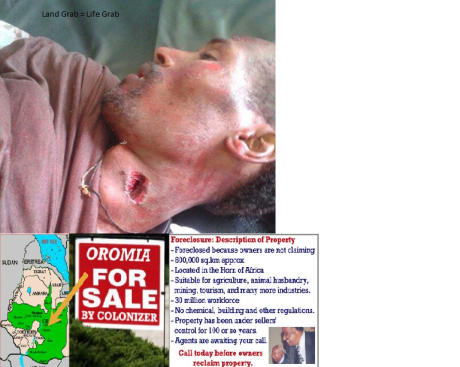



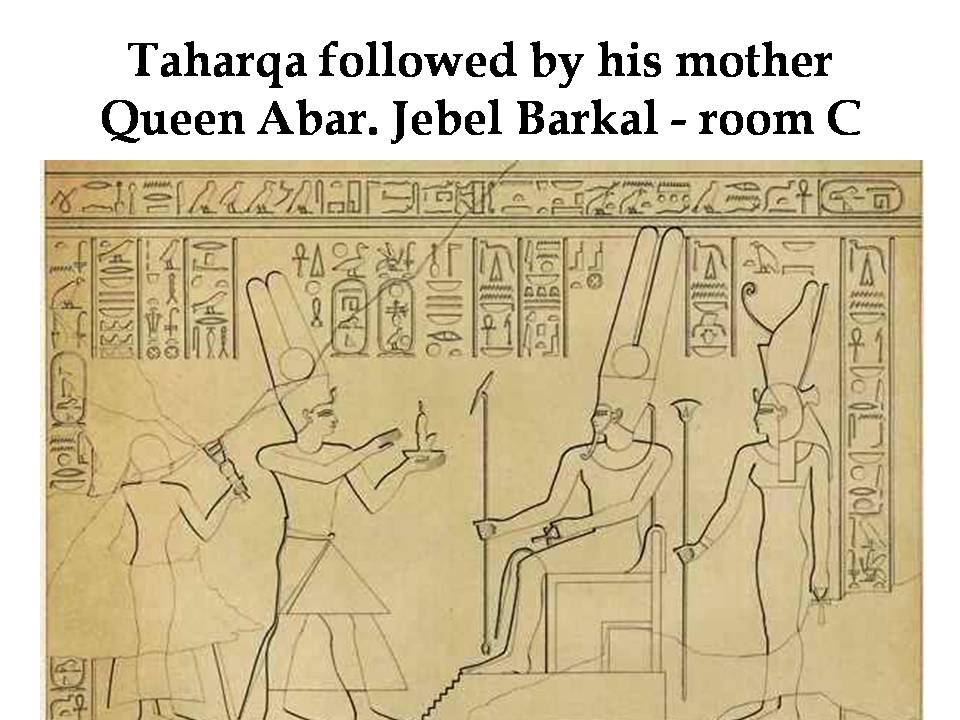
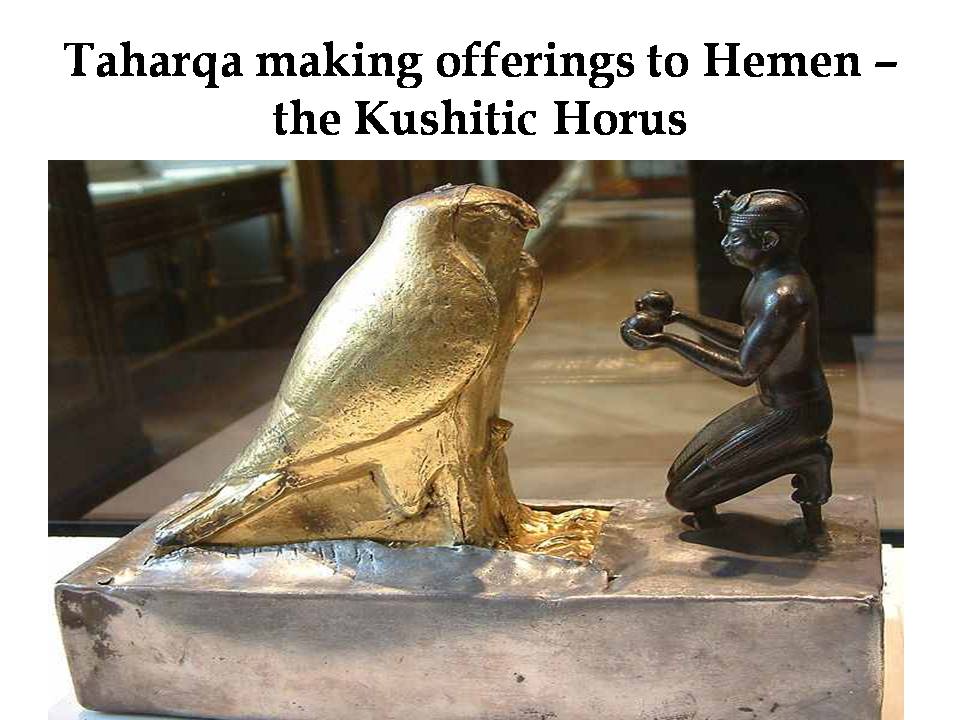

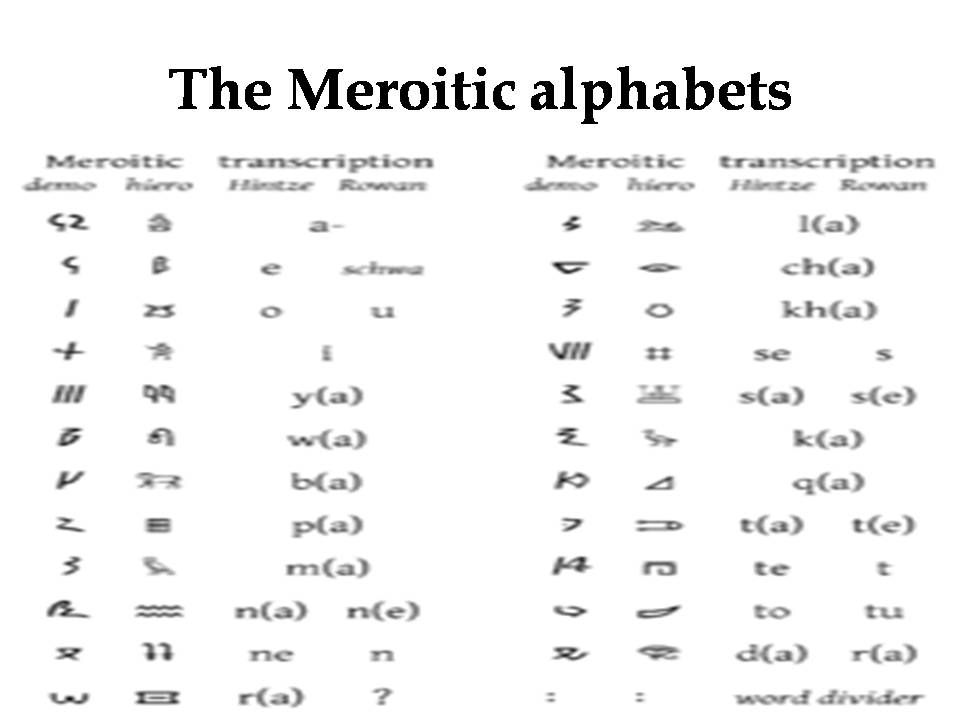


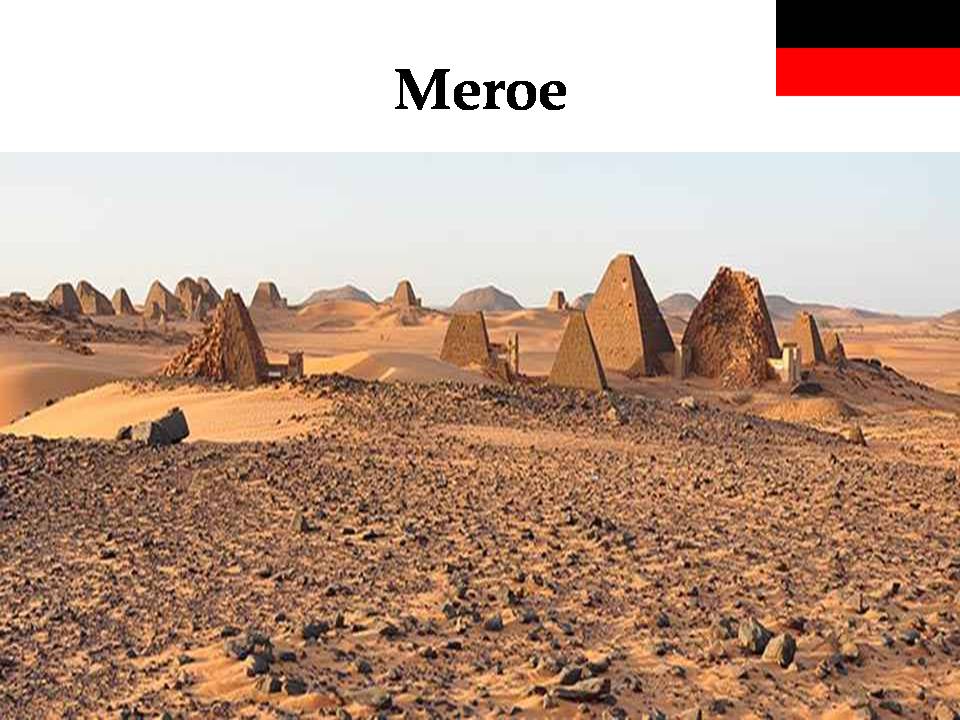

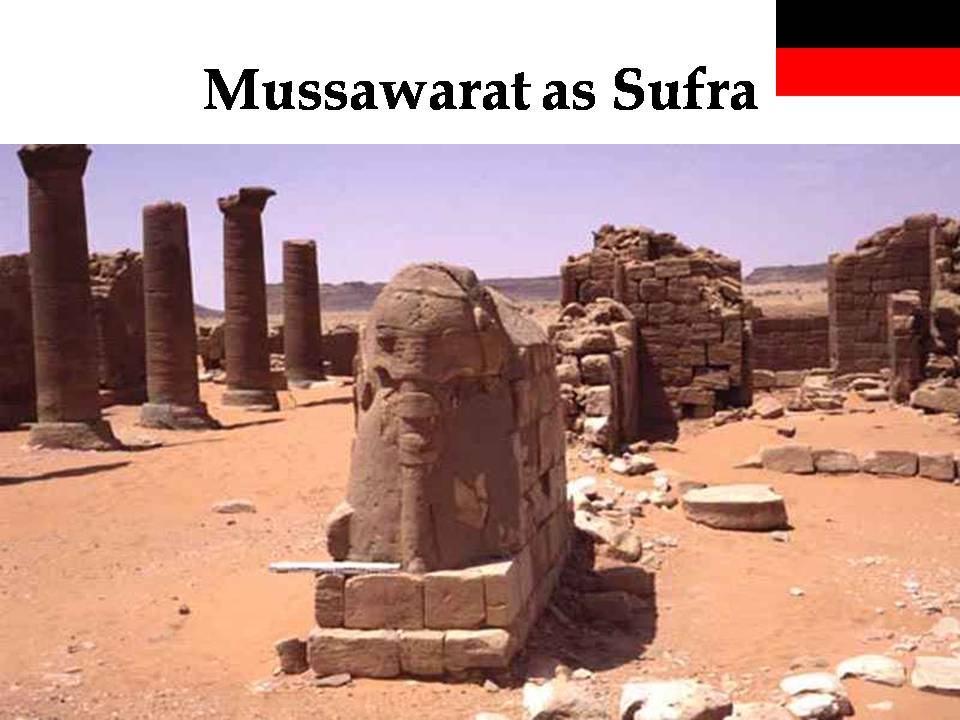
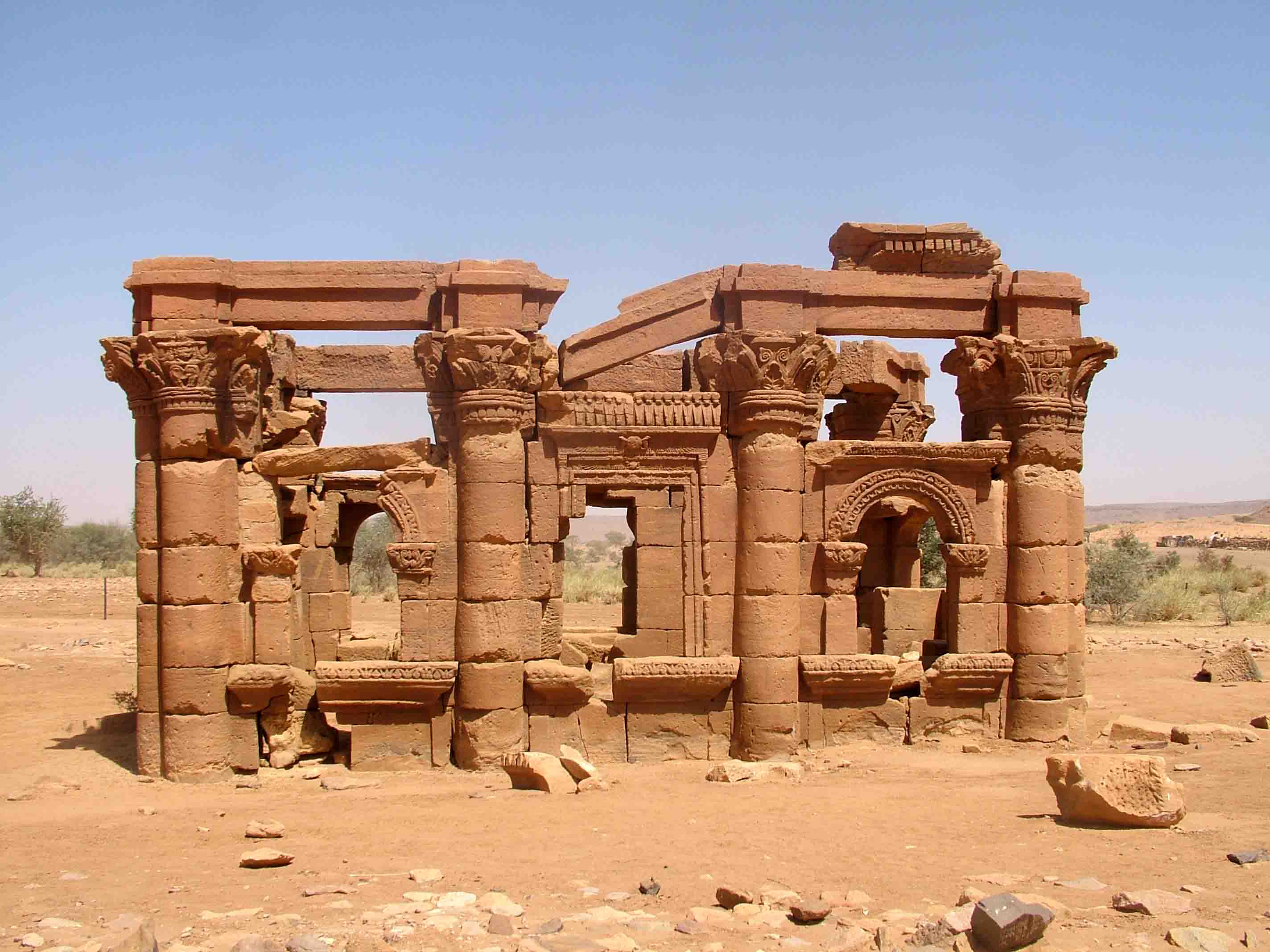


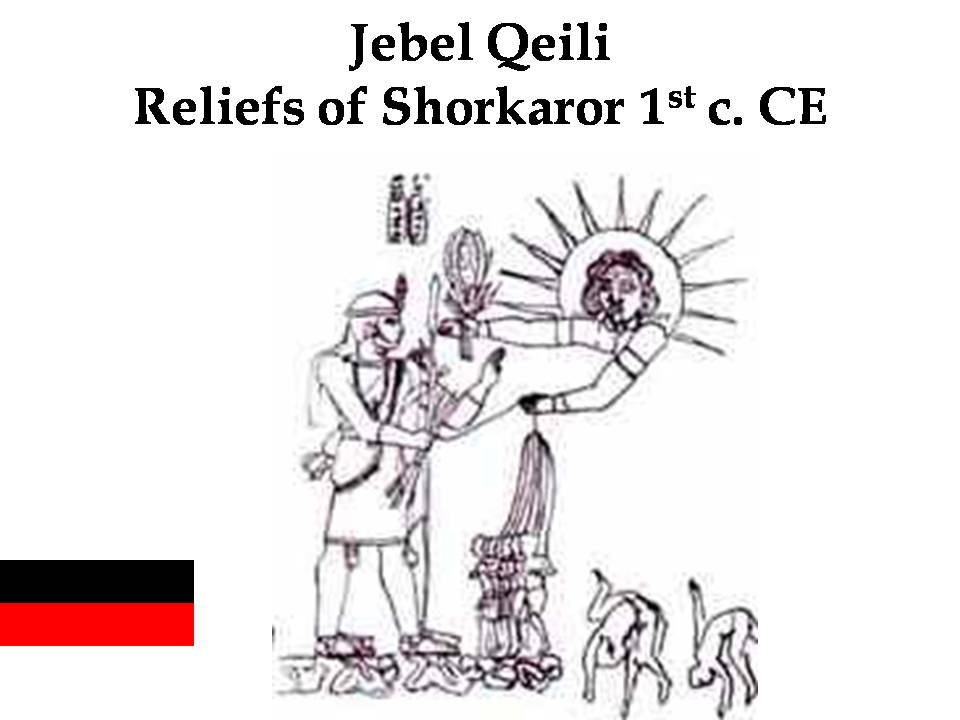

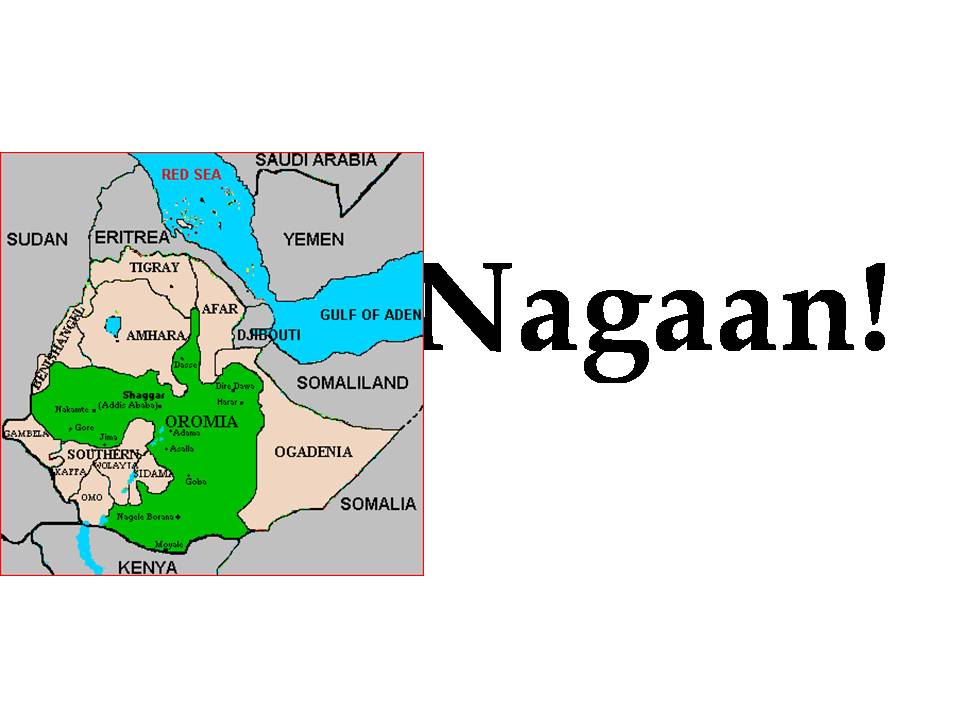






 A man who single-handedly saved Mandela has recently come forward with his story. Captain Guta Dinka, 78, was one of the two guards assigned to protect the future icon of peace during his training’ in Finfinnee. Read more at
 Nelesen Maandeellaa


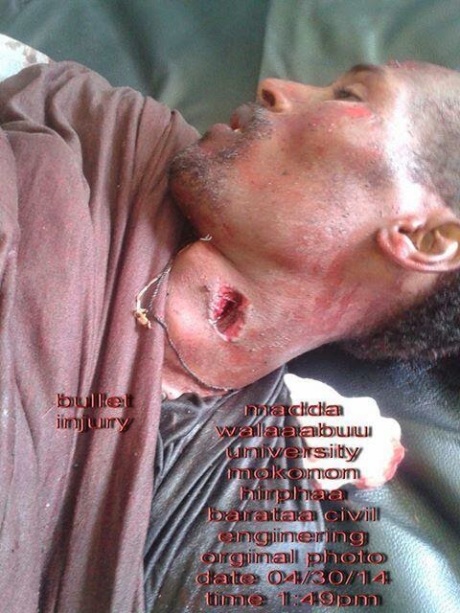




 Oromian Economist
You must be logged in to post a comment.