Economic and development analysis: Perspectives on economics, society, development, freedom & social justice. Leading issues in Oromo, Oromia, Africa & world affairs. Oromo News. African News. world News. Views. Formerly Oromia Quarterly
Oromo: Enforced Disappearance of Prominent Community Leader
Dabassa Guyo Saffaro, an important member of the Oromo community, with expertise in Oromo culture and cosmology, has been missing since 27 September 2015. He has long been persecuted by the Ethiopian government, and fled to Kenya in the 1970s. He has been living under UNHCR protection in Nairobi since then. His disappearance marks a continuation of the Ethiopian government’s consistent attacks on the Oromo people; his family and friends are calling on international human rights organisations to help the search effort.
A prominent Oromo wisdom keeper, oral historian and spiritual leader, who spent more than 30 years teaching the Oromo culture and cosmology, has been missing since September 27, family and friends said.
Dabassa Guyo Saffaro was born and raised in Yabello, Ethiopia. He moved to Kenya in the early 1970s fleeing political persecution, according to his daughter Darmi. He has since lived in Nairobi at times under the protection of the UNHCR. Guyo was in the process of renewing his expired Kenyan ID and UNHCR travel documents when he vanished.
Darmi, 22, is calling on the UN refugee agency, the Kenyan media, government and lawmakers to help locate her father, whom many describe as a living encyclopedia of Oromo wisdom, cosmology and oral tradition. The family is also asking international human rights organizations, the Oromo diaspora and other indigenous community leaders to help in the search effort and in investigating the circumstances of his disappearance.
“My father is a good man,” Darmi told OPride by phone from Mlolongo, where until recently she lived with Guyo, her two children and two other siblings. “He doesn’t have any quarrels with people. He is the greatest dad in the world.”
About half a dozen of Guyo’s former students contacted by OPride attest to the oral historian’s generosity, gentle spirit and kindness. Asnake Erko is the first of Guyo’s graduates and his former assistant. “I met him in Kenya in early 2000,” Erko told OPride. “Dabasa is a very kind man who shares from what he gets from good Samaritans. He is a man whose knowledge has no limits.”
Erko and nine other Oromo refugees eventually convinced Guyo to start teaching a course on Gadaa and Oromo culture. The effort led to the establishment in 2000 of “Arga Dhageettii Gadaa Oromoo,” an Oromo cultural institute where Guyo continued to teach Oromo culture, spirituality and the Gadaa system until recently.
Guyo was picked up from his residence in Mlolongo, a township outside of Nairobi, on September 25 by his son-in-law, Shamil Ali, and another individual from Kenya’s Oromo community, according to Darmi. He was invited by the community to preside over and perform rituals at an Irreechaa celebration at Nairobi’s City Park on September 27, something he has done every year for decades.
The respected leader reportedly returned to Eastleigh that evening after performing the ritual to spend the night with Ali, Darmi’s ex-husband. Ali says the father of six changed into a regular wardrobe after they got home and stepped outside for what he assumed was a “routine” walk. Ali says he became gradually more concerned when the elder did not return after an hour and as the night began to fall. Guyo was last seen wearing white pants and green sandals.
Darmi thought it was odd — and even uncharacteristic — for Guyo to leave behind all of his belongings and identification cards even if he ventured out for a quick walk. “My father never leaves his bag behind,” said Darmi, adding that her father had lived in Kenya for nearly four decades and knew his way around Eastleigh very well. “I was told Dad left everything of his behind, but still he can’t just get lost like a kid.” Guyo speaks Swahili and Oromo.
Ali and Guyo’s acquaintances in the United States and Europe fear that he might have fallen into the wrong hands, noting that Eastleigh is no longer a friendly neighborhood for immigrants. That the missing elder looks like a Somali in his physical appearance almost doesn’t help in an environment charged with official ethnic profiling, according to Jim Berenholtz, who had known Guyo for more than two decades. In recent years, Kenyan security officials have rounded up immigrants — particularly Somalis — en masse amid a heightened crackdown on those suspected of having links or sympathies for the militant group, Al-Shabab.
Erko and some members of the Oromo diaspora have raised concerns that Ethiopian security forces might have kidnapped Guyo because of his political views. (The Ethiopian intelligence in Kenya has a long history of targeting and kidnapping Oromo nationals in the country.)
Guyo’s family is desperately seeking information about his whereabouts. Ali maintains that he had searched local police stations, jails, hospitals and mortuaries for the missing elder at no avail. Darmi, who is seeking a divorce from Ali, questions some of her ex-husband’s accounts of her father’s unexplained disappearance and she plans to file a separate missing person report this week.
Both say they can’t rule anything out at this point, including a possibility that Ethiopian spies might have kidnapped the spiritual leader. One theory is that Guyo gave an unfavorable speech at Ireechaa and there were spies at the event. Ali also recalls Guyo had in recent months complained about some “pressure” from the Ethiopian embassy in Kenya. Erko and at least two of Guyo’s former acquaintances in the U.S. recall he always had concerns about his safety and had told them unidentified individuals had been nagging him to return to Oromia and teach Gadaa — an offer they say Guyo had repeatedly refused. Those who knew him say Guyo was openly critical of the Ethiopian government and the atrocities it commits against the Oromo people and the systemic repression of their culture. Understandably, there are a lot of speculations about his whereabouts and what might have befallen him. But at this point the family says their best hope is that the elder is indeed in Kenyan or Ethiopian custody.
His former students, including Berenholtz and Erko, say Guyo was a truly gifted orator with a very deep knowledge of the universe and the Oromo Gadaa system. The highly respected seer and mystic was an informant to such prominent anthropologists as Gamachu Magarsa, Paul Baxter and many others who have studied the Gadaa system.
In recent years, Guyo has been working with several globally recognized researchers, anthropologists and other indigenous nations, such as the Mayans, American Indians , Kyrgyz, the Altaic and other indigenous groups to raise awareness about Oromo cosmology and indigenous belief system. Over the past decade, the Oromo wisdom has travelled to the U.S., Guatemala, Kyrgyzstan, Australia and several European countries to share his wisdom with Oromo expats and other indigenous people.
Erko and others say Guyo had a unique ability to distill complex concepts about astronomy, a sophisticated Oromo calendar and numerology system “and make you sit there (listening) the whole day without even thinking that you were there for a second.” The renowned historian can reference specific dates and historical events from memory in each and every part of Oromia, according to Erko. He also had an unmatched ability to not only interpret but also connect age-old Oromo prophecies with current events.
None of the people we spoke with could conclusively say he’s kidnapped but all point to the history of Ethiopian intelligentsia in targeting such prominent Oromo nationals even beyond its borders. In addition to his lecture at Irreechaa, which his friends say may have drawn the ire of the Ethiopian intelligence, Guyo has been traveling around the world to teach Gadaa and raise awareness about the systemic suppression of Oromo culture and heritage in Ethiopia. Guyo’s disappearance on the same day he spoke at Irreechaa appears to lend some credence to their suspicion.
Anyone with information about Guyo’s whereabouts is encouraged to contact his family or the Oromo community organization in Nairobi. You can also send an anonymous tip to OPride at oromsisblog@gmail.com.
Atoo Sarbaa hin qabduu sarbaa millaa hin qabduu maaliin lafa dhiittaa yaa abbee?
Atoo gamtaa hin qabduu gamtaa dhiiraa hin qabduu maaliin nama miitaa ya aabbee?”*
Roorroo koloneefataa hammaa bahaa kan yaaliin seenaa, aadaa, afaanii fi dudhaa Oromoo balleessuuf godhame dabalatutu qabsoof ummata kakaase. Hardhas yoo tahe waldhaansoon mirgaaf godhamu itt fufaa,sirna Gadaa keessaa akeekota dhimma itt bahuun dandahaman guddifachuun irra ilaalamuu hin qabu. Ijoolleen Oromoo yero qabsoo bilisummaaf ka’an sana,kaayyoon saba saanii akkasumas firaa fi diinni eenyu akka tahan isaaniif taliila ture. Sun sagantaa malbulchaa dhaaba kallacha qabsoo Oromoo tahe, ABO irra kaa’ameera. Baras firaa fi diina gidduu timjii mullatutu ture. Angoon hoggansaas akeekamee ture. Bulee garuu want halle caalaa dimimmisaawaa fi laaqamaa dhufuutt ka’e. Amma firaa fi diinaa gargar baafachuun mamii dha; daangaan angoo fi barri hoggansaa, mirgaa fi dirqammi qondaalotaa fi miseensotaa sadarkaa hin beekamne gahaniiru. Eenyuun “Nuwi”, eenyuun “Isaan” jechuuf qabsaawoti qayabbannoo waloo dhabaa jirruu. Kanaaf dargagggoon hireen ummata kanaa dhimma keenya jedhan keessa deebi’anii mari’achuun yeroo saati. Dur Gadaan tokko yeroo murtaaweef hin dabarsu ture. Gadaa haaraan dhufu seera ofii tumata. Yoo haaraa hin baafnes kan darbe irra deebi’ee akka kan ofiitt tuma. Eenyuu seeraa ol hin turre. Sun akeekaa guddifatamuu qabu. Amma egaa,Gadaan seeraanis aadaanis kan dargaggoo waan taheef dirqammi joonjee qabate keessaa sabicha baasuu kan saaniitii. Kan kana gochuu dandahan qaama yaa’ichaa tahanii qabsoo sabaaf gumaachaa kan jiranii. Akki qabsoon Oromoo battala adda addaatt si’ana itt qabamaa jiru yaaddessaa dha. Kanaaf hundi garaa qulqulluun of qoree yaada furmaataa dhihessuu qaba. Gara kanatt masaka kennuuf hayyooti Oromoo hundi dirqamaa fi abbaawummaa qabu.
Martoota wiirtuwaloo
Oromummaan “Nuwii” kan ofiin jedhan akka martoota wiirtuwalooti ilaalamuu dandahu. Martii xiqishuu tuqaa wiirtuutt haantu akka warraatt ilaalamuu dandeessi. Sana duuba balbala, qomoo, gosa, jedhee sabatt ol guddata. Sabi marti alaa guddicha hunda haammatu jechuu dha. Tokko tokkoon martootaa keessa tuqooti nuu fi isaan kan waliin jedhan jiraachuu dandahu. Hundu tuqaa miira, dudhaa, amantoota, ganda fi godinaa qabu. Addummaan sun dhaloota duuba waan guddifatanii. Kanaaf jijjiiramuus ni dandahu. Gamnii, jabina martoota waliigalaaf garagarumaatt dhimma bahuu ni dandaha; hamaa harkatt garuu burjaajii uumuu dandahu. Sadarkaa kamittuu, tuqaaleen martii tokko keessa jiran martii takka haa tahu, martoota wiirtuwaloo ol, amanamummaa barbaadnaan waan jallatetu jira jechuu dha; shaffisaan sirraawu qaba. Addummaan tokkummaa sabichaa caalaa jabaannaan balaa qaba.
Oromummaan waan dhalootaati, kan ofirraa dhiqanii baasan mitii; qaceen saa dhalootaa dhalootatt darba. Dhugaan kun utuu jiru Oromummaan ilaalcha waloo masakaa hundaaf tahee fulduratt gahaatt hin bane. Afanfajjii fi kolomsiisa holola diinaan faca’etu akka Riqa Arrojii yk Ilaalaa Baabiloon jedhamuu afaan wal waldhaalchisaa jira. Qabsaawota kan ofiin jedhan keessa kan of hin beekne fi ofitt hin amannetu jiru. Sabichi saba guddaa, qaroomota dhaloota Kiristos dura beekaman keessaa gahaa qabu. Aadaa demokrasiin kanneen hanga yoonaa beekaman keessaa yoo caale malee kamiinuu gadi miti. Lakkoofsa ummataa naannaa saa jiran keessaa guddicha. Qabeenya uumaan hafee hin qabu. Beekumsa ogummaa, nagaa jaallachuu fi jannummaan kan komatuun hin jiru. Waaqtokkee tahuun kan isa dursu hin jiru. Kan maqaa saan sosso’an garuu kana hunda hin calaqisanii. Sodaatamu irra tuffatamu; hogganuu irra hogganamuu; nagummaa irra hammeenya agarsiisuu fi ummata ofii qindeessanii surraan mullachuu irra wan asgali hin jedhamneen bakka buufachuu yaaluun kan isa salphisantu caala. Kanaaf dandeettiin ummata kanaa kan harka jiruu fi riphaan dhimma itt hin bahamin jira. Maal wayyaa? Salphina kana keessaa attamiti bahamaa? Kan seexaan saanii salphina akkasii hin fudhanne itt yaaduu qabu. Halaalatt harka utuu hin hiixatin dura qeyee ofii soneeffachuun filmaata biraa hin qabu.
Oromummaan martii gandummaa, amantee, gosummaa kkf haammata. Hunda madaalee gaggeesssuutu irraa eegama. Jarri faaya saatisii. Kanaaf hundi amanamummaan isaaf qaban mara dursa jechuu dha. Hariiroon “Isaan” kan jedhaman waliin uumamu amanamummaa kana kan faallessu tahuu hin qabu. Sana malee raayyaa irraa adda bahanii diina mararfachuutu dhufa. Koloneeffataan keenyaa, nuwiif diina. Nuuf diina jechuun kan abba tokkee haa tahu saboota fedha saanii malee too’annoo jala galchee yk galchisiisee qaama fi qabeenya saanii irratt akka fedhett ajaju, mirgaa fi eenyummaa saanii haalee gara laafina tokko malee humnaan of jala jiraachisu jechuu dha. Diinni keenya daangaa nutt darbe. Dhalooti, afaanni, biyyi, daayi, dantaa fi kaayyoon keenya adda addaa. Nuti wararamoota inni warartuu dha. Nuti cunqurfamoota inni cunqursaa dha. Nuti kodee dhaa inni halagaa dha.
Kanaaf nuwummaa keenya akka qilleensi hin gallett eeggannu malee miiddhaan nu biraa hin hafu kan jedhamu. Kun akka Oromoon of itt ilaalanii. Gurguddoo Habashaaf Oromiyaan si’anaa yeroo hin yaadatamnee kaasee biyya saanii ture. Oromoon warartuu naannaa kana jaarraa 16faa madda hin beekamne kan laga faa dabalatuuf kkf. dhufan. Oromoon aangoo waaltaa qabaatanii waan hin beekneef akka saba tokkoott ilaalamuu hin qaban. Mirgi saanii abba abbaa kabajamuufii caaluu homa argachuu hin qaban. Kun yaada raagoti saanii dabtarooti sammuutt jaarraa hedduuf gad huduman. Kanaf mirga Oromoon kiyya jedhu hin fudhataniif. Qarqabaa kana kan Oromoon isaanitt michooman fudhachuun gaaffii sabummaa kan silaa Oromo akka sabaa walabaatt aangessuu dandahan irraa dheessan. Kana ilaalaniitu ummatii, sochiin saanii fashaluu irraa hin baraaramu kan jedhan.
Hamma yoona kaasaa Oromummaaf waliin dudhama fi murannoo agarsiisuu irratt walbuusuun miidhamaa jirra. Hanga hardhaatt kan gidiraa waliin itt gallett “nuwi” dhiisanii “isaanitt” galuun horooman hin agarre. Kan walfakkaatu yoo waliin dhaabbate qofa miidhaga. Ummatooti addunyaa yoomuu caalaa wal irratt hirkachuutu nutt himama. Haa tahu malee hunduu dantaa biyya fi nama ofii durfannoo akka kennan waliin nutt hin himamu. Hunduu humnaa fi bu’aa caalaa ummata ofiif argamsiisuuf, dadhabaa macalaqsanii bira darbu malee “anaa haanyaatu” jedhanii olkaasanii hin tirsanii. Caalmaa kana argachuuf haa tahu hurrisa jalaa bahuuf kan anjaa qabu, kan tokkummaa fi qophii cimaa qabu. Akka itt of ijaarruu fi mala ittiin qabsoofnu nammi nutt hin himuu; sun diroo keenyaa. Oromoon dorgommee addunyaa keessa seenuuf dura of bilisomsuu qabu jennee kaanee. Nuwii fi isaan gargar baafachuu kan uggetu sanaaf qophaawuu dandaha.
Ummata ofii damqsanii iddoo saanii dhugaa akka qabatan gochuu irra halagaatt riqatanii of fooyyesuu kan filatan hedduu dha. Hamma yoonaa dhugaa lafa jiru sirriitt rogaan mullisuuf sabboonoti hedduun yaalaniiruu. Isaanuu ukkamsaa sadoo meeqa keessaan hasaasan malee hamma irraa eegamu mandi’uu hin dandeenye. Kan hafan sagalee ol kaasanii iyyicha dabarsuu dhiisanii ofitt guungumu. Oromoon hedduun biyya saanii, ulfina saanii fi eenyummaa saanii dhabanii utuu jiranii maal nuun jedhuutu rakkisaanii. Kan homaa hin qabne wanti jedhamuun akka hin jirre hin hubatanii. Aarii ukkamfatanii bokokanii taa’uu. Sana futtaafatan malee yartuun itt taphataa haftii.
Kanaaf, falli saanii bakka itt kufanii ka’anii, diina digaluu taate ofirraa urgufuu dha. Hundi salphinaa fi roorroo irra gahaa jiruuf waliin aaduu fi iyyuun hunda hirriba dhowwan malee, miidhama saaniif eenyuu xiyyeeffannoo kennuufii hin dandahu. Tuffii fi salphinni kan finiinsu, kan sanaan middhaan itt dhagahamu qofa. “Baraa fi furguggee guugguufanii jala bahu” jedhanii kan gombifaman jiru. Garuu achittis jalaa hin baanee, gubbaa dhaa gad itt erganii. Baras, furguggees si’aawun itt deeman ofirraa qola’uu. Du’a hin olleef ofirratt alba’uun qaanii waliin jiraachuu taha. Qaaniin sabicha diinaaf ulfina. Yoo yeroon dammaqanii duran hin dhaabbanne isaan babbaqasuu, facaasuu, deegsuu fi gadgaloo gochuun qaanesuun itt fufa.
Garuu yoo maal godhame sun dhugoomuu dandaha? Jalqaba seerroti dhabaa fedha abba tokkee fi murnaa qufsuuf gara dhabsiifamuu akka hin qabane mirkanaawuu qaba; garuu akka abbalamiifitt hojii irra ooluu qabu. Dhaabi hawwa abba tokkee yk garee quufsuuf fedha kutaa miseensota saa tokkoo qofa calaqisuu fedhu murna fedhaa yk waldaa dhuunfaa malee, dhaba malbulchaati ofiin jechuuf hin dandahu. Kanaaf akka dhaaba malbulchaatt fiixaan akka hin baane beekamaa dha. Diinni Oromiyaa harkatt galfate of harka tursuuf boqonnaa malee halkaniif guyyaa hojjeta. Gara Oromoon tattaaffii walfakkaataan hin mullatu. Yoo shakalli akkasii jijjiiramuu baate Oromoon yeroo hundaa gaaga’amaa tahanii hafu dandahu. Diina didhchiisanii hojii ittisaa irratt harkifachuun didhchiisuu dhiisuu caalaa hamaa tahuu dandaha. Adda bilisummaa maqaa qabu tahuuf, halkanii fi guyyaa giidoo kan diinaa caaluun jabaatanii hojjechuu gaafata. Halagaa akkeessuun demokraasii irraa qoolifachuu manna hundee ofiitt deebi’ani heeraa fi seeran buluu wayya ture. Hamma yoonaa erbaala irratt malee Oromoon jaarmota demokraasii shakalan hin horannee. Dhaabi saanii angafti hunda caala jedhamullee hangammeessa saba guddaa kanaf malu hin geenye.
ABOn yeroo adda addaa gargar cacaba dhufe. Dhihenyuma murni gargar caban araaraa buusanii hamma Korri Sabaa demokratummaan ijaramee fi iddoosa ta’e walgahe dhaabicha tokkeessutt gurmeessa tokko jalatt hojjechuuf waliigaluun waan gammachiisuu. Hogganooti “nuwii” fi “isaan” kan jedhu miseensota ABO gidduutt cichee akka hin hafne, dhaaba hundee tokkomsuuf durfannoo kennu jedhamee abdatama. Namooti ulfina qaban dhugaa fi ifaa tahuu, fedha of qulqulluu gochuu barbaaduun bakka hin buusanii. Waliigalteen tolfame hanga yaa’iin nagaa xumuramutt akka itt wal tahamett yoo gaggeeffame wanti injifannoon hin baaneef hin jiru. Sanaaf Gummiin Sabaa fi kan murtii hojii irra oolchan abbaawummaa fi itt gaafatama qabu. Hunduu qulqullina garaa, akka olhantummaan gaggeessee injifannoon hulluuqsisu abdata. Hogansii carraa argame kanatt dhimma bahee daba qajeelchuun seeraan bulmaatatt deebisuu hindandeenye ummata guddaa kana injifannooti geessuu akka hin dandeenye dursee beekamuu qaba.
Sun akka fedhe tahus barsiifati dullachi jijjiiramu malee hobbaatiin hawwame argamuun mamii qaba. Sanneenii addaan bahinsaa fi hankaakuuf kaasaa kan tahanii. Garuu kan qabnuu tirsuu malee ammaafi filmaata biraa kan qabnu hin hin fakkaatu. Yoo kan tirsinu nurkatt dadhabe garuu fala hin dhabnu. Maal wayyaa, Oromoon qaba kan jedhamus ABOma? Waan halle ilaalcha sirriitt galchuuf warraaqsa dhuga gaafata. Yeroo inni jabaatu eegee kan wuxxisan, yoo dadhabu ijaan argaa saa kan hin feene fi maqaa itt baasan jiru. Sabboonaa kan ofiin jedhuu ujuu Oromoo kana jibbuun of jibbuu dha; ofittoo fi doofaa malbulchaa tahuu dha. Oromummaa kan jaallatuuf xiiqii walgiduu utuu hin tahin kan baasu hojii dha. Hoggansi kamu dhiibbaa jireenya ofii fi kan hariiroo halagaan utuu hin dagamin sochii qabsoo bakka seett deebisuuf tolfamuuf gamtaa agarsiisuu qaba. Sochiin bilisummaa hanga diina harka bahanitt hin dhaabbatu. Hoggansi garuu yeroon kan dangahame waan theef imaammati saanii egerref kan dhimma baasu malee kan ofiffumaa hardhaa quufsu qofa tahuu hin qabu.
Gadaan kan dargaggooti. Jibba, laafinaa fi hammeenyi abba tokkee Gadaa darbee dhaalmaan darbuu hin qabu. Kana attamitt hambisuu dandeenya? Oromummaan jibbaan hin jaaramu. Goototi keenya jaalalaaf itt dhumanii. Ijoolleen keenyas isaan faana bu’u jennee abdanna. Dadhabaa qabnu jabeessanii jabaa keenya hirromsanii, daba keenya sirromsanii ilaa fi ilaameen nu gaggeessuu maalee, kan tirsaa dhufne badduu baasu hin jennuu. Oromiyaa kan Oromoo kan taasisu walabummaa dha. Kaayyoo walabummaatt yoo hin cichine, ummata maxxannee malee, bilisa fi abbaa biyyaa tahuun hin jiru. Oromoof jireenyi gammachuu fi bilisi abjuu tahee hafa.
Habashooti ummatooti kolonii Itophiyaa hundi of dhiisanii “nuwii” ta’aniiru jedhanii of amansiisaniiru. Sunis namoota yartuu moora ofii caalaa kan saaniif gamtaa agarsiisan laaluuni. Isaaniin kolonota cabsanii hardhas isaanuuman cabsaa jiru. Nuwi caalaa Itophiyaan hin jiru; nuti jirmaa malee dame fottoqu mitii; qabsoo nagaa malee lolli nu hin baasuu, kkf jedhaa mooraa diina shororkeesaa tahe beekaas utuu hin beeknis gabbisan jiru. Sanaaf fayyaalessi “ishooyee” dhiichisu hedduu dha. Dinni jabeessuuf “shuu!” jedhaa jirus akkasuma. Oromoon digaluu ofirraa urgufa malee jirma irraa fottoqu hin qabu. Oromoof waldhabdee eenyu waliinuu qaban nagaan fixachuun akeeka dudhaati. ABOnis haala kun itt dandahamu lafa kaa’eera. Walabummaan Oromoo garuu maaliifuu dhoofsisaaf dhihatee hin beeku. Kan hamaan itt dhufu ofirraa fachisuun mirga dhalootaati. Empayerri seenaa keessatt nagaan diigamee hin beeku. Kan duriif gowwoomniiru, “Gaallaa Gabarii Haaraan” lammattaa Oromoo hin gowwoomsituu.
Dargaggoon, Hagoosii fi Irgaxeen maaliif Tolasaa fi Birbirsott garaa jabaatu, maaliin caallanii biyyuma saanii irratt gooftaa itt tahan kan jedhu deddeebi’anii gaafachuu qabu. Deebiin saa halagaa waan tahaniif garaa itt jabaatu; qawwee waan qabaniif gooftaa irratt tahanii kan jedhu tahuu dandaha. Halagummaan seenaan dhufe; roorrisaa jalaa bahuuf falli qawwee harka buusuu qofa. Tolasaafaan yoo mirga ofii gaafatan diina nutti hammeessuuf jedhanii firooti rom’an jiru. Diina isaan fixuutt jiru sana caalaa mal akka hin gonetu sodaatame lataa? Tolasaafaan sodaan akka isaan hin baafne baranii qaata “Lama nun suufan” jedhanii ka’anii. Sanyi gadigalooti yoo ofiin hin jenne, Oromoon kamuu akkuma Tolasaafaa kutachuu qaba. Kanneen gooftaa irraa fagaatanii jiraachuu se’atanii hin beekneef, garaagarummaan ulfinaa fi salphinaa itt hin mullatu. Jannaa fi abeebi sanaan gargar bahu. Kan onnee qabu du’a hin sodaatu. Kan du’a hin sodanne gadgalummaa hin fudhatu. Kanaaf diinaaf hin sarmu.
Wayyaaneen mootummoota darban irraa adda fakkaachuuf sabooti Itophiyaa jala jiran mirga hiree muteeffannaa akka qaban heera saa keessatt galchee jira. Sun mirga ilmoo nama addunyaa maraan beekame, eenyuu sababa kamiifuu haaluu hin qabneett beekama. Garuu Madrak ni balaaleffate. Wayyaaneen hiree murteeffannaa haa fudhatu malee kolonummaa hin fudhanne ture. Kan angoo irraa finqilchaman hundi imaammata Wayyaaneen sabootaaf qabu hunda akka yaada gandummaa fi ummata Itophiyaa addaan ciruutt fudhatanii gadoodaa jiru. Ummata Itophiyaa yoo jedhan Amaaraa fi Tigraaway mataa qabu; jarri jabaannaan wacci koloniin wan guddaa miti jedhanii yaadu. Waa hin hubataniif malee, Wayyaaneen leelloo addaa Oromoo qabuuf utuu hin tahin akka itt Empayera tursuuf mala dhahuu saatii. OFKn Wayyaaneenuu ni soba malee hojiirra oolchuuf miti jennee, Ango 39 gaddhiifnee halagaa fromfachuuf Madrakitt galle jedhanii. Safuun kan carraa argataniin mirga ummata saaniin dhoofsisuutt cehaniitii.
Oromoof, empayerri diigamu malee furmaati hin jiru. Itophiyaan Empayera kan taate erga humnaan biyyoota walaba kibba shee koloneeffattee booda. Empayera kan isee tolche hariiroo kana. Empayerri haa diigamu jechuun hariiroo kun haa dhaabbatu jechuu dhaa. Itophiyaanis kolonoottis biyyoota walirraa walaba tahan ta’u jechuu dha. Waldhabdeen jiru karaa fedheen furmaata argachuu baannaan gidiran ummatoota wayyabaa itt fufa. Sun dhaloota egeriif akka tolu, hardha itt dhiiguu, itt cabuu, itt hidhamuu fi itt du’uu akka gafatu akeekkachiisa.
Kaasaan hundee mamii fi haala dimmimmisaawaa qabsaawota Oromoo gidduutt uume hariiroo Oromiyaa fi finnaa Itophiyaa gidduu jiru irratt qayyabannoo waloo dhabuu dha. Dadhabinni abba abbaa, ofittummaa, ofirrumaa fi kanneen biraa dabalata. Yoo sun qulqullaawe danqaraa karaa qabsoo irra buufame waliin kaasuun dandahama. Waan kana irratt gara hundaan keessaanlaalummaan jiraachuu qaba. Wal sobuu safuu gochuu dha. Ummati garaagarummaa Mormitu Amanamtuu tahanii mootummaa Habashaa waliin dhaabbatanii fi kan kanneen walabummaa Oromiyaaf bilisa tahanii qabsaawan gidduu jiru hubachuu barbaachisa. Isaan lamaan faradoo kaabaa fi kibbatt gulufan fe’achuu saanii utuu ilaallu “Bitaan yaaban mirgaan yaaban walgahi kooraa dhumaa” jechuun wan namaaf hin qayyabatamne. Jechichii akkuma jirutt kanneen gar tokkott farda tokkoo fe’atan qofaaf dhugaa tahuu dandaha.
Mormitooti Amanamtuun Oromoon aangoo baayyina saaniin walgitu argatanii Itopiyaa ta’anii jiraachuu dandahu jedhu. Yaadi akkasii caasaa fi hariiroo haaran kan amma jiru bakka bu’ utu uumama kan jedhu of keessaa qaba. Kun, kan hundi bu’uura saa itt buufatu yeroon cehumsaa jira jechuu dha. Kanatt amannaan utuu harka hin kennatiin dura dhoofsifsisuu hammam dhugoomuu akka dandahu mirkaneeffachuu ture. Garuu kan isaan yaadan waan gurra saboonotaatt ni tola jedhan malee waan ittt amanan miti. Yaadichi akka hin fudhatamnes beekuu. Jara aadaa aangoo nagaan walitt dabarsuu hin qabne hafee eenyuu wan itt dafqee, it naafatee, itt du’ee argate tola gad hin dhiisuu. Kanaaf sanaa yaaduun, isaanuma waliin akka mormituu amanamtuutt Oromiyaa saamuu irratt qooda fushachuun abbbalamee fakkaata. Sana utuu hin taane sabboonota dhugaan harka walqabatanii karaa dandahamu hundaan warartuu ofirraa buqqisanii hiree ofiitt abbaa tahuu yaaluu turanii. Imaammati saanii soda irratt waan hundaaweef harka kennachiisaa dha; kanaaf kaayyoo goototi du’aniif bakka hin bu’u.
“Nuwii” jechuun nuti Oromoon jechuu tahu ni hubana. Nuwii fi koloneeffataan keenya cunqurfamoota fi cunqursaa dha. Kanaaf hanga hariiroo kanaan jirrutt walii diina. Nama Oromoo haala duree tokko malee isanitt galee, Itophiyaa demokraatessuuf jedhu Oromoo raatessuu irraa akkamitt addatt ilaalaa? Wayyaanee irraawoo? Oromoon mormituu amanamtuu utuu hin tahin akkuma Wayyaanee DDUT (TPDM) keettoo harka lafa jalaan ni kaawwata taha. Jarri akkasii akeekas kan itt gabaasanis qabu; bakka dhaqan oo’ifatanii kan hafan hin tahanii.
Garee filachuun mirga abbaatii. Garuu mirgi sun kan dantaa Oromoo miidhu akka hin taane of keessaa bahanii ilaaluu gaafata. Oromoon utuu walabummaan jabeessee of hin ijaarinii fi, of hin bilisomsin Itophiyaa keessa seene gaafii saaf deebi soquu dhuguma dandaha? Koloneefffatan diinamoo fira ofirroo dha? Yoo diina tahe rukuttaa malee deemuuf hin taa’uu. Fira ofirroott kan fudhataniif qabsoon rukuttaa hin qabne yaalamuu ni dandaha. Kan qawwee hin hikkanne, mana hidhaa guyyuu cimfataa jiru, kan guyyuu ummata ofiitt roorrisu waliin dhaabbatanii waa’ee nagaa dubbachuun of sobuu hin tahuyii? Oromoon kan morman sirna koloniitii. Malbulcheessitooti keenya maaliif ABUT qofa irratt akka xiyyeeffanu nu tolchuu fedhu? Kan empayericha akka jirutt tursuu fedhu hundi diina ABUT gadii miti. ABUT qofa addaan baasanii ilaaluun murnoota Nafxanyaa ofirroo tahan walii tumsutt geessuu akka dandahu irra ilaalamuu hin qabu. Murni aangoo irra bahu hamilate kamuu Empayera sirna Nafxanyaa waan bakka bu’uuf kan waliin nakkaran taha. Diina akkasii waliin tole jedhanii hojjechuun nagummaa ni taha? Yoo dhuguma Oromummaatt ni amanna tahe utuu qawwee biyya ofiitt gara galchuutt hin ka’in debifnee of haa gaafannu.
Bu’uuri Oromummaa cimaan duubaan utuu hin jiraatiin caasaa empayeraa irraa dorgommeen aangoof godhamu fedhaa fi deggersa halagaan malee moo’uun hin dandahamu. Maqaa Oromoon mooraa diinaa keessatt sana malee moo’uu nan dandaha jechuun ofitt qoosuu dha. Halagaan sana fedhee deggeru yoo jiraate bu’aa keessaa kan harka guddaa barbaadu. Qabsoon Oromoo dadhabbii taatotaan yeroof rakkina keessa seenuun, kan murannoo hin qabne abdii kutachiisuu dandaha. Sun Oromoon ofirraa baqachuuf sababa tahuu hin qabu. Gaaffiin Oromoo kan deebii argatu yoo kanneen gaafatan waliin daawiitii Oromummaan ilaaluu yaalan qofa. Naannaa jirrutt martii martiin mari’achuu barbaachisa. Marii akkasiin yoo hobbaatiin argame, waan halle dhooftuu godina, ganda, gosa, amanteen furuu ni dhiifna taha. Dargaggoon haala jijjiiramuun xaxamu hin qaban. Manguddoon jibbaa fi ilaalcha dhiphoo ijoolleett dabarsuu yaalan yoo jiraatan abaaramoo dha.
“You have no calf muscle; how can you kick the ground boy?
You have no cooperation; how can you hurt others boy?” *
Unbearable colonial abuse that included attempt to erase history, culture, language and tradition of the Oromo made people to rise in struggle. That is why while continuing the struggle for birth right, to adopt relevant principles from the Gadaa system should not be overlooked. When the Oromo youth rose for the national liberation struggle, their people’s kaayyoo and who enemies and friends are, were clear to them. That has been put down in the political program of their vanguard organization, the OLF. Then, there was visible cairn between enemy and friends. Leadership prerogatives were also set. With time, everything started to get murkier and jumbled up. Now, there is hesitation to distinguish between friends and enemies; leadership term and power limit, functionaries and members rights and duties became beyond definition. We are losing common understanding to whom to say “We” and “They”. Therefore, it is incumbent on the youth that feels concerned about affairs of their people to start debating seriously. In olden days, a Gadaa never outstays its term. Each incoming Gadaa proclaims new laws or proclaim the existing ones as its own. No one was above the law. That is a principle to be emulated. Now, that the Gadaa legally and culturally belong to the youth, the duty to pull the nation out of the confusion rests with them. Those who can do this are those who are part of the process and are contributing to people’s struggle. How the Oromo struggle is being handled by different quarters these days is worrisome. Hence, everyone has to self-examine in good faith and come up with suggestions on how to find a solution. All Oromo leading personalities have duty and responsibility to help in leading towards that end.
Concentric circles
Those who considered themselves as “We” in Oromummaa can be seen as concentric circles. The small circle near to the center can be considered as the family. After that, it develops to “balbala”, clan, tribe and nation. It means, the nation is the outer circle that embraces all. In each circle, there could be points that refer to each other as “we” and “they”. In all circles, there could be different points of character, faiths, counties and regions. Those differences are adopted after birth and can also be changed. For the wise, the differences can benefit in overall strengthening of the circles, but in the hands of the evil, they could bring catastrophe. At any level, if points in a circle demand higher loyalty than the circle or the concentric circles, it means something is wrong; it has to be fixed fast. If difference outweighs unity of the nation, it will have a disastrous consequence.
One is born with Oromummaa and it is not something one can wash away; its gene passes from generation to generation. Even with this truth Oromummaa is not surging forward to be the guiding outlook for all. Confusion and temptations spread by enemy propaganda is creating new version of legendary “Ladder of Arroojii” or The Tower of Babel where failed to the same language. Among activists there are those who are not self-conscious and also lack self-confidence. The people are great people that had share in pre-Christian civilizations. They had democratic culture if not the greatest, not inferior to any known so far. They are the biggest in numbers among those in the region. They have significant natural resources. No one will blame them for knowledge, skill, love of peace and bravery. No one preceded them in monotheism. But those that move in their name do not reflect all those qualities. Rather they humiliate Oromummaa by being despised rather than feared; be led rather than leading; show meanness rather than humility; rather than appearing graceful by coordinating own people, to replace it, they prefer gathering around them trifles that reperesent no one. For these reason visible and potential capabilities of this people is not utilized. What is to be done? How can it be possible to pull out from this humiliation? Those whose conscience cannot bear such humiliation have to think over. There is no alternative to putting ones house in order before stretching hands yonder.
Oromummaa embraces the circles of regionalism, faith, tribalism etc. For this reason it means loyalty to it has priority over all others for Oromo individuals. Any relation with all those referred to as, “They” should not contradict such loyalty. Otherwise it could result in separating from the hoard and favoring the enemy. Our colonizer is our enemy. For us enemy means one that puts individuals or nations under control or helps to put under control without their consent and orders on their body and resources at will and also denies their human and national rights and identity by forcing them to live under one with cruelty. Our enemy defiled our boundary. We are different in origin, language; country, vision, interest and objective. We are the invaded and they the invaders. We are the oppressed and they are the oppressors. We are kin they are aliens.
That is why it is said, if our being “We” is not guarded airtight we can never avoid abuse. This is the way Oromo view themselves. For the Habasha elites, present day Oromiyaa is their own territory from time immemorial; Oromo are invaders that came to this area in 16th century from uncertain origin that include rivers etc. Oromo had never had central authority so should not be considered as one nation. The do not deserve more than respect for their individual rights. These are ideas their ideologue daftaraa (clerics) inculcated in them for centuries and reinforced by chauvinist Nafxanyaa cadres of the present day. As a result they do not recognize the rights Oromo claim. This package is what Oromo in cahoots with them have accepted and abandoned the national question whose response could empower Oromo as an independent nation. That is why people say their move is doomed to failure.
So far we are continuing being persecuted for failing to show commitment and determination for cause of Oromummaa in unison. We had never seen when those that abandoned us in misery and run to those we call “They” flourished. It is only when the similar are put together that they become adorable. We are told that peoples of the world have become interdependent more than ever. However we are not told that every one of them gives priority to their own people’s interest. To amass more power and profit all advance by crushing the weak and never say “Oh my!” and help them up to walk them. Be it to get upper hand or to scape being stampeded those that have advantage are those that have strong unity and are well prepared. Now no one has to tell us how we organize ourselves and methods we use for our struggle that is our own part. We started our struggle because we believed that Oromo should first be liberated before entering competition with the world. It is only one that dares to distinguish between “We” and “They” that can get ready for it.
Instead of raising their own people’s level of consciousness so that they get their proper place there are many that chose to align with the enemy and improve own profile. So far many nationalists have tried in earnest to reveal the existing truth. Even them they tried to whisper through conspiratorial gagging and could not thunder as they were expected. The rest instead of magnifying and passing this frail voice preferred to murmur to themselves. Many Oromo worry about public opinion despite losing their country, honor and their identity. They do not realize that the public has no opinion for one who has nothing. That does not mean they are not angry, rather they are living with suppressed rage. Unless they release that, they will continue being played upon by a minority.
Therefore their solution is to rise from where they have fallen and shake off the parasitic enemy. Unless all roar and shout together for the abuse they are suffering from and deny others quite sleep no one will pay attention to their suffering. Only those that feel the pain of contempt and humiliation are outraged. There are those that ducked saying “You bend and make time and missiles to pass over you.” But missiles were sent down from above. It is only by actively standing against missiles that one can fend it off. To shit on oneself for inescapable death is to live with shame. The nation’s shame is honor for the enemy. It will continue shaming Oromo by dismantling, dispersing, impoverishing and dehumanizing them unless they awake in time and counter it. .
Habasha propaganda of brainwashing they grew with seems to have gone deep into the minds of most Oromo intellectuals than all they got from higher institutions of knowledge. Higher cadres that are entrusted with responsibility for the struggle were disoriented by changing conditions, pressure from different interest groups, personal problems and others. Oromo liberation movement emanated from the problem the nation was in. To learn and work in afaan Oromo was achieved by the movement. To have own letters (Qubee) was started by it. It is by the movement that many benefits were registered. All benefits achieved by Oromo liberation movement cannot be exhaustively told. These were registered by the braves whose bones are scattered all over Oromiyaa and never seen a grave. Did Oromo mothers stop giving birth to heroes after them? Those that want to exploit Oromiyaa’s resources without impediment are relentlessly attacking the movement from different direction to get political dominance. For them to stupefy Oromo and mount it just as before, the liberation movement must be destroyed. For this they are coordinating alliance from in and out. Unless liberation movement is led from where the problems are victories so far registered could be reversed. To save the movement from perishing is the duty of all Oromo.
But how can that be realized? First and formost it must be observed that organizational laws are not distorted to fit individual or group interest but implemented as they were intended for. Organization that tries to reflect interest of segment of its membership to satisy an individual or clique desire is an interst group or private association and cannot claim to be a political organization. Therefore its failure as a political organization is predetermined. Enemy that controls Oromiyaa is working day and night without rest to retain it longer. On Oromo side we do not see similar effort being made. If this practice remains unchanged the Oromo would always remain victims. The risk of challenging an enemy and dragging foot on defense could be more damaging than not challenging. It requires working hard day and night in greater force than the enemy to be worthy of the name liberation front. That could be achieved only if activist go to their roots and live according to own constitution and laws rather than imitating aliens and shun democracy. So far, except on paper Oromo did not produce practicing democratic organizations. Even its oldest and so far the best of all their organizations is not yet up to the standard this great nation deserves.
OLF, the vanguard organization had come down breaking apart at different times. It was a happy event when recently factions that broke up decided to work under one management until a General Assembly democratically constituted and genuinely reprsentative sits to unify them. It is hoped that leaders will give priority to unify the grass root so that “we and they” that could emanate from narrow mindedness will not persist among OLF members. Honarable people will not replace truth and openness with self defense. If the peace process goes as agreed, there is no reason that it could not come out successful. For that the National Council and those with executive functions have the responsibility and accountability. All hope that good faith shall prevail to take them through to victory. It must be known that leadership that cannot take this opportunity and correct irregularities to bring back the rule of law cannot lead this great people to victory.
That be as it may, the desired result may not be achieved unless old habits change. Those are what led to divisions and failures. But we have no immediate alternative than trudging with what we have. But if what we trudge cannot caryy on we will will not lack a solution. What should be done? It needs no less than a revolution to put things back in their right perspective. There are some that wiggle their tails when it is strong and hate even to see it with their eyes and call names when it is powerless. For any one that calls oneself a nationalist to hate OLF is to hate oneself. From one that loves Oromummaa what is required is work not grudge? Any leadership must cooperate to get the struggle back to its place, without being distracted by alien relations and personal predicaments. Liberation movement is not going to stop until freedom. But because leadership is limited in time, their policy should not be to satisfy their present ego alone but one that would be useful for the future as well.
This Gadaa belongs to the youth. Hate, weakness and meanness of some individuals of the past Gadaa should not be passed as heritage to the succeeding ones. How can we make stop to this? Oromummaa cannot be built on hatred. Our heroes perished for love. We hope our children will follow their example. They will rather strengthen the weak among us, empower our strong, straighten our crooked and lead us with “ilaa fi ilaamee” (orderly discussion) than finishing off what we have come dragging. It is independence that assures Oromiyaa belongs to the Oromo. Unless one holds fast to kaayyoo of independence it is not possible to be people with freedom and master of own country, except a “Maxxannee” or dependent people.
The Habashaa had convinced themselves that all colonial peoples have abandoned their identity and became them. That emanates from the few people that showed more cooperation to them than to their own people. They broke the colonies using them and are still continuing to use such collaborators to break them. There are those that knowingly or unknowingly nourish the terrorist enemy camp saying, there is no more Ethiopian than We; we are the stem not a branch to be pulled off; armed struggle is of no benefit to us but peaceful struggle etc. There are lots of naïve that say bravo to this. Enemy that say go for it are also as many. Oromo have only parasites to shake of and have no stem to get pulled off from. For Oromo it is a traditional policy to peacefully resolve conflicts they have with anyone. But their independence is nonnegotiable for whatever. To fend off anyone that comes with evil intentions is a birth right. In history empires have never been dismantled peacefully. The Oromo say we had been fooled by the so called “Gaallaa Gabar” (Buffer zone Gallaa) of olden days and shall never be fooled again by their new version.
The youth have to repeatedly ask themselves the question, why are Hagos and Irgaxe harsh on Tolasaa and Birbirso, in what ways are Hagoses better than them that they became their masters in their own country? The answer may be they are harsh because they are aliens; and they are better because they have the guns. Being alien comes with history; to be free from oppressors the solution is to disarm them. There are kin that tremble when the Tolasaas ask for their rights saying they will provoke the enemy to get harsher on them. What more can an enemy that is already erasing them more to frighten them than it already did? The Tolasaas had already realized that fear cannot be the solution and declared “they will never sniff us again”. If they are not accepting that they are of inferior race, any Oromo person ought to have determination like the Tolasaas. Those that have never imagined living away from their masters cannot visualize the difference between honor and humiliation. The brave and cowards are distinguished by that. The courageous are not afraid of death. One that is not afraid of death does not accept dehumanization. For that reason one does not obey the enemy.
To seem different from past regimes Wayyaanee has inserted articles in its constitution recognizing the right of nations under the Ethiopian state to national self-determination. That is a human right recognized by the world not to be denied for any reason by any one. But Madrak condemned it. The Wayyaanee accepted nations’ right to national self-determination though it did not recognize their colonial status. The group that was overthrown is still lamenting about policies Wayyaanee have for nationalities as regionalism and intention to divide the people of Ethiopia. When they say the people of Ethiopia they have in mind Amaaraa and Tigrawayi; if these are strengthened they believe the cacophony of the colonies is not a big deal. They did not understand that Wayyaanee had recognized those right not because it favors the Oromo but that was the only way to keep the empire going for the time under the circumstances. The OFC also said they believed Wayyaanee is only lying and would not put it into practice, so we agreed to scrap article 39 to join Madrak and befriend aliens. Woe to those that with any chance compromise their nation’s interest.
For the Oromo there is no solution unless the empire is dismantled. Ethiopia became empire after she colonized independent peoples to the south of her kingdom by force. It was that realtion that made her empire. Let the empire be dismantled means let that relation cease to exist. It means Ethiopia and her colonies become independent of each other. Ethiopia cannot continue as empire if Oromiyaa become independent. Independence of Oromiyaa can come through peaceful negotiation or armed struggle. If the conflict is not resolved soon in any way the suffering of majority people will continue. It requires bleeding, getting maimed, get imprisoned and dying for it today, for future generation to lead a better life tomorrow.
The lack of common understanding on the relation between Oromiyaa and the Ethiopian state is the root cause of suspicious and murky relations between Oromo activists. Individual weakness, selfishness, arrogance and others are secondary. It is only possible to get rid of the road block if that gets clear. On this issue transparency is required from all sides. Deceits must be made “safuu”. The people must clearly know the difference between joining colonial government with Oromo name as loyal opposition and struggling independently for independence of Oromiyaa. If two horses were saddled facing south and north, to say “If you mount on the left or right side destination is the saddle” is absurd. The saying may literally be true only for one horse.
Loyal Oppositions say the Oromo can live as Ethiopians by being given political power commensurate with their numbers. This assumes the creation of new structure and relations to replace the present one. That demands a transitional period where all organize their own base. If one believes in this the possibility must have been negotiated before surrendering. But what they wanted is something that appeals to nationalist ears, not what they believe in. They know that the idea will not be accepted by the colonizer. Let alone folks that have no culture of peacefully transferring power, no body willingly gives up what one had sweated for, maimed for and died for. Hence even thinking about it seems having the intention to join them in blundering Oromiyaa as Ethiopian loyal opposition not going beyond that. Otherwise they should have joined true nationalist to dislodge the invader by all available means and become masters of their own destiny. Their policy is based on fear and so capitulatory; for this reason it cannot substitute the ideal heroes are dying for.
“We” means, we the Oromo. We and our colonizers are the oppressed and the oppressor. For this reason until such relation is changed they are our enemies. How can we see an Oromo person that joined them with excuse of democratizing Ethiopia differently from one stupefying Oromiyaa? What about from Wayyaanee? Oromo, like Wayyaanee may assign underground agents like TPDM not loyal opposition. Such types will have objectives and where to report; they will not be those that remain wherever they find comfort.
To choose sides is ones right. But that needs to go out of oneself and see if that choice does not affect Oromoo interest. Can the Oromo really look for answers to their question in Ethiopia before getting independently well organized and liberating themselves? Is the colonizer an enemy or an arrogant friend? If it is an enemy it cannot go away without violent means. For those that take it as an arrogant friend non-violent struggle may be tried. Is it not deceiving oneself to stand with a system that did not disarm itself, strengthens its prisons daily and one that continuously abuse its own people and talk about peaceful struggle? The Oromo are against the colonial system. Why do our politicians want us to target only the TPLF? Any one aspiring to control the empire maintaining as it is, is no less an enemy than the TPLF. Let it not be overlooked that singling out the TPLF could lead to allying with chauvinist Nafxanyaa groups. Any group that takes power represents the empire Nafxanyaa system to deal with. Can it be considered struggle at all let alone peaceful struggle to willingly work with such an enemy? Let us ask ourselves again, before we start turning guns against own people.
It is naivety for one that has no strong Oromummaa rear to expect winning competition for power within empire’s structure without the will and support of aliens. To believe that you could win in enemy camp without that support, with Oromo name, is to make fool out of oneself. Even if there is an alien that is willing to support, it is one that expects bigger return from the benefit. That Oromo struggle is in difficulties because of weakness of actors can put those lacking determination into despair. That should not be an excuse for Oromo to run away from their own self. Oromo question could get answer only when those that asked try to see it in light of Oromummaa. Let it be debated in circles wherever Oromo are. There is no reason for such discussions not to lead to fruitful results. If so they may stop using region, tribe, and faith as a measurement to interpret the world. The youth should not get entangled in passing phenomenon. If there are elderly that try to transmit hate and narrow outlook affecting the young they will be only the cursed ones.
Advancing our struggle in whatever way, it is good to try and adopt certain aspects from the Gadaa system. For example, in the Gad system much attention was given to raising children. In society children are divided into age groups and given roles. Education, work and different physical exercises were given according to “hiriyaa” or peer group. These peer groups are referred to in many places as dabballee, foollee (gaammee guddaa fi xiqqaa) qondaalaa and Raabaa Doorii. There is no reason why raising children teaching culture and discipline should not be practiced in that way now. The Wayyaanee had divided Oromiyaa in structures called ganda, garee, gooxii and “one for five”. Above that there are also zones and districts. Formal education is under the government. Since it is a constitutional right to develop ones culture; to give informal education in a traditional way is a right. For this reason it is possible to advance the development of one’s culture and identity in that way. The future of Oromo nation is its children. If possible the hiriyaa system can be organized in already existing structure. Wherever it is not possible a parallel structure to the existing could be built. If societal development is officially forbidden one has to take it underground just like the political one. Those that head structures are citizens of Oromiyaa; safuu can be invoked on them for they are also embraced.
“They” who recognized the rights of the colonized peoples have put them in their constitution. It is up to those (We) that claim those rights to get them enforced. The OLF participated in the Transitional arrangement believing it will be fulfilled peacefully. “We” were cheated. We were denied and expelled. Since then the gap between us and “they” is keeping on widening not narrowing. We had worked with them dying and being imprisoned; by doing so we proved that so called peaceful struggle doesn’t work. To talk about peaceful struggle with dictatorial governments or those that do not abide by the rule of law amount to committing suicide. There are people who even if they have seen what happened still advocate for it. The genocide committed during peaceful protest against so called Finfinnee Master Plan did not scratch their minds.
Just to note as a passing remark, Finfinnee was the center of Oromiyaa where people lived in happiness tilling land and raising domestic animals as well as entertaining cattle brought to her hora (salt water) from all parts of central Oromiyaa and producing offspring. She has never stopped expanding since occupation. Rulers that came since went on adding portions to her. Not only by law has she also increased but with market influence as well. When she was occupied native Oromo were evicted and she was divided into military camps. Later she was incorporated as the citadel of colonial government in which Oromo is left with nothing in her. She was Amaara town until the demise of Darg. Though she is still speaking Amharic it is told that the surrounding area from which Oromo are again evicted are distributed among Tigrawayi hoard. It is not known when the language will be switched to Tigrigna. But how long should Finfinnee remain alien to Oromiyaa?
The purpose of so called Master Plan is only to legalize Finfinnee’s fait accompli swallowing of the surrounding towns. Except for occurring at a time when the wounds are new and people have started to join hands conscious of their Oromummaa, it cannot be separately viewed from the struggle to become masters of own country. The so called Master Plan only exposed the contempt the enemy has for the people. Earlier they chased us out saying it is not yours and we sacrificed so much people and resources as a result. It did not take them long to tell as to get back just to wheedle us. But except for the name we were not given any thing in it. Now they came with what they say Master Plan. Be it as it may, provocation that is agitating us for Finfinnee should not make us forget our higher goal. For us Finfinnee is part of Oromiyaa; though we are lamenting for her today we do not see the struggle we make for her differently from that we make for our Oromiyaa. For them what they are doing now is exploiting the resource so far untouched and assuring the transfer of hub of Oromiyaa from Amaaraa to Tigraawway with expanded radius. Not only Shaggar but they are also plotting to make all towns in Oromiyaa remain Habashaa islands in Oromiyaa. What are Oromo doing?
There is enough experience that, there are those trying to cajole the Opposition pretending to be friends simply to buy time for the Wayyaanee, not to empower them, just like the transitional period. From the political conditions in the world all preferred an empire lead by minority for their own national interest not for independence of the oppressed majority. This situation can be changed only with struggle of the oppressed. In this Oromo struggle could play a major role. As long as there is Oromoo liberation movement no party competing in Oromo name against multinational parties under empire system will get attention.However long it might take with determination and commitment they will not fall short of their desired goal. There will be no friendship between “We and They” until Oromiyaa is liberated.
Ulfinaa fi surraan gootota kufaniif; walabummaa, walqixxummaa fi bilisummaan kan hafaniif; nagaa fi araarri Ayyaana abboolii fi ayyoliif haa tahu.
Disappearance of Mr. Dabassa Guyo Saffaro in Kenya – An Oromo Cultural and Religious Scholar
It is with great sadness that we learned the disappearance of Dabassa Guyo Saffaro – a prominent Oromo cultural and religious leader residing in Nairobi, Kenya. Mr. Dabassa, a highly respected Oromo historian, thinker and cultural guru, was kidnapped on 27 September 2015 after the celebration of the annual Oromo Thanksgiving day – Irreecha. He is an accomplished traditional expert who has dedicated himself for the revival of indigenous knowledge system in the Horn of Africa. In particular, his profound knowledge of the Gadaa system – an indigenous democratic system of governance – has placed him among the few irreplaceable Oromo experts in the Horn of Africa. His extensive knowledge and exposition of the Gadaa system – currently practiced among the Oromos, has contributed not only to the revival of the system but also to its wider diffusion among international scholars such that it is currently being reviewed for recognition by UNESCO as one of the world heritages. Thanks to his dedication and exposition that the Gadaa system has obtained the attention it deserves as a purely indigenous African wisdom of governance. The system has greatly contributed to the socio-political peace and harmony among communities in the Horn of Africa, but sadly so it appears that it has not offered Dabassa Guyo the peace he has preached all his life.
On the same footing, for his mastery of the wisdom of Waaqeffanna – a monotheist system of belief among the Oromos – and its practices, Dabassa Guyo was considered the Delai Lama of the Horn of Africa. He has an amazing memory of the indigenous knowledge of the Boran in particular, and is indeed considered a walking encyclopedia of history, culture and belief and Oromo system of knowledge and philosophy in general.
He has traveled to different corners of the world to lecture about the importance of maintaining traditional wisdom for the good of future generations and has created a network of similar traditions, and is well regarded by all.
Although finger-pointing at this stage could be misleading, it is not difficult to point out that he had rough time with the government of Ethiopia – which was responsible for his eviction from the country some 35 year ago. Although he has never been a member of any political organization, his giant stature among Oromo scholars has always been seen with a great suspicion by the Government of Ethiopia, which shivers at any aspect of Oromo nationalism. In truth, Dabassa Guyo is just a free thinker and father of Argaa Dhageeti – a traditional oral knowledge system that embodies culture, tradition, history and belief among the Oromo in the Horn of Africa.
Mr. Dabassa Guyo was kidnapped by, no doubt, evil forces while he was doing what he likes doing in life – preaching peace. On 27 September, he took part in the celebration of the Irreecha annual Oromo Thanksgiving day – where he delivered his annual Thanksgiving blessings to his fellow Oromo country men and women. On this day, he was kidnapped while on his way from the ceremony. Efforts to locate him have so far not proved successful. We are, therefore, appealing to the international community, the Kenyan government, the Kenya Police force, and the Oromo community in Nairobi to help us locate Mr Dabassa Guyo.
We appeal to you for he is also a father, a grandfather and a head of a family apart from his traditional wisdom. He is a peace lover and preacher of harmony among communities all his life. He does not deserve in any way any ill-treatment. We appeal to you to help us find his whereabouts.
Ethiopian Government Paramilitary Commits Torture and Rape in Oromia
The following is a statement from the Human Rights League of the Horn of Africa (HRLHA).
HRLHA Urgent Action October 12, 2015
Harassments and intimidations through arbitrary arrests, beatings, torture and rapes were committed in Ada’a Berga district Western Showa Zone of Oromia Regional State against young Oromo nationals on September 24 and 25, 2015. More than 30 young Oromos were picked up from their homes at night by an Oromia paramilitary force. According to HRLHA informants in Ada’a Berga, the major targets of this most recent District Administration officials-sponsored violence were mostly young Oromos working in the Dangote Cement Factory and university students who were there to visit their families in the summer break. HRLHA informants from the area confirmed that this particular operation against young Oromo nationals in Ada’a Barga was led by the local government official obbo Tolera Anbasse. In this incident more than 30 young Oromos (16-25 ages) were arrested; more than 20 were severely beaten by the Oromia Paramilitary and confined in the Ada’a Barga district Police station for three days in violation of the Constitution of the Federal Democratic Republic of Ethiopia, Article 19 (3) “Persons arrested have the right to be brought before a court within 48 hours of their arrest. Such time shall not include the time reasonably required for the journey from the place of arrest to the court. On appearing before a court, they have the right to be given prompt and specific explanation of the reasons for their arrest due to the alleged crime committed”. Although it has been difficult to identify everyone by their names, HRLHA informants have confirmed that the following were among the arrestees:
All arrestees were accused of what the police referred to as “instigating the public against the government.”
When the arrestees were brought to court, one man explained to the court that he had been beaten severely in front of his family members and his wife and his sister age 16 were raped by one of the paramilitary members.
The arrestees showed their scarred backs to the court to indicate the torture inflicted on them by the Paramilitary. Even though the court released all the arrestees on bail the police refused the court order and took them to jail.
The Human Rights League of the Horn of Africa (HRLHA) expresses its deep concern over the safety and well-being of these arrested Oromo nationals and urge the Oromia Regional State Government to make sure that the bail conditions granted by the court are respected and release the arrestees unconditionally. HRLHA also urges the Oromia Regional State and the Ethiopian government to bring the torturers and rapists Ethiopian government paramilitary members to justice.
Economic benefits of ecosystems extend far beyond exploiting them for resources
The true value of the planet’s ecosystems is frequently misrepresented, if not invisible, in markets and economic decision-making. But the real economies that underpin our societies are themselves fundamentally rooted in the natural world. In a forest, the value of timber can be significant and obvious on the open market. But the capacity of the forest to prevent soil erosion in surrounding agricultural land is not so easily or readily accounted for. A mangrove swamp is an important and valuable barricade against storms. But its capacity to sequester carbon and help prevent climate change goes unappreciated in economic terms. Grasslands can be an economic foundation of communities, both for their arable land and as a draw for wildlife-based tourism. But what of their function as a water catchment, offering strategic ability to manage this resource? Without awareness of the true value of these ecosystem services, and how GDP depends on the health of ecosystems, we are bound to continue to exploit them in an unsustainable way.’
Human rights advocates criticize the bank for failing to speak up about the jailing of a former employee
Pastor Omot Agwa knew he was in danger.
“Greetings from Ethiopia in the name of Our Lord Jesus Christ,” he wrote in an online message to friends and colleagues on March 11, 2015. “I am informing you that since yesterday I have been hunted by security.”
The gentle, round-faced church leader had long been an embarrassment to Ethiopia’s authoritarian regime. As a prominent leader of the Anuak, a heavily Christian indigenous group, Agwa had spoken out against alleged beatings and killings of his kinsmen by government forces.
Days before his message, a federal agent had come looking for him at the Mekane Yesus Seminary, the evangelical church that he belonged to in Addis Ababa.
“He wants to arrest me,” Agwa wrote. “If I keep silent without communicating I will be in custody.”
The Ethiopian regime had various reasons for wanting to arrest Agwa, but at that moment, one loomed large: he had recently served as a translator and consultant for an investigation into whether government authorities had used World Bank money to bankroll a campaign of violent evictions targeting Agwa’s Anuak community.
The soft-spoken pastor arranged interviews for the bank’s Inspection Panel, its internal watchdog, with Anuak who told World Bank investigators about beatings, rapes and summary executions by Ethiopian soldiers —placing Ethiopia’s lucrative aid package from the bank into jeopardy. Months later, Agwa translated for a reporter from the International Consortium of Investigative Journalists on a newsgathering trip to Ethiopia.
Pastor Omot Agwa worked as a translator for the World Bank before his arrest. Image: Dead Donkeys Fear No Hyenas / WG Films
In February 2015, the Inspection Panel released its report, faulting the bank for failing to properly scrutinize the Ethiopian government’s programs before giving money to the regime. Soon after, Ethiopian government agents began hunting for Agwa, visiting his church, his family and leaving messages on his phone, he told human rights groups.
“I have locked myself in the room now,” the frightened pastor wrote in his distress message. “Please pray for me for God’s protection and I don’t know what to do.”
He was arrested four days later as he tried to leave the country on a flight to Kenya. In September, Ethiopian authorities indicted him on terrorism charges.
Human Rights Watch called the charges “absurd,” a transparent attempt to punish Agwa for exposing government abuses and to intimidate other Anuak into silence.
But another key player in the church leader’s case has made no public objections: his former employer, the World Bank.
World Bank officials say Ethiopian authorities have assured them that Agwa’s arrest had nothing to do with his work for the bank’s Inspection Panel. The bank won’t comment on whether it believes the charges against Agwa are valid. And the bank has continued its financial relationship with Ethiopia’s government—approving more than $1.3 billion in loans to the regime since it learned of its former employee’s arrest.
“The World Bank just abandoned him,” said Obang Metho, the executive director of the advocacy group Solidarity Movement for a New Ethiopia, who once belonged to Agwa’s congregation. “Had they not told Omot to investigate this, he would be at home today with his family.”
The World Bank’s decision to continue bankrolling Ethiopia’s government in the aftermath of allegations of human rights abuse is not unusual. The bank has repeatedly refused to intercede on behalf of protesters or local communities when they are mistreated by borrowing governments or to cut off funding in such instances, ICIJ, The Huffington Post and other media partners reported in September.
The bank maintains that as a development lender, it has a specific and limited mandate. The bank’s rules against violent evictions, abuse of indigenous peoples and other safeguards apply to the projects it finances, not all activities of its borrowers.
World Bank president Jim Yong Kim. Photo: AP Photo/Geraldo Caso Bizama
The World Bank’s charter specifies that “the Bank and its officers shall not interfere in the political affairs of any member”—a clause that the bank has long interpreted as a prohibition against advocating for human rights.
Philip Alston, the United Nations special rapporteur on extreme poverty and human rights, charged in a recent report that the bank has misinterpreted this ban on political interference to justify treating human rights “more like an infectious disease than universal values.”
Alston said that while he generally opposes across-the-board sanctions as a reaction to wrongdoing by a borrower country, they could be justified in extreme cases and that the bank needs to develop clear guidelines for responding to cases of retaliation and other abuses by its borrowers.
The World Bank declined to answer questions for this story.
In a statement to ICIJ after the terrorism charges against Agwa were revealed, the bank said it often works “in places with complex political and social issues. When allegations of reprisal are brought to our attention, we work, within the scope of our mandate, with appropriate parties to try to address them. We have made several inquiries about Pastor Omot Agwa since his arrest in March 2015 and detention.”
The Ethiopian government did not respond to requests for comment to its embassy in Washington, D.C., and its Ministry of Foreign Affairs.
Pastor and activist
The case of Omot Agwa offers a striking view of the bank’s hands-off approach.
Agwa was born in the fertile, low-lying Ethiopian state of Gambella, a traditional homeland of the Anuak, an indigenous tribe of several hundred thousand people living in Ethiopia and South Sudan. He attended an American missionary school and was “born again” as a Christian in first grade, establishing his lifelong ties to the Protestant church. He went on to earn scholarships for Bible translation that set him on a path to church leadership.
As he drew closer to the evangelical church, Agwa retained a strong Anuak identity. When he was a teenager, Agwa had the six front teeth on the bottom half of his mouth plucked out in a traditional initiation rite.
“If your teeth are still there they say that, one, you are not pure Anuak,” the pastor explained last July, a mischievous smile crossing his face, “and second, that your face looks very ugly because your mouth looks like a goat’s mouth.”
An outbreak of violence in December 2003 prompted Agwa to take his first steps into activism. Ethiopian soldiers and members of Ethiopia’s lighter-skinned ethnic majority slaughtered hundreds of Anuak in the state of Gambella’s capital. Agwa survived by hiding inside a friend’s house.
By that time a well-known church leader, Agwa collected the names of the dead and traveled to Ethiopia’s capital, Addis Ababa, to seek out human rights groups that could spread word of the massacre beyond Ethiopia’s borders.
“I went to Oxfam America, I knocked on their door,” he said, “and they interviewed me in their office where, for the first time, I weeped. I cried loudly because I was traumatized, and it was a time now that I was released.”
Hear Omot Agwa’s account of hiding in a friend’s house as gunshots echoed outside during a 2003 massacre in Gambella, Ethiopia.
In the following years, Agwa’s fluent English and ties to the Protestant church made him a frequently sought out liaison by human rights observers and others who wanted to know more about the government’s repression of the Anuak.
In 2010, federal authorities launched the “villagization program,” a massive campaign in Gambella and three other rural states to relocate Anuak and other minorities into government-sponsored villages. The government said the plan was intended to provide health, education and other essential services, but many Anuak denounced it as a land grab and refused to move from their ancestral homes.
The former governor of Gambella described personally diverting roughly $10 million in World Bank money intended for the health and education program to finance a series of violent evictions of the Anuak, ICIJ reported in April.
When the World Bank’s Inspection Panel came to Ethiopia in February 2014 to investigate abuse accusations, it hired Agwa as a consultant and interpreter. Agwa travelled with the investigators through the communities in Gambella where he had grown up, translating interviews with Anuak villagers. One man who was interviewed reported that an Anuak who was a member of the Ethiopian military’s Special Forces was shot dead on the spot by a government police officer after he refused an order to evict fellow tribe members from their farms.
In summer 2014, Agwa worked with ICIJ during a reporting trip in Ethiopia to explore the alleged abuses linked to the villagization program. Despite his fears that he would be discovered by federal agents, Agwa assisted an ICIJ reporter with steady good humor, interspersing his painful recollections with an infectious smile and frequent references to his Christian faith.
When the Inspection Panel published its findings in February 2015, security police began looking for him soon after, Agwa reported to human rights groups.
The government claims the Swiss church charity’s workshop that Agwa was traveling to when he was arrested was a “terrorist group meeting.”
On a telephone call the night before his arrest, Agwa said the police were after him because of his work with the Inspection Panel, according to David Pred, managing director of Inclusive Development International, one of the human rights groups supporting Agwa.
On March 15, Agwa sought to leave the country for a food security workshop in Nairobi, Kenya, organized by the Swiss Protestant church charity Bread for All.
He made it as far as the airport.
Ethiopian security forces arrested Agwa in Addis Ababa’s Bole International Airport and locked him up without charges, along with six other indigenous and pastoralist leaders on their way to the gathering in Kenya, according to human rights groups.
Anuak refugees, who fled Ethiopia, worship at a church in the Gorom Refugee Camp in South Sudan. Photo:Andreea CampeanuThe arrest of the well-known church leader set off a flurry of activity by Agwa’s allies. They struggled to find out why Agwa had been detained, and pressed the U.S. State Department and European embassies in Ethiopia to appeal to the Ethiopian government for his release.
Both the human rights groups and the World Bank—as well as ICIJ—agreed to keep the matter quiet so that the Ethiopian regime could release the outspoken pastor without losing face.
On March 31, little more than two weeks after Agwa’s arrest, the World Bank made a move that surprised Agwa’s defenders: it approved a $350 million loan to the Ethiopian government. The money supported a five-year initiative to improve productivity and market access among small farmers.
Agwa was locked up in the Maekelawi police station, a site notorious for the torture of political dissidents. He was held for three weeks in solitary confinement, supporters say. For months after, his family was not allowed to visit him.
His supporters still hoped that the Ethiopian government might let Agwa free. Instead, on Sept. 7, Ethiopian authorities charged the pastor with terrorism, alleging that Agwa’s contacts with an Anuak activist in London were a conspiracy to plan armed attacks in Ethiopia, according to a charging document obtained by ICIJ. The government claims the Swiss church charity’s workshop that Agwa was traveling to when he was arrested was a “terrorist group meeting.”
Human rights groups familiar with Ethiopian law say if convicted, Agwa would face a sentence of 20 years to life in prison.
The Ethiopian government has not responded to repeated requests for comment about Agwa. It is possible that authorities are in possession of evidence that would support their claims against the pastor. But Ethiopia has a history of using its anti-terrorism laws as a weapon against journalists and political activists, and human rights groups that are active in the country say the government trumped up the charges against Agwa in order to silence him.
On September 15, just over a week after the government filed formal charges, the World Bank approved a new $600 million loan to the Ethiopian government.
The newest round of financing is for a project the bank says is intended to improve health, education and other services. It replaced a central component of the same health and education program that Agwa had helped investigate. Despite the testimony facilitated by Agwa that detailed abuses by Ethiopian officials associated with the program, the bank decided to continue funding a similar arrangement into the year 2019.
Human rights groups say they informed the World Bank of Ethiopia’s terrorism charges almost immediately after they were filed.
“I have no doubt that if they intend to convict him, they will,” said David Pred of Inclusive Development International. “He’s facing 20 years to life, which is a death sentence.”
Obang Metho, the Ethiopian activist who remembers Agwa as his former pastor, said that losing the imprisoned church leader would be a crushing blow for the Anuak people.
“Omot is not just a translator,” Metho said. “He is a husband, he is a father, he is a pastor. . . . The community loved and respected him.”
Washington, D.C.—Since 2000, more than 36 million hectares—an area about the size of Japan—has been purchased or leased by foreign entities, mostly for agricultural use. Today, nearly 15 million hectares more is under negotiation (www.worldwatch.org).
“Farmland is lost or degraded on every continent, while ‘land grabbing’—the purchase or lease of agricultural land by foreign interests—has emerged as a threat to food security in several countries,” writes Gary Gardner, contributing author of the Worldwatch Institute’s State of the World 2015: Confronting Hidden Threats to Sustainability.
About half of grabbed land is intended exclusively for use in agriculture, while another 25 percent is intended for a mix of agricultural and other uses. (The land that is not used for agriculture is often used for forestry.) Land grabbing has surged since 2005 in response to a food price crisis and the growing demand for biofuels in the United States and the European Union. Droughts in the United States, Argentina, and Australia, has further driven interest in land overseas.
“Today, the FAO reports that essentially no additional suitable [agricultural] land remains in a belt around much of the middle of the planet,” writes Gardner. As a result, the largest grabbers of land are often countries that need additional resources to meet growing demands.
Over half of the global grabbed land is in Africa, especially in water-rich countries like the Congo. Asia comes second, contributing over 6 million hectares, mainly from Indonesia. The largest area acquired from a single country is in Papua New Guinea, with nearly 4 million hectares (over 8 percent of the country’s total land cover) sold or leased out.
The largest investor country is the United States, a country already rich in agricultural land. The United States alone has acquired about 7 million hectares worldwide. Malaysia comes in a distant second, with just over 3.5 million hectares acquired.
Land grabbing is precipitated by the growing challenges shaking the foundation of food production: the water, land, and climate that make crop growth possible. Globally, some 20 percent of aquifers are being pumped faster than they are recharged by rainfall, stressing many key food-producing areas. Land is becoming degraded through erosion and salinization or is getting paved for development. The changing climate is projected to cause a net decline of 0.2–2 percent in crop yields per decade over the remainder of the century, according to the Intergovernmental Panel on Climate Change.
The dangers of land grabbing are evident. Large-scale purchases often do not consider the interests of smallholders who may have been working the land over a long period. Additionally, the transfer of resources from poorer countries to wealthier ones increases the vulnerability of the target countries that surrender their own access to land and water resources to foreign investors and governments.
“As demand for agricultural goods increases, and as our planet’s water and fertile land become more scarce and its atmosphere less stable, greater effort will be needed to conserve resources and to exploit opportunities for greater efficiency throughout the agricultural system,” writes Gardner.
By preventing food waste, increasing water efficiency, conserving agricultural land, and decreasing production of meat and biofuels (both of which require large quantities of land and water for grain or crops), Gardner believes that the stress on food systems can be reduced. In addition, the international adoption of the right to food, already integrated in the constitutions of 28 countries, will ensure that food cannot be withheld for political reasons.
Worldwatch’s State of the World 2015 investigates hidden threats to sustainability, including economic, political, and environmental challenges that are often underreported in the media. State of the World 2015 highlights the need to develop resilience to looming shocks. For more information on the project, visit http://www.worldwatch.org/state-world-2015-confronting-hidden-threats-sustainability-0.
On Sept.13, the BBC World Service aired the first segment of a two-part documentary entitled: Africa Surprising. As part of the series, journalist Hugh Sykes reported thatEthiopia has achieved a number of Millennium Development Goals (MDGs) ahead of schedule.
Ethiopia has long been praised for being “on track to meet most of the MDGs by 2015 if progress continues or the pace increased.” Earlier this year, the Horn of Africa nation declared achieving a few of the targets even before the end of 2015. Sykes’ aim was to capture this “exceptional success story.”
Unfortunately, the report illustrates the Western media’s sloppy and superficial coverage of African success stories. At least in Ethiopia, the much-celebrated storyline does not actually exist on the ground.
The BBC documentary
The most central and relevant part of the broadcast is Sykes’ visit to a health center in Ethiopia’s capital, Addis Ababa. It is unclear how the BBC chose to profile this particular site, but Ethiopians know that such matters are typically handled by the regime. Authorities pick a site, tidy up everything and then let unsuspecting visitors or journalists such as Sykes in at their own convenience. As Sykes walked around the clinic, he noticed that the doctors and nurses greeted him with “broad smiles.” Their exuberance looked too unreal that Sykes had to ask why they were smiling so much. “They were so happy for over achieving the MDGs ahead of time,” a health staffer murmured. Of course, they had to smile, how else could they keep their jobs and a straight face while talking about a barely existent achievement?
It is startling that an astute journalist like Sykes was not aware that the whole thing was a setup. Ethiopia’s success stories are often created by manufacturing data or instructing project managers on how to provide information to foreign journalists. (In the case of journalists at the state-run media, reporters are given instructions on how to tell such stories.) In the BBC documentary, the clinic’s staffers appear a bit overzealous to the point of making Sykes uncomfortable. He asks what exactly they did to reach their targets ahead of schedule. Among other things, they recounted their work educating families on the benefits of breastfeeding and family planning. Incidentally, one of Ethiopia’s MDG success stories is the reduction of birth rates through a “highly successful and exemplary family planning” scheme. Little do reporters like Sykes or novice Western researchers know that the decrease in birth rate has nothing to do with the government’s family planning but the excessive outmigration of large cohorts of young women to the Middle East and South Africa, among other places.
In 2012 alone, an estimated 500,000 migrants, mostly young women, migrated to the Middle East. At that rate, several millions of female in fertile age group have left the country in search of better opportunities over the past few years. (The 2012 estimate doesn’t include migration to destinations other than the Middle East.)
Importantly, the excessive outmigration of Ethiopia’s youth is a reflection of dire poverty, and failure to achieve the MDGs. This outflow has intensified since the MDGs were put in place. Despite this, Sykes seems to nod, admire and move on. “Over the last ten years we achieved more than what was achieved during the previous century,” Ethiopia’s Minister of Health, told Skyes, an audacious and superfluous claim that the journalist let stand.
The series wrapped up by paying lip service to the truth: Sykes showed high rise buildings within a few meters of slums with shabby dwellings, rusty tin roofs and muddy walls; executives with stylish modern suits walking on the same streets with bony beggars; SUVs shuffling along with donkeys and goats on the streets, etc. He then offered a faint reference to ruling party’s embarrassing declaration of 100 percent electoral victory in May, alluding to a familiar storyline — Ethiopia’s economic rise despite a few governance hiccups here and there.
The paradox of double-digit growth
Ethiopia’s so-called double-digit economic growth brings to mind German politician Joseph Goebbels’propaganda principles: “If you tell a lie big enough and keep repeating it, people will eventually come to believe it. The lie can be maintained only for such time as the State can shield the people from the political, economic and/or military consequences of the lie. It thus becomes vitally important for the State to use all of its powers to repress dissent, for the truth is the mortal enemy of the lie, and thus by extension, the truth is the greatest enemy of the State.”
The regime in Addis Ababa has ridden Ethiopia of educated manpower so much that the capacity to put numbers together and generate sensible economic statistics and estimate reasonable economic growth rates has been grossly diminished over the years. This is not a place to delve into the niceties of GDP estimation and growth rate calculations. By government’s own admission, almost all of the last five-year Growth and Transformation Plan (GTP I) targets have not been achieved, with all large infrastructural projects stuck at their early phases. However, the GDP growth rates remained more or less at the level forecast at the plan’s preparation stage. If all economic activities have not reached their goals as planned (in fact most lagged behind anticipated targets), how did Ethiopia somehow manage toachieve only the MDG targets, before schedule at that?
From SAPs to MDGs
The distribution of income and wealth are aspects of economic progress that are most relevant to the MDGs. The widening gulf between the haves and have-nots in Ethiopia does not require a journalist or any analyst to leave Addis Ababa. The alarming increase in the number of beggars in the streets and the exodus of unemployed youth across deserts and high seas are sufficient to inform any observer interested in arriving at a balanced assessment. But such a story may not generate enough clicks in donor countries. It may also undercut the Western narrative of saviordom that’s driven by the aid-industrial complex.
Why are donor countries and their institutions so keen to tell the “Ethiopia rising” story to the extent of getting ordinary Ethiopians irritated and uncomfortable? It is appropriate to provide a broader background on the origins of the MDGs.
Back in the 1980s, African governments were told to adjust their economies to market rules through structural adjustment programs (SAPs). There was little to no concern with “poverty” in the West. Laissez-faire economics or economic policy based on market rules was the order of the day.
By mid-1990s, the failure of SAPs became apparent, primarily because they gave rise to widening gaps in income distribution and propagation of poverty, particularly in Sub-Saharan Africa. The International Monetary Fund and the World Bank, who promoted SAPs, were at one point even referred to as Lords of Poverty. However, rich western nations were behind these multilateral agencies, arm-twisting leaders of developing countries to adjust their economies to the needs to the “global economy,” a proxy for the economies of the industrialized countries.
Western powers and their multilateral agencies reluctantly acknowledged the failure of laissez-faire economic policies and replaced them with the MDGs amid pressure from their progressive constituents, presumably to redress the damage caused to the developing countries’ economies. MDGs were grouped into sets of eight targets and handed over to developing countries with a condition that development aid would be strictly linked to achievements of the MDGs.
Statistical lies
When the MDGs came into existence, Ethiopia’s current rulers had already been in power for more than ten years. The regime immediately became a darling of the West because of massive poverty, which led to the outpouring of a substantial amount of development aid over the last two decades. The coupling of development aid with the achievement of MDGs target has created a precondition and breeding ground for misreporting on achievements of those targets.In dictatorial regimes like Ethiopia, numbers related to achievements can easily get churned out and systematically built over the years.
It is often hoped that donor countries, and the United Nations, which is responsible for monitoring the progress on MDGs, would scrutinize data accuracy and ensure that the targets have genuinely been achieved. That is the ideal scenario, but we live in the real world, not in the ideal world. In the real world, the required level of scrutiny does not often come into existence simply because it is costly to setup and operationalize them. To begin with, donors often assign inexperienced and naïve staff with skills unfit for the purpose of managing large and complex programs and projects. Additionally, donor agencies and NGOs have a responsibility to report back to their governments or fund providers on implementations of programs they are entrusted with. Therefore, it is not in the interest of such agencies to report program or project failures.
The Ethiopian regime has often presented itself as a key partner with the Western powers. Geopolitical interest and the excessive weight assigned to security concerns mean authorities in Addis Ababa could do anything and get away with it. This has adversely affected scrutiny on MDGs progress. No analyst or reporter would dare to question records supplied by officials in Addis Ababa. A journalist or researcher, who tries to shed some doubt on the credibility of official statistics, would be harshly treated, including expulsion with short notice or even physical attacks.
It is also abundantly clear that there is a tacit understanding between the Ethiopian government and the donor agencies not to scrutinize Ethiopia’s record on MDGs to a required extent. Donors need a foreign aid success story. Besides, for fear of political backlash from the general public, Western leaders would not object to the success story lines. It is in this scheme of things that the Western media appear to be given the role of generating the “Ethiopia rising” or “Africa Rising” storylines to enhance the “feel good factor” in donor countries. The increasingly muzzled Ethiopian public can do little more than helplessly watching this drama being played out in the name of poverty reduction.
Despite growth averaging more than 5% a year since the turn of the century, sub-Saharan Africa’s economies remain largely noncompetitive: only three of the region’s countries – Mauritius (46th), South Africa (49th) and Rwanda (58th) three – rank in the top half of the 2015-2016 edition of the Global Competitiveness Index, and they occupy 15 of the bottom 20 places.
In general, the region has made progress in efficiency-enhancing market reform, especially in goods market, but has much more to do to improve its institutions, infrastructure, and health and education sectors, all areas in which reforms will take time to reap benefits. With a coming youth bulge – by 2035, more people will be reaching working age in sub-Saharan Africa than in the rest of the world put together – the need to improve education systems is especially urgent.
The recent fall in commodity prices, putting more pressure on many countries in the region, has also accentuated the need to prioritize competitiveness-enhancing reforms.
Mauritius. Although still the top-ranked country in sub-Saharan Africa, Mauritius dropped seven places to 46th (out of 140) in the overall rankings this year – the first fall down the Index after a decade of improvements. This is accounted for important drops in three of the 12 pillars (overall six pillars are losing places) on which the Index is based, labour market efficiency, financial market development and market size. Still, some fundamentals remain strong: Mauritius has the region’s most efficient goods market, best infrastructure and most healthy and educated workforce. To move further up the development ladder it particularly needs to improve the quality of higher education, the rate at which it adopts new technologies and its capacity to nurture innovation.
South Africa. Moving in the opposite direction to Mauritius, South Africa climbs seven places to 49th. It has improved year-on-year in its uptake of ICTs and established itself as the region’s most innovative economy. South Africa also tops the region for the efficiency of its financial markets, a pillar on which it ranks 12thglobally. It performs reasonably strongly on the pillars of infrastructure and institutions, although corruption and security remain concerns, but needs to make progress on health and education.
Rwanda. Advancing four places for the second year in a row, Rwanda’s overall position of 58th reflects improvements in the financial development pillar – especially regulation of securities exchanges – and business sophistication. It scores 8thglobally for labour market efficiency, thanks in part to the third-highest female labour participation rate in the world, and 17th globally for the strength of its public and private institutions. However, improvements are needed in some fundamental areas of competitiveness including infrastructure, health and higher education.
Botswana. Up three places to 71st, Botswana posts a top-10 score globally for the stability of its macroeconomic environment. It also boasts relatively strong rankings on institutions and labour market efficiency. Despite some improvements in the last year, however, the health and primary education pillar remains its weakest, with the impact of HIV/AIDS and tuberculosis contributing to the second-lowest life expectancy among the 140 economies surveyed.
Namibia. Advancing for the third year in a row, Namibia gains three places to rank 85th in the global Index. It registered year-on-year improvements in nine of the 12 pillars, most notably business sophistication and innovation – albeit from a low base. It improved its score on its strongest pillar, institutions, but slipped back on its weakest, health and primary education; as in Botswana, tuberculosis and HIV/AIDS remain among the biggest concerns.
Cote d’Ivoire. Leaping 24 places in the last year alone to reach 91st in the overall Index, Cote d’Ivoire has now progressed 40 places in the last three years. It has improved year-on-year on every pillar except for the macroeconomic environment, posting its biggest gains in areas such as innovation, financial market development and institutions – all pillars on which it scores in the top half globally. Despite progress also in health and primary education and higher education and training, they remain its weakest area.
Zambia. Although occupying the same position in the Index as last year, 96th, Zambia has noticeably progressed on some pillars while regressing on others. It has improved its score on macroeconomic stability, for example, with progress on the government budget balance – albeit from a low base – and public debt. However, it drops heavily on the pillars of business sophistication, goods market efficiency and financial market development.
Seychelles. Despite being considerably wealthier than the seven countries in the region that rank as more competitive, the Seychelles loses ground for the third year in a row, dropping five places to 97th overall. The country’s competitiveness is held back by a small market size, scoring bottom globally on this pillar. However, it still ranks in the top half globally on seven of the 12 pillars, with its strongest performances coming on infrastructure (2nd best in the region) and labour market efficiency. It also does well on technological readiness (71st, although low performing second in regional comparison).
Kenya. After two years of forward movement in the Index, Kenya slips nine places to 99th with regressions on three pillars in particular: goods market efficiency, financial market development and institutions. Corruption remains the top concern about doing business in the country, according to executives who took part in a survey which forms part of the Index calculations. Despite the decline, financial market development remains one of Kenya’s three strongest pillars, along with innovation and labour market efficiency; its weakest are the macroeconomic environment and, despite a small improvement in the last year, health and primary education.
Gabon. Improving slightly to 103rd overall, Gabon’s main strength is its macroeconomic environment, which is rated among the world’s top 20 thanks to a positive budget balance and low levels of government debt, reflective of its resource-driven economy. However, this is the only pillar on which Gabon ranks in the top half globally, and it ranks among the world’s bottom 20 on four pillars: goods market efficiency, higher education and training, business sophistication and innovation. To diversify its economy, it needs to invest in productivity-enhancing reforms across the board.
Maqaan Magaalaa tokkoo fedhii fi waliigaltee jiraattota magaalichaatiin jijjirama inni jedhu aangoo Caffeen Oromiyaa kan dhiibuu fi Caffeen Oromiyaa labsii heera naanichaa fi mirga caffee dhiibu akka baase illee tumaan labsii kanaa ni mullisa.
Miseensonni Caffee Oromiyaa haara filatamanii seenaan danbii fi seeraa Caffichaa utuu hin hubatin jalqabumaan murtii bara dheeraaf lafa irra harkifachaa ture fi Oromiyaa guutummaatti mormamaa jiru murteesisuun bulchiinsa naanichaa jeequmsa keessa akka galchu danda’u fi ummanni ija shakiin akka ilaalu kan godhee ta’uumis beekameera.
Hundreds of Oromo (and friends of the Oromo) Facebook and Twitter users have changed their ‘profile pictures’ to the “Say No” graphic asnews broke out earlier on September 30, 2015, that the Tigrean-led Ethiopian government was advancing to finalize the “Addis Ababa Master Plan” through its agent OPDO. The “Addis Ababa Master Plan” aims to evict millions of Oromo farmers from the Oromia Federal State’s localities around Finfinne (Addis Ababa) in order to take the land for Tigrean investors, Tigrean real-estate developers and Tigrean commercial farmers while Oromo farmers will become day-laborers (unskilled workers), guards, housemaids, etc. (i.e. low-wage earners) on the Tigrean investment hub (called “Industrial Zone”) in Central Oromiyaa. In addition to Central Oromiyaa, these Tigrean “Industrial Zones” are to be built all over Oromiyaa near major cities/towns, such as the Dire-Dawa Industrial Zone near Dire-Dawa, the Jimma Industrial Zone near Jimma city, and so on – more details can be read here.
Target: Federal Government of Ethiopia, National Regional State of Oromia, City Gov’t of Addis Ababa
Petition Background (Preamble):
We, the Oromo people in Ethiopia, the Oromo diaspora across the globe, friends of the Oromo people in and outside of Ethiopia, all other progressive forces in Ethiopia and beyond, and all forces dedicated to the ideas and ideals of justice and democracy, and those of us committed to the principles of liberty and equality of all peoples everywhere, stand together in protest to the proposed Addis Ababa Integrated Regional Development Plan (otherwise known as the Master Plan).
In particular, we request the Federal Government of Ethiopia, that of the National Regional State of Oromia, and of the City of Addis Ababa to immediately stop the implementation of the Master Plan. As the Caffee Oromiyaa meets to adopt the Urban Development Bill of the Region (Wixilee Labsii Magaalota Motummaa Naannoo Oromiyaa Hundeessuf [dhiyaate]), a bill in which the matter of the Master Plan is to be passed in disguise, we like to remind the members that they are at a rare historical moment, a moment when each of them should try and align the call of their conscience and their constituency to that of their party. We urge them to vote the bill down and stop the implementation of the Master Plan. We urge them to start wide-ranging, consultative, and participatory meetings directly with the people in order to address discontents that emerged in relation to, and triggered by, the release of the Master Plan.
So doing is of utmost urgency to the people of Oromia (whose human rights are being violated), the Government of Oromia (whose right to self-governance is defied, whose territorial jurisdiction is bypassed, whose special interest is ignored, and whose stability is endangered), and the government of Addis Ababa (whose people’s rights and interests are ignored, whose right to just administration is repeatedly violated, and whose peace and stability is increasingly at stake).
We demand the interruption of the implementation of the Master Plan and a reconsideration of its process, content, and consequence anew. We do so fully aware of the fact that, as it stands now, the proposed Master Plan lacks legitimacy in the process of its making, in its content, and in its consequence. We believe that the process was not consultative, transparent, and participatory. Its content violates the right of Oromia to self-governance, the rights of the inhabitants to socio-economic rights (such as the right of farmers to subsistence, of people to adequate standard of living, of the Oromo inhabitants to cultural rights such as language, education, and other social services), and the power of Oromia to co-equal administration of the city as its capital. Moreover, its content illegally excises the towns and Woredas of the Special Zone out of the jurisdiction of Oromia and unconstitutionally unites them with the city of Addis Ababa. In short, it expands the territorial and jurisdictional extent of the city to Oromia. In its consequence, it is neither legally defensible nor morally justifiable.
We believe that it will have, as it already had, a negative impact on the people and governments of Oromia and the inhabitants in the area. Thousands of farmers are, and will be unjustly deprived of their only means of subsistence. They are, and will be, removed from their ancestral land and displaced by the wealthy few that favour the regime in power. These farmers and their families are and will be dispossessed, homeless, and unemployed urban poor. The development the regime claims to bring about are not development of the people but an illegal and unjust enrichment of the few. To the Oromo people, its result is eviction en masse through a systematic state act of ethnic cleansing. Its result is the unconstitutional usurpation of the region’s power. It is a forced incorporation of the Oromo territory and people into a city administration that is illegally made already outside of the administrative jurisdiction of Oromia, an administration to which the hosts, i.e., the Oromo, are made the guests. The implementation of the Master Plan exacerbates the already grave conditions in which the Oromo of the area live. It dissolves the constitutionally recognized special interest of Oromia in the city. It imposes a forced cultural assimilation of the Oromo mass by marginalizing their language, invisibilizing their culture, and misrecognizing their identity. It poses a major threat to peace by intensifying conflict between investors and the local inhabitants. It poses a major threat of pollution caused by liquid waste and other acts of environmental degradation. (This, too, is against the constitutional right to a clean and pure environment.)
The implementation of the Master Plan has provoked an Oromia-wide mass protest in 2014. In response, the government brutally murdered over 70 Oromos, wounded hundreds, and illegally detained many more. Not a single one of the perpetrators have been brought before justice to date. To continue to implement the plan now is to invite another round of protest that may result in an even worse violence that might in turn result in a more intensely violent clash between the government and the people and among interest groups in the area.
Petition:
Therefore, we the undersigned seek to draw the regime’s attention to these flaws in the process, content, and consequence of the Master Plan and we urge the government to stop causing an imminent disaster even as it disguises the issue in the new Urban Development Bill. We stand united as a voice of the underprivileged and silenced poor. We stand as a voice of conscience, a voice for justice.
We demand an immediate cessation of the implementation of the Master Plan because we believe it is legally indefensible (as it violates the constitution and other laws of the country), politically implausible (as it has been comprehensively rejected by the people, even through sacrifice in lives, limbs, and futures), and morally unjustifiable (as it is an unfair eviction of poor farmers from their land, denial of their right to the only means of subsistence, deprivation of their identity, a systematic act of mass displacement, and a blunt attempt to cleanse of the land of its Oromo inhabitants).
We also urge that the government starts to enforce the special interest of Oromia over Addis Ababa in accordance with the constitutional imperative in Article 49. We demand that the governments of FDRE, Oromia, and the city of Addis Ababa to establish, jointly or separately, independent and impartial commission(s) to inquire into the government’s violence unleashed on the protestors in 2014 and to address the discontents around it.
“Connectivity changes lives and communities. We’re going to keep working to connect the entire world – even if that means looking beyond our planet,” Zuckerberg
Mark Zuckerberg details plans on how company is ‘exploring ways to use aircraft and satellites to beam internet access down into communities from the sky’
Mark Zuckerberg did not say who would provide the satellite signal receivers but as markets evolve, satellite coverage can be an intermediary measure between the internet and broadband access. Photograph: Stephen Lam/Reuters
Facebook co-founder Mark Zuckerberg took to his own timeline on Monday to announce that the company would be providing web access … from space. A new satellite called Amos-6 will make the web accessible from big chunks of sub-Saharan Africa, orbiting over the continent and serving what Zuckerberg characterized as “large parts of west, east and southern Africa”.
“Over the last year Facebook has been exploring ways to use aircraft and satellites to beam internet access down into communities from the sky,” Zuckerberg wrote. “To connect people living in remote regions, traditional connectivity infrastructure is often difficult and inefficient, so we need to invent new technologies.”
Zuckerberg did not say who would provide the receivers for the satellite signal – the web still has to connect to computers with cables and local Wi-Fi, after all – merely that Facebook was “going to work with local partners across these regions to help communities begin accessing internet services provided through satellite”. The initiative is undertaken in partnership with a charity Facebook runs called Internet.org.
As local markets evolve, satellite coverage is often an intermediary measure between not having any internet at all and broadband access. Internet.org asks internet service providers (ISPs) to help provide “free basics” to countries where wired internet penetration is sparse or non-existent, touting the the virtues of developing markets and appealing to the tech world’s charitable instincts.
In many countries on the continent, the ISP market is beginning to boom. Until relatively recently, internet in Kenya was largely provided by satellite through a large dish in the Rift Valley; four large submarine fiber-optic cables radically changed the way the country received the web beginning in 2009 under the acronym The East African Marine System (Teams), and now several multinational internet companies have a strong presence in the country, notably Alcatel-Lucent and Fujitsu.
But cable rolls out slowly and usually into densest markets first, where it can reward investment quickly. Satellite services such as Zuckerberg’s could provide a much-needed stopgap solution for large parts of the continent where those slowly approaching fiber-optic cables are a long way off.
Hiraarrii fi cunqursaan saba Oromoo irra sirna abbaa irree wayyaaneen geessifamu har’allee babal’atee dameelee hedduu yaafatee gidiraa fi dhiphuu ummata Oromoo akkaan hammeessee jira. Hidhaan, ajjechaanii fi baqi akkuma jirutti ta’ee, maqaa guddina biyyaa, misoomaa fi investimentii jedhuun qonnaan bultootni Oromoo lafa isaanii irraa buqqaafamanii maatiin diigamaniiru. Duulli maqaa misooma biyyaa fi investimentiin geggeeffamaa jiru jireenya Oromoo hundee irraa kan qoree fi lafa akaakilee fi abaabilee irraa buqqisee ilmaan Oromoo hedduun kadhattuu fi harka ormaa ilaaltuu akka ta’an taasisuun dhugaa dirreetti mul’atuu dha.
Gartuun TPLF/EPRDF sirna cunqursaa fi saaminsaa itti fufsiisuuf Oromiyaa dhabamsiisee ummata Oromoo biyya dhablee taasisuuf karoora diinummaa bal’aa lafaa akka qabu dhokataa miti. Karoora isaa keessaa tokko kan ta’ee fi bara 2014 keessa hojii irra oolchuuf yaalee kan dura dhaabbannoon ummata Oromoo isa mudachuu irraa yeroofis ta’u jalaa gufatee ture Karoora Master Plaanii Magaalaa Finfinnee fi naannawa ishee ti.
Karoorri Master Pilaanii Magaalaa Finfinnee fi naannawa ishee jedhamu dhuguma akka sirnichi ololu Oromoo lafa isaa irraa kan hin dhiibnee fi hin buqqisne, jiruu fi jireenya isaa kan hin gaagaane, aadaa, seenaa fi afaan isaa irratti gaaddidduu kan hin buusne osoo hin taane, dhugaa qabatamaan lafa irraa mul’atu Oromoota Finfinnee fi naannawa sana marsanii jiran, kanarra iyyuu darbee haga fageenyaa irratti argaman kan buqqisuu fi diigu, aadaa, seenaa fi afaan Oromoo kan dhabamsiisuu fi bulchiinsa alagaa kan warra gita bittootaa Oromoo irratti kan goobsu akka ta’e qabatamaan mul’ata. Alagaa investara taasisee Oromoo kumoota dhibbaan kan hiyyeessa gadadaawee fi kadhataa taasisuu dha.
If there is something to salvage from the SDG debacle, perhaps it is the idealistic advocacy for “universal respect for human rights and human dignity,” not as a 2030 “target,” but just as an increasing recognition of poor people’s rights for self-determination. Similar language was there in the MDGs but ignored. Such advocacy is needed to accept and respect the mainly homegrown rise of the rest. Such advocacy is needed because there are still many aid programs that violate the rights of the poor (such as involuntary resettlement) or aid that supports others who callously violate the rights of the poor (such as autocratic allies of the United States in the war on terror). Such advocacy is needed, not only because the West itself is now far too prone to xenophobic insults of poor people over fears of migration. For this generation of young idealists in rich countries, development should still be a cause worth fighting for. The many humanitarian programs that have been doing good things should continue, even if they are not quite the transformational things that the MDGs promised. But the decline and fall of the pretensions of foreign aid only tell us to not put our hopes in U.N. bureaucrats or Western experts. We can put our hopes instead in the poor people we support as dignified agents of their own destiny.- WILLIAM EASTERLY
Nothing better reflects the decline and fall of hopes for Western foreign aid than the United Nations Sustainable Development Goals (SDGs) for 2030, just launched at a summit this past weekend. TheSDG manifesto is called the “[draft] outcome document of the United Nations summit for the adoption of the post-2015 development agenda.” This not-quite-soaring rhetoric continues for 35 pages of 17 SDGs buried among phrases like: “Thematic reviews of progress,” “Implement the 10-Year Framework of Programmes,” and “Accelerated Modalities of Action.” The 17 goals in turn have 169 targets, a list that has both too many items and too little content for each one, such as target 12.8: “By 2030, ensure that people everywhere have the relevant information and awareness for sustainable development and lifestyles in harmony with nature.”
As for foreign aid, it is barely mentioned. Has anybody else noticed the SDG emperor has a shortage of clothes? Well, the Economistcalled the SDGs “worse than useless.” Another commentator described them as “a high-school wish list on how to save the world,” which seems unfair to high schoolers. Even Pope Francis warned in his address to the SDG summit this past Friday against the risk to just “rest content” with a “bureaucratic exercise of drawing up long lists of good proposals.” It is a sad result for the much-hyped SDGs. Yet hope remains: The “rise of the rest” — the economic growth of low- and middle-income countries — is causing increased respect for the poor, who are mostly achieving their own homegrown development, a welcome move away from the condescension of the old aid effort.
To be fair, the SDGs sometimes do break through with welcome idealism that is ahead of the curve: “We will cooperate internationally to ensure safe … migration involving full respect for human rights and the humane treatment of migrants … of refugees and of displaced persons.” Other inspirational rhetoric is available: “We envisage a world of universal respect for human rights and human dignity…. We resolve to build a better future for … the millions who have been denied the chance to lead decent, dignified and rewarding lives.” The SDGs might have worked, and I hope could possibly still work, as just idealistic rhetoric that will motivate more people in the rich and free countries to care about the world’s poor and shackled.
But the Sustainable Development Goals are not presented that way — they really are goals and targets. They want to be like their predecessor, the Millennium Development Goals (MDGs), announced in 2000 with targets for 2015 — but they are not. The MDGs were so appealing because they were so precise and measurable. In just one paragraph in the 2000 U.N. Millennium Declaration, the U.N. announced goals to cut in half the proportion of the world’s population that was in extreme poverty, to cut in half the proportion who suffer from hunger, to cut in half the proportion without access to safe drinking water, to achieve universal primary schooling, to reduce the maternal mortality rate by three-quarters, and to reduce under-five child mortality by two-thirds — all by the year 2015. As a later U.N. document in 2005 made clear, the MDGs held everyone accountable for actually meeting these “quantified and time-bound” targets.
In the SDGs, it is hard to imagine what the time-bound and quantified target is for harmony with nature.
Unlike the MDGs, the SDGs are so encyclopedic that everything is top priority, which means nothing is a priority: “Sport is also an important enabler of sustainable development.” “Recognize and value … domestic work … and the promotion of shared responsibility within the household.” It’s unclear how the U.N. is going to get more women to play soccer and more men to do the dishes.
Beyond the unactionable, unquantifiable targets for the SDGs, there are also the unattainable ones: “ending poverty in all its forms and dimensions,” “universal health coverage,” “ending all … preventable deaths [related to newborn, child, and maternal mortality] before 2030,” “[end] all forms of discrimination against all women and girls everywhere,” and “achieve full and productive employment and decent work for all women and men.” Again, these could have been great as ideals — I share such ideals with great enthusiasm. But the SDGs are not put forth as ideals but as “targets” for the year 2030. The rejoinder to a utopian target should be: Wow, if something that great is possible, why wait until 2030? Why didn’t it happen already?
It’s a mark of how the SDGs don’t take seriously their own utopian promises that they keep repeating them over and over again for different sub-groups.
It’s a mark of how the SDGs don’t take seriously their own utopian promises that they keep repeating them over and over again for different sub-groups. After promising full employment of everyone, the SDGs also ask more modestly for full employment of “young people,” having already mentioned even more modestly they are “promoting youth employment.” They don’t seem to get how following a big promise with a much smaller one weakens the big promise’s credibility. You have already won $1 million dollars — plus a free toaster.As if the promises were not already weakened enough by being either unmeasurable or unattainable, there are still a lot of ways to opt out. The commitments “will be voluntary and country-led,” they can be modified upon demand for “different national realities, capacities and levels of development,” and they will defer to each nation’s “policy space and priorities.”
Part of the problem is the use of that word “sustainable” — the U.N. never defines it. “Sustainable” might have something to do with climate change, but the SDGs tell us that climate change will be negotiated in a different U.N. summit in Paris beginning in late November. “Sustainable” is so overused in so many different contexts that it means very little — we might as well call them the “Some-such Development Goals.”
The best chance the SDGs have at saying something with real meaning is the promise, by 2030, to “eradicate extreme poverty for all people everywhere, currently measured as people living on less than $1.25 a day.” This is one of the few endings promised by the SDGs that could actually be possible, mostly because it is such an extreme definition of extreme poverty and the trend on this poverty has already been sloping downward for decades.
Unfortunately, the one and only official international custodian of the global poverty line, the World Bank, chose just this moment to increase the confusion on where the global poverty line should be. World Bank President Jim Yong Kim announced last week that the poverty line is not really $1.25; instead, it is about $1.90 — which might add a hundred million or so poor to the global rolls (not yet determined). Princeton University’s Angus Deaton, one of the world’s leading poverty experts, suggested this confusion is because “[you’ve] got a line that no one knows where to put it,” all based on “underlying data that is bad,” creating a “statistical problem from hell.” So the headline goal of the SDGs turns out to be almost as unmeasurable as the others.
What about foreign aid? President Barack Obama endorsed the SDGs in a speech to the U.N. summit on Sunday, but if there is to be any new U.S. aid for the SDGs, he forgot to mention it. While a price tag for SDGs of $3 trillion is mentioned (with no explanation) in U.N. discussions, there is no talks in the document itself of foreign aid increasing to pay for these targets. The rich countries are “to implement fully their official development assistance commitments” (see target 17.2) — in other words, to keep previous foreign aid promises already broken. A surge in foreign aid had been at the heart of the MDGs, but the SDGs just change the subject as fast as possible — the next target (see target 17.3) is to “mobilize additional financial resources for developing countries from multiple sources.” Nothing better exemplifies the decline and fall of the millennium goals’ transformational hopes for foreign aid than this no-show for the SDGs.
So the SDGs are to monitor the attainment of goals that cannot be monitored or attained, financed by unidentified financing.
How did it wind up like this? Part of the challenge of the SDGs was following a MDG program based on meeting precise targets in 2015, which was a great success. Well, except for meeting precise targets in 2015. As the SDG manifesto notes in a buried paragraph: “[Some] of the Millennium Development Goals remain off-track, in particular those related to maternal, newborn and child health and to reproductive health. We recommit ourselves to the full realization of all the Millennium Development Goals, including the off-track Millennium Development Goals.” No wonder the SDGs went all vague and utopian.
There is something deeper at work here — that there is today a much less confident West compared to the MDGs heyday. The rise of the rest is so much more evident now than in 2000. Per capita GDP growth in low- and middle-income countries since 2000 has been rising much faster than in the West, even in sub-Saharan Africa. Africa now has twice as many cell-phone subscribers as the United States, after remarkable growth that had nothing to do with Western development aid. Remittances from the diaspora and foreign direct investment are together twice as large for Africa as foreign aid. There are so many other long-term trends in these developing countries that are positive — from poverty to health, education to sanitation, and democratization to technology. Yes, the MDG campaign itself and foreign aid commitments do deserve some credit — even if the goals were not met. But the aid was too small to significantly explain these large accomplishments — and these trends began long before the MDGs and will continue long after 2015.
The MDGs gave far too much attention to middle-aged white male experts in the West debating what should be done for the rest of the world (including this author, but far more prominently Bono, Jeffrey Sachs, and Bill Gates). Thank goodness this patronizing direction from the West is no longer seen as so acceptable. People in low- and middle-income countries must now be recognized as equals, the authors of their own development. The surprisingly savvy Pope got this: He called upon leaders at the SDG summit to recognize “these real men and women” in poverty “to be dignified agents of their own destiny.”
If there is something to salvage from the SDG debacle, perhaps it is the idealistic advocacy for “universal respect for human rights and human dignity,” not as a 2030 “target,” but just as an increasing recognition of poor people’s rights for self-determination. Similar language was there in the MDGs but ignored. Such advocacy is needed to accept and respect the mainly homegrown rise of the rest. Such advocacy is needed because there are still many aid programs that violate the rights of the poor (such as involuntary resettlement) or aid that supports others who callously violate the rights of the poor (such as autocratic allies of the United States in the war on terror). Such advocacy is needed, not only because the West itself is now far too prone to xenophobic insults of poor people over fears of migration.
For this generation of young idealists in rich countries, development should still be a cause worth fighting for. The many humanitarian programs that have been doing good things should continue, even if they are not quite the transformational things that the MDGs promised. But the decline and fall of the pretensions of foreign aid only tell us to not put our hopes in U.N. bureaucrats or Western experts. We can put our hopes instead in the poor people we support as dignified agents of their own destiny.
15-Year-Old Haawii’s Moving Speech on the Importance of Media, OMN and the Struggle to Uphold Afan Oromo
Mini Documentary by Seenaa Jimjimo
‘The Oromo Community Association in Chicago was featured on Chicago Public Radio’s Worldviewprogram on Wednesday, October 20, 2010. Listen below the full segment of the program on the Oromo people, the Oromo Community Association in Chicago, and the benefit jazz concert that the Association will hold on October 24, 2010.From the Chicago Public Radio: There are an estimated 40 million Oromo in Ethiopia, which makes them the nation’s largest ethnic group. Their numbers extend into Kenya and Somalia as well. Yet, despite their wide influence in the Horn of Africa, many people have never heard of the Oromo. Seenna Jimjimo of Chicago’s Oromo Community Association and Kadiro Elemo talk with Jerome about the Oromo culture, the struggle for independence and the local Oromo community in Chicago.’ Source:Gadaa.com
Editor’s Note: The ‘Ethiopian’ Orthodox Church Synodos has unashamedly aligned itself (or more appropriately, it has continued to align itself) with the national agenda of domination of the Amhara and Tigray regions of Abyssinia over the non-Abyssinian regions in Ethiopia. Today, Oromo Orthodox Christians are debating, according to information we have gathered from our sources, whether to continue to be part of the Abyssinian-dominated ‘Ethiopian’ Orthodox Synodos, or form an Oromian Orthodox Synodos; after all, even the Amhara and Tigrayan regions of Abyssinia have their own Synodos (each headed by its own Abune). According to sources, many Oromos are thinking of forming an Afan-Oromo-speaking Orthodox Church, for starters, in order to spread the gospel of the Bible (following the Orthodox Doctrine) in their own mother-tongue. Oromo Orthodox Christian believers should not have to be silent when the ‘Ethiopian’ Orthodox Synodoses (whether it’s the exiled Amhara-aligned one, or that which is said to be aligned with the TPLF government) are continuing the Abyssinian national-domination (covered under religion). It’s time that the Diaspora leads in forming Afan-Oromo-speaking Orthodox Church; an Oromo person shall not have to be forced to abandon their faith over their rejection of the “national-domination agenda” of the ‘Ethiopian’ Orthodox Church, or an Oromo person shall not be forced to support the anti-Oromo national agenda of the ‘Ethiopian’ Synodoses in order to sustain their faith. We should hear the good news of the first Afan-Oromo-speaking Orthodox Church soon.
History of the National-Domination and Unchristian of the ‘Ethiopian’ Orthodox Synodos:
Before the 1974 Revolution that ousted the forced assimilation of the colonized nations and nationalities in Ethiopia into the Abyssinian cultural and linguistic fabric, it used be openly preached by the Abyssinian-dominated ‘Ethiopian’ Orthodox that “having sex with Galla and Camels are not allowed” – equating the Oromo as ‘beasts’/’animals.’ It’s this Church that has revamped its national-domination agenda over the last decade under the cover of religion. All Oromo nationals, especially Oromo Orthodox believers, should reject this national-domination agenda of the Abyssinian Orthodox Church without having to lose their Orthodox faith. This is one such crime against Oromos (and others) propagated by the Abyssinian Orthodox Church under the disguise of religion. In addition, the Abyssinian Church is using the Holy Baptism to de-Oromonize Oromos by re-naming them in Geez; such baptismal names should be changed to Afan-Oromo.
PHOTO: From “Ra’eye Mariam” religious book of the ‘Ethiopian’ Orthodox Church (see the front cover of the book below), in which the Abyssinian priests equated the Oromo with camels, donkeys and horses; an Oromo Orthodox believer should not be forced to support such teachings of the Abyssinian Orthodox priests just because they want to continue to be faithful Orthodox believers; it’s possible to continue to be faithful to the Orthodox doctrine by forming an Afan-Oromo-speaking Orthodox Church that is clean from such biased and unchristian national-domination agenda.
Related:-
FINFINNEE RADIO 1(716)748-0835 Luba Balay Mokonnon waliin
“Lagatafo Studio best for Oromia entertainment”
Lagatafo Studio requests for subscription to its YouTube Channel to get the latest and exciting Oromo song/Music. Don’t forgot to share this Video with your friends and family as well. If you happen to have any new Oromo Song, please forward to Lagatafo Studio https://www.youtube.com/channel/UCeiu…
Running for their lives, Ethiopians seek a safer track in Washington
Many of the Ethiopian runners belong to the Oromo ethnic group, which accounts for more than one-third of the country’s population, according to the most recent census, making it by far the most populous ethnic group. “Oromo is no good to them,” explained one runner, who was detained three times but never faced charges.
Oromos hold few positions of power in Ethiopia, and the EPRDF has governed the nation for more than two decades. In May, Ethiopia held its most recent national election, and the EPRDF and its allies swept every one of the 547 parliamentary seats.
“Most of the stories you hear now out of Ethiopia are about this sort of economic growth and development happening,” said Felix Horne, a researcher with the Human Rights Watch, the international watchdog and advocacy group. “But there are real stories about people who aren’t part of that success, who question the government and suffer pain and torture because of it.”
By Rick Maese
(The Washington Post) — Genet Lire locked herself in a bathroom stall at Dulles International Airport and hid. The clock was ticking. If she was found, she would have to get on the plane and eventually return home. She feared she surely would be locked up again, probably beaten, and her family terrorized.
The time passed slowly: five minutes, 10, 15, 20. Feet tapped on the tile floor. Doors opened and closed. Every noise and shuffle made Lire’s chest tighten.
This was supposed to be a quick layover. Lire was a 17-year-old sprinter from Ethiopia, here to compete in the junior world championships in Eugene, Ore. But she had no intention of ever reaching the starting line. She and her teammates flew in from Addis Ababa. They rushed to their gate, watched their bags board the big jet, and that’s when Lire saw her chance, slipping away to the bathroom as the flight began to board.
She didn’t know it at the time, but not far from Dulles, in and around the Washington area, there was an entire community of Ethiopian runners in similar situations. They were beaten and persecuted back home, almost all of them for political reasons. They feared for their lives and sought asylum in the United States, most putting their promising running careers on hold for the chance at stable and safe lives.
About three dozen Ethiopian runners have congregated in the Washington area, many in just the past three years, and 12 agreed to share their stories with The Post. Some requested their full names not be used, fearful that their families in Ethiopia would face retribution. The details vary, but some threads are consistent: They all had been imprisoned but never charged with crimes; most used visas they’d received through their track careers to flee; they were all beaten to some degree; and many have struggled to acclimate to a new life, far from family and lacking the time and resources to continue running competitively.
“They get here and they are physically and emotionally traumatized,” said Kate Sugarman, a Washington physician who has treated many of the runners. “Some of them can’t even run because of the injuries they suffered during their beatings. I think they’ve lost their confidence and arrive here without a lot of hope.”
The runners have varying skill levels, but most are long-distance specialists, having competed in marathons from New York to China. They’ve won big races in Europe and North America and claimed titles across Africa. One man in his mid-20s once completed a marathon in 2 hours 8 minutes. Only two American-born distance runners have ever run faster.
Lire was a rising star back in Ethiopia, a promising sprinter in a nation of distance runners. Less than a month earlier, she had won the national title in the 400 meters, setting an Ethiopian record. A strong showing at the junior world championships last July would’ve been an important stepping stone to representing Ethiopia in the 2016 Olympics.
Instead she sat in the Dulles bathroom, half-scared she would be spotted and half-scared she wouldn’t. All she had were the clothes on her back and a red Adidas backpack. Inside were photos of her family, friends and the life she was escaping. Lire felt she had no choice. She had spent several weeks discussing the trip to America at length with her family, and they all urged her to flee at the first opportunity.
After 30 minutes, Lire cautiously opened the bathroom door. The plane was gone, with her teammates and coaches aboard. She looked around and approached a man with a friendly face.
In her native Amharic, she said, “Please help me.”
‘You’ll never go anywhere’
In Addis Ababa, Haile Mengasha refused to join the nation’s ruling political coalition — the Ethiopian People’s Revolutionary Democratic Front (EPRDF) — and said he was detained for a week in 2012. His interrogators repeatedly struck him in the head and held a flame to his feet. It took 11/2 years to raise enough money, but he finally was able to fly to the United States for a half-marathon with no intentions of returning home. The 25-year-old now works in a Washington liquor store and runs when his aching back allows. Mengasha said many days are “dark” and his future uncertain, but that it beats the alternative.
“I’d rather commit suicide in America than return to Ethiopia,” he said.
Others share similar stories. Authorities accused them of spreading propaganda or conspiring against the EPRDF. Most of the runners now living in Washington say they were never politically active back in Ethiopia. They simply refused to join the EPRDF. In some cases, their biggest offense was having relatives who refused to join.
“I told them I don’t support any other government. I just wanted to live by myself,” said one runner who was imprisoned for a week in 2010. “I didn’t have any politics.”
Once detained, most were beaten for days on end. For Tesfaye Dube, it was 10.
“They were coming every single day, beating me, saying, ‘We know what you are doing. You are sabotaging, you’re helping the opposition parties. You have to stop doing that or we’ll kill you,’” Dube recalled.
For Taddase Hailu, it was seven.
“In the morning, they’d come to take me to a dark place to beat me,” he said. “I’m never sure I’d live the next day.”
Hailu suffered a stab wound in his lower back, was beaten with a baton and kicked with heavy boots. Worst of all, they targeted his back and Achilles’, which two years later still prevents him from running at peak form.
“They told me, ‘If you can’t run, you’ll never go anywhere,’ ” he said.
Most detainments lasted only a few days or weeks. There were never criminal charges, no due process, attorneys or visitors. Often families were unaware their loved ones had even been imprisoned at all.
Many of the Ethiopian runners belong to the Oromo ethnic group, which accounts for more than one-third of the country’s population, according to the most recent census, making it by far the most populous ethnic group. “Oromo is no good to them,” explained one runner, who was detained three times but never faced charges.
Oromos hold few positions of power in Ethiopia, and the EPRDF has governed the nation for more than two decades. In May, Ethiopia held its most recent national election, and the EPRDF and its allies swept every one of the 547 parliamentary seats.
“Most of the stories you hear now out of Ethiopia are about this sort of economic growth and development happening,” said Felix Horne, a researcher with the Human Rights Watch, the international watchdog and advocacy group. “But there are real stories about people who aren’t part of that success, who question the government and suffer pain and torture because of it.”
A new, and different, home
Lire left the airport with a sympathetic man, who happened to be from Botswana, and began trying to navigate her new life. She was quickly connected with some fellow Ethiopians, nonprofit organizations and a church that offered help.
For Lire, Washington was nothing like her home, a rural farming community outside a city called Hosaena where her father grew rice and beans. He was part of an opposition party called the Southern Ethiopia Peoples’ Democratic Coalition and faced overt pressure and persecution for years.
Lire remembers one of the first times authorities came for her father. She was just 8, and the entire family was fleeing their home on foot. She sprinted, trying to keep up with her father, and remembers a sudden burst of pain shooting through her body. A spear barely missed her father but struck Lire in the right arm, where a decade later she still bears a scar the size of a tennis ball. She tumbled and became entangled in barbed wire, the metal spikes tearing into her scalp. Her father was carrying Lire’s 3-month-old brother when he tripped and fell. The baby was crushed and died. Lire’s father was taken into custody. He was released after one week but detained many more times in the ensuing years.
That was around the time Lire started running. Always barefoot, she sprinted everywhere — to school, for chores, around the fields near her home. She won early races wearing flats and a dress and began catching the eyes of local running clubs.
Her running career began garnering attention, and last June, despite being younger than others in the starting blocks, Lire set a national record, running the 400 meters in 51.44 seconds. Her track career was taking off just as she was approaching voting age in Ethiopia. Because she would turn 18 before the national election, she’d been feeling pressure for several months to join the EPRDF. Just like her father, she refused.
“The party is not for the people,” she said.
She and her family decided that she’d flee Ethiopia at the first opportunity. She won $250 in prize money last May competing at the African Youth Games in Botswana, and she spent half of it on a camera, intent on capturing every facet of her life in Ethiopia. “My history,” she calls it.
Lire didn’t have much time. Last June, just two weeks before the junior world championships in Oregon, she was detained. She recalls a small room, packed with too many people to count — too crowded for everyone to lie down at the same time. Even as plain-clothes security officers made threats about her running career, she knew she was given preferential treatment because of her potential. She was allowed to train in the mornings but was locked up each night, never certain what the next day held, when she’d see her family again or whether she’d be allowed to compete.
Lire made no promises and refused to pledge loyalty to any political party. After 10 days, she was finally released. Three days later, she said goodbye to her family, stuffed her photo album in the red backpack and boarded a plane for the United States.
‘Still happening in my mind’
The transition is never easy. Arriving in the United States might mitigate some fears, but many other issues quickly surface: a complicated legal system, housing, employment, separation from loved ones. It’s no wonder some runners say they dream of being back home.
“My heart is still always with my family,” said Hussen Betusa, 37, who left his wife in Ethiopia after authorities there detained him for 15 days in 2012. “I’d love to go back, but I cannot. They’d kill me.”
The transplanted Ethiopian runners abscond to the United States for safety more than opportunity. When they arrive, many struggle to assimilate, often navigating a legal maze to seek asylum as they desperately search for day-to-day normalcy.
EB is one of several runners who’s fearful his family will face retribution if he revealed his full name. The 35-year-old was an accomplished runner who raced in the United States, Europe, plus all over Africa. He’d posted impressive wins over competitive fields and cracked 2:15 on his best marathon days. In 2013, EB had just finished a training run in Addis Ababa when he was stopped and beaten on the street. He went to a police station to file a complaint and that’s when he was arrested. He was detained for 10 days — hitting, slapping, yelling.
“The memories — it’s still happening in my mind,” he said.
EB was released and felt he had no choice: He had to leave Addis Ababa as quickly as possible. “If I stay there, maybe I don’t live much longer,” he said.
So he moved to the United States in the summer of 2013 and slowly started adjusting to his new life. He even entered — and won — an East Coast marathon later that year.
But EB felt like he was living in two places: his body in Washington, his heart and mind some 7,100 miles away. He received reports from back home that authorities were looking for him and were regularly harassing his family. They’d visit his younger sister at school, asking, Where is your brother? Are you talking to him? What is he doing?
In early 2014, he learned that his younger sister had hanged herself, and he blamed the political tormenters for her death. He also blamed himself. “If I was just man enough to face that,” he said, “my sister would still be alive. It was because of me being here.”
He stopped running. He stopped doing much of anything. EB felt hopeless and spent his days contemplating suicide.
EB met with psychologist Sheetal Patel, who specializes in working with torture survivors. He was barely a shadow then. Patel saw a man who wasn’t living and a runner who wasn’t running.
“There were just so many barriers,” Patel said. “He’d said he couldn’t do it. He couldn’t run. He could barely breathe.”
While the trauma is very real and still very present, Patel said some of EB’s wounds were somatic — his quiet voice became almost muted, the words unable to pass through his throat. Slowly, Patel and the physician Sugarman worked with him, encouraging him to talk, to open up, to lace up his running shoes. Sugarman invited him in January to join her running group for a five-kilometer fun run. And then he did 10k, followed by a half-marathon.
It’s a slow, difficult process, EB said. He learned long ago something every good marathon runner must accept: there are points along the course where the pain seems unbearable, where every step feels like it’s surely the last. A marathon is about surviving, enduring agony and somehow finding the strength to keep putting one foot in front of the other.
“Even if there’s pain, you learn to keep going,” EB said.
Saying goodbye to family is perhaps the toughest part for the Ethiopians runners. Many were married back home, some had children. One runner, a 31-year-old marathoner, for example, left behind a wife and 16-month-old son.
“I get here, and everything is different. It’s not like what I wished in my mind,” he said. “I thought it’d change my life. It’s not happening. The opportunity is not like that.”
The distance from his family resulted in depression. He struggled finding work and steady housing. Like many of the runners, he found some assistance from a nonprofit called Torture Abolition and Survivors Support Coalition (TASSC), which provides transitional housing, legal assistance, health services, counseling and job placement. The organization serves over 300 survivors annually, about 80 percent of whom are Ethiopian.
“Some people are literally coming to us straight from the shelter or from the street,” said Gizachew Emiru, TASSC’s executive director. “When they come, most of them come with just the clothes they’re wearing. So when they get here, they’re desperate for everything.”
Even after filing for asylum, a person must wait 150 days before applying for employment in the United States. That amounts to five months of scrounging for food, shelter and under-the-table work. The 31-year-old runner, who had competed in Poland, Germany, Austria and Greece, arrived here in 2010 and cleaned houses and worked in hotels.
His asylum was eventually granted, he was permitted to work legally and after three years apart, his family was allowed to join him in the United States. He’s now a line cook at a Marriott hotel and runs nearly six miles to and from his job each day. That 16-month-old baby is now 5 years old and last month attended his first day of kindergarten.
The path ahead
On a recent warm summer morning, Lire, EB and several other Ethiopian runners gathered in Northwest Washington for a short training session behind Coolidge High School. The Black Lion Athletics Club meets several times a week. Founded by Alan Parra, a local immigration attorney who has represented several of the runners, it operates on a shoestring budget and has become a refuge and meeting place for many of the transplanted Ethiopians.
Their coach stood inside the track with a stopwatch and after just a couple of laps, most of the seasoned runners broke into a sweat. As the others slowed, EB kept moving around the track, his gait smooth, graceful and long. He seemed to be smiling, too, looking every bit like a man who could run forever.
He still speaks just a half-notch above a whisper and is still worried about the harassment his family faces back home. But he’s running again and even has plans to compete in a marathon next spring, which would be his first in more than two years.
“Now I am doing okay,” he said.
Her hair tied in a ponytail, Lire was bent at the waist with hands on her knees as she looked down on her shadow and caught her breath. The sweat made the scar on her arm glisten under the sun.
She is now 18 and still adjusting to her new life. Those early days were difficult. Lire bounced among Ethiopian families and even spent a couple of nights sleeping outdoors. She recently had to leave a room she was renting because she couldn’t afford the $400 monthly fee. She’s now temporarily living with Parra, who’s handling her case, sleeping on a pullout sofa in his one-bedroom apartment.
Lire filed for asylum six months ago and is still waiting for a response. The process can take months, sometimes more than a year. Since 2010 the United States has granted asylum status to at least 8,500 immigrants each year, according to the U.S. Department of Justice. An average of 388 asylum cases were granted from Ethiopia each year, second only to China.
Lire is slowly piecing together her new life. She’s much younger than many of the other relocated torture survivors, so she has few friends here. She misses her family and tears up flipping through her photo album, her “history.” Lire is learning English by watching YouTube videos and listening to Christian radio. Back in Ethiopia, she’d finished the equivalent of the 10th grade, and Parra is trying to place her in school here. He hopes she might soon be able to run track in college, and beyond that, who knows?
“My goal is Olympics,” she said.
Many of the Ethiopian runners circling the Coolidge track have a similar dream — if not Lire’s talent and potential — but no country to represent. The International Association of Athletics Federation, the governing body for track and field, requires athletes to be citizens of a country in order to represent it in competition. If the athlete changes citizenship, there’s typically a one-year waiting period. The runners who’ve been granted asylum fall into a gray area and must wait for five years before they can apply for U.S. citizenship, a lifetime for an elite athlete.
For now, Lire continues training, her immediate and long-term future equally uncertain. She said she’s both grateful and sad to be here. She tries to chat on the telephone with her family once every couple of weeks but doesn’t know when — or if — she’ll see them again. For now, Lire figures, the best she can do is honor their wishes and keep running as fast as she can.
Here is an insightful video interview with Cambridge economist Ha-Joon Chang, exploring three ideas from his very readable book ’23 Things They Don’t Tell You About Capitalism’.
By Tokkicha Abbaa Milkii, http://www.ayyaantuu.net/
“We are still surprised by the prevalence of draught-induced food shortages in Africa, 3,500 years after the Pharaohs worked out how to store grain.” (The dictator’s Handbook, by Bruce Buend De Mesquita and Alastair Smith, p x-xi)
A recorded history shows that there was famine during the reign of Minilik. This famine was attributed to a plague called “ye Hidar Beshita” as their chroniclers put it. The story goes like this, “this plague killed people and their domestic animals like cows and oxen that caused a wide spread catastrophe and famine throughout the newly incorporated regions of the empire. The true story which the chroniclers did not want to mention was the plague broke out due to genocide committed in Oromia and the southern regions by Minilik army.
Somehow the plague killed millions of people and farm animals. Since the farm animals were extinct there were no means left to plow the land to grow crops. The chroniclers of the king’s history told us that the king ordered the skilled people to produce pickaxes to be distributed to the people to dig the land by hand in which the king himself participated in digging to prepare the land for growing crops. That was a “big technological innovation” discovered by Minilk to mitigate famine according to them.
This was narrated by his admirers to present Minilik as the innovative king who had concern for his people. For a shallow minded people it looks true. But Minilik who was an expert in amassing war technology like gun and ammunition from European countries to kill several millions of Oromos and the Southern Peoples had no sympathy to ask for medicine, food and farm technology aid from his war patrons.
If anybody think that this bloodthirsty monster had no knowledge how to get that aid is a fool. He had enough access and knowledge but did not want to save the subjects lives and introduce any sort of civilization into the newly incorporated regions.
To simply understand Minilik’s diplomatic ability and access to European countries it is enough to look at the next example. He amassed the next bulk of guns and ammunitions between 1968 and 1990 from four European countries with which he massacred millions of unarmed Oromos and the Southern Peoples.
Country guns ammunitions
1-England 15,000 5,000,000
2-France 500,000 20,000,000
3-Italy 50,000 10,000,000
4-Rusia 150,000 15,000,000 (Source Amharic book Written by Tabor Wamii titled “ye wugena Drsetochina yetarik Ewunetoch” p 499, translated from Amharic)
During Minilik’s reign a productive forces- all men capable of producing- from the north ( Habasha country) were forced to wage colonization war on the South (oromi’a, Sidama, wolayita,Somali, etc,) productive forces who resisted colonization. This process of war took more than two decades and during which all sort of production and progress was impeded. Therefore it is not a matter of wonder if famine and plague hit the people, because it was a man made famine and plague.
Take the case of Tewodros, he didn’t force the European missionary to produce improved farming tools. Instead he forced them to produce not even simple guns, but cannons. This shows that his appetite for mass destruction was overwhelming and clarified that Habasha rulers were and still are obsessed not with development and growth but with killing neighboring people to colonize and loot their wealth. This famine is inherent in this part of the world because the regimes were busy at war and looting the resource of the people rather than development and progress.
Out of thousands of Tewodros’s barbaric acts, to mention one of his anti-production deeds “Tewodros went to Karoda village. Karoda is known with its grain production and specially, in grape production. It was said that in Gonder one barrel of wine was sold with one bar of salt. Europeans said Karod wine was superior to European wine. He (Tewodros) ordered that grapes to be uprooted. Everybody who heard the King’s order uprooted his grapes. After that there was no wine in Ethiopia. Haleka Weldemariam wrote that, “Tewodros upon his arrival at Karoda ordered the people to be gathered at one place, 1700 people including children were gathered together. He packed all people in the houses at a maximum capacity and burnt them alive.” (Yewugena dirsetochina ye tarik Ewunetoch, by Tabor Wami, p416-417). Tewodros’s advocates try to convince us that he had a big vision for Ethiopia. I don’t understand how, the king who instead of rewarding those productive people at Karoda, burn them alive can be presented as visionary.
Tewodros never owned and resides in a palace and never settled in one place. He was called a king who lived in tent. He came to power through war, he waged war on different rival chiefs, brutally punished the people in the localities he found resistance. He committed genocide and brutal acts like mutilation of hands and legs, burning alive in mass, slain etc. wherever he set foot on. What makes Tewodros special is, even though he did the same crime on neighboring Wallo Oromos, his victims include Abisinyans. This does not mean that he had no hatred for other nations like Oromos, he had extreme rancor for Oromos and had a long intention to invade and evict them from their land. This evil intention was expressed in his letter written to Queen Victoria of England to ask for armaments to wipe out these Oromos whom he mentioned “pagans who occupied his father’s land”.
When we come to the modern era we find the Haile Selassie aristocratic and keliptocratic monarchy rule which the remnants of Naftenyas consider as nirvana. In actual fact it was as hell as the present time for the people who were expropriated their land and reduced to gabar, chisagna, slave, etc. This regime divided all the colonized peoples’ land among his invading army leaders who were changed to feudal land lords. This system of land ownership discouraged the farmers to produce in full capacity and famine was the day to day life style of the people. We can mention what famine meant to these rulers.
“Heart-wrenching images of starving children are a surefire way to stimulate aid donations. Since the technology to store grain has been known since the time of the pharaohs, we cannot help but wonder why the children of North Africa remain vulnerable to famine. A possible explanation lies in the observations of Ryszard Kapuscinski. Writing about the court of the Ethiopian emperor Haile Selassie, Kapuscinski describes its response to efforts by aid agencies to assist millions of Ethiopians affected by drought and famine in 1972.
Suddenly report came in that those overseas benefactors who had taken upon themselves the trouble of feeding our ever-insatiable people had rebelled and were suspending shipments because our Finance Minister, Mr.Yelma Deresa, wanting to enrich the Imperial treasury, had ordered the benefactors to pay high customs fees on the aid. “You want to help?” the Minister asked. “Please do, but you must pay.” And they said “What do you mean, pay? We give help! And we are supposed to pay?” “Yes, says the minister, “those are the regulations. Do you want to help in such a way that our Empire gains nothing by it?”
The antics of Ethiopian government should perhaps come as little surprise. Autocrats need money to pay their coalition. Haile Selassie, although temporarily displaced by Italy’s invasion in the 1930s, held the throne from 1930 until overcome by decrepitude in 1974. As a long term successful autocrat, Selassie knew not to put the needs of the people above the wants of his essential supporters. To continue with Kapuscinski’s description:
‘First of all, death from hunger had existed in our Empire for hundreds of years, an everyday, natural thing, and it never occurred to anyone to make any noise about it. Drought would come and the earth would dry up, the cattle would drop dead, the peasants would starve. Ordinary, in accordance with the laws of nature and the eternal order of things. Since this was eternal and normal, none of the dignitaries would dare to bother His Most Exalted Highness with the news that in such and such a province a given person had died of hunger……..So how were we to know that there was unusual hunger up north?’
Silassie fed his supporters first and himself second; the starving masses had to wait their turn, which might never come. His callous disregard for the suffering of the people is chilling, at least until you compare it to his successor. Mengistu Hail Mariam led the Derg military regime that followed Silassie’s reign. He carried out policies that exacerbated drought in the Northern Provinces of Tigry and Wollo in the mid1980s. With civil war raging in these provinces and a two year drought, he engaged in forced collectivization. Millions were forced into collective farms and hundreds of thousands forced out of the province entirely. Mass starvation resulted. Estimates of the death toll are between 300,000 and 1 million people. From the Derg’s perspective the famine seriously weakened the rebels, a good thing as Mengistu saw it. Many of us remember Live Aid, a series of records and concerts organized by Bob Geldof to raise disaster relief. Unfortunately, as well intentioned as these efforts were, much of the aid fell under the influence of the government. For instance, trucks meant for delivering aid were requisitioned to forcibly move people into collective farms all around the country. Perhaps 100,000 people died in these relocation.” (The Dictators Hand Book, by Bruce Bueno De Mesquita and Alastair Smith, P162-163)
What I mentioned above is to refresh your memory a little bit. Even though corruption and kleptocracy were not started by Habasha rulers they were the first to introduce it to Africa. H/ Silassie started hording billions of Dollars in Swiss banks long before any African country got its independence. Therefore he is considered to be the first kleptocrat, the father and teacher of corruption in Africa.
We are still in the same vicious circle of corruption and kleptocratic rule. Instead of avoiding the barbaric acts of their fathers and forefathers todays Fascist rulers modernized and continued the same barbaric acts. Instead of burning alive, mutilation of hands and legs in public like Tewdros and Minilik, and instead of killing and throwing the dead body of their victims on the streets of cities like the military junta, today’s rulers do it behind doors, in known and un known detention camps, and prison centers like H/ Silassie deed. A hidden war is waged on the people in all colonized regions too.
Therefore it is not a matter of wander if peoples of this part of the world are starved in millions year after year. All Monarchs, Communist Military Junta leaders and The Fascist TPLF Dictators are on the same set of war against the colonized people, corruption and looting. In all of the mentioned criminal regimes government revenue was and is spent on bribing supporters and left open for corruption and on buying the loyalty of a few key cronies at the expense of general welfare. Yet these corrupt dictators make sure that the people cannot coordinate, rebel, and take control of the state and endeavor to keep those outside of their coalition poor, ignorant, and unorganized.
That is what TPLF fascists are doing today. Instead of mitigating poverty and hunger they loot all tax payers money, borrowed and aid money to reward their supportrs and buy weapons with the extra money to wage war on the colonized peoples like Oromo, sidama ,Ogadeenia, afar etc. who ask for their freedom. What is heart breaking most is on the very day they preached the self- sufficiency of the country in food supply and the idea was praised by US President, the International Agencies and medias started disclosing at least 4.5 million people are starved in a “Praised Ethiopia for its double digit economic growth”.
These Fascists behave like shy to tell the truth to the people of the country they rule about the famine looming on the people. On another hand they are courageous enough to exaggerate the damage to the donor countries to attract more relief funds. Once the aid fund is secured, it is simple for them to divert it into their private accounts, rather than being steered towards famine mitigation. Letting people die is good governance for them. This is the behavior of corrupt rulers.
I want to quote “We started this chapter with an account of Hail Silassie’s shakedown of donors. By now it should be clear that this practice is all too common, and reflects the logic of privately given aid. When private donors provide aid, governments must either strike deals with them so that the government gets its cut-that, after all, is the value of aid to a small coalition regime-or, in the absence of such deals, they must shakedown well-intentioned private donors. Either way, the government must get its piece of the action or it will make it impossible for donors to deliver assistance.”(The Dictator’s Handbook, p.186) This prevalence of master thieves among world leaders is shocking.
As the writer of this book clearly stated this practice is all too common to day and the corrupt TPLF leaders are an expert in channeling aid money to their foreign bank accounts. Their so called Civil Society’s Law was declared only to shakedown donors like their grandfather did half a century ago. So this process is a vicious circle which does not go away by itself. Nothing can stop this peril except liberating ourselves from the grip of these keliptocratic fascist dictators with our own struggle and sacrifice and build democratic and accountable governance.
ADDIS ABABA, Ethiopia (The Post Post)–France with the help of the World Bank has embarked on missions that destroyed many lives in some African countries. One of those countries in which this duo operates is Ethiopia. Mali, Burkina Faso and Benin are the other victims of the “urbanization for the 21st century,” which mainly advocates building cities around public transportation.
In May 2014, university student protesters of Oromo ethnic origin took to the streets of Ethiopia in opposition to the “Integrated Development Master Plan.” Some student protesters quoted by social media activists dubbed it “a master killer,” because dozens of students and people who protested were gunned down by Ethiopian security forces. Some of them pointed to its “unconstitutionality,” saying it encroaches on Oromia’s land. Ethiopian government security forces effectively silenced the protesters.
However, the real victims of the urbanization projects were the low-income families who lived in Addis Ababa and vicinity. Bekele Feyissa, a farmer in Sebeta, complained to Bloomberg’s reporter in 2014 that he got paid $36 for 1.5 acres of land. Even though the government owns the land, Mr. Feyissa, a father of six has customary rights to the land. He has at least eight people to feed. People like Fayissa are the ones who have gotten the short end of the stick.
It all started with the 1999-2000 urbanization projects. There were multiple moving parts—lender [World Bank Group], contractor [Lyon Town Planning Agency], Addis Ababa city government, French government agencies and German Technical Cooperation Agency (GTZ).
A document detailing the zenith of a 15-year-old mission is buried in the deep web pages of UrbaLyon—The Planning Agency of the Lyon metropolitan area. Coincidentally, “Mission from 19-26 May 2009” is displayed in bold letters under a picture of Addis Ababa on a cloudy day. According to the header, the document was a result of a collaboration of three organizations. They were Addis Ababa City Government, Lyon Town Planning Agency, and Ville de Lyon—city municipal of Lyon—France’s second-largest city after Paris. The page after the agenda for the seven-day mission, splashes a photo of Ethiopian Herald, with a title that reads, “Officials of Ville De Lyon keen to work with Addis.”
Ethiopian Herald’s title was misleading as it implied working with Addis was a new venture. The “technical cooperation” started ten years before, and the May 2009 mission was to transform it into “city to city cooperation.”
In the historical background section, the document emphasizes the cooperation of Addis Ababa city government and the French (Grand Lyon and the French Embassy). It further states the decision by the French to fund the revision of the 2002 master plan was to establish pre-operational project processes, implying they were there to collect the return.
This rich French city also has other contracts with other African cities like Bamako, Ouagadougou, Porto-Novo and Rabat, whose stories are not too far from that of Addis Ababa. Some of those countries were a little generous to their displaced people due to urbanization planned by Lyon Urban Planning Agency, even though the displaced still suffered consequences.
The most significant part of this document shows the involvement of the World Bank, which is not a surprise by any stretch. However, investigative reports showed the organization’s involvement in projects which ruined at least 3.4 million lives worldwide. These contracts Grand Lyon signs with sub-Saharan cities, do not seem to involve financial planning even though it appears they often made sure the World Bank funded the projects. Three World Bank officials were listed in this document among the contacts: Abebaw Alemayehu (senior development specialist), Yoshimichi Kawasumi (senior highway engineer), and Yitbarek Tessema (senior water and sanitation specialist).
Reports by International Consortium of Investigative Journalists, The Huffington Post, and The Investigative Fund found that The World Bank Group repeatedly failed to enforce own rules to protect communities in its projects’ path. One of the stories featured by these reporters includes Ethiopian Anuak family who were beaten, raped, and displaced from their land as a result of The World Bank Group funded Ethiopian government villagization program.
The disconcerting and destructive quote to The World Bank’s mission came from the World Bank’s Ethiopia program director, Greg Toulmin. “We are not in the physical security business,” ICIJ quoted him saying at the time. Despite his dismissive quote towards human rights and his contradicting of the World Bank Group’s mission, Mr. Toulmin is currently the acting Country Director for Ethiopia.
The World Bank, whose private lending arm, International Finance Corporation (IFC) is a defendant in a class action lawsuit filed in District of Columbia, sent a link to a press release in response to The Horn Post’s request for a budget document showing financial compensation for the displaced people in the outskirts of Addis Ababa. In the press release, in March 2015, the World Bank Group President Jim Yong Kim said, “We took a hard look at ourselves on resettlement and what we found caused me deep concern.” He also goes on to acknowledge failures in overseeing projects involving resettlement, implementation and enforcement of own policies.
The World Bank’s Operational Policies (OP 4.12) clearly states involuntary displacement needs special attention in paragraph 2.
“Involuntary resettlement may cause severe long-term hardship, impoverishment, and environmental damage unless appropriate measures are carefully planned and carried out. For these reasons, the overall objectives of the Bank’s policy on involuntary resettlement are the following:
Involuntary resettlement should be avoided where feasible, or minimized, exploring all viable alternative
Where it is not feasible to avoid resettlement, resettlement activities should be conceived and executed as sustainable development programs, providing sufficient investment resources to enable the persons displaced by the project to share in project benefits should be meaningfully consulted and should have opportunities to participate in planning and implementing resettlement programs.
Displaced persons should be assisted in their efforts to improve their livelihoods and standards of living or at least to restore them, in real terms, to pre-displacement levels or to levels prevailing prior to the beginning of project implementation, whichever is higher.”
Perhaps not coincidentally, the press release came after both the ICIJ report and the lawsuit accusing International Finance Corporation of irresponsible and negligent conduct in appraising, financing, advising, supervising and monitoring a coal-fired powered plant in India.
Countries like China and Turkey are operating in Ethiopia, but France takes the lead in displacing the poor with near zero compensation in the outskirts of Addis Ababa.
An email from The Horn Post to Lyon city officials seeking comments regarding Addis Ababa Master plan did not get a response at the time of this publication.
Economic growth is not fundamentally important. For example, perfect egalitarian societies like many hunter-gatherer clans or the Hakka societies occupying the Fujian Tulou could experience zero economic growth and still be absolutely fine as long as they maintain the same standard of living from year to year.
Economic growth becomes far more important for backward societies that function off of hypocritical elitism, oppression, enforced poverty, and some form of forced labour. These are the qualities of inverse civilization which includes all slave-making civilizations.
Within slave-making societies, the easiest and most convenient position is to be a slave-maker. As long as you force others to work and keep others constantly oppressed, you get to climb to elite ranks, don’t have to do much work yourself and can get away with it because everybody else is so tired and desperate for any crumb you throw at them that they can’t rebel against you.
Attracting investment to Ethiopia by offering large plots of land to agricultural investors is a development strategy being aggressively pursued by the Ethiopian government. The government announced this strategy in 2009, stating it planned to lease 3 million hectares1 of land to foreign and domestic investors for agriculture use over a period of three years in order to increase productivity and earn foreign exchange (McClure 2009, 1). The simplest motivation for these actions is macroeconomic. In 2009, the IMF issued a staff report stating that the balance of payments in Ethiopia for the 2009-2010 year was “troubling” due to the global recession taking a toll on remittances, exports, and direct foreign investment. The impact of rising oil prices and decreasing foreign assistance was also expected to have an impact (IMF 2009, 5). In response to these prospects, the Ethiopian government created the Federal Land Bank to facilitate the acquisition of land by investors looking to acquire large tracts for cultivation. The foreign investors are mainly coming from India and Saudi Arabia, but also from Germany, Israel, the Netherlands, Italy, China, and recently, even the National Bank of Egypt (Makki and Geisler 2011, 13). In addition, about half of the investors are domestic, representing Ethiopian diaspora or wealthy Ethiopian highland residents (Vidal 2011). The investors are mainly interested in growing crops to export to their home markets or in cultivating agrofuels, crops which are used to create biofuels. While some 1 Approximately 7.4 million acres A THIRSTY THIRD WORLD Page 7 of 74 companies promise to sell some produce on the domestic market, there are no contractual obligations to do such. The issue of transferring land and its productive uses from domestic cultivators to foreign interests is particularly concerning in Ethiopia as it is a country that has often made headlines for famines, and the underlying issue, droughts. Despite having a great deal of water in certain areas, sporadic rainfall and poor collection techniques make water security a central issue of concern for the country. Many of the countries that are choosing to grow crops in Ethiopia are countries that face water insecurities of their own. They are seeking to stabilize their food security, but the impact that this will have on water access and quality for Ethiopians who depend on subsistence agriculture for survival is not being addressed in the deals that have been made. Anders Jågerskog, a leading scholar on the issue of water and land deals from the Stockholm International Water Institute (SIWI) has noted that, “The risk from poorly supervised land acquisitions is that a wealthy economy simply exports its water “footprint” elsewhere” (SAPA 2012). It is especially concerning that the design and implementation of this policy is having a stratified, possibly intentional, impact on the different ethnically divided regions of the country. The region experiencing the heaviest concentration of land deals is Gambella, a comparatively tiny region in the southwestern part of the country, bordered by newly formed South Sudan to its west. This area has had 42 percent of its land leased out to investors. Gambella also has had a difficult and increasingly violent relationship with the federal government. There have been numerous instances of the government targeting this region with oppressive tactics, violence, and biased policies. It is also one of the areas that has been identified for the latest wave of villagization, a process of relocation that is being undertaken to “increase service delivery.” However, Gambella’s villagization program appears to be being pursued with greater intensity than other regions’ programs as the government has stated it intends to relocate every indigenous, rural household in Gambella (HRW 2012, 22). The scale and intensity of these land grabs in this region coupled with the fervor of villagization is very concerning and merits much closer attention. – Emily-Ingebretsen.-A-Thirsty-Third-World

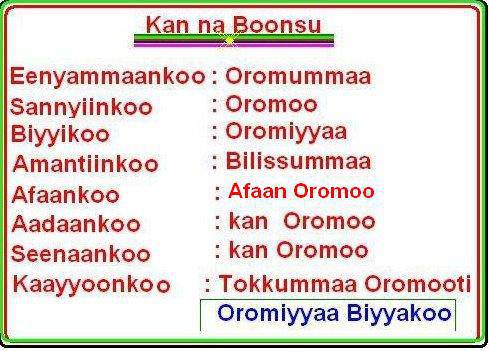


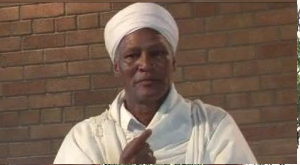









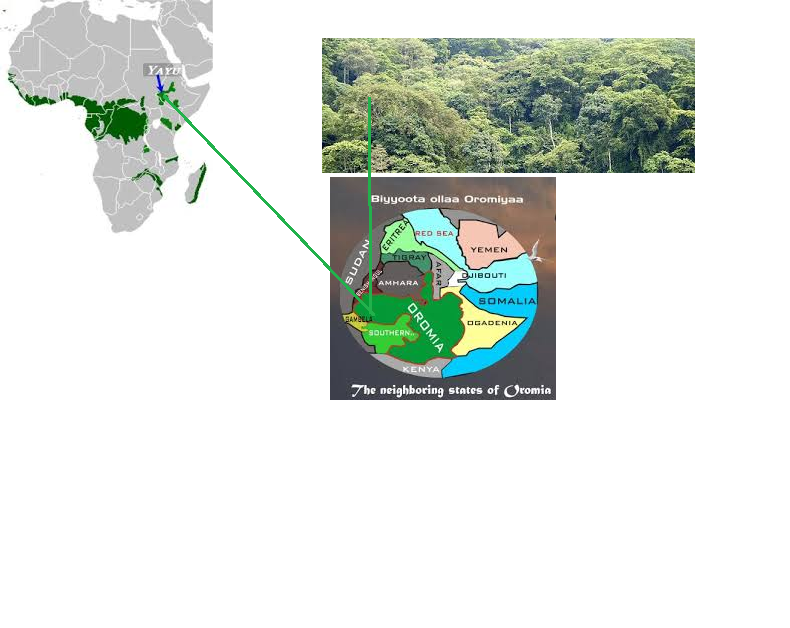



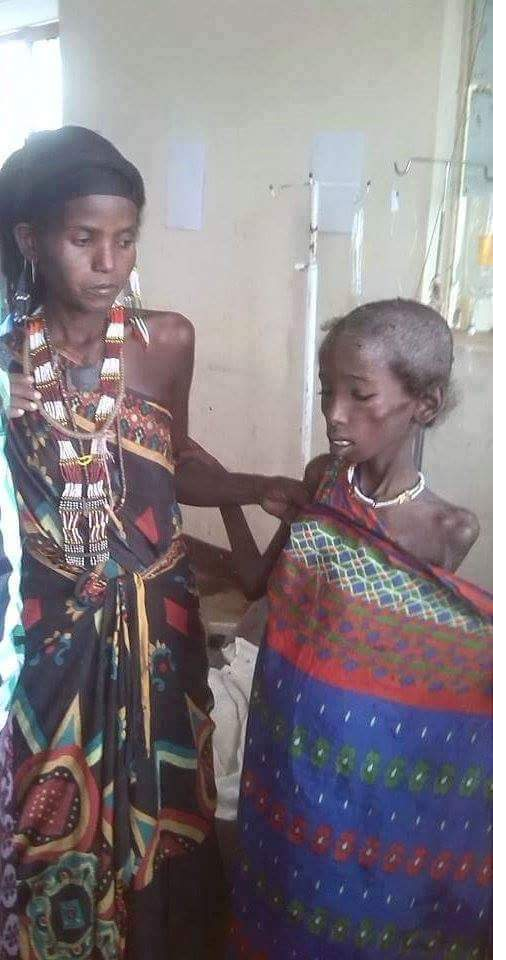
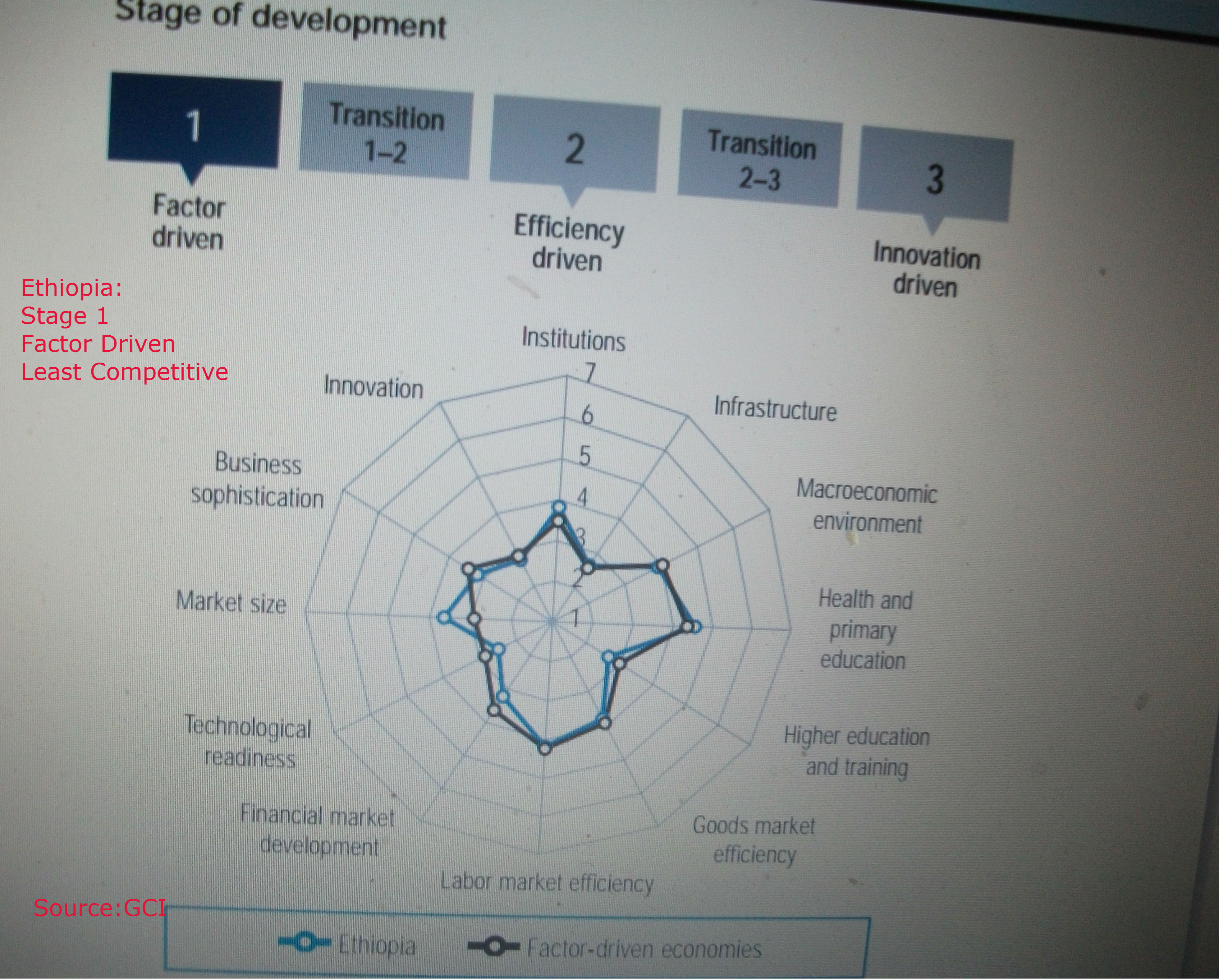

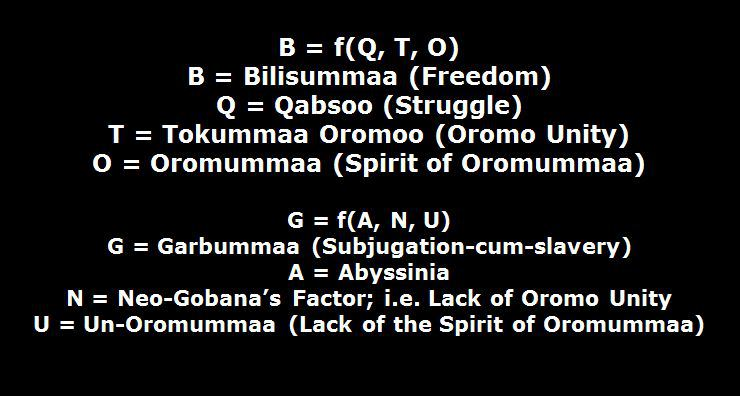




![Ayyaanoo Bariisoo (Jiillicha), Odaa Roobaa [New Oromo Music – Oct. 2015]](https://oromianeconomist.com/wp-content/uploads/2015/10/ayyaanoo-bariisoo-jiillicha-odaa-roobaa-new-oromo-music-e28093-oct-2015.png)
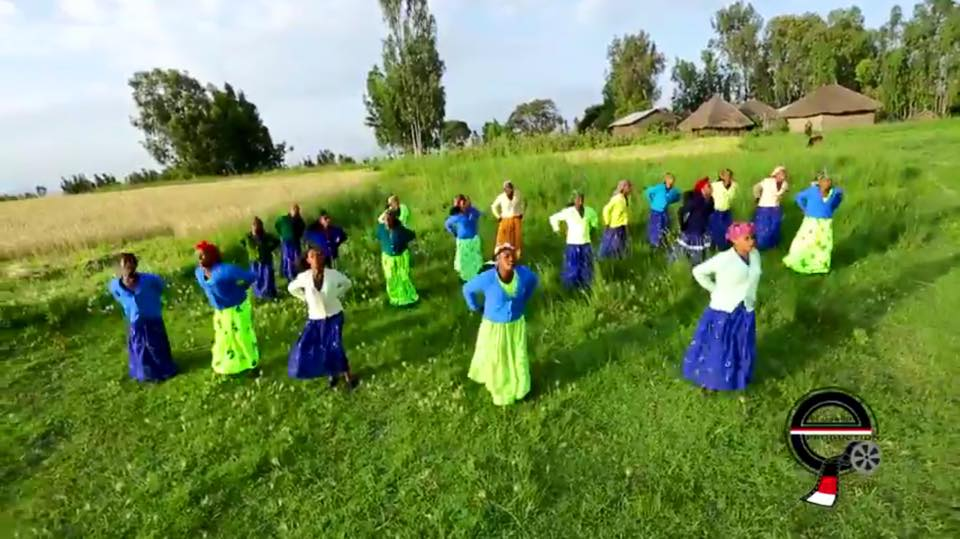
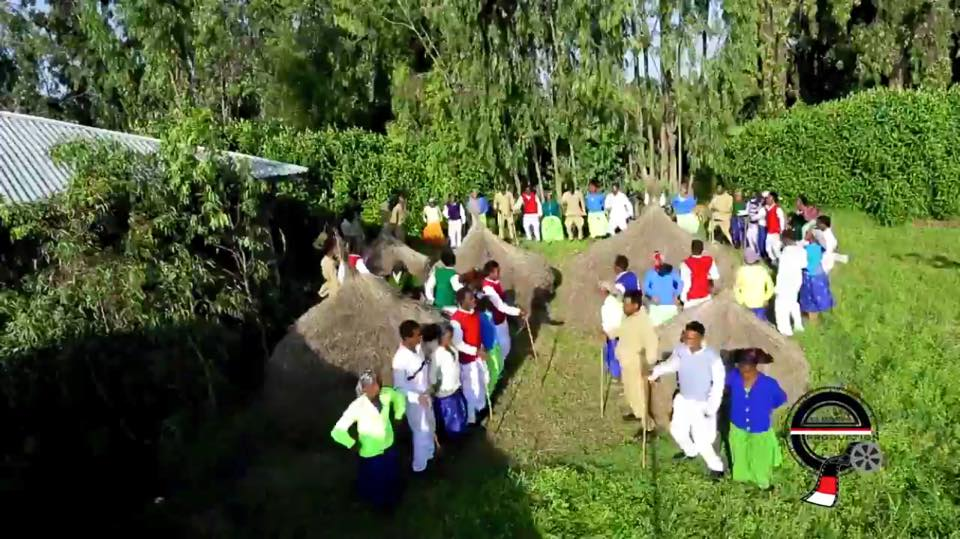






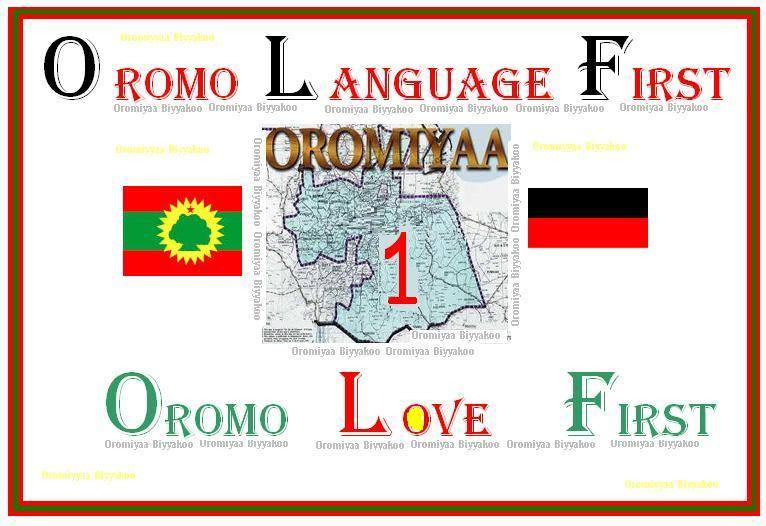


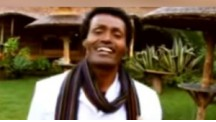




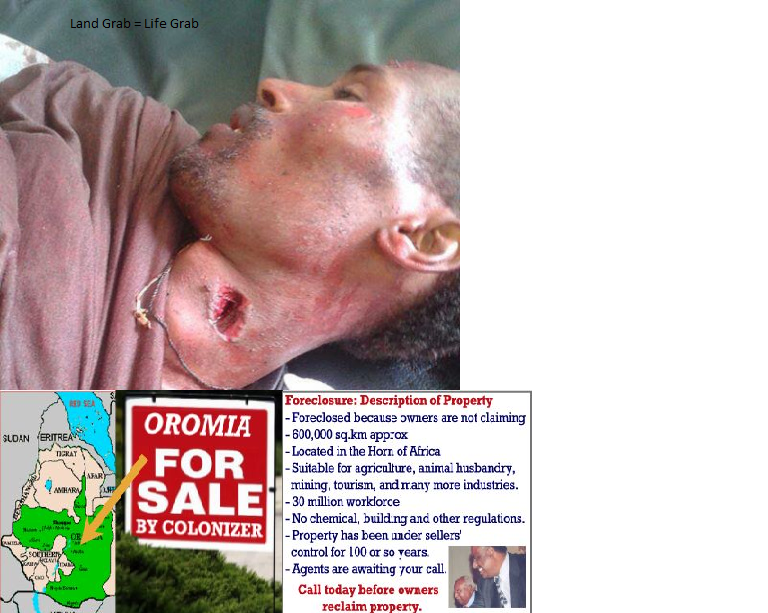


You must be logged in to post a comment.