Economic and development analysis: Perspectives on economics, society, development, freedom & social justice. Leading issues in Oromo, Oromia, Africa & world affairs. Oromo News. African News. world News. Views. Formerly Oromia Quarterly
In addition to the lyrical and melodic richness of the recently released Haacaaluu Hundessaa’s “Maalan Jira …?” Oromo music video, imagery has also played a powerful role in making the music video become an instant hit. The following are the cinematographically rich 30 still frames (screen captures) from the music video by Director/Editor Amansiisaa Ifaa and Cinematographer Tasfaayee Afuwarq.
(Advocacy4oromai, Melbourne, 30 May 2015) The Oromo Irreecha Arfaasaa festival, held on 30 Mya 2015 for the first time in Melbourne, Victoria, Australia at Mount Dandenong.
The ceremony was celebrated at Mount Dandenong to promote the Oromo Good Spirit tradition of respect for nature and gratefulness for life.
It was celebrated under the theme of “Moving Forward: Restoring the Good Spirit of Humanity” in which it aimed to celebrate Irreechaa festivals to follow our tradition and religion in society, to create public awareness where Oromo cultural and religious issues was discussed.
According to the organisers the festival was designed to provide a better understanding of Oromo culture, history and humanity, to pave the way for promotion of the Oromo culture, history, and lifestyle.
The Celebration of Irreechaa Arfaasaa, a national Spirit Day, is held yearly both to thank Waaqaa for the blessings and mercies we have received throughout the past…
VOA: Mr. Elias Hadero, Hadiya National & Medrek Candidate in Southern Region, Claims Vote Rigging.
VOA: Mr. Elias Hadero, a Hadiya National and a Regional Parliament candidate of the Ethiopian Social Democracy-Southern Ethiopian People’s Democratic Union (a Medrek party), explains the vote rigging in the Southern Nations, Nationalities and Peoples’ Region. http://gadaa.net/FinfinneTribune/2015/05/voa-mr-elias-hadero-hadiya-national-medrek-candidate-in-southern-region-claims-vote-rigging/
No Democracy in Ethiopia. No fair and free election in Ethiopia. Caamsaa 24/2015 Mooraan Yuunibarsiitii Jimmaa, Mattuu, Wallaggaa, Amboo, fi Dirree Dawaa addatti humni waraanaa guddaan itti seenee jira.
The Oromo Federalist Congress (OFC/Medrek) campaign tour has continued in south and south western Oromia. On the 19th and 20th May 2015 , the campaign tour made a stop at Beddelle in Illuu Abbaa Boora, South Western Oromia (led by Baqqalaa Garbaa) and in Shaakkiso & Bule Hora in Guji/Borana, Southern Oromia (led by Baqqalaa Nagaa).Yet again, the OFC rally drew massive turnouts in thousands as potential voters, who braved the constant harassment and intimidation of Ethiopia’s tyrannic TPLF regime to express their solidarity with OFC/Medrek. https://www.oromiamedia.org/2015/05/omn-oduu-caamsaa-19-2015/ Here are some of the pictures from Bule Hora viral in social media:- Deeggarsi Caamsaa 19 fi 20 bara 2015 Magaalaa Bulee Horaatti Barreessaa Olaanaa Koongirensii Federaalawaa Oromoo Obbo Baqqalaa Naggaaf Godhamaa Ture Hedduu Kan Nama Gammachiisuu fi Nama Boonsu Dha.
Dr. Merera Gudina, Chairman of the Oromo Federalist Congress (OFC/Medrek), and Ob. Bekele Gerba, former prisoner of conscience and OFC’s top official, jointly campaigned in Gudar, western Oromia, on Sunday, May 17, 2015, for the upcoming General Election, scheduled to be held on May 24, 2015. Thousands of supporters joined the OFC leaders in Gudar. http://gadaa.net/FinfinneTribune/2015/05/photos-dr-merera-gudina-ob-bekele-gerba-jointly-campaign-for-ofcmedrek-in-guder-oromia/
Addis Standard – I would like to congratulate you for being a free man at last. But what was it like to be in prison?
Bekele Gerba – Prison is not a place one appreciates to be. But I think it is also the other way of life as an Ethiopian; unfortunately it has become the fate of many of our people. You will find a lot of students, youngsters, brothers and sisters, sons and fathers, husbands and wives. Especially when it comes to the Oromo, they are there in great numbers. Therefore going there or being there was a very good experience by itself because you will understand the agony and the hardship our people are facing at the moment. There are lots of problems there too, from the type of food people eat to the type of bed they sleep on. But there are a lot of things to learn from them so I think for me it has been a place of training. What was your everyday life like and what was your biggest challenge?
My biggest challenge was the first one year and two months when I was kept in maximum security in Kality prison. The room was very small and the type of people we were with are regarded as deadly criminals in this country; they fight and even the police are scared of them. Sometimes they use drugs and they fight easily with anybody. It is a very difficult place. After being there for a year and two months I was sent to Ziway. Ziway is a place where people who come from the countryside are always kept; people who are economically not well off, mainly people who are allegedly suspected of having links with the Oromo Liberation Front (OLF). And most of them are Oromos there. There is this popular term that says ‘the prisons in Ethiopia speak Afaan Oromo.’ Is it what you are confirming to me now?
Exactly. If you take away the large number of thieves (the most popular crime there [in Ziway] is theft – and say may be out of 5000 or 6000 prisoners there about 3000 or 4000 thieves) and if you take away those people who are suspected of corruption, very few in number in fact, the rest you can say they are all Afaan Oromo speakers.
How did that make you feel as a politician whose party represents the Oromo and as an Oromo?
In one way I am very glad to be there because I felt myself sharing the agony of my own people. How am I different from those people? Those people went to prison because they demanded their rights; I was also there because I demanded my rights. In this country I thought that the Oromos are being excluded from the political and from the economic spheres or participation, something I always object. Therefore I am very glad to be there. I remember the first day I went to the court before my arrest just to see how the court was proceeding when about 500 or 600 Oromos were imprisoned and then taken to the court. I went there as a party member to witness and to see what was going on around. I felt very badly because I saw the prosecutors organizing false evidences; they were calling upon people and they were giving them orientations to testify against people whom they didn’t know at all, whom they have never seen before. I was sad and I called some media that day and gave a brief interview. I think it was after the airing of that interview that the government started following me in order to stop what I was doing. But since I was the spokesman of my party that was the job given to me – to give press conferences or sometimes press releases of what was going on around the party and anything related to the Oromo people. But after I went to prison I was relieved because I had to experience the agony of my people; I had to share their pain and I am glad for that. Going by your own explanation, if living the pain and agony of your fellow countrymen brought you relief, how did that affect your other life that you stood for? You had a family, you had a political life, and you had a career that you had to leave behind.
Like anybody else, like a human being, when you miss your family of course you feel sad. But my family is no different from other peoples’ family. For example there is a family that I know, the husband was in prison and when he was released the wife was taken to prison. Their children are growing up without a father at one time and a mother at another; my children are no better than these. And if only my family, if only a group of people enjoy normal life and the great majority are not doing the same, I think your happiness or your joy cannot be complete. Of course when I first went there I thought my family would be affected very badly but they are very courageous and they were very supportive psychologically. They were very strong and thanks to many Oromos my children did not quit school and my family has not suffered as such economically. Your daughter Bontu gave an interview to Afuraa Biyyaa radio station once and told the station you were suffering from ill health. Walk me through that. What happened? How did you maintain your health afterwards?
During the first two three days soon after I was taken to Ma’ekelawi [prison] I started having severe headache and the nurses told me that my blood pressure was high. I had never had that experience before. I was then taken to the Police Hospital and was diagnosed with the same thing; the nurses told me that I looked like a chronic hypertensive patient. I have not had that kind of medical history. Since then until I came out of the prison a few days ago, my blood pressure has been on the rise; I think may be because of the tension, I don’t know. But I am happy that after I was released I am quite okay. I haven’t taken any medication or I have not consulted any physician since my release; I feel I am healthy.
What did help you maintain your everyday sanity when you were there? Was it your interaction with other inmates? Did you have access to books?
The first year was a very difficult time and we have not had enough books and we didn’t know how to smuggle books or any magazines or anything to be read. We have not had any relations with the police; that was a very difficult time until we adjusted ourselves to the prison situations. But later on we started having some books to read that some friends brought for us. We started reading and on a small scale started writing, although it was very difficult to get it out because every three weeks or so the prison police would conduct a search and take away anything that is written; that was the difficult part of it. But after I went to the prison in Ziway I had a chance to meet senior people from the army and from the air force who were accused of staging a coup. Those are people like General Tefera and General Asamenew who were taken to Ziway together. We stayed together and they are very understanding people; they like reading, they like discussions and I enjoyed the discussions. We shared books; we read whatever books we could lay our hands on. That helped me to squeeze through all these bad times. Moving out of your time in prison, can you tell me what it was like growing up as Bekele Gerba, an Oromo child?
Surprisingly the place I was born and raised is a typical monolingual area. All the people around, all the shop owners or all the government employees and all the school staff speak only one single language, Afaan Oromo. It is a very special place I can say even by Oromia standards. Therefore I didn’t know whether there was any kind of difference between one ethnic group and the other or if there was any kind of oppression elsewhere. But when you go to colleges and universities you will begin to realize there are various ethnic groups and there are various things you will find difficult to tolerate. When I went to the big towns like Addis Abeba and I speak my own language in a taxi or in a bus people turn around and take a look at me; that was when I started to get surprised. And then the consciousness, the social consciousness – not as such political – the reality makes you a bit conscious. However I have not had any bad experience until I graduated from university and went to Wolega again as a high school teacher. And I like speaking languages; I am an outgoing person. I have no problem living with other ethnic group members. But it is later on that I came to understand that there is something wrong going on against the ethnic group I came from. Is that what drove you to get involved in politics?
Yes. Even in my employment for about 25 years I had never been involved in politics. I was simply an academician and I thought that politics was not a job for everyone. I am a teacher and if I am a good teacher in my profession I thought that will do and that was that. But gradually I found out that my peoples’ grievance is not addressed in a way that it should be. So I thought I could get involved in politics to contribute my share. I don’t know whether I had done anything or had made any change because before I could do anything substantial I was taken to prison. My life experience as a politician is not more than three years. But within that short period as a politician, I think it was during the 2010 election debate that in a rather succinct argument you spoke about the use and abuse of land distribution and said land was used to advance political causes. What made you take that very strong stand against the ruling party?
You know land is the most important resource in this country, not only in this country but everywhere. It is this resource that everybody who comes to power tries to get control of. If you simply open your eyes and look at what happens around Addis Abeba, then you will see how people are being evicted, and how other people who cannot explain where they get that amount of money from are being catapulted overnight into so much wealth. From my own experience I had a lot of friends who were brought up with me, who had been teachers with me yesterday but who had a lot of money today. That’s okay if it is a legal one.
Realizing that I tried to make a kind of taxonomy, a kind of classification, even though I cannot recall it perfectly now. Accordingly our level of citizenship is divided into various categories. There are people who when they travel around they see a land their eyes fell on and feel like having it and who can have it. Whoever is born and brought there they don’t care. So they can evict everybody and they can sell or hand it over to their friends. I call these people first class citizens. And many of these people are who claim themselves to have liberated us by struggling for 17 years. But what they did not do is liberate these poor farmers; in fact in this regard the Dergue did better for me because it took the land from the landlords and distributed it to the poor farmers, to the tillers. But this time it is the other way round.
And then there are others – regional officials like if you take the Oromia cabinet members, or the SNNPR cabinet members or the Amhara if you like – they can be categorized as second class citizens. They have their power to take any land they wish but there is a power above them. Frankly this power is the power of the TPLF who are the first class citizens. Second class citizens can sell and give but there are others above them who will watch them and who will control them. And then there are the lower hierarchies like the municipalities, for example, or like the Zonal administrators. They have also the same power but above them they know that there are two more hierarchies and may be sometimes they can be accountable. They know that whatever is remaining from the top two, they will get some amount.
And then there are others who do not own anything, who do not own any land but who just look and witness what is going on around, but who are quiet, who are made to become voiceless, who cannot do anything – like the civil servants. And finally the last one is the farmer. He is the farmer who is being looted, who is being evicted, but if at all something happens, like if the country is at war with neighboring countries or with any enemy, these are the people who are called upon to die for this land, a the land for which they don’t have any power on, for the land from which they can be evicted any time. It is the sons and daughters of these people who are going to the warfront and pay with their dear lives. But on the ground they have nothing. For example if you go around Addis Abeba and take a look at someone who is guarding a building and then ask who that man is, he will immediately tell you he was born and brought up there. And he will tell you that it was his land on which that huge building is built. These are mainly Oromos by the way.
Were you speaking that because the majority of this case is happening in and around lands predominantly belonging to the Oromos or was it because it is a trend that represents the rest of the country?
The pattern is all the same. In the name of investment people are being evicted in the South, in Amhara or even in Tigray regions. What makes Oromia very different is that the land is very close to the center and the investors, these high officials and the government representatives, all these wealthy people want to dwell around it; they want the area very much. The land is very nice, the location is very good, and the weather is good. So everyone puts his eyes on it. Otherwise the trend is all the same everywhere.
But the government argues it is offering compensations…
What does compensation mean? How much money is enough for someone who is evicted forever? Not only him but his children, his grandchildren and the next generation? What makes this very difficult is these people don’t have any profession other than farming. They don’t have any other skill. So how much compensation is enough for these people? Speaking of which, last year in May a number of University students were killed, imprisoned and have disappeared, I am sure you have heard about it, because they were protesting against the Addis Abeba Master plan, which wanted to include around eight peripheral localities known as the Oromia Region Special Zone. What was your take on that? How did you react when you heard about it?
This is obviously a crime. A massive crime has been committed, and people must be accountable for it. The students did not die in vain for me. They paid sacrifices in order to protect the constitution of this country which says each of the nine regions and the two city administrations has specific boundaries. Addis Abeba has its boundary too. Even though it has not been demarcated on the ground, it was a boundary which is lesser than what it was during the Dergue and greater than what it was during Hailesellasie regime. This was how it was agreed upon during the Transitional Government [24 years ago]. But today the outskirts have turned into Addis Abeba. On daily basis massive farmlands of the farmers are being included into the boundaries of Addis Abeba. So, when I say these students didn’t die in vain, I meant that it was simply to protect the constitution. The Vatican City State is in Rome but the Vatican City state cannot say I have to expand into Rome. That is not possible.
For me the idea is not to expand Addis Abeba as such; it is not to turn it into a beautiful or into a modern city but to change the social structure of Addis Abeba and its vicinity. By doing this what will happen is the language spoken around those areas will change. If you take Dukem, Legatafo, Burayu, Legedadhi or Sululta not long ago, may be some ten years ago, Afaan Oromo used to be the main language. But this doesn’t exist any longer. That is what I call language shift. There is a shift when you change the population, when you change the social structure, then the culture and the language will be destroyed. This is how the Australian Aborigines lost their languages, lost their identity, lost their history, and lost everything. This is how Red Indians in North America lost their identity, lost their language and lost everything. I think for me this is not different. Even though we live in the same country, and we call ourselves Ethiopians – and for me I call myself as an Ethiopian and as an Oromo at the same time – the idea is grave. Javier Perez De Cuellar, the former UN Secretary General in his writing entitled “Our Creative Diversity” wrote: “Put a people in chains, strip them, plug up their mouths, they are still free. Take away their jobs, their passport, the tables they eat on, the bed they sleep in, they are still rich. A people become poor and enslaved when they are robbed of the tongue left to them by their ancestors, they are lost forever.” No one likes to be lost forever.
But the argument from the ruling party and sympathizers of the plan is that they need to do whatever they are doing because Addis Abeba is also the capital of the federal government, the seat of the AU and of the ECA, you if like. How do you react to that argument?
Why so much focus on developing Addis Abeba only? Why is that? Why not Bahir Dar? Why not Hawassa why not Mekele? Why is the focus on Addis Abeba? And why is Addis Abeba so much concerned about the development of Oromia? When you say it is the capital of the country do you mean it is the seat of the diplomatic community? and the federal government? It is not only because of the diplomats and the civil services in the federal government that Addis Abeba is expanding. It is because of various reasons, one of which is perception – people think they are safe in Addis Abeba than any other cities in the regions. But we can work on that, the government can work on developing other cities. There is no problem in doing that. The other problem is it is not only because Addis Abeba is the capital of the federal government, it is a self-administered, a self-chartered city. It is regarded as having a status of a region. But regions, as I said earlier, have their own borders. That is all. If the constitution is no longer working, then Addis Abeba can expand indefinitely. Otherwise you cannot cut some part of Tigray and hand it over to Amhara and cut some part of Afar and hand it over to the Somali. Constitutionally it has been made impossible. That is it. No single region should be allowed to trespass that. The third is why is Addis Abeba concerned about the plan? Where is the regional government if Addis Abeba is making a plan for Oromia?
Do you think this dilemma traces its root from the very federal system the country says it is following? What, in your opinion, does the federal system currently in use in Ethiopia mean to the ordinary people? Do you think it is losing its relevance beyond being a toll deployed to serve political ends? Or as a famous Oromo legal expert once said, I quote: “beyond dishes, dances and dresses”? What does it represent?
Constitutionally this country is a federal country but as many people think, this is not a gift from the ruling EPRDF. Federalism evolved or it came out of the situation that existed 24 years ago. Twenty four years ago there were about 17 armed groups actively engaged in rebellion, with all their weapons and strongholds. So when the Dergue collapsed there was no way out of the political deadlock except to go for federalism because everyone could have gone home on his own way; the Oromos had the OLF, the Ogadens have the ONLF and so on. So except federalism no other kind of government was possible.
I think it is an argument that Leenco Lataa recently wrote in one of the local newspapers published here. That said how do you evaluate the last 24 years? Has the country lived up to the federalism arrangement? Where did the county perform best, if there is any, and where did it lag behind?
I have not read what Leenco has written. But it is true that federalism was dictated by the situation at the time. But since then what’shappening is its concept and practice is being eroded on a daily basis. If you look at regions I don’t think they are even electing their own rulers. Practically I think the country is as unitary and as centralized as it has been before. There was one big man, the late Prime Minister [Meles Zenawi] who used to appoint regional officials without the consent of the people of the regions, who used to transfer them to the federal government as he likes. That was what was happening and continued to this day. In federalism you plan your own way, levy taxes in your own way, you execute it in your own way; your priority is different from the federal government or other regions. That is not what’s happening now, but if you take Addis Abeba city for example, which is also the seat of the Oromia regional state, in the name of self-administered city its officials singlehandedly decide on the fate of the city and its areas. For them the creation of the Addis Abeba recreational ground in Burayu may be a high priority. But for the Oromia region to which the area belongs to a school of high standard may be its priority. But as things are happening now the federal government plans by itself and executes by its own finance. That is not true federalism.
So you are firmly implying that the federal system the country is following now was dictated by the existing circumstances 24 years ago but fell short of its purpose?
Yes it didn’t serve its purpose. I am saying this because we know so many people who were elected by their constituencies, but who are moved from power by the federal government. To bring another example, in March 2011 about one thousand Oromos were taken to the Ma’ekelawi prison in Addis Abeba but the Oromia regional state didn’t know; they didn’t have any knowledge of the Oromos taken by federal security agents from every corner of Oromia. Here is when one should ask what is this regional government doing? Did the regional government invite the federal government to come and act on its behalf to bring these people to justice? Are they incapable of bringing them to justice in their own region? So what is federalism? Let’s talk about ethnic federalism. Do you think there is a deliberate misrepresentation and exploitation of what ethnic federalism stands for? An exploitation by the powers that be of deploying the concept as a means to prolong their time in power, and a deliberate attempt by people who advocate for the so called unity using the side effects of ethnic federalism?
People say ethnic federalism doesn’t take us anywhere. But I simply say that the ethnic federalism that came about 24 years ago because of the situation we were in is a necessary evil that we cannot avoid. Because our identity, our language, our culture has been denied for many years before that and it is only through this way that we can promote our language, our culture, and our identity. But it is true that it is a very broad topic but I don’t believe in the idea of the unionists because on party level, for example within Medrek, there were various ethnic based parties like the Arena Tigray. You know if you scratch any party you will find out that the issue of ethnicity is underlined but by the name it implies something else, just like we have the Federal Democratic Republic of Ethiopia. Does it mean it is federal? Does it mean it is democratic? There is nothing in a name. Therefore for me every party in this country is an ethnic based party. I am not saying it’s a bad thing; it becomes bad when one ethnic group becomes a foe to another.
Politically, it becomes bad when it is used as a tool of repression against others; when it is imposed. When somebody imposes his own agenda on another, then the problem comes. If you say don’t speak your language speak only mine then here comes the problem.
But willingly I can learn your language and you can learn mine. For example people complain that we are not able to work in the regions because we don’t know the language. In the first place you are there because you want to sell your knowledge, your skill and your service, is that not? If I went to Tigray to sell my knowledge, my skill or to sell my expertise then I have to interact with the people who want to be served in the language they understand. Nobody is disallowed to work there. But the only thing is serve these people in the language they understand. Otherwise if I am an Oromo and if I want to go to Tigray and ask all the Tigray people to speak Afaan Oromo, I think that is crazy and it should be addressed. This is a situation that often goes wrong. But people love their language very much, they want to promote their culture, they want their identity very much. If there is another mechanism by which this can be addressed, such as by geographic kind of federalism, that is okay.
Does this reinforce your belief in a just ethnic federalism system that this country has to wake up to one day?
Yes and we have to appreciate our diversity. Look, if we are of the same age, wearing the same clothes, of the same height, of the same color, eat the same food, and dance the same way to the same music this world would be nasty, it would be really ugly! Very ugly! We don’t want to turn this earth into hell. We want our diversity. We want other people to sing in their own way, speak in their own language, to wear different kinds of dresses. I think the idea of trying to bring everything into one is not a sane idea. I would like to ask you the next question as someone who is an Oromo politician. Currently there are at least two predominant Oromo discourses. The first is the discourse for secessionism, although it’s a discourse that looked as if it was losing ground since the split within the former administration of the OLF, many people think it has surfaced again when the “Oromo first” debate came about in the recent past. The second is the Oromo discourse supporting a greater autonomy within the federal government – a better way of federalism that gives the Oromo a greater say in their affairs. For this group secessionism is no longer the call of the day. Where does Bekele Gerba stand? What do you see as a better way forward for the Oromo people?
Well my stand is very clear in this issue. I always say that first the rights of the Oromo should be respected. The Oromos are located in the middle of this country; they have formed this country, they are part of this country, they will remain in this country. You cannot think about Ethiopia without the presence of the Oromos. They have sustained it and they are in the center of this massive land. Therefore I think what is very important is that their rights is respected; there should be no compromise. If so I can boldly say from what I have seen and experienced that the Oromos are not after secession. But the problem is when the situation continues like it is now; when the exploitation, the eviction, the attempt to assimilate, to destroy their language, to destroy their culture, to destroy their identity goes on in such a way I think people may think otherwise. It is true that people who are following this very closely may assume the situation is getting desperate. But for me it’s not that desperate and I still believe that things can be put in the right track, and the wrongs can be righted. If we start righting the wrongs, then I think the question of an independent Oromia or an independent land will not be a very serious issue.
But it is exactly what many Oromos feel is not happening. For them this very grim situation the country keeps on generating has continued. Reports indicate that the exile of the Oromo has continued en mass as we speak; the jailing, the killing, the mysterious disappearance of University students just a year ago didn’t help either. Don’t you think this makes the secessionism discourse to gain momentum? As someone who has been in the center of the politics in the country do you see there is still hope for peaceful struggle for the rights and respect of the Oromo? Is there a room for that? Does the political space allow for that to exist?
There is a challenge. But I think there is still hope. I always believe that things can change gradually. Because of the culture we were in for hundreds, or may be thousands of years, we used to think changing a government is only possible by violence, or armed struggle. But I think that time has passed now; it is possible to change regimes and to confront governments by peaceful means of struggle. If people are very much committed to peaceful struggle, I think the situation will change and the government must exploit this situation – meaning that, as an opposition,we are very helpful, we can contribute much. Going to the jungle and destroying everything, crashing everything and building it when you come back again as new doesn’t take this country anywhere. And if the current leadership was wise, they could have designed many ways in which armed struggle in the future would not be a possibility. But I don’t think they are smart. The legacy now is that people are still toying with armed struggle. Ten years ago when the opposition, Kinijit, won Addis Abeba and much of the country, things would have changed a lot had they been given what was theirs at that time. People would begin to trust that it is possible to change regimes without war, thorough the ballot box, and the political tradition itself would have been one step forward. But we lost that. We lost that chance because of the power mongering attitude of the ruling EPRDF; we lost that big chance.
But don’t you think the refusal of the opposition to get into the parliament itself has contributed?
But they [the opposition] had pieces of information about Addis Abeba at that time that all the treasury that used to belong to Addis Abeba city administration were handed over to the federal government including transport facilities; the state capital of Oromia was called back again and Oromia was to tax the city. So it was because of what the EPRDF did that the opposition refused to accept the city. I am not saying they did a good job, or the right thing; I think they could have taken the challenge. All I am saying is it was because of what EPRDF did that everything turned into ashes and the possibility of changing regimes and leadership in this country through the ballot box failed.
Ethiopia is about a month away from holding yet another general election. Do you think elections for a country like Ethiopia are a means of sustaining power for those who have it; for the sake of the L word – legitimacy, as many argue? Or do you believe it is a means to change the political order peacefully?
From the experience we have so far I don’t think EPRDF is ready to give power anytime. If you look at what they are doing now in terms of the use of media space, they allocated 500 hours, but they designed it in a way that they can take a bulk or the large share once again. In the last election [in 2010] 10 million ETB was allocated to all the parties out of which 9.5 million went back to the EPRDF and 300, 000 ETB went to EDP. Do you believe if I tell you that we received just 3,600 ETB? That was about 175 Euros. This time they have allocated 30 million ETB and if you ask around you may find out that more than twenty something millions of it went back to the pocket of EPRDF again. Soyou are saying holding elections is just another way of legitimizing the time in power?
That is it. It is already a foregone conclusion. For me EPRDF has already won. I think there is very little thing we expect from this election. So what does it mean to be in an opposition party trying to survive under such circumstances? What makes your party decide to exist all together?
The objective of a political party is not only to seize power. If you can get the wrongs to be corrected by the ruling party that is already something; if you can do it yourself that is even better. But if you cannot do it and someone does it then that is also fine. Therefore we will try to contribute our best in this regard, irrespective of the hard situations we find ourselves in; there is no way out. We don’t want to go to armed struggle; we don’t want to show on television Ethiopians killing Ethiopians for power. So even though pursuing peaceful struggle is very difficult I personally always appreciated the likes of Mahatma Gandhi; I have always appreciated the struggles of people like Martin Luther King and I think we have to continue that way. Rome was not built in one day.
How did your prison experience change your political determination? Did it reshape you in any way? Will you go back practicing politics again?
I think I am stronger than I was when I went to prison; I consider myself more prepared and stronger than before. And I can never be out of politics; I don’t want to be out of politics. When you were handed the eight year sentence back in 2012, you made a speech that became a symbol of the rally behind the ‘free Bekele Gerba’ campaign. In this speech you said that if you were to ask an apology you would ask it from the “Almighty” and, I quote: “from my people for failing to speak to the depth of their suffering in the interest of the co-existence of people.” Don’t you think it’s exactly this attitude of putting the “interest of the co-existence of people” at the expense of the suffering of others that is sustaining repression in this country? That people like you keep silent for the sake of co-existence?
If you see what is happening in this country by members or group of people coming from certain ethnic groups against other ethnic groups you will be very sad. But these people should live together. This peaceful co-existence can be built if I have some share; if you and the others have some share as well. Personally, for example, I cannot speak everything that I saw of what happened to the Oromos at some point in this prison known as Kilinto; it was really very sad. Well coordinated and against one single ethnic group of prisoners, who are not able to defend themselves – both by the police, by the officials, by fellow prisoners, virtually everybody other than members of that ethnic group. But you don’t speak everything and at the same time you don’t generalize too because if TPLF has done something bad it doesn’t mean the whole Tigraians are like that. At the end these people have to live together. The TPLF may not be there after some point, but these people must continue to live together, so we should not put that kind of animosity among people. So there are times when you don’t speak everything. That was the idea; it is only for peaceful co-existence of these people. I did nothing for my own benefit and I am not scared for my life if I have spoken everything; I have not addressed it very well only because I want these people to co-exist. That is it.
Currently there are many political activists who are behind bars, and as many are exiled. Some of these youngsters are the same people who looked up to you as a role model. What do you say to them? How should they continue to be the voice for those who are rendered voiceless? What advice do you give them because many of them are the same young activists who spoke for you when you couldn’t from your prison cell? What words of wisdom do you share with them?
First I would like to thank everyone who supported me, who supported my family, who demanded my release, and who never forgot the cause for which I was there…I would like to thank them all. But at the same time you know doing politics in Ethiopia is a very difficult task, because the politics is, whether we like it or not, geared in such a way that it is ethnically motivated. Everybody tries to see everything from his ethnic group point of view. Is that a bad thing?
No, it is not bad. It becomes bad when what you want to achieve is at the expense of other ethnic groups. There should not be any hidden agenda that will exclude the other ethnic groups; whether we like it or not every group, every individual wants his right as we want ours. It is only by self-respect that we can maintain peace and brotherhood in this country. Now you may ask if there is peace in this country. The fact that the guns are silent, the fact that there is no war going on in the country doesn’t necessarily mean that it is as such very peaceful. We are carrying around so many things that can ignite any time. So the young generation must think about its future. This young generation should not listen if they hear these old politicians of the 1960s or 1950s who are old professors and who wrote many things and researched around but who do not contribute to the peaceful co-existence of the people of this country. They are gone, their time is gone and their time is going. But the young generation must think about its own future. And that future should be based on the idea that all should respect one another. We should respect one another. The right of one group or one ethnic group or one community depends also on the right of the other ethnic group. If there is injustice somewhere it will affect justice everywhere. When the Amharas are attacked the Oromos, the Tigraians, the Sidamas, the Somalis and so on must act. That’s what I believe in.
Oromo culture from ancient to present, Irrechaa time
Oromo nation and Gadaa system
Please do not call the Oromo people (the Oromians) a tribe and by extension all African nations and nationalities:
You know Why?
Read the following: What Achebe wrote referring to his Igbo people is equally applicable to the Oromo.
Chinua Achebe the renowned African novelist and poet, the author of Things fall apart, the best known and best selling novel ever in his book Home and exile (Oxford University Press, 2000, pp.3-5) says the following:
“The Igbo people of south eastern Nigeria are more than ten million and must be accounted one of the major peoples of Africa. Conventional practice would call them a tribe, but I no longer follow that convention. I call them a nation. ‘Here we go again!,’ You may be thinking. Well, let me explain. My Pocket Oxford Dictionary defines tribe as follows: ‘group of people (esp. primitive) families or communities linked by social , religious or blood ties and usually having a common culture and dialect and a recognized leader.’ If we apply the different criteria of this definition to Igbo people we will come up with the following results:
a. Igbo people are not primitive; if we were I would not be offering this distinguished lecture, or would I?;
b. Igbo people are not linked by blood ties, although they may share many cultural traits;
c. Igbo people do not speak one dialect; they speak one language which has scores of major and minor dialects;
d. and as for having one recognized leader, Igbo people would regard the absence of such a recognized leader as the very defining principle of their social and political identity.
Therefore, all in all, Igbo people would score very poorly indeed on the Oxford dictionary test for tribe.
My little Oxford dictionary defines nation as, ‘ a community of people of mainly of common descent, history or language, etc, forming a state or inhabiting a territory. This may not be a perfect fit for the Igbo, but it is close. In addition I like it because, unlike the word tribe, which was given to me, nation is not loaded or derogatory, and there is really no good reason to continue answering a derogatory name simply because somebody has given it to you.”
We see the word everywhere: throughout news reports of African struggles, in old films and on the latest television shows. You’ve probably even heard it used in a recent class covering topics related to history or anthropology.
“Tribe” has become a well-known, frequently used word to describe a particular group of people, specifically within a non-Western nation. The word seems to predominantly flood media outlets when an African ethnic group is involved in conflict or famine.
According to the Oxford Dictionaries’ newest definition of the word, a tribe is described as, “A social division in a traditional society consisting of families or communities linked by social, economic, religious, or blood ties, with a common culture and dialect, typically having a recognized leader.”
But what exactly are we implying when we use the word “tribe?” In an African context, when did this word originate and what words can we use as alternates?
Assan Sarr, assistant professor of history at Ohio University, says the word tribe first began spreading throughout Africa during the Scramble for Africa, or the period of European colonization of the continent.
“For much of Africa it seems that the word tribe became associated with the continent more during the 19th century, which means that it coincided with European imperialism,” Sarr says. “So, for Africans, the use of the word is really wrapped up in colonialism and that is one of the major reasons why Africans, or scholars who work on Africa, do not prefer the use of the term tribe to describe Africans.”
With a powerful history and past, the word “tribe” reflects social theories of the 19th century regarding stages of evolution and primitivism.
Even today, many negative connotations and falsities have continued with the use of the term to describe certain peoples within continents like Africa. The fallacies provoked by this pejorative language can include visuals of ethnic groups as clusters of half naked, barbarous, uncivilized and uneducated individuals with long feathers in their hair or spears in hand.
Definitions of the word also seem to point toward a society that exists outside of the state, one that is simple, small and static, and without the same structure as that which may be found in other complex societies and civilizations.
Sarr says the discrepancies are easily noticeable when comparing a commonly labeled tribal group, such as the Igbo, with that of Flemings, or the Flemish. The Igbo and Flemings are similarly categorized by their language and culture, and the Igbo are actually drastically greater in size — yet only the Igbo are considered a tribe.
“You don’t hear of the Irish tribe, or the Italian tribe, or the Spanish tribe. It’s always the various Arab tribes, or the Indian tribes, or the African tribes and that, for me, is one of the most potent issues that we need to be aware of. Here we are essentializing these people, we’re making them look distinctive,” Sarr says. “You are using it to refer to a group of people that share a certain historical experience, certain cultural traits, a language. This seems to me to be the perfect definition of an ethnic group, so why use the word tribe?”
Americans and Westerners are not the only people using this term, as some Africans refer to themselves as a part of a tribe. However, Sarr says that Africans do not use this word with the same assumptions and implications as those who brought it to the continent in the 19th century, or as those who may use it today in Westernized states.
In fact, as mentioned in Talking About Tribe by Africa Action, when some Africans are taught English, they are told that the correct, recognizable word to describe their ethnic group is “tribe.” In their own language, such as Zulu, the word used to describe their ethnic group actually translates to “people” or “nation.”
People and nation are two alternatives of tribe that can also be used in English to portray these multifaceted groups. Using the term “ethnic group” is also acceptable, or just simply calling them by their names – the Mende, the Wolof, the Hausa and so on.
“If they call themselves Igbo that means that word itself has a cultural meaning that the people themselves can associate with, rather than this foreign concept, this idea, that is used by others to describe them that does not capture all of their complex sets of ideas and histories and relationships,” Sarr says.
Using words like tribe and continuing to view places such as Africa as one place with one culture and one type of people is common, yet very detrimental. It is vital to be conscious of the history of the language we are using, and what our words may be negatively implying or stereotyping.
“How do we talk about Africa in a more intelligent, culturally sensitive, and helpful way? It’s this idea of unpacking all of the things that one acquired and grew up with,” Sarr says. “You have all these assumptions, these Eurocentric views, but once you start unpacking that and seeing that this is not true, then you begin to see some real interesting facts about the world.”
Macha Tulama USA: Urgent Call to Help Refugees in Yemen, Libya and South Africa
April 21, 2015
As we all have been following the events happening in Yemen, South Africa and Libya and other countries in the Middle East and Africa, Oromos and other nationals are facing gross human rights violations, brutal and cold blooded murder. Oromos are appealing to Macha Tulama Association (MTA) to stand for them in any capacity as soon as possible. The appeal and plea are coming to MTA email address daily in large number. Our people are in desperate situation in the countries where they are seeking refuge to save their lives.
In the past, MTA-USA offered modest help in the wake of such emergencies. What is happening now is even more dangerous for Oromo nationals. MTA is now ready to facilitate the collection and delivery of financial support to those who are in desperate need. Time is of the essence in this issue. MTA is also planning to find the ways to support the resettlement works of the UNHCR and International Organization for Migration (IOM).
Therefore, we hereby request all Oromos and friends of Oromos to respond to these emergency calls for support of our brothers and sisters by contributing as much as we can online or by mailing check or money order to our address. We have created a separate account for this specific purpose. The board of MTA will look in to the means and ways of disbursing the funds soon and will announce on our website and social media.
To donate online, click on the “Donate” button below which takes you to “Emergency Reponse – Yemen, Libya and South Africa” page.
If you want to send check or money order, please make it payable to Macha Tulama and mail to the address below. If you have any question, email us at machatulama.usa@gmail.
This is the state terrorism of the TPLF-led Ethiopian regime that continues to drive thousands of Oromo and other nationals in the Ethiopian empire to seek refuge in uninhabitable, volatile and inhospitable corners of the world. During today’s incident (watch the video below), it’s only because Finfinne is the Capital (with many international watching eyes) that the Tigrean regime’s elite killing squad had not used live bullets to violate the mourners’ freedom of assembly. Almost a year ago, on April 30, 2014, in Ambo (some 100 or so kilometers away from the Capital), the same federal militarized police force used deadly force during a nonviolent Oromo students protest against the ‘Addis Ababa Master Plan’ for Oromo Genocide; in a single day, more than 100 Oromo students and non-student civilians were killed by the federal security force in Ambo on April 30, 2014.
On April 20, 2015, Oromos in Ambo defied TPLF’s ban of Oromo’s freedom of assembly and filled a stadium, where Dr. Merera Gudina, Chairman of the Oromo Federalist Congress (OFC), was campaigning for the upcoming election (watch the video below). It’s to be noted that the TPLF regime tried to subdue Ambo a year ago during the Oromia-wide #OromoProtests against the ‘Addis Ababa Master Plan’ for Oromo Genocide. Almost a year ago, on April 30, 2014, more than 100 Oromo students and non-student civilians were killed by the Tigrean regime’s elite killing squad known as the Agazi Force; and thousands have been arrested just because they are Oromos, as an Amnesty International report revealed in October 2014. Shortly after April 2014, TPLF imposed on Oromia a sort of martial law where Oromos have been prohibited from assembly. On April 20, 2015, Ambo once again showed that it can never been subdued into submission by the TPLF state-sponsored terror by defying TPLF’s ban on Oromo’s freedom of assembly – and holding a rally to express support for OFC.
Meanwhile, another top OFC official, Obbo Baqqalaa Nagaa, is on campaign tour overseas to solicit support for his organization. According to the schedule, Obbo Baqqalaa Nagaa will be meeting with supporters in Las Vegas on April 23, 2015, and in Seattle on April 25, 2015.
OFC/Medrek Election Campaign in Ambo with Dr. Merera Gudina:
OFC/Medrek Election Campaign in Gindeberet:
Read more at: http://walabummaa43.blogspot.no/2015/04/ambo-defied-tplfs-ban-of-oromos-freedom.html
(Oromo Refugees in Aden) – Yemen seeking for international attention to the excessive discrimination made against us, in particular all the last two decades. The right delayed is the right denied.
Subject: problem of the Oromo Refugees in Yemen remains unsolved, while Other refugees enjoy with fair protection and the rights (to live or move with free, education, health, resettlement out of Yemen just for better changes of life etc) which the Oromo refugees are denied even, after more than 17 years of deprivation and discrimination. And now under fire of the war
Who is behind and why is this all about? Is it sensible to think or say that such huge discrimination and inhuman treatment against the Oromo refugees, in particular is made out of the sight of or, does the international community including the relevant law intends to discriminate against the Oromo refugees? And what will the outcome or effects of the closed eyes (of the governments, human rights etc) to the abuses facing the Oromo refugees in Yemen be on future of the human rights?
Despite the prevailing situation is serious in general and probable to deteriorate our situation from bad to worse or to expose us more to the dangers anticipated/ intended, but it is not seemed however to be much different from the war of the excessive discriminations inflicted on us, in particular since more than 17 years as refugees in Yemen. As Oromo refugees we were under constant threats, intimidation, systematical discrimination and deprivation of the rights as refugees and, or the right to seek /claim against or for fair protection and treatment as equal as the other refugees in Yemen.
Specific details
Threats: harassment and extortion the Oromo refugees with UNHCR mandates (in the streets, at their work places and even, in their home etc) by the police just for they are” Oromo refugees” that compelled the Oromo to hide under the pretense of Somalis on need (during movement out of the living area etc). Intimidation: frightening the Oromo refugees by threatening situation or forcibly deportation for claiming for the right to protection, equal treatment to other refugees, Or for claiming against the abuses. Systematical discrimination: whenever we seek for the right to (protection, education, etc), the response for this by UNHCR (national staffs) in Aden is to say that we are not allowed to have or to seek for these rights in Yemen because the authority doesn’t recognize or that it does consider the Oromo refugees as illegal.
We are honest that we should respect the irregular policy of the Yemeni government towards us because it has been clear to be unwilling to grant the Oromo refugees as others. But we are seriously pointing to UNHCR which fails a pinnacle of its obligation towards us by procrastination with our refugee protection.
Oromo refugees particularly, in Aden are trapped in the moist of systematical pressures and deprivation by UNHCR , which was and still having political outlook towards us and practicing very scathing criticism( as to blame us as though we behave to contravene against the law etc) and misinformation against us excessively as a pretext to disprove or deny as well as to blur the international attention towards the well-founded and flagrant threats facing the Oromo refugees, in particular in Yemen. Whatever we seek or claim for (e.g. Refugee protection, assistance, the rights etc as refugees) is distorted as being for resettlement (: as if our entire claim intends for resettlement) even though it is for specific assistance. On the contrary, UNHCR is giving resettlement in third countries just for better change, for non-Oromo refugees those are granted all the rights as equal as the host community. Sometimes UNHCR claims that they are treating the Oromo refugees as same as the others by offering them assistance needed including resettlement. And at the same time they contradict what they’ve already mentioned by saying that ‘our refugee status has been deaden for belonging to the (OLF), which has lost its political legitimacy in the world. But they are still unable to respond to the question says “ how could the Oromo Refugees in Aden – Yemen seeking for international attention to the excessive discrimination made against us, in particular all the last two decades. The right delayed is the right denied. failure of the” OLF” policy in the world effect on only the refugees in Yemen apart from those in other countries of asylum”?
We are under influence of the national staffs who struggle hard to hide and confuse the actual facts related to our prolonged sufferings. UNHCR expatriate doesn’t perceive severity / situation facing us, because we are denied the right to access to persons of concern, and any written letter is interceded by the staffs intend to fail our reasonable claim before reaching the person of concern. So, they use to deter and eliminate us even, our committee leaders by their guards or the police. The staffs just then give the expats distorted information and persuade them wrongly about our intention.
What kind of the humanity is this, of which the deserving people are deprived while offered for those who should be considered as secondary concern?
In spite of such flagrant abuses, unkind treatment and discrimination treated against Oromo refugees, but the international community uses to turn a blind eye towards us by relying on the distorted information given by its customers (UNHCR) concern problems of the Oromo refugees.
All this discrimination is made to us because we are defenseless and without advocate, although the situation necessitates because the general attention to the refugee protection has become less and complicated unless international advocacy is made on behalf of these refugees according to the relevant laws. But the silence of the international community, Human Rights watch etc towards these inhuman treatments against the Oromo in particular has discouraged humanity and courage much more the abusive policy of the Ethiopian government against Oromo in Yemen.
UNHCR has played very crucial role in getting the Oromo refugees deprived of not only the rights as refugee in Yemen, but also of humanitarian intervention endeavored by some government interests and supports humanity such as( the government of Canada, which made great attempts two consecutive years [ 2004, 2005 ] willingly intending to give the Oromo refugees citizenship. But UNHCR in Aden denied the two times missions preventing them even, from visiting location of the Oromo refugees. However, we never forget the praiseworthy attempts intended by government of Canada.
The prolonged deprivation or discrimination treated against us has now been affecting our children those were born under the flag of UNHCR in Yemen. If the law itself discriminates against the parents, isn’t there any of the laws which support the right of the children?
This is not for the first time but we wrote a lot of petition to you since 2004 but never brought any positive change. Instead, we have been made to face worse and badly overreacted pressures resulted from the petitions applied, because no intervention or attention has been made towards us, excepting the amnesty’s very humanitarian Endeavour which should never be forgotten. But UNHCR blocked the process before reaching destination.
Comment on the Oromo communities in (the global continents) On behalf of the Oromo refugees living under appalling condition in Yemen, we would like to mention fraternal regards to all the Oromo communities in the world and we hope for you great success in your efforts aiming for the Oromo problems inside and outside of Oromia in general and for the Oromo Refugees in Aden – Yemen seeking for international attention to the excessive discrimination made against us, in particular all the last two decades. The right delayed is the right denied. Refugees those have threatened by the abusive policies emanating from the despotic government of Ethiopia in countries of asylum.
As we believe Oromo has lots of intellectuals in many countries in the word but we are disappointed and surprising about their silence on the sufferings of their people (refugees). What is the main role they have played in bringing a possible solution for their threatened refugees particularly, those in the Arab countries although a massive petition to you has been applied? We hope this time should not be as before.
You are aware of what is going on in Yemen that has compelled the international community to take its peoples from Yemen. Refugees (Somalis) have been leaving and others even, the Eritrean refugees have been promised by the Ethiopian authority to be taken from Yemen. But what about the Oromo refugees who have nowhere to return although Oromo is the most vulnerable, the most threatened refugee in Yemen? UNHCR in Aden also has left us heedlessly and without even, a piece of advice concern the dangers surrounding despite we are the most liable refugees to any possible threats on the ground more than any others.
Effects expected from this deterioration towards us: Oromo refugees in Yemen are beset by Ethiopian abusive policy through the Saudi which is striking on Yemen.
As we know the last aggressive deportation process made against thousands of Ethiopian from Saudi Arabia was carried out by the request from the Ethiopian authority through its friendly relationship with kingdom of Saudi. And now it is controlling completely all over Yemen and it is intending to deploy its forces that can be very harmful to us in Yemen. It is believable that Saudi will carry out forcibly deportation against us on the request of Ethiopia. In addition there is rumor information that some political faction in Yemen uses to recruit and exploit peoples (refugees) in struggling. And this can make us target to any possible revenge.
As remembered last year on 7 March 2014 Ethiopian authority came to our settled area called Basateen with Yemeni authority to make plane how to deport Ethiopian refugees In Aden/ Yemen. The other side is the Ethiopian government is planning and made agreement with Djibouti government to deport Oromo refugees in Yemen by sea if by the plane is impossible, as we hearing information and we seen in this month they taken 30 Ethiopian embassy community from Aden to Ethiopia by the sea.
Therefore, we are writing this urgent appeal letter to international community( US government, human rights organizations and others) seeking your urgent attention and assistance to get us rid of this threatening situation as soon as possible.
Finally, we would like to insist you( the Oromo communities and representatives wherever they are) to give a good support to this petition and enable it reach to all peoples of concern and governments possible to give us lasting solution as humanitarian.
Thank you
You can contact to: Abdulmalik Mohamed Ahmed. Mobile No, +967-771361374
Ahmed Kamal Abdalla, Mobile No. +967-771605410/+967-734420407
Over 250,000 East African refugees trapped in Yemen
Many refugees and asylum-seekers from Somalia, Ethiopia and Eritrea say they have nowhere else to go
Tens of thousands of East African refugees and asylum-seekers are at risk of being left behind in Yemen’s roiling violence, deprived not only of safe options for evacuation but also of a home country that might take them in, activists and U.N. officials said this week.
Since pitched fighting between Yemen’s Houthi rebels and forces loyal to the ousted president erupted in March, escape from the country has been arduous even for foreign citizens and wealthy Yemenis. Airports are under fire and commercial transportation cut off, forcing the most desperate to charter simple power boats and make harrowing journeys across the Red Sea.
But for the over 250,000 registered Somali, Ethiopian and Eritrean refugees and asylum-seekers, the situation is even more trying. The U.N. High Commissioner for Refugees (UNHCR) and its partners have a contingency plan to receive 100,000 refugees in Somalia’s relatively stable regions of Somaliland and Puntland, and another 30,000 in Djibouti, but that process will unfold over the next six months. And it is barely underway.
“The reality is that there are limited options for people to get out,” said Charlotte Ridung, the Officer-in-Charge for the UNHCR in Yemen. “Some have fled by boat, but many ports are closed, and fuel is an issue so the options for escape are indeed limited.”
As gunbattles and aerial bombardment engulf the port city of Aden, at least 2,000 people have fled urban areas to take shelter in the nearby Kharraz refugee camp, Ridung said. Thousands more refugees and Yemenis alike have begun to make the dangerous voyage across the water, including 915 people who fronted $50 each for boats from the Yemeni port of Mukha to Somalia — among them Somalis returning home for the first time in decades.
There, the UNHCR registered “women and children who arrived extremely thirsty and asking for water,” Ridung said. They included a pregnant woman who was immediately transferred to a hospital to deliver her baby.
Meanwhile, asylum-seekers and migrants traveling in the opposite direction from East Africa continue to arrive in war-wracked Yemen. Last Sunday, the UNHCR registered another 251 people, mostly Ethiopians and Somalis, who arrived by boat at the port city of Mayfa’a. Whether they were unaware of the violence in Yemen or hopeful mass evacuations from the country might take them somewhere safer is unclear.
“Many people think when they reach Yemen they’ll get passage to Europe right away, but it is wrong information,” said Sana Mohamed Nour, 21, an Eritrean refugee and community leader in the Yemeni capital city of Sanaa. “We are trying our best to get out.”
For those like Nour, whose parents brought her to Yemen from politically oppressive Eritrea when she was just an infant, Yemen’s violence has made the daily hardships of refuge that much worse. Many refugees, who are only able to find informal work as maids, construction workers or day laborers, have lost their jobs in recent weeks as businesses shut down and people hole up in their homes. The closure of ports means food and other supplies are dwindling in the country, which imports roughly 90 percent of its food. “At night, we can’t sleep,” she said. “And when we go out during the day, we’ll be asked for ID or passport [by security forces], and there’s a lot of people [being] taken to prison.”
The options for escaping Yemen are somewhat more acceptable to Somalis, the largest refugee contingent in Yemen at over 236,000, according to UNHCR estimates. While violence has plagued Somalia since the early 1990s — including the Al-Qaeda-linked Al-Shabab insurgency that still terrorizes pockets of the country — many Somali refugees have taken the war in Yemen as their cue to finally return, if not to their home towns then to the Somaliand and Puntland regions.
The situation is different for political refugees, who include most of the over 14,000 Eritrean and Ethiopian refugees or asylum-seekers left in Yemen. They say returning home would mean political persecution, imprisonment or violence. “The Somali refugees can go back to their home country, because there was no problem, and it will take them,” said Abdulmalik Mohamed Ahmed, a 42-year-old ethnic Oromo refugee from Ethiopia, who lives in Aden with his five children. “But we have no place or country to welcome us. We are just waiting.”
Ahmed said many of the estimated thousands of Oromos in Yemen are fearful that the Ethiopian government, which denies it persecutes Oromos and considers them economic migrants, will try to use evacuation efforts to whisk his people back home and perhaps into prison. In recent days Ethiopian embassy officials have deployed in Oromo neighborhoods in Aden, hoping to round up volunteers for government-run charter flights back to Ethiopia, he said.
But the idea of relocating anywhere in the Horn of Africa, as the U.N. is planning, is unfeasible, Ahmed said. Somalia, which borders Ethiopia to the east, is within reach of the government in Addis Ababa that imprisoned Ahmed once and still holds his father. “If we go back it is clear, we will face our fate there,” he said.
The U.N. has told refugee community leaders that it is “working on” getting them out, Nour said, but there has been little sign of progress. Members of the Eritrean diaspora have been called upon to help negotiate transportation for refugees, but she fears “no one else is talking about refugees in Yemen.”
“We are waiting, and every day the situation gets worse.”
Maqaa GAOn kan dhaabbate keessattis barattootni taasisuudhaan GGO kana yaadannoo taasisaanii jiru,
GGO sababeessuudhaan ilmaan oromoo waggaa darbe 2014 keessa wareegaman maatii isaaniif gargaarsa taasisuudhaaf buusii qarshii taasisan,
Yuuniversitii Amboo:-
Yuuniversitii Ambootti torban kana jalqaba irraa kaasanii GGO kana kan baranaa adda taasisuudhaan yuuniversitii fi koollejjii ogummaa fi teknikii barattootni barumsa dhaabanii jiru,
Mooraa keessaa bahuudhaan magaala keessas kan jiru barataas tahe uummanni miilla qullaa isaa fi hucuu gurraacha uffatuun guyyaa oole,
Maatii warra jaallan waggaa darbe wareegamanii dubbisuudhaan gargaarsaa fi waliin gadda yaadanno sa’a muraasaa taasisan,
Hojjetaan mootummaa magaala Amboo fi aanaaleen garagaraa irraa hojii dhaabuun guyyaa kabajamaa kana yaadatan. http://qeerroo.org/2015/04/15/oromiyaa-keessatti-yaadannoo-ggo-ebla-15-haala-hooaadhaa-fi-bifa-qindaayeen-walfaana-kabajame/?fb_action_ids=826129117470709&fb_action_types=news.publishes&fb_ref=pub-standard
A Summary of Oromos Killed, Beaten and Detained by the TPLF Armed Forces during the April 2014 Oromo Protest Against The Addis Ababa (Finfinne) Master Plan
Compiled by: National Youth Movement for Freedom and Democracy (NYMFD) aka Qeerroo Bilisummaa
” “Assyrians themselves are shown to have been of a very pure type of Semites, but in the Babylonians there is a sign of Kushite blood. … There is one portrait of an Elmite king on a vase found at Susa; he is painted black and thus belongs to the Kushite race.” The myths, legends, and traditions of the Sumerians point to the African Cushite as the original home of these people (see. Perry, 1923, pp. 60-61). They were also the makers of the first great civilisation in the Indus valley. Hincks, Oppert, unearthed the first Sumerian remains and Rawlinson called these people Kushites. Rawlinson in his essay on the early history of Babylonian presents that without pretending to trace up these early Babylonians to their original ethnic sources, there are certainly strong reasons for supposing them to have passed from Cushite Africa to the valley of the Euphrates shortly before the opening of the historic period: He is based on the following strong points: The system of writing, which they brought up with them, has the closest semblance with that of Egypt; in many cases in deed the two alphabets are absolutely identical. In the Biblical genealogies, while Kush and Mizrain (Egypt) are brothers, from Kush Nimrod (Babylonian) sprang. With respect to the language of ancient Babylonians, the vocabulary is absolutely Kushite, belonging to that stock of tongues, which in postscript were everywhere more or less, mixed up with Semitic languages, but of which we have with doubtless the purest existing specimens in the Mahra of Southern Arabia and the Oromo.” https://oromianeconomist.wordpress.com/…/oromia-untwist-th…/
The Sumerians were one of the earliest urban societies to emerge in the world, in Southern Mesopotamia more than 5000 years ago. They developed a writing system whose wedge-shaped strokes would influence the style of scripts in the same geographical area for the next 3000 years. Eventually, all of these diverse writing systems, which encompass both logophonetic, consonantal alphabetic, and syllabic systems, became known as cuneiform.
It is actually possible to trace the long road of the invention of the Sumerian writing system. For 5000 years before the appearance of writing in Mesopotamia, there were small clay objects in abstract shapes, called clay tokens, that were apparently used for counting agricultural and manufactured goods. As time went by, the ancient Mesopotamians realized that they needed a way to keep all the clay tokens securely together (to prevent loss, theft, etc), so they started putting multiple clay tokens into a large, hollow clay container which they then sealed up. However, once sealed, the problem of remembering how many tokens were inside the container arose. To solve this problem, the Mesopotamians started impressing pictures of the clay tokens on the surface of the clay container with a stylus. Also, if there were five clay tokens inside, they would impress the picture of the token five times, and so problem of what and how many inside the container was solved.
Subsequently, the ancient Mesopotamians stopped using clay tokens altogether, and simply impressed the symbol of the clay tokens on wet clay surfaces. In addition to symbols derived from clay tokens, they also added other symbols that were more pictographic in nature, i.e. they resemble the natural object they represent. Moreover, instead of repeating the same picture over and over again to represent multiple objects of the same type, they used diferent kinds of small marks to “count” the number of objects, thus adding a system for enumerating objects to their incipient system of symbols. Examples of this early system represents some of the earliest texts found in the Sumerian cities of Uruk and Jamdat Nasr around 3300 BCE, such as the one below. http://www.ancientscripts.com/sumerian.html
The Major Challenges of Opposition Parties in Ethiopia and the Case of Leenco Lata’s ODF
By Kiya Tesfaye*
Since the adoption of the new Constitution in 1995, Ethiopia has organized 4 elections carried out regularly ever 5 years (in 1995, 2000, 2005 and 2010); the ruling party, TPLF, claimed victories in all of these elections. Unfortunately, post-election reports always show that none of the elections in Ethiopia has so far been free, fair and democratic.
Through intimidation by local cadres, or by withholding basic government rations from rural and urban poor households, people had been forced to vote for TPLF. Through such controversial elections, TPLF had claimed victories over the majority of the votes. In some places, where the TPLF had been unable to win, stealing the ballot cards had been the case. Election frauds, reactions of the opposition parties to the unfair elections, and anger of the public had been the main reasons to see instabilities, chaos, mass arrests, deaths, harassment and disorders in the aftermaths of election periods. Therefore, due to the undemocratic nature of these elections, dissenting political parties had been unable to win over the dictatorial TPLF regime – which indirectly means that people can’t change their leaders through the ballot box in Ethiopia.
In absence of free and fair election, the election itself can’t be a means to justify the legitimacy of a given government. Thus, the 2015 election will not be different from the past. According to the National Electoral Board, nearly 35 million people had registered to vote, and 60 opposition parties had registered to run for parliamentary polls dated for May 24, 2015.
Having seen the previous elections in Ethiopia, what will we expect from the upcoming 2015 election? I have a firm belief that the upcoming election will not be any different from the previous ones unless otherwise the opposition parties can make miracles helped through the divine power. Given the totalitarian nature of TPLF, no one in Ethiopia votes for the opposition parties to win the election and form a government, but instead people vote for dissenting parties only to have some seats in the TPLF-dominated Parliament.
In meantime, it is important to remind that it is not due to lack of alternative policies that opposition parties fail to win an election in Ethiopia. The major reasons why opposition parties are unable to win elections in Ethiopia are due to the fact that they are mired in multiple challenges, unlike the ruling party. I will briefly discuss these challenges below.
Major Challenges of Opposition Parties in Ethiopia
1. ABSENCE OF FREEDOM OF MEDIA
In the absence of independent media outlets, it is almost impossible to hold free and fair elections. Unfortunately, Ethiopia, under the TPLF government, is not a friendly home for independent media. The government in Ethiopia is best known for its systematic repression of the very few independent media outlets. Especially after the Anti-Terrorist Proclamation of 2009, independent media have been subjected to intimidation, harassment, and in most cases, exile. You can hardly find a single independent, non-state affiliated media outlet in Ethiopia today. The majority of newspapers, and radio and television stations are state controlled or state affiliated. The very few pseudo-independent media, which in some cases are accused of being state-affiliated behind the screen, are also subject to strict procedures of state censorship. The main radio and television stations, which are run by the state, are usually seen broadcasting the propaganda of the TPLF regime and promote government policies; and in contrary, they have no room to broadcast the human rights violations and corruptions of the dictatorial administration of the ruling party.
Since more than 85% of the population in Ethiopia resides in rural areas, radio is the only medium of news, and hence, this gives the ruling party a significant advantage in promoting its policies and preserving itself as the irreplaceable political party by controlling the radio access to the rural population. Journalists of local media outlets, which deviate from state censorship of the government, usually face arrests, harassment, shutdowns and/or exile.
The only media opportunities available for the local opposition parties are Diaspora-based media. Usually, most of these websites are blocked and cannot be accessed in Ethiopia while popular stations like OMN [Oromia Media Network] are jammed by the government in Ethiopia. It is clear that media can have huge impacts to the mind of a society. Due to the fear of the power of media, TPLF has been denying media access to opposition parties, and at the same time, restricting the blossoming of independent media in the country – forcing opposition parties to rely on Diaspora-based media outlets.
The case for Oromo media is even worse. Being the largest nation, Oromo lacks access to media in Afan Oromo, which is the largest language spoken in the Horn of Africa; it is safe to say that there is no single Afan Oromo media outlet in Ethiopia. Due to the fear of the government for independent Oromo media, Oromo political organizations suffer from the absence of freedom of media, more than others.
2. ABSENCE OF A NEUTRAL ELECTORAL BOARD
The National Electoral Board of Ethiopia, which is theoretically supposed to be an autonomous and independent body, has been accused of being the mouthpiece of the ruling party. The Election Board, which consists of nine individuals strategically nominated by the late Prime Minister, has been the major reason for the lack of fair and free elections in Ethiopia.
Dr. Merga Bekana (Chairman) and Dr. Addisu Gebre-Egziabher (Deputy Chairman) are key figures in the Board that is accused of working for the interest of TPLF. The latter, Dr. Addisu, who is currently working as a Head of a Department in the Ministry of Federal Affairs and a close friend for members of the TPLF Central Committee, is purposely assigned in the Board to protect the interest of TPLF. The Election Board has also been accused of interfering in the internal affairs of opposition parties, and putting complicated procedures and criteria for opposition parties with the goal of expelling them from election runs when found not abiding with these complicated election procedures and criteria.
3. The NON-NEUTRALITY OF THE MILITARY
What has enabled the TPLF regime to brutally rule the country for more than two decades is not its ability to create a robust and democratic political, social and economic environment. The strength of TPLF is its military. The military, which is almost dominated by one nation, the Tigreans, from which the TPLF ruling party officials also come, has been the backbone to the dictatorial regime of TPLF. Basically, a military is responsible to maintain peace, uphold constitutional orders and protect the territorial sovereignty of the country. But, in the case in Ethiopia, the TPLF government has been usually criticized for using the military for spying, intimidating and arresting opposition party individuals. It is not uncommon to hear accusations from dissenting political parties about being spied upon and about their everyday activities being tracked by the military intelligence services, and in some cases, about physical obstacles put on their ways during election campaigns.
THE CASE OF LEENCO LATA’S ODF
Having seen the three major challenges of opposition parties in Ethiopia, ODF [Oromo Democratic Front] will never be an exception to not be mired in these aforementioned challenges, had its move to Ethiopia turned long lasting. ODF’s 24-hour stay in the country, after all, is a witness to what this article wants to address. Members of ODF are prominent politicians with ample experiences in Oromo and Ethiopian politics, and had been pioneers of the Oromo struggle for freedom, and hence, they can have the possibility to make positive impacts on the political atmosphere in Ethiopia. However, that is not what the government in Ethiopia wants at all. Although the government claims to have established a multiparty system to convince donor countries, that remains true only in books; especially, chasing away exiled politicians who had come back home for a peaceful political struggle, has proven the multiparty system in Ethiopia fake and nonexistent.
The above challenges of opposition parties deliver one clear message to outsiders who observe politics in Ethiopia. That is, the totalitarian nature of the TPLF regime. Despite holding regular elections every 5 years – visually appealing rituals for the international community, the TPLF regime wants to rule the country eternally and brutally by using brute-force. Period.
* Kiya Tesfaye is an Oromo activist and lives in Norway; he can be reached at kiyaa28@gmail.com
See more at: http://finfinnetribune.com/Gadaa/2015/03/kiya-tesfaye-the-major-challenges-of-opposition-parties-in-ethiopia-and-the-case-of-leenco-latas-odf/
A Tigrean Oldie that seems misunderstanding the trend of history was heard bellowing from somewhere in Awaasaa anti-Oromo stance as if the Oromo were still those of yester years that Yohaanis had cut their tongues to impose his will. Since the colonization of Oromiyaa, Oromoo movements towards liberation had come being sabotaged by those that originated from her bosom and registered for serving the enemy knowingly or unknowingly. Oromo by nature are effective and efficient in all fields of engagement. As fighters they were known for bravery that thousands could not subdue. Believing that the colonizer gave priority to hiring them for fields that require guts and open mindedness. For internal and external conflicts including against the Oromo, it used to deploy mostly such hirelings. Those forget even the ethical and cultural obligation of their ancestors once their belly is full. In their cultural setting they used to brag by their father’s name, as galtuu to brag by the master’s name become their source of pride.
Many none Oromo anticolonial activists take the Oromo as force of reaction merely from the number of galtuu (runaways) mobilized against them. These days, those ashamed of serving the enemy are increasing. Gone are the days the Oromo join colonial camp in masse hired to strengthen colonial forces. The trend is joining liberation force to empower subjugate nations. The objective of Oromoo liberation movement that was set by the vanguard OLF is not only to liberate the land but also includes liberation of the enslaved minds. As long as there are those brainwashed, Oromiyaa will remain a forest from where everybody cuts shafts for their spears. For this reason whenever we talk about organization that are formed in the name of Oromo this should not be forgotten. To leave behind one’s nationals behind will be pilling up shame for the nation. They have to be told daily that enemy organization is not compatible with their identity. Stripping them or adding curs to humiliation they are already suffering in hands of the enemy is of no use for the nation. That should be the way progressives think. Progressivism is not a monopoly of a class or a party; it is the determination of individuals or groups from all walks of life that stand for change to betterment of society. Negotiations are possible but the nation’s kaayyoo is not negotiable.
The Tigreans are occupying Oromiyaa by changing their ancestors’ tactics keeping the major strategy constant. They had contact with Oromo activists when both were in struggle for liberation but failed to enroll them for their major mission. However it was then that they were exposed to strong and weak points of Oromo struggle. That helped them to devise ahead the means by which to thwart it. Though the basic objective is to lure and recruit from among the Oromo it was not as glaring recruitment for servitude as their forebears. But they created a pseudo organization for Oromummaa seemingly with equal status as theirs. The tither attached to it was not as discreet as they thought but was visible to the naked eye. In that way a fake organization, OPDO was molded for POW galtuu. They formed a similar “PDO” for the Amaaraa and others and created EPRDF under the leadership of TPLF that is now reigning. OPDO means Tigrean ruling Oromiyaa with mask of Oromummaa on. Thus TPLF that came pretending to be a progressive force was exposed as the most reactionary batch of all past autocratic rulers of the empire.
Those that are now called members of the OPDO are mere servants like olden times galtuu and never represent Oromiyaa. Some Oromo persons had their doubts to call openly OPDO is mere servant. But others has given it an adjective “Maxxannee”(appendage). To assure its continued loyalty periodically OPDO was called for “gimgamaa” (assessment) meeting chaired by the masters. With this “gimgamaa” members of OPDO were subjected to insults, reprimand, threat, and harassment, being chased out, disappearance and imprisonment up to this day. This time, knowingly or unknowingly sour relations between the colonizer and OPDO was leaked from a meeting hall. A Tigray oldie who gathered his “Maxxannee” leaders in an Awaasaa meeting hall was heard swearing and reprimanding them. Unless he was not drunk he would not dared provoking swarm of bees.
He treaded over sovereignty of Oromiyaa claimed to have been recognized by their constitution. The fire was not limited to OPDO alone but jumped to the people they originated from. His reprimand to his “Maxxannee” was not surprising, but what made the Oromo rise together in furry was his demand from servants to hogtie and handover the Oromo people to him. Even those in the meeting roared with laughter at his below, it seems. Oromo liberation movement had its own pre drawn program on how to handle enemy machination. Rumbling of the person seemed new because of foot drugging of Oromo revolution. His doings brought forth the true nature of EPRDF to the open and excited Oromo that were giving it benefit of the doubt; otherwise it did not surprise those that knew its nature. The oldie verified the truth for those that had doubts of OPDO being an Addeet forged arm of TPLF not of the Oromo.
Though those threatened are runaways it was because of their Oromummaa that they were sworn at. It was looking down up on Oromummaa in the open market that provoked nationalists’ anger. Many Oromo and ordinary members of OPDO might have never thought that those leaders of the organization would be censured like small kids. It was told that OPDO was equal partner of the organization that rule the empire but that was like the saying “Hoodwinking the hen they entangled her with cable to put her down”. Now their defective relations are made very public, to quietly overlook is shame. Oromo says “shame is worse than death”.
Modern technology enables one to hear what is whispered in room in Awaasaa from Shaashamannee. The Wayyaanee oldie forgot or from contempt he has for the people he pushed the Maxxannee into a corner and bellowed on them. He told them to give up their nation’s land or he will show them their size. The choice is since death is inevitable to die honorably or to kiss their feet and continue in shame. That equality of member organization is false is officially heard from true ruler of Oromiyaa. Everybody knew that relation between OPDO and EPRDF was not what is in writing but that between master and servant. If relation that had existed for the last twenty five years could accidentally leak and make all nationals to rise in fury there is no reason for it to cool off. That could guard from being kicked around by minority forever. For that reason instead of being caught by surprise and reacting to provocation of the enemy year in year out, it is high time that one firmly sticks to own program. For the time being let us sing with artist Gaaddisaa “Qeerroon mataa tuutaa hin jarjartu suuta” (The hairy head youth moves without haste). But, for how long should we drag our foot?
Habashaa government has come down kicking and suppressing Oromo and other nations with help of Oromo runaway as instrument since the last decades of 19thcentury. The Oromo can never be free from alien contempt until those who are Oromo stop serving as arm of the enemy. The Habashaa that used to shun mentioning the name Oromo now when time got harsh on them started to claim equal participation of Oromo in their administration citing services of individual runaways and POW as if the Oromo nation has ever made a pact with them to participate in their governance. All past world empires had recruited great armies from their colonies for own purposes. For example, when the British defeated the Italians and reinstituted Hayila Sillaasee to his throne except for few officers all it deployed to war fronts were persons from colonies of their own and other European countries’. From among them those from the Sudan, Congo and Asia can be mentioned. The Italians also used fighters from Eritrea, Somalia and Libya when they forced the emperor to flee his empire. Those participated not representing their countries but as individuals. Whether it is for bad or good their countries are not responsible .To say they ruled Britain and Italy together will be laughable. What is attributed as part played by Oromo individuals in Ethiopian administration was not different from those.
OPDO and its present day members are different in nature. TPLF built OPDO and filled its rank and file with demoralized prisoners of war in its captivity and those supplied it by EPLF. Those captives looked upon it with fear as their God and lived kowtowing for it for sparing them after butchering most of their comrades. Most captives survived to this day after losing stamina and lots had been purged. Now only few are left at the top. They were those that rebuke of the oldie thundered on these days. It seems the need for them is waning and they may even be considering to be replaced by better group. Because they have gained knowledge of the country and the language they might have felt no more need for a surrogate. Most OPDO members are recent recruits and are younger. They did not receive the hardship that their seniors experienced. For this reason the type of brainwashing they are subjected to is different. Unlike their elders it is not only with their belly but if they want there could be a bit of grey matter remaining in their head to think with. That there are those that comply with orders by luring or forcing and those that refuse to comply can be deduced from words of the oldie. He yelled at those he took as not conforming to his silly orders.
Most OPDO members are blamed for being opportunists. Opportunism can be viewed in two ways. One is those that went into it in masse not the chance of filling their belly. The others are those that believed it could be a short cut to find solution for problems of their people. Freedom has no short cut one has to sweat, bleed and be maimed to reach it. But they may get experience to realize their naiveté from the road they started to travel. That might give them the experience to realize their naiveté. They may also realize that objective of the guest is not only to plunder resources and honor of the nation but also to erase its identity. If that could not propel them to patriotic move nothing could. With steel strong discipline, revolutionary commitment for national cause and determination to achieve principal goal of Oromummaa, let alone Wayyaanee Mountain will not dare stand in their way. There is nothing valuable than one’s life. But no one can avoid death. For this reason it will be honorable to die cultivating priceless freedom than to live in perpetual humiliation. Even those that salivate for Ethiopianism will be respected if only they could first become themselves and stand on their feet. Then only they will be listened to respectfully. The oldie and friends that came wiping nits that struggle of liberation infested them with got not only chubby chicks and bulging belly but were also listened to and respected by the world because they had among others strong dependable rear.
It is expected from the wronged to be ever prepared rather than spontaneously boiling by periodical provocations of the enemy. Belching of the oldie after over eating should not be a point of irritation. What does “We shall reduce them to their size” means? Does it mean turning them to dust and level them with the ground? What is the unit of measure of said size? Could it mean massacring and reducing size of population to their own? So far they have never spared them; could it be possible that they got new more efficient weapons this time? Could it be that the oldie accepted Master Isaayyaas Afawarqii’s advice and going to erase article 39 of their constitution? There was nothing they did not do to tighten their domination on the Oromo. However Oromo youth had assured them that they cannot move back Oromo revolution one finger. Africa belongs to the future generation; the role of those that are in their last phase should have been reviewing and evaluating their past rather than making distortions they created transcend their time and create obstacles to bright future and understanding of coming generation. Lamenting about archaic Ethiopian empire is a backward idea. Without distinction Africans need review colonial chronic. Not leaders that see country, people and themselves as entities independent of each other but the African peoples should come forward and impose their will in reconstructing their continent. Groups that fought their ways to freedom should know how to maintain it not itching to control and enslave others in their turn. Abusing gains registered by sacrifices of thousands is dishonoring not only the nation that suffered much for it but also to memory of those patriots. They should have the courage to regret for past misdeeds and stop endless killings or herding citizens to prisons. By doing so whom are they serving, for what end? This will only send their names down to garbage bin of history with Quisling, Mussolini and Hitler. Failing to heed they know what peoples’ storm could bring. Bellowing of the oldie did not add anything different to the existing conflict, but it is possible for it to leave stigma to relations of future generation of the region.
Honor and glory for the fallen heroines and heroes; liberty equality and freedom for the living and nagaa and araaraa for the Ayyaanaa of our fore parents!
The 2015 Commemoration of Odaa-Bultum (One of the Major Oromo Gadaa System’s Administrative Centers)
Finfinne Tribune | Gadaa.com
Oromos from all corners of Oromiyaa have converged at the once-banned Odaa-Bultum, one of the major Oromo Gadaa System’s administrative centers and located in Eastern Oromiyaa, to celebrate Odaa-Bultum and witness the peaceful power-transfer to the newAbbaa-Gadaa; the celebration will last for eight days, starting on January 28, 2015. According to sources, the new Abbaa-Gadaa of Odaa-Bultum will be inaugurated at this week-long celebration.
Odaa-Bultum, together with the other Odaa’s across Oromiyaa, was banned by the invading Habesha army at the end of the 19-century. Though the banning was meant to destroy and erase people’s memory of the Oromo Gadaa heritage, the strong collective societal memory of the Gadaa System continues to propel the ongoing Renaissance of the Gadaa System across Oromiyaa.
The African land question is replete with issues of increasing landlessness, insecure tenancy, eviction and conflict. Portrayed against the backdrop of African Land Tenure and Foreign Land Ownership, commonly referred to as Land Grabs, this article raises questions as to whether such a phenomenon poses a threat or provides opportunity for sustainable development in Africa. More specifically, our thesis contends that the current land acquisitions by foreign investors have put the land question in Africa back on the global development agenda and also argues that land ownership and land use in Africa is a highly contentious, yet emotive, and worthy of critical analysis.
The concept of land is complex and incorporates many different aspects. Even when land is narrowly defined as a question of control over agricultural and pastoral land (rather than rights to natural resources such as water, minerals or forests, which are linked to, and to a large degree, embedded within the question of land rights), the land question is multi-dimensional, with economic, political, social and spiritual dynamics – it is as one civil society activist put it, “When someone loses their land not only do they lose their livelihood, but they also lose their identity”.
During the period 2007 to 2008, when the food insecurity crises pervaded the globe, the land question took on a new meaning and direction. Africa became the new frontier for global food and agro-fuel production. Currently, billions of dollars are being mobilised to create the infrastructure that will connect more of Africa’s farmland to global markets, and billions more are being mobilised by investors to take over those farmlands to produce for foreign markets.
In a rapidly globalising world, land demands are to an increasing extent driven by factors anchored exogenously. Products derived from land use are often not consumed where they are produced. The globalisation of the economy implies that local land use changes are increasingly driven by demands for products that are part of commodity chains with a large geographical span. Local human needs and local capital input are not necessarily as important determinants for land as was the case in many land use systems before the phenomena of globalisation swept the world. In this respect, the land question in Africa has come to the fore, once again. However, this time around, Africa has become the new frontier of land acquisitions – not by local people, but by foreign financial institutions, specifically multinational corporations.
Various terminologies have been used to describe the phenomenon of land outsourcing in Africa and other developing countries. Terms such as “commercialisation”, “colonisation”, “new imperialism”, neo-colonialism”, “land grabbing”, “agro- investments” and “new land invasions” are being used to describe the land acquisition process in Africa. Some investigators contend that the direct control of land by foreign companies is only part of a general trend towards the commodification of land in Africa. They warn that in this period of globalisation, a new inherent tension of security of property rights is born in a hegemonic form, and this in turn, is based on the right to exclude and alienate land. In this respect, it is the peasantry which suffers the most, especially being alienated and evicted from their customary land, once again.
A combination of higher and more volatile global commodity prices, demand for green energy, population growth, urbanisation and globalisation and its overall effects on economic development are the main macro-level factors that have contributed to the land grab phenomena. More specifically, though, the strategic programmes for land acquisition are of food security, particularly in the investor countries, bio-fuels for energy markets in the developed world, finance and hedge funds for land speculation, and more recently, biochar production for the carbon market accreditation.
Given the financial meltdown of 2008, all sorts of players in the finance and food industries, investment houses that manage workers’ pensions, private equity funds looking for a fast turnover, hedge funds which are driven off the now collapsed derivatives market and grain traders seeking new strategies for growth are turning to land, for both food and fuel production – as a new source of profit. Traditionally, land itself is not a typical investment for many of these transnational firms. Indeed, land is so fraught with political conflict that many countries don’t even allow foreigners to own it. And land doesn’t appreciate overnight like gold.
To get a return, investors need to raise the productive capacities of the land. Moreover, the food and financial crises of 2008 combined have turned agricultural land into a new strategic asset. Globally, food prices are high and land prices are low and most of the “solutions” to the food crisis talk about pumping more food out of the land that is available. Clearly, there is money to be made by getting control of the best soils, near available water supplies, as fast as possible.
While the benefits for land-seekers are obvious, the benefits to African countries may not be as apparent. For example, one of the most important patterns to notice in these transnational land acquisitions is the limited importance of financial transfers. Recent reports by the Food and Agricultural Organisation (FAO) reveal that the main benefit to the host country is perceived to be investor commitments like employment creation and infrastructure development. Similarly, other reports indicate that such land agreements can provide macro-level benefits such as GDP growth and greater government revenue, raise local living standards, and bring technology, capital and market access. In addition, improving the productivity of African agriculture undoubtedly serves as a huge point of interest for governments seeking foreign investment and in turn transnational land leases.
Despite the possibility for benefits associated with such land transfers, reactions from land-based movements, civil society organisations and organisations like the Oakland Institute and GRAIN have been highly critical and the perceived costs to the local land users appear high. Complaints about the lack of transparency in land agreements are widespread, a problem which can easily spur corruption and unfair negotiations. Many reports describe unbalanced power relationships where rich governments or international corporates have an obvious advantage in negotiating with African nations that may not always be politically stable or respectful of the rights of their citizens and may lack the institutional frameworks necessary to enforce contracts.
Similarly, the issue of land tenure comes up repeatedly, as African governments are criticised for failing to protect their agricultural workers from exploitation in this regard and accused of leasing land that they only “nominally own.” Land deals are often done in secret without informing the current land users, which causes them to be suddenly dispossessed.
Land garbs are also beginning to pose other threats and risks. Many global analysts predict that the biggest security threats in the twenty-first century may centre on disputes over water and the food that earth’s dwindling water supply is able to produce. The greatest threat to our common future, writes Lester Brown, President of the Earth Policy Institute, “is no longer conflict between heavily armed superpowers, but rather spreading food shortages and rising food prices—and the political turmoil this would lead to.”
Commodity speculation in food staples has created huge profits for companies such as the American investment firm Goldman Sachs, which is regarded as one of the world’s leaders in the trading of crop futures. Many other international banks are also heavily involved. The United Kingdom–based public interest group World Development Movement (WDM, now renamed Global Justice) estimates that Barclays, for example, has made up to £340 million a year from speculating on food prices. The WDM also found that financial speculation on food had nearly doubled in the preceding five years, from $65 billion a year to $126 billion a year worldwide.
Even ‘prestigious’ universities are joining the queue to invest in these new hedge funds. A new report on land acquisitions in seven African countries suggests that Harvard, Vanderbilt and many other US colleges with large endowment funds have invested heavily in African land in the past few years. Much of the money is said to be channelled through London-based Emergent asset management, which runs one of Africa’s largest land acquisition funds, run by former JP Morgan and Goldman Sachs currency dealers.
Land grabs—whether initiated by multinational corporations and private investment firms, sovereign wealth funds in the Middle East or state entities such as China and India—are now in the news constantly.
Land grabs in the contemporary period are reminiscent of the colonial era with foreign nations again staking a claim on the continent. Moreover, since African governments are partnering with foreign investors in the land grab, onlookers are left to question if this is another case of corrupt African leaders selling their citizens short or simply governments pursuing an economic development opportunity. Evidence suggests a marked disparity in the benefits received by those involved in and affected by these transnational land acquisitions, particularly for those originally dwelling on the land.
Such a problem deserves both increased international attention and country-level debate to ensure these agreements provide more equal benefits to all parties involved.
The new phenomenon of land outsourcing spawns it own discourses and prescriptions as to how land should be held and how disputes and conflicts should be adjudicated and the institutional frameworks that should underpin such systems. Thus holistically viewed, land outsourcing has to be understood within the context of two mutually inclusive processes, i.e. the macro level (global, regional and national levels) and the micro level (the peasantry and the intermediary administration). In this respect, it is essential to understand nuances and narratives at the intersections of the two, in order to establish what is really going on within the land acquisition process.
The possibility of volatile land conflicts also loom large within the context of the land acquisition process. Given that most of these acquisitions are for macro scale crop production, it is highly likely that a large number of vulnerable rural inhabitants will be displaced. As long as the African peasantry feel and experience economic exclusion, they are more likely to protest politically about their lack of access to land.
Given the recent history of colonial exploits, we contend that the new phenomenon of land acquisition begs the question of how to make the new agreements consensual endeavours as opposed to unwelcomed “land grabbing” that infringes upon the rights of local land holders. While there are definite possibilities for macro level economic benefits for African countries from foreign investment in agriculture and land development, these gains may not be felt by those originally dwelling on the land. The issue must be seriously and immediately debated by African governments, civil society organizations, policy makers, politicians and scholars.
Finally, the authors are of the sincere conviction that business schools, if they are ‘worth their weight in salt’ and bear any testimony to the intrinsic values of social entrepreneurship should assist in unveiling the exploitative tentacles of insidious financial institutions and multinational corporations. In this respect, business educators can contribute significantly by introducing issues of social responsibility, social justice and ethics in their programmes, especially when they deal with investment portfolios of the new hedge funds and multinational companies. This must of necessity be the founding principle of mission statements of all business schools in Africa and other emerging economies.
Certainly investors can make huge profits through investments in new international hedge funds which focus on land, but at what cost? Let us be reminded, once again by Dalrymple’s visionary account of the history of the East India Company – “its story has never been more current”. The new wave of ‘looting’ of land and other natural resources will continue on a scale hitherto unknown. We need to think of the thousands of people in Africa and other emerging nations who are and will become landless in the countries of their birth by an act which is transcribed by a pen on a piece of paper, and then ‘transported’ by a click of a button, thousands of kilometers away to be sanctioned and acted upon. The negative multiplier effects of such acts are too horrendous to contemplate. Remember Dalrymple’s prophetic words!
Source: From part of the article:
Hedge funds and corporate raiders in Africa: Space invaders of the third kind by Dhiru Soni, Ahmed Shaikh, Anis Karodia and Joseph David, 2015-03-16, Issue 718
Ahmed Shaikh, is a senior Faculty and the CEO of REGENT Business School. Anis Karodia, is senior Faculty and Director of the Centre of Health Care Management at REGENT Business School. Joseph David, is senior Faculty and Director of the Centre for Public Sector Management at REGENT Business School. Dhiru Soni, is a researcher and consultant to the higher education sector
This historical Irreechaa celebration was captured 112 years ago- 1903 at Lake Hora, Bishoftu town. Irreechaa is one of the indigenous Oromo culture by which Oromos are getting together to thank their Creator called Waaqaa or God for the reason that He helped them to turn a year. For a reason that God or Waaqaa transferred them from the rainy and difficult season to a shiny and enjoyable season Oromos are getting together and give their thanks for the Great Lord I .e. Waaqaa or God. It was then banned and the banning era was ended with the fall down of Mengistu’s regime in 1991. The Oromo people celebrate Irreechaa to thank Waaqaa (God) for the blessings and mercies they have received throughout the previous year. The thanksgiving is celebrated at the sacred grounds of Hora Harsadi (Lake Harsadi), Bishoftu, Oromia. The Irreechaa festival is celebrated every year at the beginning of Birraa (the sunny new season after the dark, rainy winter season). Irrecha is celebrated throughout Oromia and around the world where diaspora Oromos live especially North America and Europe. The Oromo people consider the winter rainy season of June to September as the time of difficulty. The heavy rain brings with it lots of things like swelling rivers and floods that may drown people, cattle, crop, and flood homes. Also, family relationship will severe during winter rain as they can’t visit each other because of swelling rivers. In addition, winter time could be a time of hunger for some because of the fact that previous harvest collected in January is running short and new harvest is not ripe yet. Because of this, some families may endure food shortages during the winter. In Birra (the season after winter in Oromoland), this shortage ends as many food crops especially maize is ripe and families can eat their fill. Other crops like potato, barley, etc. will also be ripe in Birra. Some disease types like malaria also break out during rainy winter time. Because of this, the Oromos see winter as a difficult season. However, that does not mean the Oromo people hate rain or winter season at all. Even when there is shortage of rain, they pray to Waaqaa (God) for rain. The Oromo people celebrate Irreechaa not only to thank Waaqaa (God) but also to welcome the new season of plentiful harvests after the dark and rainy winter season associated with nature and creature. On Irreechaa festivals, friends, family, and relatives gather together and celebrate with joy and happiness. Irreechaa festivals bring people closer to each other and make social bonds. Moreover, the Oromo people celebrate this auspicious event to mark the end of rainy season, known as Ganna, was established by Oromo forefathers, in the time of Gadaa Melbaa in Mormor, Oromia. The auspicious day on which this last Mormor Day of Gadaa Belbaa – the Dark Time of starvation and hunger- was established on the 1st Sunday of last week of September or the 1st Sunday of the 1st week of October according to the Gadaa lunar calendar has been designated as National Thanksgiving Day by modern-day Oromo people.
Oromo: HRLHA Plea for Release of Detained Peaceful Protestors
February 8, 2015 By Stefania Butoi Varga, Human Rights Brief, Center for Human Rights & Humanitarian Law*
From March to April 2014, members of Ethiopia’s largest ethnic group, the Oromo, engaged in peaceful protests in opposition to the Ethiopian government’s implementation of the “Integrated Regional Development Plan” (Master Plan). The Oromo believe that the Master Plan violates Articles 39 and 47 in the Ethiopian Constitution, by altering administrative boundaries around the city of Addis Ababa, the Oromia State’s and the federal government’s capital. The Oromo fear they will be excluded from the development plans and that this will lead to the expropriation of their farmlands.
In response to these protests, the Ethiopian government has detained or imprisoned thousands of Oromo nationals. In a January 2005 appeal, theHuman Rights League of the Horn
of Africa (HRLHA) claimed that the Ethiopian government is breaching the State’s Constitution and several international treaties by depriving the Oromo prisoners of their liberty. Amnesty International reports that some protestors have also been victims of “enforced disappearance, repeated torture, and unlawful state killings as part of the government’s incessant attempts to crush dissent.”
Under the Ethiopian Constitution, citizens possess the rights to liberty and due process, including the right not to be illegally detained. Article 17 forbids deprivation of liberty, arrest, or detention, except in accordance with the law. Further, Article 19 provides that a person has the right to be arraigned within forty-eight hours of his or her arrest. However, according to the HRLHA, a group of at least twenty-six Oromo prisoners were illegally detained for over ninety-nine days following the protests. The HRHLA claims that these detentions were illegal because the prisoners were arrested without warrants, and because they did not appear before a judge within forty-eight hours of their arrest. The Ethiopian authorities’ actions also disregard the United Nations International Covenant on Civil and Political Rights (ICCPR), which requires that no one be subject to arbitrary arrest, and that those arrested be promptly brought before a judge. Ethiopia signed and ratified the ICCPR in 1993, and is thus bound to uphold the treaty.
Additionally, the Ethiopian Constitution deems torture and unusual punishment illegal and inhumane. According to Article 18, every citizen has the right not to be exposed to cruel, inhuman, or degrading behavior. Amnesty International reports that certain non-violent Oromo protestors suffered exactly this treatment, including a teacher who was stabbed in the eye with a bayonet for refusing to teach government propaganda to his students, and a young girl who had hot coals poured onto her stomach because her torturers believed her father was a political dissident. Amnesty International further recounts other instances of prisoners being tortured through electric shock, burnings, and rape. If these reports are an accurate account of the government’s actions, the Ethiopian authorities are not only acting contrary to their constitution, but also contrary to the United Nations Convention Against Torture (CAT). According to Article 2 of the CAT, a State Member must actively prevent torture in its territory, without exception. In addition, an order from a high public authority cannot be used as justification if torture is indeed used. Ethiopia ratified the CAT in 1994, and is thus obligated to uphold and protect its principles.
The HRLHA pleads that the Ethiopian government release imprisoned Oromo protesters. This would ensure that the intrinsic human rights of the Oromo people, guaranteed by the Ethiopian Constitution and several international treaties ratified by Ethiopia would finally be upheld. Furthermore, it would restore peace to and diminish the fear among other Oromo people who have abandoned their normal routines in the wake of government pressure, and have fled Ethiopia or have gone into hiding.
*The Human Rights Brief is a student-run publication at American University Washington College of Law (WCL). Founded in 1994 as a publication of the school’s Center for Human Rights and Humanitarian Law, the publication has approximately 4,000 subscribers in over 130 countries.
Yeroo dhiyoo keessatti (Ebla/Caamsaa, 2014) ammoo sababa maastar plaanii “Addis Ababa” tiin walqabatee motumman abba irree TPLF qaanii tokko malee barattootaf ummata harka qullaa mormii isaa dhageessisa jiru irratti waraana banuun ummata Oromoo fixaa kan ture fi ammas kan itti fufee jiru ta’uun nibeekama. Dabalatas, hidhamtoota manneen hidhaa TPLF keessatti argaman keessaa tilmaamni harki 95 Oromoo akka ta’e ni beekama. Bara 2011 hanga 2014 qofa Oromoon manneen hidhaa TPLF keessatti hidhaman kuma shan ol ni ta’a.3 Kana malees motummaan abbaa irree TPLF gargaarsa biyya guddatan kan akka UK, Australia, USA fi kanneen biraa irraa fudhatuun meeshaa waraanaa bituun ummata nagaa ajjeessuf itti fayyadamaa akka jiru nibeekama.4,5
Obbo Abbaay Tsahaayyee Waajjira Muummicha Ministeeraa keessatti Gorsaa Olaanoo Muummee Ministeera Itoophiyaa kan ofiin jedhan dubbii dhaddannoo dheekkamsa, doorsisaaf akeekkachiisa of keessaa qabuun akka beeksisanitti Yeroo kami irraa tuffii ummata Oromootif qaban ifatti kan mirkaneessedha. Akkas jedhan “karoorri kun lafarra harkisamuun isaa ijaa barattoonni wacaniif ykn waliin dhahuu qondaaltota motummaa nannoo Oromiyaa tokko tokkoon osoo hin ta’in sababa doofummaa, rincicummaaf lamsha’uu qondaalttota motummaa Oromiyaatin. Ammas karoorichi hojiirra ni oolfama! Yaa ta’u malee namni ykn qaamni kamiyyuu karoora kana gufachiisuf yaalii godha taanan tarkaanfin gahaa ta’e ykn sirriitti isa ni galchina. Bulchinsi motummaa naannoo Oromiyas hattuuf bututtuun kan keessa guutedha” jechuun haasa’a dhadannoon walmakeen ifa godhaniiru.
Adeemsi isaa kunnis Oromoo lafaaf qabeenya isaa irraa buqqisuu, aadaa, afaan fi seenaa ummata Oromoo dhabamsiisuu, biyya Oromiyaa jedhamtee waammamtu tun gara fuula duraatti akka isheen hin jiraannee gochuu, lafa Oromoo, qabeenya Oromoo fi biyya Oromoo saba Tigreef oolchuuf halkaniif guyyaa boqonnaa malee socha’aa jiru.
Dhaddannoon Ob. Abbaay Tsahaayyee kan ammaa kun seeraaf heera ittiin bulmaata biyyatti kan cabseef kabaja ummata Oromoo kan mulqe yoo ta’u saba Oromoo irratti lola dugugginsa sanyii kan labse, jibbinsaf tuffii saba bal’aa Oroomoof qaban yeroo kammi irra kan ifa baasedha.6
Dhuma irrattis yaada waliigalaa kan “Oromian Economist” kanaan xumura The Critical Minimum Effort (dhambicuu murteessaan): Gaheen Oromummaa maal?
Bilisummaa (Freedom) dhambicuu murteessan; Qabsoo (Struggle), Tokummaa Oromoo (Oromo Unity) (T) fi afuura Oromummaa (Spirit of Oromummaa) qabachhun murteessadha.
B = f(Q,T,O)
Garbummaa (subjugation-cum-slavery), faallaa bilisummaati kunis amala warra Abyssinian (A), Neo-Gobanaa’s factor (N factor), Lack of Oromo unity (L) fi Un-Oromummaa (U) (lack of the Spirit of Oromummaa). G = f (A, N, U) Garubummaa (G) faallaa Bilisummaa (B) ykn garagalcha isaa jechuudha.7
Appeal Letter of Oromo Students of Jimma University
To: The Administration of Jimma University
Jimma
March 2, 2015
We, the Oromo students of Jimma University, are deeply disturbed by the multifaceted repression, subjugation, political marginalization, economic exploitation, and mass and indiscriminate killings that the Oromo people are subjected to by the current TPLF/EPRDF government and profoundly distressed by the endless insults, harassment and humiliations we are facing from the remnants of the old and neo-nafxanyas (gun carriers who settled on our land by force) here in our university and in the Ethiopian empire at large. To add insult to our injury, Abay Tsehaye, one of the prominent leaders of the Ethiopian regime and one of the founders of the Tigrean People Liberation Front (TPLF), has demonstrated his contempt of the Oromo people by his current provocative and inflammatory remark. It has been exposed on several independent media outlets that Abay Tsehaye arrogantly stated that, the so called Addis Ababa Master Plan, which was met with fierce opposition from the Oromo public, “will be realized whether you like it or not” and bragged that anyone who opposes the Master Plan “will face severe punishment”. Basically, this Tigrean chief, who is currently serving as the “advisor” of the TPLF-led government, undermining the power of the people, arrogantly stated that the Oromo people have no right to oppose the evil plan that the Tigrean led Ethiopian regime has put forward.
Abay Tsehaye’s contemptuous and disrespectful remark is a clear testimony of the attitude of the entire TPLF gang who has been using the so called OPDO “Oromo organization” as a tool to subjugate the Oromo nation and not in any measure an equal partner in the EPRDF coalition as they try to mislead the public. We consider his disdainful and condescending remark as remorseless and callous act of ridiculing of the blood and graves of our fallen brothers and sisters who he and his cohorts have murdered in broad day light for no crime other than showing opposition to this so called “Master Plan” they have designed in order to loot Oromo land and subjugate the great Oromo nation. Read More:-
In Ethiopia they live like animals, relentlessly persecuted, hunted down like games, killed at will and incarcerated en masse. No mercy is shown even to women and children. They are the Oromos — the largest ethnic group, the most marginalised in Ethiopia and arguably one among the most oppressed people in our planet. Despite their numerical majority, the Oromos, much like the Palestinians, are facing xenophobic oppression.
Amnesty International’s report on the state of existence of the Oromos, published last year, has been damning. It painted a chilling picture of the brutality unleashed by Ethiopian government on the hapless community to which the country’s President, Mulatu Teshome, belongs. The rights group, based in London, said: “At least 5,000 Oromos have been arrested based on their actual or suspected peaceful opposition to the government”. And most of them have been “subjected to treatment amounting to torture and other cruel, inhuman or degrading treatment”.
Amnesty researcher Claire Beston has been scathing. She said, “The Ethiopian government’s relentless crackdown on real or imagined dissent among the Oromo is sweeping in its scale and often shocking in its brutality. This is apparently intended to warn, control or silence all signs of ‘political disobedience’ in the region”. Beston, in her report, said in no uncertain terms that she saw “signs of torture, including scars and burns, as well as missing fingers, ears and teeth” on those Oromos she interviewed.
The scenario in the country is perhaps far more terrifying. The United States, in its 2013 Human Rights Report, has pointed out that at least 70,000 persons, including some 2,500 women and nearly 600 children are incarcerated with their mothers, in severely overcrowded six federal and 120 regional prisons. “There also were many unofficial detention centres throughout the country, including in Dedessa, Bir Sheleko, Tolay, Hormat, Blate, Tatek, Jijiga, Holeta, and Senkele,” the report added further.
Plurality, respect for basic democratic values and tolerance for dissent have never been the fortes for which Ethiopia is known in the world. It is for reasons on the contrary the country has already earned a massive notoriety internationally. Corruptions are rampant and behind the façade of development the government in Ethiopia is infamous for selling out the country to the western world and foreign corporations and, of course, for its blatant violation of basic human rights.
What defines Ethiopia today is the greed and corruption of its politicians, especially those in power. The brazenness with which the government is trying to sell out Omo Valley to foreign corporation is a shame and a heinous crime. Twice the size of France and UNESCO World Heritage Site, Omo Valley is known as the ‘cradle of mankind’ which, according to ancient-origins.net, has the world’s largest alkaline lake as well as the world’s largest permanent desert lake.
The Ecologist says, Lake Turkana in Omo Valley was a prehistoric centre for early hominids. Some 20,000 fossil specimens have been collected from the Turkana Basin. Anthropological digs have led to the discovery of important fossilised remains, most notably, the skeleton of the Turkana Boy, (or Nariokotome Boy). Finding Turkana Boy was one of the most spectacular discoveries in palaeoanthropology. His reconstruction comes from the almost perfectly preserved skeleton found in 1984 at Nariokotome near Lake Turkana.
Discovery of the fossilised Turkana Boy, aged between seven and fifteen who lived approximately 1.6 million years ago was a milestone in the study of our origin and ancestry. Yet, to the corrupt, shameless and avaricious Ethiopian government it is of no significance. And neither is the welfare of the indigenous people of the valley who are believed to be the living descendants of the early hominids.
Alas! Ethiopian government wants to sell out this important archaeological treasure trove to foreign corporations where they want to develop sugar, cotton and biofuel plantations. A shameless land grab is underway in Omo Valley where hundreds of more fossilised skeletons of our forefathers are expected to be found and retrieved.
Misrule, human rights violations, hubris, arrogance and corruption plagues Ethiopia. Continuous demagoguery against the Oromos has made Ethiopia sit atop a huge mound of gun powder waiting for a spark to explode. The Oromo Liberation Army (OLA), the armed wing of the Oromo Liberation Front (OLF) is getting ready for yet another armed struggle to overthrow the present political dispensation in power.
And given the history of insurgency in Ethiopia the country today seems to be heading fast towards a fresh bout of armed insurrection.
A low intensity struggle has already started as the Oromos are no more in mood to take the oppression, they are in no mood to suffer in silence their marginalisation. The ethnic fire the Ethiopian government has been stoking is gradually turning into an inferno.
We know human stupidity is endless and that of Ethiopia is infinite and dark. It cannot achieve growth and progress keeping its people delegitimised and aggrieved. The oppressed and tortured shall one day erupt to claim what legitimately belongs to them as well.
The author is the Opinion Editor of Times of Oman. All the views and opinions expressed in the article are solely those of the author and do not reflect those of Times of Oman. He can be reached at opinioneditor@timesofoman.com
The answer is clear: it is the people of Tigray, whose party, the TPLF led the fight against the Mengistu regime and took power in 1991, who benefited most. What is also striking is that the Oromo (who are the largest ethnic group) hardly benefited at all.
This is what the World Bank says about this: “Poverty reduction has been faster in those regions in which poverty was higher and as a result the proportion of the population living beneath the national poverty line has converged to around one in 3 in all regions in 2011.”
The World Bank does little to explain just why Tigray has done (relatively) so well, but it does point to the importance of infrastructure investment and the building of roads. It also points to this fact: “Poverty rates increase by 7% with every 10 kilometers from a market town. As outlined above, farmers that are more remote are less likely to use agricultural inputs, and are less likely to see poverty reduction from the gains in agricultural growth that are made. The generally positive impact of improvements in infrastructure and access to basic services such as education complements the evidence for Ethiopia that suggests investing in roads reduces poverty.”
Not surprisingly, the TPLF under Prime Minister Meles Zenawi and beyond concentrated their investment on their home region – Tigray. The results are plain to see.
The World Bank has just published an authoritative study of poverty reduction in Ethiopia. The fall in overall poverty has been dramatic and is to be greatly welcomed. But who has really benefited?
This is the basic finding:
In 2000 Ethiopia had one of the highest poverty rates in the world, with 56% of the population living on less than US$1.25 PPP a day. Ethiopian households experienced a decade of remarkable progress in wellbeing since then and by the start of this decade less than 30% of the population was counted as poor.
There are of course many ways of answering the question – “who benefited” – were they men or women, urban or rural people. All these approaches are valid.
The Ethnic Dimension
But in Ethiopia, where Ethic Federalism has been the primary driver of government policy one cannot ignore the ethnic dimension.
Book Signing and Panel Discussion with Seenaa G-D Jimjimo
ayyaantuu.com
Title: The In-Between
Author: Seenaa Jimjimo
On February 23, 2015 at 5:30pm-7:30pm CST
Venue: THE ART MART, 422 E. Monroe St., Springfield, IL, 62702, Phone: 217-744-3301
February 20, 2015 (Illinois Times) — iOut of Africa Heritage Center (OOAHC), an art gallery featuring an eclectic mix of hand-crafted African sculptures, paintings, books, and crafts created by local African-American artists, is pleased to announce that visiting author and University of Illinois Chicago graduate. Ms. Jimijimo will be conducting a book signing and cultural discussion regarding the relationships, American experience, and cultural divide between African’s and African American’s from an African-Oromo woman’s point of view.
The book signing/panel discussion will be held February 23, 2015 starting promptly at 5:30pm-7:30pm CST. In The Art Mart located at 422 E. Monroe Street Springfield, Illinois 62702.
Seena Godano-Dulla Jimjimo was born in Adaba in Bale Zone. From a very young age, she felt grieved over the injustices she saw perpetrated against Oromo, particularly against Oromo-Arsi women. Wanting to help, she studied political science, public administration, and public health at University of Illinois in Chicago as well as in Springfield. While there she was Senator at Large and treasurer for the African Student Organization. Ms. Seenaa is a dedicated human right activist. She is most proud of founding the Danboboodu Scholarship Foundation, dedicated to educating women in Africa.
“While the purpose of OOAHC is to highlight unknown or relatively-known African-American artists, individuals from all social and cultural backgrounds are invited and welcome to join in the efforts to bridge cultural divides while celebrating the arts. “We are honored and fortunate to have such a dynamic accomplished visiting young author being part of the artistic partnering and community outreach initiative” says Williamson.
Anyone interested in joining our artisan initiatives or attending any workshop/class should email Lynn Williamson at outofafricahertiate@yahoo.com . For more information about the Out of Africa Heritage Center, please visit the website at http://www.outofafricaheritage.org, or call 678.851.8888. The Out of Africa Heritage Center is a member of the Springfield Business Chamber of Commerce and a proud addition to the downtown Springfield business and artisan community.
My name is Seenaa Jimjimo. I established Danboobiduu Foundation in 2014 to promote education in a community where girls are often neglected to take part in the decision making process. In rural parts of Oromia such as Bucha-Rayya, young girls are recruited and many times sent to labor at very young ages. Those who managed to stay in school will more than likely drop out at some point before they graduate from secondary school. As we know all too well, girls’ education is not only important for themselves but for the whole family and the entire community. Danboobiduu’s Foundation mission is to promote and finance girls’ education and to provide an after-school program where girls are taught a life sustaining skills.
Ethiopia: stealing the Omo Valley, destroying its ancient Peoples
Megan Perry* / Sustainable Food Trust
A land grab twice the size of France is under way in Ethiopia, as the government pursues the wholesale seizure if indigenous lands to turn them over to dams and plantations for sugar, palm oil, cotton and biofuels run by foreign corporations, destroying ancient cultures and turning Lake Turkana, the world’s largest desert lake, into a new Aral Sea.
What is happening in the lower Omo Valley shows a complete disregard for human rights and a total failure to understand the value these tribes offer Ethiopia in terms of their cultural heritage and their contribution to food security.
There is growing international concern for the future of the lower Omo Valley in Ethiopia. A beautiful, biologically diverse land with volcanic outcrops and a pristine riverine forest; it is also aUNESCO world heritage site, yielding significant archaeological finds, including human remains dating back 2.4 million years.
The Valley is one of the most culturally diverse places in the world, with around200,000 indigenous people living there. Yet, in blind attempts to modernise and develop whatthe government sees as an area of ‘backward’farmers in need of modernisation, some of Ethiopia’s most valuable landscapes, resources and communities are being destroyed.
A new dam, called Gibe III, on the Omo River is nearing completion and will begin operation in June, 2015, potentially devastating the lives of half a million people. Along with the dam, extensive land grabbing is forcing thousands from their ancestral homes and destroying ecosystems.
Ethiopia’s ‘villagisation’ programme is aiding the land-grab by pushing tribes into purpose built villages where they can no longer access their lands, becoming unable to sustain themselves, and making these previously self-sufficient tribes dependent on government food aid.
A total disregard for the rights of Ethiopia’s Indigenous Peoples
What is happening in the lower Omo Valley, and elsewhere, shows a complete disregard for human rights and a total failure to understand the value these tribes offer Ethiopia in terms of their cultural heritage and their contribution to food security.
There are eight tribes living in the Valley, including the Mursi, famous for wearing large plates in their lower lips. Their agricultural practices have been developed over generations to cope with Ethiopia’s famously dry climate.
Many are herders who keep cattle, sheep and goats and live nomadically. Others practice small-scale shifting cultivation, whilst many depend on the fertile crop and pasture land created by seasonal flooding.
The vital life source of the Omo River is being cut off by Gibe III. An Italian construction company began work in 2006, violating Ethiopian law as there was no competitive bidding for the contract and no meaningful consultation with indigenous people.
The dam has received investment from the Industrial and Commercial Bank of China, and the hydropower is primarily going for export rather than domestic use – despite the fact that 77% of Ethiopia’s population lacks access to electricity.
People in the Omo Valley are politically vulnerable and geographically remote. Many do not speak Amharic, the national language, and have no access to resources or information. Foreign journalists have been denied contact with the tribes, as BBC reporter Matthew Newsome recently discovered when he was prevented from speaking to the Mursi people.
There has been little consideration of potential impacts, including those which may affect other countries, particularly Kenya, as Lake Turkana relies heavily on the Omo River.
At risk: Lake Turkana, ‘Cradle of Mankind’
Lake Turkana, known as the ‘Cradle of Mankind’, is the world’s largest desert lake dating back more than 4 million years. 90% of its inflow comes from the Omo. Filling of the lake behind the dam will take three years and use up to a years’ worth of inflow that would otherwise go into Lake Turkana.
Irrigation projects linked with the dam will then reduce the inflow by 50% and lead to a drop of up to 20 metres in the lake’s depth. These projects may also pollute the water with chemicals and nitrogen run-off. Dr Sean Avery’s report explains how this could devastate the lake’s ancient ecosystems and affect the 300,000 people who depend on it for their livelihoods.
Tribal communities living around the lake rely on it for fish, as well as an emergency source of water. It also attracts other wildlife which some tribes hunt for food, such as the El Molo, who hunt hippo and crocodile. Turkana is home to at least 60 fish species, which have evolved to be perfectly adapted to the lake’s environment.
Breeding activity is highest when the Omo floods, and this seasonal flood also stimulates the migration of spawning fish. Flooding is vital for diluting the salinity of the lake, making it habitable. Livestock around the lake add nutrients to the soil encouraging shoreline vegetation, and this is important for protecting young fish during the floods.
Lake Turkana is a fragile ecosystem, highly dependent on regular seasonal activity, particularly from the Omo. To alter this ancient ebb and flow will throw the environment out of balance and impact all life which relies on the lake.
Severely restricted resources around the lake may also lead to violence amongst those competing for what’s left. Low water levels could see the lake split in two, similar to the Aral Sea. Having acted as a natural boundary between people, there is concern that conflict will be inevitable.
Fear is already spreading amongst the tribes who say they are afraid of those who live on the other side of the lake. One woman said, “They will come and kill us and that will bring about enmity among us as we turn on each other due to hunger.”
Conflict may also come from Ethiopians moving into Kenyan territory in attempts to find new land and resources.
A land grab twice the size of France
The dam is part of a wider attempt to develop the Omo Valley resulting in land grabs and plantations depending on large-scale irrigation. Since 2008 an area the size of France has been given to foreign companies, and there are plans to hand over twice this area of landover the next few years.
Investors can grow what they want and sell where they want. The main crops being brought into cultivation include, sugar, cotton, maize, palm oil and biofuels. These have no benefit to local economies, and rather than using Ethiopia’s fragile fertile lands to support its own people, the crops grown here are exported for foreign markets.
Despite claims that plantations will bring jobs, most of the workers are migrants. Where local people (including children) are employed, they are paid extremely poorly. 750km of internal roads are also being constructed to serve the plantations, and are carving up the landscape, causing further evictions.
In order to prepare the land for plantations, all trees and grassland are cleared, destroying valuable ecosystems and natural resources.
Reports claim the military have been regularly intimidating villages, stealing and killing cattle and destroying grain stores. There have also been reports of beatings, rape and even deaths, whilst those who oppose the developments are put in jail. The Bodi, Kwegi and Mursi people were evicted to make way for the Kuraz Sugar Project which covers 245,000 acres.
The Suri have also been forcibly removed to make way for the Koka palm oil plantation, run by a Malaysian company and covering 76,600 acres. This is also happening elsewhere in Ethiopia, particularly the Gambela region where 73% of the indigenous population are destined for resettlement.
Al-Moudi, a Saudi tycoon, has 10,000 acres in this region to grow rice, which is exported to the Middle East. A recent report from the World Bank’s internal watchdog has accused a UK and World Bank funded development programme of contributing to this violent resettlement.
For many tribes in the Omo Valley, the loss of their land means the loss of their culture. Cattle herding is not just a source of income, it defines people’s lives. There is great cultural value placed on the animals. The Bodi are known to sing poems to their favourite cattle; and there are many rituals involving the livestock, such as the Hamer tribe’s coming of age ceremony whereby young men must jump across a line of 10 to 30 bulls.
They will no longer be independent but must rely on government food aid or try to grow food from tiny areas of land with severely reduced resources.
Ethiopia’s food security
Ethiopia is currently experiencing economic growth, yet 30 million people still face chronic food shortages. Some 90% of Ethiopia’s national budget is foreign aid, but instead of taking a grass-roots approach to securing a self-sufficient food supply for its people, it is being pushed aggressively towards industrial development and intensive production for foreign markets.
There is a failure to recognise what these indigenous small-scale farmers and pastoralists offer to Ethiopia’s food security. Survival of the Fittest, a report by Oxfam, argued that pastoralism is one of the best ways to combat climate change because of its flexibility.
During droughts animals can be slaughtered and resources focused on a core breeding stock in order to survive. This provides insurance against crop failure as livestock can be exchanged for grain or sold, but when crops fail there can be nothing left. Tribal people can also live off the meat and milk of their animals.
Those who have long cultivated the land in the Omo Valley are essential to the region’s food security, producing sorghum, maize and beans on the flood plains. This requires long experience of the local climate and the river’s seasonal behaviour, as well as knowledge of which crops grow well under diverse and challenging conditions.
Support for smallholders and pastoralists could improve their efficiency and access to local markets. This would be a sustainable system which preserved soil fertility and the local ecosystem through small-scale mixed rotation cropping, appropriate use of scarce resources (by growing crops which don’t need lots of water, for example) and use of livestock for fertility-building, as well as for producing food on less productive lands.
Instead, over a billion dollars is being spent on hydro-electric power and irrigation projects. This will ultimately prove unsustainable, since large-scale crop irrigation in dry regions causes water depletion and salinisation of the soil, turning the land unproductive within a couple of generations.
Short of an international outcry however, the traditional agricultural practices of the indigenous people will be long gone by the time the disastrous consequences becomes apparent.
*Megan Perry is Personal and Research Assistant to SFT Policy Director, Richard Young.
A native African language has been brought to the pages of children’s textbooks for the first time by a Melbourne educator. More than 40 million people speak the Oromo tongue but, until now, it’s been largely passed down by word-of-mouth.

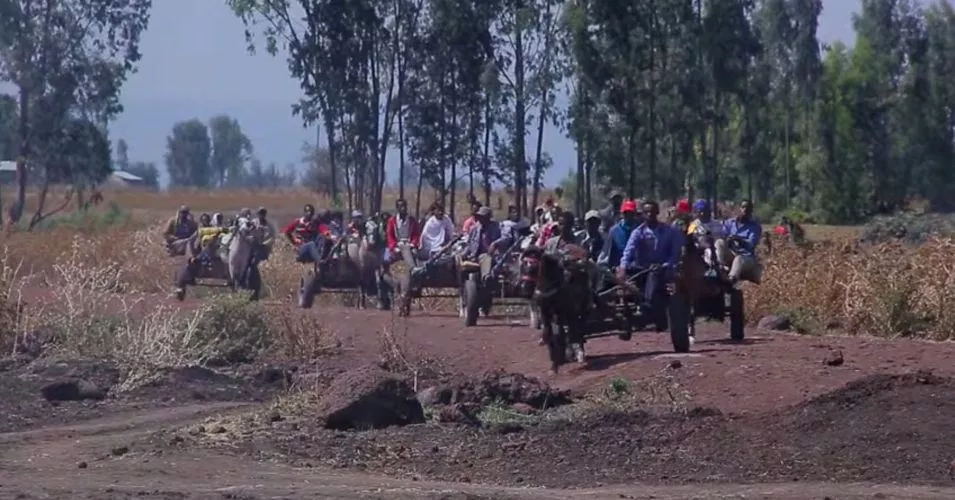

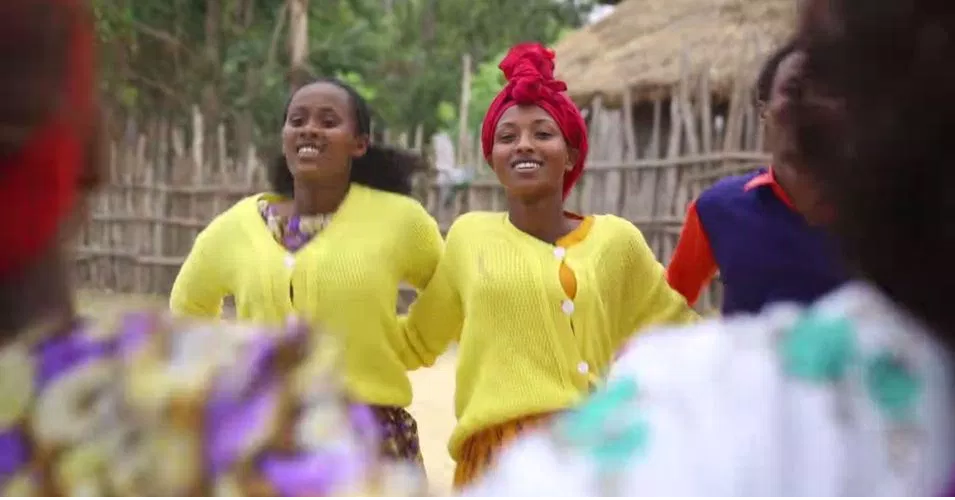


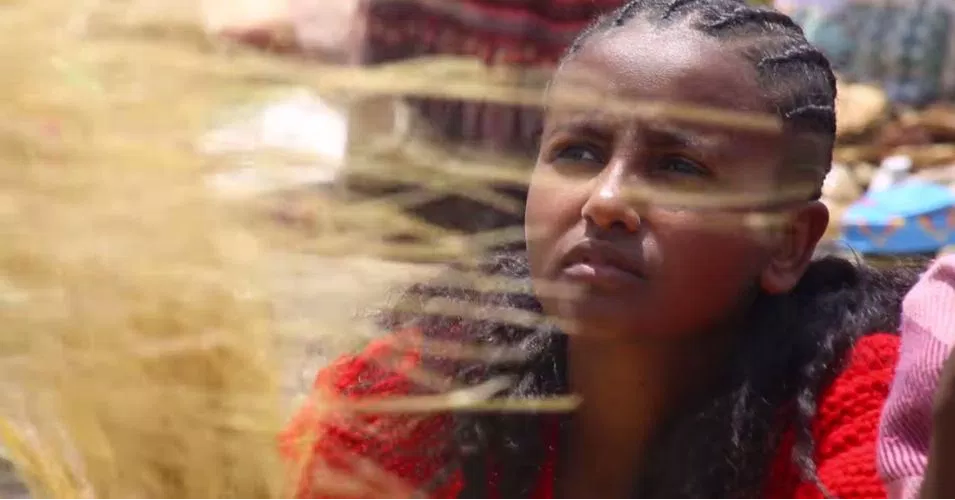

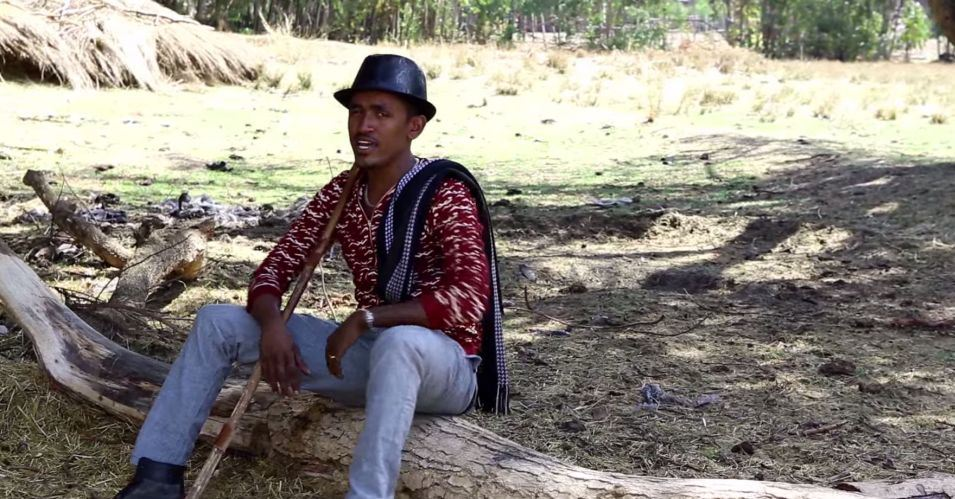
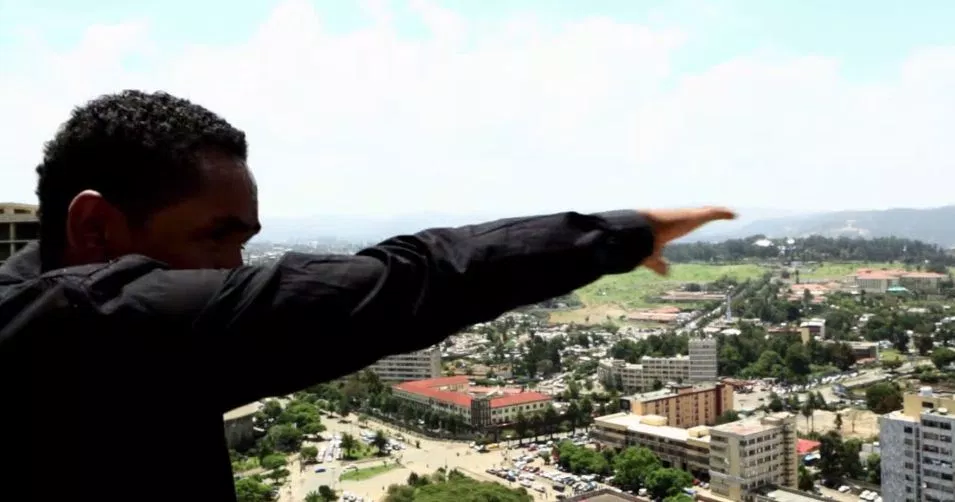

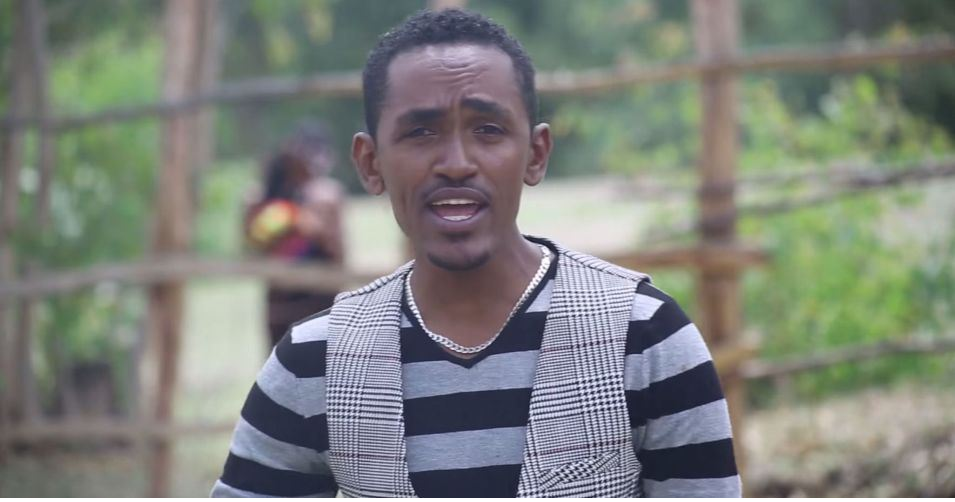
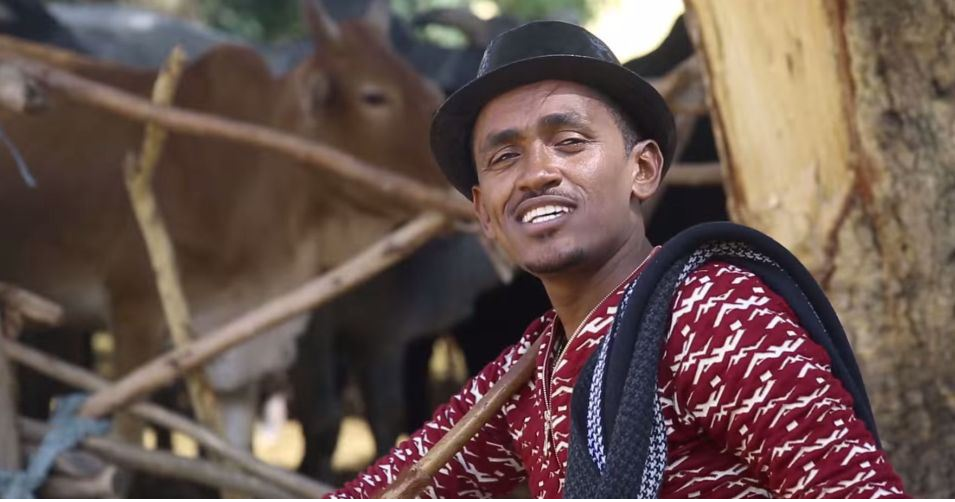
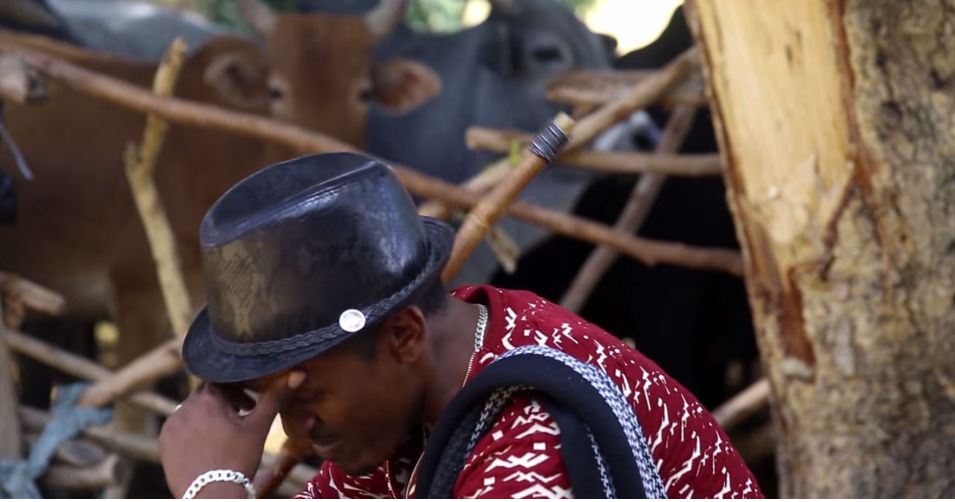
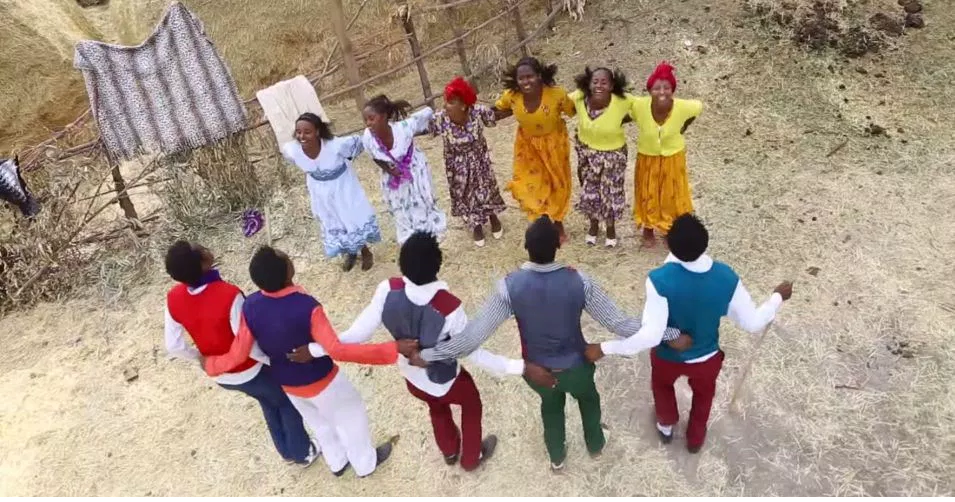
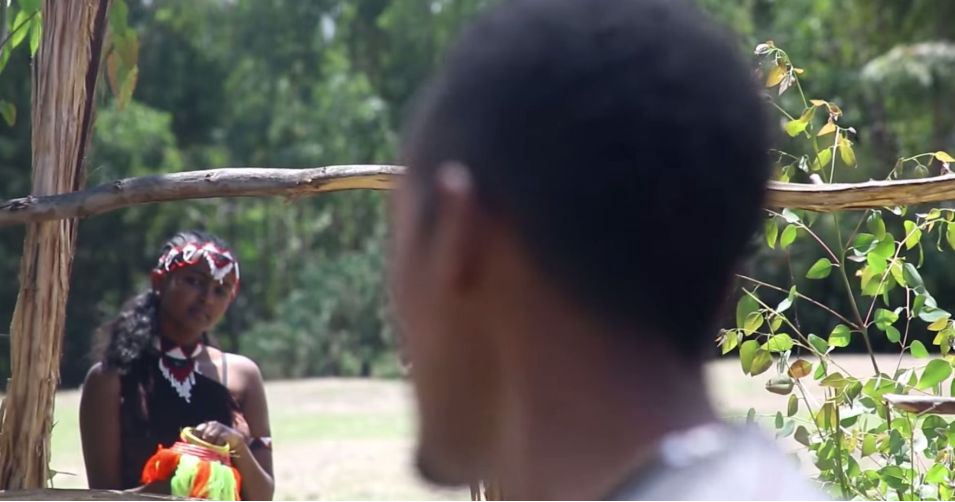
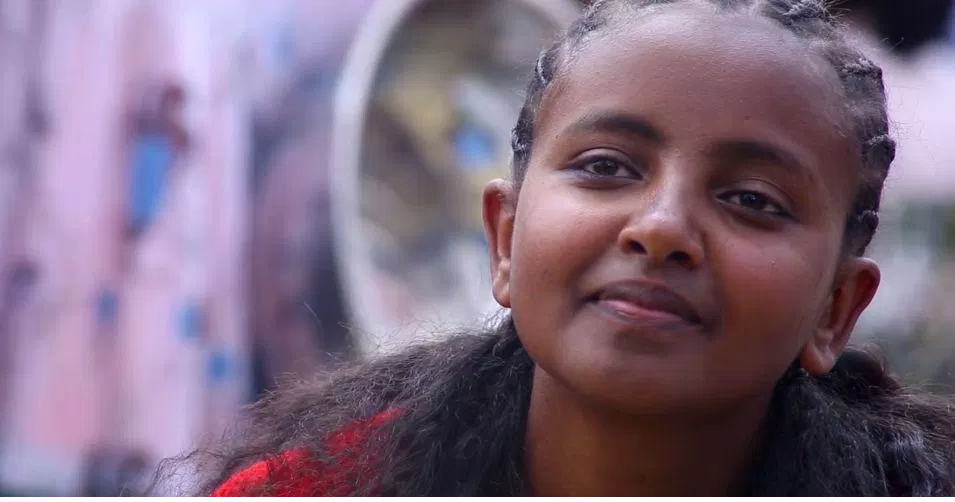
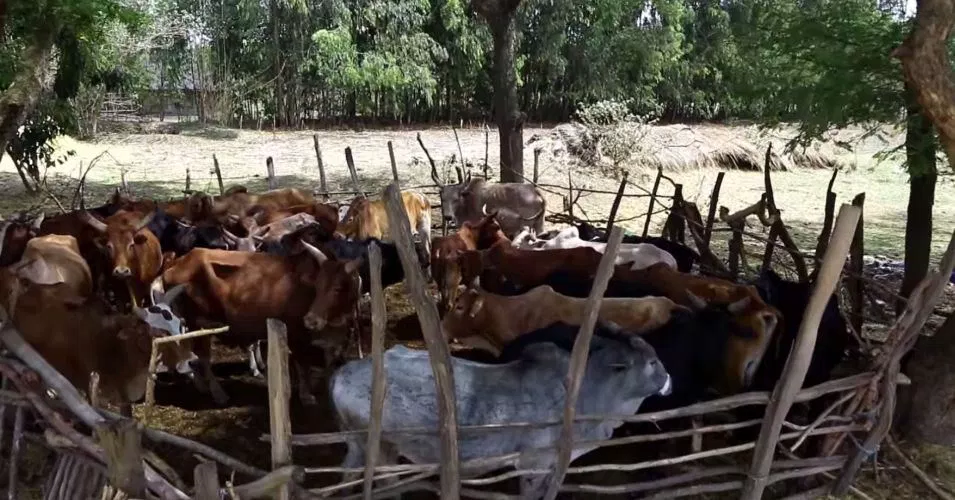
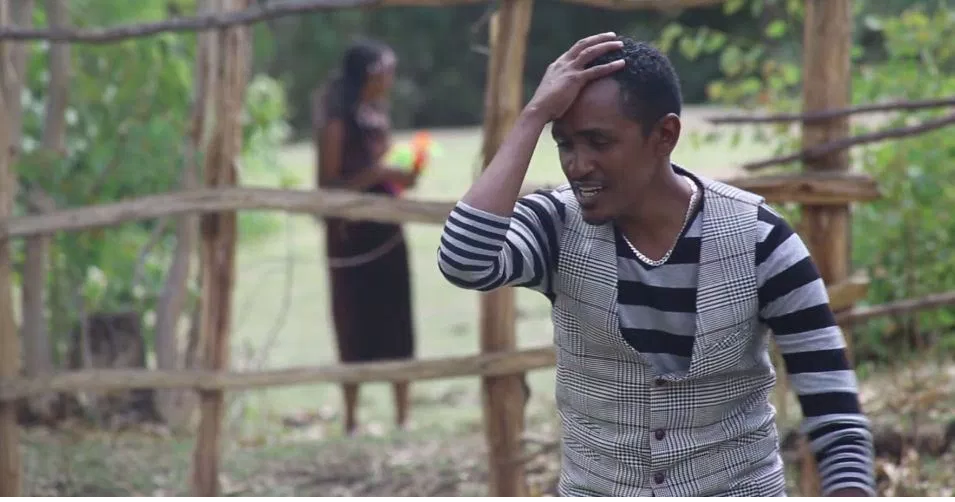
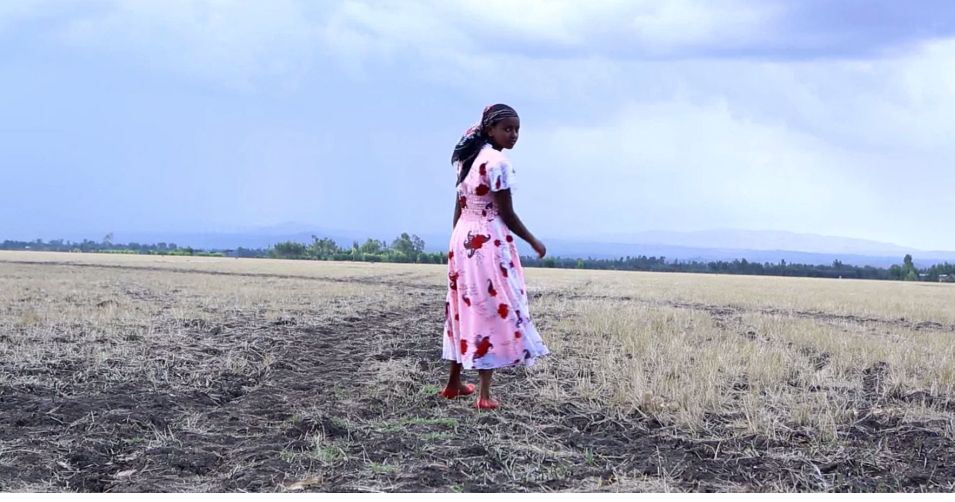
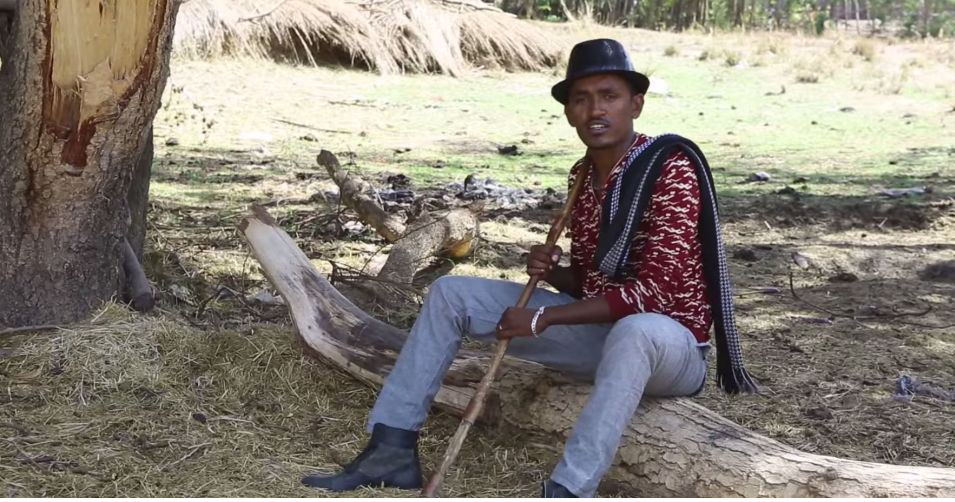
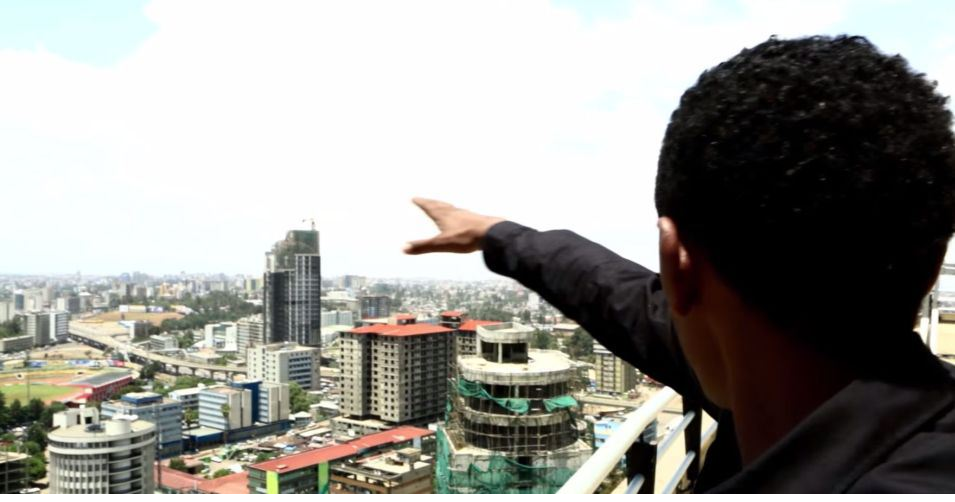
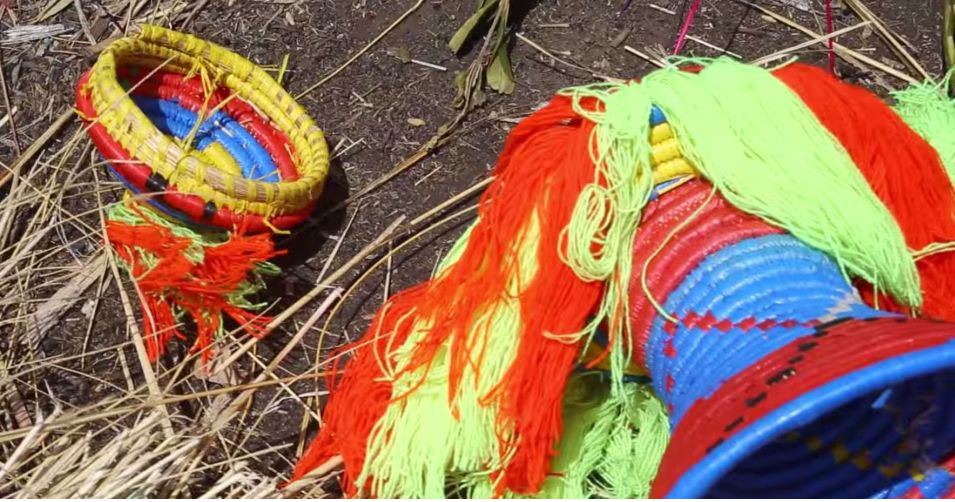
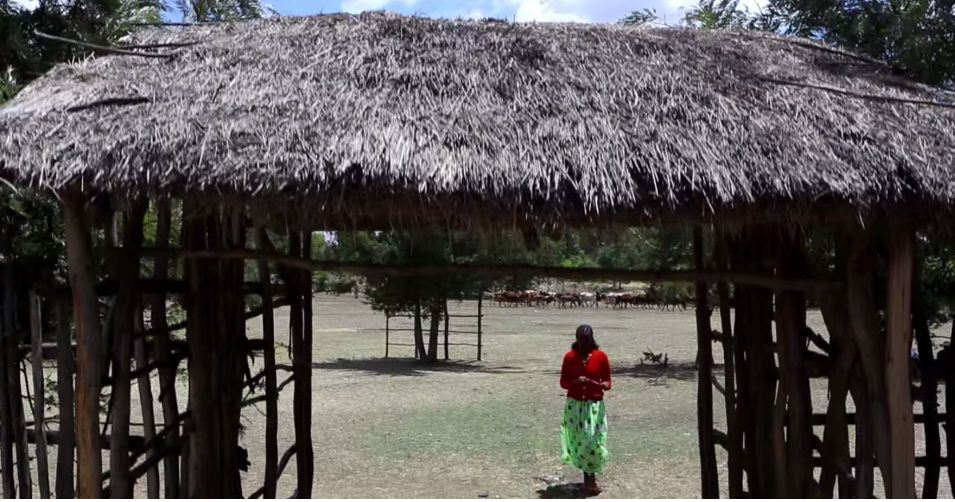

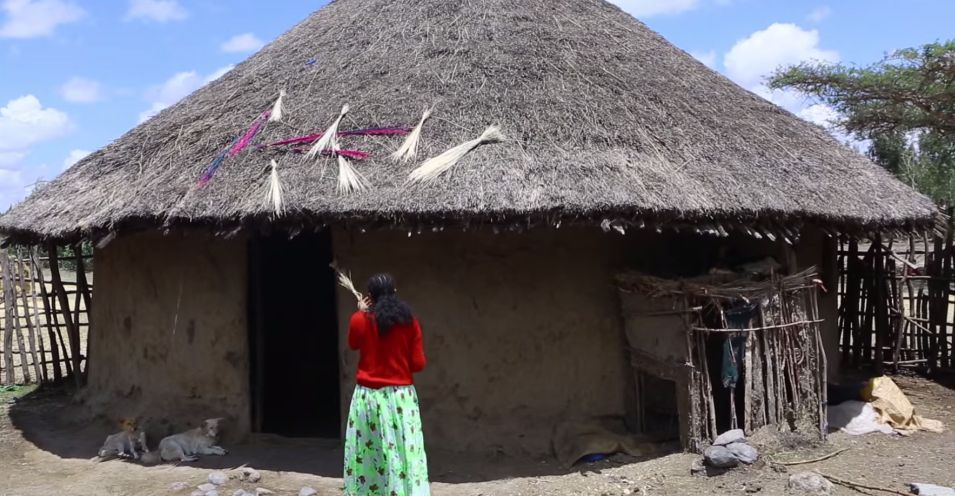
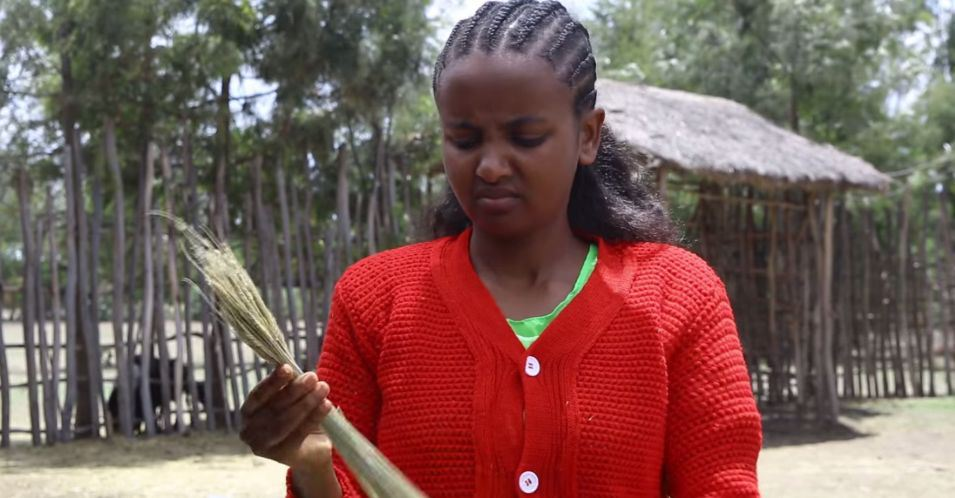

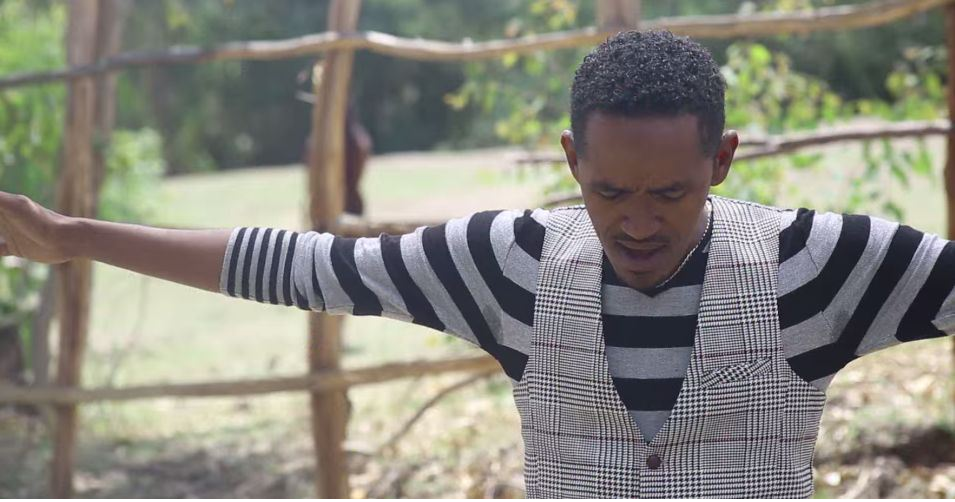
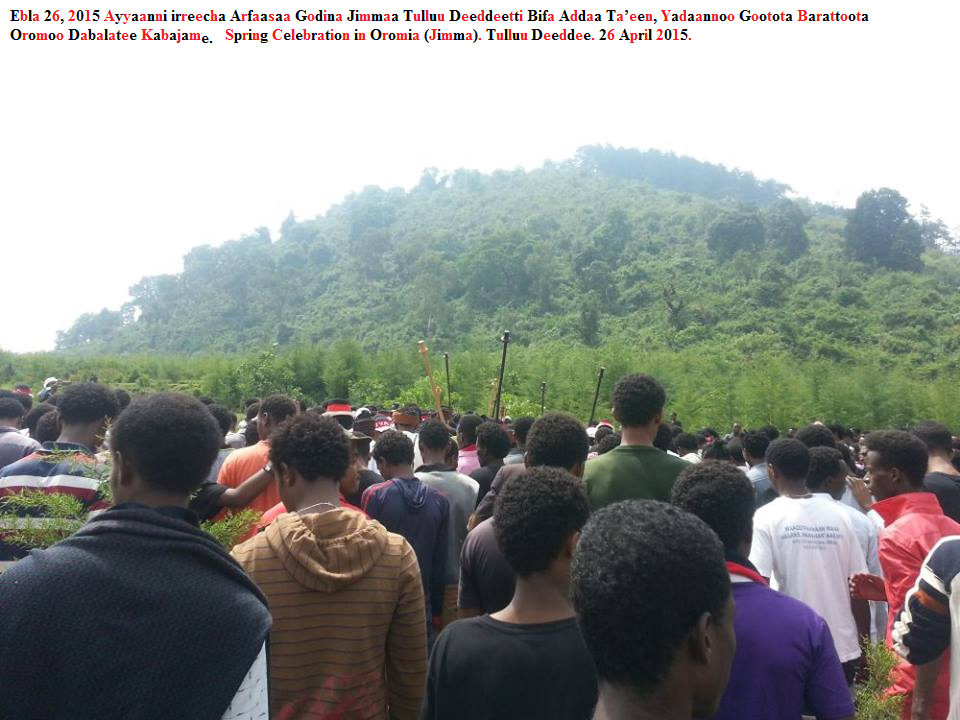




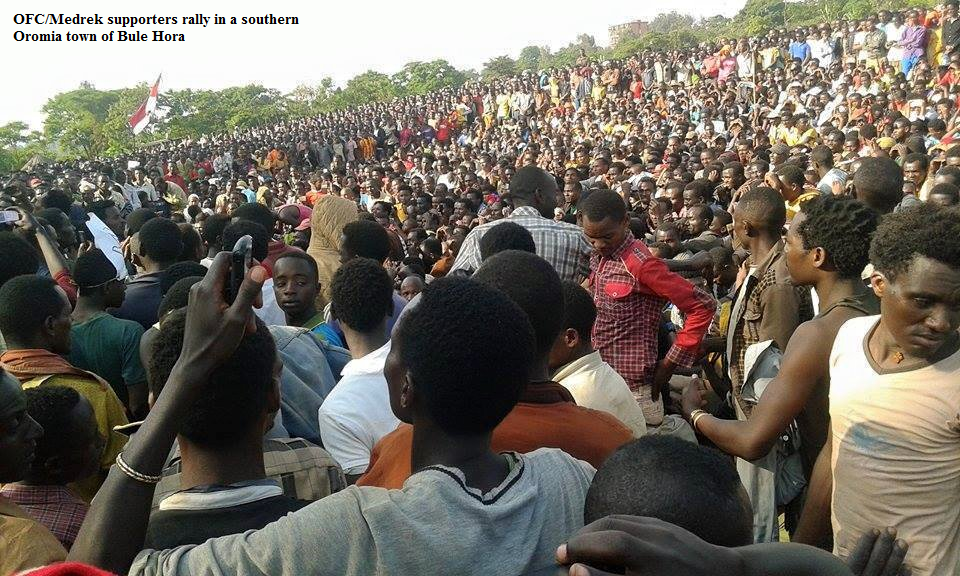
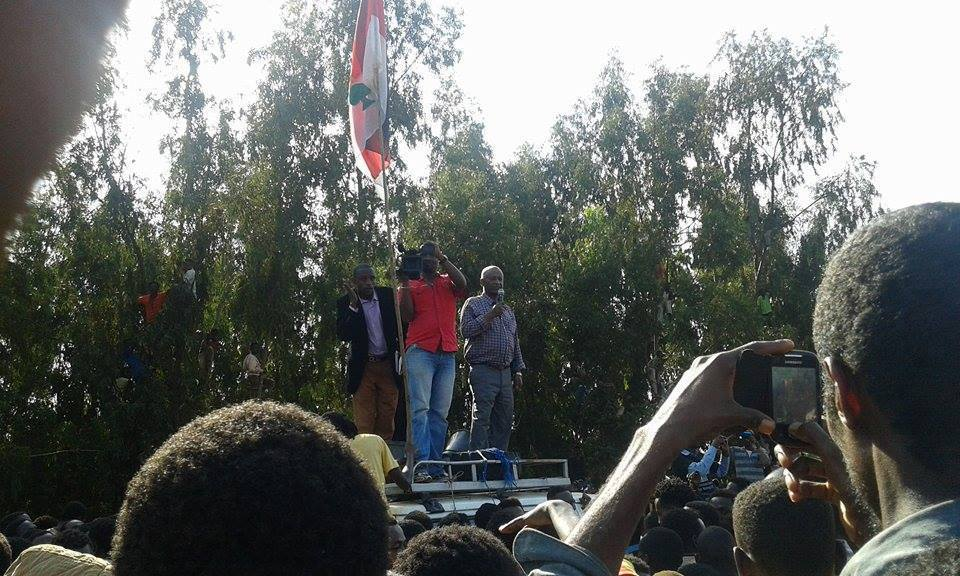
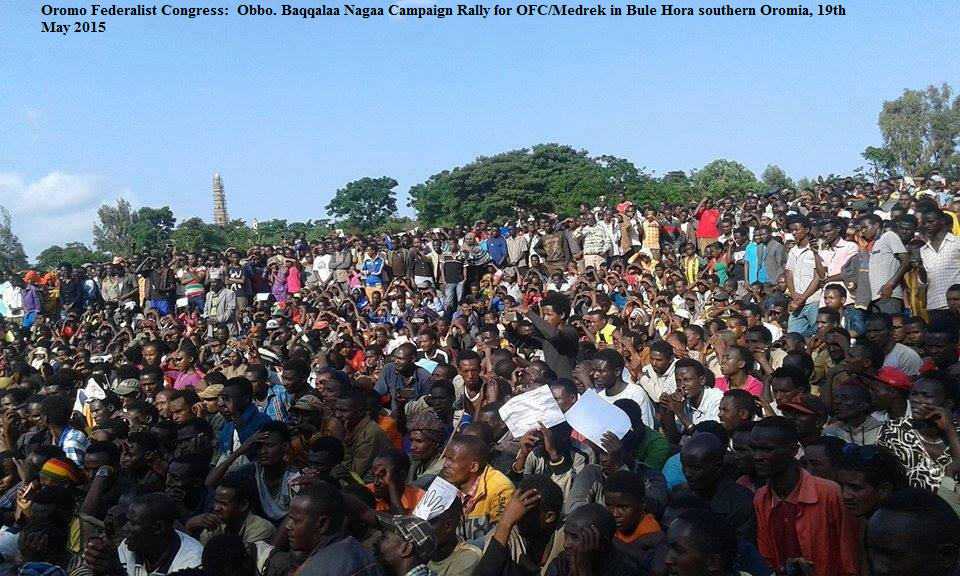
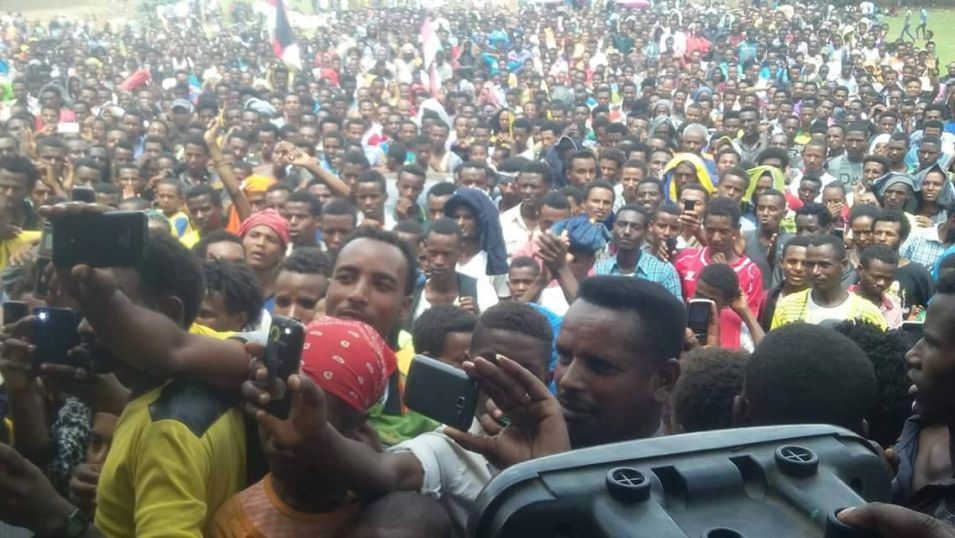
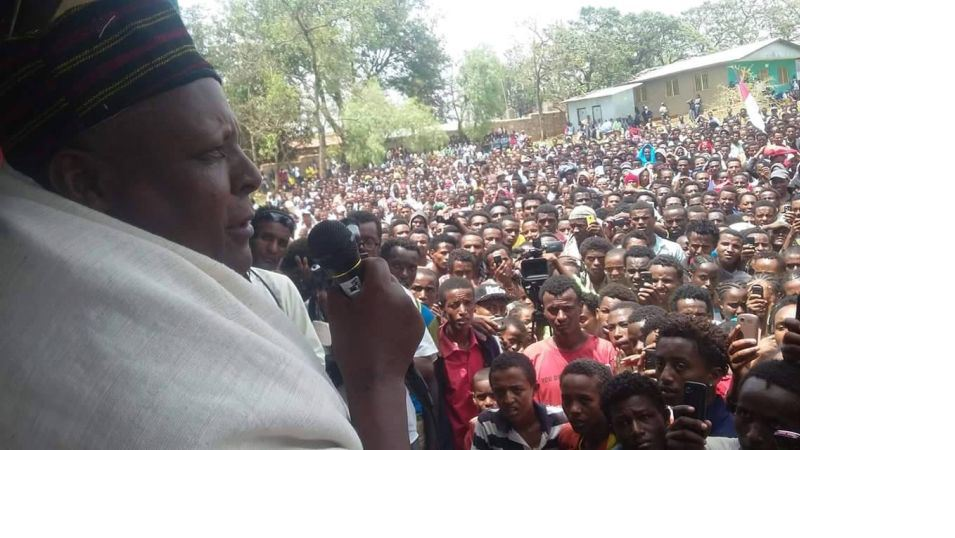
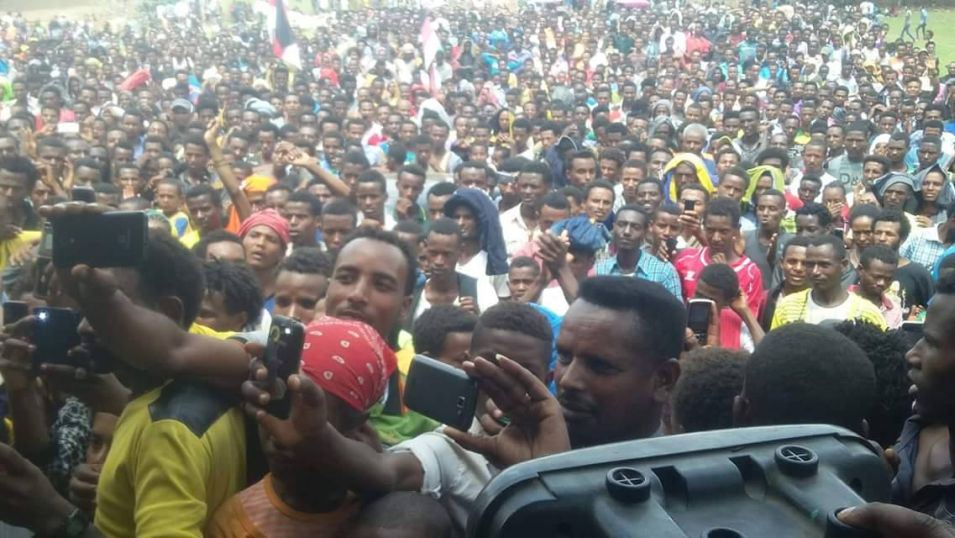
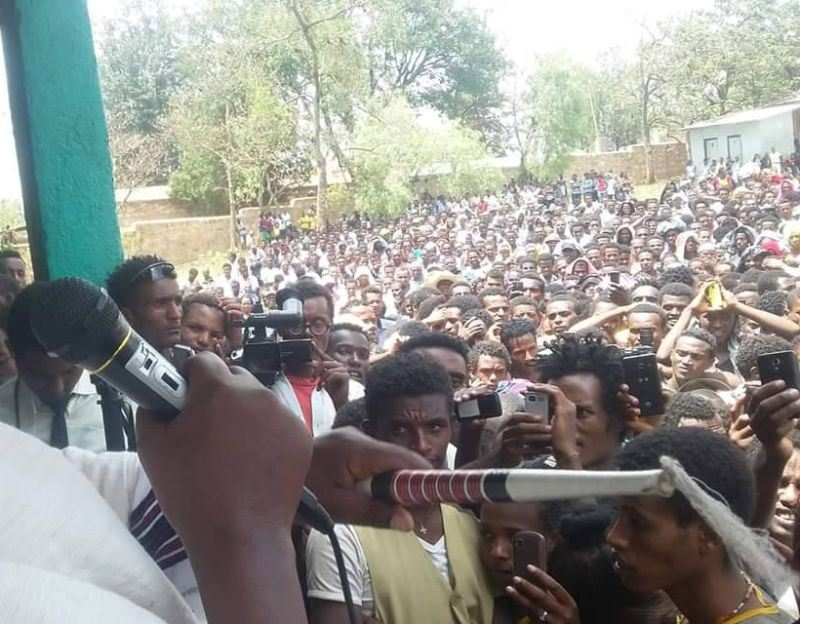
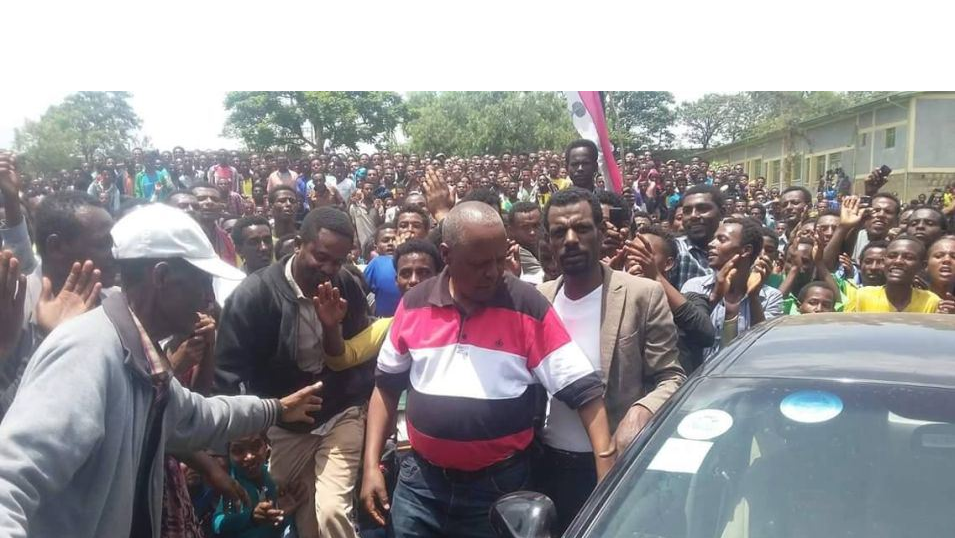


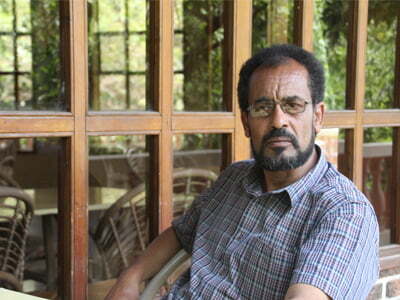
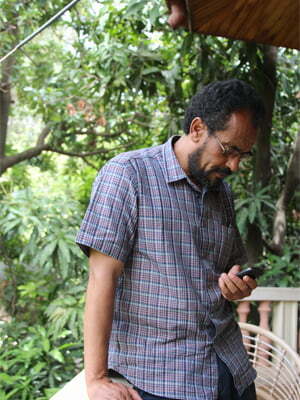

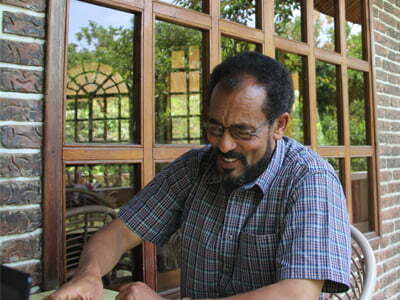

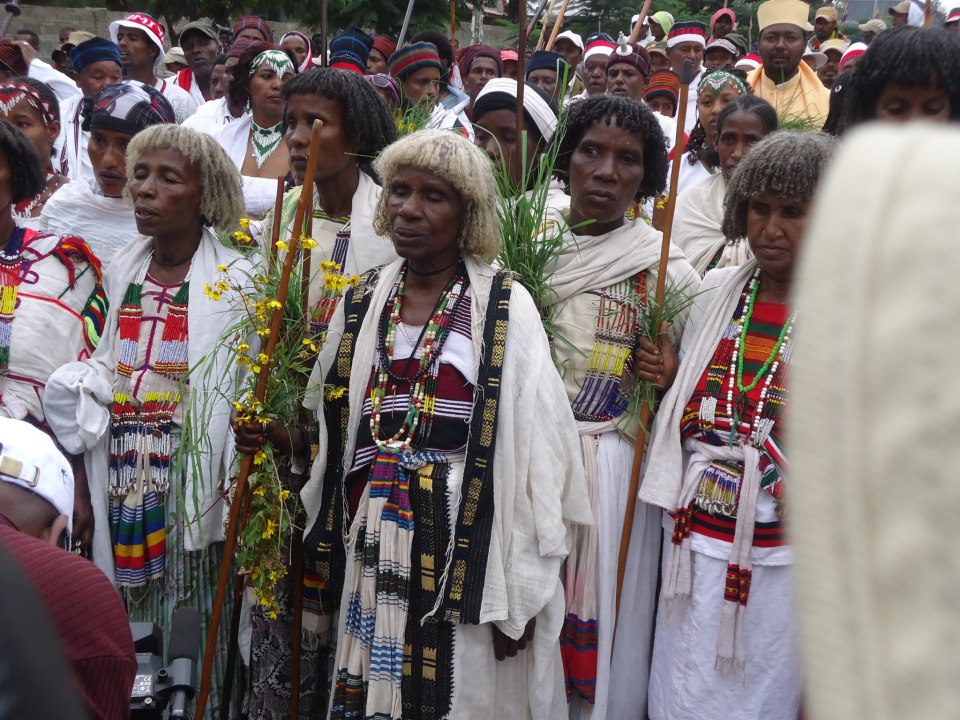


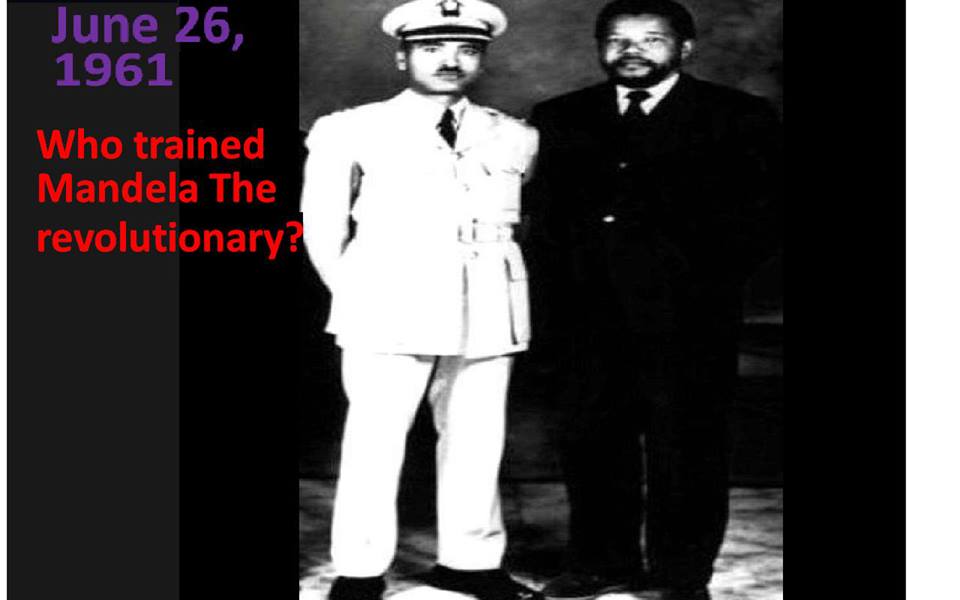
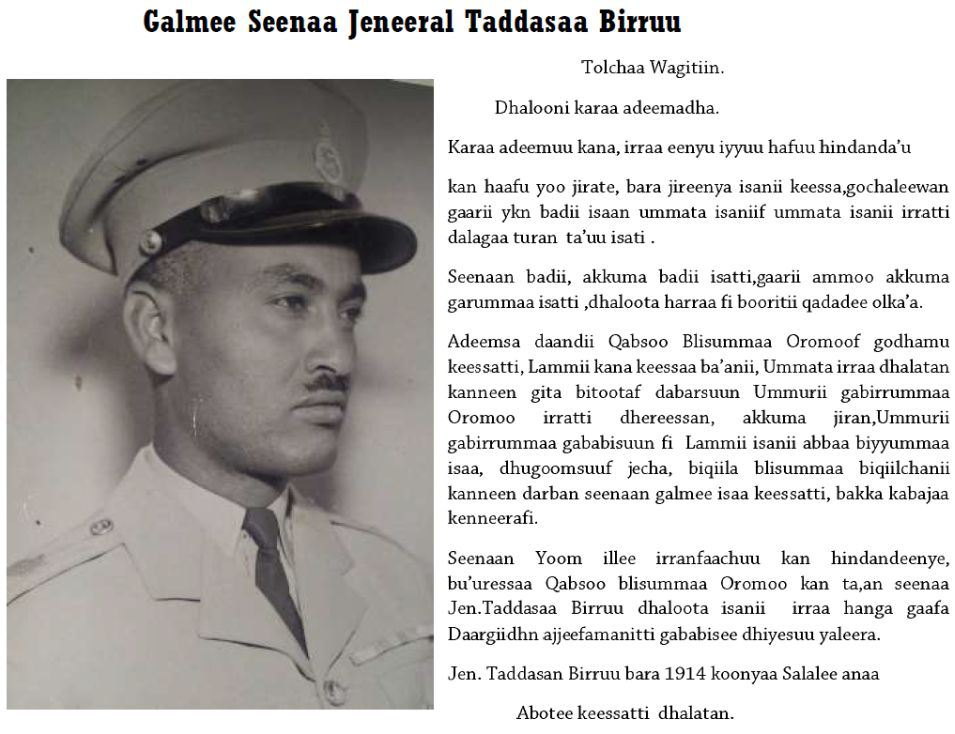


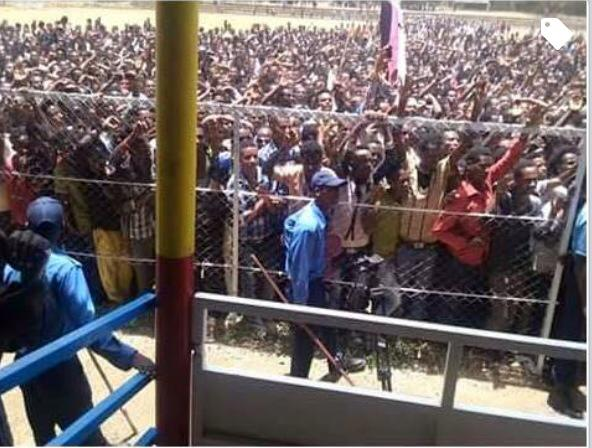
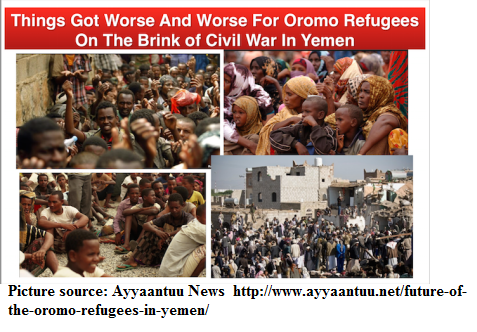

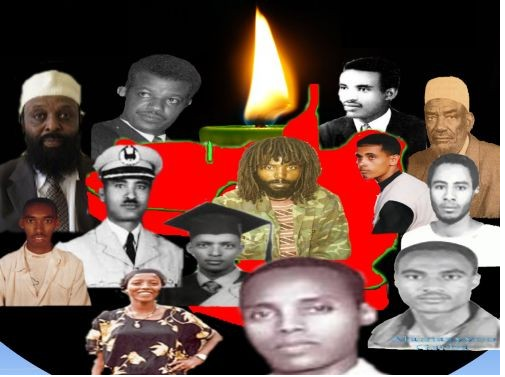

 Wareegama yeroo jennu kaan lubbuu isaa bakka bu’aa hin qabne dirree qabsootti, mana hidhaatti, lafa baqaatti, kaanis qabeenya isaa fi maatii isaa dabalee wareegaa as ga’e hundaati jechuun J/ Bultum ibsuun kun hundi mirga ilmaan Oromoo kabachiisuu fi Oromiyaa walaba adunyaa keessatti beekamtu gadi dhaabuuf wareega kaffalamaa as ga’edha jedhaniiru. Wareegamni kun kanneen jalaa ol dhufaniif waa hambisuuf akka taate ni hubatama. Yeroo ammaa sochii dargaggoonni Oromoo bobaa diinaa jala taa’anii gochaa jiran yaadachuun yeroo ammaa qabsoo waldhaalsisuutu ifatti muldhata. Biyya alaa kanatti ammoo qabsoo mitii aadaa ofiituu waldhaalsisuun ulfaataa ta’ee muldhata. Kanaaf uummanni keenya dararaa diinaa jalaa of baraaruuf jecha biyya adda addaa keessatti faca’anii jiran qabsoo bifa hundaa gaggeessuuti irraa eeggama jedhaniiru.
  J/ Bultum itti fufuun bara darbe kana sochii WBOn goleelee Oromiyaa bakkoota hedduutti lukkeelee fi qubsuma diinaa irratti fudhachaa ture fi jiru, sochii dargaggoonni Oromoo, Qeerroon biyya keessaa gaggeessaa turee fi itti jiru biyya keessaa qabsoo Oromoo kan daran jabeessee fi wareegama gootowwanii ol kaase ta’uun ni hubatama. Kun akeekni xurree qabsoo ABOn bu’uureffamee fi itti jiru uummata Oromoo biratti fudhatama argatee wareegamni inni mirga isaa kabajiifachuuf kafalaa jiru sirrii akka ta’e mirkaneessa. Kanaafuu “Rakkina Qabsoo keessaa qabsoon irra aanna” waan ta’eef bittaa halagaa jalaa baanee bakka yaadne sana ga’uuf wareegama bifa hundaan barbaachisu kafaluuf Oromoon marti qabsoo of qopheessuu qaba jedhaniiru. Yaadannoon Guyyaa gootota Oromoo gootowwan hoogganoota ABO ta’an osoo imala qabsoof gara Somaaleetti bobba’aa jirani shiftoota harcaatuu waraana Somaalee harkatti kufuun bakka “Shinnigaa” jedhamutti wareegamuu irraa eegalee akka yaadatamu ABOn murteessee dirree qabsootti kabajamaa turuu isaa fi har’a gootowwan qabsoo irratti ijaarsa ABO duras ta’ee hanga guyyaa har’aatti wareegamaa jiran ittiin yaadachuuf uummanni Oromoo marti biyya keessaa fi alaa, dirree falamaa WBO biratti osoo hin hafin kabajamaa jiraachuu isaa kan ibsan ammoo J/ Gaashuu Lameessaa MGS fi Birkii Beeksisii fi Odeessii ABO biyya alaati. Hoogganoonni kun amantiin, naannoon, gandaan, dandeettii fi beekumsaan osoo wal hin qoodin irbaata ibidda shiftoota kanaa ta’uun boolla tokkotti yeroo owwaalaman tokkummaan Oromoo mirkaneessuun qabsoo nu dhaalchisanii darbuu mirkaneessa jedhaniiru. Egasiis wareegamni ilmaan Oromoo hin dhaabbanne, diinni nuuf rafee hin bulle, “Sibiilaan sibiila…” akkuma jedhan har’a diinni nu qabee jiru Oromootuma Oromoo irratti bobbaasee keessaa fi alaan wal ficisiisaa waan jiruuf Oromoon dammaqee gara mirga isaa tikifatuutti deebi’uu qaba jedhaniiru. Dabalees ABO dhiibbaa keessaa fi alaa kana hunda danda’ee qabsoo hidhannoo, siyaasaa fi diplomaasii bifa hundaan diina irratti gageessuu itti fufee waan jiruuf uummanni Oromoo miseensota ABO qofaa irratti ilaaluu osoo hin taane akkuma kanaan duraa amma illee qabsoon kun kooti jedhee daran jabaatee cina dhaabbachuu qaba jedhaniiru.
  Akkum aadeffatame eebba maanguddoon kan eegale sagantaan guyyaa kanaa dungoo yaadannoo wareegamtootaaf qabsiisuun faaruun alaabaa Oromoo itti fufe. Darbees Dura taa’aan ABO Konyaa Victoria J/ Abdataa Hoomaa keessummoota kabaja guyyaa kanaa irratti aragamaniin baga nagaan dhuftan jechuun haasaa gabaabaa godhanii jiruu.
 Kana malees miseensaa fi Hawaasa keessaa namoonni muuyxannoo fi yaadannoo jireenya isaanii keessatti dabarsan yeroo ibsan, qooda dubartoonni keenya qabsoo keessatti qaban bakka guddaa qaba kan jedhan Obbo Mohamed Harunidha. Yeroo ammaa Tokkummaa! Tokkummaa! jechuun faarfamu yoo tokkummaan kaayyoo hin jiraanne faaruu ta’ee hafa, kaleessa Ethiopia dimokiratessuuf goonni Oromoo hin wareegamne, wareegamni ilmaan Oromoo diina Oromiyaatti dhufee lafa isaa, qabeenya isaa, humna isaa fi dandeettii isaa saamuuf itti bobba’e of irraa kaasee bilisummaa Oromoo fi Oromiyaa walaboomte sirna dimokiraasii gadaan bultu gadi dhaabuuf kan jedhan Obbo Mohamed Haruni kun ammoo afaan qawwee malee hin argamtu jedhanii seenaa gootowwan wareegamanii yaadachiisaniiru.
  Itti aansuun yaada isaanii kan ibsatan J/ Foozii H/ Bushura H/ Adam yeroo ta’an maqaa Jaallewwan Oromummaa isaaniif jecha harka diinaatti lubbuun isaanii dabarte, rasaasaan alatti kan diinni osoo lubbuun jiruu biyye itti garagalchan, mana hidhaa fi toorcheraan hiraarsee ajjeese yaadatanii kana of irraa hambisuuf Oromoon qabsoo isaatti jabaachuu qaba, namuu bifa danda’ameen akka bira dhaabbatu gaafataniiru. Karaa biraa kaayyoo kaleessa gootowwan keenya itti wareegaman bakkaan ga’uu dhabuun keenya dararaan Oromoo har’aa akka itti fuftu godheera kan jedhan Obbo Abdulfattaa Awwadaay turani. Itti fufuunis Tigreen lafa Tigray irraa fiddee hiraafii waan jirtu fakkeenya har’a ilmaan Oromoo tokko tokko “kaleessa diina baqannee biyyaa baane” jedhan osoo dhiigni ilmaan Oromoo mirga Oromootaa kabachiisuuf dhangala’e hin qoorin biyyatti deebi’uun lafa abbaa isaanii diinaa wajjin qircachaa jiran arguun baay’ee nama gaddisiisa jechuun haala jireenya gadadoo uummata keenya biyya keessaa yeroo ammaa fi Oromoota biyya alaa irraa galanii diina cina bu’uun saba Oromoo saamaa jiranii gaddaan yaadataniiru.
  Bilisummaan dhalanne, bilisummaa diinaan sarbamne sana xurree Gootowwan Oromoo qabsoo irratti wareegaman kaleessa faana buunee deebisnee gonfachuuf qabsoo irraa boodatti hin deebinu jechuun kan ibsan ammoo Aadde Sa’adaa Aammee dura teessuu waldaa dubartoota “Kaayyoo” ti. Ayyaana yaadannoo guyyaa Goototaa Oromoo magaalaa Melbourne, Australiatti kabajame kana irratti dura teessonni hawaasa Oromoo Obbo Yaadataa sabaa /Jaatam/ fi Obbo Warqinaa Dhiinsaa wal duraa duubaan haasaa godhan keessatti dirqamaa fi ga’ee hawaasa Oromoo biyya alaa ibsuun hanga qabsoon Oromoo gootowwan keenya itti wareegaman bakka ga’utti boodatti hin deebinu jedhaniiru.
 Kanaafuu garaagarummaa diinni nu keessatti uume kana irra aanuun, tattaaffii sochii diinaa yeroo ammaa maqaa “dhimma diaspora jedhuun” nufacaasuuf deeman kana illee dammaqnee of irraa ittisuuf tokkummaa keenya jabeeffannee afaan tokkoon diin dura akka waliin dhaabbannu waadaa keenya haaressina jedhaniiru. Sagantaalee kana giddu gidduutti seenaa gootowwanii faarsuun haala qabsoo Oromoo fi jireenya hawaasa keenya biyya alaa kana irratti kan xiyyeeffate walalooleen adda addaa dhiyaatuun uummata ayyaana kana irratti argame bohaarsaa oolaniiru. Xumura irrattis gumaacha deggersa QBO fi WBO arjoomuun, caalbaasiileen adda adda dhiyaatee tin’isa qabsoof akka oolu ta’eera. VCDn WBO dhiheenya gabaa irra oole caalbaasiif dhihaatee maallaqa gudda kan argamsiise yeroo ta’u gurgurtaaleen adda addaa dhiyaatanii tumsa QBO akka oolu ta’eera. Injifannoo Uummata Oromoof! Gadaan Gadaa Bilisummaati! Koree ABO Konyaa Victoria, Australia

 Qabsoon Bilisumma Uummaata Oromoo fininnee Kaayyoo Ganaamaa lafaa kayyattee galmaan akka gahatuuf miseensi fi deeggaartoon ABO mooraa qabsoo bilisumma Oromoo utubuu fi cinaa dhabachuun ijoo isaa duraa akka tahee hubannoo irra gahamee jira. Kanafuu gamaa dinagdee fi siyaasaan akkasumaas kalatti barbaachisuu hundaan WBO cinaa dhabachuun qabsoo keenyaa jaabbeessun diraqamaa lammumaati!
  Dhimma Guyyaa Ayyaana Gootota kana ilalichisee deeggartoonii fi miseensooni akkasumaas adeemsaa qabsoo bilisumma Oromooti jaaleewwan amanaan deegarsaa malaqaa gochuundhaan jalalaa fi kabajaa qabsoo kanaaf qaban ibsaatani, garaa fuldurattis gamaa barbaachisaa taheen qabsoo bilisuumma Oromoo kana cinaa dhabachuuf sagaalee tokkoon waadaa seenaniruu. Oromiyaan ni bilisoomtii; injifaannoon Uummaata Oromoof!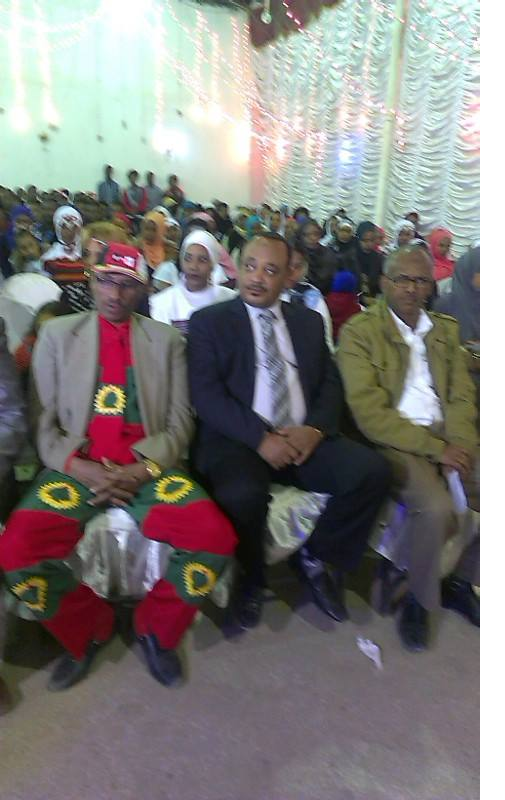
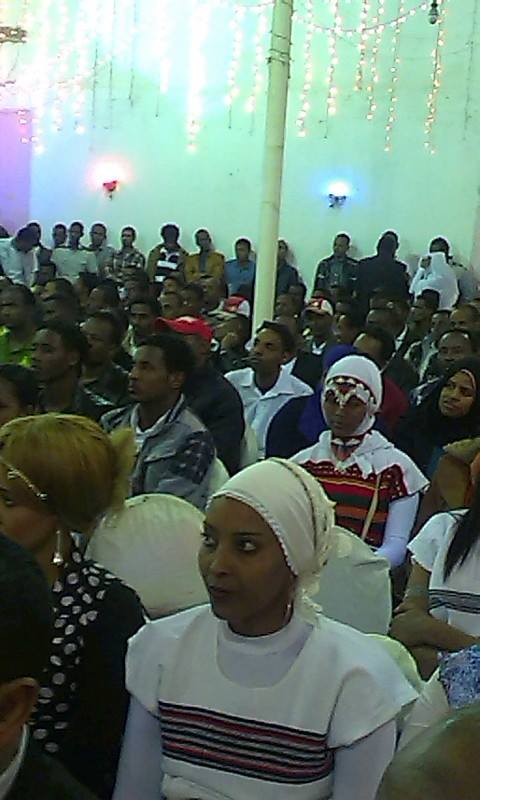

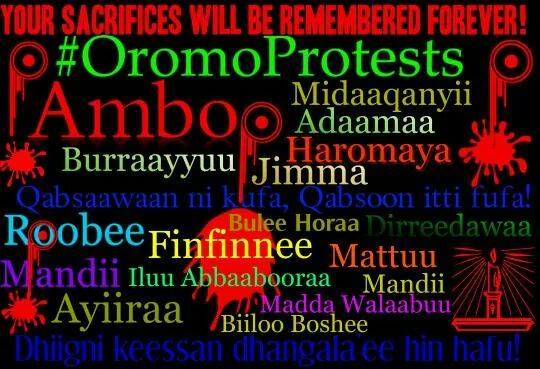
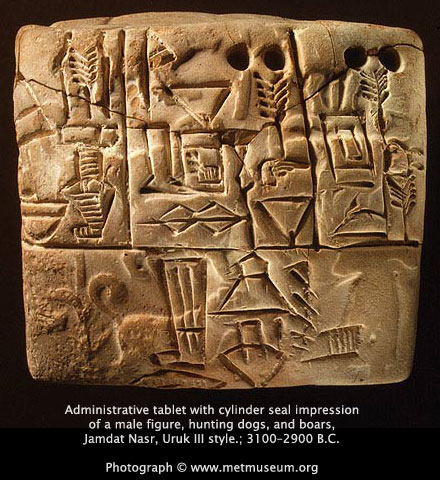
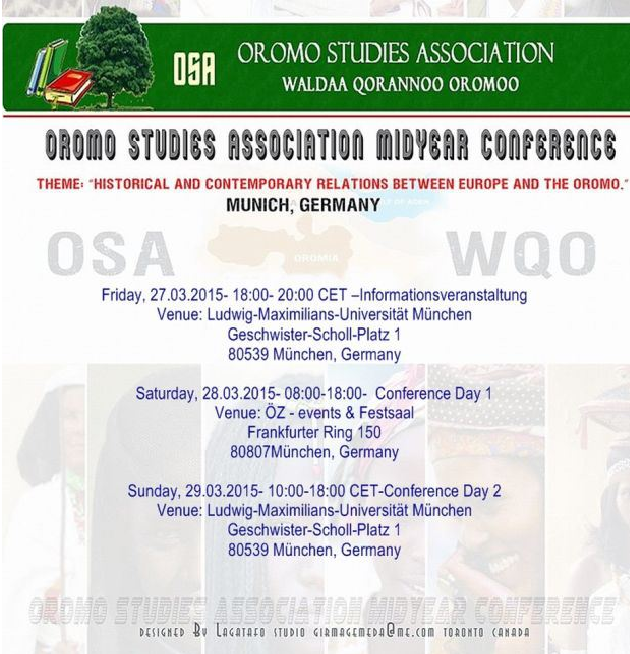
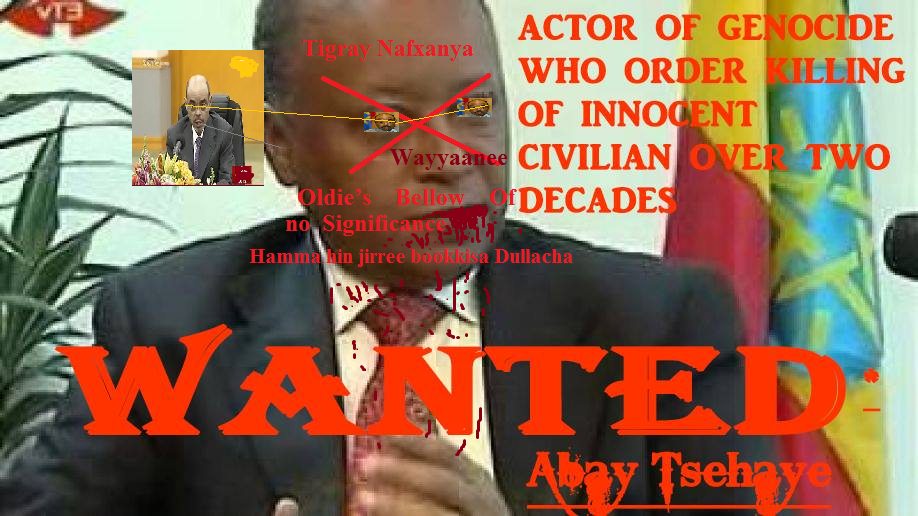


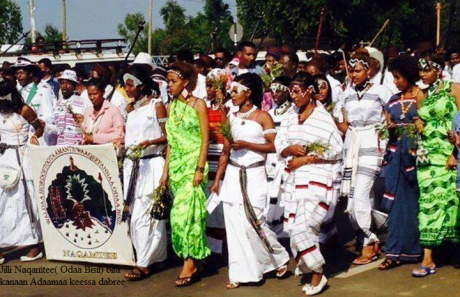
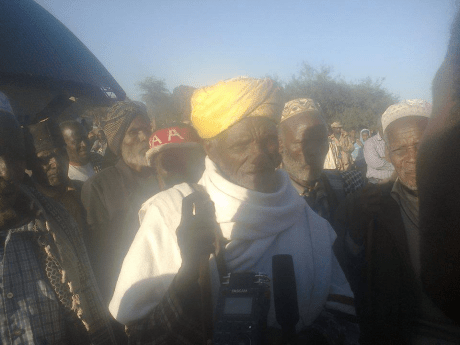


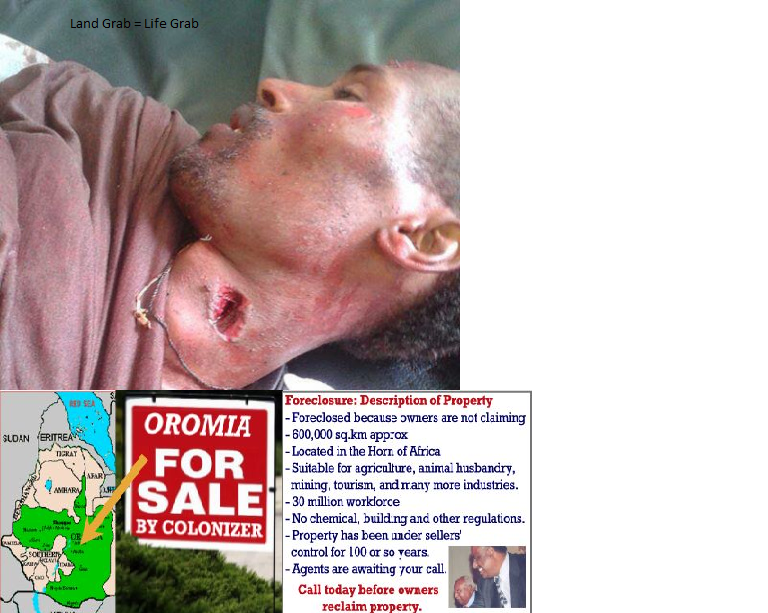

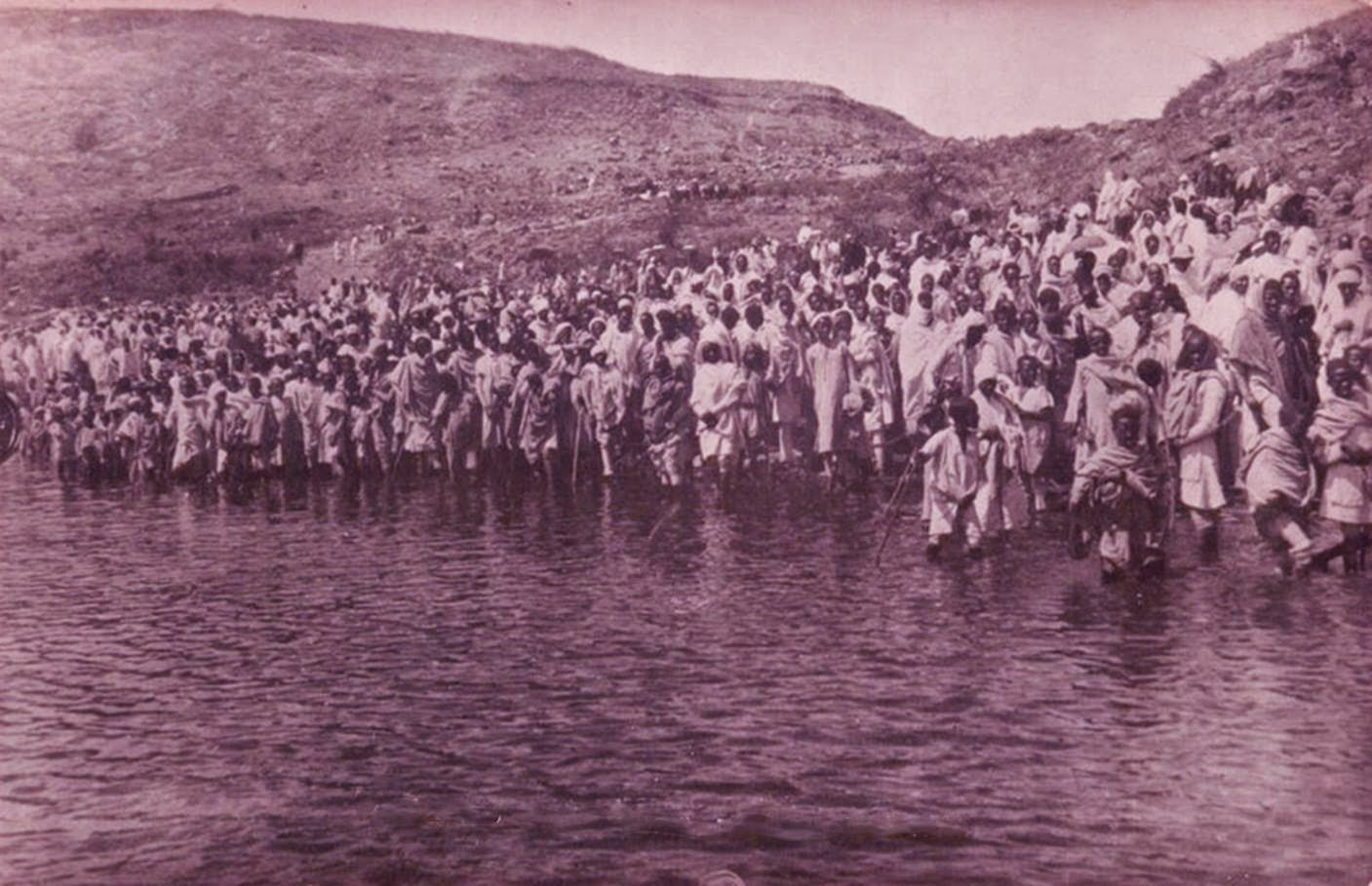






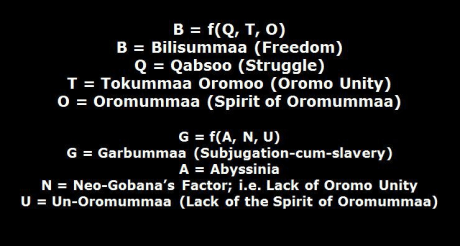

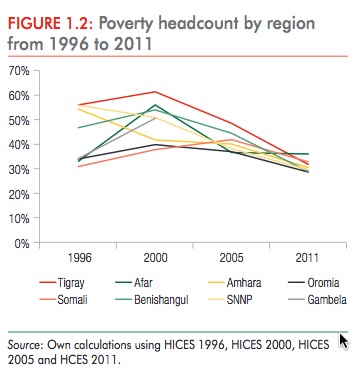

 Title: The In-Between

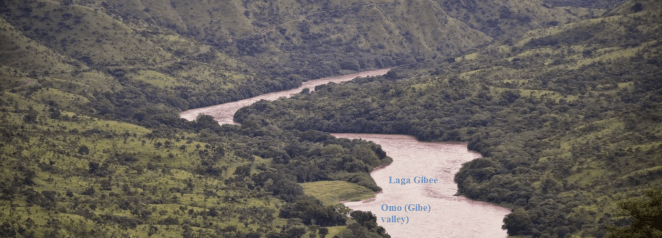
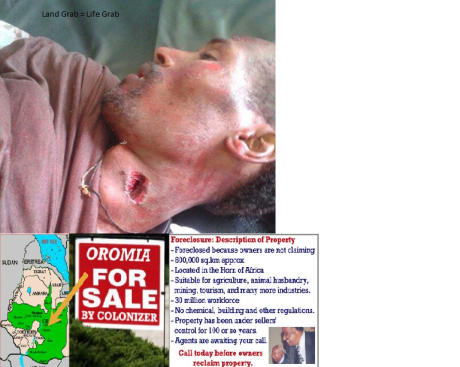
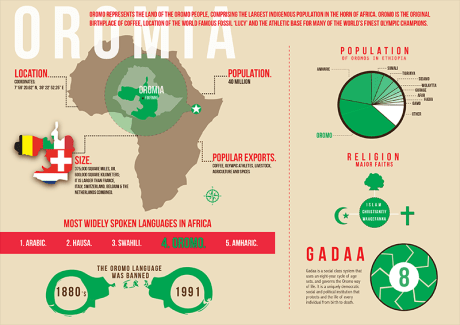


 Oromian Economist
Déjà vu in Ethiopia’s May 24, 2015 Sham Elections: Marred by rampant electoral fraud, malpractice and violence by the ruling TPLF to stay on and maintain the 24 years tyrannic rules May 24, 2015
Posted by OromianEconomist in Africa, Ethiopia's Colonizing Structure and the Development Problems of People of Oromia, Sham elections.Tags: 'BECAUSE I AM OROMO’: SWEEPING REPRESSION IN THE OROMIA, Africa, African Studies, Because I am Oromo, Ethiopia's sham elections, Freedom House in response to comments by Under Secretary for Political Affairs, Genocide against the Oromo, OLF, Oromia, The Tyranny of Ethiopia, UNPO
3 comments
BREAKING NEWS: Video: Oromo University Students Rally Against Vote Rigging in Oromia (Ethiopia)
“90% of MEDREK election observers in Oromia are harassed & aren’t on election observarion.”
-Obbo Bekele Naga
“BREAKING NEWS | OFC/Medrek Leaders Report Election Irregularities (OMN).”
#EthiopiaElection2015.”@addis_fortuneIn Hadia Zone, Mehar Kerga-“Ha” Polling Station,the ballot box got moved to a nearby health centre due to power outage.
#EthiopiaElection2015-Souce: Caamsaa/May 25, 2015 · Finfinne Tribune | Gadaa.com
VOA Afaan Oromoo: Guyyaa Filannoo (Qophii Addaa)
Roorroo Falmataa Roobsan
No Democracy in Ethiopia. No fair and free election in Ethiopia. Caamsaa 24/2015 Mooraan Yuunibarsiitii Jimmaa, Mattuu, Wallaggaa, Amboo, fi Dirree Dawaa addatti humni waraanaa guddaan itti seenee jira.
Qeerroon Bilisummaa Oromoo barruulee warraaqsaa belbetuu qabxiiwwaan armaan gadii of irraa qabduu Mooraalee Yuunibarsiitii biyyaatti hundarra facaasuun mootummaa Wayyaanee raafama guddaa keessa galche jira. waraanni wayyaanees bifa lamaan mooraa Yuunibarsiitii seenaa jira, inni tokko uffata sivilii uffachuun, inni lammaffaa immoo hidhannoodhan, barruulee qeerroon facaasaa jiruu adamsuufis lafa waranni kun hin seeniin hin jiru, qabxiiwwaan barruu qeerroo irra jiru muraasni isaa: 1. Dimookiraasiin hin jiru, filannoon hin jiru (No Democracy in Ethiopia and no fair and free election in Ethiopia) 2. Gaaffii mirga abbaa biyyummaa uummata Oromoof deebiin kennamuu qaba. 3. Ilmaan Oromoo jumlaan hidhaman gaaffii tokko malee hiikamuu qabu. 4. Mootummaan Ce’umsaa hundeeffamee, filmaanni demookiraatawaa ta’ee fi haqaa fi bilisa irratti hundaa’ee akka gaggeeffamu jabeessinee gaafatna. 5. Nuti Qeerroon dargaggootni barattootni Oromoo bilisummaa fi dimookiraasii barbaadna, hanga Oromoon bilisoomuu fi Oromiyaan Walaboomtutti FDG jabaatee itti fufa. 6. Waranni nagaa biyyaa,fi daangaa biyyaa eeguuf ijaarame malee dhaaba siyaasaa tokkitti EPRDF/TPLF eeguuf hundeeffame diigamuu qaba. 7. Humni waraanaa Mooraa Yuunibarsiitii seenee barattoota gooluun yakka. waraannii uummata keenya irra qubsiifame kaafamuu qaba, barruun jedhuu mooraalee dhaabbilee barnootatti raamsuun wal qabatee wayyaaneen lafa seentuu dhabuun humna waraanaa guddaa mooraalee Yuunibarsiitiitti ol seensisuuf dirqamtee jiraachuun gabaafame.. gabaasaan itti fufa!!
#BreakingNews:-
At Bule Hora University Oromo students have denied the right to vote
Ethiopia’s May 24, 2015 election in Oromia Special Zones near Finfinnee voters were not allowed their phones
“With limited independent press, Ethiopians left voting in the dark.” CPJ
https://www.cpj.org/blog/2015/05/with-limited-independent-press-ethiopians-left-vot.php