Economic and development analysis: Perspectives on economics, society, development, freedom & social justice. Leading issues in Oromo, Oromia, Africa & world affairs. Oromo News. African News. world News. Views. Formerly Oromia Quarterly
Irreecha 2020: The Oromo national and cultural holiday season: Oromians and friends of the Oromo nation celebrating the blessing and colourful festival in Oromia and all over the Globe. Due to the historically oppressive nature of Ethiopia’s government towards Oromo people and their culture and identity and its fears of the ongoing #OromoProtests, the Ethiopia government used massive military forces and sanctioned and suppressed the main Irreecha events in Finfinnee at Hora Finfinnee, Hulluuqoo Kormaa (Doollo Buddeena) and in Bishooftuu at Hora Harsadii. For this massive open public culture, the regime sent hand picked party cadres and its supporters through offering its participation badges and drop them there with its transport. That was designed and actioned to make believe that the events were held. Millions of Oromo mass sanctioned from driving and waling to the festive venues with layers and layers of military forces. The millions people of festivals at Hora Finfinnee an Hora Harsadii were defacto cancelled. Thousands attacked by the military, arrested and tortured in effort to celebrate their adored culture. The whereabouts of thousands is not known. This is once again a massive military attack against iconic Oromo culture and identity. Irreecha2020
“I was looking forward, like many of you, to waking up to hundreds of pictures of massive gatherings of people celebrating Irreecha in Ethiopia, like this one from last year. How heart-breaking to hear many were arrested or unexpectedly prevented from arriving at their destinations. If it was simply about COVID, there could have been clear messaging or alternative plans made, which I don’t think was the case, though that’s one excuse being given. This seems more like an attempt to suppress Oromo cultural expression during a politically volatile time. As we know from attempts of the past, Irreecha cannot actually be suppressed for long, if at all, though they may have been caught off guard and disappointed today. Broad cultural suppression like this seems like an unwise move, and yet that’s the choice the current government made at the same time they are holding large numbers of political prisoners and are putting political opponents on trial when they should be playing their parts in elections.”Photo credit: oromianeconomist ~Amy Elliott Van Steenwyk
The security forces blocked the public not to attend Irreecha, this in Bishooftuu, 4 October 2020Oromo youth were not allowed to celebrate their Irreecha, 4th October 2020 Bishooftuu, Hora Harsadii, OromiaFascist Ethiopia’s military in suppressing Irreecha Celebration in Bishooftuu 4 October 2020Oromo nationals in their Irreecha cultural outfit, the military blocked them from attending Irreecha festival 4 October 2020, Bishooftuu, Oromia The Ethiopia’s government military detained and attacking masses of the Irreecha Oromo revellers in Bishooftuu 4 October 2020The Ethiopia’s military in suppressing the iconic Oromo culture blocking the Oromo Irreecha revellers from Hora Harsadii in Bishooftuu 4 October 2020This is Kefiyalew, Oromo national hero, the Ethiopian security forces sanctioned him from Irreecha, Finfinnee 3 October 2020CaptureEthiopian security forces arresting Oromo national for going to Irreecha, Finfinnee, Oromia 3rd October 2020Oromo youth in Irreecha Oromo cultural outfit suppressed from Hora Finfinnee and Hora Harsadii 3 and 4 October 2020Oromo youth to Irreecha with Oromo music star Galana, stopped by military from attending Irreecha Hora Finfinnee on 3 October 2020Celebrating Irreecha at home
Ibsa waa’ee suuraa,Kabaja Irreecha 2020 Hore Har-Sadeetti suuraadhaanBBC Afaan Oromoo: Ibsa waa’ee suuraa,Kabaja Irreecha 2020 Hore Har-Sadeetti suuraadhaanBBC Afaan Oromoo: Ibsa waa’ee suuraa,Kabaja Irreecha 2020 Hore Har-Sadeetti suuraadhaanBBC Afaan Oromoo: Ibsa waa’ee suuraa,Kabaja Irreecha 2020 Hore Har-Sadeetti suuraadhaanBBC Afaan Oromoo: Ibsa waa’ee suuraa,Kabaja Irreecha 2020 Hore Har-Sadeetti suuraadhaanBBC Afaan Oromoo: Ibsa waa’ee suuraa,Kabaja Irreecha 2020 Hore Har-Sadeetti suuraadhaanBBC Afaan Oromoo: Ibsa waa’ee suuraa,Kabaja Irreecha 2020 Hore Har-Sadeetti suuraadhaanBBC Afaan Oromoo: Ibsa waa’ee suuraa,Kabaja Irreecha 2020 Hore Har-Sadeetti suuraadhaanBBC Afaan Oromoo: Ibsa waa’ee suuraa,Kabaja Irreecha 2020 Hore Har-Sadeetti suuraadhaanIbsa waa’ee suuraa,Kabaja Irreecha 2020 Hore Har-Sadeetti suuraadhaanBBC Afaan Oromoo: Ibsa waa’ee suuraa,Kabaja Irreecha 2020 Hore Har-Sadeetti suuraadhaanBBC Afaan Oromoo: Ibsa waa’ee suuraa,Kabaja Irreecha 2020 Hore Har-Sadeetti suuraadhaanBBC Afaan Oromoo: Ibsa waa’ee suuraa,Kabaja Irreecha 2020 Hore Har-Sadeetti suuraadhaanBBC Afaan Oromoo: Ibsa waa’ee suuraa,Kabaja Irreecha 2020 Hore Har-Sadeetti suuraadhaan
#Irreechaa2020 this is at #Bishooftuu 4October one of the videos when people celebrate on the road sanctioned by Abiy's the armed killing forces not to go to the lake, Hora Harsadi pic.twitter.com/IYcYaPTsoa
The government says it restricted attendance at the Oromo group’s Irreecha festival to prevent the spread of COVID-19.
Women, wearing traditional clothing, sing and march during the celebration of Irreechaa, the Oromo people thanksgiving holiday, in Addis Ababa. [Eduardo Soteras/AFP]
4 Oct 2020
Members of Ethiopia’s largest ethnic group gathered in Addis Ababa for a scaled-back version of Irreecha, their annual thanksgiving festival, against a backdrop of unrest and political division.
Prime Minister Abiy Ahmed’s government said it was restricting attendance for the Oromo group’s Irreecha festival to approximately 5,000 people to prevent the spread of the coronavirus, just as it did for an Orthodox Christian holiday last week.
But some attendees said the regulations were designed to prevent anti-government protests at a time when Oromo opposition politicians are behind bars and security forces stand accused of using heavy-handed tactics against civilians in the Oromo region surrounding the capital.
“When people get together they may reflect on what is going wrong in the country. For fear of that, they have restricted us,” said Jatani Bonaya, a 26-year-old student, on Saturday. “What the government is doing is not right.”
Irreecha marks the end of the rainy season and the start of the harvest season.
It is traditionally held in the city of Bishoftu, Oromia, some 50km (30 miles) southeast of Addis Ababa.
In 2016, the use of tear gas and firearms by security forces sparked a stampede in Bishoftu that killed dozens, some of whom drowned in a nearby lake.
The government put the death toll at 55, though Human Rights Watch later said it could have been in the hundreds.
The following year, Irreecha turned into an anti-government protest, part of a broader movement that brought Abiy, Ethiopia’s first Oromo ruler, to power in 2018.
Last year, Abiy allowed a separate Irreecha celebration to take place for the first time in Addis Ababa and hundreds of thousands turned out.
On Saturday, a much smaller crowd led by chanting Oromo traditional leaders gathered at pools of water in central Addis Ababa, where they dipped flowers and sprinkled it over themselves, gestures symbolising gratitude and renewal.
Tensions between Abiy and Oromo nationalists have been on the rise in recent months following the killing of Hachalu Hundessa, a pop star who gave voice to Oromo feelings of marginalisation, in June.
More than 160 people were killed in the ensuing violence, and more than 9,000 were caught up in subsequent mass arrests, including journalists and prominent Oromo opposition politicians.
Irreecha marks the end of the rainy season and the start of the harvest season. [Eduardo Soteras/AFP]Members of Ethiopia’s largest ethnic group gathered in Addis Ababa for a scaled-back version of Irreecha [Eduardo Soteras/AFP]Men in traditional wraps during the celebration of Irreechaa, the Oromo people’s festival of thanksgiving, in Addis Ababa. [Eduardo Soteras/AFP]Authorities said Irreecha attendance was restricted to around 5,000 people to prevent the spread of the coronavirus. [Eduardo Soteras/AFP]Celebrants dipped flowers in water and sprinkled it over themselves, gestures symbolising gratitude and renewal. [Eduardo Soteras/AFP]The festival is traditionally held in the city of Bishoftu, Oromia, some 50km (30 miles) southeast of Addis Ababa. [Eduardo Soteras/AFP]A small crowd led by chanting Oromo traditional leaders gathered at pools of water in central Addis Ababa. [Eduardo Soteras/AFP]Men in traditional clothing during the celebration of Irreechaa. [Eduardo Soteras/AFP]Irreecha Oromo in 2020 in Washington Dc 3 October 2020
The Oromo’s Irrechaa Festival Is the Living Testimony for the Survival of over 12,000 Years Kush Civilisations!
By Denoboba Natie (October 03, 2020)
The Sidama Nation whole heartedly wishes its cousin nation, the Oromo and the entire nations and peoples in Ethiopia who recognise, respect and believe in unity in difference in an extremely troubled empire known as Ethiopia; a very happy Irreechaa 2020.
The Oromo nation is one of the ancient Kushitic nations of north East Africa whose true history spans back to the Egyptian (Kemetic) civilisation. This history could be traced back up to 10,000 years before Common Era (CE) also known by the Western intelligentsia as Before Christ (BC).
Therefore, plethora evidences are emerging showing the interconnectedness of the Oromo/Sidama/Afar (Kush) and their huge presence and part in a highly discussed civilisation of today’s Egypt (former Kemet). Moreover, the similarities of the ancient Kemites with the Oromo, Sidama, Afar, Somali and the other Kush kingdoms is striking. Available ‘hieroglyphs’ evidences also prove that their means of sacrifices and social organisation is unique and indistinguishable that survived to this date in the cultures of the indicated Kushites.
Additionally, there are also pressing evidences among the Kushitic nations of the horn that the concept of monotheism that has been ascribed to the Europeans by the Europeans has got its genuine root in the cultures of Kushites. There are credible evidences that all the globally renowned, Greek philosophers were schooled in Kemet (Egypt) from where they probably have plagiarised the concept of monotheism to eventually claim it is theirs. The reality is otherwise, however. In Sidama culture, Magano Kalaqa Kaaliqa and in Oromo culture ‘Waaqayoo’ has got the meaning of ‘God’ almighty and the only creator of the universe. No other gods than this were known to these nations. This is the concept of monotheism. Monotheism has been practised by the Kush nations since time immemorial until it was compromised by the infiltration of the West transported fake ideology and fallacious religions that have both adulterated these noble ancient belief systems to replace it with lies, deceits and unprecedented level of immorality.
The current cultural revivals of these noble cultures are ascertained by the celebrations of the Oromo Irreechaa, Sidama Fichchee and various other Kush nations’ noble cultures. This is why we congratulate our gallant Oromo nation during this critical time. Therefore, the Sidama of all walks of life wishes all the best for the Oromo nation whilst equally ascertaining our unity and fraternity is a natural that no one on planet can stop. The current difficulties the Oromo nation is put under including state of emergency and the nation had to bear with extreme cruelty and state terrorism; we assure the Oromo nation that you are not alone. The Sidama nation is with you, in action and belief. Furthermore, we would like the the Oromo nation and the rest Federalist nations know that the agents of the new Sidama national regional state are the agents of darkness masterminding terrorism in Sidama land on behalf of the very dictator dehumanising the Oromo nation.
As the Oromo quislings are doing in Oromia, the Sidamas are there to play their dirty games as they implement their obnoxious unionist agenda in Sidama soil. Like the Oromo agents, the Sidama’s hired and corrupt agents are working day and night to take forward the agendas of their unionist dictator and his advisers. The other federalist nations of Ethiopia must be aware of this and must stand with the Oromo nation and its just cause whose fruits will benefit us all. I believe that from the entire federalist forces no genuine person(s) with assertive thinking will stand with the dictator who aspires to reverse the smallest gain achieved thus far to return the very regime the Ethiopian nations and peoples have bitterly fought to get rid of for the last 60 years. Your enemy is our enemy! Your pain is ours. We can fight together for the future of our generations and will undoubtedly defeat our enemies.
Happy Irreechaa 2020 Once again.
By Denboba Natie (On behalf of the Sidama nation)about:blankFacebook URL
Embedded content from facebook.com can’t be previewed in the editor.
This week, Wole Soyinka, the first African to win the Nobel prize in literature, said he wanted another award: The Grammy. Speaking at Oxford University, Soyinka was responding to Bob Dylan’s recent crowning as the winner of the prestigious literature prize, when he said: “Since I’ve written quite a number of songs for my plays,…
15-Year-Old Haawii’s Moving Speech on the Importance of Media, OMN and the Struggle to Uphold Afan Oromo
Mini Documentary by Seenaa Jimjimo
‘The Oromo Community Association in Chicago was featured on Chicago Public Radio’s Worldviewprogram on Wednesday, October 20, 2010. Listen below the full segment of the program on the Oromo people, the Oromo Community Association in Chicago, and the benefit jazz concert that the Association will hold on October 24, 2010.From the Chicago Public Radio: There are an estimated 40 million Oromo in Ethiopia, which makes them the nation’s largest ethnic group. Their numbers extend into Kenya and Somalia as well. Yet, despite their wide influence in the Horn of Africa, many people have never heard of the Oromo. Seenna Jimjimo of Chicago’s Oromo Community Association and Kadiro Elemo talk with Jerome about the Oromo culture, the struggle for independence and the local Oromo community in Chicago.’ Source:Gadaa.com
A Pilgrimage to Oromummaa Roots | The Colorful Irreecha at Bishoftu | A More Complete Video of Irreecha 2014 (Bishoftu, Oromia), see more at:- http://finfinnetribune.com/Gadaa/2015/09/a-pilgrimage-to-oromummaa-roots-irreecha-at-bishoftu-a-more-complete-video-of-irreecha-2014-bishoftu-oromia/
Oromo nation: The Most Athletically Blessed on Earth
“The Oromo ethnic group in Ethiopia must be one of the most athletically blessed on earth. The list of long distance running champions it has produced includes Haile Gebrselassie, Abebe Bikila, and Sileshi Sihene, as well as Dibaba sisters and Derartu Tulu.” Says Olympic and World Records 2012, Keir Radnedge (Author), pp- 62-82. This is an Official London 2012 Olympic GamesPublication. Wami Biratu, Mammo Dagaga, Tolasa Qotu, Fatuma Roba, Tikki Galana, Lesisa Desisa, Tsegaye Kebede, Meseret Defar, Maryam Yusuf, Gelete Burka, Tariku Bekele, Atsede Bayisa, Mohammed Aman, Gete (Gexee) Wami, Lamma Kumsa, Abebe Mekonnen, Fita (Fixa Bayyisa), Ayelech Worku, Worku Bikila, Kuture Dulacha, Elfnesh Alemu, Abebe Tola, Maru Dhaba, Mariam Hashim, Ibrahim Said, Berhane Adere, Magarsa Tullu, Abarraa Ayyano, Mohammed Kadir, Shibbiruu Raggasaa, Nugussie Roba, Markos Geneti Guta, Tigist Fufa, Almaz Ayyaanaa, Mare Dibaba, Sifan Hassan, Senbere Teferi are Oromians of world stars.
IAAF World Championships 2015 in Beijing, China: Oromo athletes medal gains Calculated Independently. According to the calculations Oromia stands 5th in the world and 2nd to Kenya in Africa.
Injfannoo irratti injfannoo atleetota Oromoo. Baga gammaddan Baga gammanne!
Total victory to Oromo athletes (1-2-3).
#Oromo Athletes Almaaz Ayyaanaa, Sinbiree Tafarii & Ganzabee Dibaabaa Sweep Women’s 5000m Medals (1-2-3) at the 2015 #IAAF World #Championships in Beijing, China. Almaaz Ayyaannaa’s of 14:26.83 marks a new championship record. Ganzabee is the world record-holder and 1500m world champion. Almaz Ayana is the fastest 5000m runner so far in 2015. Almaz #Ayana. #Sembere#Teferi. #Genzebe#Dibaba.
The final of IAAF 2015 Championship in Beijing, 5000m race:
#Oromo athlete #Almaz#Ayana‘s last three thousand metres, if run by itself, would have been the sixth fastest at that distance of all time.
Almaz #Ayana was up against Oromo athlete #Genzebe#Dibaba , who is, hands down, the greatest female middle-distance runner of all time, and who had beaten her this season on numerous occasions. And what did #Ayana do? Halfway through, she put the hammer down. She was flying. ‘I have never seen a championship distance race—male or female—executed with that level of audacity. No one runs that hard that early.’ http://www.newyorker.com/news/sporting-scene/the-most-awesome-female-runner-in-the-world
#Oromo athlete #Mare #Dibaba has won the women’s #marathon at the World #Athletics #Championships in #Beijing on 30th August 2015. Dibaba completed the race in a time of 2:27:35 to win a gold medal in the event at the World Athletics Championships. #Kenya’s Helah #Kiprop came second in 2:27:36, with Dibaba fending off her rival in a sprint finish, while Eunice #Kirwa of #Bahrain claimed the bronze medal with a time of 2:27:39.
Silver medalist Oromo athlete Galatee Burqaa (Gelete Burka), gold medalist Vivian Jepkemoi Cheruiyot of Kenya and bronze medalist Emily Infeld of the United States pose on the podium during the medal ceremony for the Women’s 10000 metres final during day four of the 15th IAAF World Athletics Championships Beijing 2015 at Beijing National Stadium on August 25, 2015 in Beijing, China.
Genzebe Dibaba has made it a habit of turning in jaw-dropping performances over the last couple years, and today’s 1500m in Barcelona was no different, as the 24-year-old ran 3:54.11 in a race where she finished more than 18 seconds faster than second place.
Owner of four World records indoors (1500m, 3,000m, two-mile, and 5,000m), Dibaba today became the ninth fastest woman ever in the outdoor 1500, running the best time since 1997. Her 3:54 is an African record, and lowers the previous 2015 World lead (Jenny Simpson’s 3:59.31) by more than five seconds.
What’s more remarkable is that Dibaba just ran a 14:15 5k PR just four days ago in Paris. That time ranks her as the fourth-fastest woman ever over 5,000m
Oromo athletes won AREVA, 5000m in Paris, IAAF Diamond league.
Atleetoonni Oromoo dorgommii fiigichoo km 5 kan Paarisitti Sanbata Duraa, Hadooleessa 4 bara 2015 ta’e irratti qooda fudhachuun injifannoo boonsaan xumuran. Dorgommii kana irratti Ganzabeen tokkoffaa yoo baatu Almaz Ayaanaa immoo lammaffaa bawuun injifataniiru. 3ffaa fi 4ffaan atleetooa keenya yoo ta’an, Atleetonni Oromoo, sinbiree fi Galateen 5ffaa fi 6ffaa bawuun xumurani.
Oromo athletes, Genzebe Dibaba (1st) & Almaz Ayana (2nd), won 5000m Paris AREVA IAAF DIAMOND LEAGUE. 4 July 2015
Kenyan Mercy Cherono (3rd)and Viola Kibiwot 4th. Oromians Senbere Teferi (5th) and Geleta Burka (6th).
Genzebe Dibaba and Almaz Ayana threw almost everything they had at their assault on the 5000m world record in Paris on Saturday (4).
The results will show Dibaba claimed the victory at the IAAF Diamond League meeting in a personal best and meeting record of 14:15.41, with the hard-working Ayana second in 14:21.97, some seven seconds outside her solo world lead from Shanghai in May.
But that doesn’t tell the full tale of a race in which the pair had been meant to share the pace as they attacked Tirunesh Dibaba’s world record from 2008.
It was actually Ayana who did the lion’s share as the tempo fluctuated from six seconds down to five seconds up on record pace at half way, before they finally faltered over the last kilometre.
Dibaba bided her time for much of the race before pouncing at the bell and running a last 200m of 31.3 to leave her compatriot in her wake.
It was all a bit déjà vu for Ayana, who finished second to the elder Dibaba here in 2013, a performance that persuaded her to switch to 5000m after some early career success in the steeplechase, and drew her back here this evening with the world record in her sights.
The throat-gripping stickiness of earlier in the day had given way to a warm breeze by the start of the race, making the conditions almost perfect for a record attempt.
Or so it seemed.
When the first 1000m went by in a sluggish 2:54.12, six seconds down on record pace, Ayana decided she’d had enough and took off with the younger Dibaba on her heels.
She put in a near suicidal 63.6 fifth lap and pulled her rival through 2000m in 5:38.98, now five seconds up. Dibaba then moved to the front for around 800 metres until Ayana led again through 3000m in 8:36.17.
At 4000m, they were just 0.11 inside Tirunesh’s time, and Ayana was visibly tiring.
Tirunesh had run the last 1000m in 2:42.71 in Oslo, so this was going to be tough.
END OF AGREEMENT
Ayana ploughed on, but Dibaba spotted her chance and flew away at the bell to run a last lap of 61.17.
“The pace of Ayana was too fast for me,” said Dibaba. “That is why I went to my race. I knew there was an agreement before but I could not follow that pace. When it was clear there was no world record I concentrated on my win.”
Ayana saw things differently. “I’m disappointed because the agreement was not kept,” she said. “I did more laps than my rival, especially after 2k. Next time I will run different.”
Younger sister of Tirunesh Dibaba, 24-year-old Oromo athlete Genzebe Dibaba – also hailing from Bekoji, Oromia – won the Diamond League 5K Meet in Oslo, Norway, on June 11, 2015. Among others, she was also cheered by her Oromo supporters in Norway. Oromo athletes Sinbiree and Galate Burqa completed 2nd and 4th respectively.
WORLD LEADS FOR OROMO ATHLETES YOMIF QAJELCHA (KEJELCHA) AND AMAN IN ROME – IAAF DIAMOND LEAGUE. THURSDAY, 4TH JUNE 2015.
Yomif Qajelcha (Kejelcha), author of the best world performance of the season on 5000m in Eugene last on Friday, 29 May 2015 (13’10 “54), improved his own mark in Rome, on the occasion of the fourth stage of the Diamond League, Thursday, 4th June 2015. The young Oromo athlete (17) won in 12’58 “39, before the Kenyan Paul Kipngetich Tanui (12’58” 69). The world 800m champion Mohammed Aman won over two laps of the track in a world-leading 1:43.56.
Sifan Hassan was second in in 1500m women’s race.
Oromia Athletic nation World News
Oromo athlete Sutume Asefa Kebede produced a stunning performance in the BIG 25 Berlin on Sunday May 10, 2015.
Despite 60mph gusts of wind, Oromian newcomer Sutume Asefa Kebede smashed Ejegayehu Dibaba’s national 25km record at the BIG 25 Berlin on Sunday 10 may 2015.
The 21-year-old front-ran to the finish-line in the historic Berlin Olympic Stadium, smashing Ejegayehu Dibaba’s national record with a time of 1:21:55. Despite the windy conditions, Sutume was 19 seconds faster than Ejegayehu Dibaba in Chicago in 2011.
Sutum’s time is a world-lead, and the fifth fastest ever run at this distance. The Oromian was more than four minutes faster than second placed Kenyan Winny Jepkorir who clocked 1:25:59. Elizeba Cherono of Kenya was third with 1:26:59.
Sutume set two lifetime bests en route to victory: 31:05 at 10km, and 68:23 through the halfway mark.
“I am very happy to have broken the national record. I did not expect this to happen today,” said Sutume, who now intends to run the 5000 m on track. “In the autumn I will run road races again.”
At the #Shanghai#IAAF Diamond League meeting on Sunday, 17th May 2015#Oromo athlete #Almaz#Ayana amazed the world in her shinning victory in 5000m race.
Just going faster and faster, Ayana smashed her rivals to win by about 150 metres in 14:14.32.
It was a personal best, a meeting record, an Asian all-comers’ record and an IAAF Diamond League record. Only world record-holder Tirunesh Dibaba (14:11.15) and Meseret Defar (14:12.88), both Oromo athletes, have ever gone faster and Ayana might have topped those times too had she had more competition over the last half of the race.
The 23-year-old Ayana took the bronze medal at the 2013 IAAF World Championships and last year won the IAAF Continental Cup in Marrakech. She has form.
Two years ago, Ayana clung resolutely to Dibaba’s heels as her more illustrious countrywoman ran 14:23.68 at the Paris IAAF Diamond League meeting. Ayana’s reward then was second place in 14:25.84, which remained her personal best coming into Shanghai.
On a cool Sunday night which inevitably suffered a little in contrast to Friday’s IAAF Diamond League opener in Doha, Ayana led after five laps and ran solo from just before the 3000m mark.
At that stage, Kenya’s Viola Kibiwot was still vaguely in contact, but in reality, her only hope of catching Ayana would have been to hail a taxi. Even then it would have been doubtful as the field was spread out all around the track.
It was never hard to spot Ayana, however; you just looked for the woman who was obviously running fast.
With Global Sports physiotherapist Joost Vollaard helping with translation, Ayana said she was not aware of how close she was to the world record.
“I was trying for 14:20, I didn’t think of the world record,” she explained. “I was surprised; it was much faster than I had in mind.”
Based in Finfinnee, Ayana is training just outside the city. She is coached by her husband, 1500m runner Soresa Fida.
#Oromo athlete #Mamitu#Daska created marathon magic at #TCS World 10k in #Bengaluru, India, 17 May 2015 on a fine Sunday.
The story of the day was the spirit of competition, as the entirety of the race was contested in the best possible manner.
Mamitu Daska produced a world-class performance, winning the run but missing the overall course record by 9 seconds. Mamitu ended the race on a high,steering ahead of the competition by a clear 13 seconds, she ended the run with an overall time of 00:31:57. Although Mamitu had pulled far into the lead, the battle for second and third was a thrilling encounter with both Wude Ayalew and Gladys Chesir exchanging positions at the 7km mark. Wude raced ahead by two seconds finishing second at 00:32:10.
Speaking about her medal-winning performance, Mamitu said “I am really happy to end the run on a winning note. Though I was comfortable for the first four kilometres, it got a bit tougher. However I took initiative to push myself after that and crossed the finish line before my competition.”
In the international category of World 10K for Elite Men proceedings as Mosinet Geremew stole the show. The race to claim top honours was tightly contested with the top three finishers separated by 2 seconds each, Geremew emerged victorious, clocking in a time of 00:28:16. His fellow countryman Fikadu Seboka finished second with a timing of 00:28:18, followed by Edwin Kiptoo from Kenya who finished his run in 00:28:20.
Oromians won both the men’s and the women’s races at Riga Marathon Course, the IAAF Bronze Label Road Race on Sunday (17 May 2015).#Oromoathlete Haile #Tolossa Smashes #Riga#Marathon Course Record in men’s race on Sunday 17th May 2015.
In a race where three men ran well inside the previous course record, Haile Tolossa triumphed with a PB of 2:12:29 to record the fastest marathon ever on Latvian soil. Beyene #Effa held on for second place in 2:12:52, also a PB. Duncan Koech of Kenya 3rd in 2:12:53.
Compatriot Oromo athlete #Meseret#Eshetu#Damedominated the women’s race, winning by more than five minutes in 2:37:04 to narrowly miss the course record by 13 seconds.
Oromo athlete Workenesh Tola and Kenya’s Ruth Wanjiru had been running side by side for the majority of the race. Having long passed the fading Chepkemoi, it was only in the final two kilometres thatOromia’s Tola began to pull away, eventually taking second place in 2:42:07.Leading resultsMen
1 Haile Tolossa 2:12:29
2 Beyene Effa 2:12:52
3 Duncan Koech 2:12:53Women
1 Meseret Eshetu Dame 2:37:04
2 Workenesh Tola 2:42:07
3 Ruth Wanjiru 2:42:29
World indoor champion #Oromo athlete #Genzebe#Dibaba was named sportswoman of the year at the Laureus World Sports Awards in Shanghai on Wednesday ( 15th April 2015).
DIBABA NAMED SPORTSWOMAN OF THE YEAR AT LAUREUS WORLD SPORTS AWARDS
World indoor champion Genzebe Dibaba was named sportswoman of the year at the Laureus World Sports Awards in Shanghai on Wednesday (15).
The middle-distance runner became the first sportsperson from Ethiopia to win an award in any category at the prestigious event, which began in 2000.
Dibaba was rewarded for her 2014 season in which she set world indoor records for 1500m and 3000m as well as a world indoor best for two miles.
Outdoors, she went on to record world-leading times over 5000m and 2000m before ending her season with 3000m victory at the IAAF Continental Cup in Marrakech.
On a night in which Renaud Lavillenie, Valerie Adams and Jo Pavey were nominated for other awards, Dibaba was the only winner from the sport of athletics.
Adams was nominated in the same category as Dibaba, while Lavillenie was nominated for the sportsman of the year award, which was given to tennis star Novak Djokovic. Pavey was one of the contenders for the comeback of the year award, which eventually went to rugby player Schalk Burger.
But other legendary athletes played a part in the ceremony. USA’s 400m world record-holder Michael Johnson presented Chinese tennis player Li Na with the exceptional achievement award, while recently retired sprint hurdler Liu Xiang joined Chinese opera singer Liao Changyong on stage for a surprise performance. http://www.iaaf.org/news/news/laureus-awards-2015-genzebe-dibaba
OROMO ATHLETE GENZEBE DIBABA RUNS SECOND-FASTEST 5KM IN HISTORY AT CARLSBAD 5000.
29 MAR 2015REPORTCARLSBAD, UNITED STATES
Two-time world indoor champion Genzebe Dibaba narrowly missed out on breaking the world best at the Carlsbad 5000, but her winning time of 14:48 was the second-fastest ever recorded for 5km on the roads.
The 24-year-old owns the fastest times in history across four distances indoors, and had been hoping to add another mark to her growing collection. Just like three of her indoor record-breaking performances, she was targeting a time that had been set by Meseret Defar. The two-time Olympic champion ran 14:46 in Carlsbad in 2006.http://www.iaaf.org/news/report/carlsbad-5000-2015-genzebe-dibaba-lalang
Injifannoo gammachisaa!!! #Oromo athlete Abera #Kuma from Oromia, pulled away from his rivals in the last seven kilometres of the 35th edition of de NN #Rotterdam#Marathon, an IAAF Gold Label Road Race, to win in 2.06.46 on Sunday (12).
Kenya’s Mark Kiptoo finished second in 2:07:20 and his compatriot Bernard Koech, who did a lot of work in the second part of the race, was third in 2.08.02.
“I was waiting for the more experienced runners to make a move,” reflected Kuma after the third marathon of his career. “I did come here for a personal best but, when the pace slowed down, I decided to try to win the race.”
Oromo athlete Abdi Nageeye was the fastest in the race for the Dutch national title. He finished ninth overall in 2.12.32.
Sisay #Lemma won the 32nd #Vienna City Marathon in 2:07:31 in windy and relatively warm weather conditions at the IAAF Gold Label Road Race on Sunday (12). Kenya’s Duncan Koech was second with 2:12:14 while #SirajGena took third in 2:12:48.
On same day Oromo athletes #Meseret Mengistu Biru and her compatriot Amane Gobena win the Paris Womens Marathon. Seboka #Tola was 3rd in men’s marathon. #Oromo athletes Meseret #Mengistu Biru and her compatriot Amane #Gobenawin the #Paris Womens#Marathon. Seboka #Tola was 3rd in mens marathon.
Injifannoo atileetota Oromoo.
Oromo athletes E. Shumi and B. #Dibaba were crowned champions of#Tokyo#Marathon, Sunday 22nd February 2015. #Oromia. #Africa
Endeshaw #Negesse Shumi clocked a time 2:05:59 to win the men’s race and to beat Olympic and World Champion Stephen Kiprotich of Uganda, who clocked a personal best and national record time of 2:06:30. Kenya’s Dickinson Chumba finished 3rd in 2:06:32.
The women’s Tokyo Marathon winner Birhane Dibabaclocked 2:23:15. Kenya’s Helah Kiprop clocked a personal best time of 2:24:03 to take second while Olympic Champion Tiki #Gelana (#Oromia) was third with a time of 2:24:26.
Congratulations to Oromia’s marathoners Angasaa and Qanani in Indore just like those in Tokyo!
INDORE: Runners from Oromia dominated the inaugural edition of Indore Marathon organised by the Association of Indore Marathoners in the city on Sunday 22nd February 2015.
While all three winners in men’s 21-km open category were Oromians (Oromos), it was their compatriots who were among two of the top three finishers in the women’s open category of the same event.
In the 21-km half marathon men’s open category,Oromia’s Angasa Ware clinched the first place clocking a time of one hour, five minutes and just over 42 seconds, while compatriot Abera Demelash was a close second. Their country mate, management graduate Belay Shimelis stood third.
In the women’s open category of the same event, Oromian Keneni Kome timed one hour, 18 minutes and 58 seconds to win the race, while Kenyan Linal Chirchir stood second and Oromia’s Adanech Jefare secured the third position.
Dibaba broke her fourth indoor world record in just over a year
World indoor champion Oromo athlete Genzebe Dibaba clocked 14:18.86 to beat previous record by more than five seconds at XL Galan meeting in Stockholm, Sweden on 19th February 2015.
Netherland’s European 1500m champion Oromo athlete Sifan Hassan clocked a world-leading indoor personal best of 4:00.46 to win the women’s race. German based Homiyu Tesfaye ran world-leading 1,500 time of 3:34:13.
Oromo athlete Genzebe Dibaba is now the holder of four world indoor records or world bests after clocking 14:18.86 to break the 5000m mark at the XL Galan meeting in Stockholm, Sweden, on Thursday.
With that time the two-time world indoor gold medallist beat the previous world indoor 5000m record set by her compatriot Meseret Defar – also run in Stockholm in 2009 – by more than five seconds. Her 3000m split time of 8:37 is the quickest that distance has been run so far this year.
Dibaba adds this most recent world record to the world indoor records she ran over 1500m and 3000m and the world indoor best she clocked over 2 miles all within 15 days last year. The 3000m record was run at XL Galan, with Defar the previous holder of that record, too.
On Thursday Dibaba finished more than a minute clear of her closest rival, Birtukan Fente, who ran 15:22.56. Oromo athletes filled the top three spots as Birtukan Adamu was third with 15:34.15.
LAVILLENIE, ADAMS, OROMO ATHLETE GENZEBE DIBABA AND PAVEY AMONG 2015 LAUREUS WORLD SPORTSMAN AND SORTSWOMAN NOMINEES.
Read more as follows:
‘IAAF World Athletes of the Year Renaud Lavillenie and Valerie Adams are among the nominees for the 2015 Laureus World Sportsman and Sportswoman of the Year awards.
Lavillenie, in addition to memorably breaking Sergey Bubka’s long-standing pole vault world record last February, was only beaten once during a momentous year.
Outside of athletics, the other male nominees are (in alphabetical order) Serbian tennis player Novak Djokovic, British racing driver Lewis Hamilton, British golfer Rory McIlroy Spanish motorcyclist Marc Marquez and Portuguese footballer Cristiano Ronaldo.
Adams is joined on the list of female nominees by Ethiopian distance runner Genzebe Dibaba; as well skiers Marit Bjorgen and Tina Maze, from Norway and Slovenia respectively, and tennis players Li Na and Serena Williams, from China and the USA.
British distance runner Jo Pavey, who won the European 10,000m title in Zurich last summer at the age of 40 and just 10 months after giving birth, is nominated in the Comeback of the Year category.
The 16th Laureus World Sports Awards will recognise sporting achievement during the calendar year of 2014 and is the premier honours event on the international sporting calendar.
The winners are voted for by the Laureus World Sports Academy, which is made up of 48 of the greatest sportsmen and sportswomen of all time, and they will be unveiled at a globally televised Awards Ceremony staged in the Grand Theatre, Shanghai, on Wednesday 15 April.
“This is going to be yet another classic year. Each year we think the list of Nominees cannot get better, but then it does. The Sportsman of the Year and Team of the Year categories look amazing. You could make a case for every nominee to be the winner,” said Laureus World Sports Academy chairman and former 400m hurdles world record-holder Edwin Moses.’ http://www.iaaf.org/…/news/lavillenie-adams-dibaba-pavey-la…
February 2, 2015 (IAAF) — The world 5000m bronze medallist and Continental Cup winner Oromo athlete Almaz Ayana chats about some of the best things in her world.
Best friend in athletics
My best friend in athletics is Soresa Fida (a 3:34 1500m runner) who is also my husband and always my first source of advice.
Best achievement in athletics
My best achievement is the 5000m victory at the 2014 Continental Cup in Marrakech The other one would be winning a bronze medal in the 5000m at the Moscow World Championships, which was a real breakthrough performance.
Best piece of advice
Every one of us, wherever we live or whoever we are, must work for peacefulness in our world. We are given this world to live in for free and leave it only by the grace of almighty God.
Biggest regret
Up until this point in my life, I have no regrets.
Biggest weakness
I have a weakness in terms of the finish of my races. This is something I am working hard to improve.
Biggest disappointment
I am always highly disappointed when I cannot make a good result in top competitions, like at the 2014 IAAF Diamond League in Brussels (Almaz placed down in ninth in the 3000m). I always want to show my best and I’m unhappy if other circumstances such as illness or injury hold me back.
Best athlete I ever saw
Tirunesh Dibaba is my idol. She has shown great discipline and character throughout her career.
Biggest rival
I have many great rivals but, in the race, time is my biggest rival.
Biggest achievement outside of athletics
I was living in a very small rented room for long time, but recently I bought my own residential house where I am living with my beloved husband.
Best stadium/venue
Competing at the Moscow Olympic Stadium at the 2013 World Championships was the most exciting event in my life. It was an impressive stadium with a great atmosphere and crowd.
Almaz Ayana on her way to winning the 5000m at the IAAF Continental Cup, Marrakech 2014 (Getty Images)[/caption]Almaz Ayana in the 5000m at the 2013 IAAF World Championships (Getty Images)[/caption]
Almaz Ayana in the 5000m at the 2014 IAAF Continental Cup (Getty Images)
Almaz Ayana on her way to winning the 5000m at the IAAF Continental Cup, Marrakech 2014
Source: IAAF.org and http://ayyaantuu.com/sport/personal-bests-almaz-ayana/
HASSAN THE STAR ON A NIGHT OF SIX WORLD LEADS IN KARLSRUHE
February 3, 2015 (IAAF) — The Netherlands’ European 1500m champion Sifan Hassan provided the outstanding performance at the first IAAF Indoor Permit meeting of 2015 when she sped to a national record and world-leading 1500m time of 4:02.57 at the Indoor Meeting Karlsruhe on Saturday (31).
Hassan moved away from Ethiopia’s 20-year-old world indoor silver medallist Axumawit Embaye off the final bend, although the latter was second in an indoor personal best of 4:02.92.
There were five other world-leading marks in the German city.
Turkey’s Ilhan Tanui Ozbilen won the men’s 1500m in 3:38.05, edging out Kenya’s Nixon Chepseba who was second in 3:38.12.
France’s Dmitri Bascou won the 60m hurdles in 7.53, having run the same time in his heat.
“Moments after the start tonight (in the final), I made a big mistake. Had this not happened, I would have run under 7.50 tonight,” said Bascou.
China’s Xie Wenjun was second in 7.62 and Great Britain’s Lawrence Clarke was third in 7.63, equalling his personal best.
Great Britain’s Dina Asher-Smith sped to a 60m time of 7.12, like Bascou, having run as quickly in her preliminary round.
The Briton’s route to victory was eased by the fact that the Netherlands’ European 100m and 200m champion Dafne Schippers, who had also run 7.12 in her heat, was disqualified in the final for a false start.
“I had not reckoned with this time tonight,” bubbled Asher-Smith. “I’m quite surprised how well I ran tonight.”
Spain’s Eusebio Caceres took the long jump honours with an indoor PB of 8.16m.
The Spaniard was languishing down in fifth place with 7.75m before posting his winning attempt in the final round. It spoiled a potential celebration for Germany’s Julian Howard, who actually hails from Karlsruhe and who had leapt an indoor best of 8.04m in the second round
Russia’s former European junior 3000m champion Yelena Korobkina won over 15 laps of the track in a personal best of 8:47.61, almost three seconds faster than she had ever run before under any conditions.
Great Britain’s Laura Muir was second in 8:49.73 with the first seven women home in indoor personal bests.
Lavillenie fails at 6.01m
Not participating in the orgy of world-leading marks was the evening’s headline act, Renaud Lavillenie.
The French vaulter initially looked a bit off his game, after going over 6.00m in Rouen last Saturday, and missed his opening jump at 5.73m.
He then recovered on his next attempt, posting a meeting record of 5.86m on his first try for the victory.
However, he was unsuccessful at what would have been a world-leading 6.01m.
“I was feeling a little tired tonight,” said Lavillenie. “It’s not easy to jump six metres every time out. I had great pleasure in breaking the meeting record, so I’m not unhappy.”
Russia’s Aleksandr Gripich finished second in an indoor best of 5.73m.
USA’s Funmi Jimoh won the women’s long jump with a 6.71m leap right at the end to beat Sweden’s Erica Jarder, who was second with 6.69m. Germany’s world-leading Sosthene Moguenara finished third, also with 6.69m.
Paul Kipsiele Koech’s win in the men’s 3000m never seemed in doubt as he cruised to a 7:45.41 win ahead of Germany’s Richard Ringer, who clocked a best of 7:46.18
US shot putters Christian Cantwell and Ryan Whiting, second and first in Dusseldorf on Thursday, swapped places as Cantwell won with 20.77m to Whiting’s 20.72m.
Susanna Kallur returned to the city of her 2008 world record in the 60m hurdles, running a competitive race over the barriers for the first time since 2010.
The Swede, in the wake of her well-documented injury woes over the past few years, posted creditable 8.14 times in both her heat and final but the competition belonged to Germany’s Cindy Roleder, who won with 8.03 in the final.
Oromo athletes: Lemi Berhanu surprises while Aselefech Mergia makes magnificent Marathon Comeback in the 2015 Dubai Marathon
Note: 90% of Athletes in the ranking positions are Oromo athletes from Oromia
January 23, 2015 (IAAF) — Ethiopia’s Lemi Berhanu emerged as the unexpected champion at the 2015 Standard Chartered Dubai Marathon, crossing the line at the IAAF Gold Label Road Race in a world-leading time and big personal best of 2:05:28 on Friday (23)
It was not a debutants’ triumph as has been the case for the past three years but it was definitely surprise as the 21-year-old Ethiopian – wearing a bib with his extended family name of Hayle on it – left behind some of the biggest names in long-distance running.
Lelisa Desisa, the 2013 Dubai and Boston Marathon champion, took second in 2:05:52 while Deribe Robi completed the all-Ethiopian podium with a time of 2:06:06.
Fourth was Ethiopia’s Feyisa Lilesa in 2:06:35 followed by two more Ethiopians, Sisay Lemma in a personal best of 2:07:06 and Bazu Worku in 2:07:09. Indeed, the top 12 men were all Ethiopian runners.
Split times of 14:39 for 5km and 29:22 for 10km initially pointed towards a sub-2:04 finishing time.
However, the pacemakers could not sustain the pace and when a group of 15 runners reached the 25km mark in 1:13:57, none of them was left in the race.
Five more runners lost contact during the next five kilometres, among them Kenenisa Bekele.
It was Desisa who surged ahead at the 30km refreshment station to take his bottle. The Ethiopian kept going and five countrymen went with him: Robi, Lemma, Lelisa, Girmay Birhanu and Lemi Berhanu.
Five kilometres from the finish a duel between Desisa, who was also second in New York last November, and Lemi Berhanu developed and the latter was able to drop the much more experienced Desisa with about one kilometre to go.
Dream come true in Dubai
“I would never have thought that I could win this race,” said Berhanu, who had won his debut race in Zurich last year with 2:10:40. “It was my dream to do this in Dubai one day, but not this year! With around one kilometre to go, I sensed that I could succeed.”
He has now improved by more than five minutes and is unbeaten in two races.
“If my federation selects me then I would really like to run the marathon in the World Championships in the summer,” added Berhanu, who said he had no idea what to do with the first prize cheque of US$200,000. “I never thought about the money. I really don’t know what I will do with it.”
By contrast, Dubai proved a tough and disappointing marathon experience for Bekele.
Ethiopia’s superstar, in his third marathon, dropped out just beyond the 30km mark, appearing to suffer from a leg injury. He had been in the leading group up to the 28km mark.
“Kenenisa suffered hamstring problems in both legs,” explained his coach Renato Canova.
“But I think the real problem is in his right achilles tendon. At the end of November, he had to reduce training because of this but then it got better and, actually, his final training sessions looked encouraging. A world record was never a realistic target, but a 2:04 time seemed realistic.
“However, when I saw him running today he did not look relaxed, he looked tight. I think this is the reason why he developed hamstring problems. Something must have happened in the final few days before the race,” added the Italian coach. “We now have to solve this tendon problem but for his future marathon career I remain very confident. I think he will do really well.”
Mergia a motivated mother
Making it a marvellous day for Ethiopian runners, other than Bekele, Aselefech Mergia produced a perfect comeback in the women’s race.
Having taken an extensive break from competition to have a baby, the 2011 and 2012 Dubai champion returned to run a marathon for the first time since her disappointing 42nd place at the 2012 Olympics and won in 2:20:02, just 31 seconds outside her course record from three years ago.
In a thrilling battle right to the line, Kenya’s world half marathon champion Gladys Cherono was beaten by just one second in what was the third-fastest marathon debut.
Another Kenyan, Lucy Kabuu, was third in 2:20:21 in a race which saw 10 women run faster than 2:24.
Ethiopia’s Tigist Tufa broke clear shortly after the start and maintained a daunting pace, leading a talented chasing group by a minute at 20km, which was reached in 1:05:23 and suggested a 2:18 finishing time.
However, Tufa paid the price in the end and was caught at 34km by a five-woman group consisting of Mergia, fellow Ethiopians Aberu Kebede and Shure Demissie, Kabuu and Cherono.
The group was reduced to three with just over three kilometres remaining after Kebede and Demissie were dropped, before Mergia eventually proved the strongest in the final kilometre.
“I told myself after having my daughter that I could win a marathon again,” said Mergia, who was watched by her husband and baby daughter. “We used the prize money from my first two wins in Dubai to begin building a hotel back home, now we’ll be able to complete the job.”
Ethiopian runners took the next four places. Fourth was teenager Demissie in a world junior best of 2:20:59, and the fifth fastest debut on record; with Kebede in 2:21:17, 2014 Dubai champion Mulu Seboka in 2:21:56 and then Alemu Bekele in 2:22:51 the next three women across the line.
Men’s results:
Women’s results:
Source: IAAF
Read more at: http://ayyaantuu.com/sport/lemi-berhanu-surprises-while-aselefech-mergia-makes-magnificent-marathon-comeback-in-dubai/
Oromo Athlete Dibaba Successfully Defends Her Xiamen Title as Both Course Records Fall.
January 5, 2015 (IAAF)
Oromo’s (Oromian) Mare Dibaba won the Xiamen Marathon for the second year in succession, taking more than one-and-a-half minutes off the course record she set last year at the IAAF Gold Label Road Race, winning in 2:19:52 on Saturday (3).
For the first time since the inaugural Xiamen Marathon in 2003, both course records were broken as Kenya’s Moses Mosop set a Chinese all-comers’ record of 2:06:19 to win the men’s race on a day when runners were met with ideal conditions with temperatures in the range of 11-15°C.
The organisers had made some adjustments to the route due to some construction-related concerns in the city. Some of the more undulating parts of the course – including the Yanwu Bridge that stretches over the sea – had been taken out.
When Dibaba won in Xiamen last year, she took 61 seconds off the course record and crossed the line five minutes ahead of her nearest rival.
This time, her victory was even more emphatic.
Dibaba built up a significant lead in the early stages of the race and maintained it all the way to the finish, despite some problems with her legs after 33km.
By equalling her PB of 2:19:52, she covered the course one minute and 44 seconds quicker than she did last year, finishing almost eight minutes ahead of Meseret Legesse, who once again finished second to Dibaba for the second year running.
“I could have run faster but I felt a little bit pain in my legs in the last 10km which forced me to slow down,” said the 25-year-old who finished third in Boston and second in Chicago last year. “But I am happy with the result.”
Dibaba had also aimed to break the Chinese all-comers’ record of 2:19:39, set by Sun Yingjie in 2003, and the organisers had offered an extra bonus for achieving such a feat, but Dibaba missed that mark by just 13 seconds.
“I was trying to break the record and I missed it by a few seconds, which was a pity, but I am happy to break the race record,” said Dibaba, who represented Ethiopia in the marathon at the 2012 Olympics. “The new course is very good and the fans along the road were so supportive from the beginning to the end of the race.”
Legesse was about a minute slower than last year, finishing second in 2:27:38. In third, Kenya’s Meriem Wangari set a PB of 2:27:53. It was the second time the 35-year-old had made it on to the podium in Xiamen, having finished second on her marathon debut in 2012.
Mosop back to winning ways
Back in 2011, Mosop made a promising start to his marathon-running career, clocking 2:03:06 on Boston’s record-ineligible course on his debut at the distance and then winning the Chicago Marathon with a course record of 2:05:37 later that year.
But in recent times, the 29-year-old has struggled to recapture that form. He finished eighth at the 2013 Chicago Marathon and a distant 12th in Prague last May, clocking 2:20:37. So when he lined up in Xiamen, he was something of an unknown quantity.
Unlike the women’s race, the men’s contest was more competitive.
A pack of 10 runners ran shoulder to shoulder after 7.5km and passed the 15km check point in 44:50. After 20km was reached in 1:00:20, the leading group was trimmed to six men as Ethiopia’s world bronze medallist Tadese Tola, the fastest man in the race with a PB of 2:04:49, was left behind.
The pace maker dropped out at the 30km mark, but the pace did not slow down. Regassa tried to pull away but was soon caught by Mosop and Ethiopia’s Abrha Milaw.
The leading trio ran alongside one another for a further 5km before Milaw slowed down. Mosop seized the lead at 40km and kept extending his advantage over Regassa untill he hit the finish line in 2:06:19 to take more than a minute off the course record set in 2013 by Oromia’s Getachew Terfa Negari.
Mosop’s time was also the fastest marathon ever recorded on Chinese soil, bettering the 2:06:32 set by the late Samuel Wanjiru when winning the 2008 Olympic title in Beijing.
“I planned to run in sub-2:06 in Xiamen, but I am happy with this result,” said Mosop, who has a PB of 2:05:03. “I have been troubled with injuries – first a knee injury and than an injury in the calf – for two years. Winning in Xiamen at the start of the season is a huge boost for me.”
Mosop’s next marathon will be in Paris in April.
Regassa was also inside the previous course record, clocking 2:06:54 in second place. Milaw finished third in 2:08:09, nine seconds ahead of Kenya’s Robert Kwambai. Tola was a distant fifth in 2:10:30.
In total, more than 43,000 runners competed in the marathon and half-marathon races.
Leading results
Men
1 Moses Mosop (KEN) 2:06:19
2 Tilahun Regassa (Oro) 2:06:54
3 Abrha Milaw (ETH) 2:08:09
4 Robert Kwambai (KEN) 2:08:18
5 Tadese Tola (Oro) 2:10:30
Women
1 Mare Dibaba (Oro) 2:19:52
2 Meseret Legesse (Oro) 2:27:38
3 Meriem Wangari (KEN) 2:27:53
4 Meseret Godana (Oro) 2:36:11
5 Cao Mojie (CHN) 2:43:06
In a record-breaking edition of the #Airtel New #DelhiHalf-Marathon on Sunday (23 November 2014), an unprecedented nine runners ducked under the one-hour mark led by the great #Oromo athlete #Guye#Adola in a course record of 59:06.
The 24-year-old, who won a bronze medal at the #IAAFWorld Half-Marathon Championships in #Copenhagenin March, had the measure of the gold medallist Geoffrey Kamworor this time.
In the deepest race of all-time, #Adola powered to a personal best of 59:06 to defeat #Kamworor – who arrived in the Indian capital unbeaten at the half-marathon in 2014 – by one second.
“The competition was hard, but I am very happy with my podium finish. It was bit cold in the early morning. But I am happy with my timing, and more so because I broke the course record,” said Adola.
Mosinet Geremew finished third in 59:11 while further back, the world-leader Abraham #Cheroben from Kenya placed seventh, albeit in 59:21!
The women’s race was a comparatively sedate affair with world record-holder Florence Kiplagat taking the plaudits in 70:04 in a race which boiled down to a sprint finish on the track inside the Jawaharlal Nehru Stadium.
“It was a very nice and strong field today, very tight group. I knew that if I stuck to the group, I could win and that was my strategy for today,” said the winner.
“Coming into the race as defending champion, there was no pressure on me. I just had to believe in myself and I know I could win back the title.”
World half-marathon champion Gladys #Cherono from and Worknesh #Degefafrom took second and third in 70:05 and 70:07 respectively.
Oromo Athlete Amane Gobena takes the honour at the Istanbul Marathon for the third time
November 17, 2014 (IAAF) — Amane Gobena took the honours at the 2014 Vodafone Istanbul Marathon, winning at the IAAF Gold Label Road Race in 2:28:46 on Sunday (16).
The women’s race had a runner who decided to take matters into her own hands early in the race.
Local road running talent Ummu Kiraz of Turkey led from the start and passed 5km in 17:50 and 10km in 35:25. However, Ethiopia’s Emebt Etea, Amane Gobena and Salomie Getnet kept the gap to around 80 metres, with the home hope Elvan Abeylegesse, Ukraine’s Olena Burkovska and London 2012 Olympic Games bronze medallist Tatyana Petrova Arkhipova close behind.
By the halfway point, covered in 1:14:52, Kiraz was still in the lead by 29 seconds over what had become a six-women pack,
However, around 25 kilometres, race favourite Gobena decided to haul in Kiraz and increased her pace, taking the lead two kilometres later and she passed 30km at 1:46:03, 26 seconds faster than Kiraz and Getnet.
Abeylegesse was running just behind the chasing pair but Burkovska and Petrova Arkhipova were by now another 100 metres in arrears.
Gobena carried on forging ahead and remained unchallenged until the finish line, finishing almost two minutes ahead of anyone else.
Getnet was second in 2:30:36, Burkovska was third with 2:31:30 and Petrova Arkhipova took fourth place with 2:31:47.
Former 5000m world record holder Abeylegessie was fifth in 2:32:15 with the early leader Kiraz eventually finishing sixth in 2:32:52
“I’m very happy to be here for the third time and win for the first” said the 32-year-old Gobena, who was finished third in Istanbul in 2010 and second in 2012.
Her only disappointment was missing out on the course record of 2:27:25, set in 2010 by her compatriot Ashu Kasim Rabo, with race organisers having high hopes that the mark might be improved upon this year.
Hafid Chani, from Morocco, won the men’s competition, finishing the 42-kilometer course in two hours, 11 minutes and 53 seconds, becoming the first athlete from Morocco to win the race in its history. Chani will a $50,000 prize for finishing first.
Oromo athlete Gebo Burka came second after finishing the course in 2:12.23, while Kenya’s Michael Kiprop followed him in a time of 2:12.39.
Burka will receive $25,000, while Kiprop is set to go home with $15,000.
Approximately 25,000 runners from 118 countries registered to compete in today’s races which also included a 15km race and a 10km race.
Oromo athlete Abarraa #Kumaa (Abera#Kuma) wins #Zevenheuvelenloop on Sunday, 16th November 2014.
The Seven Hills Run in #Nijmegen won Sunday by Oromo athlete Abarraa Kumaa. The big favorite and defending champion, Leonard Patrick Komon dropped out midway. He could not keep up the pace.
Kuma was part of a leading group with, among other world record holders Leonard Komon and Zersenay Tadese. These two top runners were on#Zevenheuvelenweg let the leaders go when Kuma accelerated. The Oromian then fought a battle with his compatriots Yigrem Demelash, Yenew Alamirew and Tesfaye Abera. Eventually he arrived solo at the finish.
Gammachuu!!! Gammachuu!!! Injifannoo Atileetota Oromoof! Victory to Oromo athletes! Amanee Gobanaa (Women’s race) and Gebo Burqaa (2nd in men’s race) took the honours at the 2014 Vodafone Istanbul Marathon, winning at the IAAF Gold Label Road Race.
Belayinesh Oljirraa, Emane Margaa & Muktar Idris Win IAAF Cross Country series in Burgos, Spain.
The 11th ‘Cross Internacional de Atapuerca’ marked the opening leg of this winter’s IAAF Cross Country Permit series which will reach the pinnacle with the IAAF World Cross Country Championships next March and saw victories from the Oromian duo Imane Margaa (Men’s race) and Belaynesh Oljirraa (Women’s race) on Sunday 16th November 2014.
Right from the gun, the men’s race – held in cold conditions as the thermometer barely reached 7 degrees Celsius, and with very strong winds – turned into a two-man battle between Margaa and his compatriot Muktar Edris.
Wearing identical orange vests, Edris and Margaa looked in impressive form but it was always Edris who made the pace while the former world champion Margaa ran comfortably just behind him, copying his tactics from the last three editions in Atapuerca where he had taken narrow sprint finish wins.
Oljirraa maintains the Oromians dominance!
In contrast to the men, the 7.9km women’s race opened relatively gently with Spain’s Sonia Bejarano reaching the one kilometre point in the lead while all the favourites were comfortably positioned behind her.
Oljirraa, who won bronze medals at both the IAAF World Cross Country Championships and also in the IAAF World Championships 10,000m last year, took command some five minutes into the race but there still were a large leading group of seven at halfway.
After successive laps of 6:43 and 6:30, two-time Atapuerca winner Hiwot Ayalew went to the front and the group was quickly whittled down to four with only Ayalew, Oljira, Kenya’s 2013 World Championships 5000m silver medallist Mercy Cherono and Morocco’s Malika Asahssah remaining in contention after Ayalew covered the third lap in 6:25.
With just under two kilometres remaining, Oljirraa regained command of the race and her change of speed left first Cherono and then Ayalew behind.
As Oljirraa carried on to secured her win in style, crossing the line in 25:26, Cherono caught Ayalew some 200 metres out to finish eight seconds adrift the victor.
A fading Ayalew could not even keep her third place as she was caught by Asahssah in the closing 30 metres.
“I knew Atapuerca as I already had raced here three years ago. On that occasion, I came second so I was eager to come back to what I think is the best cross country race in the world and win,” said a delighted Oljirraa.
#Oromo athlete Belaynesh #Oljirraa won the 25th edition #Bupa Great South Run.
Oromo Athletes in Germany: Tulu Wodajo Addisu wins the sovereign Rother fair run
August 13, 2014
Oromo Athletes performed superb in Roth, Bayern, Germany on Sunday, August 10, 2014. Athlete Tulu Wodajo Addisu, with Oromia National flag on his shirt (214), finished first, while Etana Getachew finished second and Badhane Gamachu fourth.
Congra! Brave #Oromo athlete Sifan Hassan wins for Europe!
Sifan #Hassan collected an impressive victory in the 1500m to further cushion Team Europe’s lead midway through the second day’s programme.
Hassan, the #European champion from the #Netherlands, won by more than a second in 4:05.99 after taking command of the race from the 800m point. She didn’t hide her delight as she crossed the line, arms held high, smiling widely.
“In the last 600 metres (Seyaum) was going fast so I had to speed up,” said the 21-year-old, who ran a world-leading 3:57.00 at the #IAAF Diamond League meeting in Paris in July. “So that’s how I won. It’s fantastic!”
Oromo Athelete Sifan Hassan (Representing Netherlands) won gold medal in 1500 m at European Championships 2014 in Zurich.
August 15, 2014 (Google Translation from Dutch language – NOS) — Sifan Hassan won the gold medal in the 1500m at the European Championships in Zurich, yesterday, August 14, 2014. Hassan (21) was born in Adama, Oromia, and obtained a Dutch passport only last November. Later this week, Hassan was out on the five kilometers.
It is the second Dutch gold medal in Zurich; Wednesday Dafne Schippers was the fastest in the 100m.
Hassan fitted into the finals its usual tactic. She sat only at the start of the final round in the lead and accelerated, but this time she let herself overtake weather by its biggest competitor, the Swedish Abeba Aregawi. On the final straight, the 21-year-old Arnhem hit mercilessly. Aregawi had to settle for silver in 4.05,08. The bronze medal was for the British Laura Weightman in 4.06,32.
Sifan Hassan left Oromia as a refugee and arrived in the Netherlands in 2008 at age fifteen. She began running while undertaking studies to become a nurse.
Affiliated with Eindhoven Atletiek, she entered the Eindhoven Half Marathon in 2011 and won the race with a time of 77:10 minutes. She was also runner-up at two cross country races (Sylvestercross and Mol Lotto Cross Cup). She won those races in 2012, as well as the 3000 metres at the Leiden Gouden Spike meeting.
Sifan made her breakthrough in the 2013 season. She ran an 800 metres best of 2:00.86 minutes to win at the KBC Night of Athletics and took wins over 1500 metres at the Nijmegen Global Athletics and Golden Spike Ostrava meetings. On the 2013 IAAF Diamond League circuit she was runner-up in the 1500 m at Athletissima with a personal best of 4:03.73 minutes and was third at the DN Galan 3000 metres with a best of 8:32.53 minutes – this time ranked her the fourth fastest in the world that year.
She gained Dutch citizenship in November 2013 and the following month she made her first appearance for her adopted country. At the 2013 European Cross Country Championships she won the gold medal in the under-23 category and helped the Dutch team to third in the rankings. She also won the Warandeloop and Lotto Cross Cup Brussels races that winter. At the beginning of 2014 she ran a world leading time of 8:45.32 minutes for the 3000 m at the Weltklasse in Karlsruhe, then broke the Dutch record in the indoor 1500 m with a run of 4:05.34 minutes at the Birmingham Indoor Grand Prix. http://ethiofreespeech.blogspot.no/2014/08/sifan-hassan-won-gold-medal-in-1500-m.html
“The Oromo ethnic group in Ethiopia must be one of the most athletically blessed on earth. The list of long distance running champions it has produced includes Haile Gebrselassie, Abebe Bikila, and Sileshi Sihene, as well as Dibaba sisters and Derartu Tulu.” Says Olympic and World Records 2012, Keir Radnedge (Author), pp- 62-82. This is an Official London 2012 Olympic Games Publication. Wami Biratu, Mammo Dagaga, Tolasa Qotu, Fatuma Roba, Tikki Galana, Lesisa Desisa, Tsegaye Kebede, Meseret Defar, Maryam Yusuf, Gelete Burka, Tariku Bekele, Atsede Bayisa, Mohammed Aman, Gete (Gexee) Wami, Lamma Kumsa, Abebe Mekonnen, Fita (Fixa Bayyisa), Ayelech Worku, Worku Bikila, Kuture Dulacha, Elfnesh Alemu, Abebe Tola, Maru Dhaba, mariam Hashim, Ibrahim Said, Berhane Adere, Magarsa Tullu, Abarraa Ayyano, Mohammed Kadir, Shibbiruu Raggasaa, Nugussie Roba and Markos Geneti Guta are Oromians of world stars.
Following her dramatic victory in the women’s 10,000m final at Barcelona 1992, Derartu Tulu waited at the finish line for the opponent Elana Meyer, a white South African, and the two set off hand in hand for a victory lap that came to symbolise new hope for Africa. At Sydney 2000, having regained her form of eight years earlier, Tulu again won gold in the women’s 10,000m event, becoming the first woman to win two gold medals in long-distance races at Games and the only woman to win 10,000m gold twice.
Women’s long-distance track events are relatively new to the games programme. It wasn’t until 1996 that a women’s 5000m event introduced and the women’s 10,000m did not make its debut until the 1988 games in Seoul. Only one women, Tirunesh Dibaba at the Beijing games in 2008, has achieved the accolade of claiming the 5000m-10,000m double.
At the 2008 Games in Beijing, Tirunesh Dibaba became the first woman in history to complete the 5000m- 10,000m double.
Gebrselassie burst on to the scene in the 1990s and progressed to become the pre-eminent marathon runner. Bekele took over his crown as king of the men’s 10,000m in 2004 and four years latter laid claim to being the best ever at half the distance. Bekele is aslo arguably the finest cross-country performer the world has ever seen.
Men’s 5000m and 10,000m long distance races challenge an athlete’s speed and endurance. The two events were introduced at the 1912 games Stockholm and many athletes have competed in both over the years with the double achieved on seven occasions, most recently by Kenenisa Bekele at Beijing 2008.
Abebe Bikila, running barefoot, won the men’s Marathon at Rome 1960 to become the first black African gold medallist in history. When runners lined up for the men’s Marathon at Rome 1960, no one outside his own country had heard of 28-year-old Abebe Bikila. He had been drafted into his country’s team at the last moment only after Wami Biratu broke his ankle playing football. By the end of the race, he had claimed the first gold medal won by a black African in the Games’ history – in bare feet, and in a world record time of 2:15.16. Four years latter, he contracted appendicitis just six weeks before Tokyo Games but jogged around the hospital to maintain his fitness. This was his first marathon with shoes , and he won in another record time (2:12.11).
Olympic and World Records 2012
by Keir Radnedge (Author),Hardback, pp- 62-82.
An Official London 2012 Olympic Games Publication
Oromo athlete, a father of 12, Wami Biratu was once among the best long-distance runners in Ethiopia. Wami had at one point trained Abebe Bikila. In his career, Wami had won 30 gold, 40 silver and 10 bronze medals and won competitions in Egypt, Japan and Czhekoslavakia.
Mamo Wolde Dagaga was born in the village of Dirre Jille in Ad’a district about 60 Km from Finfinnee from his parents Obbo Wolde Dagaga and Aadde Ganame Gobana.
Mamo grew up in a traditional upbringing spending most of his childhood in Dredhele where he attended a “qes” schooling. In June of 1951, he was hired by the Imperial Body Guard. While at the armed forces, Mamo was able to further his education. In 1953, he was transferred to the Second Battalion of the Imperial Guard and was sent to Korea as part of the UN peacekeeping mission. Mamo spent 2 years in Korea where he had a distinguished military service. After returning from Korea, Mamo got married and pursued his passion of athletics quite regularly.
Mamo easily qualified to be a member of the Ethiopian Olympics team that participated in the Melbourne Olympics in 1962. He had the overall best performance of the national Olympics team by becoming 4-th in 1500 meter race. In 1968, Mamo competed in the 10000 meters race along with the then favorite Kenyan athletes Kip Keno and Naphtaly Temo. 200 meters before the end of the race, Mamo went to the lead. He maintained the lead until almost the end whence he was overtaken by Naphtaly Temo of Kenya. Mamo won his first Silver Olympic medal. One day before the marathon race, the team trainer Negussie Roba approached Mamo and informed him that the legendary Abebe may not be able to finish the marathon race due to bad health. Coach Negussie told Mamo that he was the nation’s only hope for the next day’s marathon race and orders him to prepare. The next day, October 20, 1968, 72 athletes from 44 countries started the long anticipated race. Abebe Bikila, Mamo Wolde and Demssie represented Ethiopia. Abebe later dropped out of the race at the 15-th Km after leading for the whole duration. Mamo later would muse.
Mamo Wolde completed the race victoriously giving his country a third gold medal in Marathon. Mamo became an instant hero just like Abebe. Mamo was 35 when he won the Mexico City Marathon race. In 1972, Mamo participated in the Munich Olympics at the age of 40 where he won a bronze medal in the 10000 meter. In his athletic career, Mamo had participated in a total of 62 international competitions. http://www.roadrunnersclub.org.uk/documents/196_MamoWoldeandtheRRC.pdf
Oromo athlete Tolossa Qottuu is currently the assistant coach of the Ethiopian National Athletic team. Tolossa had his own successful career in long-distance running which earned him 18 gold, 3 silver and 12 bronze medals. His rise to national level was as a result of his near win in the 5K race in 1972 which he narrowly lost to Miruts. Tolossa had participated in the Montreal and Moscow Olympics.
Oromo athlete Eshetu Tura had won a total of 30 gold, 19 silver and 13 bronze medals in the 3000 meters hurdle race.
Eshetu Tura is a man whose career changed by a song. The famous song written by Solomon Tessema, the legendary sport journalist, to honor Abebe Bikila and Mamo Wolde (marathon li-Ililtwa) was playing on the radio after Mamo’s victory in Mexico City. Eshetu not only get inspiration but also a determination to be like Abebe and Mamo.
Eshetu joined the armed forces, the breeding-ground of athletics success in Ethiopia. His win in the 3000 meters hurdle earned him the national spot-light. Eshetu had won a total of 30 gold, 19 silver and 13 bronze medals in the 3000 meters hurdle race. Eshetu’s name is recorded in the History books as Oromia’s first athlete in the 3K hurdle.
Oromo athlete Darartu Tulluu as she won the women’s 10000 meters race in the Barcelona Olympics in 1992.www.oromiasports
Derartu Tulu rose to fame and an Olympics history, when she convincingly won the women’s 10000 meters race in the Barcelona Olympics in 1992. The scene of this 23 year old Ethiopian young lady winning this race and then draping herself with the national tri-color and doing a lap has placed her in the ranks of the eternal Oromo heroes Abebe Bikila and Mamo Wolde.
Dearatu was born in 1969 in the village of Bokoji in the Arsi region of central Oromia as a seventh child in a family of 10 children. Even in elementary school, Derartu excelled in horse riding competitions. Derartu’s first significant win came in a 400 meter race in her school where she out-run the school’s start male athlete. That along with a win in 800 meters race in her district convincingly put Derartu in a path of a successful career in Athletics. In 1988, Derartu represented the region of Arsi and competed in a national 1500 meters race where she won a bronze medal.
When she was 17, Derartu was hired by the Ethiopian Police Force. In 1989, she competed in her first international race of 6 kilometer cross-country in Norway but was 23rd. In a year time, though, she competed in the same race and won the Gold Medal. Derartu won international recognition and success in the 90’s. Her record-setting win in the 10,000 meter race in Bulgaria and her win in the same distance race in Cairo, Egypt are worth mentioning.
Derartu’s win in the 10,000 meter race in the Barcelona Olympics goes down in the History Books as the first gold-medal win ever by an African woman.
Darartu is the first black African woman to win a gold medal which she won in the 10,000m event at the 1992 Barcelona Olympic Games. The race, where her and Elana Meyer (South Africa) raced for lap after lap way ahead of the rest of the field launched her career. She sat out 1993 and 1994 with a knee injury and returned to competition in the 1995 IAAF World Cross Country Championships where she won gold, having arrived at the race only an hour before the start. She was stuck in Athens airport without sleep for 24 hours. The same year she lost out to Fernanda Ribeiro and won silver at the World Championships 10,000.
1996 was a difficult year. At the IAAF World Cross Country Championships Tulu lost her shoe in the race and had to fight back to get 4th place. She also finished 4th at the Olympic Games where she was nursing an injury. In 1997 she won the world cross country title for the second time but did not factor in the 10,000 metres World Championships. 1998 and 1999 she gave birth, but came back in 2000 in the best shape of her life. She won the 10,000 metres Olympic gold for the second time (the only woman to have done this in the short history of the event). She had also won the IAAF World Cross Country Championships title for the third time. In 2001 she finally won her world 10,000 track title in Edmonton. This was her third world and Olympic gold medal. She has a total of 6 world and Olympic gold medals.
She is also remembered for her speed and her 60.3 second-last lap at the end of the 10,000 metres at the Sydney Olympics was a sprint of note. As of 2014, Derartu Tulu is still running competitively, while most of her old rivals are retired or retiring. In her short but on-going career, she has managed to win over 35 gold, 12 silver and 15 bronze medal.http://en.wikipedia.org/wiki/Derartu_Tulu
Oromo athlete Fatima (Fatuma) Roba. The first black/ African Woman to win Marathon. www.oromiasports
Roba started running in her elementary school in the Arsi region that was once home also to Derartu Tulu and Haile Gebrselassie, 10,000-meter Olympic gold-medalists in 1992 and 1996 respectively.
Fatuma Roba was the fourth of eight children of subsistence farmers living in the rural countryside outside Bukeji, Derartu Tulu’s hometown. Roba began winning 100-meter and 200-meter races and was chosen to represent her school in regional competitions.
“I knew of (1960 Olympic marathon winner) Abebe Bikila and (1968 winner) Mamo Wolde from the radio, so I thought I’d try it, too,” she says. Unlike many rural women runners, Roba says she faced little objection from her Muslim family when she decided to take up the sport. Four years later, she moved to Finfinne became a runner on the prison police force.
‘Fatuma Roba did not take the usual path to becoming a living legend in the sport of marathon running. She was a pioneer, becoming Africa’s first ever female to take the sport’s most prestigious prize at Atlanta in 1996 when she won the Centennial Olympic Marathon. Who would have thought it, when she had only a 2:39 PR coming into the Olympic year!’http://www.runnersworld.com/boston-marathon/fatuma-roba-twisted-path-living-legend
Oromo and Kenyan girls dominated 5000m final race, IAAF Moscow 2013. Bronze medal winner Almaz Ayana of Oromia, gold medal winner Meseret Defar of Oromia and silver medal winner Kenya’s Mercy #Cherono, from left, compete in the women’s 5000-meter final Saturday, Aug. 17, 2013. Photo: David J. Phillip,www.sfgate.com/
Maryam Jamal was born in the Arsi Zone in the Oromia Region of Ethiopia, an area famous for distance runners, including Haile Gebreselassie, Kenenisa Bekele and Tirunesh Dibaba. She is Muslim Oromo. At the 2012 Olympics, Maryam Yusuf Jamal Represented of Bahrain and became the first Gulf female athlete to win a medal when she won a bronze for her showing in the 1,500m race.
Oromo athlete Tikki Galana, as she wins the 2012 Women’s marathon in London.
The 2011 Amsterdam Marathon marked a breakthrough for Tiki as she won the race in a time of 2:22:08 hours – almost eight minutes faster than her previous best and an improvement upon Gete Wami‘s nine-year-old course record.[14] At the end of that year she returned to Ethiopia, where she came runner-up at the Great Ethiopian Run and third at the Ethiopian Clubs Cross Country Championships.[15][16] She improved her personal best at the Kagawa Marugame Half Marathon in February 2012, going unchallenged to win the race in 1:08:48 hours.[17]
She broke the Ethiopian record at the 2012 Rotterdam Marathon, completing a solo run of 2:18:58 hours to win the race almost five minutes ahead of runner-up Valeria Straneo.[18] This made her the fourth fastest woman ever over the distance.[19] She was selected to represent Ethiopia in the Olympic marathon as a result. At the London 2012 Olympics she won the gold medal at the marathon with an Olympic record time of 2:23:07 hours, in spite of rain throughout the race and a fall at the water station.[20] After the Olympics she ran a personal best for the half marathon, recording 1:07:48 for third at the Great North Run,[21] then ran a 15 km best of 48:09 minutes at the Zevenheuvelenloop (finishing behind Olympic 10,000 m champion Tirunesh Dibaba at both races).[22] She was chosen at the AIMS World Athlete of the Year Award for her performances that year.[23]
Injifannoo gammachiisa!!!!
Oromo athlete Genzebe Dibaba wins the women’s 3000m for #TeamAfrica in 8:57.54. The fourth w3000 win in a row for Africa at the IAAF#ContinentalCup, 13th September 2014.
Ibrahim Jeilan (Oromia, silver) and Mo Farah (Britain, gold) in 10,000k Moscow World Athletics 2013 final race.
Winner of the Boston Marathon, Oromo athlete Lelisa Desisa with United States Secretary of State John Kerry at the American Embassy in Oromian Capital, Finfinnee.
In a somber ceremony at the American Embassy on Sunday, 26th May 2013, Lelisa Desisa, the men’s winner of this year’s Boston Marathon, said he intended to donate his medal to the people of Boston.“Sport holds the power to unify people,” Desisa said.
Oromia’s Tsegaye Kebede won the men’s London 2013 Marathon race in an unofficial time of two hours six minutes three seconds after chasing down runaway leader Emmanuel Muta.
Oromo athletes Buzunesh Daba is 2nd in 2013 New York Women Marathon and TigistTufa has demonstrated great performance as debutante. Both were leading the 1st 35 km. Priscah Jeptoo of Kenya is the 1st. The favorite Tsegaye Kebede is 2nd in the men’s race as Kenyan was the 1st.
Oromo athlete Negari Terfa wins the 11th Xiamen International Marathon, an IAAF Gold Label race (2013), and set a course record in the men’s race while while Oromo athleteFatuma Sado made it an Oromiann double by winning the women’s race. Eyarusalem Kuma is 3rd in the women’s race.
Oromo athlete Markos Geneti (born May 30, 1984 in Gute, a small township about 10 km east of Nekemte in Eastern Wollega, the State of Oromia) is an Oromian long-distance runner who previously competed in track running, but now is a road specialist.
In March 2011, he won the Los Angeles Marathon, breaking the record by almost two minutes in his first marathon attempt. His time of 2:06:35 was the sixth fastest ever for a race débutante at that point. In his second race at the 2012 Dubai Marathon he ran a personal best time of 2:04:54 hours, but in one of the fastest races ever, he took third place behind Ayele Abshero and Dino Sefir.He did not return to competition until December, when he ran at the Honolulu Marathon and placed second to Wilson Kipsang.http://en.wikipedia.org/wiki/Markos_Geneti
Oromo Athletes win Great Manchester Run
May 18, 2014, Manchester, England – Oromian athletics legends Kenenisa Bekele and Tirunesh Dibaba eased to victory in their respective races in the Great Manchester Run on Sunday.
World and Olympic 10,000m champion Tirunesh Dibaba earned a comfortable victory in the women’s competition, finishing the 10km course in 31:09.
Bekele, a three-time Olympic gold medalist on the track, raced alongside world marathon record holder Wilson Kipsang of Kenya for much of the 10 kilometres course.
However, the 31-year-old – who indicated he may have an equally glorious career ahead of him in road racing when he won his debut marathon in Paris in April – kicked away in the final 400 metres to finish in a time of 28 minutes 23 seconds.
Kipsang, also fresh from a marathon triumph in London where he set a new course record, came in five seconds back while South Africa’s Steve Mokoka was some distance back in third.
“I’m very happy to win here after having run the marathon recently,” said Bekele.
“There was a lot of wind so I tried to hide behind Kipsang and save my energy.”
A beaming Kipsang was delighted with his showing.
“This is a short distance for me but I still showed I have the speed.
“We shall meet again and over the longer distance (the marathon),” said the 32-year-old, who took marathon bronze in the 2012 Olympics.
Bekele, also a four-time 10 000 metres world champion as well as once the 5 000m titleholder, said that he and Kipsang would face many battles over the marathon distance in the years to come.
“I will run some races on the track still but Wilson and I are the same age and the same level so we will be competing against each other for years to come,” said Bekele.
Dibaba, a three-time Olympic champion and five-time world champion on the track, was never troubled and came home over a minute clear of her nearest rivals Gemma Steel of Great Britain and Polline Wanjiku of Kenya.
“The course was very good but the wind was a problem,” said 28-year-old Dibaba
Bishaan Amboo sana dhugdeeti.
The winner of Dubai and Houston Marathon, #Oromo athlete #Mamitu#Daska is unquestionably the current queen of the #Bolder Boulder’s elite women’s 10K race.
The Oromian won her fourth title Monday 26th may 2014 well ahead of the rest of the field, finishing in 32 minutes, 21.63 seconds. She also won in 2009, 2010 and 2012 and was the runner-up in 2011. Only Portugal‘s Rosa Mota has more career Bolder Boulder victories with five.
Even with temperatures in the high 60s, and even with a hard early pace from Deena Kastor, Daska felt the pace was too slow. So she took off down the left side of a long straightaway before the first mile while the rest of the women followed the inside curve of the road.
The champion “did good training and felt the pace was easy at the beginning,” Daska said through a translator.
That set the tone: If you want to win, prepare for bold moves and a long grind over the scorching pavement of this rolling, high-altitude course.
July 26, 2014 (IAAF) —World youth 3000m champion, Oromo athelete Yomif Kejelcha led for most of the last kilometre to win the men’s 5000m in 13:25.19, his best ever clocking.
Kejelcha’s team mate Yasin Haji, with whom he shared pacing duties in the last third of the race, finished in 13:26.21 for silver. Moses Letoyie of Kenya took bronze in 13:28.11.
Population:
The Oromo people are the native inhabitants of Eastern Africa. Their population is estimated at 40 million people, which comprises the single largest ethnic group in East Africa. There are thousands of Oromo people living in diaspora, largely residing in countries including the United States of America, Australia, Canada, Norway, England and Sweden.
Where is the Oromo land?
The land of the Oromo people is called Oromia. Oromia is bordered by Ogadenia and Somalia in the East, Kenya in the South, Gambella and Sudan in the West and Abyssinia in the North. The capital city of Oromia is called Finfinnee (pronounced fynn-fynn-neh), otherwise referred to as “Addis Ababa”.
Language:
The Oromo people speak Afaan Oromo. They belong to the Cushitic-speaking group of Eastern Africa. The Oromo language is the 4th most spoken language in the continent of Africa.
Religion:
The Oromo people practice three main religions Waqeefanna (Traditional Oromo beliefs), Islam and Christianity.
History:
Since the late 19th century, the Oromo have been under colonization by successive Ethiopian governments. Assisted by European colonial powers with modern weaponry, many Oromo people were killed and during 1870 until 1900s. Bloodshed was intense as the Oromo population was reduced from 10 million to 5 million people. Since the forced incorporation of Oromia as part of present day ‘Ethiopian’ empire, the language and culture of the Oromo people was banned by the Ethiopian government and punishable as a crime, until 1991. Oromo attempts to preserve the Oromo culture and language exist despite open attempts at Oromo ethnic cleansing.
Since the official penalty for speaking the language has been lifted in 1991, many Oromo people are still identified as “Ethiopian”; a title is largely resented because of the because of the historically traumatic connotations for Oromo people.
Notable Oromo movements, particularly in the 1960′s include the Oromo Raayya revolt, the Caalanqo and Aanoole Wars and The Afran Qalloo movements. Other Oromo groups and movements include the Maccaa Tuulama Association, the birth of the Oromo Liberation Front, the Oromo Student movements in 2005.
The Oromo people refer to themselves as Oromo and their land as Oromia.
Historical and cultural information about Oromo people:
Gadaa System:
The Oromo people live by a democratic and egalitarian political system, called the Gadaa system. The Gadaa system consists of Gadaa grades, these grades have individual titles and responsibilities and are also grouped in 8 year periods. Each Gadaa title teaches the young male from birth to develop skills and knowledge about culture, governance, family values and leadership qualities. At the age of 40, Oromo men can be elected as Gadaa officials.
Siinqee Institution:
Like Oromo men, Oromo women have an incorporated institution. Siinqee is one of the pillars of Gadaa, an indigenous system of thought and practice which forms the foundations of Oromo society. As the bride steps out of the door of her mother’s house, she would be handed the Siinqee (a traditional and sacred Oromo stick) by her mother. She walks, imbued with the majesty of Siinqee, shoulder to shoulder with her bridegroom, who carries a spear. The role of Siinqee in Oromo society is to keep the peace and moral sanctity of the society. Warring groups would have to immediately halt their hostilities once the womenfolk wielding Siinqee appear on the battle scene. Most importantly, when in justice is committed, the women in the vicinity would come out in the the morning hours bearing their Siinqee and baring their hairs. According to Oromo custom, the testimony of a woman is not to be doubted. It takes only the testimony of a woman to convict a man. However, it would take the sworn testimony of three men to convict a man as guilty.
Coffee:
Coffee was first found in Oromia, in the city of Kaffa, South Western Oromia. Oromo people began using coffee for nutritional use in the beginning of the 5th century.
DAMBALII, a new Afaan Oromoo drama series on Oromia Broadcasting Service (OBS), premiered on 28th June 2015, in Finfinnee at Waltajjii Oromoo ( Oromo Cultural Center). Here are PREVIEW of DAMBALII on OBS and some pictures of the beautiful event.
Fiilmiin (Draamaan) Afaan Oromoo haaran Dambalii jedhamu Waxabajjii 28 Finfinnee galma Waltajjii Oromootti eebbifame. Eebba Dambalii irratti uummanni Oromoo heddumaan waan irratti qooda fudhateef galma guutee irraa hafe. Ummanni Oromoo Finfinnee artistoota Oromoo fi aartii Oromoo amma biqilee dagaagaa jiru deeggaruuf akkanatti qooda irratti fudhachuun isaanii kan hedduu nama boonsu dha. Itti dabaleesi sab quunnamtii adda addaatiin namoonni hedduun eebba kana caqasuun haala kanatti akka hedduu itti gammadan hubatamee jira.
“The Oromo ethnic group in Ethiopia must be one of the most athletically blessed on earth. The list of long distance running champions it has produced includes Haile Gebrselassie, Abebe Bikila, and Sileshi Sihene, as well as Dibaba sisters and Derartu Tulu.” Says Olympic and World Records 2012, Keir Radnedge (Author), pp- 62-82. This is an Official London 2012 Olympic Games Publication. Wami Biratu, Mammo Dagaga, Tolasa Qotu, Fatuma Roba, Tikki Galana, Lesisa Desisa, Tsegaye Kebede, Meseret Defar, Maryam Yusuf, Gelete Burka, Tariku Bekele, Atsede Bayisa, Mohammed Aman, Gete (Gexee) Wami, Lamma Kumsa, Abebe Mekonnen, Fita (Fixa Bayyisa), Ayelech Worku, Worku Bikila, Kuture Dulacha, Elfnesh Alemu, Abebe Tola, Maru Dhaba, Mariam Hashim, Ibrahim Said, Berhane Adere, Magarsa Tullu, Abarraa Ayyano, Mohammed Kadir, Shibbiruu Raggasaa, Nugussie Roba, Markos Geneti Guta, Tigist Fufa are Oromians of world stars.
Younger sister of Tirunesh Dibaba, 24-year-old Oromo athlete Genzebe Dibaba – also hailing from Bekoji, Oromia – won the Diamond League 5K Meet in Oslo, Norway, on June 11, 2015. Among others, she was also cheered by her Oromo supporters in Norway. Oromo athletes Sinbiree and Galate Burqa completed 2nd and 4th respectively.
WORLD LEADS FOR OROMO ATHLETES YOMIF QAJELCHA (KEJELCHA) AND AMAN IN ROME – IAAF DIAMOND LEAGUE. THURSDAY, 4TH JUNE 2015.
Yomif Qajelcha (Kejelcha), author of the best world performance of the season on 5000m in Eugene last on Friday, 29 May 2015 (13’10 “54), improved his own mark in Rome, on the occasion of the fourth stage of the Diamond League, Thursday, 4th June 2015. The young Oromo athlete (17) won in 12’58 “39, before the Kenyan Paul Kipngetich Tanui (12’58” 69). The world 800m champion Mohammed Aman won over two laps of the track in a world-leading 1:43.56.
Sifan Hassan was second in in 1500m women’s race.
Oromia Athletic nation World News
Oromo athlete Sutume Asefa Kebede produced a stunning performance in the BIG 25 Berlin on Sunday May 10, 2015.
Despite 60mph gusts of wind, Oromian newcomer Sutume Asefa Kebede smashed Ejegayehu Dibaba’s national 25km record at the BIG 25 Berlin on Sunday 10 may 2015.
The 21-year-old front-ran to the finish-line in the historic Berlin Olympic Stadium, smashing Ejegayehu Dibaba’s national record with a time of 1:21:55. Despite the windy conditions, Sutume was 19 seconds faster than Ejegayehu Dibaba in Chicago in 2011.
Sutum’s time is a world-lead, and the fifth fastest ever run at this distance. The Oromian was more than four minutes faster than second placed Kenyan Winny Jepkorir who clocked 1:25:59. Elizeba Cherono of Kenya was third with 1:26:59.
Sutume set two lifetime bests en route to victory: 31:05 at 10km, and 68:23 through the halfway mark.
“I am very happy to have broken the national record. I did not expect this to happen today,” said Sutume, who now intends to run the 5000 m on track. “In the autumn I will run road races again.”
At the #Shanghai#IAAF Diamond League meeting on Sunday, 17th May 2015 #Oromo athlete #Almaz#Ayana amazed the world in her shinning victory in 5000m race.
Just going faster and faster, Ayana smashed her rivals to win by about 150 metres in 14:14.32.
It was a personal best, a meeting record, an Asian all-comers’ record and an IAAF Diamond League record. Only world record-holder Tirunesh Dibaba (14:11.15) and Meseret Defar (14:12.88), both Oromo athletes, have ever gone faster and Ayana might have topped those times too had she had more competition over the last half of the race.
The 23-year-old Ayana took the bronze medal at the 2013 IAAF World Championships and last year won the IAAF Continental Cup in Marrakech. She has form.
Two years ago, Ayana clung resolutely to Dibaba’s heels as her more illustrious countrywoman ran 14:23.68 at the Paris IAAF Diamond League meeting. Ayana’s reward then was second place in 14:25.84, which remained her personal best coming into Shanghai.
On a cool Sunday night which inevitably suffered a little in contrast to Friday’s IAAF Diamond League opener in Doha, Ayana led after five laps and ran solo from just before the 3000m mark.
At that stage, Kenya’s Viola Kibiwot was still vaguely in contact, but in reality, her only hope of catching Ayana would have been to hail a taxi. Even then it would have been doubtful as the field was spread out all around the track.
It was never hard to spot Ayana, however; you just looked for the woman who was obviously running fast.
With Global Sports physiotherapist Joost Vollaard helping with translation, Ayana said she was not aware of how close she was to the world record.
“I was trying for 14:20, I didn’t think of the world record,” she explained. “I was surprised; it was much faster than I had in mind.”
Based in Finfinnee, Ayana is training just outside the city. She is coached by her husband, 1500m runner Soresa Fida.
#Oromo athlete #Mamitu#Daska created marathon magic at #TCS World 10k in #Bengaluru, India, 17 May 2015 on a fine Sunday.
The story of the day was the spirit of competition, as the entirety of the race was contested in the best possible manner.
Mamitu Daska produced a world-class performance, winning the run but missing the overall course record by 9 seconds. Mamitu ended the race on a high,steering ahead of the competition by a clear 13 seconds, she ended the run with an overall time of 00:31:57. Although Mamitu had pulled far into the lead, the battle for second and third was a thrilling encounter with both Wude Ayalew and Gladys Chesir exchanging positions at the 7km mark. Wude raced ahead by two seconds finishing second at 00:32:10.
Speaking about her medal-winning performance, Mamitu said “I am really happy to end the run on a winning note. Though I was comfortable for the first four kilometres, it got a bit tougher. However I took initiative to push myself after that and crossed the finish line before my competition.”
In the international category of World 10K for Elite Men proceedings as Mosinet Geremew stole the show. The race to claim top honours was tightly contested with the top three finishers separated by 2 seconds each, Geremew emerged victorious, clocking in a time of 00:28:16. His fellow countryman Fikadu Seboka finished second with a timing of 00:28:18, followed by Edwin Kiptoo from Kenya who finished his run in 00:28:20.
Oromians won both the men’s and the women’s races at Riga Marathon Course, the IAAF Bronze Label Road Race on Sunday (17 May 2015).#Oromo athlete Haile #Tolossa Smashes #Riga#Marathon Course Record in men’s race on Sunday 17th May 2015.
In a race where three men ran well inside the previous course record, Haile Tolossa triumphed with a PB of 2:12:29 to record the fastest marathon ever on Latvian soil. Beyene #Effa held on for second place in 2:12:52, also a PB. Duncan Koech of Kenya 3rd in 2:12:53.
Compatriot Oromo athlete #Meseret#Eshetu#Damedominated the women’s race, winning by more than five minutes in 2:37:04 to narrowly miss the course record by 13 seconds.
Oromo athlete Workenesh Tola and Kenya’s Ruth Wanjiru had been running side by side for the majority of the race. Having long passed the fading Chepkemoi, it was only in the final two kilometres thatOromia’s Tola began to pull away, eventually taking second place in 2:42:07.Leading resultsMen
1 Haile Tolossa 2:12:29
2 Beyene Effa 2:12:52
3 Duncan Koech 2:12:53Women
1 Meseret Eshetu Dame 2:37:04
2 Workenesh Tola 2:42:07
3 Ruth Wanjiru 2:42:29
World indoor champion #Oromo athlete #Genzebe#Dibaba was named sportswoman of the year at the Laureus World Sports Awards in Shanghai on Wednesday ( 15th April 2015).
DIBABA NAMED SPORTSWOMAN OF THE YEAR AT LAUREUS WORLD SPORTS AWARDS
World indoor champion Genzebe Dibaba was named sportswoman of the year at the Laureus World Sports Awards in Shanghai on Wednesday (15).
The middle-distance runner became the first sportsperson from Ethiopia to win an award in any category at the prestigious event, which began in 2000.
Dibaba was rewarded for her 2014 season in which she set world indoor records for 1500m and 3000m as well as a world indoor best for two miles.
Outdoors, she went on to record world-leading times over 5000m and 2000m before ending her season with 3000m victory at the IAAF Continental Cup in Marrakech.
On a night in which Renaud Lavillenie, Valerie Adams and Jo Pavey were nominated for other awards, Dibaba was the only winner from the sport of athletics.
Adams was nominated in the same category as Dibaba, while Lavillenie was nominated for the sportsman of the year award, which was given to tennis star Novak Djokovic. Pavey was one of the contenders for the comeback of the year award, which eventually went to rugby player Schalk Burger.
But other legendary athletes played a part in the ceremony. USA’s 400m world record-holder Michael Johnson presented Chinese tennis player Li Na with the exceptional achievement award, while recently retired sprint hurdler Liu Xiang joined Chinese opera singer Liao Changyong on stage for a surprise performance. http://www.iaaf.org/news/news/laureus-awards-2015-genzebe-dibaba
OROMO ATHLETE GENZEBE DIBABA RUNS SECOND-FASTEST 5KM IN HISTORY AT CARLSBAD 5000.
29 MAR 2015REPORTCARLSBAD, UNITED STATES
Two-time world indoor champion Genzebe Dibaba narrowly missed out on breaking the world best at the Carlsbad 5000, but her winning time of 14:48 was the second-fastest ever recorded for 5km on the roads.
The 24-year-old owns the fastest times in history across four distances indoors, and had been hoping to add another mark to her growing collection. Just like three of her indoor record-breaking performances, she was targeting a time that had been set by Meseret Defar. The two-time Olympic champion ran 14:46 in Carlsbad in 2006.http://www.iaaf.org/news/report/carlsbad-5000-2015-genzebe-dibaba-lalang
Injifannoo gammachisaa!!! #Oromo athlete Abera #Kuma from Oromia, pulled away from his rivals in the last seven kilometres of the 35th edition of de NN #Rotterdam#Marathon, an IAAF Gold Label Road Race, to win in 2.06.46 on Sunday (12).
Kenya’s Mark Kiptoo finished second in 2:07:20 and his compatriot Bernard Koech, who did a lot of work in the second part of the race, was third in 2.08.02.
“I was waiting for the more experienced runners to make a move,” reflected Kuma after the third marathon of his career. “I did come here for a personal best but, when the pace slowed down, I decided to try to win the race.”
Oromo athlete Abdi Nageeye was the fastest in the race for the Dutch national title. He finished ninth overall in 2.12.32.
Sisay #Lemma won the 32nd #Vienna City Marathon in 2:07:31 in windy and relatively warm weather conditions at the IAAF Gold Label Road Race on Sunday (12). Kenya’s Duncan Koech was second with 2:12:14 while #Siraj Gena took third in 2:12:48.
On same day Oromo athletes #Meseret Mengistu Biru and her compatriot Amane Gobena win the Paris Womens Marathon. Seboka #Tola was 3rd in men’s marathon. #Oromo athletes Meseret #Mengistu Biru and her compatriot Amane #Gobena win the #Paris Womens#Marathon. Seboka #Tola was 3rd in mens marathon.
Injifannoo atileetota Oromoo.
Oromo athletes E. Shumi and B. #Dibaba were crowned champions of#Tokyo#Marathon, Sunday 22nd February 2015. #Oromia. #Africa
Endeshaw #Negesse Shumi clocked a time 2:05:59 to win the men’s race and to beat Olympic and World Champion Stephen Kiprotich of Uganda, who clocked a personal best and national record time of 2:06:30. Kenya’s Dickinson Chumba finished 3rd in 2:06:32.
The women’s Tokyo Marathon winner Birhane Dibaba clocked 2:23:15. Kenya’s Helah Kiprop clocked a personal best time of 2:24:03 to take second while Olympic Champion Tiki #Gelana (#Oromia) was third with a time of 2:24:26.
Congratulations to Oromia’s marathoners Angasaa and Qanani in Indore just like those in Tokyo!
INDORE: Runners from Oromia dominated the inaugural edition of Indore Marathon organised by the Association of Indore Marathoners in the city on Sunday 22nd February 2015.
While all three winners in men’s 21-km open category were Oromians (Oromos), it was their compatriots who were among two of the top three finishers in the women’s open category of the same event.
In the 21-km half marathon men’s open category,Oromia’s Angasa Ware clinched the first place clocking a time of one hour, five minutes and just over 42 seconds, while compatriot Abera Demelash was a close second. Their country mate, management graduate Belay Shimelis stood third.
In the women’s open category of the same event, Oromian Keneni Kome timed one hour, 18 minutes and 58 seconds to win the race, while Kenyan Linal Chirchir stood second and Oromia’s Adanech Jefare secured the third position.
Dibaba broke her fourth indoor world record in just over a year
World indoor champion Oromo athlete Genzebe Dibaba clocked 14:18.86 to beat previous record by more than five seconds at XL Galan meeting in Stockholm, Sweden on 19th February 2015.
Netherland’s European 1500m champion Oromo athlete Sifan Hassan clocked a world-leading indoor personal best of 4:00.46 to win the women’s race. German based Homiyu Tesfaye ran world-leading 1,500 time of 3:34:13.
Oromo athlete Genzebe Dibaba is now the holder of four world indoor records or world bests after clocking 14:18.86 to break the 5000m mark at the XL Galan meeting in Stockholm, Sweden, on Thursday.
With that time the two-time world indoor gold medallist beat the previous world indoor 5000m record set by her compatriot Meseret Defar – also run in Stockholm in 2009 – by more than five seconds. Her 3000m split time of 8:37 is the quickest that distance has been run so far this year.
Dibaba adds this most recent world record to the world indoor records she ran over 1500m and 3000m and the world indoor best she clocked over 2 miles all within 15 days last year. The 3000m record was run at XL Galan, with Defar the previous holder of that record, too.
On Thursday Dibaba finished more than a minute clear of her closest rival, Birtukan Fente, who ran 15:22.56. Oromo athletes filled the top three spots as Birtukan Adamu was third with 15:34.15.
LAVILLENIE, ADAMS, OROMO ATHLETE GENZEBE DIBABA AND PAVEY AMONG 2015 LAUREUS WORLD SPORTSMAN AND SORTSWOMAN NOMINEES.
Read more as follows:
‘IAAF World Athletes of the Year Renaud Lavillenie and Valerie Adams are among the nominees for the 2015 Laureus World Sportsman and Sportswoman of the Year awards.
Lavillenie, in addition to memorably breaking Sergey Bubka’s long-standing pole vault world record last February, was only beaten once during a momentous year.
Outside of athletics, the other male nominees are (in alphabetical order) Serbian tennis player Novak Djokovic, British racing driver Lewis Hamilton, British golfer Rory McIlroy Spanish motorcyclist Marc Marquez and Portuguese footballer Cristiano Ronaldo.
Adams is joined on the list of female nominees by Ethiopian distance runner Genzebe Dibaba; as well skiers Marit Bjorgen and Tina Maze, from Norway and Slovenia respectively, and tennis players Li Na and Serena Williams, from China and the USA.
British distance runner Jo Pavey, who won the European 10,000m title in Zurich last summer at the age of 40 and just 10 months after giving birth, is nominated in the Comeback of the Year category.
The 16th Laureus World Sports Awards will recognise sporting achievement during the calendar year of 2014 and is the premier honours event on the international sporting calendar.
The winners are voted for by the Laureus World Sports Academy, which is made up of 48 of the greatest sportsmen and sportswomen of all time, and they will be unveiled at a globally televised Awards Ceremony staged in the Grand Theatre, Shanghai, on Wednesday 15 April.
“This is going to be yet another classic year. Each year we think the list of Nominees cannot get better, but then it does. The Sportsman of the Year and Team of the Year categories look amazing. You could make a case for every nominee to be the winner,” said Laureus World Sports Academy chairman and former 400m hurdles world record-holder Edwin Moses.’ http://www.iaaf.org/…/news/lavillenie-adams-dibaba-pavey-la…
February 2, 2015 (IAAF) — The world 5000m bronze medallist and Continental Cup winner Oromo athlete Almaz Ayana chats about some of the best things in her world.
Best friend in athletics
My best friend in athletics is Soresa Fida (a 3:34 1500m runner) who is also my husband and always my first source of advice.
Best achievement in athletics
My best achievement is the 5000m victory at the 2014 Continental Cup in Marrakech The other one would be winning a bronze medal in the 5000m at the Moscow World Championships, which was a real breakthrough performance.
Best piece of advice
Every one of us, wherever we live or whoever we are, must work for peacefulness in our world. We are given this world to live in for free and leave it only by the grace of almighty God.
Biggest regret
Up until this point in my life, I have no regrets.
Biggest weakness
I have a weakness in terms of the finish of my races. This is something I am working hard to improve.
Biggest disappointment
I am always highly disappointed when I cannot make a good result in top competitions, like at the 2014 IAAF Diamond League in Brussels (Almaz placed down in ninth in the 3000m). I always want to show my best and I’m unhappy if other circumstances such as illness or injury hold me back.
Best athlete I ever saw
Tirunesh Dibaba is my idol. She has shown great discipline and character throughout her career.
Biggest rival
I have many great rivals but, in the race, time is my biggest rival.
Biggest achievement outside of athletics
I was living in a very small rented room for long time, but recently I bought my own residential house where I am living with my beloved husband.
Best stadium/venue
Competing at the Moscow Olympic Stadium at the 2013 World Championships was the most exciting event in my life. It was an impressive stadium with a great atmosphere and crowd.
Almaz Ayana on her way to winning the 5000m at the IAAF Continental Cup, Marrakech 2014 (Getty Images)[/caption]Almaz Ayana in the 5000m at the 2013 IAAF World Championships (Getty Images)[/caption]
Almaz Ayana in the 5000m at the 2014 IAAF Continental Cup (Getty Images)
Almaz Ayana on her way to winning the 5000m at the IAAF Continental Cup, Marrakech 2014
Source: IAAF.org and http://ayyaantuu.com/sport/personal-bests-almaz-ayana/
HASSAN THE STAR ON A NIGHT OF SIX WORLD LEADS IN KARLSRUHE
February 3, 2015 (IAAF) — The Netherlands’ European 1500m champion Sifan Hassan provided the outstanding performance at the first IAAF Indoor Permit meeting of 2015 when she sped to a national record and world-leading 1500m time of 4:02.57 at the Indoor Meeting Karlsruhe on Saturday (31).
Hassan moved away from Ethiopia’s 20-year-old world indoor silver medallist Axumawit Embaye off the final bend, although the latter was second in an indoor personal best of 4:02.92.
There were five other world-leading marks in the German city.
Turkey’s Ilhan Tanui Ozbilen won the men’s 1500m in 3:38.05, edging out Kenya’s Nixon Chepseba who was second in 3:38.12.
France’s Dmitri Bascou won the 60m hurdles in 7.53, having run the same time in his heat.
“Moments after the start tonight (in the final), I made a big mistake. Had this not happened, I would have run under 7.50 tonight,” said Bascou.
China’s Xie Wenjun was second in 7.62 and Great Britain’s Lawrence Clarke was third in 7.63, equalling his personal best.
Great Britain’s Dina Asher-Smith sped to a 60m time of 7.12, like Bascou, having run as quickly in her preliminary round.
The Briton’s route to victory was eased by the fact that the Netherlands’ European 100m and 200m champion Dafne Schippers, who had also run 7.12 in her heat, was disqualified in the final for a false start.
“I had not reckoned with this time tonight,” bubbled Asher-Smith. “I’m quite surprised how well I ran tonight.”
Spain’s Eusebio Caceres took the long jump honours with an indoor PB of 8.16m.
The Spaniard was languishing down in fifth place with 7.75m before posting his winning attempt in the final round. It spoiled a potential celebration for Germany’s Julian Howard, who actually hails from Karlsruhe and who had leapt an indoor best of 8.04m in the second round
Russia’s former European junior 3000m champion Yelena Korobkina won over 15 laps of the track in a personal best of 8:47.61, almost three seconds faster than she had ever run before under any conditions.
Great Britain’s Laura Muir was second in 8:49.73 with the first seven women home in indoor personal bests.
Lavillenie fails at 6.01m
Not participating in the orgy of world-leading marks was the evening’s headline act, Renaud Lavillenie.
The French vaulter initially looked a bit off his game, after going over 6.00m in Rouen last Saturday, and missed his opening jump at 5.73m.
He then recovered on his next attempt, posting a meeting record of 5.86m on his first try for the victory.
However, he was unsuccessful at what would have been a world-leading 6.01m.
“I was feeling a little tired tonight,” said Lavillenie. “It’s not easy to jump six metres every time out. I had great pleasure in breaking the meeting record, so I’m not unhappy.”
Russia’s Aleksandr Gripich finished second in an indoor best of 5.73m.
USA’s Funmi Jimoh won the women’s long jump with a 6.71m leap right at the end to beat Sweden’s Erica Jarder, who was second with 6.69m. Germany’s world-leading Sosthene Moguenara finished third, also with 6.69m.
Paul Kipsiele Koech’s win in the men’s 3000m never seemed in doubt as he cruised to a 7:45.41 win ahead of Germany’s Richard Ringer, who clocked a best of 7:46.18
US shot putters Christian Cantwell and Ryan Whiting, second and first in Dusseldorf on Thursday, swapped places as Cantwell won with 20.77m to Whiting’s 20.72m.
Susanna Kallur returned to the city of her 2008 world record in the 60m hurdles, running a competitive race over the barriers for the first time since 2010.
The Swede, in the wake of her well-documented injury woes over the past few years, posted creditable 8.14 times in both her heat and final but the competition belonged to Germany’s Cindy Roleder, who won with 8.03 in the final.
Oromo athletes: Lemi Berhanu surprises while Aselefech Mergia makes magnificent Marathon Comeback in the 2015 Dubai Marathon
Note: 90% of Athletes in the ranking positions are Oromo athletes from Oromia
January 23, 2015 (IAAF) — Ethiopia’s Lemi Berhanu emerged as the unexpected champion at the 2015 Standard Chartered Dubai Marathon, crossing the line at the IAAF Gold Label Road Race in a world-leading time and big personal best of 2:05:28 on Friday (23)
It was not a debutants’ triumph as has been the case for the past three years but it was definitely surprise as the 21-year-old Ethiopian – wearing a bib with his extended family name of Hayle on it – left behind some of the biggest names in long-distance running.
Lelisa Desisa, the 2013 Dubai and Boston Marathon champion, took second in 2:05:52 while Deribe Robi completed the all-Ethiopian podium with a time of 2:06:06.
Fourth was Ethiopia’s Feyisa Lilesa in 2:06:35 followed by two more Ethiopians, Sisay Lemma in a personal best of 2:07:06 and Bazu Worku in 2:07:09. Indeed, the top 12 men were all Ethiopian runners.
Split times of 14:39 for 5km and 29:22 for 10km initially pointed towards a sub-2:04 finishing time.
However, the pacemakers could not sustain the pace and when a group of 15 runners reached the 25km mark in 1:13:57, none of them was left in the race.
Five more runners lost contact during the next five kilometres, among them Kenenisa Bekele.
It was Desisa who surged ahead at the 30km refreshment station to take his bottle. The Ethiopian kept going and five countrymen went with him: Robi, Lemma, Lelisa, Girmay Birhanu and Lemi Berhanu.
Five kilometres from the finish a duel between Desisa, who was also second in New York last November, and Lemi Berhanu developed and the latter was able to drop the much more experienced Desisa with about one kilometre to go.
Dream come true in Dubai
“I would never have thought that I could win this race,” said Berhanu, who had won his debut race in Zurich last year with 2:10:40. “It was my dream to do this in Dubai one day, but not this year! With around one kilometre to go, I sensed that I could succeed.”
He has now improved by more than five minutes and is unbeaten in two races.
“If my federation selects me then I would really like to run the marathon in the World Championships in the summer,” added Berhanu, who said he had no idea what to do with the first prize cheque of US$200,000. “I never thought about the money. I really don’t know what I will do with it.”
By contrast, Dubai proved a tough and disappointing marathon experience for Bekele.
Ethiopia’s superstar, in his third marathon, dropped out just beyond the 30km mark, appearing to suffer from a leg injury. He had been in the leading group up to the 28km mark.
“Kenenisa suffered hamstring problems in both legs,” explained his coach Renato Canova.
“But I think the real problem is in his right achilles tendon. At the end of November, he had to reduce training because of this but then it got better and, actually, his final training sessions looked encouraging. A world record was never a realistic target, but a 2:04 time seemed realistic.
“However, when I saw him running today he did not look relaxed, he looked tight. I think this is the reason why he developed hamstring problems. Something must have happened in the final few days before the race,” added the Italian coach. “We now have to solve this tendon problem but for his future marathon career I remain very confident. I think he will do really well.”
Mergia a motivated mother
Making it a marvellous day for Ethiopian runners, other than Bekele, Aselefech Mergia produced a perfect comeback in the women’s race.
Having taken an extensive break from competition to have a baby, the 2011 and 2012 Dubai champion returned to run a marathon for the first time since her disappointing 42nd place at the 2012 Olympics and won in 2:20:02, just 31 seconds outside her course record from three years ago.
In a thrilling battle right to the line, Kenya’s world half marathon champion Gladys Cherono was beaten by just one second in what was the third-fastest marathon debut.
Another Kenyan, Lucy Kabuu, was third in 2:20:21 in a race which saw 10 women run faster than 2:24.
Ethiopia’s Tigist Tufa broke clear shortly after the start and maintained a daunting pace, leading a talented chasing group by a minute at 20km, which was reached in 1:05:23 and suggested a 2:18 finishing time.
However, Tufa paid the price in the end and was caught at 34km by a five-woman group consisting of Mergia, fellow Ethiopians Aberu Kebede and Shure Demissie, Kabuu and Cherono.
The group was reduced to three with just over three kilometres remaining after Kebede and Demissie were dropped, before Mergia eventually proved the strongest in the final kilometre.
“I told myself after having my daughter that I could win a marathon again,” said Mergia, who was watched by her husband and baby daughter. “We used the prize money from my first two wins in Dubai to begin building a hotel back home, now we’ll be able to complete the job.”
Ethiopian runners took the next four places. Fourth was teenager Demissie in a world junior best of 2:20:59, and the fifth fastest debut on record; with Kebede in 2:21:17, 2014 Dubai champion Mulu Seboka in 2:21:56 and then Alemu Bekele in 2:22:51 the next three women across the line.
Men’s results:
Women’s results:
Source: IAAF
Read more at: http://ayyaantuu.com/sport/lemi-berhanu-surprises-while-aselefech-mergia-makes-magnificent-marathon-comeback-in-dubai/
Oromo Athlete Dibaba Successfully Defends Her Xiamen Title as Both Course Records Fall.
January 5, 2015 (IAAF)
Oromo’s (Oromian) Mare Dibaba won the Xiamen Marathon for the second year in succession, taking more than one-and-a-half minutes off the course record she set last year at the IAAF Gold Label Road Race, winning in 2:19:52 on Saturday (3).
For the first time since the inaugural Xiamen Marathon in 2003, both course records were broken as Kenya’s Moses Mosop set a Chinese all-comers’ record of 2:06:19 to win the men’s race on a day when runners were met with ideal conditions with temperatures in the range of 11-15°C.
The organisers had made some adjustments to the route due to some construction-related concerns in the city. Some of the more undulating parts of the course – including the Yanwu Bridge that stretches over the sea – had been taken out.
When Dibaba won in Xiamen last year, she took 61 seconds off the course record and crossed the line five minutes ahead of her nearest rival.
This time, her victory was even more emphatic.
Dibaba built up a significant lead in the early stages of the race and maintained it all the way to the finish, despite some problems with her legs after 33km.
By equalling her PB of 2:19:52, she covered the course one minute and 44 seconds quicker than she did last year, finishing almost eight minutes ahead of Meseret Legesse, who once again finished second to Dibaba for the second year running.
“I could have run faster but I felt a little bit pain in my legs in the last 10km which forced me to slow down,” said the 25-year-old who finished third in Boston and second in Chicago last year. “But I am happy with the result.”
Dibaba had also aimed to break the Chinese all-comers’ record of 2:19:39, set by Sun Yingjie in 2003, and the organisers had offered an extra bonus for achieving such a feat, but Dibaba missed that mark by just 13 seconds.
“I was trying to break the record and I missed it by a few seconds, which was a pity, but I am happy to break the race record,” said Dibaba, who represented Ethiopia in the marathon at the 2012 Olympics. “The new course is very good and the fans along the road were so supportive from the beginning to the end of the race.”
Legesse was about a minute slower than last year, finishing second in 2:27:38. In third, Kenya’s Meriem Wangari set a PB of 2:27:53. It was the second time the 35-year-old had made it on to the podium in Xiamen, having finished second on her marathon debut in 2012.
Mosop back to winning ways
Back in 2011, Mosop made a promising start to his marathon-running career, clocking 2:03:06 on Boston’s record-ineligible course on his debut at the distance and then winning the Chicago Marathon with a course record of 2:05:37 later that year.
But in recent times, the 29-year-old has struggled to recapture that form. He finished eighth at the 2013 Chicago Marathon and a distant 12th in Prague last May, clocking 2:20:37. So when he lined up in Xiamen, he was something of an unknown quantity.
Unlike the women’s race, the men’s contest was more competitive.
A pack of 10 runners ran shoulder to shoulder after 7.5km and passed the 15km check point in 44:50. After 20km was reached in 1:00:20, the leading group was trimmed to six men as Ethiopia’s world bronze medallist Tadese Tola, the fastest man in the race with a PB of 2:04:49, was left behind.
The pace maker dropped out at the 30km mark, but the pace did not slow down. Regassa tried to pull away but was soon caught by Mosop and Ethiopia’s Abrha Milaw.
The leading trio ran alongside one another for a further 5km before Milaw slowed down. Mosop seized the lead at 40km and kept extending his advantage over Regassa untill he hit the finish line in 2:06:19 to take more than a minute off the course record set in 2013 by Oromia’s Getachew Terfa Negari.
Mosop’s time was also the fastest marathon ever recorded on Chinese soil, bettering the 2:06:32 set by the late Samuel Wanjiru when winning the 2008 Olympic title in Beijing.
“I planned to run in sub-2:06 in Xiamen, but I am happy with this result,” said Mosop, who has a PB of 2:05:03. “I have been troubled with injuries – first a knee injury and than an injury in the calf – for two years. Winning in Xiamen at the start of the season is a huge boost for me.”
Mosop’s next marathon will be in Paris in April.
Regassa was also inside the previous course record, clocking 2:06:54 in second place. Milaw finished third in 2:08:09, nine seconds ahead of Kenya’s Robert Kwambai. Tola was a distant fifth in 2:10:30.
In total, more than 43,000 runners competed in the marathon and half-marathon races.
Leading results
Men
1 Moses Mosop (KEN) 2:06:19
2 Tilahun Regassa (Oro) 2:06:54
3 Abrha Milaw (ETH) 2:08:09
4 Robert Kwambai (KEN) 2:08:18
5 Tadese Tola (Oro) 2:10:30
Women
1 Mare Dibaba (Oro) 2:19:52
2 Meseret Legesse (Oro) 2:27:38
3 Meriem Wangari (KEN) 2:27:53
4 Meseret Godana (Oro) 2:36:11
5 Cao Mojie (CHN) 2:43:06
In a record-breaking edition of the #Airtel New #DelhiHalf-Marathon on Sunday (23 November 2014), an unprecedented nine runners ducked under the one-hour mark led by the great #Oromo athlete #Guye#Adola in a course record of 59:06.
The 24-year-old, who won a bronze medal at the #IAAFWorld Half-Marathon Championships in #Copenhagenin March, had the measure of the gold medallist Geoffrey Kamworor this time.
In the deepest race of all-time, #Adola powered to a personal best of 59:06 to defeat #Kamworor – who arrived in the Indian capital unbeaten at the half-marathon in 2014 – by one second.
“The competition was hard, but I am very happy with my podium finish. It was bit cold in the early morning. But I am happy with my timing, and more so because I broke the course record,” said Adola.
Mosinet Geremew finished third in 59:11 while further back, the world-leader Abraham #Cheroben from Kenya placed seventh, albeit in 59:21!
The women’s race was a comparatively sedate affair with world record-holder Florence Kiplagat taking the plaudits in 70:04 in a race which boiled down to a sprint finish on the track inside the Jawaharlal Nehru Stadium.
“It was a very nice and strong field today, very tight group. I knew that if I stuck to the group, I could win and that was my strategy for today,” said the winner.
“Coming into the race as defending champion, there was no pressure on me. I just had to believe in myself and I know I could win back the title.”
World half-marathon champion Gladys #Cherono from and Worknesh #Degefa from took second and third in 70:05 and 70:07 respectively.
Oromo Athlete Amane Gobena takes the honour at the Istanbul Marathon for the third time
November 17, 2014 (IAAF) — Amane Gobena took the honours at the 2014 Vodafone Istanbul Marathon, winning at the IAAF Gold Label Road Race in 2:28:46 on Sunday (16).
The women’s race had a runner who decided to take matters into her own hands early in the race.
Local road running talent Ummu Kiraz of Turkey led from the start and passed 5km in 17:50 and 10km in 35:25. However, Ethiopia’s Emebt Etea, Amane Gobena and Salomie Getnet kept the gap to around 80 metres, with the home hope Elvan Abeylegesse, Ukraine’s Olena Burkovska and London 2012 Olympic Games bronze medallist Tatyana Petrova Arkhipova close behind.
By the halfway point, covered in 1:14:52, Kiraz was still in the lead by 29 seconds over what had become a six-women pack,
However, around 25 kilometres, race favourite Gobena decided to haul in Kiraz and increased her pace, taking the lead two kilometres later and she passed 30km at 1:46:03, 26 seconds faster than Kiraz and Getnet.
Abeylegesse was running just behind the chasing pair but Burkovska and Petrova Arkhipova were by now another 100 metres in arrears.
Gobena carried on forging ahead and remained unchallenged until the finish line, finishing almost two minutes ahead of anyone else.
Getnet was second in 2:30:36, Burkovska was third with 2:31:30 and Petrova Arkhipova took fourth place with 2:31:47.
Former 5000m world record holder Abeylegessie was fifth in 2:32:15 with the early leader Kiraz eventually finishing sixth in 2:32:52
“I’m very happy to be here for the third time and win for the first” said the 32-year-old Gobena, who was finished third in Istanbul in 2010 and second in 2012.
Her only disappointment was missing out on the course record of 2:27:25, set in 2010 by her compatriot Ashu Kasim Rabo, with race organisers having high hopes that the mark might be improved upon this year.
Hafid Chani, from Morocco, won the men’s competition, finishing the 42-kilometer course in two hours, 11 minutes and 53 seconds, becoming the first athlete from Morocco to win the race in its history. Chani will a $50,000 prize for finishing first.
Oromo athlete Gebo Burka came second after finishing the course in 2:12.23, while Kenya’s Michael Kiprop followed him in a time of 2:12.39.
Burka will receive $25,000, while Kiprop is set to go home with $15,000.
Approximately 25,000 runners from 118 countries registered to compete in today’s races which also included a 15km race and a 10km race.
Oromo athlete Abarraa #Kumaa (Abera#Kuma) wins #Zevenheuvelenloop on Sunday, 16th November 2014.
The Seven Hills Run in #Nijmegen won Sunday by Oromo athlete Abarraa Kumaa. The big favorite and defending champion, Leonard Patrick Komon dropped out midway. He could not keep up the pace.
Kuma was part of a leading group with, among other world record holders Leonard Komon and Zersenay Tadese. These two top runners were on#Zevenheuvelenweg let the leaders go when Kuma accelerated. The Oromian then fought a battle with his compatriots Yigrem Demelash, Yenew Alamirew and Tesfaye Abera. Eventually he arrived solo at the finish.
Gammachuu!!! Gammachuu!!! Injifannoo Atileetota Oromoof! Victory to Oromo athletes! Amanee Gobanaa (Women’s race) and Gebo Burqaa (2nd in men’s race) took the honours at the 2014 Vodafone Istanbul Marathon, winning at the IAAF Gold Label Road Race.
Belayinesh Oljirraa, Emane Margaa & Muktar Idris Win IAAF Cross Country series in Burgos, Spain.
The 11th ‘Cross Internacional de Atapuerca’ marked the opening leg of this winter’s IAAF Cross Country Permit series which will reach the pinnacle with the IAAF World Cross Country Championships next March and saw victories from the Oromian duo Imane Margaa (Men’s race) and Belaynesh Oljirraa (Women’s race) on Sunday 16th November 2014.
Right from the gun, the men’s race – held in cold conditions as the thermometer barely reached 7 degrees Celsius, and with very strong winds – turned into a two-man battle between Margaa and his compatriot Muktar Edris.
Wearing identical orange vests, Edris and Margaa looked in impressive form but it was always Edris who made the pace while the former world champion Margaa ran comfortably just behind him, copying his tactics from the last three editions in Atapuerca where he had taken narrow sprint finish wins.
Oljirraa maintains the Oromians dominance!
In contrast to the men, the 7.9km women’s race opened relatively gently with Spain’s Sonia Bejarano reaching the one kilometre point in the lead while all the favourites were comfortably positioned behind her.
Oljirraa, who won bronze medals at both the IAAF World Cross Country Championships and also in the IAAF World Championships 10,000m last year, took command some five minutes into the race but there still were a large leading group of seven at halfway.
After successive laps of 6:43 and 6:30, two-time Atapuerca winner Hiwot Ayalew went to the front and the group was quickly whittled down to four with only Ayalew, Oljira, Kenya’s 2013 World Championships 5000m silver medallist Mercy Cherono and Morocco’s Malika Asahssah remaining in contention after Ayalew covered the third lap in 6:25.
With just under two kilometres remaining, Oljirraa regained command of the race and her change of speed left first Cherono and then Ayalew behind.
As Oljirraa carried on to secured her win in style, crossing the line in 25:26, Cherono caught Ayalew some 200 metres out to finish eight seconds adrift the victor.
A fading Ayalew could not even keep her third place as she was caught by Asahssah in the closing 30 metres.
“I knew Atapuerca as I already had raced here three years ago. On that occasion, I came second so I was eager to come back to what I think is the best cross country race in the world and win,” said a delighted Oljirraa.
#Oromo athlete Belaynesh #Oljirraa won the 25th edition #Bupa Great South Run.
Oromo Athletes in Germany: Tulu Wodajo Addisu wins the sovereign Rother fair run
August 13, 2014
Oromo Athletes performed superb in Roth, Bayern, Germany on Sunday, August 10, 2014. Athlete Tulu Wodajo Addisu, with Oromia National flag on his shirt (214), finished first, while Etana Getachew finished second and Badhane Gamachu fourth.
Congra! Brave #Oromo athlete Sifan Hassan wins for Europe!
Sifan #Hassan collected an impressive victory in the 1500m to further cushion Team Europe’s lead midway through the second day’s programme.
Hassan, the #European champion from the #Netherlands, won by more than a second in 4:05.99 after taking command of the race from the 800m point. She didn’t hide her delight as she crossed the line, arms held high, smiling widely.
“In the last 600 metres (Seyaum) was going fast so I had to speed up,” said the 21-year-old, who ran a world-leading 3:57.00 at the #IAAF Diamond League meeting in Paris in July. “So that’s how I won. It’s fantastic!”
Oromo Athelete Sifan Hassan (Representing Netherlands) won gold medal in 1500 m at European Championships 2014 in Zurich.
August 15, 2014 (Google Translation from Dutch language – NOS) — Sifan Hassan won the gold medal in the 1500m at the European Championships in Zurich, yesterday, August 14, 2014. Hassan (21) was born in Adama, Oromia, and obtained a Dutch passport only last November. Later this week, Hassan was out on the five kilometers.
It is the second Dutch gold medal in Zurich; Wednesday Dafne Schippers was the fastest in the 100m.
Hassan fitted into the finals its usual tactic. She sat only at the start of the final round in the lead and accelerated, but this time she let herself overtake weather by its biggest competitor, the Swedish Abeba Aregawi. On the final straight, the 21-year-old Arnhem hit mercilessly. Aregawi had to settle for silver in 4.05,08. The bronze medal was for the British Laura Weightman in 4.06,32.
Sifan Hassan left Oromia as a refugee and arrived in the Netherlands in 2008 at age fifteen. She began running while undertaking studies to become a nurse.
Affiliated with Eindhoven Atletiek, she entered the Eindhoven Half Marathon in 2011 and won the race with a time of 77:10 minutes. She was also runner-up at two cross country races (Sylvestercross and Mol Lotto Cross Cup). She won those races in 2012, as well as the 3000 metres at the Leiden Gouden Spike meeting.
Sifan made her breakthrough in the 2013 season. She ran an 800 metres best of 2:00.86 minutes to win at the KBC Night of Athletics and took wins over 1500 metres at the Nijmegen Global Athletics and Golden Spike Ostrava meetings. On the 2013 IAAF Diamond League circuit she was runner-up in the 1500 m at Athletissima with a personal best of 4:03.73 minutes and was third at the DN Galan 3000 metres with a best of 8:32.53 minutes – this time ranked her the fourth fastest in the world that year.
She gained Dutch citizenship in November 2013 and the following month she made her first appearance for her adopted country. At the 2013 European Cross Country Championships she won the gold medal in the under-23 category and helped the Dutch team to third in the rankings. She also won the Warandeloop and Lotto Cross Cup Brussels races that winter. At the beginning of 2014 she ran a world leading time of 8:45.32 minutes for the 3000 m at the Weltklasse in Karlsruhe, then broke the Dutch record in the indoor 1500 m with a run of 4:05.34 minutes at the Birmingham Indoor Grand Prix. http://ethiofreespeech.blogspot.no/2014/08/sifan-hassan-won-gold-medal-in-1500-m.html
“The Oromo ethnic group in Ethiopia must be one of the most athletically blessed on earth. The list of long distance running champions it has produced includes Haile Gebrselassie, Abebe Bikila, and Sileshi Sihene, as well as Dibaba sisters and Derartu Tulu.” Says Olympic and World Records 2012, Keir Radnedge (Author), pp- 62-82. This is an Official London 2012 Olympic Games Publication. Wami Biratu, Mammo Dagaga, Tolasa Qotu, Fatuma Roba, Tikki Galana, Lesisa Desisa, Tsegaye Kebede, Meseret Defar, Maryam Yusuf, Gelete Burka, Tariku Bekele, Atsede Bayisa, Mohammed Aman, Gete (Gexee) Wami, Lamma Kumsa, Abebe Mekonnen, Fita (Fixa Bayyisa), Ayelech Worku, Worku Bikila, Kuture Dulacha, Elfnesh Alemu, Abebe Tola, Maru Dhaba, mariam Hashim, Ibrahim Said, Berhane Adere, Magarsa Tullu, Abarraa Ayyano, Mohammed Kadir, Shibbiruu Raggasaa, Nugussie Roba and Markos Geneti Guta are Oromians of world stars.
Following her dramatic victory in the women’s 10,000m final at Barcelona 1992, Derartu Tulu waited at the finish line for the opponent Elana Meyer, a white South African, and the two set off hand in hand for a victory lap that came to symbolise new hope for Africa. At Sydney 2000, having regained her form of eight years earlier, Tulu again won gold in the women’s 10,000m event, becoming the first woman to win two gold medals in long-distance races at Games and the only woman to win 10,000m gold twice.
Women’s long-distance track events are relatively new to the games programme. It wasn’t until 1996 that a women’s 5000m event introduced and the women’s 10,000m did not make its debut until the 1988 games in Seoul. Only one women, Tirunesh Dibaba at the Beijing games in 2008, has achieved the accolade of claiming the 5000m-10,000m double.
At the 2008 Games in Beijing, Tirunesh Dibaba became the first woman in history to complete the 5000m- 10,000m double.
Gebrselassie burst on to the scene in the 1990s and progressed to become the pre-eminent marathon runner. Bekele took over his crown as king of the men’s 10,000m in 2004 and four years latter laid claim to being the best ever at half the distance. Bekele is aslo arguably the finest cross-country performer the world has ever seen.
Men’s 5000m and 10,000m long distance races challenge an athlete’s speed and endurance. The two events were introduced at the 1912 games Stockholm and many athletes have competed in both over the years with the double achieved on seven occasions, most recently by Kenenisa Bekele at Beijing 2008.
Abebe Bikila, running barefoot, won the men’s Marathon at Rome 1960 to become the first black African gold medallist in history. When runners lined up for the men’s Marathon at Rome 1960, no one outside his own country had heard of 28-year-old Abebe Bikila. He had been drafted into his country’s team at the last moment only after Wami Biratu broke his ankle playing football. By the end of the race, he had claimed the first gold medal won by a black African in the Games’ history – in bare feet, and in a world record time of 2:15.16. Four years latter, he contracted appendicitis just six weeks before Tokyo Games but jogged around the hospital to maintain his fitness. This was his first marathon with shoes , and he won in another record time (2:12.11).
Olympic and World Records 2012
by Keir Radnedge (Author),Hardback, pp- 62-82.
An Official London 2012 Olympic Games Publication
Oromo athlete, a father of 12, Wami Biratu was once among the best long-distance runners in Ethiopia. Wami had at one point trained Abebe Bikila. In his career, Wami had won 30 gold, 40 silver and 10 bronze medals and won competitions in Egypt, Japan and Czhekoslavakia.
Mamo Wolde Dagaga was born in the village of Dirre Jille in Ad’a district about 60 Km from Finfinnee from his parents Obbo Wolde Dagaga and Aadde Ganame Gobana.
Mamo grew up in a traditional upbringing spending most of his childhood in Dredhele where he attended a “qes” schooling. In June of 1951, he was hired by the Imperial Body Guard. While at the armed forces, Mamo was able to further his education. In 1953, he was transferred to the Second Battalion of the Imperial Guard and was sent to Korea as part of the UN peacekeeping mission. Mamo spent 2 years in Korea where he had a distinguished military service. After returning from Korea, Mamo got married and pursued his passion of athletics quite regularly.
Mamo easily qualified to be a member of the Ethiopian Olympics team that participated in the Melbourne Olympics in 1962. He had the overall best performance of the national Olympics team by becoming 4-th in 1500 meter race. In 1968, Mamo competed in the 10000 meters race along with the then favorite Kenyan athletes Kip Keno and Naphtaly Temo. 200 meters before the end of the race, Mamo went to the lead. He maintained the lead until almost the end whence he was overtaken by Naphtaly Temo of Kenya. Mamo won his first Silver Olympic medal. One day before the marathon race, the team trainer Negussie Roba approached Mamo and informed him that the legendary Abebe may not be able to finish the marathon race due to bad health. Coach Negussie told Mamo that he was the nation’s only hope for the next day’s marathon race and orders him to prepare. The next day, October 20, 1968, 72 athletes from 44 countries started the long anticipated race. Abebe Bikila, Mamo Wolde and Demssie represented Ethiopia. Abebe later dropped out of the race at the 15-th Km after leading for the whole duration. Mamo later would muse.
Mamo Wolde completed the race victoriously giving his country a third gold medal in Marathon. Mamo became an instant hero just like Abebe. Mamo was 35 when he won the Mexico City Marathon race. In 1972, Mamo participated in the Munich Olympics at the age of 40 where he won a bronze medal in the 10000 meter. In his athletic career, Mamo had participated in a total of 62 international competitions. http://www.roadrunnersclub.org.uk/documents/196_MamoWoldeandtheRRC.pdf
Oromo athlete Tolossa Qottuu is currently the assistant coach of the Ethiopian National Athletic team. Tolossa had his own successful career in long-distance running which earned him 18 gold, 3 silver and 12 bronze medals. His rise to national level was as a result of his near win in the 5K race in 1972 which he narrowly lost to Miruts. Tolossa had participated in the Montreal and Moscow Olympics.
Oromo athlete Eshetu Tura had won a total of 30 gold, 19 silver and 13 bronze medals in the 3000 meters hurdle race.
Eshetu Tura is a man whose career changed by a song. The famous song written by Solomon Tessema, the legendary sport journalist, to honor Abebe Bikila and Mamo Wolde (marathon li-Ililtwa) was playing on the radio after Mamo’s victory in Mexico City. Eshetu not only get inspiration but also a determination to be like Abebe and Mamo.
Eshetu joined the armed forces, the breeding-ground of athletics success in Ethiopia. His win in the 3000 meters hurdle earned him the national spot-light. Eshetu had won a total of 30 gold, 19 silver and 13 bronze medals in the 3000 meters hurdle race. Eshetu’s name is recorded in the History books as Oromia’s first athlete in the 3K hurdle.
Oromo athlete Darartu Tulluu as she won the women’s 10000 meters race in the Barcelona Olympics in 1992.www.oromiasports
Derartu Tulu rose to fame and an Olympics history, when she convincingly won the women’s 10000 meters race in the Barcelona Olympics in 1992. The scene of this 23 year old Ethiopian young lady winning this race and then draping herself with the national tri-color and doing a lap has placed her in the ranks of the eternal Oromo heroes Abebe Bikila and Mamo Wolde.
Dearatu was born in 1969 in the village of Bokoji in the Arsi region of central Oromia as a seventh child in a family of 10 children. Even in elementary school, Derartu excelled in horse riding competitions. Derartu’s first significant win came in a 400 meter race in her school where she out-run the school’s start male athlete. That along with a win in 800 meters race in her district convincingly put Derartu in a path of a successful career in Athletics. In 1988, Derartu represented the region of Arsi and competed in a national 1500 meters race where she won a bronze medal.
When she was 17, Derartu was hired by the Ethiopian Police Force. In 1989, she competed in her first international race of 6 kilometer cross-country in Norway but was 23rd. In a year time, though, she competed in the same race and won the Gold Medal. Derartu won international recognition and success in the 90’s. Her record-setting win in the 10,000 meter race in Bulgaria and her win in the same distance race in Cairo, Egypt are worth mentioning.
Derartu’s win in the 10,000 meter race in the Barcelona Olympics goes down in the History Books as the first gold-medal win ever by an African woman.
Darartu is the first black African woman to win a gold medal which she won in the 10,000m event at the 1992 Barcelona Olympic Games. The race, where her and Elana Meyer (South Africa) raced for lap after lap way ahead of the rest of the field launched her career. She sat out 1993 and 1994 with a knee injury and returned to competition in the 1995 IAAF World Cross Country Championships where she won gold, having arrived at the race only an hour before the start. She was stuck in Athens airport without sleep for 24 hours. The same year she lost out to Fernanda Ribeiro and won silver at the World Championships 10,000.
1996 was a difficult year. At the IAAF World Cross Country Championships Tulu lost her shoe in the race and had to fight back to get 4th place. She also finished 4th at the Olympic Games where she was nursing an injury. In 1997 she won the world cross country title for the second time but did not factor in the 10,000 metres World Championships. 1998 and 1999 she gave birth, but came back in 2000 in the best shape of her life. She won the 10,000 metres Olympic gold for the second time (the only woman to have done this in the short history of the event). She had also won the IAAF World Cross Country Championships title for the third time. In 2001 she finally won her world 10,000 track title in Edmonton. This was her third world and Olympic gold medal. She has a total of 6 world and Olympic gold medals.
She is also remembered for her speed and her 60.3 second-last lap at the end of the 10,000 metres at the Sydney Olympics was a sprint of note. As of 2014, Derartu Tulu is still running competitively, while most of her old rivals are retired or retiring. In her short but on-going career, she has managed to win over 35 gold, 12 silver and 15 bronze medal.http://en.wikipedia.org/wiki/Derartu_Tulu
Oromo athlete Fatima (Fatuma) Roba. The first black/ African Woman to win Marathon. www.oromiasports
Roba started running in her elementary school in the Arsi region that was once home also to Derartu Tulu and Haile Gebrselassie, 10,000-meter Olympic gold-medalists in 1992 and 1996 respectively.
Fatuma Roba was the fourth of eight children of subsistence farmers living in the rural countryside outside Bukeji, Derartu Tulu’s hometown. Roba began winning 100-meter and 200-meter races and was chosen to represent her school in regional competitions.
“I knew of (1960 Olympic marathon winner) Abebe Bikila and (1968 winner) Mamo Wolde from the radio, so I thought I’d try it, too,” she says. Unlike many rural women runners, Roba says she faced little objection from her Muslim family when she decided to take up the sport. Four years later, she moved to Finfinne became a runner on the prison police force.
‘Fatuma Roba did not take the usual path to becoming a living legend in the sport of marathon running. She was a pioneer, becoming Africa’s first ever female to take the sport’s most prestigious prize at Atlanta in 1996 when she won the Centennial Olympic Marathon. Who would have thought it, when she had only a 2:39 PR coming into the Olympic year!’http://www.runnersworld.com/boston-marathon/fatuma-roba-twisted-path-living-legend
Oromo and Kenyan girls dominated 5000m final race, IAAF Moscow 2013. Bronze medal winner Almaz Ayana of Oromia, gold medal winner Meseret Defar of Oromia and silver medal winner Kenya’s Mercy #Cherono, from left, compete in the women’s 5000-meter final Saturday, Aug. 17, 2013. Photo: David J. Phillip,www.sfgate.com/
Maryam Jamal was born in the Arsi Zone in the Oromia Region of Ethiopia, an area famous for distance runners, including Haile Gebreselassie, Kenenisa Bekele and Tirunesh Dibaba. She is Muslim Oromo. At the 2012 Olympics, Maryam Yusuf Jamal Represented of Bahrain and became the first Gulf female athlete to win a medal when she won a bronze for her showing in the 1,500m race.
Oromo athlete Tikki Galana, as she wins the 2012 Women’s marathon in London.
The 2011 Amsterdam Marathon marked a breakthrough for Tiki as she won the race in a time of 2:22:08 hours – almost eight minutes faster than her previous best and an improvement upon Gete Wami‘s nine-year-old course record.[14] At the end of that year she returned to Ethiopia, where she came runner-up at the Great Ethiopian Run and third at the Ethiopian Clubs Cross Country Championships.[15][16] She improved her personal best at the Kagawa Marugame Half Marathon in February 2012, going unchallenged to win the race in 1:08:48 hours.[17]
She broke the Ethiopian record at the 2012 Rotterdam Marathon, completing a solo run of 2:18:58 hours to win the race almost five minutes ahead of runner-up Valeria Straneo.[18] This made her the fourth fastest woman ever over the distance.[19] She was selected to represent Ethiopia in the Olympic marathon as a result. At the London 2012 Olympics she won the gold medal at the marathon with an Olympic record time of 2:23:07 hours, in spite of rain throughout the race and a fall at the water station.[20] After the Olympics she ran a personal best for the half marathon, recording 1:07:48 for third at the Great North Run,[21] then ran a 15 km best of 48:09 minutes at the Zevenheuvelenloop (finishing behind Olympic 10,000 m champion Tirunesh Dibaba at both races).[22] She was chosen at the AIMS World Athlete of the Year Award for her performances that year.[23]
Injifannoo gammachiisa!!!!
Oromo athlete Genzebe Dibaba wins the women’s 3000m for #TeamAfrica in 8:57.54. The fourth w3000 win in a row for Africa at the IAAF#ContinentalCup, 13th September 2014.
Ibrahim Jeilan (Oromia, silver) and Mo Farah (Britain, gold) in 10,000k Moscow World Athletics 2013 final race.
Winner of the Boston Marathon, Oromo athlete Lelisa Desisa with United States Secretary of State John Kerry at the American Embassy in Oromian Capital, Finfinnee.
In a somber ceremony at the American Embassy on Sunday, 26th May 2013, Lelisa Desisa, the men’s winner of this year’s Boston Marathon, said he intended to donate his medal to the people of Boston.“Sport holds the power to unify people,” Desisa said.
Oromia’s Tsegaye Kebede won the men’s London 2013 Marathon race in an unofficial time of two hours six minutes three seconds after chasing down runaway leader Emmanuel Muta.
Oromo athletes Buzunesh Daba is 2nd in 2013 New York Women Marathon and TigistTufa has demonstrated great performance as debutante. Both were leading the 1st 35 km. Priscah Jeptoo of Kenya is the 1st. The favorite Tsegaye Kebede is 2nd in the men’s race as Kenyan was the 1st.
Oromo athlete Negari Terfa wins the 11th Xiamen International Marathon, an IAAF Gold Label race (2013), and set a course record in the men’s race while while Oromo athleteFatuma Sado made it an Oromiann double by winning the women’s race. Eyarusalem Kuma is 3rd in the women’s race.
Oromo athlete Markos Geneti (born May 30, 1984 in Gute, a small township about 10 km east of Nekemte in Eastern Wollega, the State of Oromia) is an Oromian long-distance runner who previously competed in track running, but now is a road specialist.
In March 2011, he won the Los Angeles Marathon, breaking the record by almost two minutes in his first marathon attempt. His time of 2:06:35 was the sixth fastest ever for a race débutante at that point. In his second race at the 2012 Dubai Marathon he ran a personal best time of 2:04:54 hours, but in one of the fastest races ever, he took third place behind Ayele Abshero and Dino Sefir.He did not return to competition until December, when he ran at the Honolulu Marathon and placed second to Wilson Kipsang.http://en.wikipedia.org/wiki/Markos_Geneti
Oromo Athletes win Great Manchester Run
May 18, 2014, Manchester, England – Oromian athletics legends Kenenisa Bekele and Tirunesh Dibaba eased to victory in their respective races in the Great Manchester Run on Sunday.
World and Olympic 10,000m champion Tirunesh Dibaba earned a comfortable victory in the women’s competition, finishing the 10km course in 31:09.
Bekele, a three-time Olympic gold medalist on the track, raced alongside world marathon record holder Wilson Kipsang of Kenya for much of the 10 kilometres course.
However, the 31-year-old – who indicated he may have an equally glorious career ahead of him in road racing when he won his debut marathon in Paris in April – kicked away in the final 400 metres to finish in a time of 28 minutes 23 seconds.
Kipsang, also fresh from a marathon triumph in London where he set a new course record, came in five seconds back while South Africa’s Steve Mokoka was some distance back in third.
“I’m very happy to win here after having run the marathon recently,” said Bekele.
“There was a lot of wind so I tried to hide behind Kipsang and save my energy.”
A beaming Kipsang was delighted with his showing.
“This is a short distance for me but I still showed I have the speed.
“We shall meet again and over the longer distance (the marathon),” said the 32-year-old, who took marathon bronze in the 2012 Olympics.
Bekele, also a four-time 10 000 metres world champion as well as once the 5 000m titleholder, said that he and Kipsang would face many battles over the marathon distance in the years to come.
“I will run some races on the track still but Wilson and I are the same age and the same level so we will be competing against each other for years to come,” said Bekele.
Dibaba, a three-time Olympic champion and five-time world champion on the track, was never troubled and came home over a minute clear of her nearest rivals Gemma Steel of Great Britain and Polline Wanjiku of Kenya.
“The course was very good but the wind was a problem,” said 28-year-old Dibaba
Bishaan Amboo sana dhugdeeti.
The winner of Dubai and Houston Marathon, #Oromo athlete #Mamitu#Daska is unquestionably the current queen of the #Bolder Boulder’s elite women’s 10K race.
The Oromian won her fourth title Monday 26th may 2014 well ahead of the rest of the field, finishing in 32 minutes, 21.63 seconds. She also won in 2009, 2010 and 2012 and was the runner-up in 2011. Only Portugal‘s Rosa Mota has more career Bolder Boulder victories with five.
Even with temperatures in the high 60s, and even with a hard early pace from Deena Kastor, Daska felt the pace was too slow. So she took off down the left side of a long straightaway before the first mile while the rest of the women followed the inside curve of the road.
The champion “did good training and felt the pace was easy at the beginning,” Daska said through a translator.
That set the tone: If you want to win, prepare for bold moves and a long grind over the scorching pavement of this rolling, high-altitude course.
July 26, 2014 (IAAF) —World youth 3000m champion, Oromo athelete Yomif Kejelcha led for most of the last kilometre to win the men’s 5000m in 13:25.19, his best ever clocking.
Kejelcha’s team mate Yasin Haji, with whom he shared pacing duties in the last third of the race, finished in 13:26.21 for silver. Moses Letoyie of Kenya took bronze in 13:28.11.
Population: The Oromo people are the native inhabitants of Eastern Africa. Their population is estimated at 40 million people, which comprises the single largest ethnic group in East Africa. There are thousands of Oromo people living in diaspora, largely residing in countries including the United States of America, Australia, Canada, Norway, England and Sweden.
Where is the Oromo land?
The land of the Oromo people is called Oromia. Oromia is bordered by Ogadenia and Somalia in the East, Kenya in the South, Gambella and Sudan in the West and Abyssinia in the North. The capital city of Oromia is called Finfinnee (pronounced fynn-fynn-neh), otherwise referred to as “Addis Ababa”.
Language:
The Oromo people speak Afaan Oromo. They belong to the Cushitic-speaking group of Eastern Africa. The Oromo language is the 4th most spoken language in the continent of Africa.
Religion:
The Oromo people practice three main religions Waqeefanna (Traditional Oromo beliefs), Islam and Christianity.
History:
Since the late 19th century, the Oromo have been under colonization by successive Ethiopian governments. Assisted by European colonial powers with modern weaponry, many Oromo people were killed and during 1870 until 1900s. Bloodshed was intense as the Oromo population was reduced from 10 million to 5 million people. Since the forced incorporation of Oromia as part of present day ‘Ethiopian’ empire, the language and culture of the Oromo people was banned by the Ethiopian government and punishable as a crime, until 1991. Oromo attempts to preserve the Oromo culture and language exist despite open attempts at Oromo ethnic cleansing.
Since the official penalty for speaking the language has been lifted in 1991, many Oromo people are still identified as “Ethiopian”; a title is largely resented because of the because of the historically traumatic connotations for Oromo people.
Notable Oromo movements, particularly in the 1960′s include the Oromo Raayya revolt, the Caalanqo and Aanoole Wars and The Afran Qalloo movements. Other Oromo groups and movements include the Maccaa Tuulama Association, the birth of the Oromo Liberation Front, the Oromo Student movements in 2005.
The Oromo people refer to themselves as Oromo and their land as Oromia.
Historical and cultural information about Oromo people:
Gadaa System:
The Oromo people live by a democratic and egalitarian political system, called the Gadaa system. The Gadaa system consists of Gadaa grades, these grades have individual titles and responsibilities and are also grouped in 8 year periods. Each Gadaa title teaches the young male from birth to develop skills and knowledge about culture, governance, family values and leadership qualities. At the age of 40, Oromo men can be elected as Gadaa officials.
Siinqee Institution:
Like Oromo men, Oromo women have an incorporated institution. Siinqee is one of the pillars of Gadaa, an indigenous system of thought and practice which forms the foundations of Oromo society. As the bride steps out of the door of her mother’s house, she would be handed the Siinqee (a traditional and sacred Oromo stick) by her mother. She walks, imbued with the majesty of Siinqee, shoulder to shoulder with her bridegroom, who carries a spear. The role of Siinqee in Oromo society is to keep the peace and moral sanctity of the society. Warring groups would have to immediately halt their hostilities once the womenfolk wielding Siinqee appear on the battle scene. Most importantly, when in justice is committed, the women in the vicinity would come out in the the morning hours bearing their Siinqee and baring their hairs. According to Oromo custom, the testimony of a woman is not to be doubted. It takes only the testimony of a woman to convict a man. However, it would take the sworn testimony of three men to convict a man as guilty.
Coffee:
Coffee was first found in Oromia, in the city of Kaffa, South Western Oromia. Oromo people began using coffee for nutritional use in the beginning of the 5th century.
(Advocacy4oromai, Melbourne, 30 May 2015) The Oromo Irreecha Arfaasaa festival, held on 30 Mya 2015 for the first time in Melbourne, Victoria, Australia at Mount Dandenong.
The ceremony was celebrated at Mount Dandenong to promote the Oromo Good Spirit tradition of respect for nature and gratefulness for life.
It was celebrated under the theme of “Moving Forward: Restoring the Good Spirit of Humanity” in which it aimed to celebrate Irreechaa festivals to follow our tradition and religion in society, to create public awareness where Oromo cultural and religious issues was discussed.
According to the organisers the festival was designed to provide a better understanding of Oromo culture, history and humanity, to pave the way for promotion of the Oromo culture, history, and lifestyle.
The Celebration of Irreechaa Arfaasaa, a national Spirit Day, is held yearly both to thank Waaqaa for the blessings and mercies we have received throughout the past…
Spring equinox known as Irreecha Arfaasaa in Oromo culture colorfully celebrated in Oromia on 5th April 2015. Dressed in cultural costumes, Oromians revel in the return of spring by visiting the ancient sites including mount Furii in Central Oromia.
Ayyaani Irreecha Arfaasaa Oromoo haala ho’aa fi gammachiisaan Dilabata Ebla 5, bara 2015 Tulluu Furii irraatti kabajamee oole. Tulluun furii Tulluuwwaan Ulfoo Oromoon qabu keessaa ishee tokkodha. Guyyaa kana Waaqeffattoonni fi jiraatonni Magaalaa Finfinnee, Sabbataa fi Naannawaa ishee Irrati argamanii Haala Addaan Kabajameera.
Irreecha Arfaasaa Oromoo, Oromia, 5th April 2015. Spring Celebration. Celebration of Spring equinox in Oromo Culture.
Oromo culture from ancient to present, Irrechaa time
Oromo nation and Gadaa system
Please do not call the Oromo people (the Oromians) a tribe and by extension all African nations and nationalities:
You know Why?
Read the following: What Achebe wrote referring to his Igbo people is equally applicable to the Oromo.
Chinua Achebe the renowned African novelist and poet, the author of Things fall apart, the best known and best selling novel ever in his book Home and exile (Oxford University Press, 2000, pp.3-5) says the following:
“The Igbo people of south eastern Nigeria are more than ten million and must be accounted one of the major peoples of Africa. Conventional practice would call them a tribe, but I no longer follow that convention. I call them a nation. ‘Here we go again!,’ You may be thinking. Well, let me explain. My Pocket Oxford Dictionary defines tribe as follows: ‘group of people (esp. primitive) families or communities linked by social , religious or blood ties and usually having a common culture and dialect and a recognized leader.’ If we apply the different criteria of this definition to Igbo people we will come up with the following results:
a. Igbo people are not primitive; if we were I would not be offering this distinguished lecture, or would I?;
b. Igbo people are not linked by blood ties, although they may share many cultural traits;
c. Igbo people do not speak one dialect; they speak one language which has scores of major and minor dialects;
d. and as for having one recognized leader, Igbo people would regard the absence of such a recognized leader as the very defining principle of their social and political identity.
Therefore, all in all, Igbo people would score very poorly indeed on the Oxford dictionary test for tribe.
My little Oxford dictionary defines nation as, ‘ a community of people of mainly of common descent, history or language, etc, forming a state or inhabiting a territory. This may not be a perfect fit for the Igbo, but it is close. In addition I like it because, unlike the word tribe, which was given to me, nation is not loaded or derogatory, and there is really no good reason to continue answering a derogatory name simply because somebody has given it to you.”
We see the word everywhere: throughout news reports of African struggles, in old films and on the latest television shows. You’ve probably even heard it used in a recent class covering topics related to history or anthropology.
“Tribe” has become a well-known, frequently used word to describe a particular group of people, specifically within a non-Western nation. The word seems to predominantly flood media outlets when an African ethnic group is involved in conflict or famine.
According to the Oxford Dictionaries’ newest definition of the word, a tribe is described as, “A social division in a traditional society consisting of families or communities linked by social, economic, religious, or blood ties, with a common culture and dialect, typically having a recognized leader.”
But what exactly are we implying when we use the word “tribe?” In an African context, when did this word originate and what words can we use as alternates?
Assan Sarr, assistant professor of history at Ohio University, says the word tribe first began spreading throughout Africa during the Scramble for Africa, or the period of European colonization of the continent.
“For much of Africa it seems that the word tribe became associated with the continent more during the 19th century, which means that it coincided with European imperialism,” Sarr says. “So, for Africans, the use of the word is really wrapped up in colonialism and that is one of the major reasons why Africans, or scholars who work on Africa, do not prefer the use of the term tribe to describe Africans.”
With a powerful history and past, the word “tribe” reflects social theories of the 19th century regarding stages of evolution and primitivism.
Even today, many negative connotations and falsities have continued with the use of the term to describe certain peoples within continents like Africa. The fallacies provoked by this pejorative language can include visuals of ethnic groups as clusters of half naked, barbarous, uncivilized and uneducated individuals with long feathers in their hair or spears in hand.
Definitions of the word also seem to point toward a society that exists outside of the state, one that is simple, small and static, and without the same structure as that which may be found in other complex societies and civilizations.
Sarr says the discrepancies are easily noticeable when comparing a commonly labeled tribal group, such as the Igbo, with that of Flemings, or the Flemish. The Igbo and Flemings are similarly categorized by their language and culture, and the Igbo are actually drastically greater in size — yet only the Igbo are considered a tribe.
“You don’t hear of the Irish tribe, or the Italian tribe, or the Spanish tribe. It’s always the various Arab tribes, or the Indian tribes, or the African tribes and that, for me, is one of the most potent issues that we need to be aware of. Here we are essentializing these people, we’re making them look distinctive,” Sarr says. “You are using it to refer to a group of people that share a certain historical experience, certain cultural traits, a language. This seems to me to be the perfect definition of an ethnic group, so why use the word tribe?”
Americans and Westerners are not the only people using this term, as some Africans refer to themselves as a part of a tribe. However, Sarr says that Africans do not use this word with the same assumptions and implications as those who brought it to the continent in the 19th century, or as those who may use it today in Westernized states.
In fact, as mentioned in Talking About Tribe by Africa Action, when some Africans are taught English, they are told that the correct, recognizable word to describe their ethnic group is “tribe.” In their own language, such as Zulu, the word used to describe their ethnic group actually translates to “people” or “nation.”
People and nation are two alternatives of tribe that can also be used in English to portray these multifaceted groups. Using the term “ethnic group” is also acceptable, or just simply calling them by their names – the Mende, the Wolof, the Hausa and so on.
“If they call themselves Igbo that means that word itself has a cultural meaning that the people themselves can associate with, rather than this foreign concept, this idea, that is used by others to describe them that does not capture all of their complex sets of ideas and histories and relationships,” Sarr says.
Using words like tribe and continuing to view places such as Africa as one place with one culture and one type of people is common, yet very detrimental. It is vital to be conscious of the history of the language we are using, and what our words may be negatively implying or stereotyping.
“How do we talk about Africa in a more intelligent, culturally sensitive, and helpful way? It’s this idea of unpacking all of the things that one acquired and grew up with,” Sarr says. “You have all these assumptions, these Eurocentric views, but once you start unpacking that and seeing that this is not true, then you begin to see some real interesting facts about the world.”
” “Assyrians themselves are shown to have been of a very pure type of Semites, but in the Babylonians there is a sign of Kushite blood. … There is one portrait of an Elmite king on a vase found at Susa; he is painted black and thus belongs to the Kushite race.” The myths, legends, and traditions of the Sumerians point to the African Cushite as the original home of these people (see. Perry, 1923, pp. 60-61). They were also the makers of the first great civilisation in the Indus valley. Hincks, Oppert, unearthed the first Sumerian remains and Rawlinson called these people Kushites. Rawlinson in his essay on the early history of Babylonian presents that without pretending to trace up these early Babylonians to their original ethnic sources, there are certainly strong reasons for supposing them to have passed from Cushite Africa to the valley of the Euphrates shortly before the opening of the historic period: He is based on the following strong points: The system of writing, which they brought up with them, has the closest semblance with that of Egypt; in many cases in deed the two alphabets are absolutely identical. In the Biblical genealogies, while Kush and Mizrain (Egypt) are brothers, from Kush Nimrod (Babylonian) sprang. With respect to the language of ancient Babylonians, the vocabulary is absolutely Kushite, belonging to that stock of tongues, which in postscript were everywhere more or less, mixed up with Semitic languages, but of which we have with doubtless the purest existing specimens in the Mahra of Southern Arabia and the Oromo.” https://oromianeconomist.wordpress.com/…/oromia-untwist-th…/
The Sumerians were one of the earliest urban societies to emerge in the world, in Southern Mesopotamia more than 5000 years ago. They developed a writing system whose wedge-shaped strokes would influence the style of scripts in the same geographical area for the next 3000 years. Eventually, all of these diverse writing systems, which encompass both logophonetic, consonantal alphabetic, and syllabic systems, became known as cuneiform.
It is actually possible to trace the long road of the invention of the Sumerian writing system. For 5000 years before the appearance of writing in Mesopotamia, there were small clay objects in abstract shapes, called clay tokens, that were apparently used for counting agricultural and manufactured goods. As time went by, the ancient Mesopotamians realized that they needed a way to keep all the clay tokens securely together (to prevent loss, theft, etc), so they started putting multiple clay tokens into a large, hollow clay container which they then sealed up. However, once sealed, the problem of remembering how many tokens were inside the container arose. To solve this problem, the Mesopotamians started impressing pictures of the clay tokens on the surface of the clay container with a stylus. Also, if there were five clay tokens inside, they would impress the picture of the token five times, and so problem of what and how many inside the container was solved.
Subsequently, the ancient Mesopotamians stopped using clay tokens altogether, and simply impressed the symbol of the clay tokens on wet clay surfaces. In addition to symbols derived from clay tokens, they also added other symbols that were more pictographic in nature, i.e. they resemble the natural object they represent. Moreover, instead of repeating the same picture over and over again to represent multiple objects of the same type, they used diferent kinds of small marks to “count” the number of objects, thus adding a system for enumerating objects to their incipient system of symbols. Examples of this early system represents some of the earliest texts found in the Sumerian cities of Uruk and Jamdat Nasr around 3300 BCE, such as the one below. http://www.ancientscripts.com/sumerian.html
The 2015 Commemoration of Odaa-Bultum (One of the Major Oromo Gadaa System’s Administrative Centers)
Finfinne Tribune | Gadaa.com
Oromos from all corners of Oromiyaa have converged at the once-banned Odaa-Bultum, one of the major Oromo Gadaa System’s administrative centers and located in Eastern Oromiyaa, to celebrate Odaa-Bultum and witness the peaceful power-transfer to the newAbbaa-Gadaa; the celebration will last for eight days, starting on January 28, 2015. According to sources, the new Abbaa-Gadaa of Odaa-Bultum will be inaugurated at this week-long celebration.
Odaa-Bultum, together with the other Odaa’s across Oromiyaa, was banned by the invading Habesha army at the end of the 19-century. Though the banning was meant to destroy and erase people’s memory of the Oromo Gadaa heritage, the strong collective societal memory of the Gadaa System continues to propel the ongoing Renaissance of the Gadaa System across Oromiyaa.
This historical Irreechaa celebration was captured 112 years ago- 1903 at Lake Hora, Bishoftu town. Irreechaa is one of the indigenous Oromo culture by which Oromos are getting together to thank their Creator called Waaqaa or God for the reason that He helped them to turn a year. For a reason that God or Waaqaa transferred them from the rainy and difficult season to a shiny and enjoyable season Oromos are getting together and give their thanks for the Great Lord I .e. Waaqaa or God. It was then banned and the banning era was ended with the fall down of Mengistu’s regime in 1991. The Oromo people celebrate Irreechaa to thank Waaqaa (God) for the blessings and mercies they have received throughout the previous year. The thanksgiving is celebrated at the sacred grounds of Hora Harsadi (Lake Harsadi), Bishoftu, Oromia. The Irreechaa festival is celebrated every year at the beginning of Birraa (the sunny new season after the dark, rainy winter season). Irrecha is celebrated throughout Oromia and around the world where diaspora Oromos live especially North America and Europe. The Oromo people consider the winter rainy season of June to September as the time of difficulty. The heavy rain brings with it lots of things like swelling rivers and floods that may drown people, cattle, crop, and flood homes. Also, family relationship will severe during winter rain as they can’t visit each other because of swelling rivers. In addition, winter time could be a time of hunger for some because of the fact that previous harvest collected in January is running short and new harvest is not ripe yet. Because of this, some families may endure food shortages during the winter. In Birra (the season after winter in Oromoland), this shortage ends as many food crops especially maize is ripe and families can eat their fill. Other crops like potato, barley, etc. will also be ripe in Birra. Some disease types like malaria also break out during rainy winter time. Because of this, the Oromos see winter as a difficult season. However, that does not mean the Oromo people hate rain or winter season at all. Even when there is shortage of rain, they pray to Waaqaa (God) for rain. The Oromo people celebrate Irreechaa not only to thank Waaqaa (God) but also to welcome the new season of plentiful harvests after the dark and rainy winter season associated with nature and creature. On Irreechaa festivals, friends, family, and relatives gather together and celebrate with joy and happiness. Irreechaa festivals bring people closer to each other and make social bonds. Moreover, the Oromo people celebrate this auspicious event to mark the end of rainy season, known as Ganna, was established by Oromo forefathers, in the time of Gadaa Melbaa in Mormor, Oromia. The auspicious day on which this last Mormor Day of Gadaa Belbaa – the Dark Time of starvation and hunger- was established on the 1st Sunday of last week of September or the 1st Sunday of the 1st week of October according to the Gadaa lunar calendar has been designated as National Thanksgiving Day by modern-day Oromo people.
Historian Cheikh Anta Diop illustrates how as early as 10,000 BC women in Africa pioneered organized cultivation, thereby creating the pre-conditions for surplus, wealth and trade. African women are responsible for the greatest invention for the well being of human kind, namely, food security. It is the practice of organized agriculture that made population expansion, food surpluses and the emergence civilization possible. http://www.counterpunch.org/2015/03/06/the-capitalist-origins-of-the-oppression-of-african-women/
A Glorious Past Before Colonialism
The Capitalist Origins of the Oppression of African Women
by GARIKAI CHENGU, CounterPunch
Sunday marks International Women’s Day, which was founded in 1908 by the Socialist party of America in order to promote the struggle for women’s equality. Unbeknown to many, for the vast majority of human history, which took place in Africa, women have been equal if not superior to men.
The world’s first civilizations arose from the spiritual, economic and social efforts of African women and African women in turn went on to lead those Matriarchal societies.
Matriarchy in ancient Africa was not a mirror image of patriarchy today, as it was not based on appropriation and violence. The rituals and culture of matriarchy did not celebrate violence; rather, they had a lot to do with fecundity, exchange and redistribution.
Early man was unaware of the link between intercourse and birth, therefore it was thought that new life was created by the woman alone. This belief created the first concept of God as a caring, compassionate, generous, all loving and all powerful Mother, which is the basis of the African matriarchal ideology.
Historian Cheikh Anta Diop illustrates how as early as 10,000 BC women in Africa pioneered organized cultivation, thereby creating the pre-conditions for surplus, wealth and trade. African women are responsible for the greatest invention for the well being of human kind, namely, food security. It is the practice of organized agriculture that made population expansion, food surpluses and the emergence civilization possible.
Pre-capitalist matriarchal civilizations in Africa included the Nigerian Zazzau, Sudanese Kandake, Angolan Nzinga, and Ashanti of Ghana, to name but a few. The quintessential African matriarchal system was most evident and most enduring in black Ancient Egypt.
Women in Ancient Egypt owned and had complete control over both movable and immovable property such as real estate in 3000 BC. As late as the 1960s, this right could not be claimed by women in some parts of the United States.
A closer look at ancient Egyptian papyrus’ reveals that society was strictly matrilineal and inheritance and descent was through the female line. The Egyptian woman enjoyed the same legal and economic rights as the Egyptian man, and the proof of this is reflected in Egyptian art and historical inscriptions. Egypt was an unequal society but the inequality was based much more upon differences in the social classes, rather than differences in gender.
From ancient legal documents, we know that women were able to manage and dispose of private property, including: land, portable goods, servants, slaves, livestock, and financial instruments such as endowments and annuities. A woman could administer all her property independently and according to her free will and in several excavated cemeteries the richest tombs were those of women.
The independence and leadership roles of ancient Egyptian women are part of an African cultural pattern that began millennia ago and continued into recent times, until Europeans brought capitalism and Christianity to Africa.
In the 1860s, the colonial explorer Dr. David Livingstone wrote of meeting female chiefs in the Congo, and in most of the monarchical systems of traditional Africa there were either one or two women of the highest rank who occupied a position on a par with that of the king or complementary to it.
Professor of Ancient African History, Barbara Lesko illustrates how anthropologists who have studied African history and records of early travelers and missionaries tell us “everywhere in Africa that one scrapes the surface one finds ethno-historical data on the authority once shared by women.”
Under colonial misrule, black women suffered double-edged discrimination and dis-empowerment both as women and as black people.
It is difficult for many people to accept that racial discrimination and antagonism, which is such a pervasive phenomenon in the world today, has not been a permanent historical feature of humanity. In fact, the very notion of “race” and the ideology and practice of racism is a relatively modern concept.
For instance, historians recount how the Romans and Greeks attached no particular stigma to the colour of a person’s skin and there were no theories about the inferiority of darker skin. Slavery in ancient societies was not defined by color, but primarily by military fortune: conquered peoples, irrespective of their color, were enslaved.
Just before colonisation, African women were largely equal to men. The significant value of African women’s productive labour in producing and processing food created and maintained their rights in domestic, political, cultural, economic, religious and social spheres, among others. Because women were central to production in these pre-class societies, systematic inequality between the sexes was nonexistent, and elder women in particular enjoyed relatively high status.
With the creation of the capitalist colonial economy, the marginalization of women came in several ways:
Firstly, the advent of title deeds, made men the sole owners of land. Consequently, as women lost access and control of land, they became increasingly economically dependent on men. This in turn led to an intensification of domestic patriarchy, reinforced by colonial social institutions.
Secondly, as colonialism continued to entrench itself on African soil, the perceived importance of women’s agricultural contribution to the household was greatly reduced, as their vital role in food production was overshadowed by the more lucrative male-dominated cash crop cultivation for the international market. Prior to colonialism, women dominated trade. Markets were not governed by pure profit values; but rather, by the basic need to exchange, redistribute and socialize. Traditional African economic systems were not capitalist in nature.
Thirdly, colonialism brought with it Christianity and a masculine fundamentalism, which is now prevalent across Africa today. The imported patriarchal religion does not allow women to play the leading roles they have in the indigenous African religion.
In Ancient African religions it is not only God who is female, but also the main guardian spirits and sacred principles. Rosalind Jeffries, a historian, documents the concept of the Supreme Mother. In a paper entitled, “The Image of Woman in African Cave Art”, she shows how African Creation stories focused on the Primordial Mother, creating woman first, then man.
Christianity brought the monogamous nuclear family unit to Africa. Its sole purpose was to pass on private property, in the form of inheritance, from one generation of men to the next. Under capitalism, the modern family unit is founded on concealed, domestic slavery of the wife; and, the modern capitalist society is a compound made up of many individual families as its molecules.
A glance at the dictionary will reveal that the word family, has rather telling Latin origins. Famulus literally means domestic slave; andfamilia, which is also the Italian word for family, signified the total number of slaves belonging to one man. Karl Marx lays it bare: “The modern family contains in germ not only slavery (servitus) but also serfdom, since from the beginning it is related to agricultural services. It contains in miniature all the contradictions which later extend throughout society and its state.”
Finally, the introduction of wage labour affected women by uprooting men from villages to work in urban areas, causing profound, negative economic impacts on women. Colonial authorities routinely used native African males to impose taxes on women, thereby entrenching male dominance in the Native’s psyche. After all, colonialists brought to Africa the concept of the Victorian woman: a woman who should stay in the private domain and leave “real work” to the men. Due to the Victorian concept of women held by all colonialists, African women were excluded from the new political and administrative system, whose sole purpose was to extract raw materials and labour from the colony.
Colonialism replaced the role and status of the pre-colonial, African woman with a landless and disenfranchised domestic slave.
The United Nations Development Program notes that nowadays, African women perform sixty-six percent of the world’s work, produce fifty percent of the food, but earn only ten percent of the income and own only one percent of the property.
The greatest threat towards the African woman’s glorious future is her ignorance of her glorious past. Armed with knowledge, Africans must now fight to restore women to a position of respect and of economic freedom that exceeds that which she enjoyed before colonialism.
A native African language has been brought to the pages of children’s textbooks for the first time by a Melbourne educator. More than 40 million people speak the Oromo tongue but, until now, it’s been largely passed down by word-of-mouth.
According to the recent study reported in National Geographic New Science Brief, the mainly Oromia’s (Ethiopian) traditional shade coffee farms are the world’s highest relative bird friendly. It is also known that geographically and categorically Oromia is the birth place of coffee and traditional shade coffee farms have been the dominate form of coffee production practice in the state.
“Oromia is the region where coffee first originated and it is by the Oromo people that the usage of coffee as a food started in the beginning of the 5th century. Oromia is approximately located between 3 degree and 15 degree North latitude and 33 degree and 40 degree longitude. The region is known for its unique native vegetation as well as for being the center of diversity for many different species of plant. The region is the birth place of coffee. The Oromo’s use coffee as food, drink, trade, spiritual nourishment and as a tool for peace-keeping.” http://www.oromiacoffeeunion.org/
The details of study reports from National Geographic as follows:
A new study found high biodiversity on traditional coffee farms.
Shady coffee plantations in Ethiopia, where coffee has been grown for at least a thousand years, hold relatively more forest bird species than any other coffee farms in the world, new research shows.
The research suggests that traditional cultivation practices there support local forest bird biodiversity better than any other coffee farms in the world.
In Ethiopia, coffee is traditionally grown on plantations shaded by native trees. These farms boasted more than 2.5 times as many bird species as adjacent mountain forest, according to a study slated for publication February 11 in the journal Biological Conservation.
“That was a surprise,” says study co-author Cagan H. Sekercioglu, a biologist at the University of Utah and a National Geographic Society grant recipient. Further, “all 19 understory bird species we sampled in the forest were present in the coffee farms too, and that just doesn’t happen elsewhere.”
Other studies have shown that shade coffee farms provide better bird habitat than full-sun plantations, but the effect may be more prominent in Ethiopia because farmers there tend to use native trees instead of the exotic species popular elsewhere.
Coffee cherries, the fruit that contains the coffee beans, are seen up close on the plant in Ethiopia.
PHOTOGRAPH BY AMI VITALE, PANOS
Why It Matters
The new study may be the first of bird biodiversity on Ethiopian coffee farms, because the country is relatively remote and poor. Ethiopian coffee farmers face pressure—as in many countries—to convert more coffee production to full-sun plantations.
Growing coffee in the sun can reduce the risk of fungal disease, cuts labor, and can yield more coffee beans, but at the costs of lower-quality coffee that fetches less per pound and degraded habitat for wildlife, says Sekercioglu.
The Big Picture
Scientists found all but one of nine species of migratory birds on the coffee farms, but not in adjacent forest. Sekercioglu suspects that the open structure of the farms was more inviting to the birds than the denser natural forest because it more closely resembles the habitat they are used to in the north.
Still, Sekercioglu cautions that “coffee farms cannot simply replace forest for habitat.” Although all forest understory bird species were also represented on the farms, their number of individuals was about 80 percent lower. (See how coffee changed America.)
Birds such as the blue-breasted bee-eater can be found on Ethiopia’s shade coffee farms.
PHOTOGRAPH BY CAGAN SEKERCIOGLU, NATIONAL GEOGRAPHIC CREATIVE
What’s Next
The team would like to measure how birds in the canopy above the coffee farms are faring, since they only measured birds caught in the understory, or the first ten feet above the ground. The scientists also want to study long-term the breeding success and population changes of birds in forest versus shade coffee.
Sekercioglu also suggests that the Smithsonian Migratory Bird Centeror the Rainforest Alliance, which certify bird-friendly coffee from other countries, should consider extending their programs to Ethiopia. Certification allows farmers to recoup a price premium, which can help deter the impulse to convert farms to full sun or otherwise develop their land.
Correction: An earlier version of this story suggested the Ethiopian farms had the highest bird biodiversity anywhere, but it has been updated to clarify that the farms have the highest relative bird biodiversity.
Being and Becoming A Global Nation: The Oromo of East Africa
By Dorii Abbaa Fugug,
ayyaantuu.com
Globalization is a phenomenon that has been metamorphosing from negative imperialistic connotation background to more positive, progressive and cherished representation. However, it is still suffering from cynicism and prejudice as some group of nations continuously prospering on the expense of others mortification. Long before the existence of the term globalization and when the concept of globalization is not as comprehensive as today people were fighting over the dominance and some of them with the only rudimentary awareness of the glob and aspired to dominate the world mainly to maximize their sphere of influence or revenues. Others had mainly focused in strongly defending their territory and live in peace and tranquility for many centuries. The Oromo people were among those strong, democratic and peaceful nations in the region.
However, their unshakeable power in the region for many centuries prior to European conquest was deranged; and with help of colonizers’ superior armaments; the once dying Abyssinian enclave happened to control the mighty Oromo nation. Thus with extraordinary weaponry supplies and unrelenting advice of their masters, this “dependent colony” strived and maintained its power over the Great Nation for over a century.
During this time, the Abyssinians tried their best not only to completely eradicate the Oromo identities (language, cultural, etc.), but they had also committed ethnic cleansing in which the Oromo population was reduced in half. They prohibited the Afaan Oromo from spoken in public or in offices and further worked hard to make the Oromo totally ignorant of the world around them. In other words they destroyed all traditional relationships with their neighbors and effectively blocked their interaction with them and the entire world at large.
For instance, until the Italian period in 1935-41, the Oromo males were not allowed to go to market (magalaa/gaba’aa/ katama) as they were killed by Naftangas as “cursed and unruly enemies”. On the other hand, the Oromo were also neither surrendered their dignity easily or stopped fighting them during this time. Patriotic Oromos like Muce Ahmed Muce was remembered by countless banana trees he planted on the graves of Naftanyas he killed. He is also remembered by eating Minelik’s commander, waldegebriel Aba Seyxan’e ear. I am very sure many Oromos from different corners of the Country have similar stories to tell.
During the emperor period and afterwards, the Oromo were discouraged to have any access to outside world be it in terms of business, education or any travels. They were geven, derogatory mistrusting nomenclatures like Aligaza bay “galla” (unruly “gella”) during Menilek; Banda(collaborators) during Hailesillasie; sargogab ( infiltrators) during Mengistu and OLF during Melles Zenawi (wayyane) regime only for the purpose of justifying the killing or robbing of the innocent Oromos. Yet, the Oromo continued to abjure such Abyssinian aspersion and illegally trekked to the neighbouring Somalia, Yemen, Sudan and other Arab countries.
These assiduous and risky defiant encounters resulted in creating Oromo heroes like Waqo Gutu, Jarra Abba Gada, Elemo Qilxu and many, many others who were the key for the formation of Oromo Liberation Army. History also witnesses thousands of Oromo who were captured and massacred by Abyssinian militias while crossing the border. Some of them were even followed and killed in neighboring countries. People like Ayyub Abubake, Jahatani Gurmu, Mullis Ababa Gada, etc, are the case in point. It was in this defiant and antipathy of Abyssinian anathema that the most precious Oromo freedom fighters, the eleven members the top OLF leaders, perished in the hands of hostile Ogadenian bandits, while travelling to Somalia for diplomatic purposes.
However, with EPRDF policy of killing some Oromos and expelling other from the country, thousands of Oromians took flight out of the country, all for the purpose of defending the Oromo nation right for self-determination and to become one of free world nation. In a nut shell, the Oromo have paid ultimate sacrifice for their independence not less than Algerians or Eritreans in any standards which most of us should be proud of. As I tried to mention above I don’t mean in anyways that globalization is a trend or a phenomenon that Africans have benefited from and as a result we cherish it. No, not at all. My point is that While becoming a victim of globalization, in general, is a bad thing, yet being deprived of your national identity, as Oromo, in the globalized world, is the worst thing ever and the opposite is true.
My other point here is that although the Oromo as a nation with its own national boundary and sovereign rule is in waiting, our diaspora efforts are already making Oromians a global citizen/nation in short cut. Today the Oromo have very strong community organization, vibrant civic and political organizations in Diaspora. Most importantly the majority of the Oromo have long been mentally liberated and completely forgotten Ethipiawinet.
Now that, we have seen how the Oromo were defiantly absconding the country sadistically since the beginning of the Abyssinian colonialization of Oromia and particularly during the 1950s and 1960s of Jarra Abba Gada-Waqoo Guutuu generations, which brought about the Oromo freedom fighting that continued to swelter like conflagration .
On the other hand, unprecedented new fashion of defiant flees or mass exodus of Oromo happened after 1991-2 Revolution. While few OLF left the country through Bole many thousands had flocked to the different corners of the countries’ border. As it goes, if we cannot succeed through Bole we will be making it through Bale became a motto. Anyway, most of these people destined to refugee in neighboring countries only to seek eventual resettlement to the third countries (to western world). As a result most of these refugees succeeded in resettling in countries like Australia, Germany, Denmark, Finland, Norway, Sweden, the Netherland, the UK, The United States and Canada. Although the trauma of refugee camps and establishing in new counties are not simple matter, many of these refugees are quickly established themselves and involved in the doing Oromummaa projects.
Although deserting the country especially by few top OLF leader during the crisis was seen as an abhorrent historical disaster for the Oromo struggle for independence, there are people who believe that leaving the countries enabled the Oromo people to be free of oppressive government and work for the Oromo struggle from outside of the country. Leaving the former for history, we are witnessing the latter becoming the reality.
That doesn’t mean however every Oromo in Diaspora is working for the benefit of Oromians, there is a group of Diaspora Oromo that chose to seek yet another Ethiopiawinet citizenship. How on earth someone can seek a new citizenship in the country where he was born and where the citizenship right in the county is already by birth.
On the contrary, however, those who left the country for the genuine pursuit of Bilisumaa continued working on a plethora of Oromummaa projects here in Diaspora. For example, all the proliferated Oromo free Medias, strong community organizations and other civic organization like OSA, OSG, ORA, HRLHA, Mada Walabu, IOYA, Barnoota and many other organizations are only the tip of the iceberg. These actives are undoubtedly becoming the reliable means for the Oromo to being and becoming the global nation. Furthermore, these are the outcomes of the Oromo defiance against the Abyssinians policy of concealment, camouflaging and containment. It is also a remarkable confirmation of the total failure of Abyssinian century old struggle against the Oromo or the demise of Ethipiawinet for good.
Thus, the assiduous process of reintroducing or reconnection of the Oromo nation to the world community as independent entity, of course, has reached the stage where no one can relapse it. We can see a multifaceted movement in continuums. The diaspora Oromo Students Organizations, Oromo community associations, the OLF and OSA and Oromo Medias are the leading champions of these developments.
The OMN which is envisioned by young Oromo student Obbo Jawar Mohammed and his friends started its role as a giant media outlet. They mobilized the diaspora Oromo behind the mission and the OMN has successfully been launched in March 2014. The OMN not only informs about what is going on in the world concerning the Oromo and the Horn of Africa’s natios but is also instilled the moral and spiritual connection of the Oromians all over the world as well as demonstrated that the Oromo can do so many great things when worked together. It also showed the Oromo that for every problem they are suffering from now, the solutions are always right in their hand.
The other promising Oromo project of our time in diaspora is Toltus Tufa’s’ Education project(Afaan). Toltu Tufa is an outstanding Australian born Oromo girl who envisions the greatness of educating her people in diaspora. Started with small project in Melbourn, Adde Tultu expanded the horizon of her vision to reach all the Oromo children in every corner of the globe. Currently she is touring around the world to distribute the children books she authored.
Totlu project is so crucial for the Oromo people in diaspora for several reasons: First, Oromiffaa/Afaan Oromoo is one of the few languages that survived the language genocide. Please refer to the UN Genocide Convention definitions,( Art. 2b & 2e), which clearly stipulates what the linguistic genocide means, and how it occures. So Toltu’s project of teaching Afaan Oromoo is not only helps us to survive our languages from the threatening foreign media and scholastic language genocide in diaspora; but it makes our children be active future leader and inheritors of our struggle for independence. Secondly, it preserves Oromo identity as intact as it was. Toltu, herself, is a role model and charismatic leading light for our young foreign born Oromians.
There are many other emerging young talented Oromo leaders of Qube Generation like Toltu and Jawar whose achievements in the field of Oromumma are yet to be witnessed. As they are marching on natural course of actions( for a just cause), these young leaders are always successful to the detriment of those time-worn old gantuus Oromos who are derailed from the right trajectory.
The other acclaimed successful diaspora Oromo achievements are the naming of Minneapolis Oromo Street and the Melbourne Oromo community, hosting Oromo flag (right beside the Australian National flag) on Melbourne Street only to represent the Oromo nation as a distinct entity. These are shining Oromo community achievements in diaspora which shows the being and becoming of global nation. The OLF participation on “world stateless nations” conference in last year was nothing more than a confirmation for the world community that we are the nation without the state. Indirectly that means we are a state in exile or Oromia is the state in waiting.
Generally the Oromo in diaspora do actually know the fact that strengthening their organizational capacities and becoming viable global citizen enables them to revive and reconnect to their age older brotherly relationship with East African nations to work hard for the demise of the crumbling Ethiopian Empire. Many neighbouring nations have already joined hand in hand against tyrannical Ethiopian regime. Thus the disintegration of Ethiopia Empire will definitely paves the way for the integration and re-alliance of eastern African loving nations.
Mind you, while the Abyssinian in Washington reaffirmed their deep-rooted hatred to the Oromo her in the USA, the Somali and Oromo in Minneapolis demonstrated their Cushitic ties by working to together to make their dream of enshrining their names on the street of Minnesota. This trend of working together with brotherly spirit for the revitalization of old Cushitic bonds should continue with other East African communities.
Finally, we must be well aware of the multiple opportunities ahead of us to make difference in making the great Oromo Nation more known to the world communities and for the ultimate of Bilisummaa Oromoo. Each Oromo community association in diaspora has to bear the responsibility of doing at least one thing in their cities that make Oromo lined up among free nations. We become one of the independent World nations in our own rights!!!!
The majority of the 500,000-strong Borana tribe live in Kenya but some also live in Ethiopia and Somalia
Women use clarified butter (ghee) to keep their hair in perfect condition and wear it in elaborate plaits
Girls have the crown of their heads shaved, with the hair only allowed to grow after they marry
Other beliefs include the fear that having your photo taken removes some blood and steals your shadow
They also believe in a single god named Wak, although more are converting to Christianity and Islam
By Ruth Styles for MailOnline
January 24, 2015 (TKG News) Split between Kenya, Ethiopia and Somalia, the 500,000-strong Borana tribe might be numerous but their fascinating customs and religious beliefs are entirely unique.
A nomadic people, their lives revolve around finding good grazing for their herds of camels and cattle, which combined, provide everything they need to survive in the striking semi-arid scrub land they inhabit.
But while men dominate village life and are in charge of the herds, women play a vital role and are in sole charge of building Borana homes and performing the elaborate dances that signal the birth of a baby.
Dressed in her best: A Borana woman wearing traditional garb made from goat skins. The expensive dresses are now kept only for best
Rules: Many of the Borana’s rules apply to children, including a prohibition on addressing anyone older than themselves by their first name
With so little water to be had, their beauty routine is an unusual one and involves anointing their locks with ghee (clarified butter) to keep hair smooth and shiny.
Girls are given the most striking hairdos and wear the crown of their heads shaved until they marry, at which point the hair is allowed to grow back while the rest is plaited into elaborate designs.
But hair isn’t the only part of life governed by the Borana’s centuries-old laws. The majority of rules apply to children who, for instance, aren’t allowed to call anyone older than themselves by their first names.
Those names are also governed by tribal law and are inspired by the time of day they were born. ‘Boys born in broad daylight are always called Guyo,’ explains photographer Eric Lafforgue who took these incredible pictures.
‘Some are named after a major event, a ceremony (Jil), a rainy season (Rob) or a dry season (Bon). Others are named after weekdays while a few get odd names such as Jaldes (ape), Funnan (nose), Gufu (tree stump) and Luke (lanky long legs).’
Whatever their parents decide to call them, all children are given a place in the social pecking order at birth – and once done, it is rare for it to be changed.
Welcome: The birth of a baby of either gender is marked by a traditional women-only dance which welcomes the infant into the world
Hard work: Women are in sole charge of building Borana homes and since they move four times a year, have to work extremely hard
Elaborate: A woman carries milk in an engraved gourd and shows off a bead ring (left). Right: The chief’s wife is given special jewellery
Shaved: Girls such as this one have the crowns of their heads shaved until marriage. Afterwards, hair grows back and is plaited
Changing times: Traditionally, the Borana believed in a single god called Wak. Now Islam and Christianity are beginning to make inroads
Moving: Many of the young people are leaving the tribe behind for jobs in town, among them this trio who send money home to their families
Screened: Borana women are not allowed to come face-to-face with their son-in-laws. If they do, both must immediately cover their faces
The luckiest are the sons of village chiefs who are placed in the top grade, daballe, at birth and show their status with long locks that make them resemble girls.
As future chiefs themselves, no one is allowed to punish them, even when they misbehave, while their mothers gain an honoured place in society and are frequently asked to bless well-wishers.
These women are also given special jewellery to wear usually made from colourfully beaded leather, enlivened on occasion with recycled Coca-Cola caps.
Those who aren’t married to a chief, although often forced to share a husband, do get some special benefits including being in sole charge of who can and cannot enter their homes – spouses included.
‘A wife always decides who will enter in the house,’ explains Lafforgue. ‘If her husband comes back and finds another man’s spear stuck into the ground outside her house, he cannot go in.’
Women are also in sole charge of raising their daughters and usually insist that they become excellent housewives. Men, when they come to choose a wife, will often judge the girl by her mother, which makes getting it right all the more important.
Older women are honoured as the keepers of tribal lore, although not all of it makes sense to Western ears. ‘Old people are afraid of having their picture taken,’ says Lafforgue. ‘They believe that when you take their photo, you remove their blood and steal their shadow.’
New religion: An increasing number of Borana are becoming Muslim and have adopted Islamic customs such as the headscarf
Respected: Older women are honoured as keepers of village lore while this boy (right) is the son of a chief and can never be punished
Important man: This man is the overseer of one of the Borana’s network of wells. It is taboo to fight over water
Chief: The Borana elect a leader every eight years. The ‘father of the village’ wears a special headdress called a kalacha
Home: Women have the final say on who can enter their homes. If a man finds another man’s spear outside his wife’s hut, he can’t go in
Laborious: Women are tasked with building all the houses, as well as dismantling and rebuilding them when the village moves on
Livelihood: The Borana’s cattle and camels are their most precious possessions and are nearly always cared for by men
Oromo athletes: Lemi Berhanu surprises while Aselefech Mergia makes magnificent Marathon Comeback in the 2015 Dubai Marathon
Note: 90% of Athletes in the ranking positions are Oromo athletes from Oromia
January 23, 2015 (IAAF) — Ethiopia’s Lemi Berhanu emerged as the unexpected champion at the 2015 Standard Chartered Dubai Marathon, crossing the line at the IAAF Gold Label Road Race in a world-leading time and big personal best of 2:05:28 on Friday (23)
It was not a debutants’ triumph as has been the case for the past three years but it was definitely surprise as the 21-year-old Ethiopian – wearing a bib with his extended family name of Hayle on it – left behind some of the biggest names in long-distance running.
Lelisa Desisa, the 2013 Dubai and Boston Marathon champion, took second in 2:05:52 while Deribe Robi completed the all-Ethiopian podium with a time of 2:06:06.
Fourth was Ethiopia’s Feyisa Lilesa in 2:06:35 followed by two more Ethiopians, Sisay Lemma in a personal best of 2:07:06 and Bazu Worku in 2:07:09. Indeed, the top 12 men were all Ethiopian runners.
Split times of 14:39 for 5km and 29:22 for 10km initially pointed towards a sub-2:04 finishing time.
However, the pacemakers could not sustain the pace and when a group of 15 runners reached the 25km mark in 1:13:57, none of them was left in the race.
Five more runners lost contact during the next five kilometres, among them Kenenisa Bekele.
It was Desisa who surged ahead at the 30km refreshment station to take his bottle. The Ethiopian kept going and five countrymen went with him: Robi, Lemma, Lelisa, Girmay Birhanu and Lemi Berhanu.
Five kilometres from the finish a duel between Desisa, who was also second in New York last November, and Lemi Berhanu developed and the latter was able to drop the much more experienced Desisa with about one kilometre to go.
Dream come true in Dubai
“I would never have thought that I could win this race,” said Berhanu, who had won his debut race in Zurich last year with 2:10:40. “It was my dream to do this in Dubai one day, but not this year! With around one kilometre to go, I sensed that I could succeed.”
He has now improved by more than five minutes and is unbeaten in two races.
“If my federation selects me then I would really like to run the marathon in the World Championships in the summer,” added Berhanu, who said he had no idea what to do with the first prize cheque of US$200,000. “I never thought about the money. I really don’t know what I will do with it.”
By contrast, Dubai proved a tough and disappointing marathon experience for Bekele.
Ethiopia’s superstar, in his third marathon, dropped out just beyond the 30km mark, appearing to suffer from a leg injury. He had been in the leading group up to the 28km mark.
“Kenenisa suffered hamstring problems in both legs,” explained his coach Renato Canova.
“But I think the real problem is in his right achilles tendon. At the end of November, he had to reduce training because of this but then it got better and, actually, his final training sessions looked encouraging. A world record was never a realistic target, but a 2:04 time seemed realistic.
“However, when I saw him running today he did not look relaxed, he looked tight. I think this is the reason why he developed hamstring problems. Something must have happened in the final few days before the race,” added the Italian coach. “We now have to solve this tendon problem but for his future marathon career I remain very confident. I think he will do really well.”
Mergia a motivated mother
Making it a marvellous day for Ethiopian runners, other than Bekele, Aselefech Mergia produced a perfect comeback in the women’s race.
Having taken an extensive break from competition to have a baby, the 2011 and 2012 Dubai champion returned to run a marathon for the first time since her disappointing 42nd place at the 2012 Olympics and won in 2:20:02, just 31 seconds outside her course record from three years ago.
In a thrilling battle right to the line, Kenya’s world half marathon champion Gladys Cherono was beaten by just one second in what was the third-fastest marathon debut.
Another Kenyan, Lucy Kabuu, was third in 2:20:21 in a race which saw 10 women run faster than 2:24.
Ethiopia’s Tigist Tufa broke clear shortly after the start and maintained a daunting pace, leading a talented chasing group by a minute at 20km, which was reached in 1:05:23 and suggested a 2:18 finishing time.
However, Tufa paid the price in the end and was caught at 34km by a five-woman group consisting of Mergia, fellow Ethiopians Aberu Kebede and Shure Demissie, Kabuu and Cherono.
The group was reduced to three with just over three kilometres remaining after Kebede and Demissie were dropped, before Mergia eventually proved the strongest in the final kilometre.
“I told myself after having my daughter that I could win a marathon again,” said Mergia, who was watched by her husband and baby daughter. “We used the prize money from my first two wins in Dubai to begin building a hotel back home, now we’ll be able to complete the job.”
Ethiopian runners took the next four places. Fourth was teenager Demissie in a world junior best of 2:20:59, and the fifth fastest debut on record; with Kebede in 2:21:17, 2014 Dubai champion Mulu Seboka in 2:21:56 and then Alemu Bekele in 2:22:51 the next three women across the line.
Men’s results:
Women’s results:
Source: IAAF
Read more at: http://ayyaantuu.com/sport/lemi-berhanu-surprises-while-aselefech-mergia-makes-magnificent-marathon-comeback-in-dubai/
Philosopher and Social Anthropologist Prof. Gammachu Magarsaa has so far periodized 9 Gadaa Oromo Governance cycles for the time since 1249BC in which one cycle takes 360 years. We can see as follows:
The intricately curved stones of Xayyaa (Tiya) are the marks of the Gadaa governance of 1249BC – 889BC Xayyaa era, and the Maddillee governance also marked by stone graves in the region. At present, as the Ethiopian regime engaged in denying and erasing Oromo cultural and historical heritages, redistricted this part of central Oromia to neighboring zone.
So, in reading the following article we must refer to the above study.
The Intricately Carved Tiya Megaliths of Ethiopia
January 13, 2015 (Ancient Origins) — The Tiya stones are part of an archaeological site located in central Ethiopia, in an area known as the Gurage Zone. The 46 large, decorated Tiya megaliths have been declared a UNESCO World Heritage Site. Although the construction of such megaliths is an ancient tradition in Ethiopia, the Tiya stones are fairly ‘recent’, dating to sometime between the 10th and 15th centuries. Remarkably little is known about the Tiya stelae, beyond descriptions of their physical appearance. These large monuments likely had some cultural significance when erected, but their meaning remains unclear and very few efforts have been made towards understanding these magnificent monoliths.
The town of Tiya is found in central Ethiopia, located in the Soddo Region, in an area known as the Gurage Zone. Over 100 stelae can be found scattered across nine distinct megalithic pillar sites within the zone, 46 of which can be found at Tiya.
The pillar sites contain large stelae (monuments) of three types – anthropomorphic, phallic, and non-anthropomorphic/non-phallic. Anthropomorphic stelae are those which are given a human form. Phallic stelae are tall, thin shafts. The final stelae are flat monuments that take on neither an anthropomorphic nor phallic form, yet still take on the same basic form as the other megaliths. Each of these types of stelae are prominent within the nine sites of the Gurage Zone. Additionally, most of the stelae in the Gurage Zone contain elaborate decorations, including symbols that resemble plants, swords, and human figures, standing “akimbo,” with their hands on their hips and elbows turned out.
The monoliths at Tiya are taller than the stelae found elsewhere in the zone, with the tallest reaching over 16 feet (5 meters) high. Thirty two of the Tiya stelae bear decorative symbols.
In April 1935, one of the Tiya stones, engraved with a sword symbol, was discovered during a German expedition. Local residents refer to the stelae as Yegran Dingay, or Gran’s Stone. This is in reference to the ruler of the Adal Sultanate, Imam Ahmad ibn Ibrahim al-Ghazi. In addition to the stelae at Tiya, there have been other finds of archaeological significance. During excavations, several tombs have been found. In the area, researchers have also discovered tools form the Middle Stone Age. Several sets of remains have been found in the area, with the bodies dating to sometime between the 12th and 14th centuries. Upon examination, it appeared that the remains belonged to individuals who were killed in battle. This may be fitting, as some say that the Tiya stones appear to be laid out like a row of headstones. There has been speculation that these are, perhaps, the site of a mass burial for those killed in battle.
The Tiya stelae are similar to stelae found in other areas, such as those that can be found en route between Djibouti City and Loyada. The stelae near Djibouti City include anthropomorphic and phallic stelae, and some of those near Loyada contain a T-shaped symbol. Some of these stelae also contain the symbols found on the Tiya stelae.
The Tiya stones were declared to be a UNESCO World Heritage Site in 1980. A UNESCO World Heritage Site is a place that is considered to be of special cultural or physical significance. These worldwide sites are protected in hopes of preserving any cultural significance they may hold. The site of the Tiya stones joins many other UNESCO World Heritage Sites in Ethiopia, including: Axum, Lalibela, Semien Mountains National Park, Fasiledes Castle, the lower Valley of the Awash River, the lower Valley of the Omo, Muslim Holy City Harar, and the Konso Landscape. Altogether, these sites are the important remains of ancient Ethiopian culture, although it has been said that there has not been enough effort towards understanding the archaeology of Ethiopia.
Fully understanding the purpose and function of the Tiya stones is difficult because of the small amount of research that has been done in the area. Identification as a UNESCO World Heritage Site should be helpful towards learning more about the stelae, but surprisingly little has been done in the past 35 years since that occurred.
Sites such as the Tiya stones should be protected to ensure that any cultural secrets they hold will remain preserved, and perhaps someday be discovered. As a site created by the ancestors of those who live in Tiya and nearby areas, any significance of the megaliths may still apply to those who live there today. By protecting the site, UNESCO and other interested groups can ensure that the stones are preserved for future generations. There is the hope that more research will be undertaken in order to learn more about the amazing megaliths at Tiya, including who constructed them, why they did so, and what significance the monuments hold.
‘The reason why some countries are rich and others poor depends on the quality of their institutions, the culture they have, the natural resources they find and what latitude they’re on.’
Fulbaana/September 17, 2014 · Finfinne Tribune http://gadaa.net/FinfinneTribune/2014/09/ibsa-ejjannoo-hirmaattota-kora-38ffaa-tbojuosg/ Date: 14-09-2014 TBOJ (UOSG) Tel: 01745994312 E-Mail: tboj.uosg@gmail.com Kora 38ffaa Tokkummaa Barattoota Oromoo Jarmanii (TBOJ) Fulbaana 14 bara 2014 Sa’a booda saatii 12:15 irraa egalee waaree booda amma saatii 18:30 magaalaa Frankfurt, galma Universitii Joon Volfigaang kessatti geggefame. Kaayyoon waliga’ii:- 1ffaa haala qabsoo bilisummaa Oromoo (QBO) yeroo ammaa irratti mariiyatuun hubannoo siyasaa argatuu fi 2ffaa raawii hojii TBOJ/UOSG Caayaa ABO Onkoololeessa 6 bara 2012 amma Fulbaana 14, 2014 gamaagamun booda Koree Hojii Geggesitu (KHG) gadaa ittii aanuu filachuudha. Walga’iin ergaa Eeebbaa Manguddoo Oromoottin tahe boode, faaruu Alaabaa Oromiyaan akkasumas Jaallan QBO irrati otto falmanuu kufaniif yaadannoo godhun banamee. Hogganaa olaanaa ABO mata duree bara 1990 asi “QBO” ABOn gageefamu maal akka fakkaatu fi maal keessa akka darbe fi amma hoo ABO maal akka gochaa jiru akkasumas WBOn maal gochaa akka jiru irratti Ibsaa balaa Miseensoota TBOJ/UOSG kennaniruu. Mata duree kana irratti gaaffii fi deebiin akkasumas Yaada Ijaaroo tahan balinaan kennaniruu. Itti-aansuun gabaasaan raawii hojii Onkoololeessa bara 2012 haga Fulbaana 14, 2014 KHG TBOJ fi KHG damilee TBOJ irraa hirmaatota waliga’iif dhiyaate. Gabaasaa gamaagamuu fi raggaasisun booda KHG gadaa ittii aanuu filachuu fi ibsa Ijjannoo baafatun sagantaan koraa 38ffaa TBOJ milkiin xumurameera. Ibsa Ejjannoo Nuti miseensotiin TBOJ walga’ii kana hirmaannee turre haala siyaasaa QBO irratti ergi mariyanneen booda, ummata Oromoo fi Oromiyaa sirna gabiromfannaa (kolonii) bara ammaa motummaa Habashaa, gartuu wayaaneen (TPLFn) hogganamaa jiru, jalatti gidirfamaa jiru bilisomsuuf qabsoo hadhooftuu hogganummaa jaarmaa ABOn geggefamaa jiru gutummaan tumsaa, gumaata nu irraa barbaadamu gama maraan kennuuf qophii ta’uu kenya ni mirkaneessina! 1. QBO hirmannaa ummata Oromoo fi hogganummaa ABOn geggefamaa jiruu ni deggerra! 2. Qabsoo hidhannoo, siyasaa, fi dipilomasii ABO geggessaa jiru diinagideen ni utubna! 3. Qabsoo fincila diddaa gabirummaa karaa qeerroo Oromiyaa, barattotaa, fi ummata Oromoo geggefamaa jiru waan nu irraa barbaachisu maraan ni tumsina! 4. Sagalee QBO haala hundaa kessatti firotaa fi dinoota ni dhageessifina! 5. Saamichaa Lafa fi Qabeenya Oromoof Oromiyaa akkasumas shororkaa ummata Oromoo irratti dinoti fi farreen QBO raawataa jiraatan injifachuuf hubannoo fi kutannoon sagantaa QBO milkomsuuf heera jaarmaa ni tiksina! 6. Araaraa ABO QC fi ABO giduuti tahe labsamee ni deggerra! 7. Yakkoota dhittaa mirga-namomaa ummata Oromoo irratti karaa motummaa gabironfataa TPLF (Wayaanee) raawatamaa jiru ni balaaleffanna! 8. Hogganummaa motummaa wayaaneen yakkoota dhiittaa mirga namaa ummata Oromoo irratti raawatamaa jiru hambisuuf akka hawaasoti Addunyaa dhibbaa godhan ni gaafanna! 9. Lammii Oromiyaa kanneen meeshaa motummaa TPLF ta’uun yakkoota hiriyaa hin qabne ummata Oromoo irratti raawachisuun sirna motummaa Habashootaa tiksuuf boojiyamtan akka gara moraa QBO makamuun mirga abbaa biyyummaa ummata Oromoo kabachisuuf qabsooftan waamicha ilaalcha Oromummaa hundeefate isiniif erginerra! 10.Master Plan –> Master killer dha! Kana cimsinee morminaa! Injifatnnoon ummata Oromoof! Hirmaattota Kora 38ffaa TBOJ (Jarmanii, Frankfurt – Fulbaana 14, 2014) KHG TBOJ/UOSG Tokkummaa Bartoota Oromoo Biyya Awurooppaa, Damee Jarmanii Union of Oromo Students in Europe, German Branch Postfach 510610 • 13366 Berlin Tel: + 49 (0)151 63727696 e-Mail: tboj.uosg@gmail.com embed]http://https://www.youtube.com/watch?v=YUQxnvRrm5Q[/embed]
The Oromo Gadaa System Lecture Tour: By Abbaa Gadaa Bayyanaa Sanbatoo of Caffee Tulama at the OSA Workshop on “Gadaa Research and Renaissance”
Reported Fulbaana/September 4, 2014 By Finfinne Tribune | Gadaa.com
The following is a statement from the President of the Oromo Studies Association (OSA), Ob. Jawar Mohammed. ———————————————————————– SUBJECT: Abbaa Gadaa Bayyanaa Sanbatoo’s Visit to North America You might recall that Abbaa Gadaa Bayyanaa Sanbatoo, due to issues related to his visa, was unable to arrive on time to speak and participate as a distinguished guest at OSA’s 28th Annual Conference that took place at Howard University in Washington, DC on August 2-3, 2014, with the theme, “Gadaa and Oromo Democracy: Celebrating Forty Years of Research and Renaissance.” We are pleased to inform you that he was finally able come to the United States. OSA has extended its theme focusing on the Gadaa democracy through the end of the year, and Abbaa Gadaa Bayyanaa will speak at a series of OSA-organized workshops in various cities in the United States from September 6-27, 2014 – focusing on the ongoing work of reviving the Gadaa system.
He will also participate as a Guest of Honor at several Irreecha celebrations organized by the Oromo in the Diaspora.We invite all who are interested in the Gadaa democratic system, and Oromo culture in general, to attend these workshops and participate in the spectacular Irreecha celebrations to be held throughout September and October 2014.We would like to extend our appreciation to local individuals and institutions – who participated in preparing these events. We are also grateful to the United States Consular Service for the assistance they provided in issuing Abbaa Gadaa Bayyanaa’s travel documents.The attached flyer contains general information about dates and cities where Abbaa GadaaBayyanaa will be speaking.Jawar Mohammed President, Oromo Studies Association
Little Oromia (aka Minnesota) Agust 2014:The Year’s Biggest Diaspora Festival of Oromummaa
http://www.osfna.org/ The Oromo Gadaa Democracy meets the American Congress Democracy. Abbaa Gadaa (Rt.) Aagaa Xanxanoo and Abbaa Gadaa (Rt.) Moonaa Godaanaa meet Senator Al Franken (from the State of Minnesota). (July 20, 2014 (Gadaa) — Minnesota’s Twin Cities, also known as “Little Oromia” for being the home of the largest Oromo population outside of the Horn of Africa, will be the venue for the 2014 OSFNA Sports Tournaments. Less than two weeks are left before this year’s 19th Annual OSFNA Soccer Tournament kickoff on August 2, 2014. First started in 1996, the OSFNA (Oromo Sports Federation of North America) organizes an annual soccer tournament among teams drawn from majorNorth American cities with sizable Oromo expat populations, and the venue for each year’s tournament has been rotating among the participating cities over the last 19 years. Unlike previous years, the 2014 OSFNA Sports Tournaments will include basketball, women’s volleyball and the Abebe Bikila Legacy Two-Mile Race in addition to the soccer tournament, according to information posted on OSFNA.org. What’s more, this year’s Soccer Tournament will also include gameparticipants from Australia. OMN (Oromia Media Network) has also partnered with OSFNA to broadcast the 2014 OSFNA Soccer Tournaments live.
Lasting for a week (August 2, 2014 to August 9, 2014) known as the OROMO WEEK, sports is only one of the activities in Little Oromia. The OROMO WEEK is also a time of heritage (Oromummaa) celebration for the Oromo expats in Little Oromia and those visiting Little Oromia from all over the world. A number of music concerts with Oromo recording artists, the Bakakkaa Oromo
Music Awards (debuting this year), the Mr. and Miss Oromo North America Pageant Show, and community and civic conferences are among the non-sports activities during this year’s OROMO WEEK. In addition, heritage products (such as music CD’s, drama/music DVD’s, drama/music VCD’s, cultural clothes, food, etc.) will be available for purchase at stalls located at/near the event arenas. The following is a mini-schedule of the activities during the 2014 OROMO WEEK in Little Oromia; this section will be updated regularly as new information becomes available.August 2, 2014 – August 9, 2014: OSFNA Sports Tournaments For full content, visit Gadaahttp://ayyaantuu.com/horn-of-africa-news/oromia/little-oromia-aka-minnesota-gears-up-for-the-years-biggest-diaspora-festival-of-oromummaa/
OSA2014: Remarks by Former Abbaa Gadaa Aagaa Xanxano, and Gadaa Scholar Prof. Asmarom Legesse
July 14, 2014 (ONLF Press Release)The Ethiopian security has assassinated three Kenyan civilians and gravely wounded another one in Garissa, Kenya during the last week of June and the first week of July. The latest victim, Mr. Asad Yusuf was shot and killed in the evening of July 9, 2014. He was a Kenyan Somali civilian and was killed because he was assisting refugee from the Ogaden. He was a businessman and had a large family. A week ago another young man was also killed for the same reason and two weeks ago one man was killed and another wounded. Assassin Abdirahman Hajir who was a member of the Liyu Police, the killing squads in the Ogaden, funded and trained by the Ethiopian regime, was apprehended and has confessed that he carried out the last two killings. He also confessed that the Ethiopian security has trained and sent him and a team of 19 assassins and support staff to create chaos in Kenya. They were assembled in Addis Ababa and came through Moyale town. Furthermore, he stated “others were also dispatched to Somali and the Neighbouring countries to assassinate opponents to the regime, including Somali officers in Somalia and Ethiopian opposition figures”. The Ethiopian regime has taken a policy of coercion, extermination and mass execution against the Ogaden People in Ethiopia, so they fled to the neighbouring countries. Many of these refugee sought asylum in Kenya which has been a safe haven for the refugees in the Horn and central Africa, because of their hospitality and for their respect of International and African laws of Refugees. Therefore, since 2009, the Ethiopian government decided to routinely abduct and commit extrajudicial executions, including politically motivated killings in Kenya and so far the action taken by the Kenyan government to protect the refugees it gave asylum was not enough to stop such criminal acts. After failing to deter Somalis from Ogaden to keep seeking refugee in Kenya, despite all these inhumane acts, the Ethiopian regime has now decided to punish the local Somali Kenyans for supporting the refugees and in order to create Chaos and destabilize the North-East Provence of Kenya. Furthermore, the Ethiopian regime is getting bolder in flaunting International law and human rights laws by extending its criminal acts against its victims across international borders and is violating the Human Rights of those who seek asylum from its heinous acts in Ethiopia. The policy of the Ethiopian regime is to create chaos and endanger the stability of the Horn of Africa. If this continues unchecked it will lead to dangerous consequences for all concerned. ONLF condemns the Ethiopian regime and call upon the UNHCR and the Kenyan government to take seriously their responsibility to protect its civilians and the refugees that are under its care. (ONLF)
The following is a press release from the Australian Oromo Community in Victoria, Australia. Ebla/April 22, 2014Australian Oromo Community Association in Victoria Inc. A.B.N. 52 554 165204Press ReleaseSUBJECT: Safeguarding the Rights of Oromo Refugees and Asylum SeekersThe Australian Oromo Community in Victoria Australia (AOCAV), a non- profitable organisation established in 1984 to facilitate community development, preservation of Oromo culture, and promoting cross cultural awareness and harmony between the Australian-Oromo and mainstream Australians, and to serve as voice of the Oromo people, is concerned about the ongoing swoops targeting refugees and asylum seekers in various urban centres in Kenya.Reports from different media indicate that over 6000 refugees and asylum seekers have been arrested in these crackdowns. According to AOCAV’s informant, more than two thousand asylum seekers and refugees have been detained in the Kasarani Stadium in the Capital, as a temporary police station, while some are being held at the Pangani, Kasarani and other police stations. More than 400 Oromos and other Ethiopian immigrants have been arrested in these crackdowns.AOCAV applauds the Government of Kenya for hosting nearly 400,000 refugees from nine African countries, which is an enormous task. We also appreciate the continuing efforts to strengthen security for all persons living in Kenya. While we appreciate these efforts, our concern is that innocent Oromo refugees and asylum seekers have been arrested during the security operation. AOCAV does not support refugees and asylum seekers who engage in criminal activities, but maintains that any such persons should be subjected to proper judicial procedures by the government with due respect to their vulnerability and human rights.We understand that the government’s duty to maintain national security cannot be disputed, however, it is imperative for the State to guarantee the safety and protection of all registered refugees and asylum seekers residing in Kenya. According to the Refugees Act of 2006, the government of Kenya has an obligation to protect the rights of refugees and asylum seekers – which includes the right to seek asylum. Kenya is party to various international and regional conventions governing protection of refugees and asylum seekers, and therefore, it has a duty to protect such persons.AOCAV urges the government to uphold and safeguard the rights of Oromo refugees and asylum seekers in Kenya even as it continues its security operations. It is our stand that recent government’s actions should not negate the gains made by the state towards the protection of refugees and asylum seekers in Kenya. We call upon the leaders of the government of Kenya to guard against making remarks and actions which may jeopardize the protection of Oromo refugees and asylum seekers. AOCAV also requests the governments of the Western countries as well as international organizations to continue interfering in this matter so that the safety and security of the arrested Oromo refugees and asylum seekers in Kenya could be ensured.Sincerely,Yadata SabaPresident, Australian Oromo Community in Victoria Australia120 Race course Rd Flemington, VIC 3031P.O.BOX 2123 Footscray VIC 3011Tel + 61 412 795 909 Tel +61 422 869 709Email: ocaustralia@gmail.com Website: www.oromocommunity.org.au
Gadaa.com: Oromo & Oromia » Safeguarding the Rights of Oromo Refugees and Asylum Seekers in Kenya
Featuring Raya Wollo (Raya Oromo) People: Northernmost Cushitic Oromo People
January 8, 2014 (kwekudee trip down memory lane) — Celebrating our African historical personalities,discoveries, achievements and eras as proud people with rich culture, traditions and enlightenment spanning many years.
The Raya Wollo people, sometimes called Raya Oromo are agricultural and music-loving Cushitic Oromo people but now mixed with small amalgamated Tigre and Amhara bloodlines living in the Debubawi Zone of the current Tigray Regional State at the eastern edge of the Ethiopian highlands in Ethiopia.
Historically, the Raya Wollo (Raya Oromo), with the Yejju Oromo, are the northernmost groups of the Oromo people and are a part of the Wollo Oromo Tribe. Their women especially are known by their distinctive hair-braiding styles and facial tattoos.
The Wollo Oromo (particularly the Raya Oromo and Yejju Oromo) were early Oromo holders of power among the increasingly mixed Ethiopian state. The later north-to-south movement of central power in Ethiopia led to Oromos in Shewa holding power in Ethiopia together with the Shewan Amhara. “In terms of descent, the group that became politically dominant in Shewa – and Subsequently in Ethiopia – was a mixture of Amhara and Oromo; in terms of language, religion and cultural practices, it was Amhara.
Currently, Debubawi Zone/Raya-Azebo woreda (county) is bordered on the south by Alamata, on the southwest by Ofla, on the northwest by Endamehoni, on the north by Hintalo Wajirat, and on the east by the Afar Region. The administrative center of this woreda (county) is Mersa; other town in Raya-Azebo includes Weyra Wuha.
Despite their historic resistance against dominance (read any literature on Ethiopian history, the Raya Oromo revolt given below is mentioned as the first revolt against the Teferi government as early as the late 1920′s and as the predecessor of the Bale Oromo revolt), Raya’s ties with the rest of Oromia have weakened due to years of wars in that part of the region. Today, the challenge should be given to Oromo artists to produce music of the Raya in Afan Oromo; music serves as a cultural ambassador as well as a path to reconnect to one’s historic past (heritage). It’s also paramount that the Oromo Studies Association (OSA) set up a session during its annual meeting to deliberate on the history of Raya Oromo and on ways to bring about the renaissance of Oromummaa in Raya.
Why the name Raya Wollo?
Wollo was an historical region and province in the northeastern part of Ethiopia, with its capital city at Dessie. The province was named after the Wollo Oromo, who settled in this part of Ethiopia in the 17th century. An older name for Wollo is Lakomelza.
Following the invasion by Britain that toppled Italian colonial authority in 1941, the provinces of Amhara Sayint, Azabo, Lasta, Raya Province, Wag, and Yejju were added to Wollo. A number of peasant rebellions rocked Wollo, which included the Woyane rebellion in 1943, and revolts of the Yejju Oromo in 1948 and 1970. With the adoption of the new constitution in 1995, Wollo was divided between the Afar Region, which absorbed the part of the province that extended into the Afar Depression; the Tigray Region, which annexed the northwestern corner; and the Amhara Region, which absorbed the remainder of the province in the Ethiopian highlands.
Northern Marginalization under Shewan Rule
The northern provinces of Gonder, Gojjam, Wollo and Tigray are the heartland of the “core” culture of Ethiopia — the Ethiopian Orthodox church, the Amharic language and script, plow-based agriculture, and many elements of the social system of the country derive from this historic region. Most of the Emperors also came from here.
At the end of the 19th century, the center of power in Ethiopia decisively shifted from the north to Shewa, with the assumption of the title of Emperor by Menelik, King of Shewa. Menelik was an Amhara, from the dynasty that ruled Manz, at the northern tip of the modern province of Shewa. The majority of the inhabitants of the rest of Shewa were Oromo — as is the case today. In terms of descent, the group that became politically dominant in Shewa (and subsequently in Ethiopia) was a mixture of Amhara and Oromo; in terms of language, religion and cultural practices, it was Amhara. The northern Amhara regarded the Shewans as “Galla” (the pejorative term for Oromo), and together with the Tigrayans and some of the Agau and Oromo people in Wollo, resisted the new Shewan domination, which led to their economic and political marginalization.
Revolt in Wollo
Between 1928 and 1930 there was a rebellion — or a series of rebellions — in northern Wollo against Shewan domination. The specific political cause was support for Ras Gugsa Wale, a northern Amhara lord with a strong claim on the throne, against the Shewan Ras Teferi (who crowned himself the Emperor Haile Selassie after defeating the revolt). The government suppression of the revolt led to quartering soldiers with local people, interrupting the salt trade, and involved massive looting and confiscation of cattle. Combined with drought and locusts, the result was famine. Haile Selassie ordered the importation of grain from India to supply Addis Ababa, but there was no relief for north Wollo. Political measures were taken after the revolt, including the replacement of much of the administration, which formerly had local roots, with appointees from Shewa; and the joining of the rebellious districts to the province of southern Wollo, which was ruled with harshness and venality by the crown prince. These helped to contribute to the further marginalization of the area, and the series of famines which plagued the area up to the fall of the Emperor.
The cumulative impact of imperial misrule and the petty tyrannies of local landlords created an atmosphere in which development was extremely difficult, as described by two consultants investigating the possibility of starting livestock projects:
Wollo is virtually impossible … there is such an obscuring weight of disbelief, suspected innuendo and antagonisms; such a mess of mis-government at petty levels, and such a
lading of landlords that there is almost nothing to start with and nowhere to start that
will not go wrong or sour … [there is] the smothering welter of the weeds of an
entrenched and stagnant society.
The Weyane in Tigray
Following the restoration of Haile Selassie after the defeat of the Italians in 1941, there was a revolt in Tigray. Known as the Weyane, this was the most serious internal threat that Haile Selassie faced. An alliance of the Oromo semi-pastoralists of Raya Azebo, disgruntled peasants, and some local feudal lords, under the military leadership of a famous shifta, Haile Mariam Redda, the rebels nearly succeeded in overrunning the whole province.4 British aircraft had to be called in from Aden in order to bomb the rebels to ensure their defeat. While some of the aristocratic leaders, such as Ras Seyoum Mengesha, were treated gently and ultimately allowed to return and administer the recalcitrant province, there were reprisals against the ordinary people. Most notably, the Raya and Azebo Oromo were subjected to wholesale land alienation, and much of their territory was transferred to the province of Wollo. This area was badly hit in subsequent famines, partly as a consequence.
Tax Revolts in Gojjam
Gojjam treasured its independence for centuries, and did not submit willingly to Shewan rule. The issue around which opposition repeatedly coalesced was any attempt by the central government to measure land and tax it. Taxation was not only resented as the imposition of unjust exertions by government, but was feared as the means whereby the traditional land tenure system would be undermined, and the farmers’ independence destroyed.
In the 1940s and ’50s there was a series of attempts to measure land in Gojjam, prior to taxation. In the face of peasant resistance, including violence, all attempts failed. In the early 1960s, only 0.1 per cent of the land had been measured, and Gojjam, one of the richest and most populous provinces, paid less land tax than the poor and thinly populated province of Bale. In 1950/1 there was armed resistance, including a plot to assassinate Haile Selassie. However the most serious revolt occurred in 1968, in response to the most systematic attempt to levy an agricultural income tax to date.
In February 1968, in reaction to the arrival of parties of government officials accompanied by armed police, the peasants of Mota and Bichena districts resorted to armed resistance. After months of stalemate while much of the province remained out of government control, Haile Selassie sent troops to Gojjam in July and August. The air force bombed several villages; it burned houses but its main task was probably intimidating the resistance. Several hundred people died, according to contemporary accounts, but the Gojjamis remained defiant.
Finally, in December, Haile Selassie backed down. He visited Gojjam in 1969, cancelled all tax
arrears, and made no serious attempt to collect the new taxes.
Famines in Wollo and Tigray
In 1974, the Emperor Haile Selassie became notorious for his attempts to conceal the existence of the famine of 1972-3 in Wollo. This, however, was only one in a succession of such incidents. Prof. Mesfin Wolde Mariam of Addis Ababa University has documented how the famines of 1958 and 1966 in Tigray and Wollo were treated with official indifference, bordering on hostility towards the peasants who were considered sufficiently ungrateful for the divinely-sanctioned rule of Haile Selassie as to allow themselves to defame his reputation by dying of famine.
There was severe famine in Tigray in 1958 which went without significant government relief. In 1965/6, reports of famine from Were Ilu awraja in Wollo arrived at the Ministry of the Interior in November 1965, one month after the situation became clear to the local police, but no action was taken. The information took a further 302 days to reach the Emperor, who then requested the Ministry of the Interior to act — which it did by asking officials in Wollo to send a list of the names of the people who had died.6 A small relief distribution was then authorized.
The only consistent response to famine was to regard it as a security problem — famine created destitute migrants, who needed to be prevented from entering towns, particularly Addis Ababa.
Both the 1958 and 1965/6 famines killed tens of thousands of people.
The famine that struck Wollo during 1972-3 played a crucial role in Ethiopian history:
“the revelation of that famine by the British television journalist Jonathan Dimbleby played a key
role in precipitating the downfall of the rule of Haile Selassie. Between 40,000 and 80,000
people died.” The famine also led directly to the creation of the Relief and Rehabilitation
Commission (RRC), the powerful government department mandated to prevent and ameliorate
future famines, and to coordinate international assistance. The 1972-3 famine was the last one
in which there were no functioning mechanisms for the delivery of large-scale humanitarian
relief.
The Wollo famine was popularly blamed on drought, a backward and impoverished
social system, and the cover-up attempted by the imperial government. These factors were all
important — though it must be remembered that specific actions by the government, especially
after the Ras Gugsa and Weyane revolts, were instrumental in creating the absence of
development. In addition, forcible alienation of resources and violence also played an important
role.
The group that suffered most from the famine were the Afar pastoral nomads of the
Danakil desert. Famine had already gripped them in early 1972. The Afar inhabit an arid semi-
wilderness, utilizing pastures over a large area to support their herds. In times of drought, they
are forced to move to areas which they do not normally exploit. Traditional drought reserves
included the Tcheffa Valley, on the rift valley escarpment, and pastures along the inland delta of
the Awash river where the waters dissipate into the desert. In the 1960s the Tcheffa Valley
became the location of commercial sorghum farms, and small farmers from nearby also began
to use much of the land. Meanwhile, large cotton plantations were developed along the Awash.
By 1972, 50,000 hectares of irrigated land had displaced 20,000 Afar pastoralists.
During the years of good rainfall, the loss of the drought reserves was not noticed by the
Afar, but when repeated drought struck, they found that a necessary resource they had utilized
sporadically for generations had been alienated, without compensation. Famine among the Afar
was certainly caused by drought — but by drought acting on a society that had been deprived of
the means of responding to that threat.
Official indifference to the plight of the Afar is illustrated by an incident in 1974, when
the flood waters of the Awash river were directed to the Dubti valley in order to irrigate cotton
plantations. The resident Afar population was not informed, and 3,000 lost their homes, while
100 were “missing.”
Mobility is crucial to survival among the Afar. Nomadic in normal times, the ability to
move freely over large distances becomes a vital concern when resources are short. In the early
1970s, the Afar’s mobility was further restricted by the flow of weaponry to their nomadic
neighbors and competitors, the Issa (who are ethnic Somali). The Issa themselves were
suffering from the alienation of much of their pasture and restrictions on their movement. The
result was an attempt by the Afar to appropriate wells formerly used by the Issa. This led to
widespread armed clashes, especially in 1972. One Afar reported “Many people die. Disease is
the first cause but the Issa are the second.” Meanwhile, a survey done among the Issa reported
that homicide by the Afar was a major cause of death. The famine also resulted in large-scale
armed clashes between the Afar and their Oromo neighbors in Wollo.
The second group which suffered severely from the famine included farmers in a narrow
strip of middle-altitude areas of northern and central Wollo. Those who suffered most were
tenants. The Raya and Azebo Oromo had been reduced to that state by massive land alienation
after they participated in the Weyane revolt against Haile Selassie in 1943. Others were forced
to mortgage or sell their land by the stresses of repeated harvest failures in the early 1970s.
Landlords took advantage of their tenants’ penury by insisting on the payment of large rents,
often in kind. This demand could be backed up by force, as most influential landlords had a
retinue of armed guards. The enforcement of crippling tenancy contracts in time of shortage had
the effect of taking food from the hungry. Thus, during 1973, the famine area exported grain to
the provincial capital, Dessie, and to Addis Ababa.
The famine was much less severe in Tigray province, despite the drought affecting both
provinces. The difference can be largely accounted for by the different modes of land tenure —
in Tigray, most farmers owned their own land; in middle-land Wollo, most were tenants.
Finally, the Emperor Haile Selassie considered that the peasants and nomads of Wollo
were shaming His reputation by starving, and resolved to ignore them. Reports of famine were
consistently ignored or denied. In response to a report by UNICEF documenting famine
conditions in July 1973, the Vice-Minister of Planning retorted: “If we have to describe the
situation in the way you have in order to generate international assistance, then we don’t want
that assistance. The embarrassment to the government isn’t worth it. Is that perfectly clear?”
Though the governor of Wollo, Crown Prince Asfa Wossen, was both greedy and
incompetent (at the time of the famine he forced the closure of commercial sorghum farms in
the Tcheffa Valley by engaging in litigation, claiming their ownership), Haile Selassie was
never in ignorance of the conditions in Wollo. A UN official visited him in early 1973 and
found him well-informed — his attitude was that peasants always starve and nothing can be
done, and that in any case it was not the Shewan Amhara who were dying. On belatedly
visiting the province in November 1973, his one remedial action was to announce that all who
had sold or mortgaged their land in the previous year could return and plow it during the coming
season, only leaving it to their creditors afterwards. Even this minimal and tardy gesture was
not enforced.
The 1975 Northern Rebellions
The Wollo famine contributed to the downfall of Haile Selassie, not because the hungry
peasants and nomads revolted and forced him out, but because the issue gained political
currency among the students and middle classes of Addis Ababa. However, that is not to say
that the famine, and more generally the eight decades of political marginalization and economic
stagnation that preceded it, did not have serious consequences at the time of the 1974 revolution
and the years following.
In the early 1970s, “peasant risings in various provinces [were] an even more closely
guarded secret than the famine”. These revolts intensified in during the revolution, with a
series of rebellions led by feudal leaders in each of the northern provinces. In Wollo, there was
a revolt by a feudal lord, Dejazmatch Berhane Maskal. In March 1975, he destroyed an
Ethiopian airlines DC3 at Lalibella. In October, he rallied supporters after a spree of killings of
former landlords by peasants and government security officers. Dej. Berhane’s ill-armed force
of 5,000 was defeated by government militia and air force attacks near Woldiya in December
1975, but he continued to cause problems for the government for years. Another feudal leader,
Gugsa Ambow, had brief military successes in northern Wollo, before the army foiled an
attempt to capture Korem in mid-1976, reportedly causing 1,200 fatalities among Gugsa’s
peasant army and local villagers.18 Other smaller revolts occurred in Gojjam and Shewa.
The most significant rebellion started in Tigray. This was an insurrection led by the
former governor, Ras Mengesha Seyoum (son of the governor at the time of the 1943 Weyane).
Ras Mengesha fled to the hills with about 600 followers in November 1984, when the Dergue
executed 60 officials of the previous regime. Ras Mengesha combined with other members of
the aristocracy, notably General Negga Tegegne (former governor of Gonder) and formed the
Ethiopian Democratic Union (EDU) in 1976. They obtained encouragement from western
countries. With Sudanese military assistance, the EDU occupied the towns of Metema, Humera
and Dabat (all in Gonder province) between February and April 1977,19 but was defeated by the
militia force sent to the province in June-July.
The EDU remained active in Tigray, where two other rebel groups were also
operational. The Tigrayan People’s Liberation Front (TPLF) was set up in February 1975 by a
group of left-wing students and peasants, incorporating the Tigray National Organization,
created three years earlier. Prominent among its early leaders was Berihu Aregawi; later the
front was headed by Meles Zenawi. In 1978, the TPLF set up the Relief Society of Tigray
(REST), headed by Abadi Zemo. It espoused a mix of Tigrayan nationalism and socialist
transformation. The Ethiopian People’s Revolutionary Party (EPRP), after defeat in the urban
Red Terror (see chapter 6), retreated to a base in rural eastern Tigray in mid-1977.
The EDU was rent by divisions between its leaders, and its aristocratic leaders failed to
gain popular support among their erstwhile tenants. Crucially, it suffered defeat at the hands of
the TPLF.20 The EPRP was also defeated by the TPLF and driven into Gonder, creating lasting
bitterness between the two organization.
After the ill-fated Peasants’ March of 1976, the government launched a series of five military offensives in Tigray: November 1976, June 1978, October-November 1978, March-
April 1979 and May-June 1979. Small towns such as Abi Adi changed hands several times. By
1979, REST estimated that 50,000 people in Tigray were displaced on account of war.
Refugees from Tigray and Gonder began to arrive in Sudan in early 1975. By May there were
34,000; by 1978 there were 70,000. In February 1979, the Ethiopian army invaded Sudanese
territory at Jebel Ludgi, forcing the evacuation of the nearby refugee camp of Wad el Hileui.
Dates and Event of Raya Wollo (Raya Oromo) people
1929: Oromo peasants and nomads in Yejju, Raya or Wajerat districts of present southern Tigray and northern Wallo revolted against the rule of Haile Selassie and refused to pay the heavy taxes imposed on them. The government dispatched troops to put down the revolt. The peasants with few arms they possessed were able to defeat the troops and capture a large quantity of arms and ammunition. Additional arms were obtained by the nomads from the Red Sea coast in Tajura.
1929: The Oromo fighters of the revolt in Yejju and Raya controlled a large part of their area and closed the trade route that connected Dasee, the capital of Wallo, to the south. In a battle with the government forces in October 1929, the Oromo fighters captured 2,000 rifles and 12,000 cartridges.
1930: Tafari Makonnen, throne name Haile Sellassie I, Conquering Lion of the Tribe of Judah, Elect of God and Emperor of Ethiopia, succeeded Zawditu to the throne.
1930: A large government force, led by the war minister, Mulugeta, arrived in Yejju and Raya regions. The Oromo fighters put up stiff resistance. The Oromo resistance was finally put down, although temporarily, mainly by the use of airplanes. It was the first time airplanes were ever used in a war in the Empire.
1931: The first constitution of Ethiopia was introduced. In this document the term “Abyssinia” was dropped in favor of “Ethiopia,” thereby defining Abyssinians and all the colonized peoples as “Ethiopians.”
1935/1936: Oromo of Raya and Qobbo were fighting Haile Selassie’s army. At one point, on April 3, 1936 near Ashange Lake, they almost trapped Haile Selassie himself fleeing from the Italians. He never put his feet in this area again after that. During the same period, the Oromo guerrillas attacked the retreating Ethiopian army led by Ras Mulugeta and inflicted heavy casualties. They revenged his earlier (1930) aerial attack on them by killing his son; he himself narrowly escaped. One of the reasons for the attack was, the Ethiopian army on its way to the war had looted the property of the Oromo communities.
1943: The Oromo uprising in Raya was temporarily suppressed with the assistance of the British Royal Air Force stationed in Aden. Many of the leaders of the Oromo movement were also implicated in the Woyane revolt in Tigray in 1943.
1947/1948: The Raya Oromo rose up in arms again. Again after they had liberated a large area of their land, the movement was stopped when the British Royal Air Force in Aden, at the request of the Ethiopian regime, bombed the Oromo guerrilla positions
Read more @ original source: http://ayyaantuu.com/horn-of-africa-news/oromia/featuring-raya-wollo-raya-oromo-people-northernmost-cushitic-oromo-people/
Madda Walaabuu Media Foundation (MWMF) will start English program
Oromo Voice Radio (OVR) English Service will be launched on 5 January 2015, every Monday for 15 Minutes from 7:15-7:30 pm Oromia Local time. For the start OVR English Service program will be aired once a week, and with time it hopes to increase the time length and scope of the program.
MWMF is a non-governmental, non-partisan and non-profit organization, incorporated in Washington, D. C. (USA) and Melbourne Australia.Founded in 2013 by a broad based collective of human rights advocates, civic society leaders, journalists and community members who are committed to the principles of democracy, human rights, freedom and justice, the MWMF provides an independent voice for the Oromo people and other voiceless communities of the Horn of Africa, including the Diaspora communities from the region.
The MWMF envisions that providing public education through its media outlets will enhance knowledge and appreciation about the true nature of the Oromo society and also the interest and its neighbours. MWMF’s pride is our common bond, aspirations, achievements and the desire to be a positive voice in the global society.
The OVR English Service program is designed to address issues that impact on the daily life of Oromo people and its neighbours in the Horn of Africa. It broadcasts 15 minutes English Program every Mondays at 7:15 PM local time at 16 MB or 17850 kHz.
For further information please call Mr. Aliye Geleto Anota on 61422602204 or email mwmfdirector@gmail.com
Sof Umar Wall, Bale Oromia (Ancient and magnificent past and present)
Parts of ancient kemetic (Kushitic), Egyptian, material culture (fashion accessories), courtesy of British Museum sources
Traditionally, Oromo women wear necklaces with telsum amulets, triangular and crescent shaped pendants protect from the evil eye and attract the power of the moon or to improve fertility.
Oromia: The continuity of farming in Oromo society from ancient Kemetic (Kushitic) to present Oromia
Ancient Oromo culture, Irreechaa from the time before the Pyramid
As some indeed suspect, that the science which we see at the dawn of recorded history, was not science at its dawn, but represents the remnants of the science of some great and as yet untraced civilisation. Where, however, is the seat of that civilisation to be located? (J. W. S. Sewell, 1942)
Conquest and dominations are social phenomenon as are dying elsewhere will die in Oromia (Author’s Remark).
JEL: O5, D2
Oromia: Untwist the Twisted History
The topic is about Oromia’s location in space and allocation in humanity and society. It is concerned with Oromia’s physical position in terms of geography and relational to issues of economic conditions, social justices, cultural values, political history and destiny. Civilisation, Colonisation and Underdevelopment are presented in historical and geo-political perspectives. They capture both the space and time perceptions. They are also representing the economic and social conditions and positions. The portrayal we procure the present of the Oromo nation, the core of the Cush (Cushite/ Kemet)/Ham (Hamite), the children of Noah, in North & East Africa in past age from the phantom of the Solomonic dynasty, the history thought in Abyssinian high schools, their text books and elsewhere in the invaders’ literature, abusive literary and oral discourses is that they were savages and that, though Abyssinians and Europeans overrun their lands and have made mere subjects of them, they have been in a way, bestowing a great favour on them, since they have brought to them the benisons of Christian Enlightenment. With objective analysis, however, this paper obliterates and unmakes that inaccurate illustration, wanton falsifications, immorality, intellectual swindle, sham, mischievous tales, the bent and the parable of human reductionism. Hence, it is the step to delineate an authentic portrait of a human heritage, which is infinitely rich, beautiful, colourful, and varied in the retrograde of orthodox misconceptions. The paper is not only a disinclination itself but also a call for and a provocation of the new generation of historians to critically scrutinise and reinvestigate the orthodox approaches to the Oromo history and then to expose a large number of abusive scholarship authorities on the Oromo and Cushitic studies and it detects that they do not really know the intensity and profoundness of the history of these black African people and nations and the performance these Africans registered in the process of creating, making and shaping the prime civilisations of human societies. The study acknowledges and advances a strict contest to an orthodox scholarship’s rendition of Egypt as a white civilisation, which arose during the nineteenth century to fortify and intensify European imperialism and racism. Depending on massive evidences from concerned intellectual works from linguistic to archaeology, from history to philosophy, the study authenticates that Egypt was a Cushitic civilisation and that Cushite civilisation was the authentic offspring of the splendid Upper Nile/ Oromian legacy. The Greek civilisation, which has been long unveiled as the birthplace of Western philosophy and thought, owes its roots to the Cushites thoughts and achievements. The original works of Asfaw Beyene (1992) and F. Demie (inOromia Quarterly, 1998 & 2000) are giving motivations and also greatly acknowledged. The study also expresses that radical thinkers and multi-genius African historians such as Diop (1991) have not given due attention to the epic centre of Cushitic civilisation, Oromia, the land after and Eastern and South Eastern to Nubia, pre-Aksum central Cush, Aksumite Cush and Cushites civilisation southern to Aksum, etc. The method of enquiry is qualitative and the eclectics of formal and the informal sources, rigorous, casual and careful scholarship argument. Oral history and written documents on history, economy, sociology, archaeology, geography, cosmology and anthropology are based on as references. The paper studies the Oromo history and civilisation in horizontal approach and challenges the reductionist and Ethiopianist (colonialist, racist) vertical approach (topsy-turvy, cookkoo). It goes beyond the Oromo Oral sources (burqaa mit-katabbii) and Africanist recorded studies and western civilisational studies. The approach is to magnify, illuminate and clarify the originality of humanity and civilisation to this magnificent Cushitic (African) beauty. The Origin of Humanity When and where did human life first surface on our cosmos? Who contrived the original and prime human culture and civilisation? Ancient Egyptians contended that it was in their homeland, the oldest in the world, the God modelled the first of all human beings out of a handful of ooze soddened by the vivacity of the life giving sanctified and blessed water, the Nile (see, Jackson, 1995). “The ancient Egyptians called the river Ar or Aur (Coptic: Iaro), “Black,” in allusion to the colour of the sediments carried by the river when it is in flood. Nile mud is black enough to have given the land itself its oldest name, Kem or Kemi, which also means “black” and signifies darkness. In The Odyssey, the epic poem written by the Greek poet Homer (7th century bce), Aigyptos is the name of the Nile (masculine) as well as the country of Egypt (feminine) through which it flows. The Nile in Egypt and Sudan is now called Al-Nīl, Al-Baḥr, and Baḥr Al-Nīl or Nahr Al-Nīl.”http://www.britannica.com/EBchecked/topic/415347/Nile-RiverAr or Aur (Coptic: Iaro) is Booruu in modern Afaan Oromo which means turbid in English translations. Lagdi Nayili jedhamee amma waamamu maqaan kun kan akkanatti moggaasameefi, bowwaa jechuudha. Warri kushii, warri biyyaa, waarri durii laga isaanii Aur (Ooruu) jedhanii waamu. Afaan Oromoo amma uni dubbannuutti booruu jechuudha. Booruu (turbid) jechuuni gurri’aacha (Kami) jechuu miti. Booruu (Ooruu, Aur) jechuun kan taliila hin taane kan hin calaliini jechuudha. Dameen laga kanaa kan Moromor (dhidheessa) irraa maddu galaana biroo itti burqan dabalatee biyyoo loolan haramaniin waan booraweef. kaartumitti yoo damee isa (isa taliila) garba Viktooriyaati karaa Ugaanda dhufutti makamu kanasi booressee misiriitti godaana. Dameen Garba Viktooriyaati dhufu iyyuu adii (white) jedhamee mogga’uuni irra hin turre. Bishaani adiini hin jiru. Bishaani hin boora’iini bishaan taliila. Bishaani taliilatu bishaan guri’aacha. Inni ‘Blue’ jedhanisi ‘Blue’ mitti. Bishaan taliilatu, gurri’aacha ‘Blue’ dha. ‘Blue Nile’ jechuu irra ‘Brown’ Nile (Mormor Booruu, Ar, Aur) yoo jedhani ille itti dhiyaata.
The word (Africa) Afrika itself derived from kemetic (Oromo) language. In Oromo, one of the ancient black people (kemet), Afur means four. Ka (Qa, Waqa) means god. Afrika Means the four children of god. It describes the four sub groups of kemet people. Such type of naming system is very common in Oromo even today such as Afran Qallo, Shanan Gibee, Salgan Boorana, Macca Shan, Jimma Afur, Sadan Soddoo, etc. For other theories in this topic please refer to http://atlantablackstar.com/2014/09/23/9-theories-africa-got-name/
One of the oldest Cushites histories to account for the origin and early development of man and his culture survives in a Greek version of the thesis advanced by the ancient Cushites, Oromians and the rest. This marvellous people paraded in golden times in the region called Kush (Punt) in the Hebrew Scriptures and stamped on the present-day upper Nile Oromia (see, Jackson, 1995). Diodorus Siculus, wrote that the Cushites were of the opinion that their country was not only the birthplace of human race and the cradle land of the world’s earliest civilisation, but, indeed, the primal Eden where living things first appeared on Earth, as reported by the Scriptures. Thus, Diodorus was the first European to focus attention on the Cushites asseveration that Upper Nile (Oromia) is the cradle land of world’s earliest civilisation, the original Eden of the human race. Whether by almighty (God) or nature/ evolution (Darwin’s natural selection and survival of the fittest), Oromia was not only the birth place of man himself (e.g., Lucy) but also for many hundred years thereafter is in the vanguard of all world progress (see Diop, 1991 in his African Civilisation; Martin Bernal, 1987). These are also authenticated by the present archaeological inferences in Oromo tropical fields and rivers valleys. The original natives of Egypt, both in old and in the latter ages of development, were Cushite and there is every raison d’être for the discourse that the earliest settlers came from upper Nile Oromia. The original homeland of the Oromians and other Cushites including Chadic, Berber, Egyptian, Beja, Central Cushitic, East Cushitic, South Cushitic, Omotic and Nilotic was the present day upper Nile Oromia. It was from the original Oromo (Madda Walaabu) that the rest of humanity descended diffused to other parts of the world. This can be understood in the analogue of the diffusion of two Oromo families (Borana and Barentuma). While those who expanded to other regions latter taken new family names like Macha, Tulama, Karayyu, etc and those who stayed in original place kept the original name such as Borana. In terms of linguistic, like most scholars, we believe that it is impossible to judge between the theories of monogenesis and polygenesis for human, though the inclination is towards the former. On the other hand, recent work by a small but increasing number of scholars has convinced us that there is a genetic relationship between European, Asian, and African and Cushite languages. A language family originates from a single dialect, proto Cushitic/ Oromo. From such language and culture that must have broken up into Africa, Asiatic, and European and within them a very long time a go. Professor Bernal (1987, in Black Athena, p. 11) confirmed that the unchallenged originality of Oromians and other Cushites nativity to the region and put forward that the latest possibility for initial language break up would be the Mousterian period, 50- 30,000 years Before the Present (BP), however, it may well have much earlier. He further observed that the expansion and proliferation of Cushitic and other Afroasiatic as the promulgation of a culture long pioneered in the East African Rift valley (South Eastern Oromian) at the end of the last Ice Age in the 10th and 9th millennia BC. According to Bernal (1987, p.11) the polar ice caps caged the water within itself, which was during the Ice ages, thus water was significantly less than it is nowadays. He reports that the Sahara and Arabian deserts were even bigger and more inhospitable then than they are presently. In the centuries that ensued, with the rise of heat and increase in the rainfall, greatly the regions became savannah, into which adjoining peoples voyaged. The most successful of these were, the speakers of Proto-Afroasiatic from upper Nile Oromia. Bernal further confirmed that these people not only possessed flourishing and effective skills and techniques of hippopotamus hunting with harpoons but also had domesticated cattle and food crops. The following is quoted from Black Athena: ‘Going through the savannah, the Chadic speakers renched lake Chad, the Berbers, the Maghreb, and the Proto-Egyptians, upper Egypt…. With long-term desiccation of the Sahara during the 7th and 6th millennia BC, there were movements into the Egyptian Nile Valley from the west and east as well as from the Sudan. … A similar migration took place from the Arabian savannah into lower Mesopotamia ‘(Bernal, pp.11-12).
The Origin of Civilisation
There are many things in the manners and customs and religions of the historic Egyptians that suggest that the original home of their human ancestors was in the Upper Nile region and the biblical land of Punt/ Kush (Cush) Or Oromia which include the present day of Cushitic North and East of Africa. Hence, historical records showed that the antiquity of upper Nile Cushitic Oromian civilisation had a direct link with the civilisation of ancient Egypt, Babylonian and Greece. Hence, the Egyptian and Babylonian civilisations are part and parcel of the entire Cushite civilisation. As it is described above, there is wide understanding that Cushites = Egyptians + Babylon + Oromo+ Agau + Somalis + Afars + Sidama + Neolithic Cush + other Cush. There is also an understanding that all the Cushites are branched out (descended) from their original father Oromo which can be described as Oromo = Noah=Ham= Cush= Egyptian + Bablyon+ Agau + Somali + Afar + Sidama + Neolithic Cush + other Cush. Boran and Barentuma, the two senior children and brothers were not the only children of the Oromo. Sidama, Somali, Agau, Afar and the others were children of the big family. Wolayita and the Nilotics were among the extended family and generations of the Cushite. As a hydro-tower of Africa, the present Oromia is naturally gifted and the source of Great African rivers and hosts the bank and valleys of the greatest and oldest civilisations such as Nile (Abbaya), Baro (Sobat), Gibe, Wabe, Dhidhesa, Ganale, Wabi-shebele, Omo, and Awash among others. Oromian tropical land, equatorial forest and Savannah have been the most hospitable ecology on the earth and conducive environment to life and all forms of human economic and social practices. According to Clarke (1995), many of the leading antiquarians of the time, based largely on the strength of what the classical authors, particularly Diodorus Siculus and Stephanus of Nabatea (Byzantium after Roman colonisation and Christianisation), had to say on the matter, were exponents of the vista that the Cushite, the ancient race in Africa, the Near East and the Middle East, or at any rate, the black people of remote antiquity were the earliest of all civilised peoples and that the first civilised inhabitants of ancient Egypt were members of what is referred to as the black, Cushite race who had entered the land as they expanded in their geographical space from the their birthplace in upper Nile Oromia, the surrounding Cushite river valleys and tropical fields. It was among these ancient people of Africa and Asia that classical technology advanced, old world science and cosmology originated, international trade and commerce was first developed, which was the by-product of international contacts, exchange of ideas and cultural practices that laid the foundations of the prime civilisations of the ancient world. Cushite Africa and also of the Middle East and West Asia was the key and most responsible to ancient civilisations and African history. It must also be known that there were no such geographical names, demarcations and continental classification at that time. As a whole, Cushite occupied this region; there was the kernel and the centre of the globe, the planet earth, and the universe. African history is out of stratum until ancient Cushites looked up on as a distinct African/ Asian nations. The Nile river, it tributes, Awash, Baro and Shebele or Juba, etc., played a major role in the relationship of Cushite to the nations in North, South and East Africa. The outer land Savannah, Nile, other Oromian rivers with it Adenian ecology were great cultural highways on which elements of civilisation came into and out of inner North East Africa. After expansions, there was also an offshoot, a graft, differentiation, branching out, internal separation, semi-independence and again interactions, interdependence and co-existence of the common folks. Cushites from the original home made their relationships with the people of their descendants in the South, the North, East and the West, which was as both good, and bad, depending on the period and the regime in power they formed and put in place in the autonomous regions. Cushite Egypt first became an organised autonomous nation in about 6000 B.C. In the Third Dynasty (5345-5307 B.C.) when Egypt had an earnest pharaoh named Zoser and Zoser, in turn, had for his chief counsellor and minister, an effulgent grand named Imhotep (whose name means ‘he who cometh in peace”). Imhotep constructed the famous step pyramid of Sakkarah near Memphis. The building techniques used in the facilitation of this pyramid revolutionised the architecture of the ancient world (Clarke, 1995). Of course, Independent Egypt was not the original home of these ancient technology. However, it was an extension, expansion, advancement and the technological cycle of the Upper Nile Oromia, Nubia, Beja, Agau and other Cushites. Ideas, systems, technologies and products were invented, tested and proved in upper Nile then expanded and adopted elsewhere in the entire Cush regions and beyond. . Bernal (1987, pp. 14-15) has identified strict cultural and linguistic similarities among all the people around the Mediterranean. He further attests that it was south of the Mediterranean and west to the Red Sea’s classical civilisation that give way to the respective north and east. Cushite African agriculture of the upper Nile expanded in the 9th and 8th century millennia BC and pioneering the 8th and 7th of the Indo-Hittite. Egyptian civilisation is Cushite and is clearly based on the rich pre-dynastic cultures of Upper Egypt, Nubia and upper Nile, whose Cushite African and Oromian origin is uncontested and obvious. Of course, Cushite Egypt gave the world some of the greatest personalities in the history of mankind. In this regard, Imhotep was extraordinary discernible. In ancient history of Egypt, no individual left a downright and deeper indentation than Imhotep. He was possibly the world’s first mult-genuis. He was the real originator of new medicine at the time. He revolutionised an architect of the stone building, after which the Pyramids were modelled. He became a deity and later a universal God of Medicine, whose images charmed the Temple of Imhotep, humanity’s earliest hospital. To it came sufferers from the entire world for prayer, peace, and restorative. Imhotep lived and established his eminence as a curative at the court of King Zoser of the Third Dynasty about 5345-5307 B.C. (Duncan, 1932). When the Cushite civilisation through Egypt afar crossed the Mediterranean to become the foundation of what we think of as Greek culture, the teachings of Imhotep were absorbed along with the axioms of other great Cushite African teachers. When Greek civilisation became consequential in the Mediterranean area, the Greeks coveted the world to ponder they were the originators of everything in its totality. They terminated to acknowledge their liability to Imhotep and other great Cushites. Imhotep was forgotten for thousands of years, and Hippocrates, a mythical posture of two thousand years latter, became known as the father of medicine. Regarding to Imhotep’s influence in Rome, Gerald Massey, noted poet, archaeologist, and philologist, says that the early Christians cherished him as one with Christ (Massey, 1907). It should be understood that, while the achievements of Cushite Egypt were one of the best, these are not the only achievements that Cushite Africans can claim. The Nubians, upper Nile, central and eastern Cushites (the Oromo, Agau, Somalia, Afar, etc) were continue to develop many aspects of civilisation independent of Cushite Egyptian interactions. These nations and states gave as much to Egypt as Egypt give to them in terms of trade, ideas and technology as well. There was also a considerable Cushite dominion on what later became Europe in the period preceding Christian era. Cushites played a major role in formative development of both Christianity and Islam. Both the Holly Bible and the Holly Quran moral texts are originated from the Oromo and other Cushite oral and moral principles, beliefs, creeds and teachings. There is a common believe and understanding that Abraham, a seminal prophet, believer and recipient of a single and eternal God was from Central Cush of present Upper Nile Oromia. The Oromos believed in a single and eternal God, Black God (Waaqa Guri’acha) also Blue God according to some scholars who translated the oral history. Waaqa also Ka. While the Oromian faith, social structure and policies were the prime and the origins of all, Judaism, Christianity, and Islam were all the derivatives and originated from the Black God. Waaqayyoo in Oromo is the original, the single, the omnipotent, the prime and the greatest of all the great religions. All aspects of the present day Christian churches were developed in Cushites. One of the more notable of Cushite contributions to the early church was monasticism. Monasticism, in essence, is organised life in common, especially for religious purposes. The home of a monastic society is called a monastery or a convent. Christian monasticism probably began with the hermits of Cushite Egypt and Palestine about the time when Christianity was established as a licit religion (Clarke, 1995). Oral tradition and Arabian records confirm that Bilal, a tall, gaunt, black, bushy-haired, Oromo, was the first High Priest and treasurer of the Mohammedan empire. After Mohamet himself, the great religion, which today numbers upwards of half a billion souls, may be said to have began with Bilal. He was honoured to be the Prophet’s first neophyte. Bilal was one of the many Cushites who concurred in the founding of Islam and later made proud names for themselves in the Islamic nations and expansions. Europe was sluggishing in her Dark Ages at a time when Cushite Africa and Asia were relishing a Golden Age. In this non-European world of Africa and Asian, Cushites built and enjoyed an age of advancement in technology before a period of internal withdrawal and isolation that favoured the Europeans to move a head of them. For more than a thousand years the Cushites were in the ‘Age of Grandeur’ but the second rise of Europe, internal strife, slave trade and colonialism brought the age of catastrophic tragedy, abase and declivity. The early Cushites made spears to hunt with, stone knives to cut with, the bola, with which to catch birds and animals, the blow-gun, the hammer, the stone axe, canoes and paddles, bags and buckets, poles for carrying things, bows and arrows. The bola, stone knives, paddles, spears, harpoons, bows and arrows, bow-guns, the hammer and the axe- all of them invented first by Cushites – were the start of man’s use of power. The present’s cannon, long-range missiles, ship propellers, automatic hammers, gas engines, and even meat cleavers and upholstery tack hammers have the roots of their development in the early Cushite use of (Clarke, 1995). Cushite offered humans the earliest machine. It was the fire stick. With it, man could have fire any time. With it, a campfire could be set up almost any place. With it, the early Africans could roast food. Every time we light a match, every time we take a bath in water heated by gas, every time we cook a meal in a gas-heated oven, our use of fire simply continues a process started by early Cushites: the control of fire. Of course, those early Cushite was the first to invent how to make a thatched hut. They had to be the first because for hundreds of thousand of years they were the only people on earth. They discovered coarse basket making and weaving and how to make a watertight pot of clay hardened in a fire. In the cold weather, they found that the skins of beasts they had killed would keep them warm. They even skin covers for their feet. It was from their first effort much later clothing and shoes developed. Humanity owes the early Cushites much and even much more (Clarke, 1995). The Cushites dociled animals. They used digging sticks to obtain plant roots that could be consumed. They discovered grain as a food, how to store it and prepare it. They learnt about the fermentation of certain foods and liquids left in containers. Thus, all mankind owes to Cushites including the dog that gives companionship and protection, the cereals we eat at break-fast-time, the fermented liquids that many people drink, the woven articles of clothing we wear and the blankets that keep us warm at night, the pottery in which we bake or boil food, and even the very process (now so simple) of boiling water- a process we use every time we boil an egg, or make spaghetti, or cook corned beef. Canoes made it possible for man to travel further and farther from his early home. Over many centuries, canoes went down Baro, the Nile and the Congo and up many smaller rivers and streams. It was in this pattern that the early Cushite civilisation was advanced. From the blowgun of antiquated Cushite, there come next, in later ages, many gadget based on its standard. Some of these are: the bellows, bamboo air pumps, the rifle, the pistol, the revolver, the automatic, the machine gun- and even those industrial guns that puff grains. Modern Scientists certain that by about 3000 B.C., the Cushite farmers in the Nile Valley were growing wheat and barely, cultivating millet, sorghum, and yams. Around 1500 B.C. new crops farming were developed: – banana, sugar cane, and coconut trees and later coffee. The cultivation of bananas and coffees in particular spread rapidly which are suited to tropical forest conditions. Cushites had also domesticated pigs, donkeys, horses, chickens, ducks, and geese, etc. (Greenblatt, 1992). The agricultural revolution brought about a gradual increase in population. Then another development helped expand population still more. The technique of smelting iron innovated by Cushites. Iron working start and then advanced in the Nile valley and then started to spread to other parts of Africa and from who, by way of Egypt and Asian Minor, this art made its way into Europe and the rest of Old World. Iron greatly improved the efficiency of tools and weapons. Iron tools and weapons are much stronger and last longer than those made of stone or wood. Iron axes made it easier to chop tropical trees and clear land for farming. Iron sickles made harvest easier. Iron hoes and other farm tools helped farmers cultivate land more easily. Iron-tipped spears meant more meat. The new technologies boosted the Cushite economy; they increased food production that enabled more people to survive. In addition, iron objects became valuable items in Cushite trade and commercial activities. With his simple bellows and a charcoal fire the Cushite blacksmith reduced the ore that is found in many parts of the region and forged implements of great usefulness and beauty. In general, the Iron technology was instrumental in auguring the rise and expansion of Cushite civilisation (Greenblatt, 1992). Cushite hunters many times cut up game. There still exists for evidences, drawings of animal bones, hearts and other organs. Those early drawings as a part of man’s early beginnings in the field of Anatomy. The family, the clan, the tribe, the nation, the kingdom, the state, humanity and charity all developed first in this region of the cradle of mankind. The family relationships, which we have today, were fully developed and understood then. The clan and the tribe gave group unity and strength. The nation, the common whole was first developed here. It was by this people that early religious life, beliefs, and the belief in one God, the almighty started and expanded. The first formal education of arts, science, astronomy, times and numbers (mathematics) were visual, oral and spoken tradition given in the family, during social and religious ceremonies. Parents, Medicine men, religious leaders, etc were the education heads. Ceremonial Cushite ritual dances laid the basis for many later forms of the dance. Music existed in early Cushite Among instruments used were: reed pipes, single-stringed instruments, drum, goured rattles, blocks of wood and hollow logs. Many very good Cushite artists brought paintings and sculpture into the common culture. The early Cushites made a careful study of animal life and plant life. From knowledge of animals, mankind was able to take a long step forward to cattle rising. From the knowledge of plants and how they propagate, it was possible to take a still longer step forward to agriculture. Today, science has ways of dating events of long a go. The new methods indicate that mankind has lived in Cushite Africa over two million years. In that long, long time, Cushites and people of their descent settled in other parts of Africa and the rest. Direct descents of early Cushites went Asia Minor, Arabia, India, China, Japan and East Indies. Cushites and people of Cushite descents went to Turkey, Palestine, Greece and other countries in Europe. From Gibraltar, they went into Spain, Portugal, France, England, Wales and Ireland (Clarke, 1995). Considering this information, the pre-Colombian presence of Cushite African mariners and merchants in the New World is highly conceivable and somewhat sounds. In this context, the first Africans to be brought to the New World were not in servitude and slavery, which contrary to popular creed. Tormenting references in the Spanish chronicles and other growing body of historical studies advocate that Cushites were the founders, the pioneers and first permanent settlers of America. Commanding authentication as in Bennett (1993, p. 85) cited by Leo Veiner in his work Africa and the discovery of America suggests that African traders founded Mexico long before Columbus. Hence, the Africans influences were extended from Canada in the North to the Maya, Aztec, and Inca civilisation in the South America. The Cushite civilisation is therefore the basis of Indian civilisation. Unlike the western Sudan and in Egypt, the people and nations of upper Nile had lost written records of their ancient times and medieval history. These were destroyed and burned during war of conquests. The early travellers to these areas are also mostly not yet known. Notable kingdoms, republics and states did rise in this part of Africa and did achieve a high degree of civilisation of their time. Scholarly undertakings show that Cushite Africans such as Oromos were the first in human history to invent and implement democratic institutions (e.g. Gada system or Gadaa system), democratic forms of government, elections and unwritten constitution. Democracy was first invented in upper Nile Oromia then to Athens, Greek and to the rest. It was not the other way round. Gada, an accomplishment of Oromian social genius in socio-political organisation is one of the most complex, the world wonder and by far superior to so far other humanity’s social and political imagination and civilisation. Gada in its vector of values constitutes, political institution, the power structure, governing constitution, the ideology, the religion, the moral authority, the economic and the whole way of life of the public, the collective, the social and the private individual. Gada is the social civilization of the Oromo in the Nile civilization. Gada is an atonishing and complex social evolution in human social transformation and an Oromo social perfection. In old Egyptian (Cushite, oromo) dialect it means Ka Adaa. Ka means God. Adaa (law). It means the law of God, the law of waaqa (God). It also symbolizes the dawn of not only civilization but also human freedom as civilazation. ‘Gadaa bilisummaa saaqaa.’ Orthodox historians and some archaeologists believe that the civilisation of Egypt is the oldest in the world, while others give that priority to western Asia or India. It has also been suggested that, since all these cultures possess certain points of similarity, all of them may evolve from an older common civilisation. Men of eminent scholarship have acknowledged this possibility. In this regard, Sir E.A. Wallis Budge (1934) indicated: “It would be wrong to say that the Egyptians borrowed from the Sumerians or Sumerians from Egyptians, but it may be submitted that the literati of both peoples borrowed their theological systems from common but exceedingly ancient source… This similarity between the two companies of gods is too close to being accidental.” A pioneer American Egyptologist, Breasted (1936) advanced the following views: “In both Babylonian and Egypt the convenient and basic number (360), of fundamental importance in the division of the circle, and therefore in geography, astronomy and time-measurement, had its origin in the number of days in the year in the earliest known form of the calendar. While its use seems to be older in Egypt than in Babylonian, there is no way to determine with certainty that we owe it exclusively to either of these two countries. A common origin older than either of is possible.” Sewell (1942) said that the science, which we see at the dawn of recorded history, was not science at its dawn, but represents the remnants of the science of some great and as yet untraced civilisation. Where, however, is the seat of that civilisation to be located?” A number of scholars, both ancient and modern, have come to the conclusion that the world’s first civilisation was created by the people known as Cushite (Oromian) and also known by Greeks as Punt (Burnt Faces). The Greeks argued that these people developed their dark colouration since they were adjacent to the sun than were the fairer natives of Europe. In terms of the sources of well-informed modern authority, Herodotus describes the Cushites as in Lugard (1964) as: “ The tallest, most beautiful and long-lived of the human races,’ and before Herodotus, Homer, in even more flattering language, described them as ‘ the most just of men; the favourites of gods.’ The annals of all the great early nations of Asia Minor are full of them. The Mosaic records allude to them frequently; but while they are described as the most powerful, the most just, and the most beautiful of the human race, they are constantly spoken of as black, and there seems to be no other conclusion to be drawn, than that remote period of history the leading race of the western world was the black race.” Alexander Bulatovich (2000, p.53) of Russia in his 1896-1898 travels in Oromia described the Oromo, which is akin to Herodotus’s description as fallows: “The [Oromo] physical type is very beautiful. The men are very tall, with statuesque, lean, with oblong face and a somewhat flattened skull. The features of the face are regular and beautiful…. The mouth is moderate. The lips are not thick. They have excellent even teeth; large and in some cases oblong eyes and curly hair. Their arm bones are of moderate length, shorter than the bones of Europeans, but longer than among the Amhara tribes. The feet are moderate and not turned in. The women are shorter than the men and very beautifully built. In general, they are stouter than the men, and not as lean as they. Among them one sometimes encounters very beautiful women. And their beauty does not fade as among the Abyssinians. The skin color of both men and women ranges from dark to light brown. I did not see any completely black [Oromo].” According to Homer and Herodotus, the Cushites were inhabited in the Sudan, Egypt, Arabia, Palestine, present Ethiopia, Western Asia and India. In his essay of historical analysis of ancient East Africa and ancient Middle East, roughly in the years between 500BC and 500AD. Jesse Benjamin (2001), brought to our attention that the importance of research focus on global formations, multi- and bi-directional and cultural relations, geopolitical associations, archaeology, linguistics, sociology, cosmology, production, commerce and consumption patterns of these regions. Benjamin (2001) indicates that historiographers have acknowledged and documented that the adored spices, cinnamon (qarafaa in modern Afaan Oromo) and cassia of the Mediterranean sphere produced and come from ‘Cinnamon land.’ The latter is also known in different names as ‘ The other Barbaria,’‘Trogodytica,’Cush, Kush,Upper Nile. or ‘Punt’ but persistently representing the whole environs identified nowadays as the ‘Horn of African’ or that part of Oromia. These show the presence of production, consumption and commercial interactions in the regions. In line with Miller (1969), Wilding (1988), Benjamin (2001) included the Oromian pastoralism, pottery, cosmology and culture in the antiquity and old world civilisation. The identification of the Cushite Oromian civilisation with the present Abyssinia Amhara-Tigre under the name of Ethiopia made by the post civilisation Abyssinian priests translators of the Abyssinian version of the Bible in the 5th and 6th century or some other time, has been a cheating and misrepresentation of true human history. Those Abyssinians who were stealing the history were relatively recent migrant (conquerors) of the region. They occupied the present day Northern Ethiopia (central Cushitic of Agau and Oromo) long after the first human civilisation already originated and advanced in the area and spread to the rest of the world including to Arabia and Mediterranean Europe. The native residents of the region are the Cushite African people (Oromo, Agau, Somali, Sidama, Afar, Beja, Saho, etc). Ethiopian Jews (Falashas) are also Cushite Oromo and Agau who accepted Jews religion. Abyssinian tribes have fabricated their own myth and false history to claim legitimacy to the region and then established a regime truth through continuos fable story, phantom, indoctrination and falsification of the real Cushite history. Semitic immigrants did not found Aksum but the Abyssinians resettled among the Cushites cities and commercial centres in which Aksum was one and latter dominated the ruling power in this very centre of the civilisation of the central Cush. Ge’ez was invented as a language of the centre and latter used as the official language of the church and the colonising Abyssinian ruling class. Ge’ez was initially developed from the mixture of Cushitic and Greek elements that was facilitated by the Cushite trade links to the Greek world. There was also Greek resettlement in Aksum and the surrounding central Cush commercial towns with primary contacts with endogenous Cushite. The earlier rulers of Aksum and Christian converts including Ezana were Cushites. Though Ezana was the first convert from the above (the ruling class) to Christianity, he did not give up his belief in one God (Waqa) (Cushite/ black God). He was also not the first Cushite to be a Christian. In their linkages with a wider world, it is also highly likely and very logical and possible that there were Christians among the civilian Cushite trading communities who had already disseminated their new faith, as so many Oromo merchants were to do latter in the expansion of Islam. The splendid Stella, towers of solid masonry, with non-functional doors and windows at Aksum was not the earliest materialisation but it was the continuity in the manifestation of major indigenous Cushite tradition of monumental architecture in stone, which also later found expression in the rock-hewn churches of the Cushite Agau kings (see also Isichei, 1997 for some of the opinions). Abyssinians were the rulers. They were not the engineers and the builders of the stone monuments. It was the original product and brainchild of Cushite technologist. Of course, their advancement was thwarted with the unfortunate coming of the Abyssinians. Almost all of the original studies of the origin of Cushite civilisation could not penetrate far deep into regions south east to Nubia (Mereo) and could not dig out the other side of the twin, the close link and vast primary sources in present day Oromia. Though the British Museum has collected vast sources on Nubian, it has not kept on or linked any to the sister and more or less identical to the civilisation of the Oromo. For me, as native Oromo with knowledge of oral history and culture, as I observed the Nubian collection in British Museum, what they say Nubian collection is almost identical to Oromia, but in a less variety and quantity. I can say that Nubian and other Cushite civilisations were extensions (grafts) of the vast products of Oromo. I may also be enthused to the inference that the people whose manners and customs have been so thoroughly capitulated by Herodotus, Diodorus, Strabo Pliny and other were not Abyssinians and other Black people at all, but the natives of Upper Nile, Oromos, Agau, Somalis, Afar and the rest of Cushitic people of the present Horn of Africa. Sir Henry Rawlinson in his essay on the early History of Babylonian describes Oromos as the purest modern specimens of the Kushite. Thus, Oromo is Kush and Kush is Oromo. Seignobos (1910), in his scholarly works on the history of Ancient Civilisation reasoned that the first civilised natives of the Nile and Tigiris-Euphrates Valleys were a dark skinned people with short hair and prominent lips, they were called Cushites by some scholars and Hamites by others. So Cushite (Hamite) is generally recognised as the original home of human civilisation and culture both beyond and across the Red Sea. They are the original source of both the African and Asiatic (Cushitic Arabian) civilisation. Higgins in 1965 scholarly undertaking discusses: “I shall, in the course of this work, produce a number of extraordinary facts, which will be quite sufficient to prove, that a black race, in a very early times, had more influence of the affairs of the world than has been lately suspected; and I think I shall show, by some very striking circumstances yet existing, that the effects of this influence have not entirely passed away.” Baldwin in his 1869 study of Arab history expressed in his own words the following: “At the present time Arabia is inhabited by two distinct races, namely descendants of the old Adite, Kushite, …known under various appellations, and dwelling chiefly at the south, the east, and in the central parts of the country, but formerly supreme throughout the whole peninsula, and the Semitic Arabians- Mahomete’s race- found chiefly in the Hejaz and at the north. In some districts of the country these races are more or less mixed, and since the rise of Mahometanism the language of Semites, known as to us Arabic, has almost wholly suppressed the old … Kushite tongue; but the two races are very unlike in many respects, and the distinction has always been recognised by writers on Arabian ethnology. To the Kushite race belongs the purest Arabian blood, and also that great and very ancient civilisation whose ruins abound in almost every district of the country.” Poole (in Haddon, 1934) says, “Assyrians themselves are shown to have been of a very pure type of Semites, but in the Babylonians there is a sign of Kushite blood. … There is one portrait of an Elmite king on a vase found at Susa; he is painted black and thus belongs to the Kushite race.” The myths, legends, and traditions of the Sumerians point to the African Cushite as the original home of these people (see. Perry, 1923, pp. 60-61). They were also the makers of the first great civilisation in the Indus valley. Hincks, Oppert, unearthed the first Sumerian remains and Rawlinson called these people Kushites. Rawlinson in his essay on the early history of Babylonian presents that without pretending to trace up these early Babylonians to their original ethnic sources, there are certainly strong reasons for supposing them to have passed from Cushite Africa to the valley of the Euphrates shortly before the opening of the historic period: He is based on the following strong points: The system of writing, which they brought up with them, has the closest semblance with that of Egypt; in many cases in deed the two alphabets are absolutely identical. In the Biblical genealogies, while Kush and Mizrain (Egypt) are brothers, from Kush Nimrod (Babylonian) sprang. With respect to the language of ancient Babylonians, the vocabulary is absolutely Kushite, belonging to that stock of tongues, which in postscript were everywhere more or less, mixed up with Semitic languages, but of which we have with doubtless the purest existing specimens in the Mahra of Southern Arabia and the Oromo.
The Greek alphabet, the script of English today, is based on the Kemetic alphabet of Ancient Egypt/Kemet and the Upper Nile Valley of Ancient Africa. Ancient Egyptians called their words MDW NTR, or ‘Metu Neter,” which means divine speech. The Greeks called it, ‘hieroglyphics”- a Greek word. The etymology of hieroglyphics is sacred (hieros) carvings (glyph). The Oromos (the Kemet of modern age) called it Qubee.
“Chaltu as Helen”, which is based on a novelized story of Chaltu Midhaksa, a young Oromo girl from Ada’aa Barga district, also in central Oromia.
Born to a farming family in Koftu, a small village south of Addis Ababa near Akaki, Chaltu led an exuberant childhood. Raised by her grandmother’s sister Gode, a traditional storyteller who lived over 100 years, the impressionable Chaltu mastered the history and tradition of Tulama Oromos at a very young age.
Chaltu’s captivating and fairytale like story, as retold by Tesfaye, begins when she was awarded a horse named Gurraacha as a prize for winning a Tulama history contest. Though she maybe the first and only female contestant, Chaltu won the competition by resoundingly answering eleven of the twelve questions she was asked.
Guraacha, her pride and constant companion, became Chaltu’s best friend and she took a good care of him. Gurraacha was a strong horse; his jumps were high, and Chaltu understood his pace and style.
A masterful rider and an envy to even her male contemporaries, Chaltu soon distinguished herself as bold, confident, outspoken, assertive, and courageous. For this, she quickly became a household name among the Oromo from Wajitu to Walmara, Sera to Dawara, Bacho to Cuqala, and Dire to Gimbichu, according to Tesfaye.
Chaltu traces her lineage to the Galan, one of the six clans of Tulama Oromo tribe. At the height of her fame, admirers – young and old – addressed her out of respect as “Caaltuu Warra Galaan!” – Chaltu of the Galan, and “Caaltuu Haadha Gurraacha!” – Chaltu the mother of Gurraacha.
Chaltu’s disarming beauty, elegance, charisma, and intelligence coupled with her witty personality added to her popularity. Chaltu’s tattoos from her chin to her chest, easily noticeable from her light skin, made her look like of a “Red Indian descent” (Tesfaye’s words).
As per Tesfaye’s account, there wasn’t a parent among the well-to-do Oromos of the area who did not wish Chaltu betrothed to their son. At 14, Chaltu escaped a bride-kidnapping attempt by outracing her abductors.
Chaltu’s grandfather Banti Daamo, a well-known warrior and respected elder, had a big family. Growing up in Koftu, Chaltu enjoyed being surrounded by a large network of extended family, although she was the only child for her parents.
Recognizing Chaltu’s potential, her relatives suggested that she goes to school, which was not available in the area at the time. However, fearing that she would be abducted, Chaltu’s father arranged her marriage to a man of Ada’aa family from Dire when she turned 15.
Locals likened Chaltu’s mannerism to her grandfather Banti Daamo, earning her yet another nickname as “Caaltuu warra Bantii Daamo” – Chaltu of Banti Daamo. She embraced the namesake because many saw her as an heir to Banti Daamo’s legacy, a role usually preserved for the oldest male in the family. Well-wishers blessed her: prosper like your grandparents. She embraced and proudly boasted about continuing her grandfather’s heritage calling herself Chaltu Banti Daamo.
Others began to call her Akkoo [sic] Xinnoo, drawing a comparison between Chaltu and a legendary Karrayu Oromo woman leader after whom Ankobar was named.
Chaltu’s eccentric life took on a different trajectory soon after her marriage. She could not be a good wife as the local tradition and custom demanded; she could not get along with an alcoholic husband who came home drunk and abused her.
When Chaltu threatened to dissolve the marriage, as per Oromo culture, elders intervened and advised her to tolerate and reconcile with her husband. Rebellious and nonconformist by nature, Chaltu, who’s known for challenging old biases and practices, protested “an alcoholic cannot be a husband for Banti Daamo’s daughter!”
Soon she left her husband and moved to Addis Ababa, Ethiopia’s capital, to attend formal education and start a new chapter in life.
Trouble ensues.
In Addis Ababa, her aunt Mulumebet’s family welcomed Chaltu. Like Chaltu, Mulumebet grew up in Koftu but later moved to Addis Ababa, and changed her given name from Gadise in order to ‘fit’ into the city life.
Subsequently, Mulumebet sat down with Chaltu to provide guidance and advice on urban [Amhara] ways.
“Learning the Amharic language is mandatory for your future life,” Mulumebet told Chaltu. “If you want to go to school, first you have to speak the language; in order to learn Amharic, you must stop speaking Afaan Oromo immediately; besides, your name Chaltu Midhaksa doesn’t match your beauty and elegance.”
“I wish they did not mess you up with these tattoos,” Mulumebet continued, “but there is nothing I could do about that…however, we have to give you a new name.”
Just like that, on her second day in Addis, Caaltuu warra Galaan became Helen Getachew.
Chaltu understood little of the dramatic twists in her life. She wished the conversation with her aunt were a dream. First, her name Chaltu means the better one, her tattoos beauty marks.
She quietly wondered, “what is wrong with my name and my tattoos? How can I be better off with a new name that I don’t even know what it means?”
Of course she had no answers for these perennial questions. Most of all, her new last name Getachew discomforted her. But she was given no option.
The indomitable Chaltu had a lot to learn.
A new name, new language, new family, and a whole new way of life, the way of civilized Amhara people. Chaltu mastered Amharic in a matter of weeks. Learning math was no problem either, because Chaltu grew up solving math problems through oral Oromo folktale and children’s games like Takkeen Takkitumaa.
Chaltu’s quick mastery amazed Dr. Getachew, Mulumebet’s husband. This also made her aunt proud and she decided to enroll Chaltu in an evening school. The school matched Chaltu, who’s never set foot in school, for fourth grade. In a year, she skipped a grade and was placed in sixth grade. That year Chaltu passed the national exit exam, given to all sixth graders in the country, with distinction.
But her achievements in school were clouded by a life filled with disappointments, questions, and loss of identity. Much of her troubles came from Mulumebet packaged as life advice.
“Helen darling, all our neighbors love and admire you a lot,” Mulumebet told Chaltu one Sunday morning as they made their way into the local Orthodox Church. “There is not a single person on this block who is not mesmerized by your beauty…you have a bright future ahead of you as long as you work on your Amharic and get rid of your Oromo accent…once you do that, we will find you a rich and educated husband.”
Chaltu knew Mulumebet had her best interest at heart. And as a result never questioned her counsel. But her unsolicited advises centered mostly on erasing Chaltu’s fond childhood memories and making her lose touch with Oromummaa – and essentially become an Amhara.
Chaltu spent most of her free time babysitting Mulumebet’s children, aged 6 and 8. She took care of them and the kids loved her. One day, while the parents were away, lost in her own thoughts, Chaltu repeatedly sang her favorite Atetee – Oromo women’s song of fertility – in front of the kids.
That night, to Chaltu’s wild surprise, the boys performed the song for their parents at the dinner table. Stunned by the revelation, Mulumebet went ballistic and shouted, “Are you teaching my children witchcraft?”
Mulumebet continued, “Don’t you ever dare do such a thing in this house again. I told you to forget everything you do not need. Helen, let me tell you for the last time, everything you knew from Koftu is now erased…forget it all! No Irreechaa, no Waaree, no Okolee, no Ibsaa, No Atetee, and no Wadaajaa.”
Amused by his wife’s dramatic reaction, Getachew inquired, “what does the song mean, Helen?” Chaltu told him she could not explain it in Amharic. He added, “If it is indeed about witchcraft, we do not need a devil in this house…Helen, praise Jesus and his mother, Mary, from now on.”
“Wait,” Getachew continued, “did you ever go to church when you were in Koftu? What do they teach you there?”
Chaltu acknowledged that she’s been to a church but never understood the sermons, conducted in Amharic, a language foreign to her until now. “Getachew couldn’t believe his ears,” writes Tesfaye. But Getachew maintained his cool and assured Chaltu that her mistake would be forgiven.
Chaltu knew Atetee was not a witchcraft but a women’s spiritual song of fertility and safety. All Oromo women had their own Atetee.
Now in her third year since moving to Addis, Chaltu spoke fluent Amharic. But at school, in the market, and around the neighborhood, children bullied her daily. It was as if they were all given the same course on how to disgrace, intimidate, and humiliate her.
“You would have been beautiful if your name was not Chaltu,” strangers and classmates, even those who knew her only as Helen, would tell her. Others would say to Chaltu, as if in compliment, “if you were not Geja (an Amharic for uncivilized), you would actually win a beauty pageant…they messed you up with these tattoos, damn Gallas!”
Her adopted name and mastery of Amharic did not save Chaltu from discrimination, blatant racism, hate speech, and ethnic slurs. As if the loss of self was not enough, seventh grade was painfully challenging for Chaltu. One day when the students returned from recess to their assigned classes, to her classmate’s collective amusement, there was a drawing of a girl with long tattooed neck on the blackboard with a caption: Helen Nikise Gala – Helen, the tattooed Gala. Gala is a disparaging term akin to a Nigger used in reference to Oromos. As Chaltu sobbed quietly, their English teacher Tsige walked in and the students’ laughter came to a sudden halt. Tsige asked the classroom monitor to identity the insulting graffiti’s artist. No one answered. He turned to Chaltu and asked, “Helen, tell me who drew this picture?”
She replied, “I don’t know teacher, but Samson always called me Nikise Gala.”
Tsige was furious. Samson initially denied but eventually admitted fearing corporal punishment. Tsige gave Samson a lesson of a lifetime: “Helen speaks two language: her native Afaan Oromo and your language Amharic, and of course she is learning the third one. She is one of the top three students in the class. You speak one language and you ranked 41 out of 53 students. I have to speak to your parents tomorrow.”
Athletic and well-mannered, Chaltu was one of the best students in the entire school. But she could not fathom why people gossiped about her and hurled insults at her.
Banned from speaking Afaan Oromo, Chaltu could not fully express feelings like sorrow, regrets, fear and happiness in Amharic. To the extent that Mulumebet wished Chaltu would stop thinking in Oromo, in one instance, she asked Chaltu to go into her bedroom to lament the death of a relative by singing honorific praise as per Oromo custom. Chaltu’s break came one afternoon when the sport teacher began speaking to her in Afaan Oromo, for the first time in three years. She sobbed from a deep sense of loss as she uttered the words: “I am from Koftu, the daughter of Banti Daamo.” Saying those words alone, which were once a source of her pride, filled Chaltu with joy, even if for that moment.
Chaltu anxiously looked forward to her summer vacation and a much-needed visit to Koftu. But before she left, Mulumebet warned Chaltu not to speak Afaan Oromo during her stay in Koftu. Mulumebet told Chaltu, “Tell them that you forgot how to speak Afaan Oromo. If they talk to you in Oromo, respond only in Amharic. Also, tell them that you are no longer Chaltu. Your name is Helen.”
Getachew disagreed with his wife. But Chaltu knew she has to oblige. On her way to Koftu, Chaltu thought about her once golden life; the time she won Gurracha in what was only a boys’ competition, and how the entire village of Koftu sang her praises.
Her short stay in Koftu was dismal. Gurraacha was sold for 700 birr and she did not get to see him again. Chaltu’s parents were dismayed that her name was changed and that she no longer spoke their language.
A disgruntled and traumatized Chaltu returns to Addis Ababa and enrolls in 9th grade. She then marries a government official and move away from her aunt’s protective shield. The marriage ends shortly thereafter when Chaltu’s husband got caught up in a political crosshair following Derg’s downfall in 1991. Chaltu was in financial crisis. She refused an advice from acquintances to work as a prostitute.
At 24, the once vibrant Chaltu looked frail and exhausted. The regime change brought some welcome news. Chaltu was fascinated and surprised to watch TV programs in Afaan Oromo or hear concepts like “Oromo people’s liberation, the right to speak one’s own language, and that Amharas were feudalists.”
Chaltu did not fully grasp the systematic violence for which was very much a victim. She detested how she lost her values and ways. She despised Helen and what it was meant to represent. But it was also too late to get back to being Chaltu. She felt empty. She was neither Helen nor Chaltu.
She eventually left Addis for Koftu and asked her parents for forgiveness. She lived a few months hiding in her parent’s home. She avoided going to the market and public squares.
In a rare sign of recovery from her trauma, Chaltu briefly dated a college student who was in Koftu for a winter vacation. When he left, Chaltu lapsed back into her self-imposed loneliness and state of depression. She barely ate and refused interacting with or talking to anyone except her mother.
One afternoon, the once celebrated Chaltu warra Galaan took a nap after a coffee break and never woke up. She was 25.
The bottom line: Fictionalized or not, Chaltu’s is a truly Oromo story. Chaltu is a single character in Tesfaye’s book but lest we forget, in imperial Ethiopia, generations of Chaltu’s had to change their names and identity in order to fit in and be “genuine Ethiopians.” Until recently, one has to wear an Amhara mask in order to be beautiful, or gain access to educational and employment opportunities.
Likewise, in the Ethiopia of today’s “freedom of expression advocates” – who allegedly sought to censor Tesfaye – it appears that a story, even a work of fiction, is fit to print only when it conforms to the much-romanticized Ethiopianist storyline.
So much has changed since Chaltu’s tragic death a little over a decade ago, yet, clearly, much remains the same in Ethiopia. Honor and glory to Oromo martyrs, whose selfless sacrifices had allowed for me to transcribe this story, the Oromo today – a whole generation of Caaltuus – are ready to own, reclaim, and tell their stories.
Try, as they might, the ever-vibrant Qubee generation will never be silenced, again.
Origins of the Afro Comb: 6,000 years of culture, politics and identity
Even today, a significant number of mainstream Egyptologists, anthropologists, historians and Hollywood moviemakers continue to deny African people’s role in humankind’s first and greatest civilization in ancient Egypt. This whitewashing of history negatively impacts Black people and our image in the world. There remains a vital need to correct the misinformation of our achievements in antiquity.
Senegalese scholar Dr. Cheikh Anta Diop (1923-1986) dedicated his life to scientifically challenging Eurocentric and Arab-centric views of precolonial African culture, specifically those that suggested the ancient civilization of Egypt did not have its origins in Black Africa.
Since some people continue to ignore the overwhelming evidence that indicates ancient Egypt was built, ruled, and populated by dark-skinned African people, Atlanta Blackstar will highlight 10 of the ways Diop proved the ancient Egyptians were Black.
Physical Anthropology Evidence
Based on his review of scientific literature, Diop concluded that most of the skeletons and skulls of the ancient Egyptians clearly indicate they were Negroid people with features very similar to those of modern Black Nubians and other people of the Upper Nile and East Africa. He called attention to studies that included examinations of skulls from the predynastic period (6000 B.C.) that showed a greater percentage of Black characteristics than any other type.
From this information, Diop reasoned that a Black race existed in Egypt at that time and did not migrate at a later stage as some previous theories had suggested.
Irreecha (Irreessa) Birraa Oromoo kan Bara 2014 ((akka lakkoobsa Oromootti kan Bara 6408) akka gaariitti karooreffatamee, haala oo’aa fi bareedan kabajame. Here are some of live pictures, videos and reports refer to Irreecha Oromo Thanksgiving 2014 (6408 in Oromo Calendar) Season Global Events Planning and Celebration. The blessing event that started in mid August and celebrated successfully and colorfully through Birraa (September- October). Millions attended Hora Harsadi (Bishoftuu, Oromia) and Malkaa Ateetee (Buraayyuu, Oromia).
Irreecha (Oromo Thanksgiving) 2014: Colorfully celebrated in East Wallaggaa, Western Oromia, Naqamtee City, 16 November. This month’s Irreecha also known as Irreecha Yaadanno. Remembrance Irreechaa.
Irreecha (Oromo Thanksgiving) 2014: Colorfully celebrated at Burraayyuu, Malkaa Ateetee, Oromia with millions of Oromians in attendance. 9th October 2014.
Irreecha (Oromo Thanksgiving) 2014: Colorfully celebrated at Bishoftu Oromia, Hora Harsadii with over 4 million in attendance. 5th October 2014.
Irreecha (Oromo Thanksgiving) 2014: Colorfully celebrated at Bishoftu Oromia, Hora Harsadii with over 4 million in attendance. 5th October 2014
OromoPress Report:- Irreecha: Oromo’s Largest African Festival Celebrated by Millions at Hora Arsadi, Bishoftu
(OromoPress) – On Sunday October 5, 2014 an estimated 4 million people attended the annual Irreecha Festival at Hora Arasdi (lake) in Bishoftu town, located 47.9 kilometers southeast of the Oromo nation’s capital Finfinne (aka Addis Ababa). Although not conceptually, historically and purposively equivalent, people sometimes superficially use the word from the American holiday “Thanksgiving” to describe Irreecha Festival to expatriates. Oromo and friends of Oromo from across all religions and backgrounds converged to celebrate the transition from a gloomy (dukkana) rainy season to a bright (booqaa) Birraa (Spring season). The rainy season that runs for 3 months–June to August– is considered a harsh winter and is associated with darkness and separation from friends and families because of rivers swelling, (and also because of the lack of electricity). In contrast, Spring is considered a more pleasant season of festivity. Honestly, the tropical rainy season is not as a harsh a season as Winter as we know it in the northern hemisphere if you have the skills to swim and walk in and on waters.To say that Irreecha is a celebration of escaping a bad season, would be a gross oversimplification given the long and complex history of the Oromo indigenous African holiday practiced for thousands of years before the arrival of Abrahamic faiths in Oromia, Ethiopia and the Horn of Africa. Read more @http://oromopress.blogspot.co.uk/2014/10/irreecha-oromos-largest-african.html
Irreecha (Oromo thanksgiving) 2014: Colorfully celebration in Tel Aviv, Israel, (Middle East)
Irreecha (Oromo thanksgiving) 2014: Colorfully celebration in Uganda (East Africa)
5th October 2014.
The Oromo people, the largest nation in Ethiopia, celebrate Irreecha, a festival of thanksgiving. Oromo communities spread out across the world perform rituals on this day around water sources to thank God for enduring the rainy season and ushering in the Spring season. The Oromo Community in Uganda held their celebrations at the Kabaka’s Lake in Lubaga on October 5, 2014. http://finfinnetribune.com/Gadaa/2014/10/ntv-uganda-report-oromo-community-in-uganda-celebrate-irreecha-festival/
NTV Uganda
A Beautiful Irreecha Celebration in Groton, Connecticut (It Takes One Family to Start Building a Community)
Irreecha Celebration in Perth (Australia) – Oct. 5, 2014
Irreecha (Oromo thanksgiving) 2014: Colorfully celebration in South Africa.
5th October 2014.
Irreecha (Oromo thanksgiving) 2014: Colorfully celebration in Melbourne, Australia
Irreecha (Oromo thanksgiving) 2014: Colorfully celebration in Cairo, Egypt
5th September 2014.
Irreecha (Oromo Thanksgiving) 2014: Colorfully celebration in Atlanta, Georgia, USA
4th October 2014
Irreecha (Oromo Thanksgiving) 2014: Colorfully celebration in Holland.
4th October 2014
Irreecha (Oromo Thanksgiving) 2014: Colorfully celebration in Boston, MA, USA
28 September 2014
Irreecha (Oromo thanksgiving) 2014: Colorfully celebration in Los Angeles, California
27 September 2014
Hawaasni Oromoo Magaalaa Los angeles fi San Diego Ayyaanaa Biyyoolessa Oromoo, IRREECHA, Birraa 27, 2014 haala hoo’an kabajaanni oolan. Sirni ayyaaneeffanaa sa’aa 11:00WD qabee hanga sa’aa 6:00WB gageeffame kun seeraan banamee, eebbaa manguddootiin itti fufee, aadaa irreechaatiin Waaqaa faarffachaa fi gammachuudhaan sirbaa iddoo haroo adeemudhaan erga irreeffatamee booddaa haaluma walfakkaataan iddoo qophiitti deebi’ame sirbaa fi mariin xumurameera. ‘Barrii baranaa kan hegereetiin Isin ha gahu!’
Irreecha (Oromo Thanksgiving) Festival Celebrated in Bay Area, California
4th October 2014
Irreecha (Oromo thanksgiving) 2014: Colorfully celebration in Leeds, UK.
27 September 2014
Irreecha (Oromo thanksgiving) 2014: Colorfully celebration in Ohio.
28th September 2014.
Irreecha( Oromo thanksgiving) 2014: Colorfully celebration in Seattle with Oromiya and Caffee Tuulamaa Abbaa Gadaa- Bayanaa Sanbatoo, 28th September 2014
Irreecha: Colorfully Celebrated
inWashington DC, USA.
27th September 2014
At the Hururssaa, Name-Recognizing or Name-Giving Ceremony, held in conjunction with the 2014 Washington-DC’s Irreecha celebration, author Tasfaayee Gabra-aab has become “Gadaa” Gabra-aab; watch the ceremony below (video by OPride.com). Hururssaa is one of the rich traditions of the Oromo nation.
Minnesota, Little Oromia in the Presence of A/G Bayyanaa Sanbatoo & Ob. Laggasaa Deettii, Former Leader of Macha-Tulama Association
Ayyaana irreechaa Fulbaana 27 bara 2014 magaalaa Bergen,Norway
Irreecha Colorfully Celebrated in Oslo, Norway, on Saturday, Sept. 27, 2014
Seife Nebelbal Radio: Special Program on the Irreecha Festival in Dallas, TX (With Abbaa Gadaa Bayyanaa Sanbatoo)
Irreecha Birraa 2014 Celebration @ Las Vegas, Sunset Park
25 Fuulbana ( September ) 2014.
The 2014 Irreecha Celebration in Adelaide, South Australia
Ayyaana Irreecha Birraa Oromoo kan bara 2014 Kanaadaa (Canada) Calgaryti Birraa 20 Bara 2014 haala O’ooan kabajamee Ooole. Irreecha celebrated in Calgary, Canada on 20th September 2014. See picture below.
Irreecha Oromoo kan Bara 2014 Baga Ittiini Isin Gahe! Aadaa Oromoo Maraa Irreechi Hundee Keenya Irree Keenya!!!
Happy the 2014 Oromo Irreecha Thanks Giving, Cultural and National Day!!!!
Felice 2014 Oromo Irreecha Thanks Giving, Culturali e Giornata Nazionale !!!!
Glückliche 2014 die Oromo Irreecha Thanks Giving, kulturellen und nationalen Tag !!!!
Glad de 2014 Oromo Irreecha Thanks Giving, kulturelle og National Day !!!!
Bonne 2014 Oromo Irreecha Merci Donnant, la culture et la Journée nationale !!!!
Gelukkig 2014 Oromo Irreecha Thanks Giving, culturele en nationale Dag !!!!
Shona 2014 Oromo Irreecha Go raibh maith agat a thabhairt, Cultúrtha agus Lá Náisiúnta !!!!
Irreechi Faajjii Keenya
Irreecha @Buraayyuu, 2013
Oromians in Sweden Celebrated Irreecha in Stockholm on 13th September 2014
Ayyaanni Irreessa/irreecha Sweden magaalaa Stockholmitti Fulbaana 13, 2014 ayyaaneffatame (suuraa kanaan olii ilaalaa, see the above pictures of Irreecha celebration in Stockholm )
Ayyaanni Irreessaa/irreechaa Sweden magaalaa Stockholmitti Fulbaana 13, 2014 ayyaaneffatame
Ayyaanni Irreessaa/irreechaa Sweden magaalaa Stockholmitti Fulbaana 13, 2014 ayyaaneffatame ( Suuraa kanaa olii ilaalaa, Irreecha celebration @ Stockholm pictures).
Irreecha celebration: Toronto,Canada 31 August 2014
We are pleased to inform you that he is finally able come to the United States. OSA has extended its theme focusing on Gada democracy through the end of the year and Abba Gada Bayana speak at a series of OSA-organized workshops in various cities in Unite Stated from September 6-27, focusing on the ongoing work of reviving the Gadaa system.
He will also participate as a guest of honor at several Irreecha celebrations organized by Oromo in the Diaspora.
We invite all who are interested in the Gadaa democratic system and Oromo culture in general to attend these workshops and participate in spectacular Irrechaa celebrations to be held throughout September and October 2014.
We would like to extend our appreciation to local individuals and institutions who participated in preparing these events. We are also grateful to the United States Consular Service for the assistance they provided in issuing Abbaa Gadaa Bayana’s travel documents.
The attached flyer contains general information about dates and cities where Abbaa Gadaa Bayana will be speaking.
Jawar Mohammed
President, Oromo Studies Association
Welcoming the New Season; Announcing the Season’s First Irreecha Celebration (Toronto, Canada – August 31, 2014)
According to the Oromo culture writer, Ob. Anga’a Dhugumaa, the preparation for the spring Oromo holiday of Irreecha/Gubaa, which celebrates the transition from the rainy season to the bright season by giving Thanks to Waaqa, begins in mid-August, and mid-August is only a couple of weeks away from today; the mid-August celebration is calledTaaboree or Muka Dhaabaa.
Here is a quote from Ob. Anga’a Dhugumaa article on Gubaa/Irreecha:
“In the middle of August, a tall olive tree (Ejersa – Olea Africana) is cut, and all its branches removed except at its top. It is then erected (horduu, dhaabuu) on ground as a pole. The species of this tree has to be olive. Olive trees (Ejersa) are considered as holy trees among the Oromo. Its smoke is very sweet. Erecting such a tree at the peak of the rainy season symbolizes a wish for the Earth to get firm. It is a peak time for the ground to get wet or saturated with rainwater, and is too weak to stand heavy rain. This day, which is called Taaboreeor Muka Dhaabaa, is observed by the youth only.
“The final gigantic celebration takes place exactly five weeks later from this day. The five weeks are refereed to as the ‘five-finger rules’. One finger is equivalent to one week.” (Read more here: http://goo.gl/kGdVBD)
With that, Toronto is once again ready to hold the first Irreecha celebration, which will be held in Whitby, Canada, on August 31, 2014.
Ayyaana Irreecha | Oromo Thanksgiving in Sydney, Australia – Sept. 27, 2014
Ayyaana Irreecha Bara 2014 | Oromo Thanksgiving in Los Angeles on Sept. 27, 2014
Ayyaanni Irreecha bara 2014 Fulbaana 27 magaala Los Anjeles keessatti kabajaamuuf qophiin itti fufeera. Lammiiwwan Oromoo fi firoonni Oromiyaa Kaaliforniyaa fi Godina Ollaa keessa jiratan hundinuu koottaa waliin haa Irreeffannuu!
Qophiin sa’aa 11:00 WD jalqaba.
Bakkeen Qophii:
Kenneth Hahn State Recreation Area
4100 S. La Cienega Blvd
Los Angeles, CA – 90056
———————
The Oromo Thanksgiving Day will be celebrated on September 27, 2014. All Oromo citizens and friends of the Oromo nation cordially invited. Please join us on our highly celebrated Holiday.
Program begins at 11:00am
Location:
Kenneth Hahn State Recreation Area
Los Angeles, CA – 90056
Ayyaana Irreecha | Oromo Thanksgiving in Helsinki, Finland – on October 4, 2014
Event Details:
Date: 4th of October 2014
Time: from 12:00 to 5:00
Place: Kivikonkaari 11, Kivenkolo, Helsinki, Finland
Transport: Take Metro from Helsinki Railway Station to Kontula; From Kontula, take Bus 78. It is about 5 minutes.
Irreecha Bara 2014 | Kan Biyya Jarmaniitti | Fulbaana/Sept. 20, 2014
Waamicha Kabajaa Ayyaana Irreecha kan Bara 2014 Biyya Jarmanii keessatti qophaa’ee: Koree Qindeesitu Ayyaana Irreeschaa irraa Ilmaan Oromoo Biyya Jarmanii keessa jiraatan Maraaf – Frankfurt am Main, Germany
Kabajammo Ilmaan Oromoo,
hundaa duraan dursee nagaan rabii isin haagahu. Ashamaa ilmaan Oromoo kann biyya Jarmanii keessa jiraattan; obboleewwan keenya dhiira fi dubartiin, baga ayyaana Irreecha bara haaraa 2014 walumaan jala geenye. Ayaanni Irreecha jila (festival) waga/bara haaraatti cee’uumsaatti.
Ayyaanni Irreecha kan bara haaraa 2014 biyya Jarmaniitti kutaa magaalaa Frankfurt am Main “Bockenheim” (im Stadtteil Bockenheim) jedhamu keessatti Fulbaana (September) 20, 2014 kabajamuuf qophiin Koree Qindeessituu Ayyaana Irreescha xumuramee jira. Kanaaf Oromoon biyya Jarmanii keessa jiraatan kabajaa ayyaana Ireechaa kan bara 2014 irratti argamtannii waliin akka kabajnu ulfina guddaan isin afeerra.
Ayyaanni Irreecha kan bara haaraa 2014 Fullbaana (September) 20, 2014, guyya sambata xiqqaa(Saturday), sa’a 12:30 WB (PM) irra eegalee hanga (hama) sa’attii 18:00 WB (PM) Paarkii (iddoo namni itti haara galfatu) “Rebstockpark” jedhamu keessatti cinaa (bukkee) haroo (Weiher im Rebstockpark = Pond in Rebstockpark) ti kabajama.
Ayyaanni Irreecha guyyaa ilmaan Oromoo akka sabaatti heddomminaan walarganii dhimma har’a itti jiran waliif himan, waan hegeree immoo waliin qindeeffaatan, guyyaa waloomaa (day of joint action) Oromoo ti. Heddomminaan bahanii ayyaana Irreecha irratti aadaa fi duudhaa/jifuu (culture and tradition) ofii agarsisuunis mallattoo sabboonummaa saba Oromoo ti. Aadaa kana guddisuu fi muldhisuun eenyummaa Oromoo guddisuudha.
Ayyaanni Irreecha kan bara 2013 kan yeroo kamuu caala biyya keessaa fi alatti sirna ho’aa fi hamilee guddaan akka kabajame, odeeffannoo fi gabaasa bakka gara garaa irraa argaa fi dhagahaa jirra. Kun kan muldhisu, ayyaanni Irreecha guddina aadaa fi duudhaa/jifuu, akkasumas eenyummaa fi tokkummaa saba Oromoof utubaa ta’uu nu hubachiisa.
Daandi (kara)/Street: Am Römerhof, Max‐Pruss‐Straße Geejiba/Transport: Baabura (tram) lakoofsa 17 (Straßenbahnlinie 17 vom Hauptbahnhof Frankfurt am Main bis zur Endehaltestelle “Rebstockbad”)
Ayyaana Irreecha Kan Bara 2014 | Oromo Thanksgiving in Columbus, Ohio – Sept. 28, 2014
Address: 213 Camrose Court, Gahanna, OH
UPDATED (Seattle): Workshop on Gadaa with A/G Bayyanaa Sanbatoo following Irreecha: Seattle, Washington (NW U.S. & British Columbia) – Fulb./Sept. 28, 2014
Ayyaana Irreecha Kan Bara 2014 | Oromo Thanksgiving in Columbus, Ohio – Sept. 28, 2014
Address: 213 Camrose Court, Gahanna, OH
Ayyaana Irreecha | Oromo Thanksgiving in Leeds, the UK (Fulbaana/Sept. 27, 2014)
Mark your calendar; this year’s Irreecha celebration will be held in the city of Leeds, the UK, on Sept. 27, 2014. All Oromos and friends of the Oromo in the UK are invited.
Plan of Event: Ayyaana Irreecha , Oromo Thanksgiving on Onkoloolessa/October4, 2014- Perth, Australia
Baga bacaqii Gannaa nagaan baatanii Booqaa Birraa argitan jechaa, Eenyummaa fi Aadaa ofii yoo abbaan duukaa bu’ee hin kununisifatiin alagaan ishuma hafte iyyuu balleessuuf duubatti hin jedhu waan ta’eef IRREECHA bara kanaa / 2014 sirnna hoo’aan kabajachuuf Oromoonni dhuunfaan sagantaa kana irratti hojjataa jiru. Ammoo dhimma kana fiixaan baasuuf hirmannaan Hawaasa Oromoo Magaalaa Perth murteessaa dha.
Waan kana ta’eef jecha Oromoonni Magaalaa Perth jirraattan hundi ayyaana IRREECHAA kana irratti hafeeramtaniirtu.
Koottaa / dhyaadhaa waliin gammannaa!
Yoom:-
Gaafa 05/10/2014
Guyyaa Dilbataa
Bakka:- Burswood Park, Burswood
Yeroo:- Sa’aatii 11:00 AM irraa eegalee
Hubachiisa:-
Wamicha Guyyaa Irreecha bara 2014 | London: Fulb./Sept. 27, 2014
Oromoo fi Firottan Oromoo UK Maraaf,
Hawaasni Oromoo UK kessa jiraatu guyyaa Irreecha galata kennan bara 2014 Fulbaana 27, 2014 Magaala Londonitti ayyaneffata. Kanaf, guyyaa Oromon tokkummadhan uumaa galata galchatu kana irratti argamtani akka gammaddan Hawaasni Oromoo UK kabajaan isin aferra. Nyatnii fi dhugaatin gatii bayyessan ni jira.
Kottaa aadaa fi muziqaa Oromoo dhandhamadhaa!
Sagantaa:
A. Sagantaa Irreffachuu: 11:00wd-2:00
Bakka: Hampsted Heath Park Staff Yard, Parliament Hill Fields, High-gate Road, London NW5 1QR
Gejjiba: Atobusii: C2, C11, 214
Baabura: Bufata baaburaa Gospel Oak
Konkolaataa dhabuf sa’ati 2f £2.50 basisa
B. Yeroo gammachuu fi hawaasessuu – 3.00wb-10.30gg
Bakka: Whittington Park Community Centre, Yerbury Road, London N19 4RS
Gejjiba: Atobusii C11 gara bufata baaburaa Archway, 17, 43, 263, 271 (gara bufata baaburaa Upper Holloway Road)
Baabura: Bufata baaburaa Archway
Bufata baaburaa: Upper Holloway Road
Irreecha (Irreessa) Birraa Oromoo kan Bara 2014 ((akka lakkoobsa Oromootti kan Bara 6408) akka gaariitti karooreffatamee, haala oo’aa fi bareedan kabajame. Here are some of live pictures, videos and reports refer to Irreecha Oromo Thanksgiving 2014 (6408 in Oromo Calendar) Season Global Events Planning and Celebration . The blessing event that started in mid August and celebrated successfully and colorfully through Birraa (September- October). Millions attended Hora Harsadi (Bishoftuu, Oromia) and Malkaa Ateetee (Buraayyuu, Oromia).
Irreecha Oromoo kan Bara 2014 Baga Ittiini Isin Gahe! Aadaa Oromoo Maraa Irreechi Hundee Keenya Irree Keenya!!! Happy the 2014 Oromo Irreecha Thanks Giving, Cultural and National Day!!!! Felice 2014 Oromo Irreecha Thanks Giving, Culturali e Giornata Nazionale !!!! Glückliche 2014 die Oromo Irreecha Thanks Giving, kulturellen und nationalen Tag !!!! Glad de 2014 Oromo Irreecha Thanks Giving, kulturelle og National Day !!!!
Bonne 2014 Oromo Irreecha Merci Donnant, la culture et la Journée nationale !!!!
Gelukkig 2014 Oromo Irreecha Thanks Giving, culturele en nationale Dag !!!!
Shona 2014 Oromo Irreecha Go raibh maith agat a thabhairt, Cultúrtha agus Lá Náisiúnta !!!!
سعيدة 2014 أورومو Irreecha تقديم الشكر والثقافة واليوم الوطني !!!!
Irreecha Buraayyuu irrattii yoo kabajamu. Suraan kun kan bara 2013 bara kan maxxanfame.
Oromo woman celebrating Irreecha (Irreessa) Thanksgiving at Burayyuu, Central Oromia, near the capital Finfinnee, September 2013.
Irreecha (Oromo Thanksgiving) 2014: Colorfully celebrated in East Wallaggaa, Western Oromia, Naqamtee City, 16 November. This month’s Irreecha also known as Irreecha Yaadannoo. Remembrance Irreechaa.
Irreecha (Oromo Thanksgiving) 2014: Colorfully celebrated at Burraayyuu, Malkaa Ateetee, Oromia with millions of Oromians in attendance. 9th October 2014.
OromoPress Report:- Irreecha: Oromo’s Largest African Festival Celebrated by Millions at Hora Arsadi, Bishoftu
(OromoPress) – On Sunday October 5, 2014 an estimated 4 million people attended the annual Irreecha Festival at Hora Arasdi (lake) in Bishoftu town, located 47.9 kilometers southeast of the Oromo nation’s capital Finfinne (aka Addis Ababa). Although not conceptually, historically and purposively equivalent, people sometimes superficially use the word from the American holiday “Thanksgiving” to describe Irreecha Festival to expatriates. Oromo and friends of Oromo from across all religions and backgrounds converged to celebrate the transition from a gloomy (dukkana) rainy season to a bright (booqaa) Birraa (Spring season). The rainy season that runs for 3 months–June to August– is considered a harsh winter and is associated with darkness and separation from friends and families because of rivers swelling, (and also because of the lack of electricity). In contrast, Spring is considered a more pleasant season of festivity. Honestly, the tropical rainy season is not as a harsh a season as Winter as we know it in the northern hemisphere if you have the skills to swim and walk in and on waters.To say that Irreecha is a celebration of escaping a bad season, would be a gross oversimplification given the long and complex history of the Oromo indigenous African holiday practiced for thousands of years before the arrival of Abrahamic faiths in Oromia, Ethiopia and the Horn of Africa. Read more @http://oromopress.blogspot.co.uk/2014/10/irreecha-oromos-largest-african.html
Irreecha (Oromo thanksgiving) 2014: Colorfully celebration in Tel Aviv, Israel, (Middle East)
Irreecha (Oromo thanksgiving) 2014: Colorfully celebration in Uganda (East Africa)
5th October 2014.
The Oromo people, the largest nation in Ethiopia, celebrate Irreecha, a festival of thanksgiving. Oromo communities spread out across the world perform rituals on this day around water sources to thank God for enduring the rainy season and ushering in the Spring season. The Oromo Community in Uganda held their celebrations at the Kabaka’s Lake in Lubaga on October 5, 2014. http://finfinnetribune.com/Gadaa/2014/10/ntv-uganda-report-oromo-community-in-uganda-celebrate-irreecha-festival/
NTV Uganda
A Beautiful Irreecha Celebration in Groton, Connecticut (It Takes One Family to Start Building a Community)
Irreecha (Oromo Thanksgiving) 2014: Colorfully celebration in Holland.
4th October 2014
Irreecha (Oromo thanksgiving) 2014: Colorfully celebration in Boston, MA, USA
28 September 2014
Irreecha (Oromo thanksgiving) 2014: Colorfully celebration in Los Angeles, California
27 September 2014
Hawaasni Oromoo Magaalaa Los angeles fi San Diego Ayyaanaa Biyyoolessa Oromoo, IRREECHA, Birraa 27, 2014 haala hoo’an kabajaanni oolan. Sirni ayyaaneeffanaa sa’aa 11:00WD qabee hanga sa’aa 6:00WB gageeffame kun seeraan banamee, eebbaa manguddootiin itti fufee, aadaa irreechaatiin Waaqaa faarffachaa fi gammachuudhaan sirbaa iddoo haroo adeemudhaan erga irreeffatamee booddaa haaluma walfakkaataan iddoo qophiitti deebi’ame sirbaa fi mariin xumurameera. ‘Barrii baranaa kan hegereetiin Isin ha gahu!’
Irreecha (Oromo Thanksgiving) Festival Celebrated in Bay Area, California
4th October 2014
Irreecha (Oromo thanksgiving) 2014: Colorfully celebration in Leeds, UK.
27 September 2014
Irreecha (Oromo thanksgiving) 2014: Colorfully celebration in Ohio, USA.
28th September 2014.
Irreecha( Oromo thanksgiving) 2014: Colorfully celebration in Seattle with Oromiya and Caffee Tuulamaa Abbaa Gadaa- Bayanaa Sanbatoo, 28th September 2014
Irreecha: Colorfully Celebrated
inWashington DC, USA.
27th September 2014
At the Hururssaa, Name-Recognizing or Name-Giving Ceremony, held in conjunction with the 2014 Washington-DC’s Irreecha celebration, author Tasfaayee Gabra-aab has become “Gadaa” Gabra-aab; watch the ceremony below (video by OPride.com). Hururssaa is one of the rich traditions of the Oromo nation.
Irreecha: Colorfully Celebrated in Minneapolis, Minnesota, Little Oromia in the Presence of A/G Bayyanaa Sanbatoo & Ob. Laggasaa Deettii, Former Leader of Macha-Tulama Association
Ayyaana irreechaa Fulbaana 27 bara 2014 magaalaa Bergen,Norway
Irreecha Colorfully Celebrated in Oslo, Norway, on Saturday, Sept. 27, 2014
Seife Nebelbal Radio: Special Program on the Irreecha Festival in Dallas, TX (With Abbaa Gadaa Bayyanaa Sanbatoo)
Irreecha Birraa 2014 Celebration @ Las Vegas, Sunset Park, Nevada
25 Fuulbana ( September ) 2014.
The 2014 Irreecha Celebration in Adelaide, South Australia
Ayyaana Irreecha Birraa Oromoo kan bara 2014 Kanaadaa (Canada) Calgaryti Birraa 20 Bara 2014 haala O’ooan kabajamee Ooole. Irreecha celebrated in Calgary, Canada on 20th September 2014. See picture below.
Ayyaanni Irreessa/irreecha Sweden magaalaa Stockholmitti Fulbaana 13, 2014 ayyaaneffatame (suuraa kanaan olii ilaalaa, see the above pictures of Irreecha celebration in Stockholm )
Ayyaanni Irreessaa/irreechiaa Sweden magaalaa Stockholmitti Fulbaana 13, 2014 ayyaaneffatame
Ayyaanni Irreessaa/irreechaa Sweden magaalaa Stockholmitti Fulbaana 13, 2014 ayyaaneffatame (Suuraa kanaa olii ilaalaa, Sweden Irreecha celebration pictures above).
Ayyaana Irreecha Birraa Bara 2014. Hargaya (August) 31 colourfully Celebrated in Toronto, Canada. Oromo Thanksgiving Celebration 2014, Toronto Canada. See the pictures below.
Ayyaana Irreecha Birraa Bara 2014. Hargaya (August) 31 as Celebrated in Toronto, Canada.
Oromo Thanksgiving Celebration 2014, Toronto Canada
Ayyaana Irreecha Birraa Bara 2014. Hargaya (August) 31 as Celebrated in Toronto, Canada.
Oromo Thanksgiving Celebration 2014, Toronto Canada
We are pleased to inform you that he is finally able come to the United States. OSA has extended its theme focusing on Gada democracy through the end of the year and Abba Gada Bayana speak at a series of OSA-organized workshops in various cities in Unite Stated from September 6-27, focusing on the ongoing work of reviving the Gadaa system.
He will also participate as a guest of honor at several Irreecha celebrations organized by Oromo in the Diaspora.
We invite all who are interested in the Gadaa democratic system and Oromo culture in general to attend these workshops and participate in spectacular Irrechaa celebrations to be held throughout September and October 2014.
We would like to extend our appreciation to local individuals and institutions who participated in preparing these events. We are also grateful to the United States Consular Service for the assistance they provided in issuing Abbaa Gadaa Bayana’s travel documents.
The attached flyer contains general information about dates and cities where Abbaa Gadaa Bayana will be speaking.
Jawar Mohammed
President, Oromo Studies Association
Plan of Event: Ayyaana Irreecha , Oromo Thanksgiving on Onkoloolessa/October4, 2014- Perth, Australia
Baga bacaqii Gannaa nagaan baatanii Booqaa Birraa argitan jechaa, Eenyummaa fi Aadaa ofii yoo abbaan duukaa bu’ee hin kununisifatiin alagaan ishuma hafte iyyuu balleessuuf duubatti hin jedhu waan ta’eef IRREECHA bara kanaa / 2014 sirnna hoo’aan kabajachuuf Oromoonni dhuunfaan sagantaa kana irratti hojjataa jiru. Ammoo dhimma kana fiixaan baasuuf hirmannaan Hawaasa Oromoo Magaalaa Perth murteessaa dha.
Waan kana ta’eef jecha Oromoonni Magaalaa Perth jirraattan hundi ayyaana IRREECHAA kana irratti hafeeramtaniirtu.
Koottaa / dhyaadhaa waliin gammannaa!
Yoom:-
Gaafa 05/10/2014
Guyyaa Dilbataa
Bakka:- Burswood Park, Burswood
Yeroo:- Sa’aatii 11:00 AM irraa eegalee
Hubachiisa:-
– Hanga danda’ametti Uffannaa Aadaan midhaganii argamuun heddu feesisa.
– BBQ fi waanni dhugan nama maraaf tola.
– warra hin dhageenyeef dabarssaa.
Qopheessituu IRREECHA Magaalaa Western Australia (Perth) bara 2014
Plan of Event: Ayyaana Irreecha , Oromo Thanksgiving in Cairo, Egypt – on October 5, 2014
Ayyaana Irreecha | Oromo Thanksgiving in Boston/Cambridge, MA
Akkam jirtu Oromoo Boston?
ODA Boston waggaa waggaadhaan laga Charles River, Cambridge kessatti argaamu irrati guyyaa Irreecha kabajaa turuun isaa ni yadatama. Haaluma Kanaan bara kanas gaafa guyyaa Fulbaana ykn September 28/2014 sa’ati 12:00pm irrati kabajuuf qophii irra jiraachu isaa gamachuudhan isin beekisisaa, akka irrati argamtan kabajaan isiin hafeerra.
Galatoomaa!
Koree ODA Boston
Ayyaana Irreecha | Oromo Thanksgiving in Helsinki, Finland – on October 4, 2014
Posted: Fulbaana/September 28, 2014 · Finfinne Tribune | Gadaa.com
Event Details:
Date: 4th of October 2014
Time: from 12:00 to 5:00
Place: Kivikonkaari 11, Kivenkolo, Helsinki, Finland
Transport: Take Metro from Helsinki Railway Station to Kontula; From Kontula, take Bus 78. It is about 5 minutes.
BEEKSISA:
Oromoota magaalaa Nairobi fi naannawa isii jiraatan maraaf
DHIMMA: Ayyaana Irreechaa fi Hulluuqqoo, 2014
Ilmaan Oromoo hundi baga ganna bacaqii irraa gara booqaa birraatti nagayaan ceetan jechaa, ayyaanni Irreechaa fi Hulluuqqoo magaalaa Nairobitti Fulbaana 28, 2014 waan kabajamuuf, maatii fi hiriyyoota keessan wajjiin akka irratti hirmaattan kabajaan isin affeerra.
Bakka (Venue): Nairobi City Park
Yeroo: Ganama 8:00AM – 2:00PM
Ayyaana Irreechaa fi Hulluuqqoo sababeeffachuun barnootni:
~ aadaa fi argaa-dhageettii,
~ maalummaa Irreechaa fi Hulluuqqoo,
~ Seenaa fi amantii Oromoo ni kennama. Kana malees sagantaa nyaata aadaa Oromoo fi qophii bashannanaa waan qabnuuf ammas irra deebinee dhiyaadhaa isiniin jenna.
Odeeffannoo dabalataaf ammo karuma fuula facebook’n nu qunnamaa!
Koree Aadaa fi Argaa Dhageettii Oromoo, Nairobi
Irreecha Bara 2014 | Kan Biyya Jarmaniitti | Fulbaana/Sept. 20, 2014
Waamicha Kabajaa Ayyaana Irreecha kan Bara 2014 Biyya Jarmanii keessatti qophaa’ee: Koree Qindeesitu Ayyaana Irreeschaa irraa Ilmaan Oromoo Biyya Jarmanii keessa jiraatan Maraaf – Frankfurt am Main, Germany
Kabajammo Ilmaan Oromoo,
hundaa duraan dursee nagaan rabii isin haagahu. Ashamaa ilmaan Oromoo kann biyya Jarmanii keessa jiraattan; obboleewwan keenya dhiira fi dubartiin, baga ayyaana Irreecha bara haaraa 2014 walumaan jala geenye. Ayaanni Irreecha jila (festival) waga/bara haaraatti cee’uumsaatti.
Ayyaanni Irreecha kan bara haaraa 2014 biyya Jarmaniitti kutaa magaalaa Frankfurt am Main “Bockenheim” (im Stadtteil Bockenheim) jedhamu keessatti Fulbaana (September) 20, 2014 kabajamuuf qophiin Koree Qindeessituu Ayyaana Irreescha xumuramee jira. Kanaaf Oromoon biyya Jarmanii keessa jiraatan kabajaa ayyaana Ireechaa kan bara 2014 irratti argamtannii waliin akka kabajnu ulfina guddaan isin afeerra.
Ayyaanni Irreecha kan bara haaraa 2014 Fullbaana (September) 20, 2014, guyya sambata xiqqaa(Saturday), sa’a 12:30 WB (PM) irra eegalee hanga (hama) sa’attii 18:00 WB (PM) Paarkii (iddoo namni itti haara galfatu) “Rebstockpark” jedhamu keessatti cinaa (bukkee) haroo (Weiher im Rebstockpark = Pond in Rebstockpark) ti kabajama.
Ayyaanni Irreecha guyyaa ilmaan Oromoo akka sabaatti heddomminaan walarganii dhimma har’a itti jiran waliif himan, waan hegeree immoo waliin qindeeffaatan, guyyaa waloomaa (day of joint action) Oromoo ti. Heddomminaan bahanii ayyaana Irreecha irratti aadaa fi duudhaa/jifuu (culture and tradition) ofii agarsisuunis mallattoo sabboonummaa saba Oromoo ti. Aadaa kana guddisuu fi muldhisuun eenyummaa Oromoo guddisuudha.
Ayyaanni Irreecha kan bara 2013 kan yeroo kamuu caala biyya keessaa fi alatti sirna ho’aa fi hamilee guddaan akka kabajame, odeeffannoo fi gabaasa bakka gara garaa irraa argaa fi dhagahaa jirra. Kun kan muldhisu, ayyaanni Irreecha guddina aadaa fi duudhaa/jifuu, akkasumas eenyummaa fi tokkummaa saba Oromoof utubaa ta’uu nu hubachiisa.
Daandi (kara)/Street: Am Römerhof, Max‐Pruss‐Straße Geejiba/Transport: Baabura (tram) lakoofsa 17 (Straßenbahnlinie 17 vom Hauptbahnhof Frankfurt am Main bis zur Endehaltestelle “Rebstockbad”)
UPDATED (Seattle): Workshop on Gadaa with A/G Bayyanaa Sanbatoo following Irreecha: Seattle, Washington (NW U.S. & British Columbia) – Fulb./Sept. 28, 2014
Ayyaana Irreecha | Oromo Thanksgiving in Sydney, Australia – Sept. 27, 2014
Ayyaana Irreecha Bara 2014 | Oromo Thanksgiving in Los Angeles on Sept. 27, 2014
Ayyaanni Irreecha bara 2014 Fulbaana 27 magaala Los Anjeles keessatti kabajaamuuf qophiin itti fufeera. Lammiiwwan Oromoo fi firoonni Oromiyaa Kaaliforniyaa fi Godina Ollaa keessa jiratan hundinuu koottaa waliin haa Irreeffannuu!
Qophiin sa’aa 11:00 WD jalqaba.
Bakkeen Qophii:
Kenneth Hahn State Recreation Area
4100 S. La Cienega Blvd
Los Angeles, CA – 90056
———————
The Oromo Thanksgiving Day will be celebrated on September 27, 2014. All Oromo citizens and friends of the Oromo nation cordially invited. Please join us on our highly celebrated Holiday.
Program begins at 11:00am
Location:
Kenneth Hahn State Recreation Area
Los Angeles, CA – 90056
Ayyaana Irreecha Kan Bara 2014 | Oromo Thanksgiving in Columbus, Ohio – Sept. 28, 2014
Address: 213 Camrose Court, Gahanna, OH
Ayyaana Irreecha | Oromo Thanksgiving in Leeds, the UK (Fulbaana/Sept. 27, 2014)
Mark your calendar; this year’s Irreecha celebration will be held in the city of Leeds, the UK, on Sept. 27, 2014. All Oromos and friends of the Oromo in the UK are invited.
Wamicha Guyyaa Irreecha bara 2014 | London: Fulb./Sept. 27, 2014
Hawaasni Oromoo UK kessa jiraatu guyyaa Irreecha galata kennan bara 2014 Fulbaana 27, 2014 Magaala Londonitti ayyaneffata. Kanaf, guyyaa Oromon tokkummadhan uumaa galata galchatu kana irratti argamtani akka gammaddan Hawaasni Oromoo UK kabajaan isin aferra. Nyatnii fi dhugaatin gatii bayyessan ni jira.
Kottaa aadaa fi muziqaa Oromoo dhandhamadhaa!
Sagantaa:
A. Sagantaa Irreffachuu: 11:00wd-2:00
Bakka: Hampsted Heath Park Staff Yard, Parliament Hill Fields, High-gate Road, London NW5 1QR
Gejjiba: Atobusii: C2, C11, 214
Baabura: Bufata baaburaa Gospel Oak
Konkolaataa dhabuf sa’ati 2f £2.50 basisa
B. Yeroo gammachuu fi hawaasessuu – 3.00wb-10.30gg
Bakka: Whittington Park Community Centre, Yerbury Road, London N19 4RS
Gejjiba: Atobusii C11 gara bufata baaburaa Archway, 17, 43, 263, 271 (gara bufata baaburaa Upper Holloway Road)
Baabura: Bufata baaburaa Archway
Bufata baaburaa: Upper Holloway Road
Koree Hojii Geggessituu Hawaasa Oromoo UK
Hawaasni Oromoo UK kessa jiraatu guyyaa Irreecha galata kennan bara 2014 Fulbaana 27, 2014 Magaala Londonitti ayyaneffata. Kanaf, guyyaa Oromon tokkummadhan uumaa galata galchatu kana irratti argamtani akka gammaddan Hawaasni Oromoo UK kabajaan isin aferra. Nyatnii fi dhugaatin gatii bayyessan ni jira.
Kottaa aadaa fi muziqaa Oromoo dhandhamadhaa!
Sagantaa:
A. Sagantaa Irreffachuu: 11:00wd-2:00
Bakka: Hampsted Heath Park Staff Yard, Parliament Hill Fields, High-gate Road, London NW5 1QR
Gejjiba: Atobusii: C2, C11, 214
Baabura: Bufata baaburaa Gospel Oak
Konkolaataa dhabuf sa’ati 2f £2.50 basisa
B. Yeroo gammachuu fi hawaasessuu – 3.00wb-10.30gg
Bakka: Whittington Park Community Centre, Yerbury Road, London N19 4RS
Gejjiba: Atobusii C11 gara bufata baaburaa Archway, 17, 43, 263, 271 (gara bufata baaburaa Upper Holloway Road)
Baabura: Bufata baaburaa Archway
Bufata baaburaa: Upper Holloway Road
Koree Hojii Geggessituu Hawaasa Oromoo UK
Ayyaanna Irreecha/ Oromo Thanksgiving in Calgary, Canada with Live Concert/ Sept./Fuul. 20, 2014
Welcoming the New Season; Announcing the Season’s First Irreecha Celebration (Toronto, Canada – August 31, 2014)
According to the Oromo culture writer, Ob. Anga’a Dhugumaa, the preparation for the spring Oromo holiday of Irreecha/Gubaa, which celebrates the transition from the rainy season to the bright season by giving Thanks to Waaqa, begins in mid-August, and mid-August is only a couple of weeks away from today; the mid-August celebration is calledTaaboree or Muka Dhaabaa.
Here is a quote from Ob. Anga’a Dhugumaa article on Gubaa/Irreecha:
“In the middle of August, a tall olive tree (Ejersa – Olea Africana) is cut, and all its branches removed except at its top. It is then erected (horduu, dhaabuu) on ground as a pole. The species of this tree has to be olive. Olive trees (Ejersa) are considered as holy trees among the Oromo. Its smoke is very sweet. Erecting such a tree at the peak of the rainy season symbolizes a wish for the Earth to get firm. It is a peak time for the ground to get wet or saturated with rainwater, and is too weak to stand heavy rain. This day, which is called Taaboreeor Muka Dhaabaa, is observed by the youth only.
“The final gigantic celebration takes place exactly five weeks later from this day. The five weeks are refereed to as the ‘five-finger rules’. One finger is equivalent to one week.” (Read more here: http://goo.gl/kGdVBD)
With that, Toronto is once again ready to hold the first Irreecha celebration, which will be held in Whitby, Canada, on August 31, 2014.
This paper deals, among others, with the development of Meroitic studies, the Meroitic civilization, the destruction of the city of Meroe, the dispersal of the Meroitic people after the collapse of their state, the Christianization of the post Meroitic states in Ethiopia (i.e. Northern Sudan / it is to be reminded that the modern state of Abyssinia is fallaciously, illegally and criminally rebaptized ‘Ethioipia’), the migration of the remnants of the Meroitic people in the direction of the Blue Nile, and their possible relation of ancestry with the modern Cushitic language speaking Oromo nation. It must be stated clearly at the outset that the issue of Meroitic ancestry of the Oromo nation has not yet been considered, much less published in an academic journal or scholarly books. The paper was first presented in an academic conference organized by the Oromo Studies Association. Footnotes have been added in view of the aforementioned publication (see Pdf).
1. The Development of the Meroitic Studies, the History of Kush and Meroe, and the Efforts to Decipher the Meroitic Writing
Interest in what was Ethiopia for the Ancient Greeks and Romans, i.e. the Northern territory of present day Sudan from Khartoum to the Egyptian border *1, led to the gradual development of the modern discipline of the Humanities that long stood in the shadow of Egyptology: the Meroitic Studies.
Considerable advances had been made in academic research and knowledge as the result of the exploratory trips of the Prussian pioneering Egyptologist Richard Lepsius *2 (1842 – 1844) that bestowed upon modern scholarship the voluminous ‘Denkmaeler aus Aegypten und Aethiopien’ (Monuments from Egypt and Ethiopia), and as the direct consequence of the series of excavations undertaken by E. A. Wallis Budge *3 and John Garstang *4 at Meroe (modern Bagrawiyah) in the first years of the twentieth century, by Francis Llewellyn Griffith *5 at Kawa (ancient Gematon, near modern Dongola, 1929 – 1931), by Fritz Hintze *6 at Musawwarat es Sufra, by Jean Leclant *7 at Sulb (Soleb), Sadinga (Sedeinga), and Djebel Barkal (ancient Napata, modern Karima) in the 1950s and the 1960s, by D. Wildung *8 at Naqah, and by Charles Bonnet at Kerma. The pertinent explorations and contributions of scholars like A. J. Arkell *9, P. L. Shinnie *10, and Laszlo Torok *11 that cover a span of 80 years reconstituted a large part of the greatness and splendor of this four millennia long African civilization.
Yet, due to the lack of direct access to original sources and genuine understanding of the ancient history of Sudan, the legendary and historical Ethiopia of the Greeks and Romans, which corresponds to what was ‘Kush’ for the Hebrews (mentioned many times in the Bible) and ultimately ‘Kas’ for the ancient Egyptians *12 (mentioned in thousands of hieroglyphic, hieratic and demotic texts), we face a serious problem of terminology when it comes to Ancient Sudan’s earlier historical periods.
We are confined to such terms as Period (or Group) A (3100 – 2700 BCE), *13 Period B *14 (2700 – 2300 BCE that starts with Pharaoh Snefru’s expedition, *15 which marks indeed the beginning of the time-honored and multi-faceted relationship between Kemet-Egypt and Kush), and Period C *16 (2300 – 2100 BCE), for one millennium of Ancient Sudanese (Ethiopian or Kushitic) History. For the said period, thanks to Ancient Egyptian texts, we have a plethora of ethnic names and state names referring to populations living in North Sudan’s territory (notably Wawat, Irtet, Setjiu,Yam, Zetjau, and Medjay *17); but we fail to correctly establish to whom these names exactly refer as ethno-linguistic groups (Kushitic? Nilo-Saharan? Western Hamitic?).
Subsequent periods of Ancient Sudanese History are also denoted in conventional manner, as this is highlighted by the term Period of Kerma *18 (2100 – 1500 BCE); this period is named after the modern city and archeological site, 500 km in the south of the present Sudanese – Egyptian border.
What we know for sure is that, when the first Pharaohs of the New Empire invaded and colonized the entire area down to Kurgus *19 (more than 1000 km alongside the Nile, south of the present Sudanese – Egyptian border), they established two top Egyptian administrative positions, namely “Viceroy of Wawat” and “Viceroy of Kush/Kas”. Wawat is the area between Aswan and Abu Simbel or properly speaking, the area between the first and the second cataracts, whereas Kas is all the land that lies beyond. With the collapse of the Kerma culture, comes to end a first high-level culture and powerful state in the area of Kush.
We employ the term ‘Kushitic Period’ *20 to refer to the subsequent periods:
a) the Egyptian annexation (1500 – 950 BCE), which involved a permanent effort to egyptianize Kush that triggered in turn ceaseless Kushitic revolutions against the Pharaohs,
b) the Kushitic independence (950 – 800 BCE), when a separate state was formed around Napata *21, present day Karima, 750 km south of the Sudanese – Egyptian border,
c) the Kushitic expansion and involvement in Egypt (800 – 670 BCE, which corresponds mostly to the XXVth – ‘Ethiopian’ (meaning literally Sudanese) according to Manetho *22 – dynasty of Egypt, when the Theban clergy of Amun made an alliance with the Kushitic ‘Qore’, i.e. the Kings of Napata, who ruled Kush and Upper Egypt based on their two capitals, Napata and Thebes *23, (the alliance was directed against the pact that the Heliopolitan clergy of Ra had made with the Libyan princes who thus strengthened the separate state of Lower Egypt),
d) the Kushitic expulsion from Egypt, following the three successive invasions of Egypt by Emperors Assarhaddon *24 (in 671 BCE) and Assurbanipal *25 (in 669 BCE and 666 BCE) of Assyria, who made an alliance with the Heliopolitan *26 priesthood and the Libyan princes against the Theban clergy and the Kushitic kings, and
e) the subsequent Kushitic state’s decline – period during which took place the successive invasions led by Psamtik/Psammetichus II of Egypt *27 (in 591 BCE) and by the Achaemenid *28 Persian Shah Kambudjiyah / Cambyses *29 (in 525 BCE).
The entire Kushitic period is considered as terminated with the completion of the transfer of the capital city at a much safer (and more distant from Egypt) location far in the south, namely at Meroe, in the area of present day Bagrawiyah beyond the point whereby Atbarah river unites with the Greater Nile. This event occurred at the end of the reign of Qore (King) Nastasen *30 between 335 and 315 BCE.
We call ‘Meroitic’ the entire period that covers almost 700 years beginning around 260 BCE with the reign of the successors of Nastasen, notably Arkamaniqo / Ergamenes *31 (the most illustrious among the earliest ones and the first to be buried at Meroe / Bagrawiyah), and ending with the end of Meroe and the destruction of the Meroitic royal cities by the Axumite Abyssinian Negus Ezana *32 (ca. 370 CE). It is easily understood that the ‘Kushitic’ period antedates ‘Meroitic’ period, but both appellations are quite conventional.
The ancient people of Kush (or Ethiopia) entered into a period of cultural, intellectual, and scriptorial radiation and authenticity relatively late, around the third century BCE, which means that the development took place when Meroe replaced Napata as capital of the Kushites / Meroites. Before that moment, the ancient people of Kush (or Ethiopia) used Egyptian hieroglyphic writing for all their scriptorial purposes, be they administrative, economic, religious and/or monumental – royal. The introduction of the Meroitic alphabetic hieroglyphic writing spearheaded the development of a Meroitic cursive alphabetic scripture that was used for less magnificent purposes than palatial and sacred relief inscriptions. The first person to publish copies of Meroitic inscriptions (then unidentified) was the French architect Gau *33, who visited Northern Sudan as early as 1819. Quite unfortunately, almost two centuries after the discovery of the first Meroitic inscriptions, we are left in mysteries with regard to the greatest part of the contents of the epigraphic evidence collected in both scriptural systems.
The earliest dated Meroitic hieroglyphic inscriptions belong to the reign of the ruling queen Shanakdakheto *34 (about 177-155 BCE), but archaeologists believe that this scripture represents the later phase of a language spoken by Kushites / Meroites at least as far back as 750 BCE and possibly many centuries or even millennia before that (hinting therefore at a Kushitic / Ethiopian continuity from the earliest Kerma days at the end of the 3rd millennium BCE). The earliest examples of Meroitic cursive inscriptions, recently found by Charles Bonnet in Dukki Gel (REM 1377-78) *35, can also be dated in the early 2nd century BCE. The latest text is still probably the famous inscription from Kalabsha (Ancient Egyptian Talmis) mentioning King Kharamadoye (REM 0094) *36, which dates back to the beginning of the fifth century CE, although some funeral texts from Ballana *37 could be contemporary or even posterior.
Despite the fact that F. L. Griffith identified the twenty three (23) Meroitic alphabetic writing signs already in 1909, not much progress has been made towards the ultimate decipherment of the Meroitic *38. Scarcity of epigraphic evidence plays a certain role in this regard, since as late as the year 2000 we were not able to accumulate more than 1278 texts in all types of Meroitic writing. If we now add to this fact the lack of lengthy texts, the lack of any bilingual text (not necessarily Egyptian /Meroitic, it could also be Ancient Greek / Meroitic, if we take into consideration that Arkamaniqo / Ergamenes *39 was personally well versed in Greek), and a certain lack of academic vision, we understand why the state of our knowledge about the history of the Ancient Meroites is still so limited.
Linguistics and parallels from other languages have been repeatedly set in motion in order to help the academic research. Griffith and Haycock *40 tried to read Meroitic, through use of (modern) Nubian – quite unsuccessfully. K.H. Priese *41 tried to read the Meroitic texts, using Eastern Sudanese (Beja *42 or Hadendawa *43) languages – also unsuccessfully. On the other hand, F. Hintze *44, attempted to compare Meroitic with the Ural-Altaic group (Turko-Mongolian languages) to no avail. More recently, Siegbert Hummel *45, compared the “known” Meroitic words to words attested in languages of the Altaic family which he believed was a substrate language of Meroitic; as this hypothesis is totally wrong, no result came out of this effort. At times, scholars (like Clyde Winters *46) were driven to farfetched interpretations, attempting to equate Meroitic with Tokharian, after assuming a possible relationship between the names Kush and Kushan *47, the latter being the appellation of a sizeable Eastern Iranian state of the late Arsacid *48 (250 BCE – 224 CE) and early Sassanid *49 (224 – 651 CE) times. However, one has to conclude that the bulk of the researchers working on the Meroitic language never believed that the language of the Ancient Sudanese (Ethiopians) could ever be a member of the so-called Afro-Asiatic group of languages (the term itself being very wrong and quite fraudulent).
So far, the only Meroitic words for which a solid translation had been given by Griffith and his successors are the following: man, woman, meat, bread, water, give, big, abundant, good, sister, brother, wife, mother, child, begotten, born, feet. The eventual equivalence between Egyptian and Meroitic texts was a strong motivation for any interpretational approach, recent or not. More recent, but still dubious, suggestions are the following: arohe- ‘protect’, hr- ‘eat’, pwrite ‘life’, yer ‘milk’, ar ‘boy’, are- or dm- ‘take, receive’, dime ‘cow’, hlbi ‘bull’, ns(e) ‘sacrifice’, sdk ‘journey’, tke- ‘love, revere’, we ‘dog’. It is clear that vocalization remains a real problem *50.
Through the aforementioned we realize why collective works, like Fontes Historiae Nubiorum. Textual Sources for the History of the Middle Nile Region (vols. I – IV, edited by T. Eide, T. Haegg, R.H. Pierce, and L. Torok, University of Bergen, Bergen 1994, 1996. 1998 and 2000), are still seminal for our – unfortunately indirect, as based on Ancient Egyptian, Greek, Latin and Coptic texts – knowledge of Ancient Meroe.
2. The End of Meroe
Amidst numerous unclear points of the Kushitic / Meroitic (Ancient Sudanese / Ethiopian) History, the end of Meroe and the consequences under which it happened still remain a most controversial point among scholars. Quite indicatively, we may mention here the main efforts of historical reconstitution.
A. Arkell, Sayce and others asserted that Meroe was captured and destroyed, following one military expedition led by Ezana of Axum.
B. Reisner insisted that, after Ezana’s invasion and victory, Meroe remained a state under another dynasty tributary to Axum.
C. Monneret de Villard and Hintze affirmed that Meroe was totally destroyed already before Ezana’s invasion, due to another, earlier Axumite Abyssinian raid.
D. Torok, Shinnie, Kirwan, Haegg and others concluded that Meroe was defeated by a predecessor of Ezana, and continued existing as a vassal state.
E. Bechhaus-Gerst specified that Meroe was invaded prior to Ezana’s raid, and that the Axumite invasion did not reach further lands north of Meroe *51.
With two fragmentary inscriptions from Meroe, one from Axum, two graffitos from Kawa and Meroe, and one coin being all the evidence we have so far, we have little to properly reconstruct the details that led to the collapse of Meroe. One relevant source, the Inscription of Ezana (DAE 11, the ‘monotheistic’ inscription in vocalized Ge’ez), *52 remains a somewhat controversial historical source to be useful in this regard. The legendary Monumentum Adulitanum *53, lost but copied in a confused way by Cosmas Indicopleustes *54, may not shed light at all on this event. One point is sure, however: there was never a generalized massacre of the Meroitic inhabitants of the lands conquered by Ezana. The aforementioned DAE 11 inscription mentions just 758 Meroites killed by the Axumite forces.
What is even more difficult to comprehend is the reason behind the scarcity of population attested on Meroitic lands in the aftermath of Ezana’s raid. The post-Meroitic and pre-Christian, transitional, phase of Sudan’s history is called X-Group *55 or Period, and also Ballana Period; this atypical appellation underscores the lack to historical insight that happens once more in the History of Ancient Sudan (Ethiopia).
During the Ballana Period (X-Group) and contrarily to what happened for many centuries of Meroitic History, when the Meroitic South (the area between today’s Shendi *56 and Atbarah *57 in modern Sudan with the entire hinterland of Butana that was called Insula Meroe / Nesos Meroe, i.e. Island Meroe in the Antiquity) was overpopulated comparatively with the Meroitic North {the area between Napata / Karima and Abu Simbel *58 or further in the North, Aswan *59 (the area between Aswan and Abu Simbel was then called Triakontaschoinos *60 and politically, it was divided between Meroe and the Roman Empire)}, the previously under-populated area (i.e. the Meroitic North) gives us the impression of a more densely peopled region, if compared to the previous center of Meroitic power and population density (the Meroitic South). The new situation contradicts therefore the earlier descriptions and narrations by Dio Cassius *61 and Strabo *62.
Furthermore, the name ‘Ballana period’ is quite indicative in this regard, because Ballana is located on Egyptian soil, whereas not far, south of the present Sudanese – Egyptian border, lies Karanog with its famous tumuli that bear evidence of Nubian (not Kushitic / Meroitic) upper hand in terms of social anthropology. The southernmost counterpart of Karanog culture can be found in Tangassi (nearby Karima, which represented the ‘North’ for what was the center of the earlier Meroitic power). This means that for the period immediately after the destruction of Meroe (ca. 370 CE), the Meroitic North offers the archaeological evidence that serves to name the entire period (Ballana Period), whereas the Meroitic South seems to have been totally uninhabited.
In addition, in terms of culture, X-Group heralds a total break with the Meroitic tradition, with the Nubians and the Blemmyes/Beja outnumbering the Meroitic remnants and imposing a completely different cultural and socio-anthropological milieu out of which would later emanate the first and single Nubian state in the World History: Nobatia.
Much confusion characterized modern scholars when referring to Kush or Meroe by using the modern term ‘Nubia’. By now, it is clear that the Nubians lived since times immemorial in both Egypt and the Sudan, being part of the history of these two lands. However, the Nubians are a Nilo-Saharan ethno-linguistic group different from the Hamitic Kushites / Meroites. At the times of X-Group and during the long centuries of Christian Sudan, we have the opportunity to attest the differences and the divergence between the Nubians and the Meroitic remnants.
Following the collapse of the Meroitic state, the epicenter of the Nubian land, i.e. the area between the first (Aswan) and the third (Kerma) cataracts, rose to independence and prominence first, with capital at Faras, nearby the present day Sudanese – Egyptian border, around 450 CE. Nobatia institutionalized Coptic as religious (Christian) and administrative language, and Nubian language remained an oral only means of communication. The Nobatian control in the areas south of the third cataract was vague, nominal and precarious. Nobatia was linked with the Coptic (‘Monophysitic’) Patriarchate of Alexandria.
This means something very important for the Christian History of Sudan (Ethiopia); Christianization did not come from Abyssinia, and there was no cultural or religious impact exercised by Axum on (Ethiopia) Sudan. As in pre-Christian times, Ethiopia remained the absolute opposite of Abyssinia. In the true, historical Ethiopia (Sudan), Christianization came from the North (Egypt). Abyssinia (which cannot be called ‘Ethiopia’ and which has absolutely no right to the name of Ethiopia) was a marginal and isolated, tiny and mountainous state that basically controlled the land between Axum and Adulis (on the Red Sea shore). And King Ezana’s invasion and destruction of Meroe was an occasional and inconsequential event that did not bring forth any immediate major result.
The Meroitic remnants underscored their difference from the Nubians / Nobatians, and the depopulated central part of the defunct state of Meroe rose to independence only later, in the first decades of the sixth century. Its name, Makuria, is in this regard a linguistic reminiscence of the name ‘Meroe’, but we cannot know its real origin and meaning. The remnant of the Meroitic populations inhabited the northern circumference of Makuria more densely, and the gravitation center revolved around Old Dongola (580 km south of Wadi Halfa), capital of this Christian Orthodox state that extended from Kerma to Shendi (the area of the sixth cataract), so for more than 1000 km alongside the Nile. But beyond the area of Karima (750 km in the south of Wadi Halfa) and the nearby famous Makurian monastery at Al Ghazali we have very scarce evidence of Christian antiquities. The old African metropolis of Meroe remained at the periphery of both, the Kushitic Ethiopian states of Makuria and Alodia and the Semitic Abyssinian state of Axum.
Makurians highlighted their ideological – religious divergence from the Nubians, by adopting Greek, not Coptic, as religious language. They even introduced a new scripture for their Makurian language that seems to have been a later phase of Meroitic. Makurian was written in alphabetic Greek signs. Risen at a time of Christological disputes and theological conflicts that brought about a forceful polarization between the Greek Orthodox and the Coptic ‘Monophysitic’ Patriarchates of Alexandria, the state and the Christian church of Makuria sided with the Greek Patriarchate of Alexandria, in striking opposition to the Nobatian state and church that allied themselves with the Coptic Patriarchate of Alexandria.
Further in the South, Alodia has long been called by modern scholars as the ‘third Christian state’ of Sudan, but recent discoveries in Soba, its capital (15 km at the east of Khartoum), suggest that Alodia rose first to independence (around 500 CE) and later adhered to Christianity (around 580 – 600 CE), following evangelization efforts deployed by missionary Nobatian priests (possibly in a sort of anti-Makurian religious diplomacy). In general, we know little about Alodia (or Aluwah or Alwa), and we actually don’t know whether they used a particular Alodian writing system.
The later phases of the History of Christian Ethiopia (Sudan) encompass the Nobatian – Makkurian merge (around 1000 CE), which was necessary for the two Christian states to defend themselves against the Islamic pressure coming manly from the North (Egypt), the islamization of Makkuria in 1317, and finally, the late collapse of Christian Alodia in 1505.
The question remains unanswered until today:
– What happened to the bulk of the Meroitic population, i.e. the inhabitants of the Insula Meroe, the present day Butana? What occurred to the Meroites living between the fourth and the sixth cataracts after the presumably brief raid of Ezana of Axum, and the subsequent destruction of Meroe, Mussawarat es Sufra, Naqah, Wad ben Naqah, Basa and all the other important cities of the Meroitic heartland?
3. Reconstruction of the Post-Meroitic History of the Kushitic Oromo Nation
Certainly, the motives of Ezana’s raid have not yet been properly studied and assessed by modern scholarship. The reasons for the raid may vary from a simple nationalistic usurpation of the name of ‘Ethiopia’ (Kush), which would give a certain Christian eschatological legitimacy to the Axumite Abyssinian kingdom, to the needs of international politics (at the end of 4th c. CE) and the eventuality of an Iranian – Yemenite (Himyaritic) – Meroitic alliance at the times of Shapur II (310 – 379), aimed at outweighing the Eastern Roman – Abyssinian bond.
Yet, this Iranian – Sudanese political alliance may have been only the later phase of a time-honored Iranian infiltration that could have taken the form of an (easily assessable by both civilizations and nations, the Meroites and the Iranians) heliocentric theology and imperial ideology. No less than 300-350 years before Ezana’s raid and destruction of Meroe, the famous Jebel Qeili reliefs of Shorakaror mark an impressive penetration of Mithraic artistic and religious concepts and forms.
Whatever the reasons of Ezana’s raid may have been, we can be quite sure, when it comes to the destruction of Meroe, about two determinant points that impose a fresh approach and interpretation of the historical development:
a) the absence of any large-scale massacre is evident, and
b) the impressive scarcity of population in the old, central Meroitic provinces is a fact for the period that follows Ezana’s raid and the destruction of Meroe.
The only plausible explanation is that the scarcity of population in the Meroitic mainland after Meroe’s destruction must be due to a large scale migration to safer areas far from the reach of the king of Axum.
The only explanation to match the historical facts and the archeological evidence is that, following Ezana’s raid, the Meroites in their outright majority (at least for the inhabitants of Meroe’s southern provinces) fled and migrated to areas where they would stay independent from the Semitic Abyssinian kingdom of Christian Axum. This explanation hinges on the best utilization and interpretation of the already existing historical – archaeological data.
From archeological evidence, it becomes clear that during X-Group phase and throughout the Makurian period (so for many long centuries) the former heartland of Meroe remained mostly uninhabited. The end of Meroe is definitely very abrupt, and this makes obvious that Meroe’s driving force had gone elsewhere. The correct question would then be ‘where to’?
There is no evidence of Meroites sailing the Nile downwards to the area of the 4th (Karima) and the 3rd (Kerma) cataracts, which was earlier the northern circumference of Meroe and remained totally untouched by Ezana. There is no textual evidence in Greek, Latin and/or Coptic to testify to such a migratory movement toward the North. Christian Roman Egypt would certainly be an incredible direction, but if this had been the case, the migration would have been recorded in some texts and monuments due to its importance. To the above, we have to add the impossibility of marching to the heartland of Abyssinia, because this must have been for the migrating Meroites the only direction to avoid, and again if it had occurred, it would have been mentioned in some historical sources, Ge’ez, Coptic, Syriac, Greek or Latin.
Having therefore excluded all the migration alternatives as per above, we can examine the remaining possibilities. The migrating Meroites could therefore have a) gone either to the vast areas of the Eastern and the Western deserts , b) entered the African jungle or c) ultimately searched for a possibly free land that, being arable and good for pasture, would keep them far from the sphere of the Christian Axumites.
It would be very erroneous and highly unlikely to expect settled people to move to the desert. Such an eventuality would be a unique oxymoron in the History of the Mankind. Nomadic peoples move from the steppes, the savannas and the deserts to other parts of the steppes, the savannas and the deserts or preferably to fertile lands and settle there, at times crossing really long distances. However, settled people, if under pressure, move to other fertile lands that offer them the possibility of cultivation and pasture. When dispersed by the invading Sea Peoples, the Hittites moved from Anatolia to Northwestern Mesopotamia, crossing long distances; they did not cross shorter distance to settle in the small part of Central Anatolia that happened to be desert. The few scholars, who may think that Meroitic continuity can be found among the present day Beja and Hadendawa, are oblivious to the aforementioned reality that was never contravened throughout World History. In addition, the Blemmyes had never been friendly to the Meroites. Every now and then, they had attacked parts of the Nile valley and the Meroites had had to repulse them thence. It would rather be inconceivable for the Meroitic population, after seeing Meroe sacked by Ezana, to move to a land where life would be far more difficult and, in addition, enemies would wait them!
At this point, we should briefly examine Meroe’s surrounding environment, how it is today, and how it was before 1650 years, at the times of king Ezana’s raid. Modern technologies help historians and archeologists better reconstruct the ancient world; paleo-botanists, geologists, geo-chemists, paleo-entomologists, and other specialized natural scientists are of great help in this regard. It is essential to stress here that the entire environmental milieu of Sudan was very different during the times of the Late Antiquity that we examine in our approach. Butana may look like a wasteland nowadays, and the Pyramids of Bagrawiyah may be sunk in the sand, whereas Mussawarat es Sufra and Naqah truly demand a real effort in crossing the desert. However, in the first centuries of Christian era, the entire landscape was dramatically different.
During the Meroitic and Christian times, the entire Butana region, delineated by the rivers Atbarah in the northeast, United Nile in the north-northwest, and Blue Nile in southwest, was not a desert, but a very fertile and extensively cultivated land. We have actually found remains of reservoirs, aqueducts, various hydraulic installations, irrigation systems, and canals in Meroe and elsewhere. Not far from Mussawarat es Sufra there must have been an enclosure where captive elephants were trained before being transported to Ptolemais Theron (present day Suakin, 50 km south of Port Sudan) and then further on to Alexandria. Desert was in the vicinity, certainly, but not that close.
We should not imagine that Ezana crossed desert areas, moving from the vicinities of Agordat, Tesseney (both cities being located in Eritrea), and Kessala (in Sudan) to Atbarah and Bagrawiyah, as we would do today. These lands were either forested or cultivated and used as pasturelands. For what the Meroitic Ethiopian state was in the middle – second half of the 4th c. CE, its capital was located quite close to the Abyssinian borders in the mountains beyond the modern Sudanese city of Kessala; the distance between the two capitals, Meroe and Axum, was much smaller than the distance between Meroe and its northern borders with the Christian Eastern Roman Empire.
In fact, the end of the Meroitic state is a historical irony; it was established with the transfer of capital from Napata to Meroe, ca. 750 years earlier, an act which was due to defense reasons and imposed only after the 6th c. BCE attacks that originated from the North (Egypt). By transferring their capital far to the southeast, the Ancient Kushites / Meroites of Ethiopia (Sudan) made it impregnable from the North; but by so doing, they exposed their capital to an attack from the southeast. However, one has to admit that, at the times of the Ethiopian – Kushitic capital transfer to the southeast (5th – 4th c. BCE), the presence of the Yemenite tribe of Habashat in the African coast land of Eritrea was insignificant and Axum did not exist.
Further expanding on the natural environment of the Ancient Meroites, we have to add that it would be highly unlikely for anyone to attempt to cross at that time the lands south of present day Khartoum, alongside the White Nile. In ancient times, impenetrable jungle started immediately in the south of Khartoum, and cities like El Obeid, Kosti, Sinnar, and Jabalayn are today located on deforested soil.
Contrarily to the aforementioned improbabilities (desert, jungle), the southernmost confines of the Meroitic state offered a certain possibility for migration, since pasturelands and arable land could be found alongside the Blue Nile Valley. Reaching that area, they would achieve safety from Axumite Abyssinia due to the greater distance.
Jungle signified death in the Antiquity, and even armies feared to cross forests and be forced to stay overnight there. We therefore have good reason to believe that, following Ezana’s raid, the Meroites, rejecting the perspective of forced christening, moved first southwestwards up to Khartoum. From there, they proceeded southeastwards alongside the Blue Nile in a direction that would keep them always safe and far from the Axumite Abyssinians whose state did not expand at those days as far in the south as Gondar and Tana Lake. Proceeding in this way and crossing successively areas of modern cities like Wad Madani, Sennar, Damazin, and Asosa, and from there on, they expanded in later times over the various parts of Biyya Oromo.
We do not imply that the migration was completed in the span of one lifetime; quite contrarily, we have reasons to believe that the establishment of Alodia (or Alwa) is rather due to the progressive waves of Meroitic migrants who settled first in the area of Khartoum that was out of the southwestern confines of the Meroitic state. Only when Christianization became a matter of concern for the evangelizing Nobatians, and the two Christian Sudanese states of Nobatia and Makuria were already strong, the chances of preserving the pre-Christian Meroitic cultural heritage in the area around Soba (capital of Alodia) became truly poor. Then, perhaps more than 100 years after the first migration, another wave of migration took place with the early Alodian Meroites proceeding as far in the southeast as Damazin and Asosa, areas that remained always beyond the southern border of Alodia (presumably between Khartoum and Wad Madani). Like this, the second migratory Meroitic Alodian) wave may have entered around 600 CE in the area where the Oromos, descendents of the migrated Meroites, still live today.
A great number of changes at the cultural – intellectual – behavioral levels are to be expected, when a settled people migrates to faraway lands. The Phoenicians had kings in Tyre, Byblos and their other cities – states in today’s Lebanese and Syrian coast lands, but they introduced a democratic system when they sailed faraway and colonized various parts of the Mediterranean. In their colonies, there were no more kings.
Ezana’s raid ended up with the extermination of some garrison and the Meroitic royal family. The collapse of the Meroitic royalty was an unprecedented event and a greater shock for the Nile valley. The Christian kingdoms of Nobatia, Makuria and Alodia were all ruled by kings whose power was to great extent conditioned and counterbalanced by that of the Christian clergy.
With the Meroitic royal family decimated by Ezana, it is quite possible that high priests of Apedemak and Amani (Amun) took much of the administrative responsibility in their hands, inciting people to migrate and establishing a form of collective and representative authority among the Meroitic – Alodian Elders who thus retained the sacerdotal heritage without a royal – palatial contextualization. They may even have preserved the royal title of Qore within completely different socio-anthropological context and thus made it known to the ancestors of today’s Somalis when the next waves of migration brought the two Kushitic nations close to one another; and the Somalis preserved the term a Boqor within their language until our times.
4. Call for Comparative Meroitic-Oromo Studies
How can this approach, interpretation, and conclusion be corroborated up to the point of becoming a generally accepted historical reconstitution at the academic level? On what axes should one group of researchers work to collect detailed documentation in support of the Meroitic ancestry of the Oromos?
Quite strangely, I would not give priority to the linguistic approach. The continuity of a language can prove many things, and at the same time, it can prove nothing. Today’s Bulgarians are of Uralo-Altaic Turco-Mongolian origin, but, after they settled in Eastern Balkans, they were linguistically slavicized. Most of the Greeks are Albanians, Slavs, and Vlachians, who were greecized linguistically. Most of the Turks in Turkey are Greeks and Anatolians, who were turkicized linguistically.
People can preserve their own language in various degrees and forms. For the case of languages preserved throughout millennia, we notice tremendous changes and differences. Within the context of Ancient Greece, Plato who lived in the 5th – 4th c. BCE could never understand the Achaean Greek dialect which was spoken 800 years earlier at Myceanae and written by means of what we call today ‘Linear B’ (a syllabic, not alphabetic, writing system).
Egyptian hieroglyphics as a Holy Language (the Ancient Egyptian name of this writing system was ‘medu netsher’ which meant ‘the words of the God’) and as a sacerdotal scripture favored a certain archaism and a constant linguistic purification. However, we can be sure that for later Pharaohs, like Taharqa the Kushite (the most illustrious ruler of the Kushitic – Sudanese / Ethiopian dynasty), Psamtik and Nechao (the rulers of the ‘Libyan’ dynasty), and Ptolemy II and Cleopatra VII (of the Macedonian Ptolemaic dynasty), a Pyramid text (that antedated them by 1700 to 2300 years) would almost be incomprehensible.
A. National diachronic continuity is better attested and more markedly noticed in terms of Culture, Religion and Philosophical – Behavioral system. The first circle of comparative research should encompass the world of the Kushitic / Meroitic and Oromo concepts, anything that relates to the Weltanschauung of the two cultural units/groups under study; this should involve a religious-historical comparison between the Ancient Kushitic / Meroitic religion and Waaqeffannaa. A common view of basic themes of life and a common perception of the world, same virtues and values, shared concepts and principles would bring a significant corroboration of the Meroitic ancestry of the Oromos. So, first it is a matter of history of religions, African philosophy, social anthropology, ethnography and culture history.
B. Archeological research can help tremendously too. At this point, one has to state that the critical area for the reconstruction of the suggested Meroitic migration did not attract the interest of Egyptologists, and of archaeologists specializing in Meroitic and Sudanese Antiquities. The area was indeed marginal to both civilizations, and to some extent it is normal that it did not attract scholars who could easily unearth other monumental sites elsewhere and have more spectacular results. The Blue Nile valley in Sudan and Abyssinia was never the subject of an archeological survey, and the same concerns the Oromo highlands. Certainly modern archeologists prefer something concrete that would lead them fast to a great discovery, being therefore very different from the pioneering 19th c. archeologists. An archeological surface survey would therefore be necessary in the Blue Nile valley and in the Oromo highlands in the years to come.
C. A linguistic – epigraphic approach may bring forth even more spectacular results. It could eventually end up with a complete decipherment of the Meroitic, and of the Makurian. An effort must be made to read the Meroitic texts, hieroglyphic and cursive, with the help of Oromo language. Meroitic personal names and toponymics must be studied in the light of a potential Oromo interpretation. Comparative linguistics may unveil affinities that will lead to reconsideration of the work done so far in the Meroitic decipherment.
D. Last but not least, another dimension would be added to the project with the initiation of comparative anthropological studies. Data extracted from findings in the Meroitic cemeteries must be compared with data provided by the anthropological study of present day Oromos. The research must encompass pictorial documentation from the various Meroitic temples’ bas-reliefs.
To all these I would add a better reassessment of the existing historical sources, but this is not a critical dimension of this research project.
I believe my call for Comparative Meroitic – Oromo Studies reached the correct audience that can truly evaluate the significance of the ultimate corroboration of the Meroitic Ancestry of the Oromos, as well as the magnificent consequences that such a corroboration would have in view of
a) the forthcoming Kushitic Palingenesia – or Renaissance if you want – across Africa,
b) the establishment of a Post -Colonial African Historiography, and – last but not least –
c) the Liberation of Oromia and the Representation of the Ancient Kushitic Nation in the United Nations.
Notes
1. To those having the slightest doubt, trying for purely political reasons and evil speculation to include territories of the modern state of Abyssinia into what the Ancient Greeks and Romans called ‘Aethiopia’, the academically authoritative entry Aethiopia in Pauly-Wissowa, Realenzyklopadie der klassischen Altertumwissenschaft consists in the best and irrevocable answer.
4. Mythical figure of the British Orientalism, Garstang excavated in England, Turkey, Syria, Palestine, Egypt and the Sudan; Albright, William Foxwell: “John Garstang in Memoriam”, Bulletin of the American Schools of Oriental Research, No. 144. (Dec., 1956), pp. 7-8; Garstang’s major articles on his Meroe excavations are the following: ‘Preliminary Note on an Expedition to Meroe in Ethiopia’, Annals of Archaeology and Anthropology 3 (1911 – a), ‘Second Interim Report on the Excavations at Meroe in Ethiopia, I. Excavations’, Annals of Archaeology and Anthropology 4 (1911 – b), ‘Third Interim Report on the Excavations at Meroe in Ethiopia’, Annals of Archaeology and Anthropology 5 (1912), ‘Forth Interim Report on the Excavations at Meroe in Ethiopia’, Annals of Archaeology and Anthropology 6 (1913), and ‘Fifth Interim Report on the Excavations at Meroe in Ethiopia’, Annals of Archaeology and Anthropology 7 (1914). His major contribution was published in the same year under the title ‘Meroe, the City of Ethiopians’ (Oxford). A leading Meroitologist, Laszlo Torok wrote an entire volume on Garstang’s excavations at Meroe: Meroe City, an Ancient African Capital: John Garstang’s Excavations in the Sudan.
5. Griffith was the epigraphist of Grastand and had already published the epigraphic evidence unearthed at Meroe in the chapter entitled ‘the Inscriptions from Meroe’ in Garstang’s ‘Meroe, the City of Ethiopians’. After many pioneering researches and excavations in various parts of Egypt and Northern Sudan, Faras, Karanog, Napata and Philae to name but a few, Griffith concentrated on Kerma: ‘Excavations at Kawa’, Sudan Notes and Records 14.
6. Basically: http://www.sag-online.de/pdf/mittsag9.5.pdf; among other contributions: Die Inschriften des Loewentempels von Musawwarat es Sufra, Berlin (1962); Vorbericht ueber die Ausgrabungen des Instituts fuer Aegyptologie der Humboldt-Universitaet zu Berlin in Musawwarat es Sufra, 1960-1961 (1962); ‘Musawwarat es Sufra – Preliminary Report on the Excavations of the Institute of Egyptology, Humboldt University, Berlin, 1961-1962 (Third Season)’, Kush 11 (1963); ‘Preliminary Note on the Epigraphic Expedition to Sudanese Nubia, 1962′, Kush 11 (1963); ‘Preliminary note on the Epigraphic Expedition to Sudanese Nubia, 1963′, Kush 13 (1965)
7. As regards my French professor’s publications about his excavations at Sudan: Soleb and Sedeinga in Lexikon der Aegyptologie 5, Wiesbaden 1984 (entries contributed by J. Leclant himself); also J. Leclant, Les reconnaissances archéologiques au Soudan, in: Etudes nubiennes I, 57-60.
8. His recent volume Sudan: Ancient Kingdoms of the Nile, Paris/New York (1997) contains earlier bibliography.
9. Some of his most authoritative publications: ‘A History of the Sudan from the Earliest Times to 1821′, 1961 (2nd Ed.), London; ”The Valley of the Nile’, in: The Dawn of African History, R. Oliver (ed.), London. Arkell is mostly renowned for his monumental ‘The Royal Cemeteries of Kush’ in many volumes.
24. Basics: http://en.wikipedia.org/wiki/Assarhaddon; the edition of the Assyrian emperor’s annals by R. Borger (Die Inschriften Assarhaddons, Koenigs von Assyrien, AfO 9, Graz, 1956) remain our basic reference to formal sources. More recently, F. Reynolds shed light on private sources, publishing ‘The Babylonian correspondence of Esarhaddon, and letters to Assurbanipal and Sin-Sarru-Iskun from Northern and Central Babylonia’ (SAA 18, 2004).
25. For the Greater Emperor of the Oriental Antiquity:http://en.wikipedia.org/wiki/Ashurbanipal; http://en.wikipedia.org/wiki/Shamash-shum-ukin;http://web.utk.edu/~djones39/Assurbanipal.html; until today we have to rely mostly on the voluminous edition of Assurbanipal’s Annals by Maximilian Streck (Assurbanipal und die letzten assyrischen Koenige bis zum Untergang Niniveh, Leipzig,1916); see also M. W. Waters’ Te’umman in the neo-Assyrian correspondence (Journal of the American Oriental Society, 1999, vol. 119, no3, pp. 473-477)
26. Heliopolis (Iwnw in Egyptian Hieroglyphic, literally the place of the pillars; On in Hebrew and in Septuagint Greek) was the center of Egyptian monotheism, the holiest religious center throughout Ancient Egypt; it is from Heliopolis that emanated the two foremost Ancient Egyptian theological systems, namely the Isiac ideology and the Atum Ennead. Basic readings: the entry Heliopolis in Realenzyklopaedie and in Lexikon der Aegyptologie; more recently:http://en.wikipedia.org/wiki/Heliopolis_%28ancient%29.
28. Hakhamaneshian is the first Persian dynasty; it got momentum when Cyrus II invaded successively Media and Babylon. Readings: http://en.wikipedia.org/wiki/Achaemenid_dynasty(with selected bibliography); the 2nd volume of the Cambridge History of Iran is dedicated to Achaemenid history (contents: http://www.cambridge.org/uk/catalogue/c … 0521200911.
29. Readings: http://en.wikipedia.org/wiki/Cambyses_II_of_Persia (with bibliography and sources). Cambyses invaded Kush and destroyed Napata at the times of Amani-natake-lebte, but his embattled army was decimated according to the famous narratives of Herodotus that still need to be corroborated. What seems more plausible is that, having reached in an unfriendly milieu of the Saharan desert where they had no earlier experience, the Persians soldiers, at a distance of no less than 4000 km from their capital, faced guerilla undertaken by the Kushitic army remnants and their nomadic allies.
30. Nastasen was the last to be buried in Nuri, in the whereabouts of Napata. Contemporary with Alexander the Great, Nastasen fought against an invader originating from Egypt whose name was recorded as Kambasawden. This led many to confuse the invader with Cambyses, who ruled 200 years earlier (!). The small inscription on the Letti stela does not allow great speculation; was it an attempt of Alexander the Great to proceed to the south of which we never heard anything? Impossible to conclude; for photographical documentation:http://www.dignubia.org/bookshelf/ruler … 00017&ord=. Another interpretation:http://www.nubia2006.uw.edu.pl/nubia/ab … 94e6349d8b.
32. For Abyssinia’s conversion to Christianity: http://www.spiritualite2000.com/page.php?idpage=555, and http://www.rjliban.com/Saint-Frumentius.doc. The Wikipedia entry (http://en.wikipedia.org/wiki/Ezana_of_Axum) is written by ignorant and chauvinist people, and is full of mistakes, ascribing provocatively and irrelevantly to Ezana’s state the following territories (using modern names): ‘present-day Eritrea, northern Ethiopia, Yemen, southern Saudi Arabia, northern Somalia, Djibouti, northern Sudan, and southern Egypt’. This is just rubbish. All this shows how misleading this irrelevant ‘encyclopedia’ can at times be. Neither southern Egypt, nor northern Sudan, nor northern Somalia, nor Djibouti, nor Yemen, nor southern Saudi Arabia ever belonged to Ezana’s small kingdom that extended from Adulis to Axum. It is only after that king’s victory over Meroe that his kingdom included also a tiny portion of modern Sudan’s territories, namely the region between Kessala, Atbara and Bagrawiyah where the site of Ancient Meroe is located. But this was quite precarious and soon the Abyssinian control over that part of Ethiopia (: Sudan) ended.
33. Richard A. Lobban, ‘The Nubian Dynasty of Kush and Egypt: Continuing Research on Dynasty XXV’: http://209.85.129.104/search?q=cache:4F … clnk&cd=2; these inscriptions were published as early as 1821: E. F. Gau, Nubische Denkmaeler (Stuttgart). Other early publications on Meroitic antiquities: E. Riippell, Reisen in Nubien, Kordofan, & c. (Frankfort a. M., 1829); F. Caillaud, Voyage a Meroe (Paris, 1826); J. L. Burckhardt, Travels in Nubia, e5fc. (London, 1819); G. Waddington and B. Hanbury, Journal of a Visit to some parts of Ethiopia (London, 1822); L. Reinisch, Die Nuba-Sprache (Vienna, 1879); Memoirs of the Societe khediviale de Geographic, Cairo.
34. Readings: http://www.homestead.com/wysinger/candace.html;http://en.wikipedia.org/wiki/Shanakdakhete; more analytically:http://www.arkamani.org/arkamani-librar … graphy.htm. The only inscription giving her name comes from Temple F in Naga (REM 0039A-B). The name appears in Meroitic hieroglyphics in the middle of an Egyptian text. See also: Laszlo Torok, in: Fontes Historiae Nubiorum, Vol. II, Bergen 1996, 660-662. The first attempts to render full Meroitic phrases into hieroglyphs (not only personal names, as it was common earlier) can be dated from the turn of the 3rd / 2nd century BCE, but they reflect the earlier stage of the development.
35. C. Rilly, ‘Les graffiti archaiques de Doukki Gel et l’apparition de l’ ecriture meroitique’. Meroitic Newsletter, 2003, No 30: 41-55, pl. IX-XIII (fig. 41-48).
38. His publications encompass the following: ‘Karanog: the Meroitic Inscriptions of Karanog and Shablul’, (The Eckley B. Coxe Junior Expedition to Nubia VI), Philadelphia, 1911; ‘Meroitic Inscriptions, I, Soba to Dangul, Oxford, 1911; ‘Meroitic Inscriptions part II, Napata to Philae and Miscellaneous’, Egypt Exploration Society, Archaeological Survey of Egypt, Memoirs, London, 1912; ‘Meroitic Studies II’, in: Journal of Egyptian Archaeology, vol. 3 (1916).
40. B. G. Haycock, ‘The Problem of the Meroitic Language’, Occasional Papers in Linguistics and Language Learning, no.5 (1978), p. 50-81; see also: http://www.arkamani.org/arkamani-librar … nology.htm. Another significant contribution: B. G. Haycock, ‘Towards a Data for King Ergamenes’, Kush 13 (1965)
41. See: K. H. Priese, ‘Die Statue des napatanischen Koenigs Aramatelqo (Amtelqa) Berlin, Aegyptisches Museum Inv.-Nr. 2249 in: Festschrift zum 150 jaehrigen Bestehen des Berliner Aegyptischen Museums, Berlin; of the same author, ‘Matrilineare Erbfolge im Reich von Napata’, Zeitschrift fuer Aegyptische Sprache und Altertumskunde, 108 (1981).
43. Basic reading: Egeimi, Omer Abdalla, ‘From Adaptation to Marginalization: The Political Ecology of Subsistence Crisis among the Hadendawa Pastoralists of Sudan’, in: Managing Scarcity: Human Adaptation in East African Drylands, edited by Abdel Ghaffar M. Ahmed and Hassan Abdel Ati, 30-49. Proceedings of a regional workshop, Addis Ababa, 24-26 August 1995. Addis Ababa: OSSREA, 1996 (http://www.africa.upenn.edu/ossrea/ossreabiblio.html).
45. In various publications; see indicatively: ‘Die meroitische Sprache und das protoaltaische Sprachsubstrat als Medium zu ihrer Deutung (I): Mit aequivalenten von grammatikalischen Partikeln und Wortgleichungen’, Ulm/Donau (1992).
61. http://en.wikipedia.org/wiki/Dio_Cassius; see details of the early Roman rule over Egypt here: Timo Stickler, ‘Cornelius Gallus and the Beginnings of the Augustan Rule in Egypt’
In most of Africa, indigenous African religions have been pushed to the margin because of a number of factors. The implied and open relegation of indigenous African religions to the levels of inferiority and inconsequentiality in world affairs by colonial powers and post-colonial contemporary African states not only undermines and stereotypes the examination of the unique contributions of these religions to peacemaking, but also discards with them unique mythologies, values, laws, cultures and meaning-making systems. I argue that applying North American conflict resolution models, without considering African religious values that existed for many millennia before the arrival of world religions, will be an enormous hindrance to building lasting peace from the bottom-up in the vastly rural and agrarian Africa that is still steeped in traditions and rituals.
Contributing to a range of negative stereotypes about African religions (example, uncivilized, barbaric and conflict-generating) is the fact that many of them have been orally transmitted from generation to generation and lack written major holy books unlike the world religions. The purpose of this paper is to shift attention from common misconceptions about African religions to a productive examination of the constructive roles they can be made to play.
I will focus on the case of Waaqeffannaa, an Oromo indigenous religion of East Africa, and its core values and laws. It will be significant to examine Waaqeffannaa’s complex concepts, such as concept and view of Waaqaa (God), Eebba (prayers and blessings), safuu (the place of all things and beings in the cosmic and social order), issues related to cubbuu (sin) and other religious and ritual practices. Although there is no holy book forWaaqeffannaa thus far, I will obtain my data from published ethnographic books, journal articles, periodicals, relevant reports and press releases. The interactions between Waaqeffannaa and other organized religions, such as Christianity and Islam, will be examined in context.
The paper will seek answers to three related questions:
What are the contributions or lack thereof orally transmitted values and laws of Waaqeffannaa to peacemaking and relationship-building? If there are any contributions, how can they be compared to other forms of conflict resolution? What will be the role of Waaqeffannaa in peacemaking in the ever changing global and local contexts of religious diversity and difference?
The Concept of God in Waaqeffannaa’s Monotheistic System
In order to examine the hermeneutic advantages and disadvantages of Waaqeffannaa and compare it to modern or Western conflict resolution methods, it is essential to examine the concept of God (Waaqaa) in the religion in its own right. There is a consensus among researchers and observers of Waaqeffannaa—the most prominent of whom are pre-colonial European missionaries, explorers and anthropologists and local religious leaders and scholars—that Waaqeffannaa is one of the ancient indigenous African monotheistic religions.[1] The Oromo, the Cushitic African people of Ethiopia, among whom this religion emerged and developed, call their one God Waaqaa or more intimately and endearingly Waaqayyoo (good God). It is difficult to capture with one definition the complexity of the ways in which the followers of this religion (Waaqeffataas) relate to God and make sense of God (not gendered) is hard to capture just with one definition. The question of ways of understanding and relating to God is a question of Waaqeffannaa’s worldview that is indigenous and unique, in some ways, and thus, different from ways in which followers of major world religions understand and relate to God.
While monotheism is a key similarity it shares with Judaism, Christianity and Islam, Waaqeffannaa has the following worldview of its own:
We believe in God who created us. We believe in Him (sic) in a natural way … We believe in God because we can see what God has done and what he does: he makes rains and the rains grow greenery, and crops that we consume. He lets the sun shine. So believing in him is instinctive and inbuilt. It is as natural as the desire we have for food and drink, and as natural as the reproduction of living things. We go to the nature, the nature that He created: mountains and rivers to praise and appreciate Him impressed by His works … [2]
This contemporary declaration of the faith centers on nature and creation that can be pragmatically seen and experienced in daily life. There is no mention of “heaven” and “hell” here. Concerning the followers’ perceptions of the residence of God, Bartels writes, “They do not visualize Waaqaa(sic) existing outside this world in time or space … In this sense Waaqaa is as much of this world as the vault of the sky.”[3] Bokku concurs with Bartels findings that God exists among people on earth, but Bokku makes a radically different claim as follows: “Waaqeffataas don’t [sic] believe in after life. They don’t believe that God would come in the future to judge people and send the righteous to heaven and the sinful to hell. God is with us always.”[4] Bokku’s claims can be controversial because in much of the literature I reviewed, I found that the question of “after life” is either overlooked or ambiguously treated, except in the work of Father De Salviac whose much older field research (1901) explicitly states the existence of the belief in life after death among Waaqeffataas in eastern Oromia as follows:
They acknowledge three places destined to receive the souls after death. The paradise, which they call: the ‘Happiness of God’,Ayyaana Waaqaa; or the: ‘Response of God’, Bayanacha Waaqaa; or even Jenneta Waaqaa; ‘Paradise of God’, is reserved for the just who go there to enjoy the company and infinite blessings of the Lord … they say of death ‘That he passed on to Waaqaa;’ – ‘That he entered into Waaqaa,’ – ‘That he went to his eternal house with Waaqaa’.[5]
Reference to life after death, punishments and rewards in hell and heaven respectively are very rare features of the religion. Nonetheless, the argument that De Salviac makes about the existence of the belief in life after death in Oromo society is enough to make Bokku and other writers’ denial of the existence of “life after death” contested and curious. The issue of justice and how people relate to each other may hold for every writer. The question of relationships between peoples, and nature and justice will be treated in later sections for safuu.
Waaqeffataas generally view and worship Waaqaa based on their amazement with the ingenious works of Waaqaa’s hands that they experience and find them overwhelming to comprehend and explain. Even family prayers around the hearth contains many such instances: “UNIQUE AND SO GREAT GOD SUPPORT WITHOUT PILLAR THE DOME OF THE BLUE SKY.”[6]
Waaqeffataas view the earth as one of the major ingenious works of God. The earth is viewed inseparably from God. The image that followers of this religion have of the relationship between Waaqaa and the Earth “comes close to that of a human couple”[7]: ‘the earth is Waaqaa’s wife—Lafa niti Waaqaa,’[8] According to Bartels, there are four manifestations of the close connection between Waaqaa and the earth in four spheres of theWaaqeffannaa religious life:[9]
Blessings
May the Waaqaa and the earth help you.
May Waaqaa and the earth cause you to grow up (a blessing for children.) …
Curses
Be not blessed either by Waaqaa or the earth.
May Waaqaa and the earth burn [make dry] your kidneys and your womb (the curse is addressed to a woman).
Oaths
The man who takes the oath breaks a dry stick, saying:
‘May the earth on which I walk and Waaqaa beneath whom I walk do the same to me, if I have done such and such a thing.’
Rituals
There are rituals of slaughtering a bull or sheep for Waaqaa and making libation (dhibayyuu) under a tree for the earth.[10]
Waaqeffannaa rituals honor both God and the earth. Followers of the religion seem to take cue from God Himself, who created the earth, to inform their ways of relating to Waaqaa and earth (lafa). Evidence that suggests a relationship based on fears, intimidations or punishment between God and persons is less prevalent than those that are mostly based on respect for God, one another and for the earth. Waaqeffataas embrace and celebrate the egalitarian view of God and the diversity of names people call God. Despite some differences among people, research points to followers’ similar attitudes towards God. “… it has become clear that their attitude towards him [sic] is not only inspired by awe but also marked by familiarity and even, from time to time, by lack of respect. In his despair, a man may claim: ‘Waaqaa does not exist!’”[11] This just showsWaaqeffataas have a more liberal relationship with God. It does not mean that they are less pious as there is enough evidence to suggest many magnificent examples of humility, piety and obedience.
The question of Waaqeffataas’ acknowledgement of the oneness of God and the multiple names various religions call Him does not only show the openness of the concept of God to various interpretations, but it also shows the religion’s acceptance of religious diversity. It is easier to engage in interfaith or other conflict resolution activities when such an acknowledgement is extant than when religions claim “my way or the highway.” The ways some prayers are rendered testify to this progressive values of Waaqeffannaa: “O Black God who created the dark sky and the clean waters, who is one but called by multitudes of names, who has no competitor, the omniscient, the omnipotent, the omnipresent, who is eternal and ever powerful, whose power can never decline.”[12] Because of the view of God described here, Waaqeffataas believe that God is patient and that it is not in His nature to become angry if people believe in other things abandoning Him. Bokku holds the Waaqeffannaa God is too self-confident to be angered into punishing people who do not obey or defect to other religions.[13]
Prayers and Blessings
Boran society sometimes appears to float on a river of prayers and blessings…
Common to private, collective and family prayers is the focus of Oromo/Waaqeffataas’ prayers on the material conditions and well-beings of the self, the family and the group. Prayers mediate conditions of people to God so he can intervene and alter their current conditions.[15] The faithful pray for peace, health, deliverance from wrongdoing and harmful sprits and things, human and livestock fertility, growth of babies (little ones), long life for adults, for the goodness of the inside and the outside, rain, harvest and development, inter alia.
The Waaqeffannaa prayer is barely about inheriting the kingdom of heaven nor is it about seeking the help of God in a battle against Satan and sin. Evidence suggests that the concept of Devil/Satan does not exist in Waaqeffannaa while spirits that cause all kinds of suffering and misfortune or harm (ayyaana hamaa) are believed to exist.[16] Instances of talk about Devils by Waaqeffataas are generally understood as the borrowing of a religious vocabulary from the adjacent/co-existing major faiths, such as Christianity and Islam. For instance, Waaqeffataa pray to God to prevent them from wrongdoing and errors committed in ignorance. The religion has no room for addressing anxieties and fears arising from the imaginary realm of the devil/evil. For instance, words used in prayers include, “Prevent us from wrongdoing …” (dogogora nu oolchi). In terms of how people experience and understand misfortunes and fortunes (good things) Oromo proverbs capture the peoples’ dependence on Waaqaa. Indeed, the proverbs below indicate how Waaqaa is perceived as the source of good and bad things that happen in real life:[17]
A house that is built by Waaqaa will be completed.
It is Waaqaa who brings hunger;
It is Waaqaa who brings a full stomach.
The one Waaqaa clothes will not go naked.
Who trusts on Waaqaa will not lack anything.
Man wishes, Waaqaa fulfills.
Waaqaa is there [therefore] the sun rises.
It is Waaqaa who makes a person sick;
It is Waaqaa who restores him to health.
Waaqaa is never in a hurry;
But he is always there at the proper time.
There are standard prayers that have been codified in oral tradition and bequeathed down to generations. The codification of prayers, rituals and ceremonies in oral traditions serve the purpose of making Oromo worships definite and unarbitrary. The question of precise transmissions of spoken messages are always up for debates as there are obviously some room for improvisation and modification as the word of mouth (message) travels through time and space. I believe that the improvisation aspect of oral narratives will add an interesting dimension of dynamism to the hermeneutics of Waaqeffannaa.
De Salviac praises the endurance of Waaqeffannaa for many millennia in spite of the oral mode of transmission. De Salviac aptly critiques the West for generally believing that the sole sources of “valid” or “authentic” knowledge are written texts (books) as follows: “We, accustomed to the cycle of knowledge by turning pale over the books, our careless memory resting on the permanence of typography, we hardly take into account the power of tradition, which sufficed, for centuries, for the civilization of many peoples. With the Oromo, religious and secular traditions are formulated in thousands of short sentences …”[18]
What I understand from De Salviac is that Western or modern industrialized societies privilege written knowledge. His critique is on tangent because preference for written and formal communication in the West will certainly shape intervention policy-making, official diplomacy and the attitudes of interveners towards indigenous cultures. Third party interveners with fixed or rigid approaches are not only likely to disrespect and shun local knowledge systems, but they are also likely to impose rigid and unproductive conflict resolution processes developed in the context of limited civilizations.
One can only anticipate the stiff resistance that locals are likely to put up against Western models in today’s Africa where there is an increasing awareness about the importance of self-reliance and going back to the roots in order to solve indigenous problems. The true superficiality of strict Western models of dialogue, mediation, problem-solving workshop can be revealed by observing how in most of Africa’s peripheries cut of modern laws, bureaucracies and infrastructures, people thrive on the strong indigenous knowledge systems. This is how most conflicts are resolved and how people do communal work in either irrigating the land or protecting the environment. In the contexts of corrupt and partisan politics, these efforts by local people to overcome the daily challenges must be given credit because some of them are providing themselves important social services that that their governments have failed to provide them. In any effort of conflict resolution or peacemaking in such dire circumstances, it is imperative to bring local knowers (the wise men and women) into the sphere of diplomacy and peacemaking.
Prayers, sometimes synonymously called blessings or benedictions, in the form of litany and chants are integral parts of indigenous communities. Every communal activity whether it is weddings, funerals or dances and music begins with blessings or prayers. Eebba is aimed moderating the way people relate to each other at certain venues and beyond. They are about building constructive relationships even in times of wars. Here are some examples of Oromo prayers/blessings of different periods and crowds’ responses.
Gadaa (social system) is the system of rain and peace!
The year is the year of abundance/development and full stomach.
These contemporary prayers cited from the Waaqeffannaa magazine are powerful. They are usually used in order to open any public/communal gatherings secular and spiritual. This is how things are called to order. The religious prayers give authority or credibility to whatever event that is to take place. At the center of this messaging is reaching the hearts and minds of parties to an event by cleansing the air of any hard feelings and ensuring that the heart and minds are softened and ready for the secular or non secular events and exchanges that will proceed from that.
Historically, Oromos made ecumenical pilgrimages to holy sites of Abbaa Muudaa, Spiritual Father,[22]in order to receive blessings for them and to bring back blessings into their communities with them. Blessings are still considered serious religious activities that serve as glues of social life. Spiritual Fathers can give blessings to people on a range of personal and communal matters: such as long life, being alive, more property and wealth, peace in the household, on productions (calves, children, crops).
I have not come across modern mediation, negotiation or other third party intervention processes that start with prayers. Obviously, if blessings are not built into the processes, an attempt at conflict resolution in African societies, such as the Oromo, will be in vain. In the first place, people will not recognize what is not authorized and endorsed by their own knowledge system. Most importantly, empowering and funding Abbaa Mudaas or elders to engage in conflict resolution is likely to be accepted and bear fruit because of the tremendous reputations these people wield in society. They are highly regarded in society and leaving them out of official processes simply works against peace.
In Waaqeffannaa, one sees from the content of the payers and blessings above that most of them take on the nature of what Gopin succinctly characterizes as “Premordial prosocial moral/spiritual values.”[23] Although many of the conflicts in Ethiopia (Africa) are not religiously driven, the application of religious values will have a huge impact on conflicts driven by ethnicity, nationalisms and competition over resources and power. People listen when one reaches out and talks to them at their own level. Gopin provides a detailed critique of why current modern conflict resolution approaches fail to understand the importance of using prosocial religious values in the context of the Arab/Israel conflict in the Middle East, but his appraisal also holds true for the Horn of Africa region, where the volatility and intractability of conflicts are comparable to the ones in the Middle East. Among the important reasons Gopin cites are the West’s refusal to recognize non-Western models and knowledge systems. Gopin articulates the consequences of modern cultures failure to reckon with indigenous religious and cultural systems as follows:
As religion becomes more important in the lives of hundreds of millions of people, the political power generated by this commitment will either lead to a more peaceful world or to a more violent world, depending on how that power is utilized … Methods of peacemaking that continue to focus only on political and intellectual elites or that fail to address the broadest possible range of religious believers are leading to systematic and potentially catastrophic diplomatic failures in key areas of the world … [24]
Survival through Religious Diversification and Rituals
It is accurate that Waaqeffannaa and similar Africa indigenous religions are being reincarnated and are slowly starting to become explicitly important in the lives of so many people. Religious traditions, including those from indigenous religions, form the bedrock of the values of those Africans who converted to Christianity and Islam. Often these values moderate the foreign values associated with the cultures from which these major religions originated. It is not just the Waaqeffataas who only follow the indigenous religion, but a swathe peoples seem to have accepted double or triple religious lives. They shuttle between various religious and cultural values in their daily decision-makings so as to adapt to changing socio-economic circumstances. Pointing to the loose nature of individual’s and group’s negotiations between multiple religious identities, Aguilar[25] presents a case of the importance of “religious diversification for survival” among the Kenyan Boran/Oromo in northern Kenya. Aguilar provides the best illustration for survival and adaptation by accepting diverse religious values. He cites how Muslim and Waaqeffaannaa parents send their children to Catholic schools in northern Kenya and that the children do perfectly well shuttling between religious worldviews without facing physical dangers.[26] The same religious rituals performed by followers of Waaqeffannaa form the cores of the rituals and daily cultural practices of the followers of Islam and Christianity, as a mechanism of preserving and transmitting their identity. For instance, some of the religious traditions and rituals kept by Oromo communities who converted to major religions in north Kenya include similar types of blessings, prayers, and peacemaking through rituals of coffee beans-slaughtering and symbolic prayers.[27] These subtle practices of syncretism not only form the core identity of Oromo in north Kenya and connect them to the mainland (Oromia-Ethiopia), but they also play stabilizing roles in a families and communities there.[28]
The phenomenon of syncretism/ “religious diversification” serves as a survival strategy where minority communities cut off into another country from the mainstream because of colonial map-making try to cope with the alien majority they are swallowed up by. The case of Kenyan Oromos imitating the Waaqeffannaa values of the mainland is an example of such an essential survival strategy. Aguilar puts this as, “It is clear that the strategy of diversification provides the household (and a manyatta [place of settlement]) with security should something happen to either of the herds.”[29]
It is no accident that somebody whom an outsider may perceive as a follower of one religion is actually found at the crossroads of multiple religious values. It takes a deeper look to discern such subtle and significant dynamics. For an intervener who has no interest or who is not patient to take time and learn, the subtlety of the power of tradition will ever remain inaccessible. Because one has no access to the right cultural tools, the very people he/she trying to reach and help will become inaccessible and unresponsive, especially if one attempts to impose some ivory-tower (imported) conflict resolution framework or process on local situations. People have been handling their affairs everyday for centuries independently of outsiders. To assume that they somehow do not or their methods are not in par with modern approaches will defeat the purpose of thinking to help others in the first place.
Safuu in Peacemaking and Social Harmony
This section analyzes the role of Safuu as one of the key elements of Waaqeffannaa. Safuu is a prosocial variable that needs a deeper analysis to see its roles in indigenous peacebuilding. Safuu is a broad concept that governs relationship in and between families, communities, national groups and relationship between people and nature and things.
Bartels provides a nuanced anthropological definition of the term Safuu:[30]
Saffu is a fundamental and all-pervading concept in the Matcha’s [Oromo] life. It implies that all things have a place of their own in the cosmic and social order, and that they should keep this place. Their place is conditioned by the specific ayana [good spirit] each of them has received from Waaqaa. Every creature, and especially man, has to act according to its own ayana and to respect the others’ ayana. Saffu implies both rights and duties. In the people’s eyes wisdom is ‘knowing saffu and abide [sic] by it.’
Gemetchu Megerssa, a leading Oromo anthropologist and former research assistant to Lambert Bartels, probably influenced by Bartels himself, states that safuu is one of the key founding concepts in Oromo culture and Waaqeffannaa tradition.[31] Bartels’ definition is more encapsulating, while it shares one central common feature with Megerssa’s definition, “… the concept of saffu(mutual relationship between elements of the social and cosmic orders) which maintains practice obligatory [sic] through ethical conduct.” They both agree that safuu governs relationships between people and people, and people and nature, but Megersa introduces a newer and more specific idea of safuu as “an ethical conduct.”
Another leading expert on Waaqeffannaa, Bokku quotes Bartels directly and extends the concept of Safuu to broad areas of “morality”, “norm” and “laws” that govern social and ecological order.[32] Bokku states his extended definition building on Bartels: “Safuu is the understanding of differences and appreciation of differences for the peaceful coexistence of all natural things.” For Bokkuu, as opposed to man-made laws “safuu is not subject to change.” He concludes that safuu as laws of nature is necessary for the “smooth operation of life”, which is harmony. Everyone invokes the notions that Safuu owes its authority over social relationship because it derives from the will or the spirit of God (ayyaanaa). Thus, experts agree that Safuuis one of the fundamental principles of Oromo culture that governs relationships and keeps society together.
In Waaqeffannaa in particular and Oromo culture in general, it is believed that “breaking safuu would cause some sort of trouble.”[33] Breaking safuulaws is seen as committing sin. The consequences of breaking various categories of safuu are understood as generating unhappy reactions from God. In Waaqeffannaa when someone sins, God turns His back on him/her. The meaning behind this is that if one misses the face of God, it means that one lacks ayyana (a guardian, blessings or will of God). This core law encourages people to maintain friendly relationships between themselves and with nature. Safuu is a law of rights and obligations. Since Safuu is not something in people, but something between them, it is assumed to promote collective harmony. Paying attention to the concept of “sin” in the meaning system of Waaqeffannaa is important because it comes from the Oromo word, “‘balleessuu’, which actually means ‘to destroy, to damage, to spoil’”[34]
When one engages in destructive activities one is considered to be destroying, damaging, and spoiling relationships between at least three parties: God, creation (nature) and other human beings. In Oromo life, not damaging relationship between oneself and creations is given more importance than not damaging relationship between human and God.[35]
The Dynamisms of the Indigenous Faith System
It is hard to understand how one can be effective in conflict resolution in Africa without having at least the working knowledge of important key principles governing all-rounded relationships, such as safuu. Religious values of Waaqeffannaa may not require so much hermeneutic transformation because they already exist in pro-social form. Keeping natural and social orders is already a stringent requirement on top of acceptance for differences of any sort.
In Waaqeffannaa, destroying (for example killing humans in conflict) is prohibited by the religion’s laws. Those who violate traditional laws and destroy anything will face alienation and banning from God as well as from fellows humans. They are denied opportunities to sit and eat at a table with family members and others; they become social outcasts. My evidence does not suggest any anti-social principles/laws in the Waaqeffannaaworldview so far. Even some of the curses that are put on people have the goal of ensuring social harmony and can be viewed positively. If I had come across anything that says, “if you kill your enemy or someone, God will reward you with heaven or sainthood or some other rewards,” I would have paused and thought, this is a justification for war and destruction that needs to be hermetically transformed. Transformation may be due if violence is made into something sacred. In my opinion the values of this religion particularly those about safuu are poised to play important peacebuilding and relationship-building roles at least in Ethiopia and the Horn of Africa.
One can think of the lack of written scriptures (there are oral ‘scriptures’) for African religion as both advantages and disadvantages. In terms of the creativity and improvisation of transmissions of oral values/laws, the lack of written scriptures is an advantage because followers or leaders of indigenous religions will have the ability to interpret the concepts in ways that meet the physical and spiritual needs of their time. But that can also be a disadvantage since some lament that African could not have converted to Christianity and Islam if they had written scriptures and transformed their religions into organized faith systems.[36]
The question of whether Africans had concepts of God or not or whether they were ‘pagan hordes’ as the colonialists viewed them is now an outdated and irrelevant question because a number of scholars have produced research revealing that indeed Africans had believed in one God even before the advent of Middle Eastern religions.[37] Mbiti’s findings are credible because he stayed in Africa for 15 years and conducted studies on about 300 African communities and their belief systems.
Because indigenous African religions, including Waaqeffannaa, lack written scriptures, culturally biased scholars who judge everything according to Western standards may think religions, such as Waaqeffannaa, are inferior, static and things of the past. In rebuttal, one can respond to that arguing that oral mode of transmission makes African religions dynamic, ever-changing and ever-adapting to social changes even after some converted to other faiths. This happens because African religions do not punish defections and because their religious leaders are less likely to make claims to the permanence of specific oral texts or think of the values/traditions of their religion as the only “Truth” to die for.
About the locus of the existence of African religions, Mbiti writes, “Religion in African societies is written not on paper but in people’s heart, minds, oral history, rituals, and religious personages like the priests, rainmakers, official elders … African religions have neither founders nor reformers.”[38]Mbiti’s notion of the lack of founders and reformers can be contested because it could be that founders and reformers might have existed millennia ago and simply no written records were kept about them. The key point here is that words of mouth are dynamic. The best way to reach the hearts and minds of the vast peoples of rural Africa should be through oral traditions and spoken language. The prevalent practice by third party interveners shows an opposite tendency of bureaucratizing everything and transmitting messages via the written medium (forms and documents) through the agency of “rational professionals”.
Authors caution against viewing Waaqeffannaa religious traditions as part of a static tradition of the past[39], and encourage us to view them as dynamic traditions that are continually changing based on wider experiences that are part of their present. Aguilar is succinct about the advantages of the dynamism of Waaqeffannaa’s hermeneutics: “… traditions are transmitted, never as static forms but as changeable manifestations of an Oromo religion [Waaqeffannaa] that interacts [sic] with other traditions and other ethnic groups, and therefore becomes capable of reshaping society itself.”[40]
Lessons for Conflict Resolution
The values and laws of Waaqeffannaa identified and analyzed in this research suggest the importance of recognizing African indigenous religious systems and the prosocial contributions of their values and laws to conflict resolution.
I deliberately tried not to impose a theoretical framework over my analysis although my approach was influenced by hermeneutics.[41] Engaging in peacemaking in indigenous African communities requires the use of what Gopin, drawing on Lederach, calls “elicitive and cross-cultural methods.”[42] Concepts such as safuu, the Waaqeffannaa worldview, prayers, blessings, harmony are predominantly about building relationships between people and people, and them and nature. The most effective way of arriving at these principles and using them in interventions is to do one’s best to involve indigenous peoples, religious leaders, elders and parties to conflict and to elicit from them the best practices they have evolved over centuries in peacemaking.
Indigenous African religions are caught up in multipronged challenges, such as lack of recognition from interveners, states and richer and more organized religions despite their prevalence and appeal to many African communities. Established conflict resolution methods, such as mediation, negotiation, facilitation, problem-solving workshop and dialogue, are often too Western, rationalistic, elitist and foreign to accommodate other grassroots approaches to peacemaking, such as obeying safuu. If we look at official mediation, for instance, we find the reliance on rigid processes and professionals as its main features. Such formal stages may include collecting data, building hypothesis about a conflict, searching for theories, selecting theory, making intervention, and verifying and nullifying hypothesis.[43] It is not necessarily bad to prepare for mediation in stages, but when everything is prefigured, there is a danger of learning very little on the field while doing the intervention itself. In most rationalistic conflict resolution methods listed above, the immediate settlement of conflict is desired. This may turn out to be a shortcoming because long-term relationship-building and peacemaking, which is the hallmark of indigenous systems, are and sidelined.
Limitation of the Indigenous Religion
The most important limitation of many African indigenous religious values and traditions, including Waaqeffannaa, is that the practice of peacemaking is inbound to groups in which these traditions originated. There are also perceptions and tendencies to associate the good prosocial aspects of religious principles this religion with ethno-nationalist competitions of the day, and therefore, to readily dismiss them as unrepresentative of the whole. A much productive approach, however, is to see the commonalities of multiple African religious traditions and to take key principles from each of them and combine them in order to make everyone feel good about their faiths. There is so much to learn from this culture if one is willing to follow the elicitive path to conflict resolution.
The second obvious limitation is the lack of written scriptures and the challenges of accessing oral scriptures for outsiders due to language barriers, but which can still be overcome with translators and interpreters.
Thirdly, African indigenous religions have not been given the places they deserve in some continental interfaith organizations whose member religions tend to be organized and rich major religions. For instances, the United Religious Initiative (URI) Africa chapter, an international faith network that operates in 25 African countries, professes that it aims to look for solutions to Africa’s challenges at community levels in the areas of corruption, human rights violation, poverty and HIV/AIDs[44], but unfortunately no indigenous African religious tradition from any community is represented by such an important organization. The network carries it activities in Africa through major faiths, such as Christianity and Islam. Another domestic (Ethiopian) interfaith network, Interfaith Peace-building Initiative (IPI), a member of the URI, has no indigenous Ethiopian religions (Waaqeffannaaincluded) as its members.
The problem with URI and IPI is not only a simplistic and envious question of who is represented or who is not, but it appears that the mentioned interfaith networks have been systematically coopted and used to advance the interests of the Ethiopian state since Ambassador Mussie Hailu is serving simultaneously as the Regional Director of URI and the Board Chair of IPI.[45] The more intractable and absurd aspect of IPI is that it is an interfaith organization as far as the major religions are concerned, but the founders and its leaders are members of a single ethno-national group who are publicly known to lean toward the ruling party from the same group. This is a clear negative messaging to others in Ethiopia where the issues of ethnicity are sensitive. To be sure, it is possible to have an interfaith organization with wonderful goals like IPI, but with ethno-nationalist ideological agenda at same time. That will do more to keep peoples apart than bring them together.
Despite its growing popularity in Oromiya regional state, the most populous in Ethiopia, Waaqeffannaa’s attempts to transform itself into an organized religion have failed many times so far because the Ethiopian state has first denied and then revoked the license of the group citing that its leaders sympathize with the Oromo Liberation Front[46], a secular rebel group in conflict with the government on the question of autonomy and self- determination for Oromiya.
Conclusion
Waaqeffannaa’s pro-social principles, laws and values did and will contribute to building constructive relationships between communities. In addition to improving human relations, laws, such as safuu, that emphasize the need to maintain good relationship with nature, can be extended and used in areas of environmental conflict resolution, specially where climate change is threatening pastoralist and agrarian communities in many observable ways today.
I explored and discussed the ways in which the egalitarian but respectful views of God by Waaqeffataas can be helpful in curbing extremist tendencies. Neither oral scriptures of the religion nor its leaders condone acts of violence as something leading to rewards or sainthood. Prayers and blessings function as authoritative moderators and they can be used in opening and closing any intervention efforts. Waaqeffannaa is a very pragmatic religion whose most themes are linked to and earthbound to the material conditions of people. Therefore, people in conflict may have the same questions they want answered through prayers to be answered through interventions.
The potential and capacity of the religion in national or regional peacemaking is promising if it be recognized and the multi-pronged obstacles in its way are removed.
=======================================
References
Abu-Nimer, Mohammed. Nonviolence and Peace Building in Islam: Theory and Practice. Gainesville: University Press of Florida, 2003.
Aguilar, Mario I. The Politics of God in East Africa: Oromo Ritual and Religion. Trenton, N.J.: The Red Sea Press, 2009.
Appleby, Scott R. “Retrieving the Missing Dimension of Statecraft: Religious Faith in the Service of Peacebuilding.” In Faith-Based Diplomacy: Trumping Realpolitik, ed. Douglas Johnston, 2003. Oxford: OUP.
____ The Ambivalence of the Sacred: Religion, Violence and Reconciliation. Lanham: Rowman & Littlefield Publishers, 2000.
Bartels, Lambert. Oromo Religion: Myths and Rites of the Western Oromo of Ethiopia-An Attempt to Understand. Berlin: Dietrich Reamer Verlag, 1983.
Bokku, Dirribi Demissie. Oromo Wisdom in Black Civilization. Finfinne, Ethiopia: Finfinne Printing & Publishing S.C., 2011.
De Salviac, Martial. An Ancient People: Great African Nation: the Oromo. Translation from the 1901 original French edition by Ayalew Kanno. Paris, the French Academy, 2005.
Gopin, Marc. Between Eden and Armageddon: The Future of World Religions, Violence and Peacemaking. Oxford: Oxford University Press, 2000.
____ Holy War, Holy Peace: How Religion Can Bring Peace to the Middle East. New York: Oxford University Press, 2002.
Megerssa, Gemetchu. “Oromumma: Tradition, Consciousness and Identity.” In Being and Becoming Oromo: Historical and Anthropological Enquiries, Edited by P.T.W. Baxter, Jan Hultin and Alessandro Triulzi. Lawrenceville, N.J.: The Red Sea Press, 1996.
Montville, Joseph V. “Psychoanalytic Enlightenment and the Greening of Diplomacy.” In The Psychodynamics of International Relationships, Eds. Vamik D. Volkan, Demetrios A. Julius, and Joseph V. Montville. Lexington Mass.: Lexington Books (1990-1991): 177-192.
Moore, Christopher W. The Mediation Process: Practical Strategies for Resolving Conflict. 3rd Ed. San Francisco: Jossey-Bass, 2003.
MTA. Waaqeffannaa: Ayyaana Irreechaa Birraa, 2010.Vol. V. No. 1. Finfinnee: MTA, 2010. (trans. Waaqeffannaa: Thanksgiving Holiday of Fall 2010.)
Sandole, Dennis J.D. “Paradigm, Theories, and Metaphors in Conflict and Conflict Resolution: Coherence or Confusion?” In Conflict Resolution Theory and Practice, Ed., Dennis Sandole. Manchester and New York: Manchester University Press, (1993): 3-24.
Stenger, Mary Ann. “Gadamer’s Hermeneutics as a Model for Cross-Cultural Understanding and Truth in Religion.” In Religious Pluralism and Truth: Essays on Cross-Cultural Philosophy of Religion, Ed., Thomas Dean. New York: State University of New York Press, (1995): 151-168.
Volkan, Vamik D. “Psychological Processes in Unofficial Diplomacy Meetings.” In The Psychodynamics of International Relationships, Eds. Vamik D. Volkan, Demetrios A. Julius, and Joseph V. Montville. Lexington Mass.: Lexington Books (1990-1991): 207-219.
=======================================
Footnotes
[1] De Salviac, 1901:43; Bartels, 1983:89; Bokku, 2011: 54). The two previous books on Oromo religion (now named Waaqeffannaa) by European missionaries are widely regarded as authoritative secular scholarly sources closest to the source ever to be published on an indigenous African religion of antiquity. Bokku adds his own recent perspectives on the religion and revises his predecessors’ perspectives without altering the essence of their work.
[12] Bokku, 2011: 66. The quote was an English translation the author provides from the Afaan Oromoo (Oromo language) version, which runs:“Gurraacha garaa garbaa, leemmoo garaa taliilaa, tokkicha maqaa dhibbaa, guddicha hiriyaa hinqabne, kan waan hundaa beeku, kan waan hundaa gochuu danda’u, kan bakka maraa jiru, kan hinkufine, kan hinduuneefi kan hincabne.”
[20] Translated by me from Afaan Oromoo into English from the Waaqeffannaa magazine, p i.
[21] Haroo Walaabuu is considered the origin of Oromo community and the source of all walking humans on earth. It plays an important symbolic/mythic role in standard prayers. Water bodies are considered sources of life.
Hararqee, the vast land in Eastern Ethiopia, is where over 50% of Ethiopia’s (possibly including Horn of Africa)
rock paintings are found (Bravo 2007:137). Among these is the famous Laga Oda Site “dating to at least 16,000
BP” (Shaw and Jameson 1999:349) and comprising depictions of bovines and many different types of animals. This vast land of Hararqee is settled by the Oromo, the largest tribe of the Cushitic stock, and hence it is part of the Oromia National State. The Oromo people, one of the richest in ancient (oral) cosmogonal- social history , literature and especial owners of the unique socio-philosophico-political institution known as Gada or Gada System, consistently insist that theirs as well as human being’s origin is in the Horn of Africa specifically a place known as Horra βalabu/Ŵolabu ‘the Place of Spring-Water of Genesis of Humanity’ (Dahl and Megerssa 1990).
This and a plethora of Oromo social epistemology has been studied by the plausible Oromo historians (Gidada 2006, Hassen 1990, to mention a few) and non-biased European theologico-ethnologists (Krapf 1842; De Abbadie 1880; De Salviac 1980, Bartels 1983, to mention a few). Similarly, social semiosis is not new to the Oromo. Although Eurocentric archaeologists rarely acknowledge, “the identification of cultural themes and symbolic interpretation has revealed affinities between contemporary Oromo practices and those of other East African culture groups, both ancient and modern (Grant 2000: np.).In like manner, the Classical Greek philosophers wrote that the Ancient Ethiopians were “inventors of worship, of festivals, of solemn assemblies, of sacrifice, and of every religious practice” (Bekerie, 2004:114). The oral history of the Oromo states that it was Makko Billii, whom Antonio De Abbadie, one of the early European scholars who studied and lived with the Oromo, described as “African Lycurgus” (Werner 1914b: 263; Triulzi and Triulzi 1990:319; De Abbadie 1880) and son of the primogenitor of the Oromo nation (Raya or Raâ), who hammered out the antique, generation-based social philosophy known as Gada System (Legesse 1973, 2006; Bartels 1983; Gidada 2006). A key ingredient in Gada system is the For Oromo, the first Qaallu “Hereditary ritual officiant” and “high priest” was of “divine origin” and, as the myth tells us, “‘fell from the sky itself’…with the first black cow” and he was the “‘eldest son of Ilma Orma’” (Hassen 1990:6; Baxter, Hultin and Triulzi 1996:6). In its “dual[ity] nature”, Waaqa, the black Sky-God “controlled fertility, peace, and lifegiving rains… [hence] prayers for peace, fertility, and rain” are the core recursive themes in Oromo religion (Hassen 1990:7). Hence, the concept/word Qaallu refers at large to “Divinity’s fount of blessings in the world” (Baxter, Hultin and Triulzi 1996: 1996: 21). As De Salviac (2005 [1901]: 285) explicated “The Oromo are not fetishists. They believe in Waaqa took, a unique universal creator and master. They see His manifestations in great forces of nature, without mistaking for Him.” As a result of this ‘pre-historic’, Spinozaean like social epistemology, but unlike Martin Heideggerean “ancients” who never dared questioning or confronting ontology but endorsed only veneering it, for the Oromo social semiosis has never been new since time immemorial. Despite all these antique history and tradition, it is unfortunatel, the so-far few studies made on the Ethiopian ancient rock paintings and rock arts never consider—sometimes apparently deliberately isolate–the social history, tradition, culture or language of the Oromo people as a possible explanatory device. What the available few studies usually do is only positivist description of the paintings (types, size and/or number of the signs) rather than inquiry into and explanation of the social origin and the underlying social meaning, praxis or worldview. Partly, the reason is the studies are totally dominated by Eurocentric paradigms that de-Africanize and extrude the native people and their language, religion, social structure, material cultures and, in general, their interpretive worldview. Besides, some of the native researchers are no different since they have unconditionally accepted this Eurocentric, hegemonic epistemology (Bekerie 1997; Smith 1997; Gusarova 2009; Vaughan 2003). As a result, we can neither understand the social origin of these amazing ‘texts’ nor can we explain the underlying social semiosis.. Equally, under this kind of mystification or possible distortion of human (past) knowledge, we miss the golden opportunities that these ancient documents offer for evolutionary, comparative and interdisciplinary social science research and knowledge. Above all, the old Eurocentric view narrowed down the sphere of semiotics (archaeological, social) to only ‘the sign’, extruding the human agents or agency and the social context.
The aim of this paper is to use the ancient Qaallu Institution of Oromo as analytical ‘devices’ in order to understand and explain the underlying social epistemological, semiotical and rhetorical structures, i.e., expressed in all forms of linguistic and non-linguistic structures. In sharp contrast to the aforementioned positivist, narrow, colonial semiotics, in this analysis,
Theo van Leeuwen’s postmodern and advanced approach to social semiotics is adopted. Primarily, Van Leeuwen (2005: 3) expands “semiotic resource” as involving “the actions and artefacts we use to communicate, whether they are produced physiologically – with our vocal apparatus…muscles…facial expressions and gestures, etc. – or by means of technologies – with pen, ink and paper…computer hardware and software…with fabrics, scissors and sewing machines.”
Van Leeuven (2005: xi) introduces the changing semiosphere of social semiotics:
Just as in linguistics the focus changed from the ‘sentence’ to the ‘text’ and its ‘context’, and from
‘grammar’ to ‘discourse’, so in social semiotics the focus changed from the ‘sign’ to the way people use semiotic
‘resources’ both to produce communicative artefacts and events and to interpret them;
Rather than constructing separate accounts of the various semiotic modes – the ‘semiotics of the image’, the ‘semiotics of music’, and so on – social semiotics compares and contrasts semiotic modes, exploring what they have in common as well as how they differ, and investigating how they can be integrated in multimodal artefacts and events.
Indeed, the Classical Western dualism which separates the linguistic from the non-linguistic, the literary from the
non-literary, the painting from the engraved, the notional from the artefactual must be eschewed, especially when
we build evolutionary perspective to analyzing pre-historic arts.
CLEARING SOME CONFUSIONS
Scholars have already explicated and explained away the old de-Ethiopianization historiographies in social sciences
(Bekerie 1997; Smith 1997; Gusarova 2009; Vaughan 2003), humanities (Ehret 1979) and archaeology
(Finneran 2007). Therefore, there is no need to repeat this here. But, it is necessary to briefly show disclose some
veils pertaining to Hararqee pre-historic paintings. As usual, the ‘social’ origin of ‘pre-historic’, Classical or Medieval era Hararqee rock paintings is either mystified or hailed as agentry “Harla” or “Arla” (Cervicek and Braukämper 1975:49), an imaginary community:
According to popular beliefs Harla generally refers to a mysterious, wealthy and mighty people, (frequently even
imagined as giants!), who had once occupied large stretches of the Harar Province before they were destroyed by the supernatural powers through natural catastrophies as punishment for their inordinate pride. This occurred prior to the Galla (Oromo) incursions into these areas during the 16th and 17th centuries” (Cervicek and Braukämper 1975: 49; emphasis added).
In footnote, Cervicek and Braukämper (1975:49) quote Huntingford (1965:74) to on the identity of the Harla: “The
name “Harla” is first mentioned, as far as we know, in the chronicle of the Ethiopian Emperor ‘Amda Seyon in the
14th century (Huntingford 1965:74).” It is clear that this mystification prefigures in the usual gesture of de-Africanizing civilization of Black Africans to justify the so-called Hamitic myths, as explained well in the works of the aforementioned post-modern scholars. Thanks to Professor Claude Sumner (Sumner 1996: 26), today we know the fact of the matter, that it was not Huntingford who composed about the imaginary “Harla”. It was the French Catholic missionaries by the name
François Azais and Roger Chambard who reconstructed to fit it to their interest the imaginary ‘Harla’ (spelling it
rather as “Arla”) from an oral history told to them by an Oromo old man from Alla clan of Barentuu.The story itself
is about a “wealthy” Oromo man called “Barento” who was “very rich but very proud farmer” (Sumner 1996: 26).
For it is both vital and complex (in its ironic message, which cannot however be analyzed here) we have to
quote it in full:
There was in the Guirri country, at Tchenassen [Č’enāssan], an Oromo, a very rich but very proud farmer called Barento. A cloth merchant, an Arab who was also very rich, lived a short distance from there at Derbiga. The merchant’s daughter went one day to see the farmer and told him: “I would like to marry your son.”—“Very well, I shall give him to you,” he answered. The merchant in turn, gave his daughter and made under her daughter’s steps a road of cloth, from Derbiga to Tchenassen, residence of the rich farmer. The tailor replied to this act by making a road of dourah and maize under his son’s steps, from Tchenassen to Derbiga. But God was incensed by this double pride and to punish him, shaked Tchenassen Mountain and brought down a rain of stones which destroyed men and houses; it was then that the race of Arla [Alla] was destroyed (Sumner 1996: 26). Confirming the antiquity and unity of this story and the Oromo, similar story is found in Western Oromo as far closer to the Southern Sudan: “in interpreting certain of their [Oromo] myths about the beginning of things, it was because of man’s taking cultivation and pro-creation toomuch into his own hands, that Waqa[Waaqa] withdrew from him–a withdrawal resulting in a diminution of life on earth in all its forms” (Bartels 1975:512). As a part of the general social semiotics adopted in this study, onomasiology (the scientific analysis of toponyms, anthroponyms,ethnonyms as well as of semiotic metalanguages) is considered as important component for evolutionary social semiosis, particularly for any researcher on Oromo since these are coded or they code social epestemes, are cyclical, based on the principles of Gada System’s name-giving tradition, and, hence, are resistant to change (for detail on this see Legesse 1973). For instance, Cervicek and Braukamper (1965:74) described the Laga Gafra area and its population as: “The area of the site is part of the Gafra Golla Ḍofa village, and the indigenous Ala [Oromo] call it Gada Ba’la (“large shelter”)”, but appropriately, Baalli Gada. Here, let us only remember that Alla and Itťu clans are two of the Hararqee Oromo self-identificating by Afran Qalloo
(literally the Quadruplets, from ancient sub-moiety) who “provide[d] a basis for…construct[ing] models for
prehistoric land and resource use” (Clark and Williams:
Social semiosis, language and reality in the ancient ‘texts’ Social semiosis might be considered as old as homo
sapiens sapiens. But, for our analytical purpose, it is logical to begin from the Ancient Black Africans that some
19th century European missionaries and researchers referred to as ‘Ancient Egyptians’ (although still others
refer to them by Ancient Cushites, Ancient Ethiopians, Ancient Nubians or Meroes), who are the originators of
the first writing systems known as ‘hieroglyphics’. Chiekh Anta Diop (Diop 2000), Geral Massey (Massey 1907)
and other scholars have illuminated to us a lot about hieroglyphics. Initially, hieroglyphics was pictogram or semagram. That is, pictures of real world were ‘painted’ to communicate a sememe or motif, the smallest meaningful structure or concept, for instance, a picture of sitting man for their word equivalent to the English ‘sit’; a picture of man stretching his/her arms to the sky for ‘pray’; a lion for ‘great man’, etc., all or some of which is determined by
the lexical structures (phonological, syllabic, semantic, imagery they arise, etc) of their respective words. Based
on their social philosophy/paradigm, literary/figurative symbolism, and/or their word’s/language’s phonology/syntax, for instance, equivalent to the English ‘woman’, they might have also depicted a picture of a pigeon, or an owl or a cow. This zoomorphic mode of representation as the ‘Sign-Language of Totemism and Mythology’ was the first and early writing system in human history. The Ancient Egyptians used the principles of, among others, sound-meaning association, semantic and ontologic (what something/somebody can cause) similarization, physical resemblance, grouping (duplication or triplication of the same pictograms to represent meaning), aggregation (pictograms are combined in or around a spot or a pictogram is duplicated as many as necessary and congregated in or around a spot), sequencing vertically or horizontally (representing lexico-grammatic, syntactic, semotactic or stylistic structure) and so forth.
Some of these or similar principles or ‘stylistic features’ are observed, particularly, in the Laga Oda painting styles. Cervicek (1971:132-133 122-123), for instance, observed in Laga Oda paintings such stylized ‘discourse’ as ‘group of horseshoe-like headless bovine motifs’, ‘paired ‘soles of feet’ from Bake Khallo [Bakkee Qaallu ‘Sacred Place for Qaallu Ritual]’, ‘oval symbo accompanied as a rule by a stroke on their left side’, sun-like symbol, in the centre with animal and anthropomorphic representations grouped around it’, paired ‘soles of feet’, carefully profiled styles (overhead, side, back point-of-view of bovines), zooming (large versus small size of bovine motifs), headless versus headed bovines, H-shaped anthropomorphic
representations with raised hands’, superimposition and so forth. Any interpretation that renders these as isolated
case, arbitrary or pointless marks can be rejected outright. Some of these ‘early spelling’ are found not only across the whole Horn of Africa but also in Ancient Meroitic-Egyptian rock paintings, hieroglyphics and, generally, organized social semiosis.By the same token, Oromo social semiotical ‘texts’, like any ancient texts, textures “intimate link…between form,
content and concrete situation in life” (Sumner 1996:17-18). Professor Claude Sumner, who produced three volume analysis of Oromo wisdom literature (Sumner 1995, 1996, 1997), sees that like any “ancient texts”, in Oromo wisdom literature, “a same unit of formal characters, namely of expressions, of syntactic forms, of vocabulary, of metaphors, etc., which recur over and over again, and finally a vital situation…that is a same original function in the life of [the people]” (Sumner 1996:19). An elderly Oromo skilled in Oromo wisdom speaks, to use the appropriate Marxian term, ‘historical materialism’, or he speaks “in ritual language, as it was used in old times at the proclamation of the law” (Bartels 1983:309).
Moreover, he speaks in rhythmatic verses, full of “sound parallelism” (Cerulli 1922), “parallelism of sounds” or
“image” or “vocalic harmony” (Bartels 1975: 898ff). Even Gada Laws used to be “issued in verse” (Cotter 1990:
70), in “the long string of rhyme, which consists of repeating the same verse at the end of each couplet” or “series of short sententious phrases” that are “disposed to help memory” (De Salviac 2005 [1901]: 285). The highly experienced researchers on the ancient Oromo system of thought, which is now kept intact mainly by the Booran Gada System, emphasize that “‘the philosophical concepts that underlie the gadaa system’…utilize a symbolic code much of which is common to all Oromo” (Baxter, Hultin and Triulzi 1996: 21). Long ago, one scholar emphatically stated, this is a feature “surely has developed within the [Oromo] language” and “is also only imaginable in a sonorous language such as Oromo” which “as a prerequisite, [has] a formally highly developed poetical technique” (Littmann 1925:25 cited in Bartels 1975:899).
Claude Sumner formulates a “double analogy” tactic as prototypical feature of Oromo wisdom literature, i.e., “vertical” and “horizontal” parallelism style (Sumner 1996:25), known for the most part to linguists, respectively, as ‘paradigmatic’ (‘content’ or ‘material’) and ‘syntagmatic’ (‘form’ or ‘substance’) relations or in both literature and linguistics, as contextual-diachronic and textual-synchronic, relations. Oromo social epistemological concepts/words/signs offers important data for historical and evolutionary social sciences for they recycle and, consequently, are resistant to change both in form and meaning (Legesse 1973). In the same way, in this analysis of the ancient rock paintings of Hararqee, an evolutionary and multidisciplinary analysis of the interrelationship among the traditional ‘semiotic triangle’—the sign (sound or phonon, word or lexon, symbol or image), the signified (the social meaning, ‘semon’, episteme or theme) and the referent (cultural-historical objects and ritual-symbolic actions)——and among the metonymic complex (referring here to layers and clusters of semiotic triangles in their social-natural contexts) is assumed as vital meta-theoretical framework.
METHODS AND THE SEMIOTIC RESOURCES
For this analysis, both archival and field data or semiotic resources are collected. In 2012 visits were made to the
some of the popular (in literature) ancient rock painting sites in Hararqee (Laga Oda, Goda Agawa, Ganda Biiftu,
etc.; comprehensive list of Ethiopian rock painting sites is presented by Bravo 2007). Also, field visits were made to
less known (in literature) ancient to medieval era painting sites were made in the same year (e.g., Goda Rorris,
Huursoo, Goda K’arree Ǧalɖeessa, Goda Ummataa, Goda Daassa, etc). Huge audiovisual data (still and
motion) of both paintings and engravings were collected, only very few of which are used in this paper. On the one
hand, the previously captured data (as photos, sketches or traces) from some of the popular sites, for instance
Laga Oda and Laga Gafra (as in Cervicek 1971; Cervicek and Braukamper 1975), are sometimes found to be
preferably clearer due to wear-off or other factors. On the other hand, from the same sites, some previously
unrevealed or undetected motifs (painted or engraved) were collected. Therefore, both field and archival data are
equally important for this analysis. However, since the Qaallu Institution , and its sub-themes, is used as sensitizing device or a means rather than end— hence is capitalization upon social semiotic and linguistic aspects–there is an inevitable risk of undermining these complex philosophical notions. Yet, for the pertinent (to Qaallu Institution) anthropological-ethnological archivals used as additional secondary data or, to use Theo van Leeuwen’s term, as “semiotic resource”, original and influential references are indicated for further reading. More importantly, two old men skilled in Oromo social epistemology, customarily referred to as ‘walking libraries’, are used as informants. Taaddasaa Birbirsoo Mootii, 87, from Wallagga, Western Oromia (Ethiopia) and Said Soddom Muummee, 85, from Hararqee Eastern Oromia (Ethiopia). Mootii, Addoo Catholic Church Priest (‘Catechist’ is the word they use), was one of the infor- mants and personal colleagues of Father Lambert Bartels, who studied in-depth and wrote widely on Oromo religion, rituals and social philosophy. His scholarly and
comparative (with Biblical) analysis of Oromo religion and world view, child birth custom, praise song for the cow,
Qaallu Institution, Gada system geneaological-social hierarchy are among his seminal works. Although Bartels
only indicated Mootii as “one priest”, he and his colleague Shagirdi Boko (one of the Jaarsa Mana Sagadaa ‘Old
Men of Church’) were among his informant colleagues. Muummee, is not only well seasoned wiseman, but he
still celebrates and identify himself as Waaqeeffata—believer, observer and practitioner of the pre-Christian
Oromo religion founded on Waaqa, the Black Sky-God.
ANALYSIS AND DISCUSSION
Qaallu Institution and the praise to the cattle Above, under Introduction section, we briefly touched upon the mythical-social origin of the Qaallu Institution and its relation with genesis and cow-milk. Qaallu comes from the gerundive qull (qul’qullu, intensive) ‘pure, holy, sacred, blameless; being black, pretty, neat’, pointing to the color and quality of Waaqa (see Bartels 1983; Hassen 1990 for detail).. The “ancient” Qaallu Institution of Oromo (Baxter 1987: 168 quoted and elaborated in Gidada 2005: 146-147) had been widely practiced in Eastern, Hararqee Oromo until the first half of the 20th century. It is as much cosmogonal, cosmological and ideological (identificational) as it is theo-political to the Oromo nation, in particular, and, at large, the pre-colonial (pre-Christian, pre-Islam) Cushite who uniformly believed in Water, as a source of life and on which life is unilaterally dependent, and in Waaqa–a concept/word that means, on the one hand, the abstract ‘Supreme Being, God, Devine, Heave’ and, on the other, the ‘concrete’ ‘Sky, Divinely Water (rain)’. For Oromo, the first Qaallu “a high priest”, the “spiritual leader” was of “divine origin”, as the myth tells us, “ ‘fell from the sky itself’…with the first black cow” and he was the “‘eldest son of Ilma Orma’” and in its “dual nature”, Waaqa, the black Sky-God “controlled fertility, peace, and lifegiving rains…[hence] prayers for peace, fertility, and rain” are the core recursive themes in Oromo religion (Hassen 1990: 6-7). For more on Oromo genealogical tree and history, see Gidada (2006), Bartels (1983), BATO (1998), to mention a few.
The Booran Oromo, who still retains the Qaallu Institution ‘unspoiled’:
The Booran view of cosmology, ecology and ontology is one of a flow of life emanating from God. For them, the benignancy of divinity is expressed in rain and other conditions necessary for pastoralism. The stream of life flows through the sprouting grass and the mineral waters [hoora] of the wells, into the fecund wombs and generous udders of the cows [ɢurrʔ
ú]. The milk from the latter then promotes human satisfaction and fertility (Dahl and Megerssa 1990: 26).
In this worldview, the giant bull (hanɡafa, hancaffa) is a symbol of angaftitti “seniority of moieties: stratification
and imbalance” (Legesse 2000: 134). Hence, the separation of the most senior or ancient moieties or the cradle land imitates hariera ‘lumbar and sacral vertebrae’ (other meaning ‘queue, line, suture’) or horroo ‘cervical vertebrae’ of the bull.
The primogenitors (horroo) of the Oromo nations (mainly known as Horroo, Raya, Booro) set the first ßala ‘moiety, split (from baɮ ‘to flame, impel, fly; to split, have bilateral symmetry’) or Ẃalaßu ‘freedom, bailing, springing’. The formation of moieties, sub-sub-moieties grew into baɭbaɭa‘sub-sub-sub-etc…lineages’ (also means ‘door, gate’; the reduplication showing repetitiveness). Jan Hultin, an influential anthropologist and writer on Oromo, states “Among the Oromo, descent is a cultural construct by which people conceive of their relations to each other and to livestock and land; it is an
ideology for representing property relations” (Hultin 1995: 168-169). The left hand and right hand of the bovine always represent, in rituals, the “sub-sections of the phratry” (Kassam 2005:105). That is, as the tradition sustains,
when the ancient matrilineal-patrilineal moieties sowed, dissevered (fač’á) from the original East (Boora), the
Booreettúma (designating matrilineality, feminine soul) took or went towards the left hand side, while the Hoorroo
(also for unclear reason βooroo, designating patrilineality, masculine soul) took the right hand side. Both correspond, respectively, to the directions of sunrise and sunset, which configure in the way house is constructed: Baa, Bor ‘the front door’ (literally ‘Origin, Beam, morning twilight’) always faces east, while the back wall (Hooroo) towards west (also Hooroo means ‘Horus, evening twilight’). This still governs the praxis that the backwall “is the place of the marriage negotiations and of the first sexual intercourse of sons and their bride [i.e., behind the stage]” (Bartels 1983: 296). For this reason, Qaallu Institution has had a special Law of the Bovine as well as Holiday of the Cattle/Bovine, Ǧaarrii Looni (Legesse 1973:96; Dahl and Megerssa 1990). On Ǧaarrii Loonii, cattle pen are renovated and embellished, and festivities and dances with praise songs to cattle was chanted (for more, Bartels 1975; Wako 2011; Kassam 2005). An excerpt from the praise song ‘talks’ about them with admiration (See also Bartels 1975: 911):
Chorus: Ahee-ee
Soloist: Sawa, sawilee koo–Cows, o my cows,
Bira watilee koo–and also you, my calves.
Ǧeɗ’e malee maali–Could I say otherwise?
Yá saa, yá saa—o cattle, o cattle!
saa Humbikooti–cattle of my Humbiland,
Saa eessa ǧibbu?–What part of cattle is useless?
Saa qeensa qičču–Our cattle with soft hoofs,
koṱṱeen šínii ta’e—from their hoofs, we make coffee-cups
gogaan wallu ta’e—from their skins, we make wallu
[leather cloth]
gaafi wanč’a ta’ee, — from their horns, we make wáɳč’a
[large beer cup]
faɭ
ʔ
anas ta’a!—as well as spoons! [See Fig.1A, B, C, D,
E]
Chorus: Ahee-ee
Lambert Bartels, a Catholic Father and scholar lived with the Oromo, writes “When they bless, they say: ɡurrači
ɡaraa ǧ’abbii siif ha kenu ‘May the dark one [God] with hail under his abdomen give you all (good things)’
(Bartels 1983:90-91). Cervicek (1971:124 Fig.10) wonders about the unexplained but recurrent “oval
representations… painted black [and] white-dotted” and consistently painted “below” the cow udder (see Fig.2B).
This can be compared with wáɳč’a ‘drinking horn-cup’ or č’óč’oo, č’iič’oo ‘milking (horn-)cup’ (see Fig.1D). On
Irreečča ritual of Thanking Waaqa the Black Sky-God, a line of the doxology mentions, among others, “Waaqa
č’iič’oo gurraattii” ‘God of the dark č’iič’oo milking-cup’ (Sabaa 2006:312). The deadjectival č’óč’orree means ‘white dotted (black background); turkey or similar white dotted bird’, while Waaɳč’ee is a proper name for white-dotted cow.
Qaallu as ecotheological concept
Qaallu is also an ontological concept referring to the spirit that resides in sacred realities, the mountain hills, seas, river
beds, pasture land, etc. As an important place for ritual place for immortalizing (primogenitors, ancestors), blessing
(children, the young), initiations (to Gada classes, power take-over), praying (for fertility, abundance, fortune, rain),
and praising (God, nature, cattle), the sacred land of spirituality must be mountain foot (goda) where there must
be, naturally, laga ‘lagoon, river’, č’affee ‘marshy area with green grasses’ (symbol of the parliamentary assembly),
χaɭoo ‘pasture land’, and the evergreen oɖaa fig sycamores. Oɖaa serves not only as “a depiction of a political power”,
but “is also a centre of social and economic activities” and “symbolizes the entire corpus of their activities, history,
culture and tradition” (Gutamaa 1997:14). Five Qaallu centres are known in Booran sub-moiety: (1) Qaallu Odiituu, (2) Qaallu Karrayyuu, (3) Qaallu Matťarii, (4) Qaallu Karaar, (5) Qaallu Kuukuu, (10) Qaallu Arsii (Nicolas 2010). These centers are like cities of (con-)federal states and simultaneously are (sub-)clan names. These names are codes and decoders of not only genealogical and landscapes, but also of ancient (sub)-moieties and settlement patterns. Since they are cyclical, based on the principles of Gada System’s name-giving principle, they are widespread across Oromia and resistant to change. Werner (1915:2) observed that in Booran Oromo, “every clan has its own mark for cattle, usually a brand (ɢuʋa [ɡuƀá ], which is the name of the instrument used, is an iron spike fixed into a wooden handle)”, a fact which is
significated in other parts of Oromia with different signifiers, for instance, pattern of settlement, which is determined by a
korma karbaʑaa ‘bull that bulldozes jungles’ or korma qallaččaa ‘kindling bull’ (Gidada 2006: 99-100) or bull’s
anatomy (BATO 1998). For instance, quoting Makko Billii, the ancient Gada System law maker, the Wallaga Oromo
recite their settlement pattern in the anatomy of Korma the virile ‘buffalo-bull’ or ‘macho man’: Sibuun garaača. Haruu č’inaacha, Leeqaan dirra sangaati, ‘The Sibuu [Sabboo] clan is the abdomen, the Haruu [Hooroo] is the ribs, and Leeqaa is the chuck of the bull’ (BATO 1998:164).
Qallačča bull as a kindler is related defined qallačča “a white patch between the horns of a cow running back down the
two sides of the neck; a charm” (Foot 1913:33). See Fig.2 A, B, C and D . It is the symbol of a Qaallu’s qallačča, here
meaning, an inherited, from ancestors, spiritual and intellectual grace or sublimity. This is quite related to of
book’a ‘a black cow or bull or ram that has a white mark upon the forehead’ (Tutschek 1844:135-136), a natural
phenomenon considered as a good omen. Adda isá book’aa qaba ‘his forehead has a blaze’ is an idiom appropriately
meaning the person has the natural capacity, inherited from ancestors, to prophesize, foreknow. For this reason, “white-headedness” or wearing white turban is a symbol of (passage to) seniority or superordinate moiety (Kassam 1999). As usual, there is “intimate link…between form, content and concrete situation in life” (Sumner 1996:17-18).
Qallačča as a mysterious metal
Qallačča is a key concept in Qaallu Institution. One instantiation of this complex concept is that it is a mysterious
sacred material culture (Fig.3). Informants tell us that true. qallačča worn on the forehead by the Qaallu was made of
iron that fell from sky as qorsa (comet, metorite); it was only recovered after pouring milk of a black cow on the specific
spot it dropped. For some ethnologists/anthropologists, it is a “white metal horn which is worn on the forehead” and is
“horn-symbolism” for “every man is a bull”, a symbol of virility (Bartels 1983: 146). For others it is just a ‘white
metal horn’ which is a symbol of fertility or just is “phallic ornament” (Haberland 1963:51 quoted in Bartels
1983:146). These argumentations share the root qaɾa ‘horn (sharp and tall), acute; graining fruit, granulate,
shoot’ and the inavariable qaɾ-ɳî ‘sex (characteristics)’. The very Oromo word for ‘sex (intercourse)’, namely
saala, also designates ‘horn, oryx, penis; awe, honor, esteem; shame, shameful’. But, these notions are only
part of the polysemantic and complex concept of qallačča. Amborn (2009: 401) might be wrong when he completely
rejects the “phallisphication” of qallačča by “some anthropologists”. He is right that qallačča is also a symbol
of “socio-religious mediator which is able to bundle positive and negative “cosmic” (for want of a better word)
energies” and rather “symbolizes a link between the human and the supernatural world; its function is to open
up this connection between different spheres.” Knutsson (1967:88-90 quoted in Bartels 1983:145) describes
qallačča as “a conically formed ‘lump’ of black iron…brought from the heaven by the lightening.” Plowman (1918:114), who took a sketch of qallačča (Fig.3 D), described it as “emblem” of the Qaallu “Chief Priest” or of the retired Abba Gadaa ‘the president’. Plowman fleshes out the components of qallačča: (1) “seven bosses superimposed on a raised rim running
round the emblem”; (2) “upright portion made of polished lead”; (3) “circular base of white polished shell-like substance resembling ivory”; (4) “leather straps for fastening emblem to forehead of weaver” (Plowman 1918:114). This mysterious cultural object has multifunction. Taaddasa Birbirsso Mootii, who is not only an informant, but, in the expression of the locals, ‘a man who has sipped mouthful’ (of Oromo traditional wisdom) explains the social epistemological structure underlying qallačča: During the time of Gada System, government by the people’s justice, the Waaqeeffataa used to pour out milk of black cow on Dibayyuu ritual and discover/see their qallačča [truth and abundance]. For it is a sacred object,
qallačča never moved [transported, communicated] withoutsacrificial blood of bulls. It must be smeared on
the forehead [See Fig.3A and P7B on the forehead]. How can urine/semen without water, child without blood, milk
without udder/teats be discovered [gotten]? In the aftermath of lengthy drought, too, they used to take
qallačča to depression/ford and hill-top to pray with one stomach [unanimously] to God with Qaallu the Spiritual
Father. Immediately, qallačča [God’s riposte] reconciled streaming milk from the sky [rains]. Hence, qallačča was
used for collective welfare. Qallačča is God’s qali ‘alethic truth, promise’. Note that from Laga Oda Cave, archaeologists (Brandt 1984:177) have found “‘sickle sheen’ gloss and polish”, which helped archaeologists to recover “possible
indications of intensive harvesting of wild grasses as early as 15, 000 B. P.”; “one awl”, “one endscraper” and
“one curved-backed flake” all “dated 1560 B.C.”; and, “a few microliths that show evidence of mastic adhering
close to the backed edges” which “strongly suggests” that by “1560 B.C…stone tools were being used (probably as components of knives and sickles).”
Qallačča and Gadaa—the generation-age-based sociopolitical system
Baxter (1979:73, 80) calls it “phallic” or “ritual paraphernalia”, which is worn on the head “by men at crucial stage in the gaada [gadaa] cycle of rituals”. Informants make distinction between two types of qallačča: qallačča laafa (of the soft, acuminous), which is worn by the Qaallu or Abba Gadaa; and qallačča korma (of the virile man or bull, macho). Viterbo (1892) defines “kallaéccia”, qallačča as ‘disciple, pupil’, which cuts para-llel with the anthropologist Baxter (1979: 82-84) who
states that, in Oromo Gada System, a young man’s grown tuft (ɡuuɗuu; see Fig.3D; we shall come back to Fig.3A in the final part of the discussion) is “associated symbolically with an erect penis” and discourses that he is “guutu diira”, which means a “successful warrior”, the one who has reached a class of “member of political adulthood”, for he has “become responsible for the nation”. At this age, Baxter adds, “each of its members puts up a phallic Kalaacha”, a “symbol of firm but
responsible manliness.” The feminine counterpart to ɡuuɗuu hairstyle is “ɡuɖeya” (Werner 1914a: 141), guʈʈiya (literally go-away bird or its tonsure) or qarré ‘tonsure’ (literally, ‘kite’ or similar bird of prey) (Bartels 1983:262), while of the masculine qallačča head-gear is the feminine qárma (literally ‘sharpened, civilized’). In Gada System, this age-class is called Gaammee Gúɖ’ɡuɖá (reduplication ɡuɖá ‘big’) ‘Senior Gamme III’, the age of at which the boys elect their six leaders to
practice political leadership (Legesse 2006:124-125).
Bokkuu: Insignia of power, balance and light of freedom
Hassen (1990:15) discusses that bokkuu has “two meanings”. One is “the wooden scepter kept by the Abba
Gada in his belt during all the assembly meetings”, an “emblem of authority…the independence of a tribe,
and…a symbol of unity, common law and common government” (Fig.4). De Salviac describes it “has the
shape of a voluminous aspergillum (a container with a handle that is used for sprinkling holy water) or of a mace
of gold of the speaker of the English parliament, but in iron and at the early beginning in hard wood” (De Salviac
2005 [1901]: 216). Legesse (2006: 104) describes it as “a specially curved baton”, which shows that there are two
types in use. The second meaning of bokkuu is, “it refers to the keeper of the bokkuu—Abba Bokkuu” (Hassen
1990:15), or in plural Warra Bokku “people of the scepter” (Legesse 2006: 104). Hence, after serving for full eight year, Abba Bokkuu must celebrate Bokkuu Walira Fuud’a (literally to exchange the scepter bokkuu), a Gada system concept
that refers to two socio-political “events as a single act of “exchange”” (Legesse 1973:81): (1) the event of power
“take over ceremony”, i.e., the symbolic act of “the incoming class” and (2) the event of power “handover
ceremony”, i.e., the symbolic act of “the outgoing class”. This power-exchange ceremony is also called Baalli
Walira Fud’a “Power Exchange” or “transfer of ostrich feathers” (Legesse 1973: 81-82; 2006: 125). Here, baalli
refers not only ‘power, authority, responsibility’ (Stegman 2011: 5, 68), but also ‘ostrich feather’ and ‘twig
(leaved)’, both of which are used as symbolic object on the Baalli power transfer ceremony. De Salviac (2005 [1901]: 216) witnessed “the power is transferred to the successor by remittance of the scepter or bokkuu.” After power exchange ceremony, the ‘neophyte’ Abba Bokkuu: “falls in his knees and raising in his hands the scepter towards the sky, he exclaims, with a majestic and soft voice: Yaa Waaq, Yaa Waaq [Behold! O, God!] Be on my side…make me rule over the
Doorii…over the Qaallu…make me form the morals of the youth!!!…” (De Salviac 2005 [1901]: 213). See Fig.4B.
Then, the new Abba Bokkuu takes possession of the seat and “immolates a sacrifice and recites prayers to obtain
the assistance of On-High in the government of his people….The entire tribe assembled there, out of breath
from emotion and from faith” (De Salviac 2005 [1901]: 212). Above we raised that two symmetrical acts/concepts are
enfolded “as a single act [or word] of “exchange”” is performed by exchanging the Bokkuu scepter during
Baalli ceremony (Legesse 1973:81). That is, when the scepter is the one with bokkuu ‘knobs’ on each edge, it
suffices to enfold it ‘Bokkuu Baalli’ since the symmetricality principle of the act of reciprocal remittance
or power exchange is as adequately abstracted in the phrase as in the iconicity of the balanced bokkuu. Besides, the horooroo stick with a knob (bokkuu) on one side and a v-/y-shape (baalli) on the other side is a semagram and semotactic for the same concept of symmetricality principle, i.e., Bokkuu Baalli.
Ateetee in Qaallu Institution: Fertility symbolism
Cerulli (1922:15, 126-127) “Atētê …the goddess of fecundity, worshipped by the Oromo” and adds that “the
greatest holiday of the [Oromo] pagans is the feast of Atetê”; she is “venerated” by “even the Mussulmen”; she
is referred to “in the songs ayô, ‘the mother,’ often with the diminutive ayoliê, ‘the little mother’”. Women sing
“songs asking the goddess to grant them fecundity and lamenting the woes which are caused by sterility.” Long
before Cerulli, Harris (1844:50) wrote as follow: “when sacrificing to Ateti, the goddess of fecundity, exclaiming
frequently, “Lady, we commit ourselves unto thee; stay thou with us always”.”
The symbolic material cultures pertaining to Aɖeetee are important for our purpose in this paper. Bompiani
(1891:78) saw the Oromo on their “long journeys to visit Abba Múdā” who, “as a sign of peace they make a sheep
go before them on entering the village… and instead of a lance carry a stick, upon the top of which is fixed the horn
of an antelope” (this is well known Ancient Egyptian hieroglyph). Indeed, sheep (ḫooɭaa), common in ancient
rock paintings of Hararqee, is also the favorite for sacrificial animal for Qaallu institution of “peacemaking
and reconciliation”, particularly black sheep, “a sheep of peace” (hoolaa araaraa)” (Gidada 2001: 103). In fact, the
word ḫooɭaa for ‘sheep’ and rêeé, re’ee for ‘goat’ (re’oṱa, rooɖa, plural) have meronymic relationship. The semantic
structure underlying both is ‘high fertility rate’ (arareessá, from ɾaɾí ‘ball, matrix; pool, rivulet’). The “antelope” that Bompaini names is in fact the beautifully speckled ʂiiqqee ‘klipspringer’ (Stegman 2011:45, 35), common in Laga Oda and other paintings along with ‘fat-tailed’ sheep. At the same time, ʂiiqqee (literally, ‘splendid, lustrous, graceful’) is, according to the
Aṱeetee Institution, a sacred, usually tall and speckled, “stick signifying the honor of Oromo women…a blessing… a ceremonial marriage stick given to a girl…a religious stick Oromo women used for prayer” (Kumsaa 1997:118). Kumsa observed that “the very old, the very young and all women, in the Gadaa system, are considered innocent and peace-loving” and quoted the renowned anthropologist Gemetchu Megerssa who expressed that in Oromo Gada tradition women “were also regarded as muka laaftuu (soft wood–a depiction of their liminality) and the law for those categorized as such
protected them” (Kumsa 1997:119). Concentric or circular or ‘sun-burst’ geometric motifs are as abundant as ‘udder chaos’ in the Hararqee and Horn of African ancient rock paintings (Fig.5C from Qunnii or Goda Ummataa; A and B Goda Roorris traditionally known as ‘Errer Kimiet’; G from Goda K’arree Ğaldeesaa or Weybar in Č’elenqoo; E Laga Oda from Cervicek
1971). Bartels (1983) studied well about another symbolic object in Aɖeetee Institution, namely ɡuɳɖo, a grass-plate, made from highly propagative grasses, plaited in a series of concentric-circles (see Fig.5D). It is used to keep bîddeena ‘pizza-like circular bread’ and fruits. Bartels (1983: 261) documented that, on her wedding day: [T]he girl has with her a grass-plate (gundo), which she made herself. This gundo is a symbol of her womb [ɡaɖāmeʑa]. Since…she is expected to be a virgin
[ɡuɳɖúɖa], nothing should have been put in in this grass plate beforehand. Gundo are plaited [with an awl] from
outside inwards, leaving a little hole in the centre [ɡuɖé, qaa]…this little hole is not filled in by the girls themselves,
but they ask a mother of a child to do it for them. If they do it themselves, they fear they will close their womb to
child-bearing (Square brackets added).While, ɡuɳɖó stands for a woman’s gadameʑa ‘womb’ (from gadá ‘temple; generation, time-in-flow), the concentricity of the plaits (marsaa, massaraa, metathesis) is a symbol of the ‘recyclers’ of generations, namely mûssirró ‘the bride-woman’ and marii ‘bride-man’ (marii also means ‘cycle, inwrap, plait’). A bigger
cylindrical ɡuɳɖó with cover called suuba is particularly given as hooda ‘a regard’ to the couples (on their good
ethos, virginity) and is a symbol of súboo ‘the newly married gentlemen, the prudential gentlemen’. Father Lambert Bartels (Bartels 1983: 268) wrote that a buffalo-killer would bring a special gift for his mother or wife from the wilderness: namely, elellee (elellaan, plural) from his buffalo skin” Elellee and č’aačč’u refer to a string of cowries (of snail shells, obsidian rocks or fruits of certain plant called illilii) and festooned to a sinew cut from a sacrificial animal (Fig.5F). They are worn only by
women on the breastplate or forehead or worn to č’ooč’oo, č’iič’oo milk-pots, symbol of “a woman’s sexual and reproductive organ” (Østebø 2009: 1053). See also Fig.5F and G.
We need to add here a praise song to a beauty of woman, which symbolizes her by élé ‘circular cooking pot or oven made of clay’ and bede smaller than élé (Sumner 1996: 68): Admiration is for you, o <ele>… <But> I take out of <bede>…
Admiration is for you, moon shaped beauty. Rightly, Sumner (1996:68) states élé symbolizes “the mother, of woman” while bedé symbolizes “daughters” or the “moon [báṱí] shaped beauty”, i.e., her virginity (ɡuɳɖuɖa), uncorruptedness (baʤí) combined with ethos of chastity (aɖeetee). Woman is expressed arkiftu idda mačč’araa literally ‘puller of the root of one-body/-person’,a paraonomastic way to say circulator, recycler or propagator of the genealogy of Oromo moieties, namely
Mačč’a and Raya/Raã. Here, it is fascinating to observe the unique social semiosis at work—selecting and stitching (qora) the language and world according to the semblance and image the reality (world) offers as a cognitive possibility to operate upon. cowries of “giant snail shells…kept with a string made.
Spear piercing coffee bean
According to the Aṱeetee tradition, on her wedding ritual, the bride “hands her gundo to her mother-in-law who puts
some sprouting barley-grains in it. They are (a symbol of) the children Waqa will give her if he will’’ (Bartels 1983:
261). The mother-in-law will, according to the long tradition, adds some coffee-beans (coffee-beans and
cowries are look-alike, Fig.5 F from Cervicek 1971 and H); “coffee-beans are a symbol of the vagina,
representing the girl to be a potential mother. The beans are children in the shell at this moment, protected and
inaccessible as a virgin’s vagina” (Bartels 1983:261). Later on during the ritual, the elderly bless her: “May
Waqa cause the womb [gundo] sprouts children [grains]! Let it sprout girls and boys!” Amid the ceremony, the
bride “gives the gundo to her groom’s mother. She herself now takes his [bridegroom’s] spear and his stool.
She carries the stool with her left hand, holding it against her breast. In her right hand she grasps the spear….”
The spear, a representation of the male organ, is expressed in the Girl’s Song:
O sheath [qollaa] of a spear,
Handsome daughter,
Sister of the qaɽɽee [us colleagues of marriage-age]
Let us weep for your sake
The buna qalaa ‘slaughtering of coffee fruit’, which reflexes, in direct translation, the ‘slaughtering’ (qaɭa) the
virgin is “a symbol of procreation” (Bartels 1975: 901). The bride “puts the coffee-fruits from the gundo in butter
together with others and put them over the fire” (Bartels 1983: 263). Butter (ɗ’aɗ’á) is a symbol of fecundity
(ṯaɗ’āma) while the floor of the fire, or hearth (baɗ’ā) is a symbol of the nuclear family that is taking shape
(Legesse 1973:39). While, all this was captured by Bartels in the late 20th century in Wallagga, Werner (1914
b: 282) captured similar events a thousand or so kilometers away at Northern Kenya with the Booran:
On the wedding morning, a woman (some friend of the bride’s mother) hangs a chicho [č’iič’oo, č’ooč’oo] full of
milk over the girl’s shoulder….The bridegroom, carrying his spear and wearing a new cloth and a red turban, goes
in at the western gate of the cattle-kraal and out at the eastern, and then walks in a slow and stately way to the
hut of his mother-in-law, where the bride is waiting for him. They sit down side by side just within the door; after
a time they proceed to the cattle-kraal, where his friends are seated. She hands him the chicho and he drinks
some milk, and then passes it on to his friends, who all drink in turn.
In general, matrix-shape, milk-pots, sprouting beans all symbolizes feminineness quality, the natural power to
‘reproductive faculty’ (ʂaɲɲí), a capacity to generate many that, yet, keep alikeness or identity (ʂaɲɲí).
Woman and a cow and infant and a calf
Cows are “a symbolic representation of women” (Sumner 1997: 193; Bartels 1975: 912) because both are equally
haaɗ’a manaa ‘the flex of the home/house’:
Sawayi, ya sawayi—o my cow, o my cow [too high
hypocorism]
ʼnīṱī abbaan gorsatu–a wise man’s wife/a wife of wisest
counselor husband
amali inmulattu–her virtues are hidden;/is virtuous and
has integrity;
saa abbaan tiqsatu–o careful owner’s cow/ similarly, cow
that the owner himself
shepherds/feeds
č’inaači inmuľaṱu–her ribs are hidden/her hook bone is
invisible (full and swollen).
Saa, saa, ya saa–cattle, cattle, o cow,
ya saa marī koo–o cow, my advisor/darling
ţiqē marartu koo–good in the eyes of your herdsman/am
overseeing you spitefully.
(Bartels, 1975: 912)
Likewise, an infant and a young calf are not only congruous, but also sung a lullaby to comfort them:
Sleep, sleep!
My little man slobbers over his breast.
The skin clothes are short.
The groin is dirty
The waist is like the waist of a young wasp
The shepherd with the stick!
Sleep, sleep!
He who milks with the ropes!
Sleep, sleep!
He who takes the milk with the pot!
Sleep, sleep!
The cows of Abba Bone,
The cows of Dad’i Golge:
They’ve gone out and made the grass crack;
They’ve [come home] again and made the pot.
(Sumner 1997: 181)
Basically, there is no difference between a newborn calf and an infant; no need of separate lexisboth is élmee—
diminutive-denominative from elma ‘to milk’. Young calves or children are worn kolliʥa ‘collar’, ǧallattii
‘diadem, crown, tiara’ or č’allee ‘jewelry’ wrapping around their necks, all of whose semiotic significance is to
express ǧalla, ǧallačča ‘love’ and protection from ɡaaɖiɗú ‘evil spirit’ that bewitches not only infants and young of
animals, etc (Bartels 1983: 284-285, 196-197). The first meaning of ɡaaɖiɗú, gádíṱú is ‘silhouette’ or ‘human
shadow’ (see also Tutschek 1844: 54), but, in this context it refers to an evil spirit that accompanies or inhabits a
person. The evil spirit comes in a form of shadow and watches with evil-eye, hence it is also called, in some areas, ɮaltu, ilaltu ‘watcher (wicked)’. All these concepts are common motifs in Hararqee rock paintings (Cervicek 197). See
Fig.6 especially the silhouette-like background and in C an evil-eye motif is seen watching from above.
In accordance with the Qaallu Institution, the Qaallu (or Qaalličča, particulative) receives and embraces new
born children, giving them blessings, buttering their heads and ɡubbisaa ‘giving them names’, literally,
‘incubating’ from ɡubba ‘to be above, over’ or ɡuƀa ‘to brand, heat’ (Knustsson 1967). Women call this process of entrusting children to the Qallu ‘aɖɖaraa ol kaa’, literally ‘Putting/Lifting up oath/children to the topmost (related to the prayer epithet Áɖɖaraa ‘Pray! I beseech you!’). Or, they call it Ők’ubaa ɢalča, literally ‘entering/submitting the Őq’ubaa’, which refers to “the act of kneeling down and raising one’s hands with open fingers towards the sky (Waaqa) and thus submitting oneself to Waaqa” (Gidada 2006:163), from the prayer epithet: Őq’uba ‘Pray!, Prayer!’, literally,
‘Take my fingers!’ A “perfect attitude at prayers in the Oromo’s eyes is to lift the hands towards heaven”
(Bartels 1983: 350). An unfortunate Oromo father/mother has to but say élmee koo ana ǧalaa du’e, literally ‘my offspring/child died from under/underside me’ while an unfortunate child would say abbo/ayyo koo ana’irraa du’e ‘my dear dad/mum died from above/over me’. Some lines from a song for a hero illustrate caressing and kissing the belly of his mother (Cerulli 1922: 48):
The belly which has brought you forth,
How much gold has it brought forth?
Who is the mother who has given birth to you?
If I had seen her with my eyes,
I would have kissed her navel.
These symbolic-actional rhetorical organizations are most probably the underlying ‘grammar’ of the recurrent
anthropomorphic signs, along with a newborn calves, ‘embracing’ the belly, navel of a cow (Fig.6CandD from
Cervicek 1971). Culturally, cows are given as an invaluable gift to an adoptee child, so that she/he never
sleeps a night without a cup of milk. The gift-cow is addressed by hypocoristic aɳɖ’úree ‘navel, umbilical cord’
(aɖɖ’oolee, plural, by play on word ‘good parous ones, the gray/old ones’), which means ‘dear foster-mama’
symbolizing cordiality, wish to long-life and strong bond, protection of the child (see also Hassen 1990: 21).
Earlier in this paper, we saw how matrilineal-patrilineal and moiety phratry are represented partly by bovine
anatomy. As recorded by the Catholic Father Lambert Bartels and others, Waaqa ‘Devine, God, Sky’
symbolizes Abbá, Patriarchic-side of the cosmos or Father or Husband “who goes away” while, Daččee
‘Earth’ symbolizes, the Matriarchic-side, Mother or Wife who “is always with us” (Bartels 1983: 108-111) and
“originally, Heaven and Earth were standing one next to the other on equal terms” (Haberland 1963: 563 quoted in
Bartels 1983: 111). As we observe the Laga Odaa pictures (see Fig.5A), we consistently also find another
interesting analogy–bulls are consistently drawn above the cows. In Oromo worldview, a bull represent ßoo
‘sacred domain of the male’ (vocative form of bâ ‘man, subject, being, masculine 4th person pronoun’), while a
cow (saa, sa’a) represent çâé, îssi ‘sacred domain of the female’ (also ‘feminine 4th person pronoun’) (Kassam
1999:494). From this worldview comes Oromo concept of Ḿootumma ‘rule, government, state, kingdom’:[Ḿootumma comes] from moo’a, autobenefactive: moo’ď/ʈ, is a cattle image. For example, Kormi sun him moo’a, “that bull is in heat” and sa’a sun iti moo’a ‘he is mounting that cow’. With reference to human beings, the implication is not necessarily sexual, but can denote superiority or dominance in general. An moo’a, an mooti is a formula of self praise by a new Abba Gada during his inauguration (Shongolo 1996: 273).
Qallačča and Qaallu: A jigsaw motif
In this last section of this analysis, we must consider the symbolic significance of what an old man skilled in
Oromo oral history says is tremendously important: The Qaallu did this. For the daughter/girl of Ǧillee
[eponymous clan name] he took a heifer; for the daughter/girl of Elellee [eponymous clan name] he also
took a heifer. Then, for the Elellee girl he erected the heifer of Elellee in such a way that her (the heifer’s) head
is faced upwards. For the Ǧillee girl, he erected the heifer of Ǧillee in such a way that her (the heifer’s) is faced
downwards. The girl of Ǧillee too siiqqee stick and hit the Mormor River; then, the Mormor River split into two
(BATO 1998:75; My translation).
This story offers us a tremendously important insight.It corresponds with the amazing critical observation and re-interpretation of my informant Muummee. Muummee rotated 90oCW Cervicek’s (1971) Laga Oda Figure 47 (=
Fig.7 A) and got Fig.7B after rotating. In this motif, the Qaallu , with his qallačča headgear, is at the centre. We
can observe one heifer above the Qaallu (perhaps Ǧillee heifer) her head inverted, serving as qallačča headgear,
and behind him to the right handside, two heifers (cattle, one headless), both of whose heads are facing
downwards but in between them and the qallačča cattle is one anthropomorphic motif, unlike on the lefthand
where there are many, possibly a chorus in praise of the sublime black cow and of the reverenced Qaallu. We also
observe, a heifer (cow?) whose head is faced upwards (possibly Elellee heifer).
As usual, it is likely also that this style is as much for associal-epistemological as is it for grammatical- semotactical reason. The downward-faced heifer or Ǧillee (hypocoristic-diminutive from ǧiɭa ‘ritual ceremony, pilgrimage’), which is equivalent to qallačča headgear of the Qaallu anthropomorphic, is a signification of the semantic of ɡaɮa ‘to safely travel away and come home (or ɢaɮma ‘the Sacred Temple of Qaallu’)’ by the help of the Qallačča the providence of God. Thus, the collocation
forming gaɮa-gaɮča gives the polysemous metonymic senses: (1) to invert, make upside down, (2) one who causes safe home-come i.e., Qallačča. The same ‘play on word’ is true of Elellee: (1) reduplication (emphasis) of ēɮ, éla ‘spring up; well (water)’, and (2) őɮ literally ‘go up; upwards; spare the day peacefully, prevail’. “Őɮa!” is a farewell formula for ‘Good day!’ (literally ‘Be upward! Be above! Prevail!’).Yet, the most interesting aspect lies beyond the lexico-syntactic or semotactic motives. If we look carefully at this motif, the head of the Qaallu and the foreparts of the downwards (ɡaɗi) Ǧillee heifer merge, which makes the latter headless (ɡaɗooma). The Elellee heifer apparently with only one horn but full nape (bok’uu)
appears to be another jigsaw making a thorax (ɡûɗeɫča) of the Qaallu, possibly because in the “Barietuma” Gada
System, the Qaallu are “central”, i.e., “occupy a special position, and their members act as “witnesses” (Galech)
on the occasion of weddings or other important transaction” (Werner 1915:17, 1914a: 140; See also Legesse 2006: 104, 182, for “Gada Triumvirate System”). This is not arbitrary, but is stylized so that the notions of seniority are textured simultaneously, in caput mortuum. Pertaining to the “seven bosses” of the qallačča (Plowman 1918:114) ) is possibly equivalent to Cervicek’s (1971:192) description of this same motif: “Seven animal representations, painting of a symbol ((cen-tre) and pictures of H-shaped anthropomorphic figures…Painted in graphite grey, the big cattle picture a
little darker, the smaller one beneath it in caput mortuum red.” While we can consider, following Dr. Gemetchu Megerssa, anthropology professor, that the seven bosses might stand for the seven holes of human body (above the neck) which still stand for some mythical concepts we cannot discuss here, it is also possible to consider the (related) socio-political structure of the democratic Gada System. They must stand for what Legesse (1973: 82, 107) calls “torban baalli” “the seven
assistants” of Abba Gada in “power” (his in-powerness is makes him Abba Bokkuu, ‘Proprietor/Holder of the
Scepter’). Long before Legesse’s critical and erudite study of Gada System, Phillipson (1916) wrote:
The petty chiefs act in conjunction with the king. These are, however, appointed by election of officers called Toib
[Tor b] or Toibi (= seven councilors or ministers). These are men of standing and character…. They are governed
by, and work in unison with, the head. These officers are appointed by the king, and each of the seven has an
alternative, so that the number is unbroken. Their office is to sit in council with the king, hear cases, administer
justice, and in the king’s absence they can pass sentence in minor cases; but all they do is done by his authority.
For all that, this may act as a check if the king inclines to despotism. There is no such thing as favoritism; the Toibi
stands in the order elected: 1, 2, and c (Phillipson 1916:180). These seven high ranking officials (aɡaoɗa) are
purposely represented by forepart of bovine body (agooda), because this is the strongest and most
powerful part. Ól, literally ‘up, upwards, upper’ is a metaphoric expression for those “On-High in the
government of his [Abba Bokkuu] people” (De Salviac 2005 [1901]: 212). Cervicek (1971:130) is accurate when he theorized “anthropomorphic representations do not seem to have been painted for their own sake but in connection with the cattle and symbolic representations only.” Despite the guttural sounds dissimilarization, as in the expression
ɢaɮčaan naaf ɡalé ‘I understood it by profiling. i.e., symbolically (i.e., from the gerundive ɢaɮču, kalču ‘profiling, aligning, allying’, or kaɬaṯṯi ‘perspective, façade’, or the base kala, χala ‘to construct, design’; see Stegman
2011:2, 17), the very word qallača itself is a metasemiotic language, meaning ‘symbolic interpretation’.
*Dereje Tadesse Birbirso (PhD) is Assistant Professor, School of Foreign Language, College of Social Science and Humanities, Haramaya University
Waaqeffannaa (Amantii Oromoo), the traditional faith system of the Oromo people, is one version of the monotheistic African Traditional Religion (ATR), where the followers of this faith system do believe in only one Supreme Being. African traditional religion is a term referring to a variety of religious practices of the only ONE African religion, which Oromo believers call Waaqeffannaa (believe in Waaqa, the supreme Being), an indigenous faith system to the continent of Africa. Even though there are different ways of practicing this religion with varieties of rituals, in truth, the different versions of the African religion have got the following commonalities:
– Believe in and celebrate a Supreme Being, or a Creator, which is referred to by a myriad of names in various languages as Waaqeffataa Oromo do often say: Waaqa maqaa dhibbaa = God with hundreds of names and Waaqa Afaan dhibbaa = God with hundreds of languages; thus in Afaan Oromoo (in Oromo language) the name of God is Waaqa/Rabbii or Waaqa tokkicha (one god) or Waaqa guraachaa (black God, where black is the symbol for holiness and for the unknown) = the holy God = the black universe (the unknown), whom we should celebrate and love with all our concentration and energy
– No written scripture (ATR’s holy texts are mostly oral), but now some people are trying to compose the written scripture based on the Africans’ oral literature.
– Living according to the will of the Supreme Being and love also those who do have their own way of surviving by following other belief systems, which are different from that of the Waaqeffannaa. It includes keeping both safuu (virtues) and laguu (vices); i.e. to love safuu as well as to hate and abhor cubbuu (sin).
– Correspondence with the Supreme Being in times of a great need (i.e. in times of natural calamities, unexplained deaths) and try to walk always on the karaa nagaa (on the way of peace = on the way of righteousness, on the road of truth).
– Having a devout connection with ancestors; in case of Oromo, the ancestors are all ways blessed and celebrated for the good inheritance we got from them, but not worshiped as some people want to mis understand.
The word “culture” is most commonly defined as the set of shared attitudes, values, goals, and practices that characterizes an institution, organization or group; different cultures are the distinct ways that classified people living in different parts of the world, that represented their experiences and acted creatively. African peoples have got our own culture, which distinguish us from other parts of the world, of course also having our own sub-cultures among ourselves. Aadaa Oromoo (Oromo culture) being one part of the Cush culture is one of the sub-cultures within the common African culture, which consists also the faith system of Waaqeffannaa as part and parcel of the Oromo/African culture.
Waaqeffannaa’s interaction with other religions
According to the expert opinions written up to now, the concept of monotheism is the whole mark of African Traditional Religion including the faith system of the Cush nations. It seems that this concept of monotheism have moved from Cushitic black Africans (including the Oromo) first to ancient Egypt, secondly, further to Israel of the Bible and lastly to the Arab world of Koran. The experts tell us that Moses was not the first monotheist, but Akhenaten was the first revolutionary monotheist; they even claim that Moses might have been black. It is also argued that Moses was an Egyptian Pharaoh known as Akhenaten before the exodus. Additionally, they do argue that Akhenaten’s monotheism revolution in Egypt was not inspired from inside, but induced from outside by the Cushites, i.e. Akhenaten might have derived his monotheism concept from Africa’s/Oromo’s concept of Waaqa tokkicha in a form of “Waaq humna malee bifa hin qabu (God has no physical form, but power).” This concept may have been misinterpreted so that the other religions later started to talk about God with a physical form.
It is also interesting to observe many similarities between some old Egyptian words and Afaan Oromo words; for instance, the similarities of the ancient Egyptian words “Anii and Matii” with the Oromo words of “Ana (Ani) and Maatii.” Anii of Egyptians, which means I (I am who I am), that is equivalent to God is similar to the Oromo word Ani, which also means I and refers to the first person singular (the actor = the main character of GOD). Matii being the designation of God’s congregation and the Oromo word Maatii for the family which is the “congregation” of ani (first person = God) are surprisingly the same. This is only one of many similarities between Oromo and Egypt registered by experts till now. It is not my intention to talk about this historical relationship here, but just to show the relation between Oromo’s traditional religion and the three Abraham religions, even though Judaism is not part of the current religions practiced by the Oromo. It means the new acceptance of both Christianity and Islam by Africans is the coming back of the same belief in Waaqa tokkicha to Africa in different forms.
This historical relation between Amantii Oromoo and the two big religions of the world suggests that Waaqeffannaa is the older version of monotheism and humanism. Waaqeffannaa as a faith system and Irreechaa as a major national celebration were part and parcel of Oromo public life. Now, some Oromo nationals prefer the name Amantii Oromo/Amantii Africa to Waaqeffannaa. It is important if we all can agree to call the Oromo traditional religion as Amantii Oromo/Amantii Africa, just like we agreed on calling our language Afaan Oromo and our country Biyya Oromo. So in short, we can say: Our land is Biyya Oromo, our language is Afaan Oromo and our religion is Amantii Oromo. It is known that some people may argue by saying “how can we call it Amantii Oromo, when we do see that more than half of the Oromo nowadays have Christianity and Islam as their religion?” Are Oromo with other first language rather than Afaan Oromo not Oromo, despite their lost Afaan Oromo? Should we say just because of these Oromo, who nowadays speak only English, German, Amharic, etc., that Oromo language is not Afaan Oromo? The same way, it is not logical not to call Oromo religion as Amantii Oromo because of the Oromo who overtook other religions. Actually, the designation Waaqqeffannaa (believing in and living with Waaqa) can also be applied to Christian Oromo and Islam Oromo even though most of the Islam Oromo prefer the name Rabbii to the name Waaqa. They all are believers in Waaqa = God = Allah = Rabbii. Amantii Oromo differs only because of its specificity for it is the older Oromo faith embedded in only Oromo/African culture without any influence from alien culture.
The fact to be accepted here is that God is universal even though we call HIM Waaqa, Rabbii or Allah. But, Amantii Oromo is the way how our forefathers believed in this universal Waaqa of humankind. We don’t have God or Waaqa, who is specific only to Oromo/Africa and doesn’t care for other nations. Waaqa is the God of nations. But, we Oromo do have a specific way and culture regarding how we do practice our belief in Waaqa. This way of practicing our faith is what we call Amantii Oromo. Amantii Oromo is simply the Oromo way of practicing the faith in the universal Waaqa. It is part of the Oromo way of dealing with the problems of life (it is part of Aadaa Oromo). Accordingly, aadaa (culture) can also be defined as the way, in which a certain collective or group of people deals with its own life problem.
The difference between this Amantii Oromo and the other two big religions practiced by Oromo is that the other two got not only the faith in one God, but also the elements of cultures from the people in which they first emerged. We can see here the Arabs accepted the concept of Waaqa tokkicha while still keeping pre-Mohammad Arab culture in Islam, which is far different from Oromo/from African culture, but Islam practiced by Oromo in Oromia is colored by Arab culture for it is adopted from there. Interestingly, this is the difference between Islam Arab and Islam Oromo; Islam Arabs adopted only the concept of Waaqa tokkicha from Cush of Africa/Egypt/Israel, but don’t seem to exercise alien culture from these areas, whereas Islam Oromo tend to adopt both the faith and the culture from Arabs. Egyptians and Israelis, who accepted the concept of the same Waaqa tokkicha, also do practice their faith being colored by their own previous culture; they don’t seem to practice Cush culture; but again Christianity practiced in Oromia is mostly colored by the culture of the Israelis, the Habeshas as well as by that of the Western world for Christian Oromo tend to adopt not only the faith, but also the alien culture.
That is why it is not actually bad that some Oromo nationals accept and believe in the two monotheist religions (Christianity and Islam) per se, but not good is giving more value to the culture of the nations from which the religions come to us, at the cost of the very valuable Aadaa Oromo. Of course, good elements of foreign cultures can be accommodated without damaging the good elements of our own. For instance, the similarity between dibbee Qaallu (Qaallu’s drum) and the beat of Tigrinya music shows how Tegarus have inherited and kept some elements of Oromo’s culture. This can verify that the suggestion of Donald Levine, who in his book called Greater Ethiopia wrote that “Tegarus are part of the Cushites of the Old Testament who denied their identity”, may be true. After all, why do they call their mother Aadde? Where does the name Barentu in Eritrea come from? Are they only inheritance of names or were they part of the lost Oromo/Cush? Anyways, it is good to follow the advice given once by Luba Shamsadin. He said (paraphrased here), when we try to accept religions from other nations, we have to identify and separate “the bone of the fish from the meat”; i.e. we need to identify and leave the unnecessary cultural elements of other nations, which are usually mixed with their religions we Oromo do tend to accept and adopt.
So as it is put here in short,
Waaqeffannaa (believe in one Waaqa of the universe) is practiced not only among the Cush nations, but also among almost all African nations. This faith system of Africans including Waaqeffannaa has been devalued as something “paganism, barbarism, religionlessness, uncivilization, Godlessness, animism, primitivism, etc”. The black color, which is the symbol of holiness in Waaqeffannaa was/is demonized as a symbol for Satan. All the blessing ceremonies of Waaqeffannaa and the utensil used for the blessings are condemned as a service, an instrument and worshiping of demons/Satan. Despite this denigration, the current revival of Waaqeffannaa and the celebration of Irreechaa in Oromia can be a good example-setting for the other African nations to revive their hitherto devalued and almost lost culture and religion.
To serve this purpose of revival, the right way of Waaqeffannaa (believing in, celebrating of and living with Waaqa) must be cleaned from alien non-constructive elements as well as from non-productive practices and rituals like that of “qaalichaa” (infiltrating idolatry), which are not serving the purpose of Waaqa in our personal or national life. That means, we have to differentiate Waaqeffachuu (realizing God’s purpose in our life) from waaqessuu (serving alien gods). Waaqeffachuu is applying Waaqa’s goodwill in our practical life, whereas waaqessuu is making someone or something be our Waaqa, i.e. practicing idolatry. The Oromo people in general have never had an idol to worship, but always had only one Waaqa to believe in and to celebrate. Of course, there are very few Oromo individuals nowadays tending to practice waaqessuu. Such purification of the African faith system from unimportant and useless elements must be done in all versions of the practices and rituals among all African nations.
Concept of God in Waaqeffannaa
To make Waaqeffannaa a little bit clear, here is a short narration about this faith system in practice. Oromo nationals practicing this faith do talk about Waaqa tokkicha, which is one of the evidences for the faith to be monotheism, just as the Christianity and Islam are. The concept of God among these believers is summarized by their usual saying: “Waaq humna malee bifa hin qabu.” These believers do not misinterpret Waaqa tokkicha as an expression of physical form for even the whole nature as a physical form is also an expression of his power. The believers and the Qaalluu or Qaallitti (local spiritual leader) are usually very lovely; specially the leaders are simply like a love in person. All their followers are selfless people full of good deeds and love; they do talk about Waaqa, calling him as abbaa koo (my father), and they usually do pray for children saying: “akka ijoollee keenyaa eebbisuuf abba keenya gaafanna (let’s ask our father to bless our children),” they usually don’t say “abba keenya kadhanna (let’s beg our father).”
Whenever they are challenged by life problems, they do assert by saying: “Waaq abbaan keenya eessa dhaqeetu (our God is not far away)”, denoting that Waaqa is always ready to help his children. They some times also talk as prophets in a way: “Abbaan keenya akkas jedha, ani sin wajjin jira, ani nan sin gargaara (our father says, I am with you and I will help you)”. According to them, the spiritual father is Waaqa garaa gurraachaa, i.e. Waaqa with holy heart, symbolized with black color, most of whose holiness is unknown to humans. Knowledgeable believers do tell that the concept “Waaqa gurracha garaa garba (black God with heart like ocean)” actually refers to the unknown future. What Waaqa may bring in the future is unknown, and that is signified by black color. Here, garaa garba is also about the unknown. One couldn’t know what is inside the body of water from afar. This point of view seems to be the reason for the color black in the Oromo tricolor to signify the unknown future.
In some regions of Oromia, there are a lot of congregations visited by Oromo at some big houses called gimbi (galma) which have got different names: gimbii diloo, maram, abbaa jama, hiike, etc; the spiritual practices done there include the following: dalaguu (dancing), irreenssa kennu (green leaf as a gift), wareeguu (offerings), hammachiisaa (blessing babies), gashaa (delicious food brought to gimbi), etc. Actually, people go to such gimbi regularly carrying green leaves of Irreensaa. In this culture, green grass or green leaf is a powerful symbol for life and prosperity, and it is an element present in all public rituals of Waaqeffataa Oromo, including funerals and prayers of remembrance, during which grass is spread on the ground or grave. The above listed different names of gimbi are Oromo spiritual holy places and palaces, which are equivalent to temple, church and mosque. In all the places mentioned, everyone prays to Waaqa. The practices mentioned above are just variations of spiritual practice to Waaqa.
It is also to be observed among the practicing Waaqeffattaa how balanced is their way of discussion and relationship. During sorts of discussions, they often discuss very wisely. For example, when they give comments, here is a sample of how they do: “Ilaa, kanaa fi sana waan gaarii jette. Haa ta’u malee, kunimmoo otoo akkana ta’e wayya (here and there you said good, but it is better if this one be so and so)”. They do not denigrate the opinion of the other side, but tell the better alternative to the opinion they do disagree with. They do tolerate the mistake of others and just tell the consequence of the mistake. As far as they are concerned, there is always cubbuu (sin) in their consciousness, but no concept for hell or condemnation after death. This simply implies that we all do experience the consequence of our trespasses regarding the safuu (virtues) and laguu (vices) expected from us during our life time.
Not to suffer such consequences of cubbuu, Waaqeffattaa Oromo have got a lot of very well said prayers in their practical life activities. The following are very few of the impressive prayers in the day to day life of the Oromo, which need to be presented here as examples. They are usually heard from the believers of Amantii Oromo, and they are almost similar to what the believers in Christianity and Islam do pray, let alone the similarity of the greatly formulated prayers we do hear during Irreechaa celebration with what the Christian Qesis and the Islam Sheiks usually do pray:
– Yaa Waaq kan dubbatee nu dubbachiisu fi kan hamaa nutti yaadu nurraa qabbi (God keep us from those who speak evil and make us speak the same).
– Yaa Waaq mirga nu oolch (help us to walk on the right way); hamaa nurraa qabi (protect us from evil).
– Yaa Rabbii, ilmi ga’e haa fuudhu (Oh God, let the young man be married), dubarri geesse haa heerumtu (let the young woman be married), this prayer shows howimportant family building for human blessing is.
– Yaa Waaq, ani galee, kan galee hin rafne narraa qabi; ani rafee kan rafee hin bulle narra qabi (I am now at home to sleep, save me from the evil ones who didn’t yet be at their home and didn’t sleep).
– Yaa Waaq galgala koo hin balleessiin (let my old age not be cursed), this is related with the conse -quence of cubbuu. The believers are asking Waaqa to help them stay away from cubbuu so that their “galgala (late age)” will not be bad/painful. Here we see something similar with the native American’s culture. They say: “when you came to this world, you cried and everybody else laughed; live your life so that when you leave this world, you laugh and everyone else cries”; i.e. to say live your life free from cubbuu and its conse -quence (suffering), the life style which leads you to the blessing in your old age.
This prayers indicate the fact on the ground how Oromo look at Waaqa and at the human-being. Waaqa is conceived as a holy father with whom we can correspond during our day to day life problems or when ever we face calamities or difficulties for his will is always good, whereas human-beings can be with either bad or good intention in relation to each other. Both Gadaa and Qaalluu institutions look at all individuals as human with equal rights in front of Waaqa; that is why there is no a “respect form” of addressing human-being or God in Afaan Oromo, just as there is non in English language. After losing our sovereignty, the Oromo people had to learn how to “respect” authority figures. For there is no such option in Afaan Oromo, we had to use plural verbs to address the authority figures. Even Abbaa Gadaa (chief of the government) and Abbaa Mudaa (the spiritual leader) were addressed as “ati = you in a singular form,” not as “isin = you in a plural form.” Today, we have to address our fellow human being with certain authority as “isin” to show “respect.” It is not bad if such addressing would have been mutual/symmetrical as for instance it is in German language. But such “respect,” which we are now applying is asymmetrical (only the authority figure is addressed with the “respect” form, whereas the authority figure can address the other person without using the “respect” form. Where it is the reality that we don’t use the “respect” form during addressing our Waaqa, as seen in the above prayers, why should we bother to use it in addressing our fellow human being? It would be better if we leave this culture, which we adopted from others with authoritarian culture in contrast to our own egalitarian one. Our concept of Waaqa doesn’t allow us to behave so submissively to any human being, who is equal to us.
Virtues and Vices of Waaqeffannaa
Here in short, safuu (virtue) can be defined as the “to do list” in order to serve Waaqa and to achieve his kaayyoo/goal in our personal and national earthly life; whereas laguu (vice) is the “not to do list” or the taboo, so that we can refrain from doing such activities diverting us from the kaayyoo Waaqa for our life. Cubbuu (sin) then in short includes both not doing the safuu and doing the laguu. Just as an example, if we take bilisummaa (national freedom) as Waaqa’s kaayyoo for the Oromo nation, what are the safuu and the laguu to be respected? If the kaayyoo of Waaqeffannaa is individual healing from any sort of illness, what are the safuu and the laguu, which both the healer and the sick person should respect?
In order to look at the virtues and vices of the traditional Oromo/African belief system for our earthly life, let us now try to describe Waaqeffannaa as we experienced it and knew it. Note that all the descriptions and notions we try to put here on paper are based on our own argaa-dhageetti (based on our own perception), which may differ from that of the other Oromo nationals. For instance, we could observe that Oromo is a nation filled with celebrations of eebba (blessing), who do have different celebrations for almost everything and everybody related to our life. For instance, taaboree as a blessing ceremony for young boys; ingiccaa for blessing young girls; ayyaana abbaa for blessing the ancestors for the good inheritance we got from them; ateetee for blessing our women; borantichaa for blessing adult men; jaarii looni for blessing our useful animals; jaarii qe’e or jaarii kosii for blessing our residence area; jaarii midhaani to bless our farms; garanfasa mucucoo as a celebration of the rainy season and, of course, gubaa and irreechaa for celebration of the coming birraa (the coming spring season) etc. We hope that Oromo students of anthropology, sociology and theology will make a scientific research on these blessing ceremonies and tell us the constructive and non-constructive elements of the activities in them.
But, let us mention few of the virtues (positive aspects) of Waaqeffannaa in our earthly life time. Here the reference point to judge certain elements as negative or positive is the position of the purpose, which Waaqa do have for our personal and national life, i.e. based on the kaayyoo (goal) our Waaqayyoo do have for us. To elaborate this relationship between kaayyoo and Waaqayyoo, we can ask: is Waaq-aayyoo our ka-ayyoo / is our ka-ayyoo the Waaq-ayyoo? It is about knowing what purpose we do serve in our daily life both cognitively and behaviorally, as individuals or as a nation. Be it that we do think and walk at political, religious or private level, we do try to serve certain purpose in life. In order to identify that purpose, we only need to be conscious about it, reflect on it and ask our selves: whom do we privately or collectively serve in our endeavors? Do we serve Waaqa’s purpose for us or that of the others’? Simply put, which purpose should we serve? Fortunately the hitherto cumulative knowledge and wisdom of different societies in general and that of the Oromo society in particular tell us what we ought to serve: i.e. to serve Waaqa’s purpose which is good for us as an individual and as a collective. This good purpose is given a sacred name and it seems to be what people call the will of Waaqa.
As a support for this assertion, we can look at an example written in the Bible of Christians, that states : “God is my objective”. Is this to be understood also as: “my objective is God”? Can we say that our good personal or political purpose is the will of Waaqa, whom we ought to serve? To comprehend this, it is no where clearly written other than in Afaan Oromo. Surprisingly the words kaayyoo and Waaqayyoo in our language do indicate to have the same source. As we know, the short word KA is the name given by our Cushitic ancestors to God and the word aayyoo is, of course, the name given to a mother, who does wish all good things for her children and does plan and try to fulfill it. So KA can be defined as the Supreme Being, which has good purpose for ayyoo’s children. This purpose is the “Goodness” for her children. So KA-ayyoo is God’s will (his good objective to her beloved children). The term Waaqayyo is the short form of waan-KA-ayyoo (what is planned from KA for aayyoo and for her children). So we can see that the good end, we have to serve, can be called kaayyoo from Waaqa. So the will of Waaqa is simply to be defined as the good end we should choose to serve as part of the balanced universe created by HIM.
To fulfill this service to the good end, fortunately the best thing we do observe among Waaqeffataa Oromo is the work-ethics they do have to achieve the purpose of Waaqa in their earthly life, specially in the life areas of career and family. They do love to be the best in both life areas; they love their family and most of them are very enthusiastic to be successful in their profession. They usually say “Waaq taa’i taa’i namaan hin jedhin (let HE not make us idle);” simply put, diligence is part of safuu and to be idle and lazy is part of laguu. We know that there are certain contamination from other cultures to be practiced as rituals contradicting this virtue and which are not serving the purpose of Waaqa for us. That is why we do recommend not only the revival of this marvelous belief system, which was the creation of our forefathers, but also we do suggest a necessary reformation to make the faith system to be fit, so that it can help us to cope with the 21st century challenge and situation. Waaqa’s creation and his keeping the balance of the universe is still going on, so that HE demands also a dynamic creative work from his creature, from the human being. Another impressive virtue of Waaqeffannaa necessary to be mentioned is its relation with nature and its persuasion to help us keep the environment healthy; it is the faith system which is simply through and through green.
Waaqeffannaa’s position on the life after death
According to this belief system, we all will live further after death as ekeraa (in a form of soul/spirit) with our father, with Waaqa, without any possibility of punishment in hell. We recently read Martial De Salviac’s translated book, in which he wrote “Oromo invariably believe that they will go to heaven.” So, the consequence of our cubbuu is not losing eternal life, but suffering in our earthly life. To Waaqeffataa Oromo, Waaqa is the one who wants us not to do a collective cubbuu, but expects us to protect the balanced nature, in which HIS power is manifested. The wisdom that guides Waaqeffataa Oromo in fulfilling this mission seems to be our arga-dhagetti (believe and act on a principle of reality, i.e. based on what we see and hear).
According to argaa-dhageetti, the concepts like “cubbuun ni qabdi (sin has got consequence), cubbuun ni sirriqxi (the consequence of sin can be inherited), cubbu abbaatu eeggata or cubbuu irra abbaatu uf eega (everyone should keep him-/herself from committing sin and everybody is responsible for the consequences of the sin he/she commit)” are nice and practical. What we liked most from the principles of Waaqeffannaa is this concept of cubbuu. The consequences of cubbuu are only to be seen here on this earth, not in the coming life after death. There is no hell that Waaqayyoo has prepared to punish the people with cuubbu. This is hilarious and very healing for those who always have to live with the fear of hell or punishment after death.
Another interesting aspect of Waaqeffannaa is that we never heard from the practicing believers that they are believing in the presence of an evil spiritual power in the form of Satan, which acts and lives against the almighty power of Waaqa. Accordingly, there is only one sovereign power doing and undoing all things in a universe, that is Waaqa. Unfortunately, the concept Satan is now already spread among the whole Oromo population as a contamination taken from other religions. Waaqeffataa Oromo do believe that the evil things we do experience in life are due to the imbalance of nature as a result of the unwise or wicked deeds of humans as collective, i.e. it is a human cubbuu with its consequences on the earth. That is why they usually ask their Waaqa for wisdom to keep the balance of nature and that HE lead them to only those with good intention and protect them from those with bad intention, for example, in a prayer like: “yaa Waaq tolaa nutti qabi, hamaa irraa nu eegi (God lead who is good to us and keep away who is evil from us). Here it seems that good is someone, who works to keep the balance of nature; and evil is the contrary.
According to the faith system of Waaqeffannaa, there is nothing we have to do now to earn eternal life after death; life after death is simply a free gift we got from our father, Waaqayyoo, whom we just need to celebrate and thank as we do daily and during the yearly celebrations like Irreechaa. We also don’t need a savior, who has to suffer and die for us, so that we can get life after death. The only area where we have to work on is trying to live the quality life (the character of the eternal life) according to the will of Waaqa here on earth. To live this quality life, we need to activate our potentials given to us from Waaqa and then walk on the karaa nagaa towards the kaayyoo Waaqa for our life, being free from cubbuu by keeping both safuu and laguu.
Further recommendation
The very important aspect of Waaqeffannaa as part of Oromo/African culture is its principle of argaa-dhaggeetti (it is relatively an evidence based faith system, possibly trying to be free from superstition). This principle is about reading the real situations at hand and finding the appropriate solutions for the situations. Waaqeffannaa teaches that only Waaqa is not prone to change for HE is perfect, but all his creature and all the situations are changing with time; that is why his creative action is still going on and that we also need to be in a position to find new solutions for the changed situations. In short, we need to be situation oriented, time oriented and live accordingly. That means, it is good to know the past version of aadaa and Amantii Oromo/Africa; but better is to live and practice the present version of aadaa and Amantii Oromo; of course the best is to create the most beneficial version of aadaa and Amantii Oromo as well as to inherit it to our coming generation. So let’s learn from the past version, live the present version and love to create the future verion of aadaa Oromo in general, and Amantii Oromo in particular.
This article is of course coloured by subjective perceptions, so that Oromo nationals are welcome to complement or contradict it. All the sub-titles given in this article need a further meticulous research and study. Through scientific studies, it can be possible to cleanse Waaqeffa -nnaa from certain meaningless rituals adopted from the other sub-cultures, e.g rituals like that of “qaalichaa” (idolatry), xinqolaa (sorcery), etc, where the practitioners are actually making business in the name of the religion. Waaqeffannaa needs not only revival, but also reformation as part and parcel of the ongoing liberation from such sensless practices. Elements, which are against the will of Waaqa for all human-being in general and for African nations in particular must be removed, so that we can say Waaqa bless Oromia/Africa and then live accordingly. Adopting good elements, which serve the will of Waaqa for us, from other cultures and faiths is not bad as it is usually said: “waan gaariin bade hundi kan Oromo ti” (every good thing lost belongs to Oromo). Again, good and bad is defined from the position of the will of Waaqa for our life, i.e. from the position of his kaayyoo in our life, which is always a good purpose.
So, only celebrating the holidays and reviving the religion are not enough, if we want to be fit for the present 21st century situation and for the situation in which our future generation will live. Our forefathers created a faith system as part of the solution to their situation; we also need to do the same. So let’s not try to use the same key used by our forefathers in the past to open doors with totally different keyholes at the present and the future or we don’t need to ride a donkey at this age of driving a limousine; in short we need a right solution for the present and the future situations. Our next generation need to inherit from us the latest and modern model/edition/version of our faith system, Waaqeffannaa, which they also can reform, edit and secure for their children and grand children, so that we human-being continue to be as creative as our father, Waaqa.
Let’s give a simple suggestion as an example in the required reforming: why can’t we use bundle of flowers for Irreechaa, instead of only grass used by our forefathers? Why don’t we use water or oil, instead of butter to anoint others during the blessing ceremonies just for the sake of hygiene? Why don’t we use candle light or the modern beautifully colored electric light decorations instead of bonfire during wa-maraa (demera)? etc. Now it is a time to have Waaqeffannaa free from non-productive and untimely elements, so that it will be a faith system, which will be accepted and believed by the enlightened and informed Oromo in particular as well as by Africans in general (so that it will be a faith system serving the will of Waaqa for Oromia in particular, and for Africa in general).
Last but not least, Waaqeffataa Oromo need to be creative in realizing the will of Waaqa in our life, which is the only way to “evangelize” and convert others to the “karaa nagaa (to the right way) HE wants us to walk. We need to learn from the past (the known part of life, which is symbolized by white color), live the present (the challenging part of life symblized by red color) and love to know the future (the unknown part of life symbolized by black color). The karaa nagaa at this particular era/time includes the virtue of a passinate struggle in life both individually and collectively, not an attitude of the pacifistic stoicism. Waaqeffannaa doesn’t persuade us to do things to secure life after death, but it tells us that our effort and enthusiasm are part of the safuu we have to keep and implement in order to make our life here on earth the excellent success story.
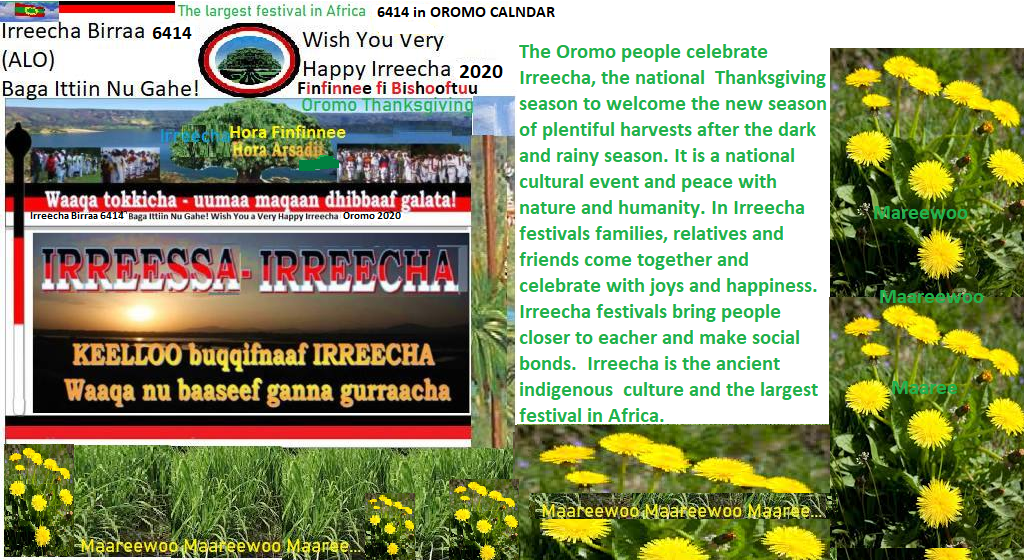
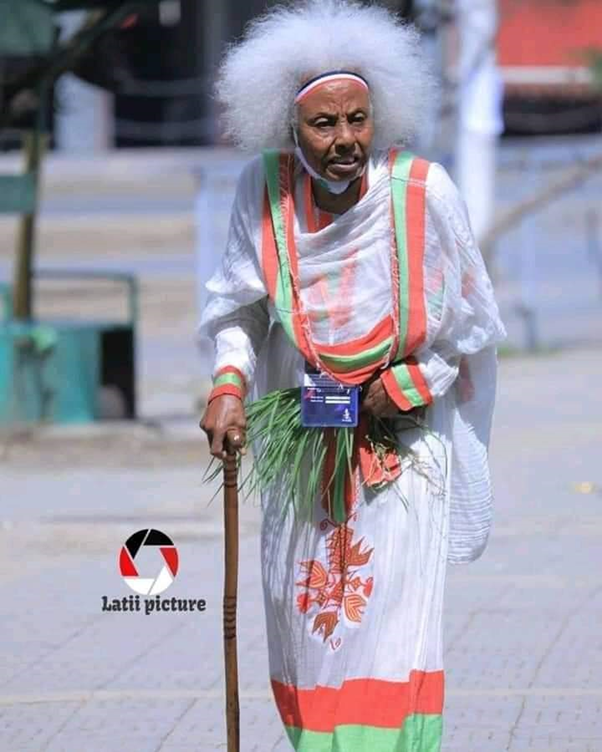
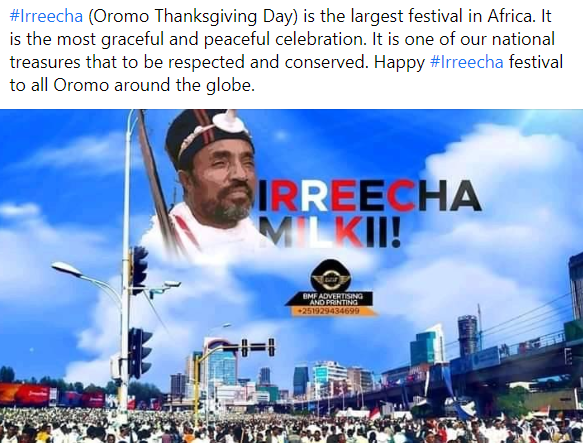

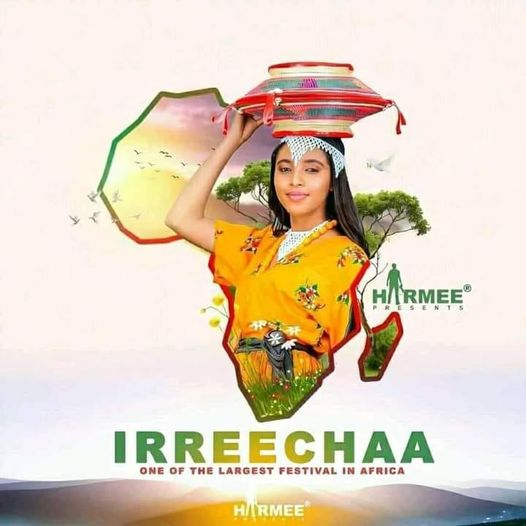
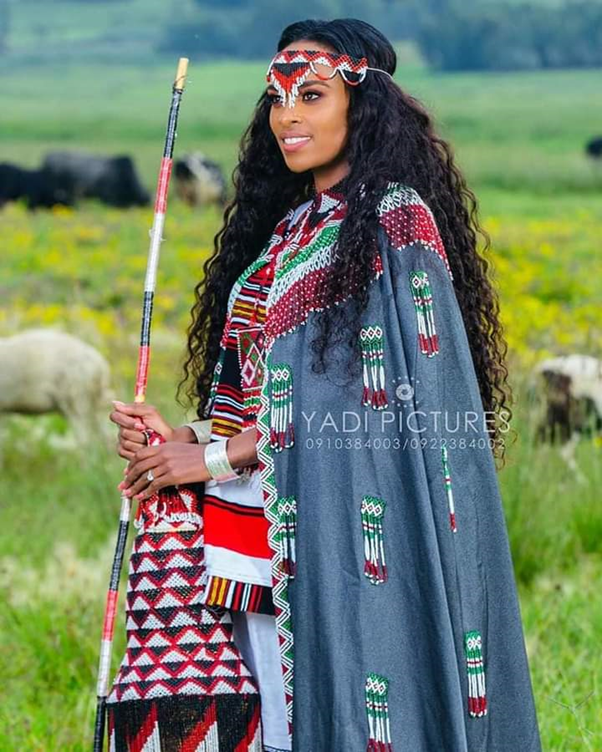
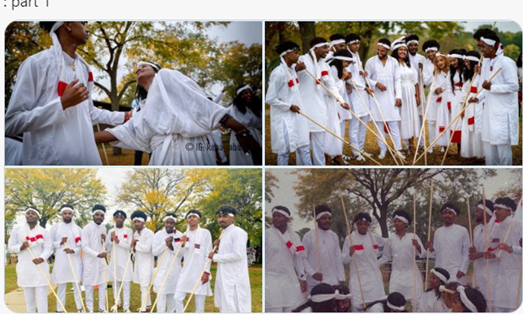

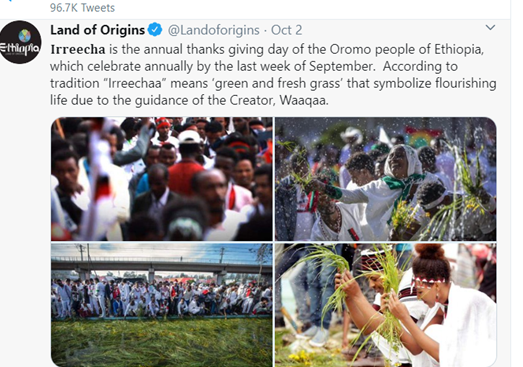
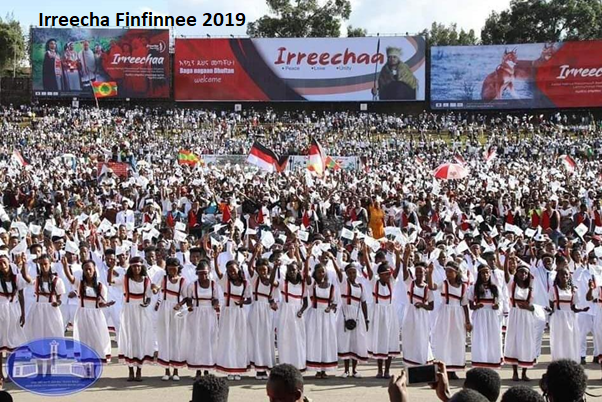
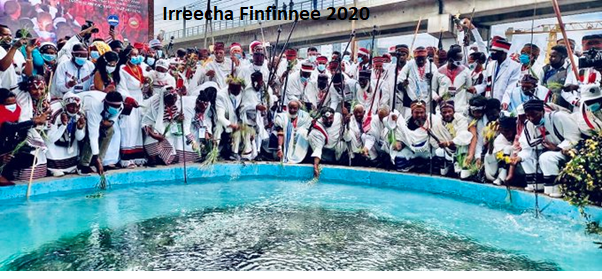
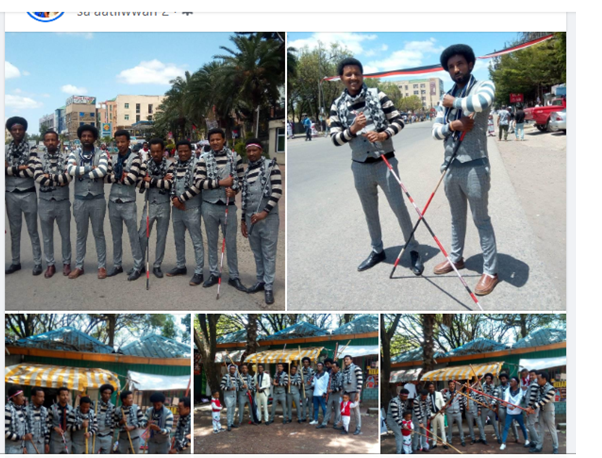
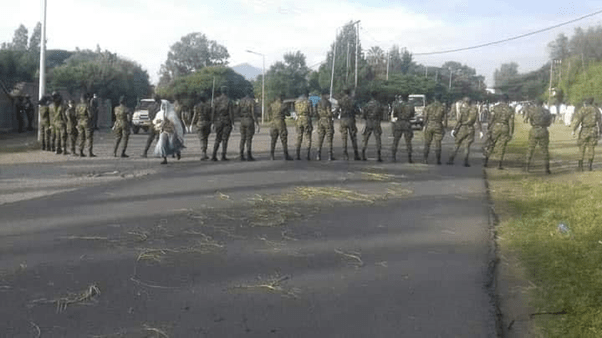
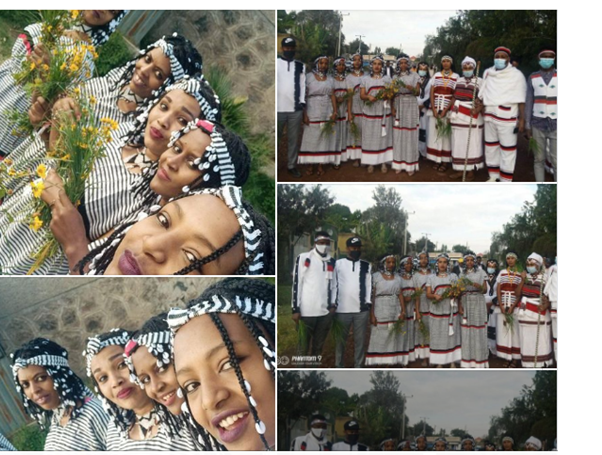
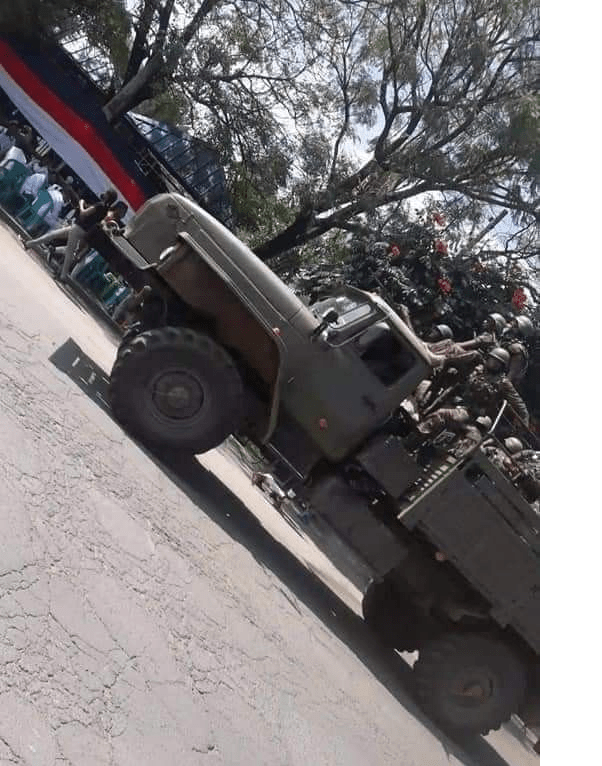
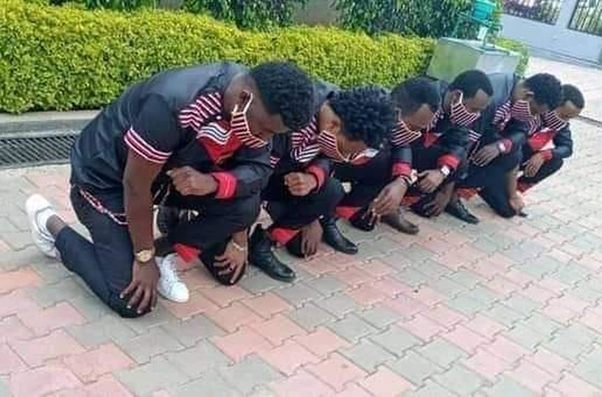
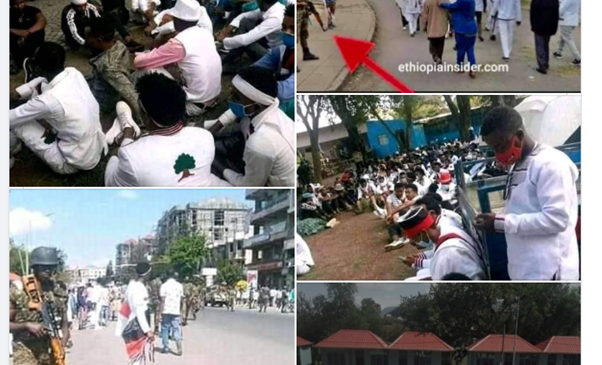
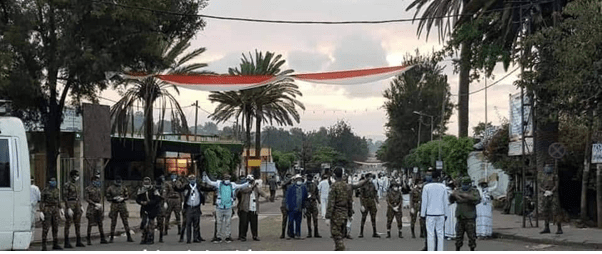
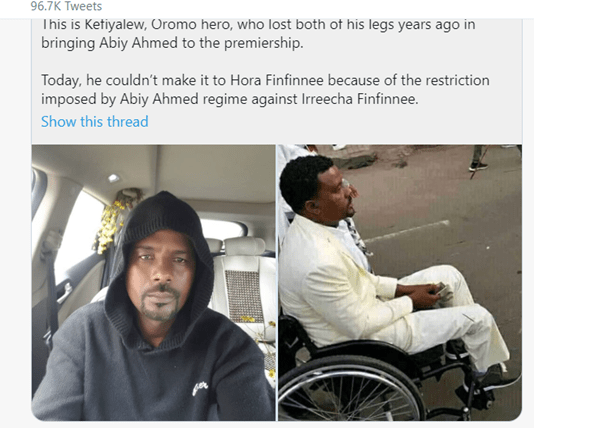
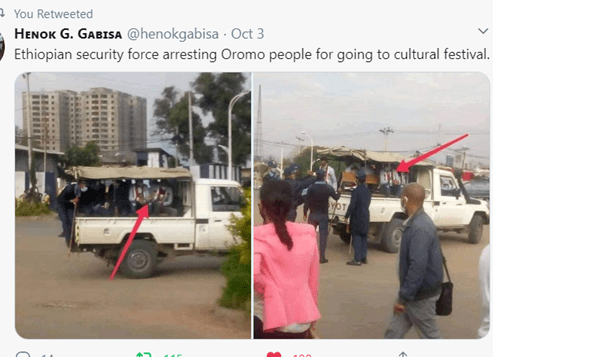
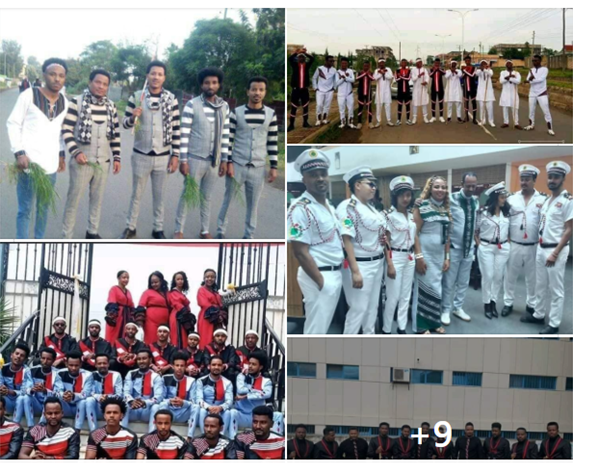
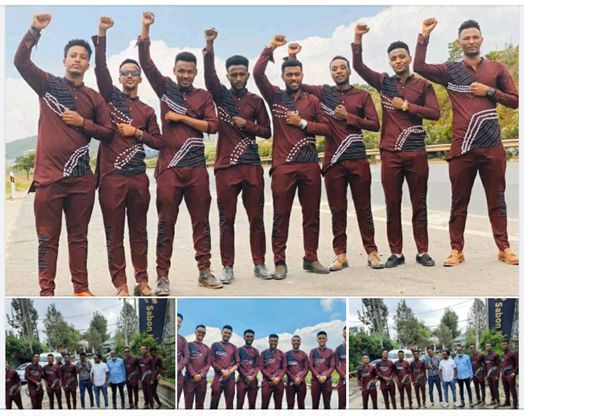
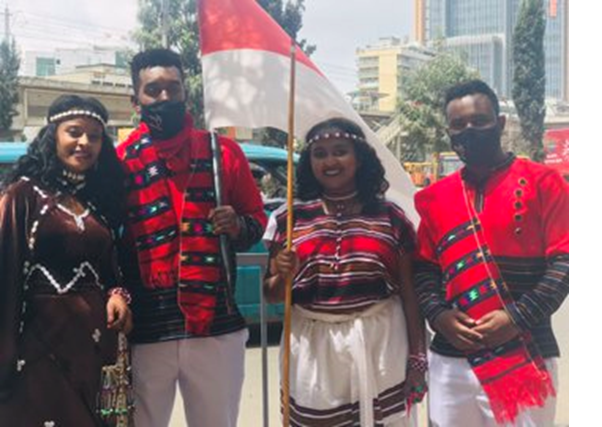
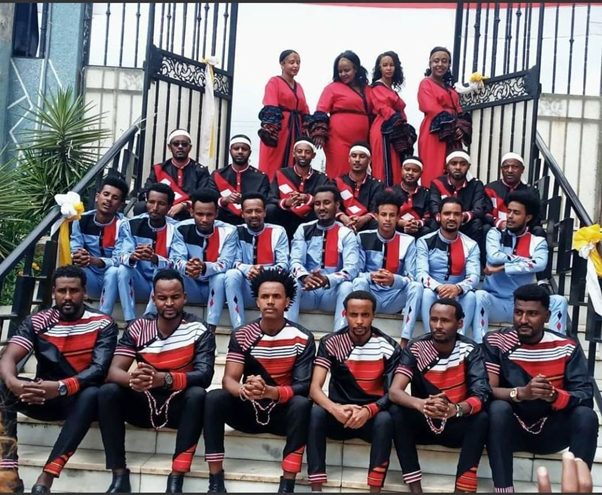
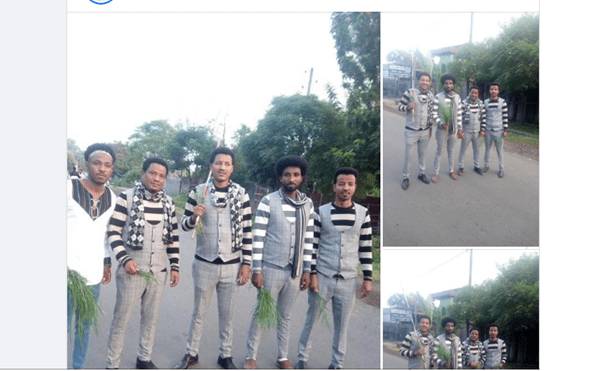
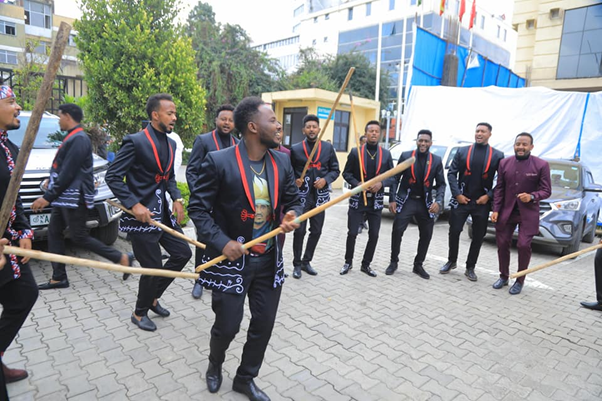
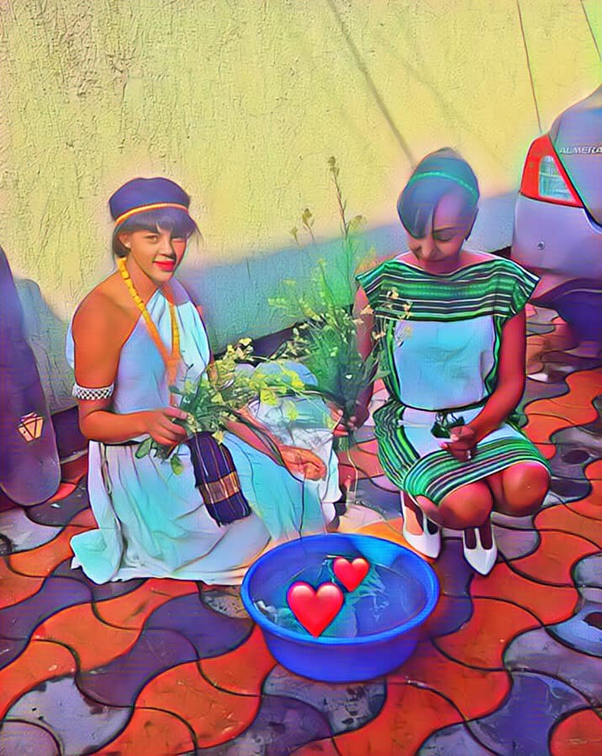
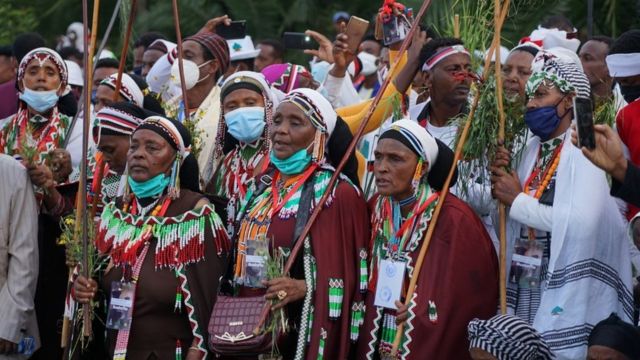
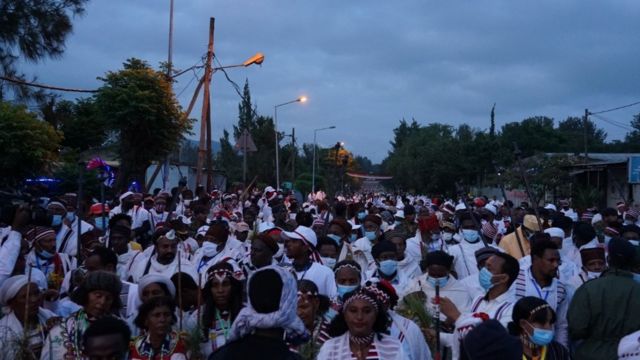
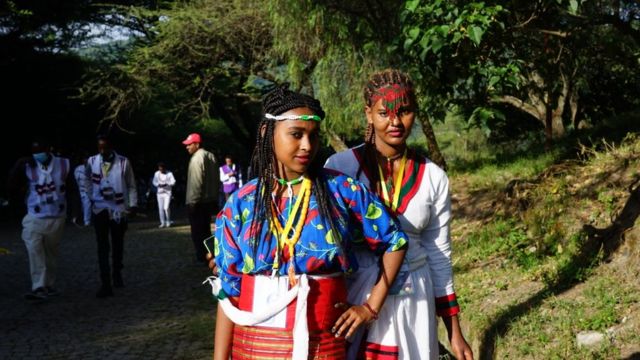
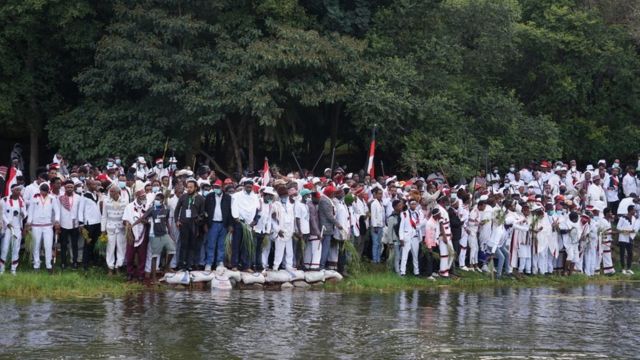
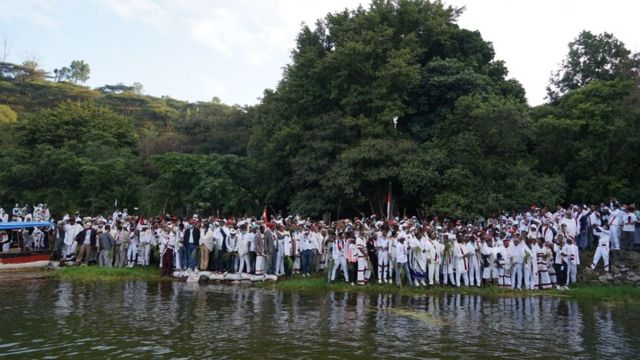
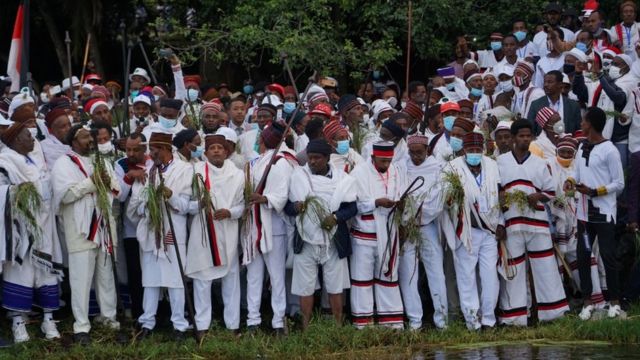
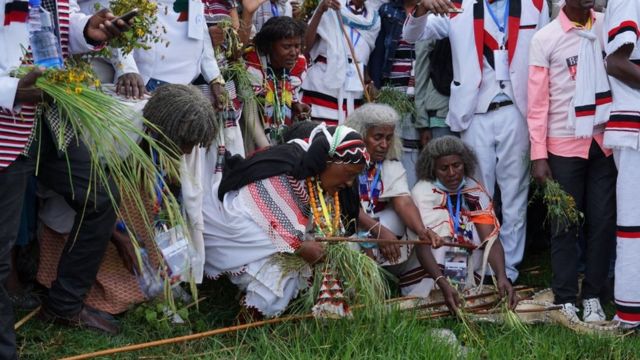
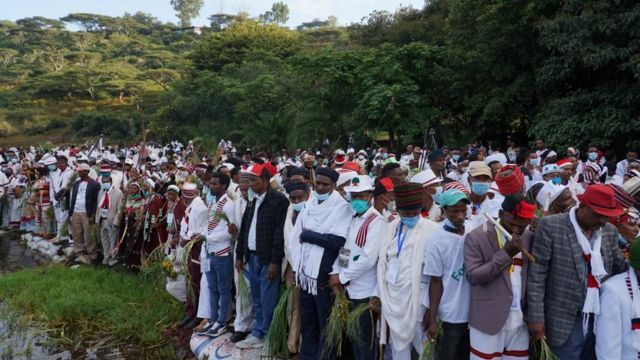
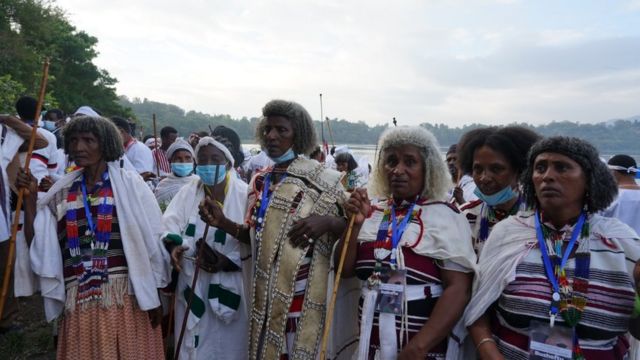
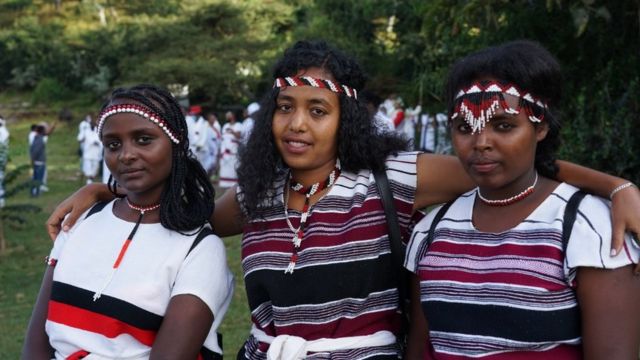
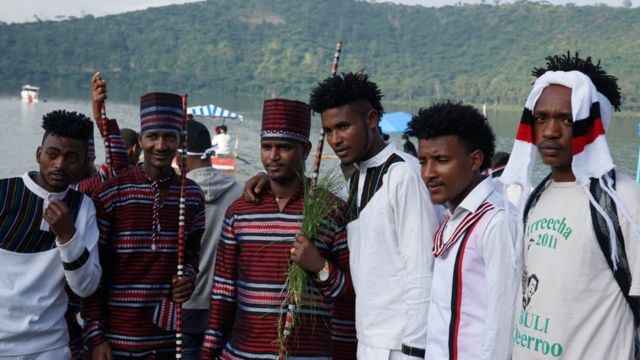
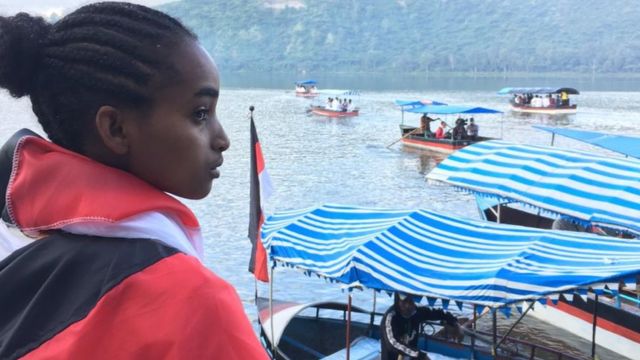
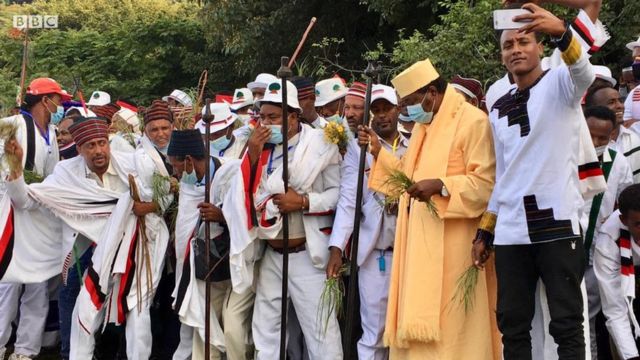
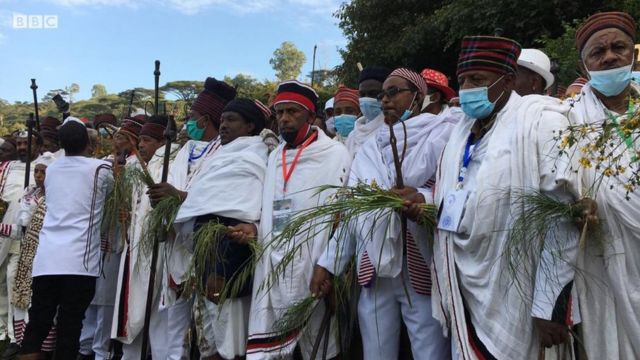
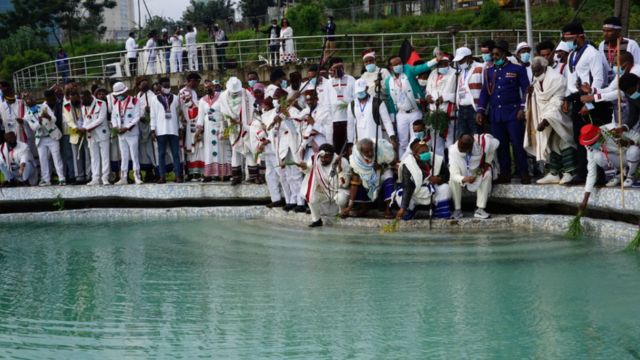
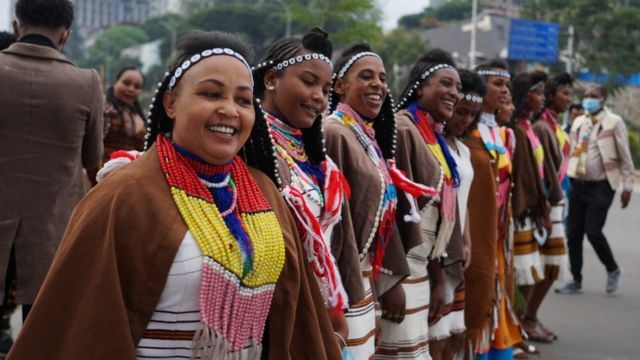
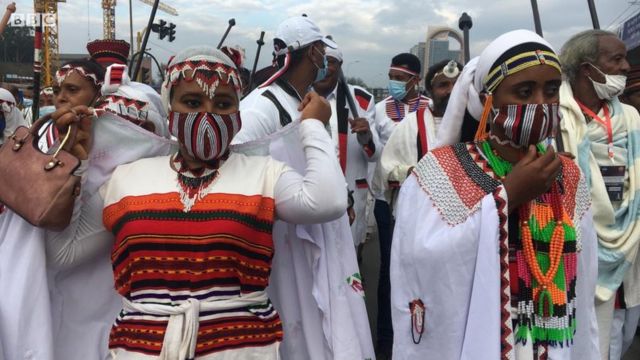
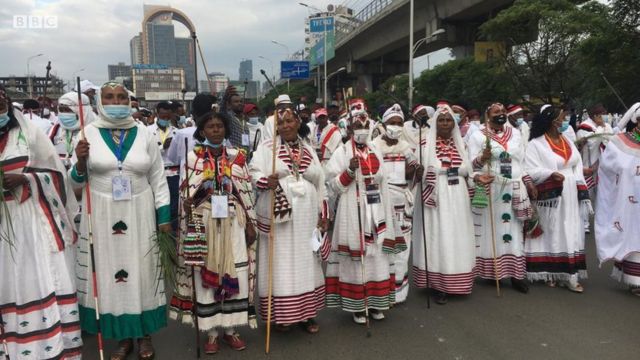
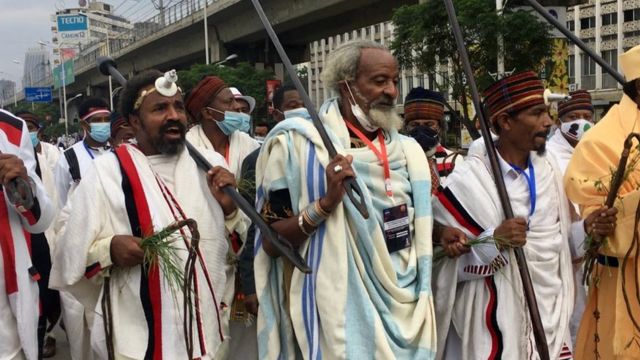
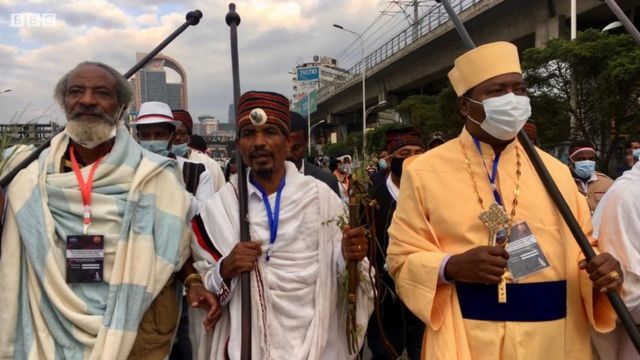
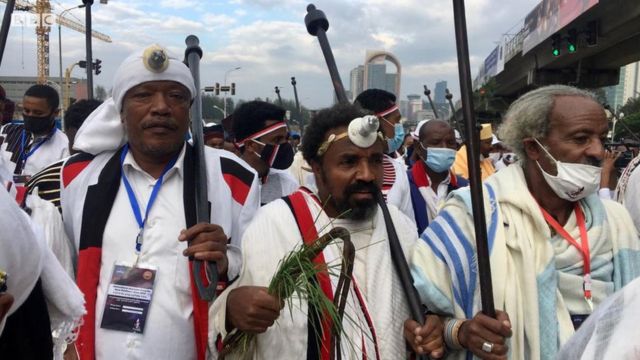
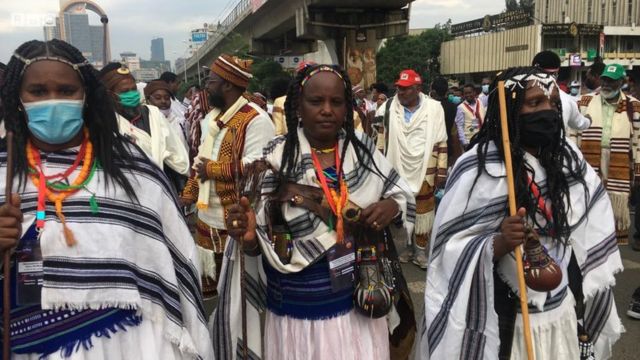
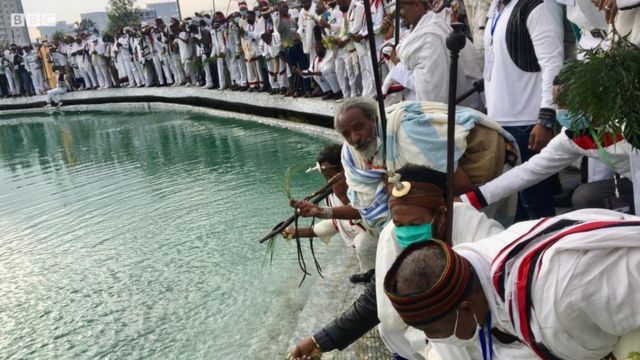
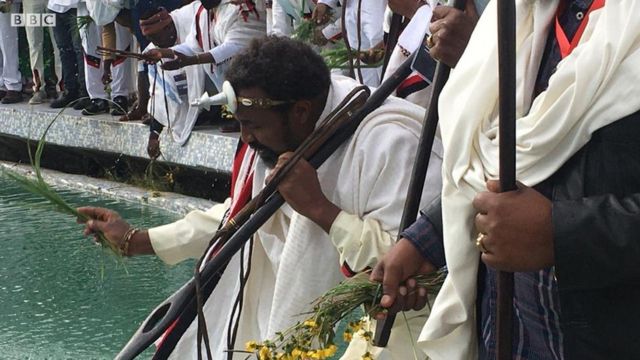
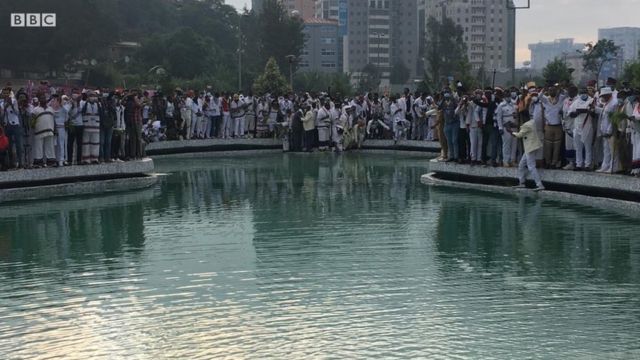
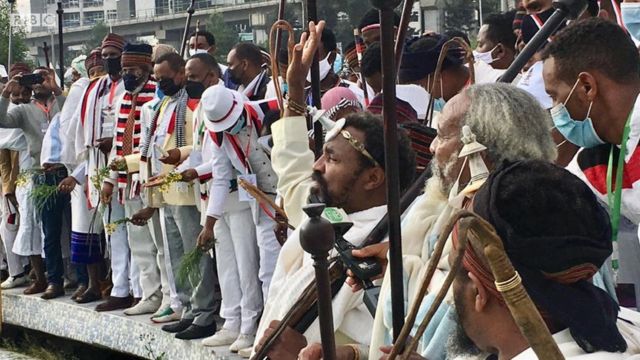
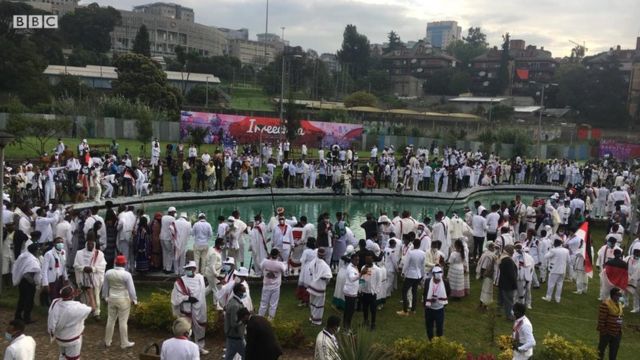
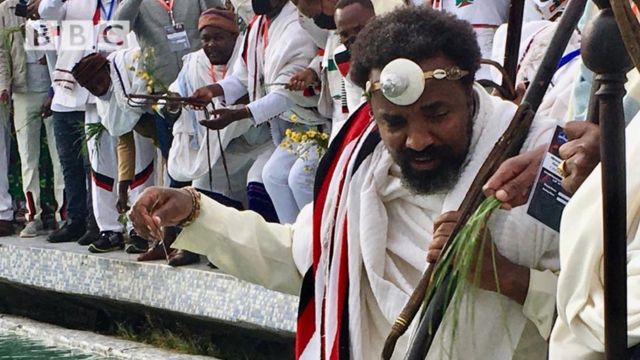
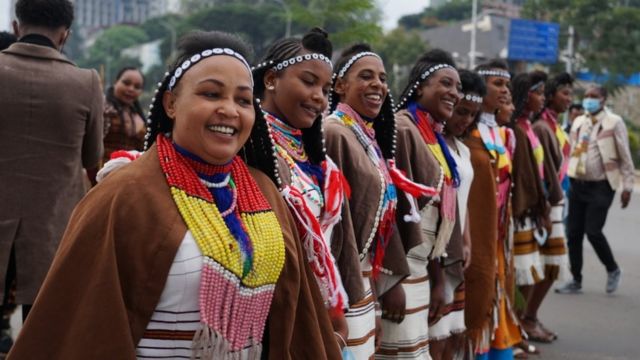
![Women, wearing traditional clothing, sing and march during the celebration of Irreechaa, the Oromo people thanksgiving holiday, in Addis Ababa. [Eduardo Soteras/AFP]](https://www.aljazeera.com/wp-content/uploads/2020/10/000_8RB7Z2.jpg?resize=1170%2C780)
![Irreecha marks the end of the rainy season and the start of the harvest season. [Eduardo Soteras/AFP]](https://www.aljazeera.com/wp-content/uploads/2020/10/000_8RB7Z8.jpg?fit=1170%2C781)
![Members of Ethiopia's largest ethnic group gathered in Addis Ababa for a scaled-back version of Irreecha [Eduardo Soteras/AFP]](https://www.aljazeera.com/wp-content/uploads/2020/10/000_8RB7ZT.jpg?fit=1170%2C781)
![Men in traditional wraps during the celebration of Irreechaa, the Oromo people's festival of thanksgiving, in Addis Ababa. [Eduardo Soteras/AFP]](https://www.aljazeera.com/wp-content/uploads/2020/10/000_8RB826.jpg?fit=1170%2C780)
![Authorities said Irreecha attendance was restricted to around 5,000 people to prevent the spread of the coronavirus. [Eduardo Soteras/AFP]](https://www.aljazeera.com/wp-content/uploads/2020/10/000_8RB7ZR.jpg?fit=1170%2C780)
![Celebrants dipped flowers in water and sprinkled it over themselves, gestures symbolising gratitude and renewal. [Eduardo Soteras/AFP]](https://www.aljazeera.com/wp-content/uploads/2020/10/000_8RB7ZP.jpg?fit=1170%2C780)
![The festival is traditionally held in the city of Bishoftu, Oromia, some 50km (30 miles) southeast of Addis Ababa. [Eduardo Soteras/AFP]](https://www.aljazeera.com/wp-content/uploads/2020/10/000_8RB7ZG.jpg?fit=1170%2C780)
![A small crowd led by chanting Oromo traditional leaders gathered at pools of water in central Addis Ababa. [Eduardo Soteras/AFP]](https://www.aljazeera.com/wp-content/uploads/2020/10/000_8RB7Z7.jpg?fit=1170%2C780)
![Men in traditional clothing during the celebration of Irreechaa. [Eduardo Soteras/AFP]](https://www.aljazeera.com/wp-content/uploads/2020/10/000_8RB7Z3.jpg?fit=1170%2C780)
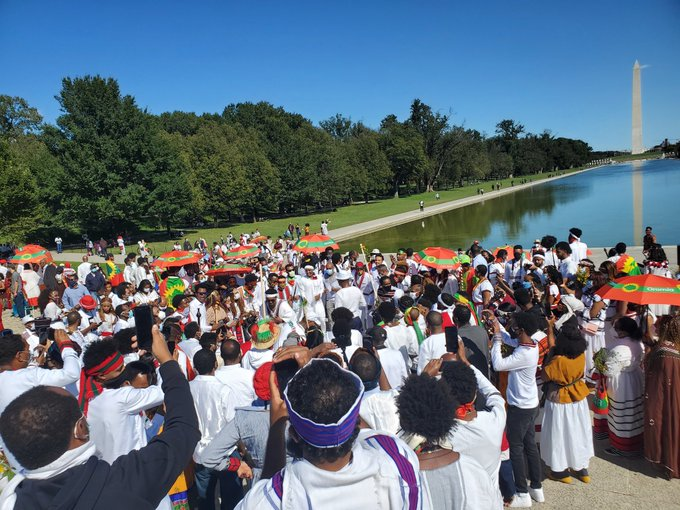
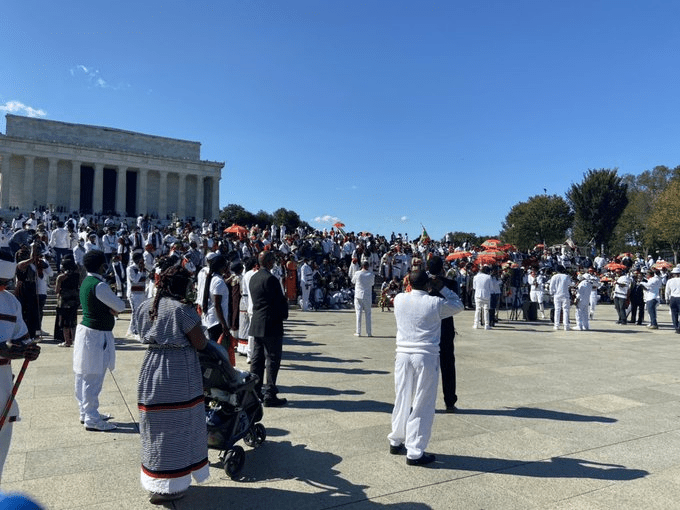
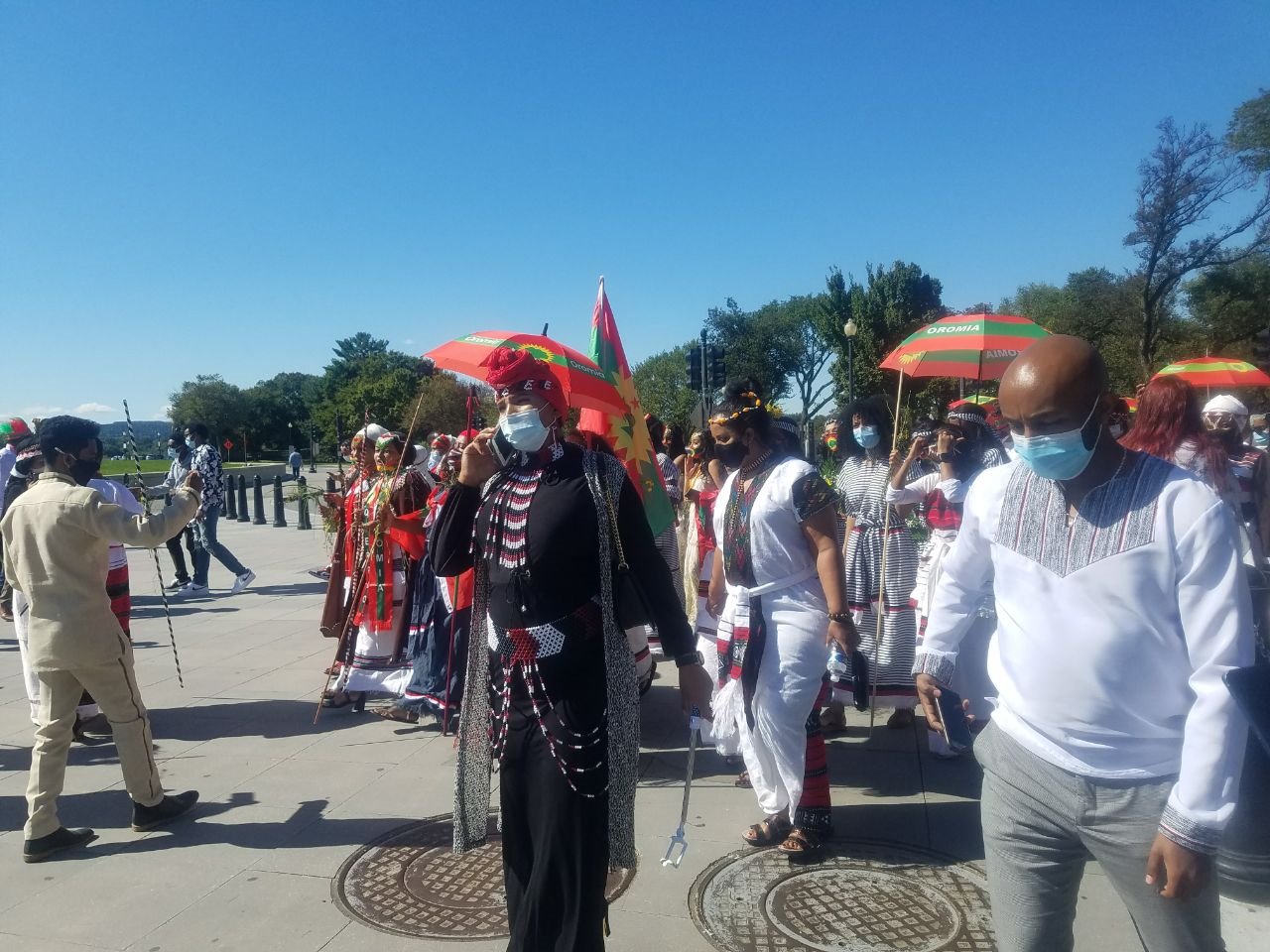



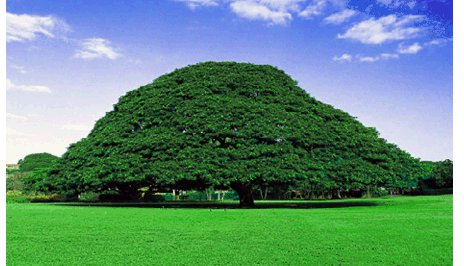


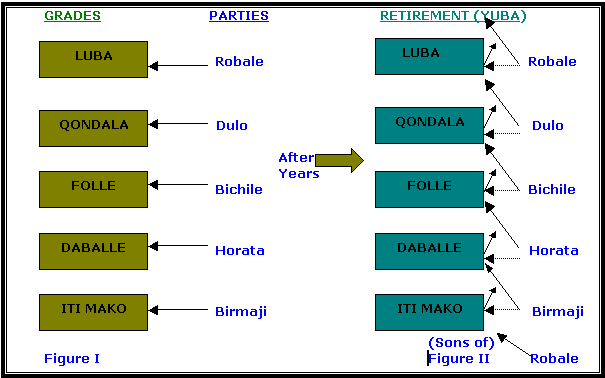
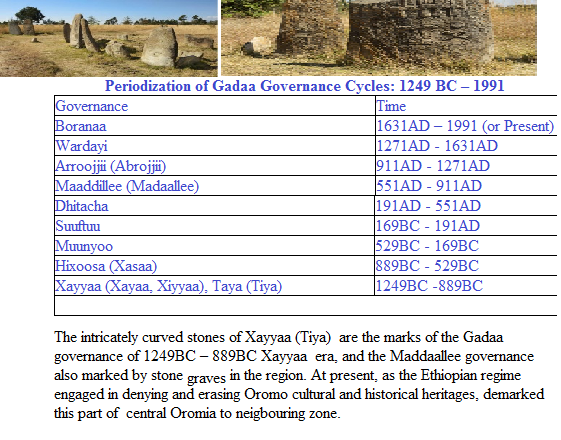


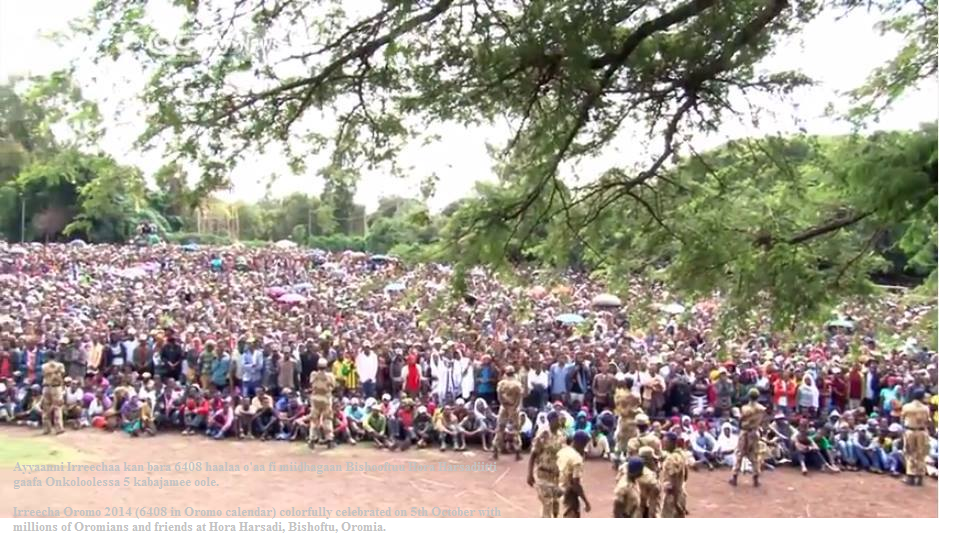


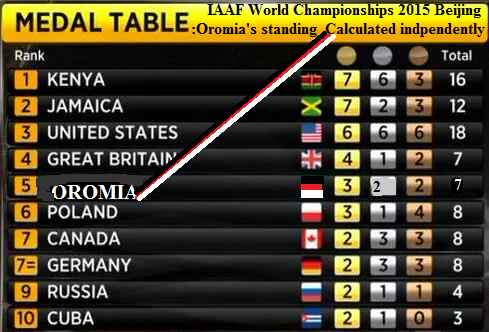
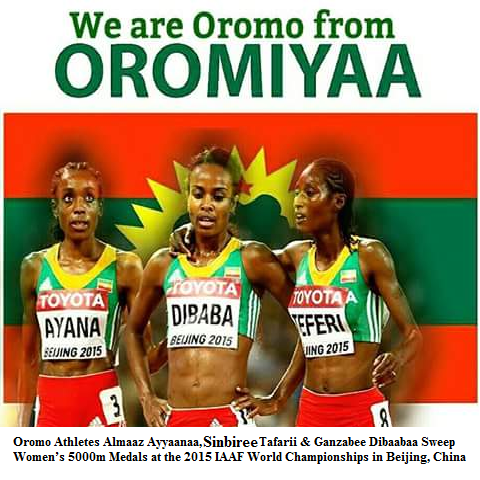
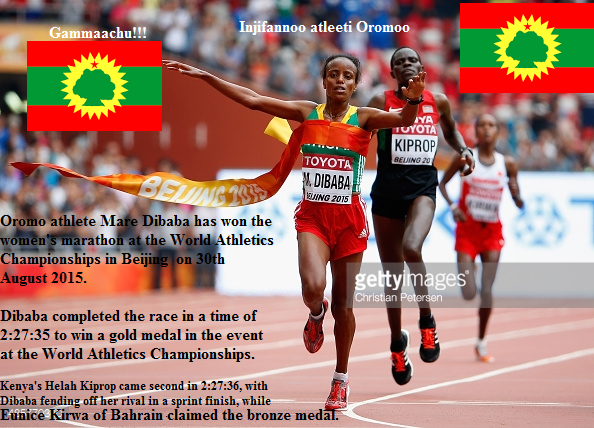
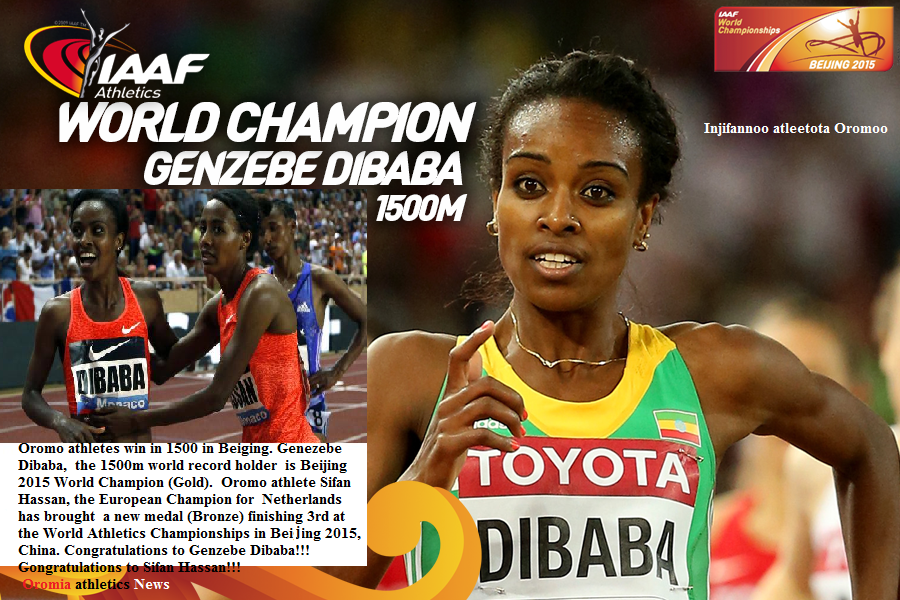
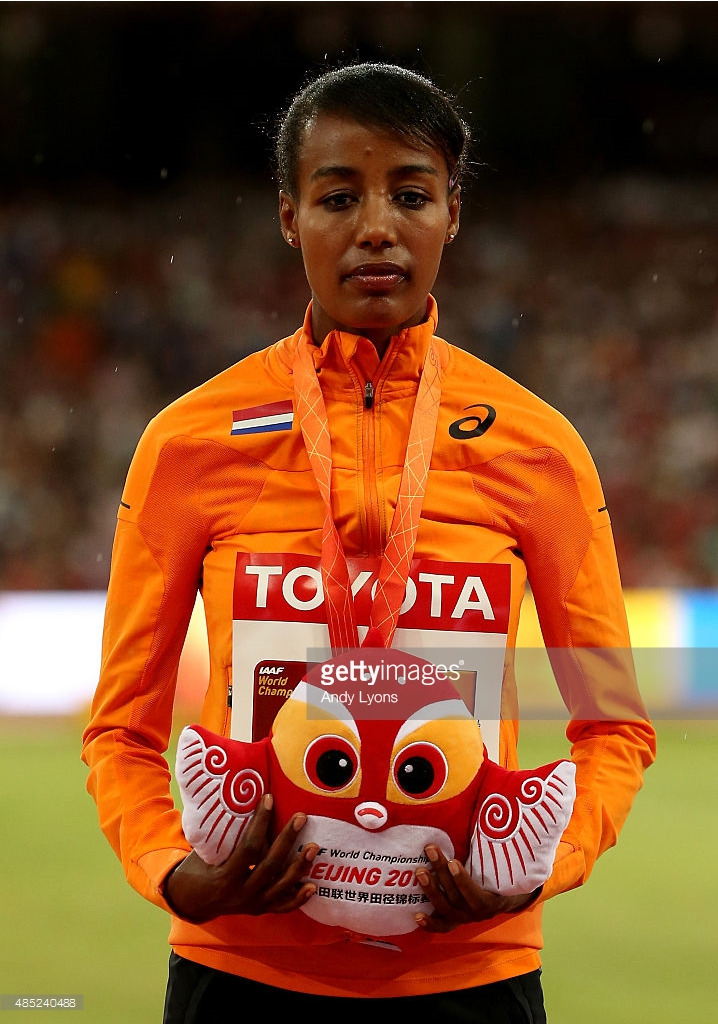
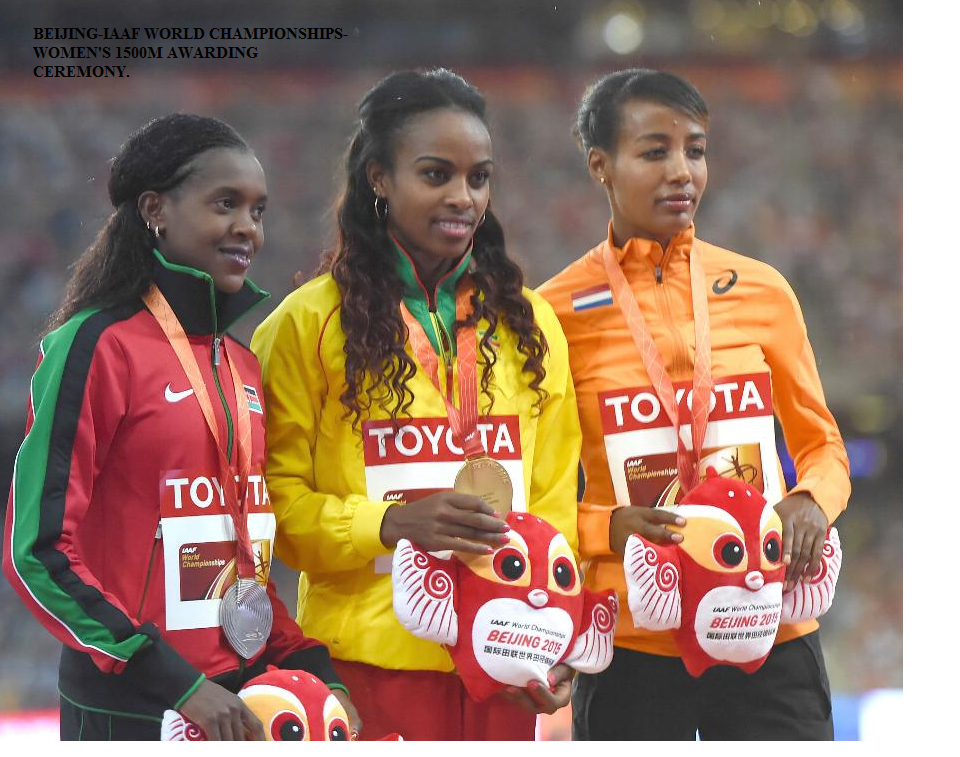
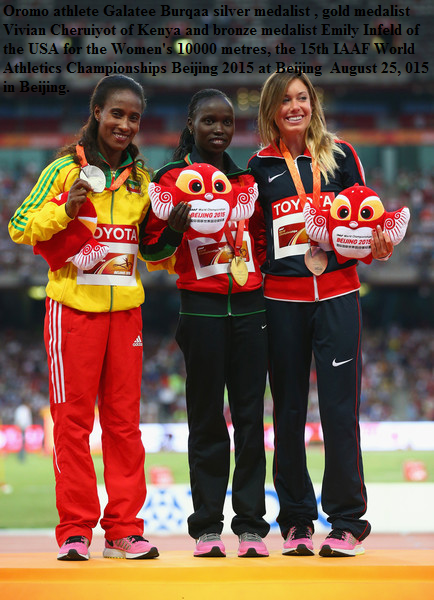
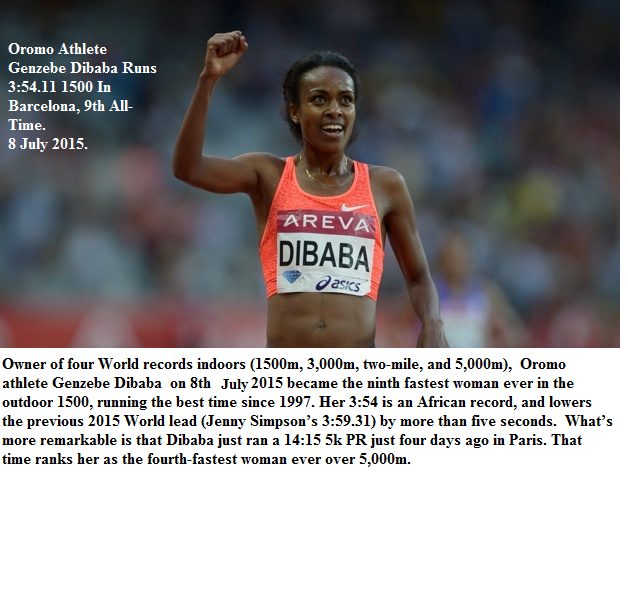
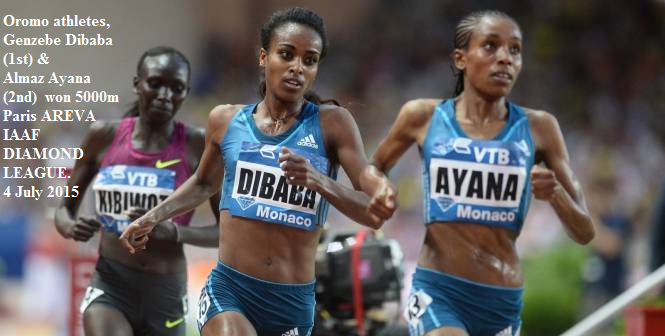
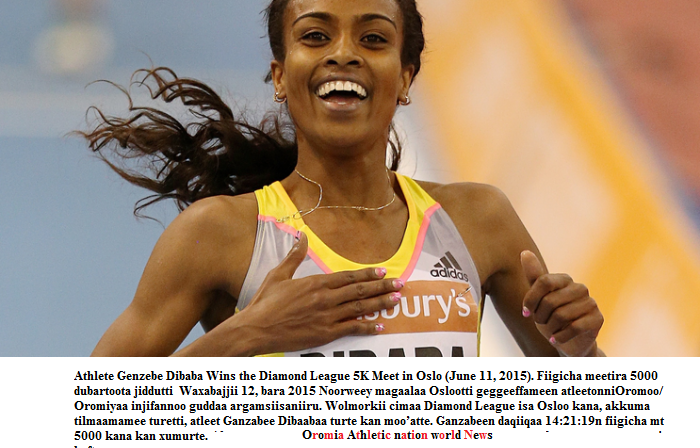
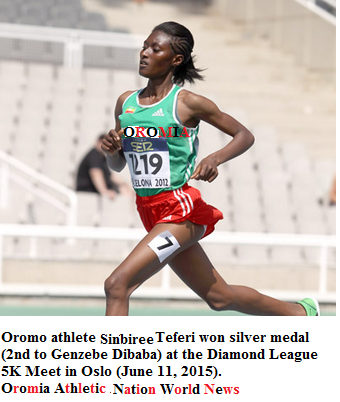
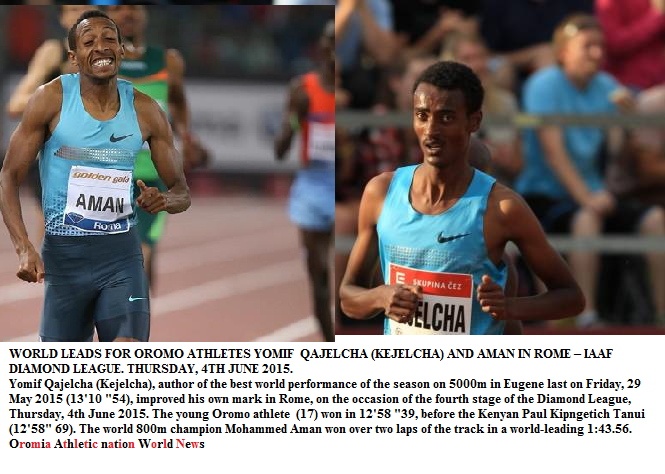

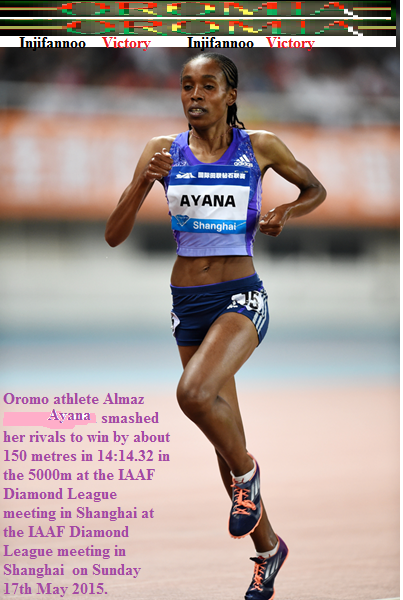
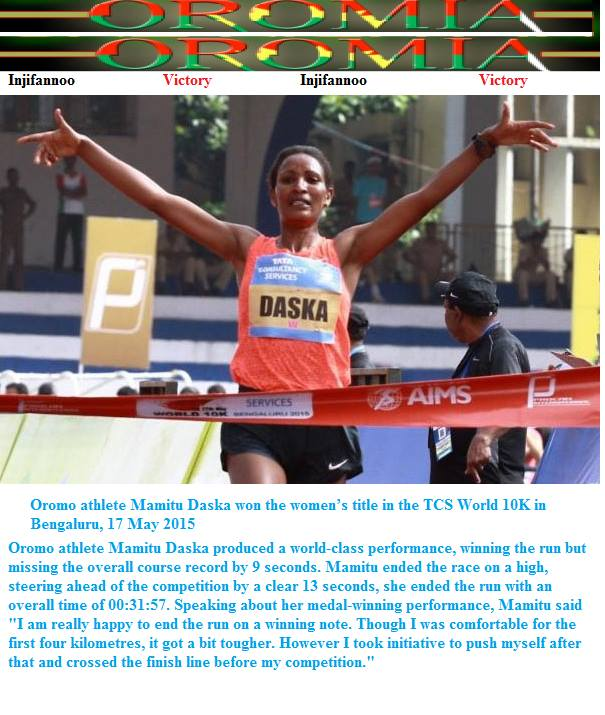
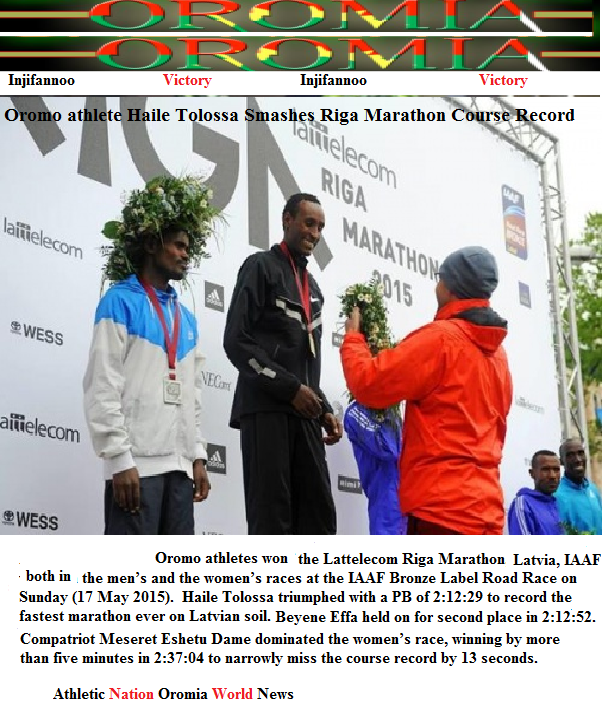


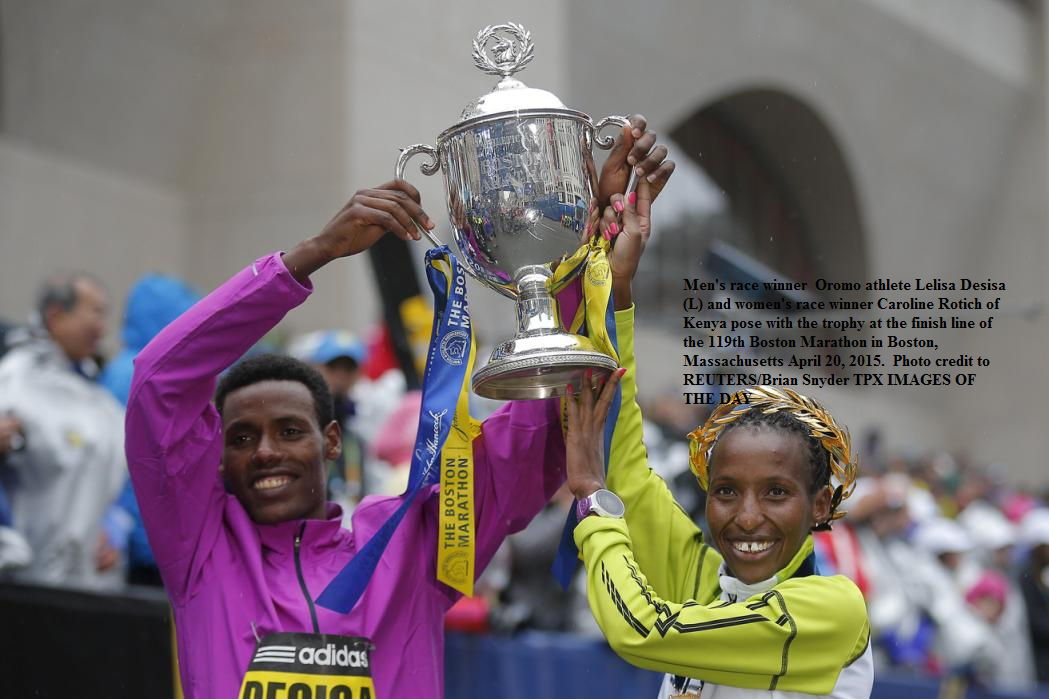


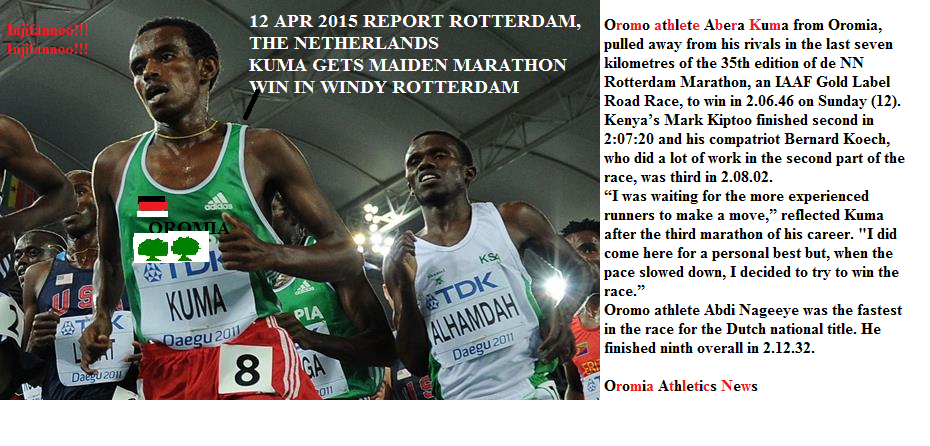
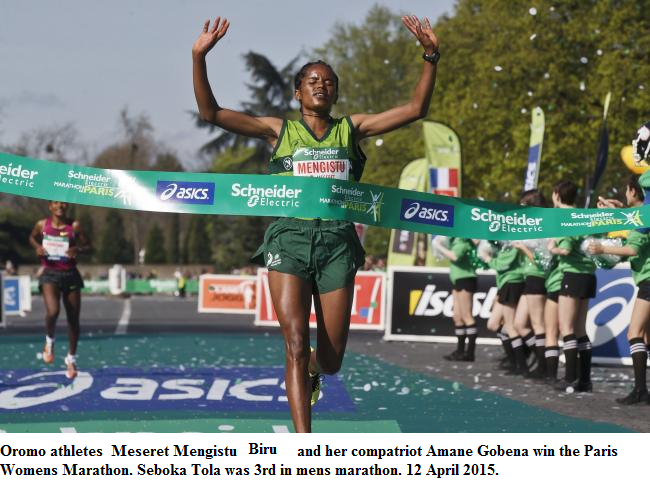

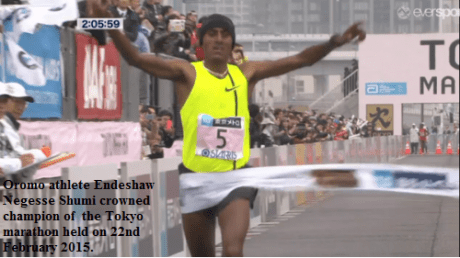
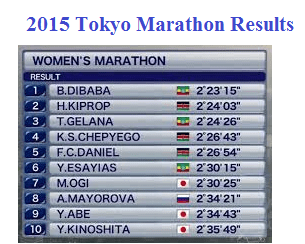


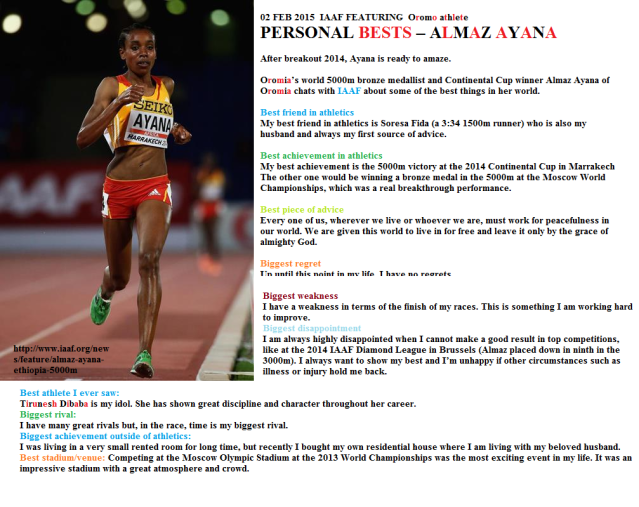


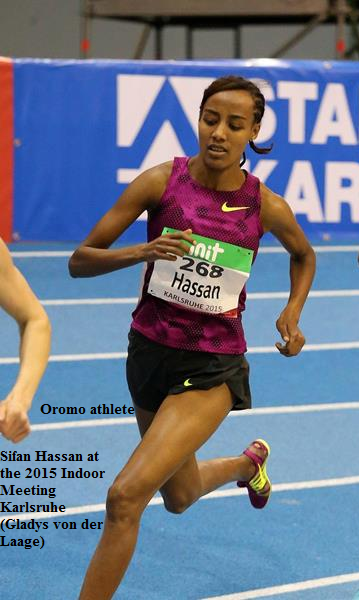

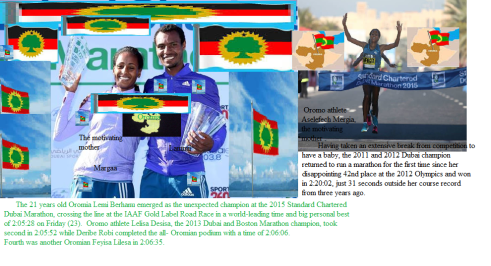


 November 17, 2014 (IAAF) — Amane Gobena took the honours at the 2014 Vodafone Istanbul Marathon, winning at the IAAF Gold Label Road Race in 2:28:46 on Sunday (16).


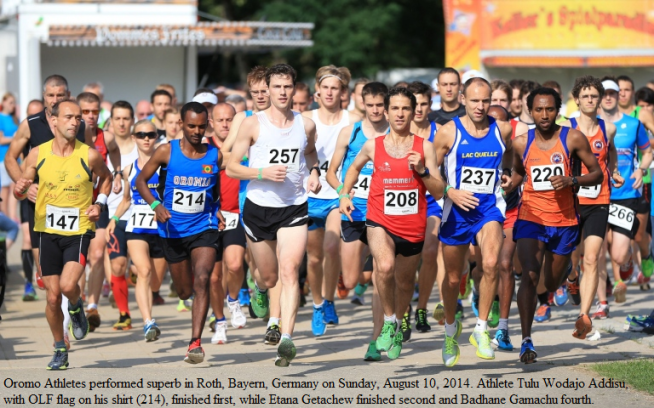
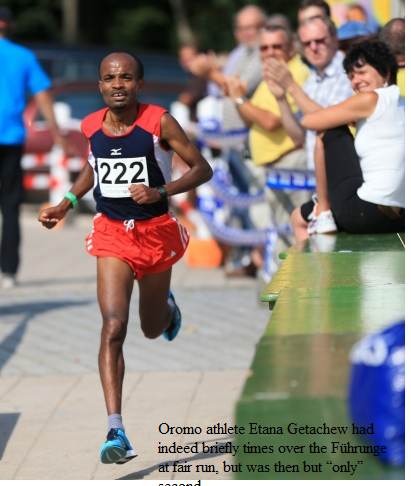
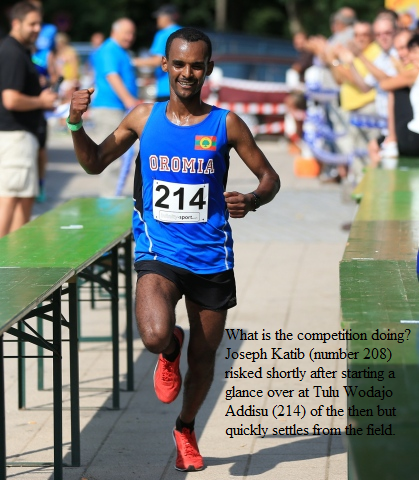
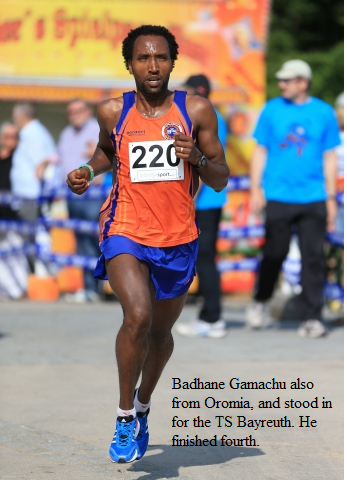


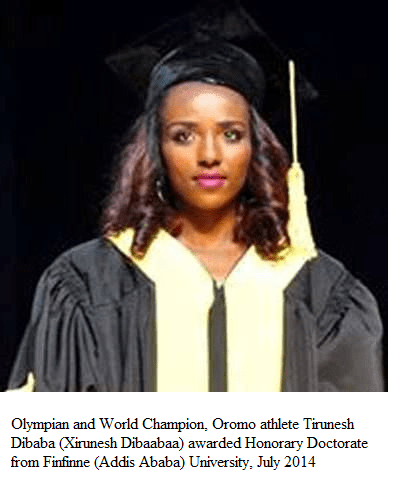
 Oromian Runners Shatter Marathon Race Records.Oromo fans showed support to Oromian athlete Deressa Chimsa as he completed the fastest marathon run in Canada (Photo: Lagatafo Studio)


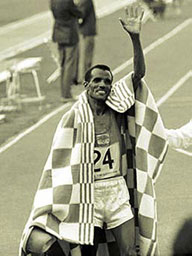
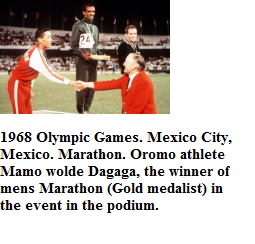
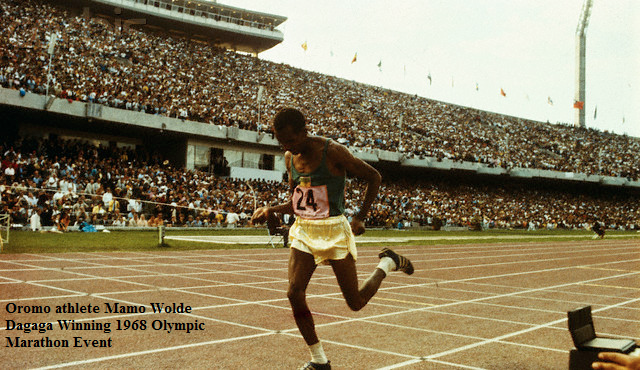

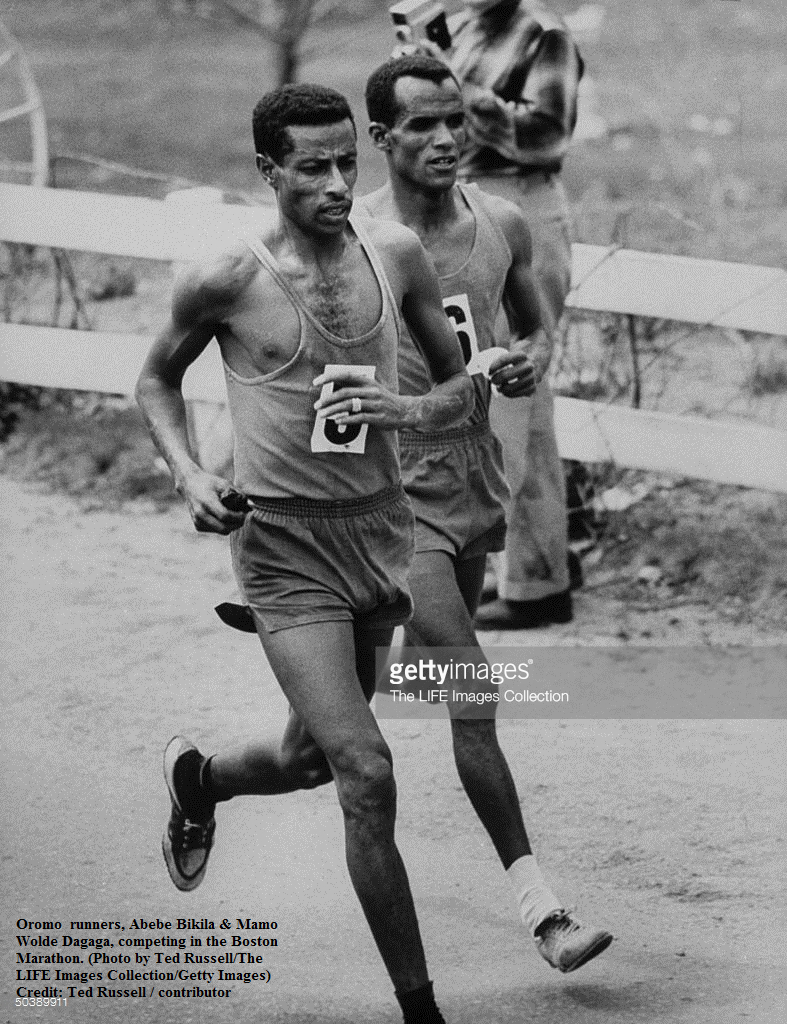
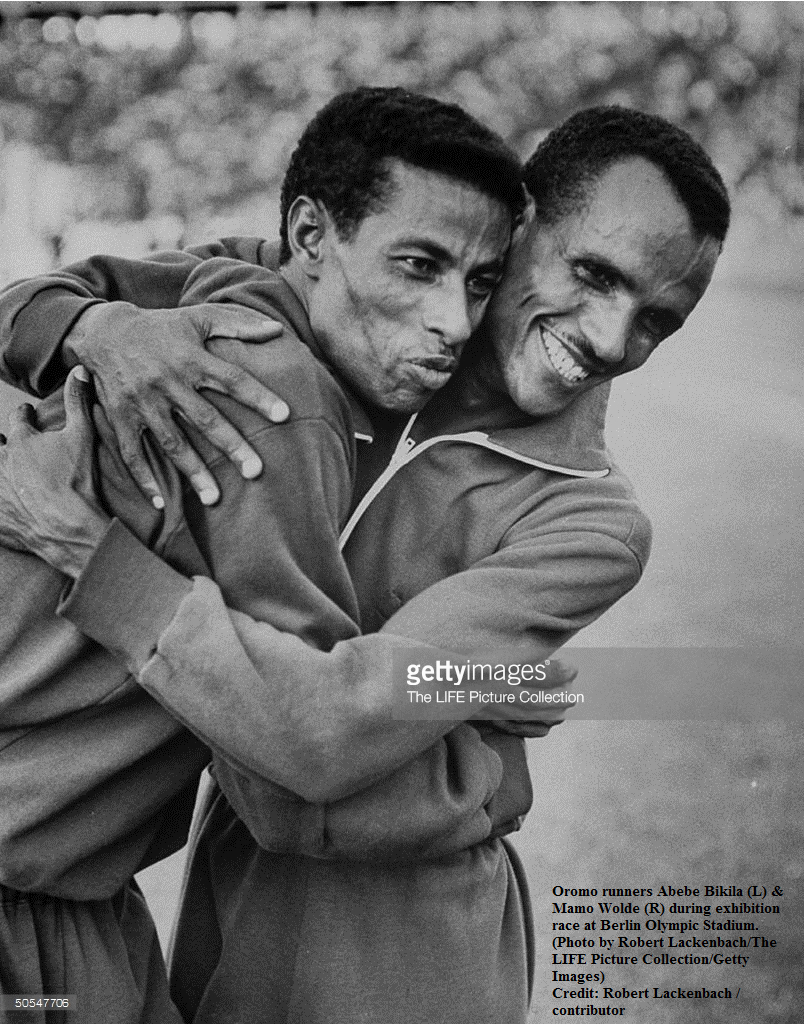


 Ibrahim Jeilan (Oromia, silver) and Mo Farah (Britain, gold) in 10,000k Moscow World Athletics 2013 final race.


 Winner of the Boston Marathon, Oromo athlete Lelisa Desisa with United States Secretary of State John Kerry at the American Embassy in Oromian Capital, Finfinnee.


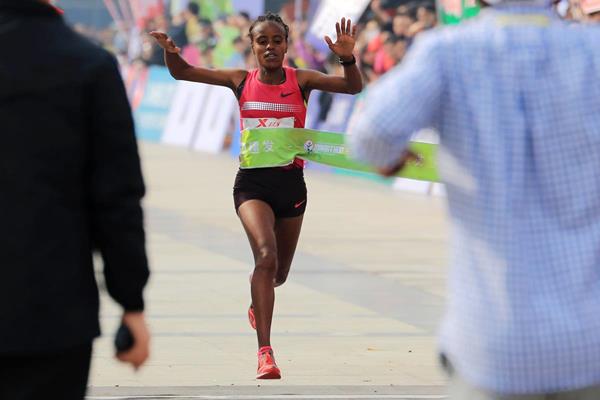
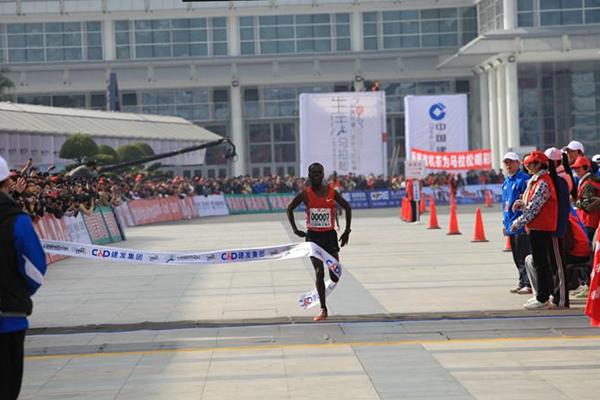


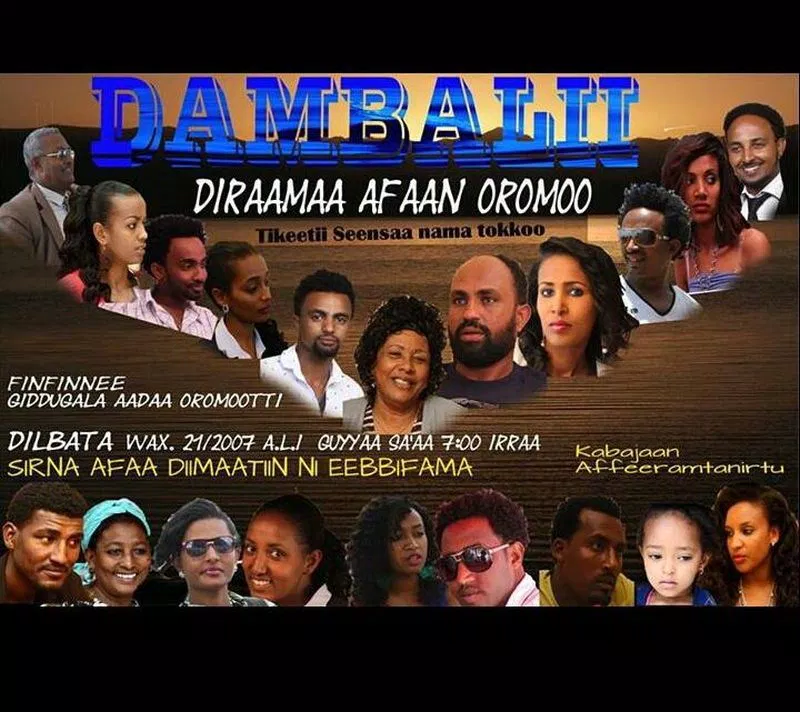
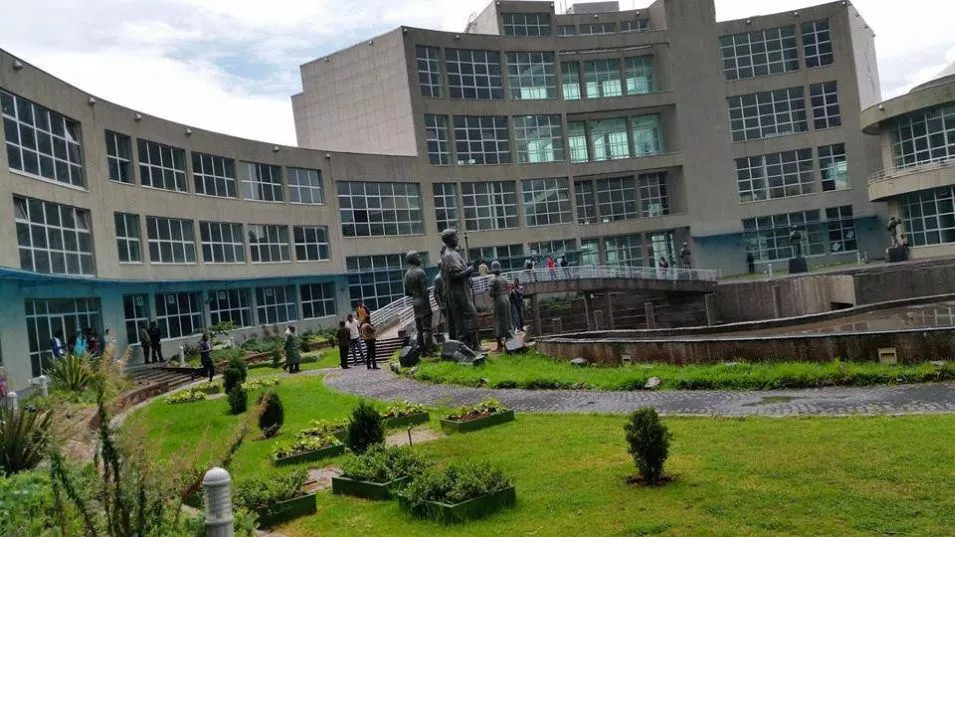
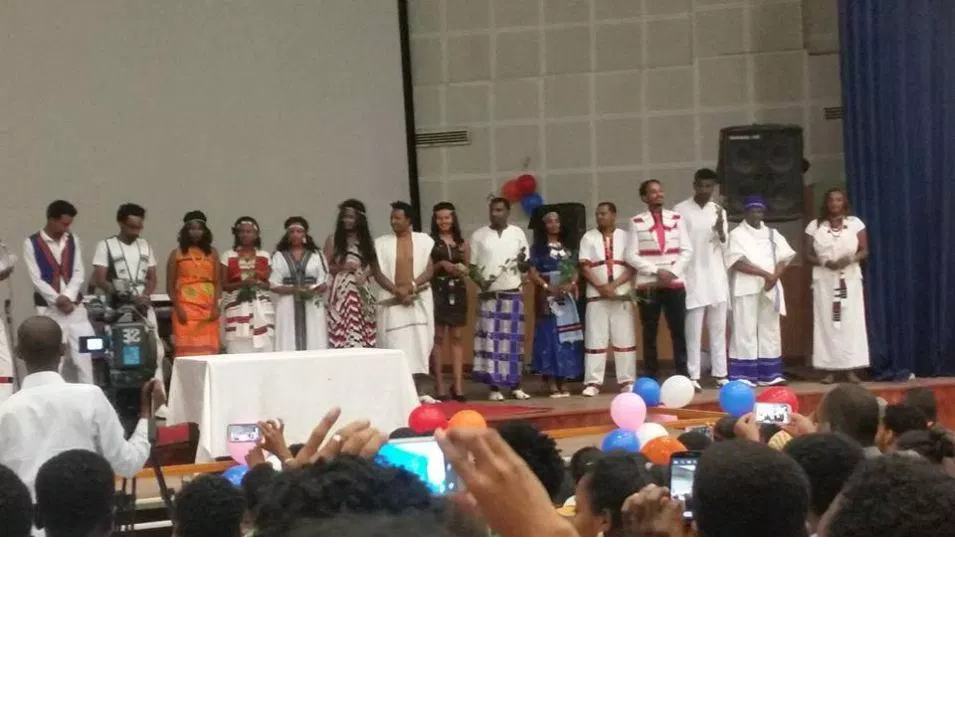


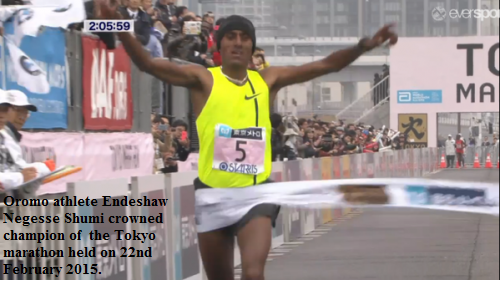



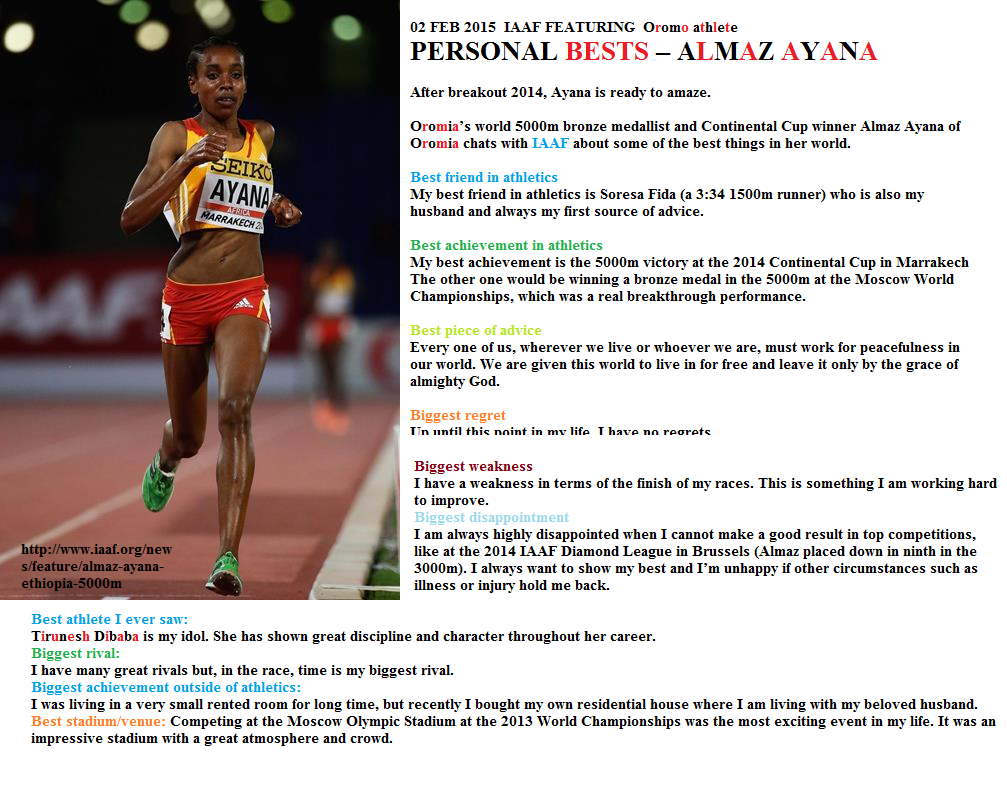


 Ibrahim Jeilan (Oromia, silver) and Mo Farah (Britain, gold) in 10,000k Moscow World Athletics 2013 final race.
 Winner of the Boston Marathon, Oromo athlete Lelisa Desisa with United States Secretary of State John Kerry at the American Embassy in Oromian Capital, Finfinnee.


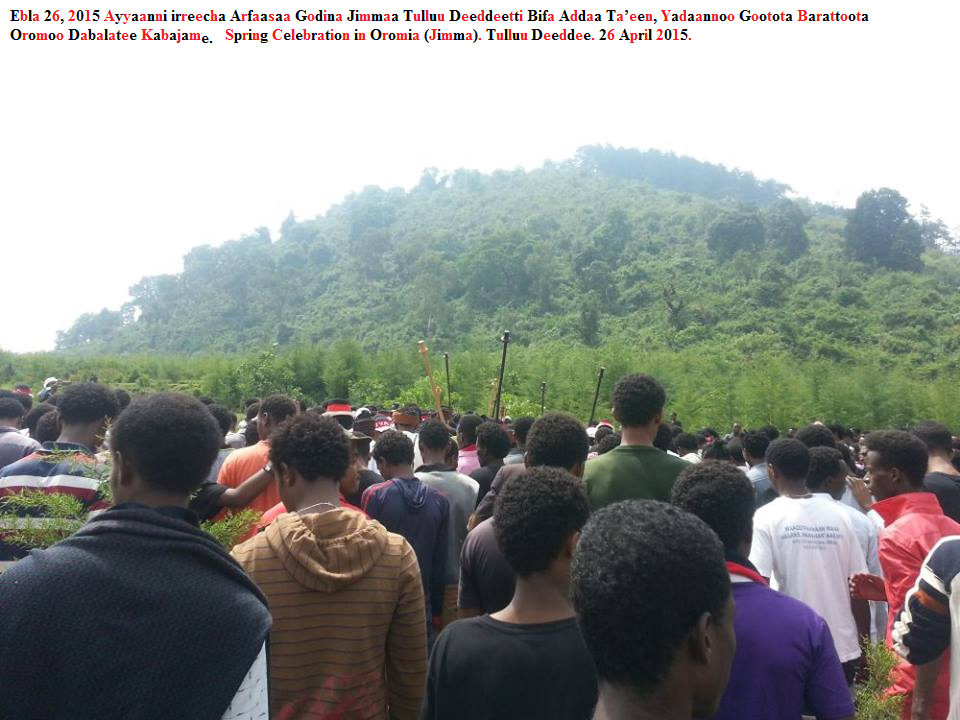


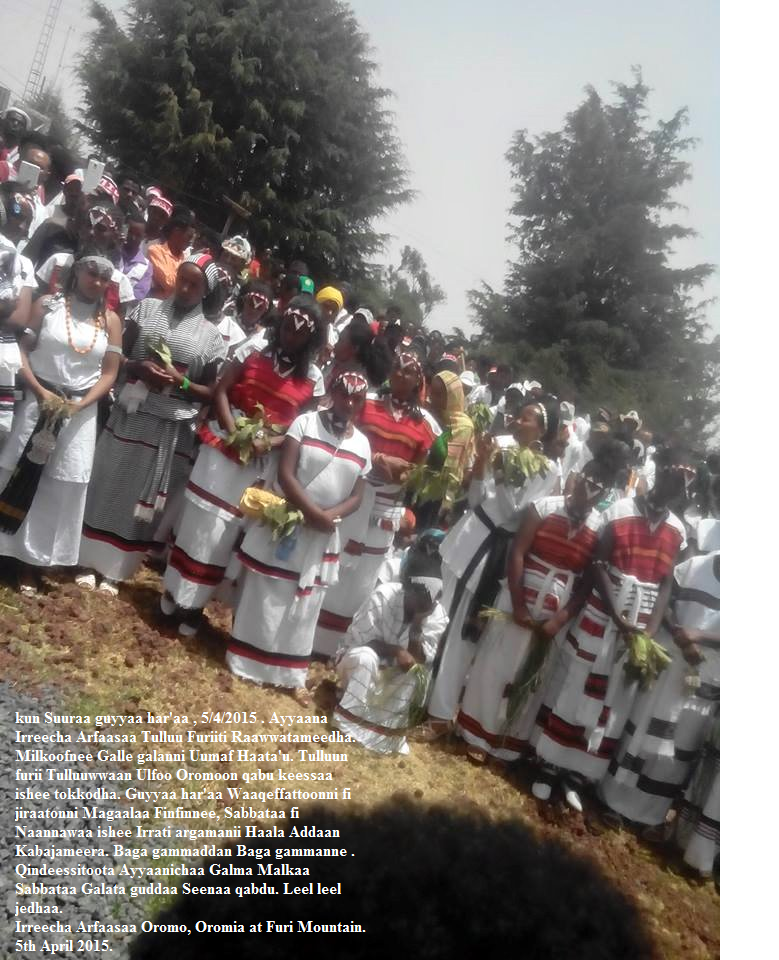
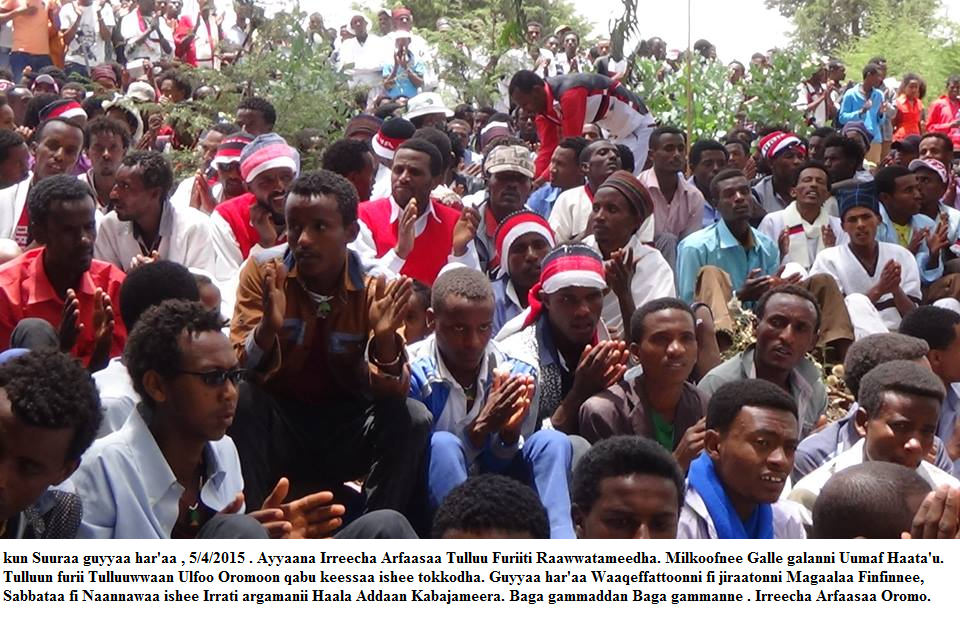


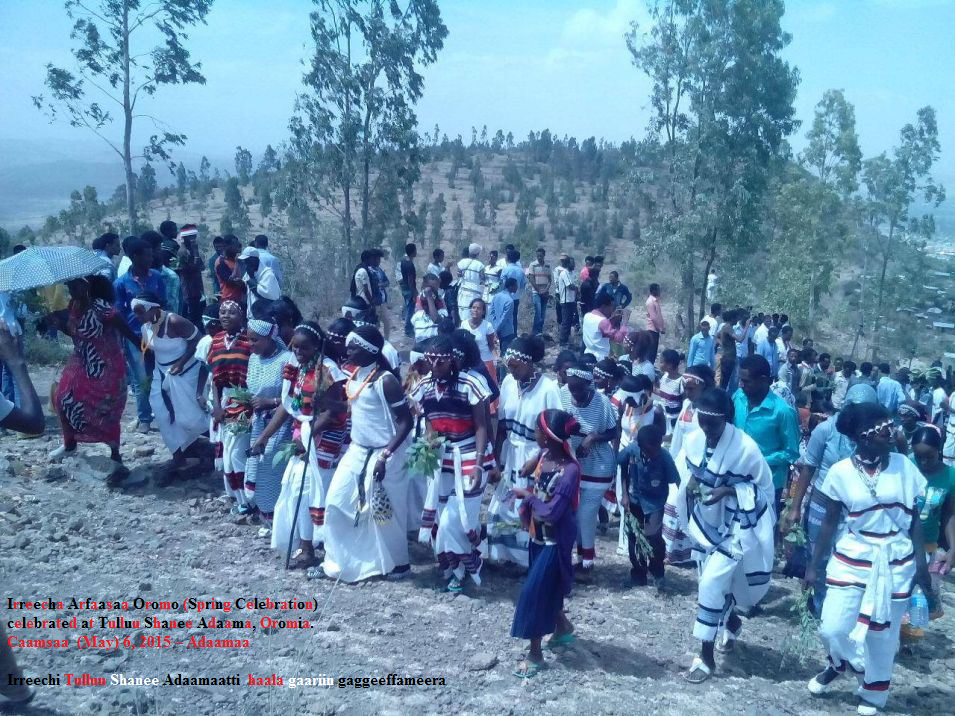
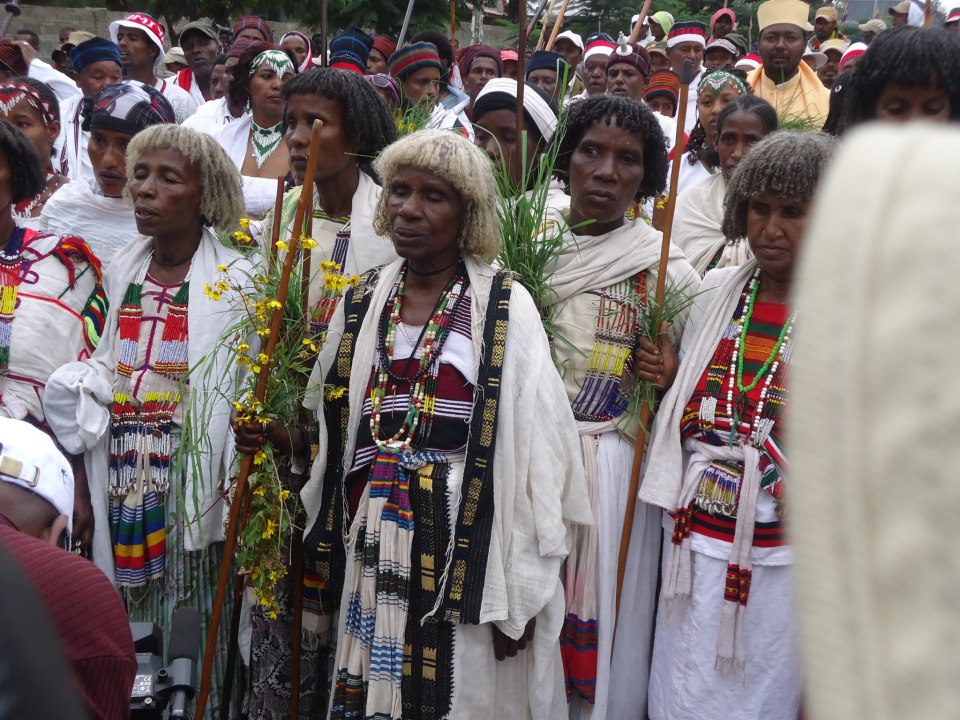



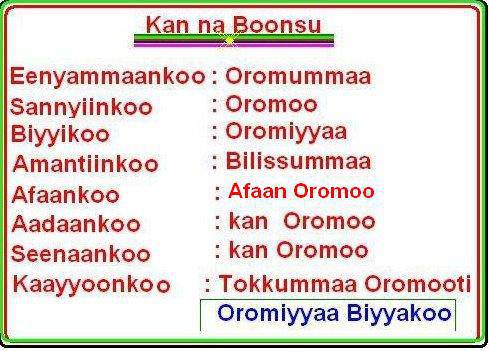
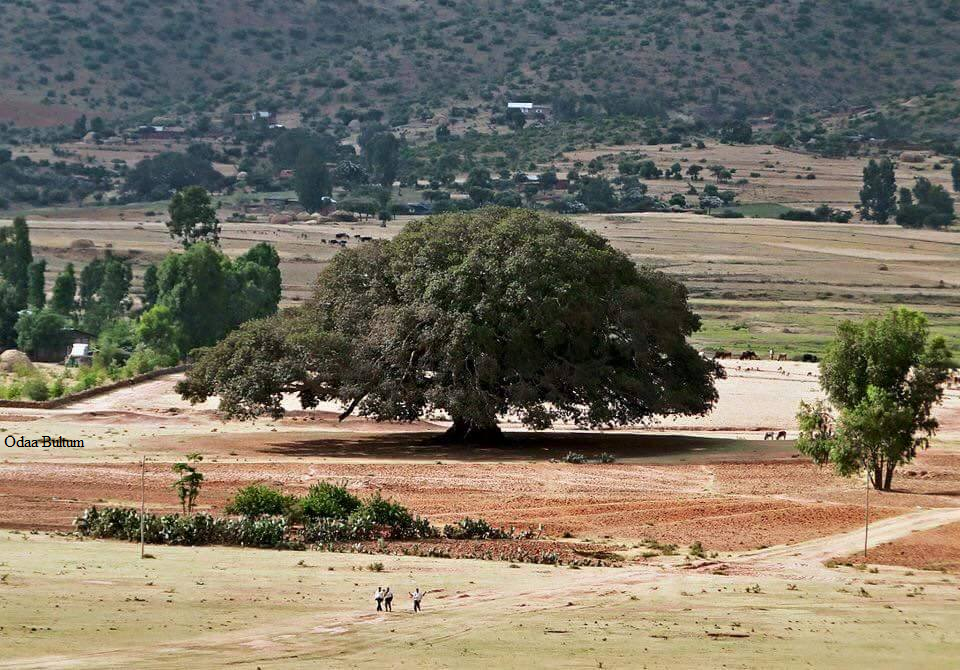


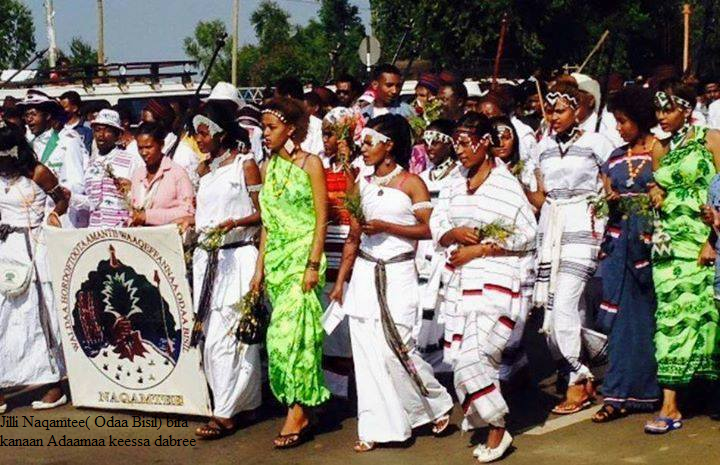
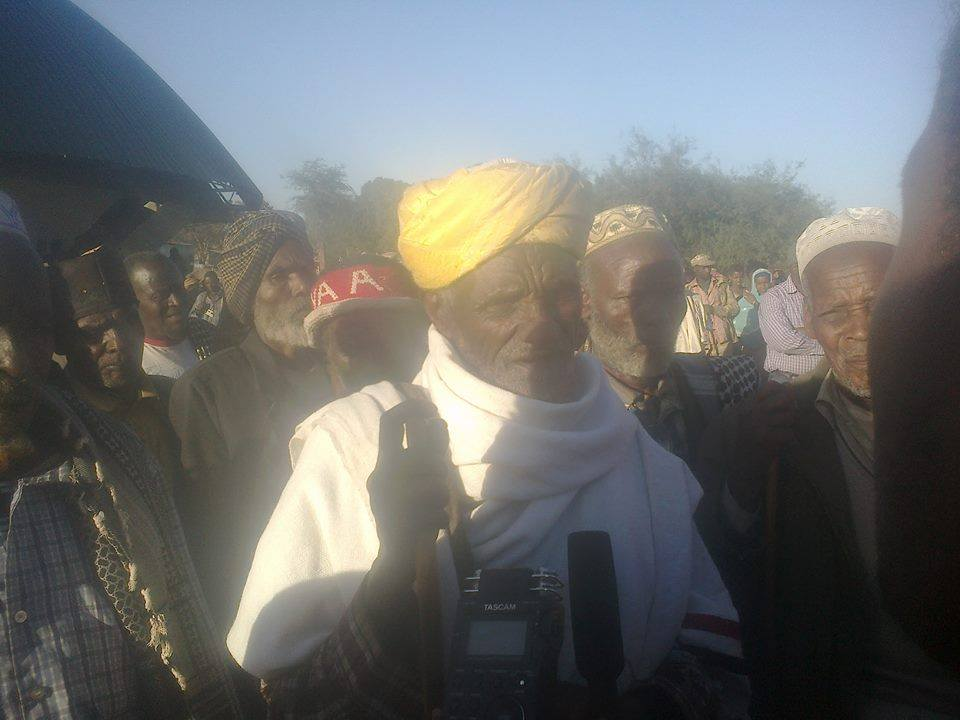
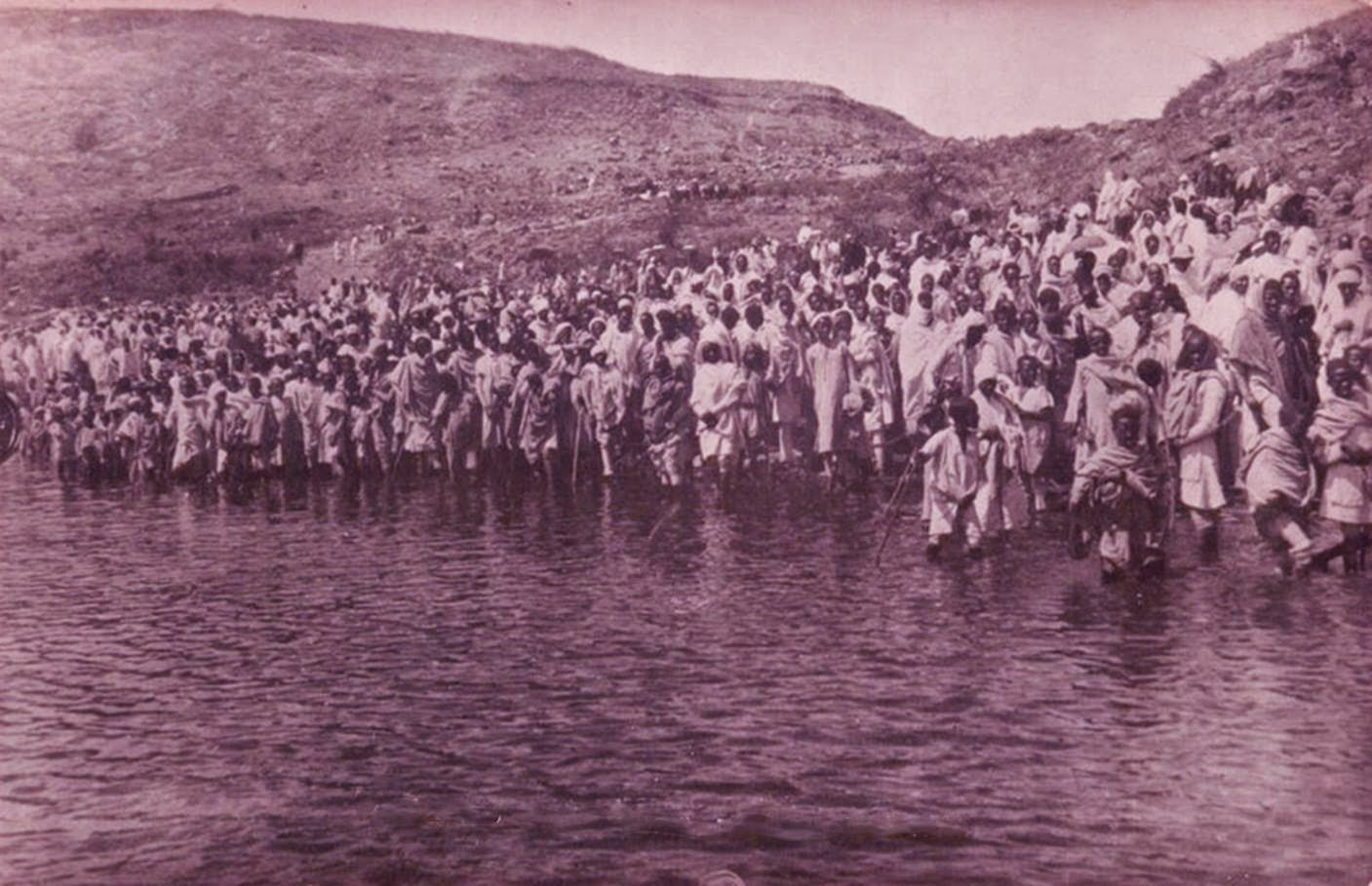

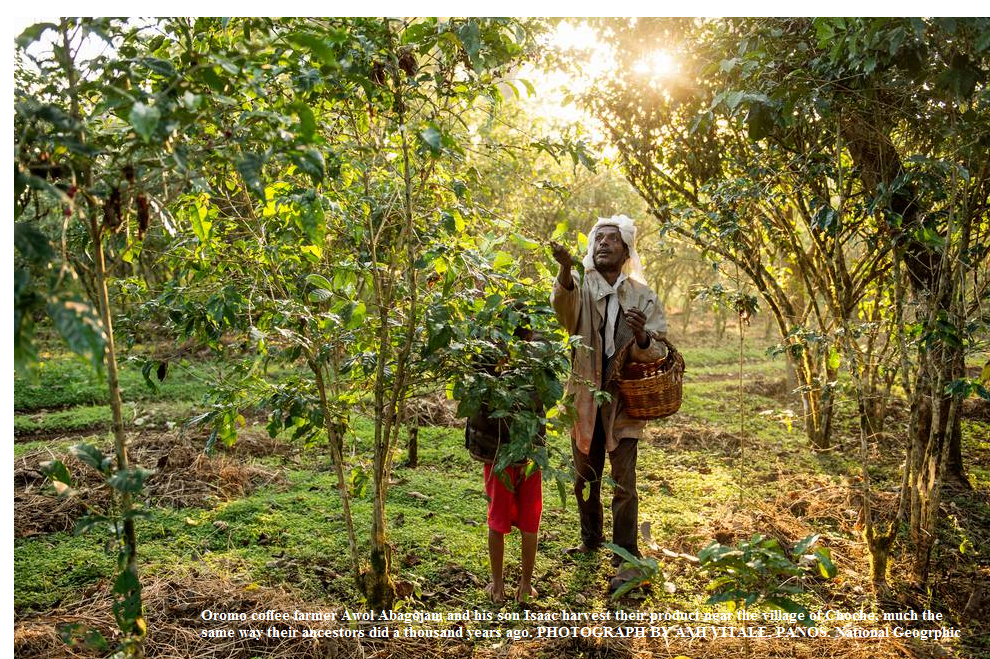
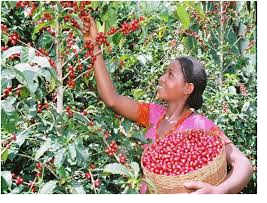



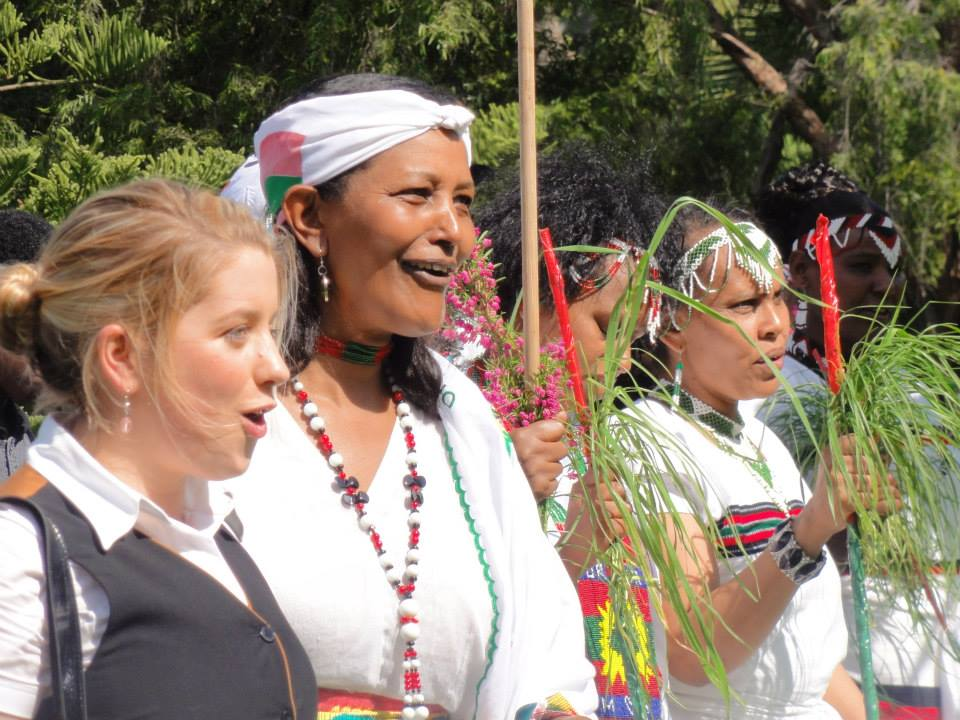
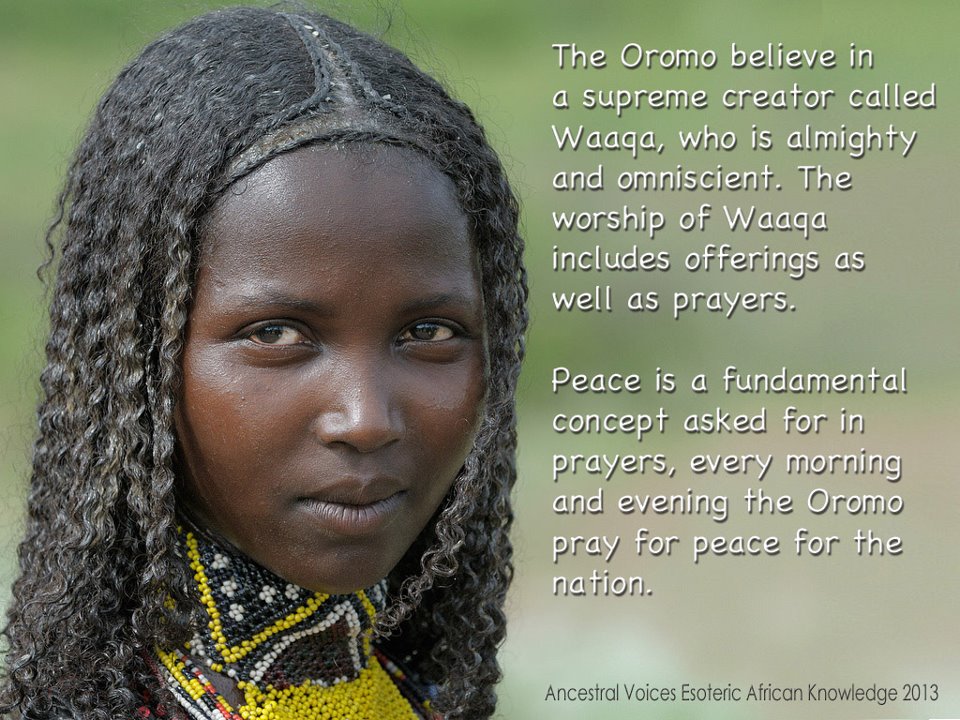


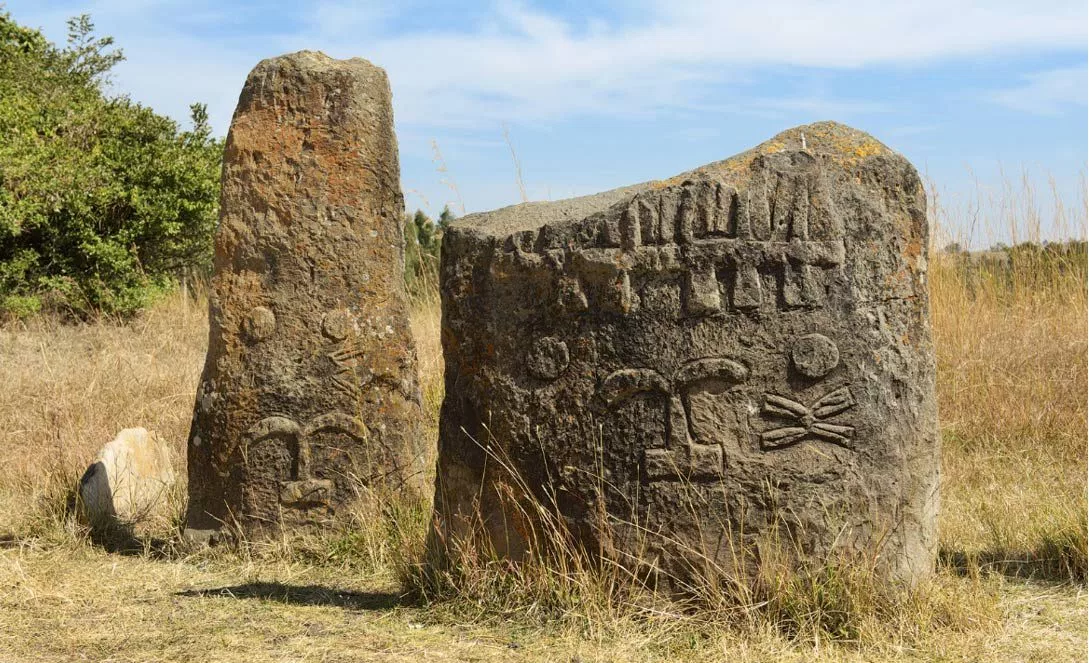
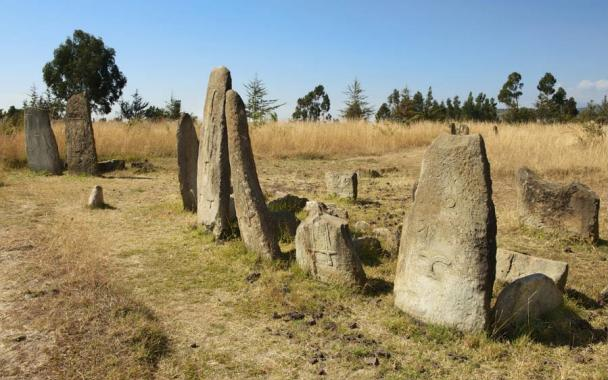


 Sites such as the Tiya stones should be protected to ensure that any cultural secrets they hold will remain preserved, and perhaps someday be discovered. As a site created by the ancestors of those who live in Tiya and nearby areas, any significance of the megaliths may still apply to those who live there today. By protecting the site, UNESCO and other interested groups can ensure that the stones are preserved for future generations. There is the hope that more research will be undertaken in order to learn more about the amazing megaliths at Tiya, including who constructed them, why they did so, and what significance the monuments hold.

 He will also participate as a Guest of Honor at several Irreecha celebrations organized by the Oromo in the Diaspora.We invite all who are interested in the Gadaa democratic system, and Oromo culture in general, to attend these workshops and participate in the spectacular Irreecha celebrations to be held throughout September and October 2014.We would like to extend our appreciation to local individuals and institutions – who participated in preparing these events. We are also grateful to the United States Consular Service for the assistance they provided in issuing Abbaa Gadaa Bayyanaa’s travel documents.The attached flyer contains general information about dates and cities where Abbaa GadaaBayyanaa will be speaking.Jawar Mohammed President, Oromo Studies Association


 Annual Oromo Sports Event in UK, 23rd August 2014 held in Leeds, England.


 The Oromo Gadaa Democracy meets the American Congress Democracy. Abbaa Gadaa (Rt.) Aagaa Xanxanoo and Abbaa Gadaa (Rt.) Moonaa Godaanaa meet Senator Al Franken (from the State of Minnesota).


 (July 20, 2014 (Gadaa) — Minnesota’s Twin Cities, also known as “Little Oromia” for being the home of the largest Oromo population outside of the Horn of Africa, will be the venue for the 2014

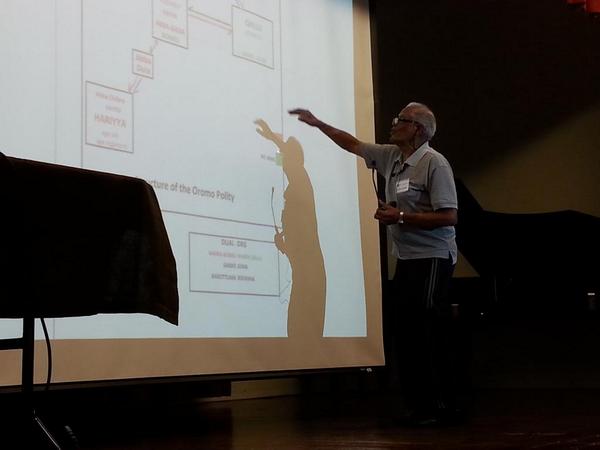 Prof. Asmerom Leggese, Lecturing Gadaa System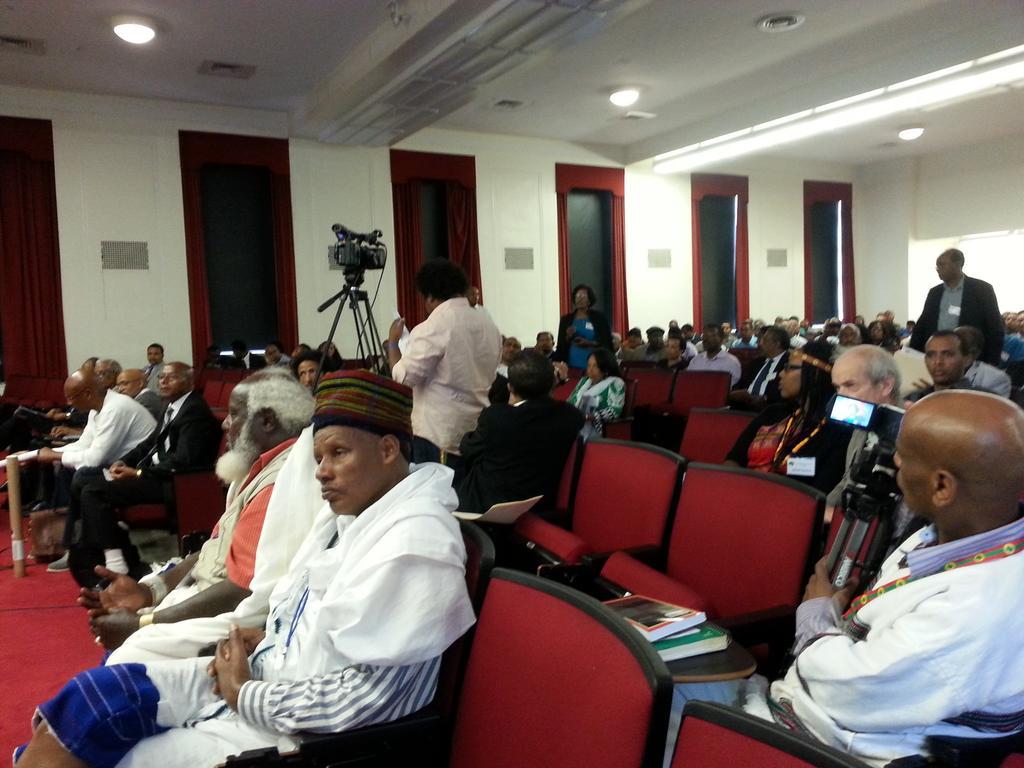
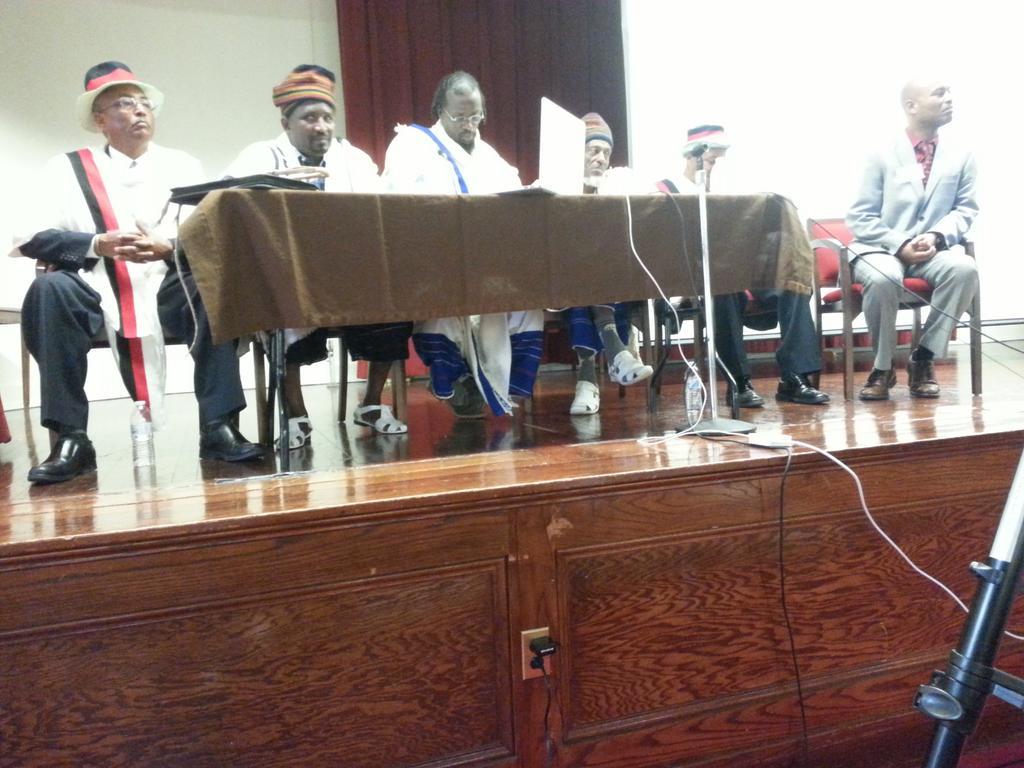


 The Oromo Abbaa Gadaa -Abbaa Gadaa of Tuulama Oromo, two Yubas (EX-AbbaGadaas-Aagaa Xinxanoo and Moonaa Godaanaa) with other Gadaa leaders arrived in DC on 30 July 2014 to attend the OSA Conference


 Below is Bakkalcha TV’s 2-part interview with Oromo recording artist Lencho Abdishakur. Also, check out Lencho Abdishakur’s new album, titled


 Historically, the Raya Wollo (Raya Oromo), with the Yejju Oromo, are the northernmost groups of the Oromo people and are a part of the Wollo Oromo Tribe. Their women especially are known by their distinctive hair-braiding styles and facial tattoos.




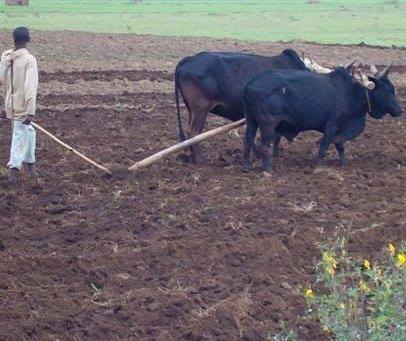


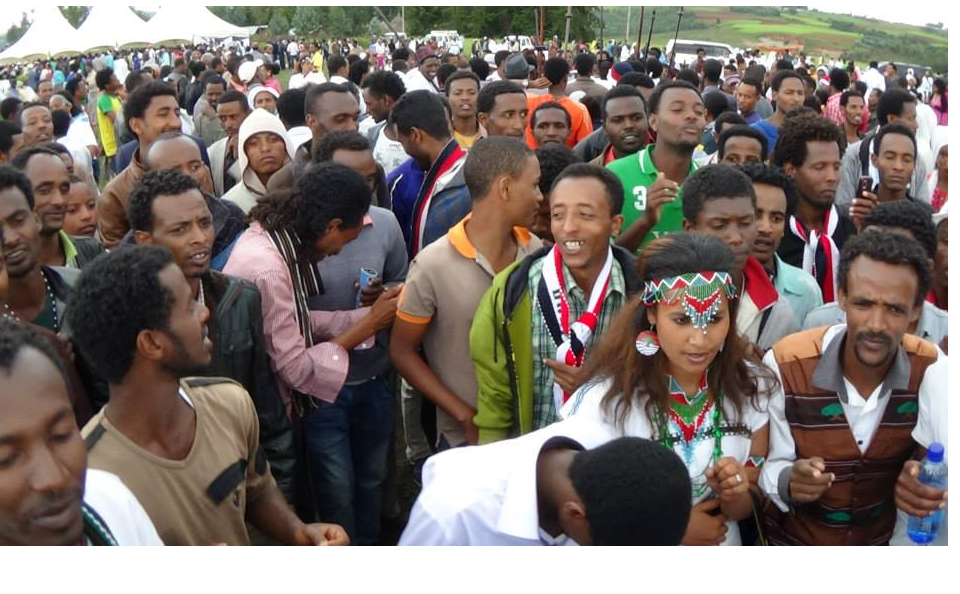

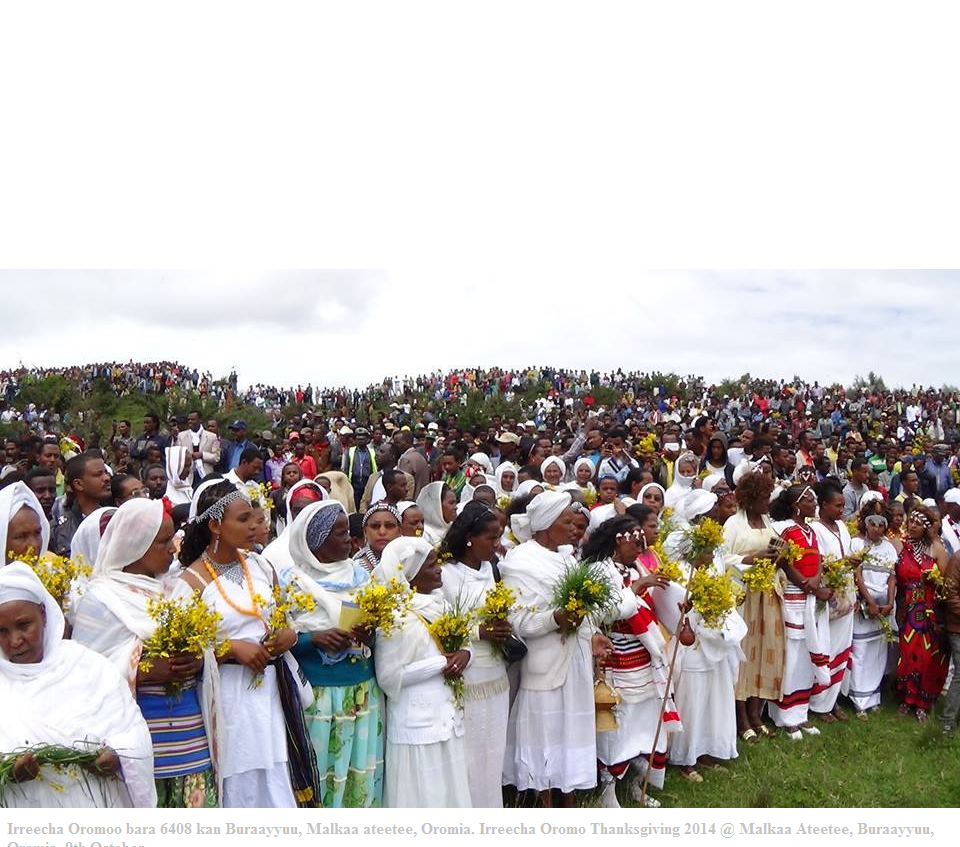
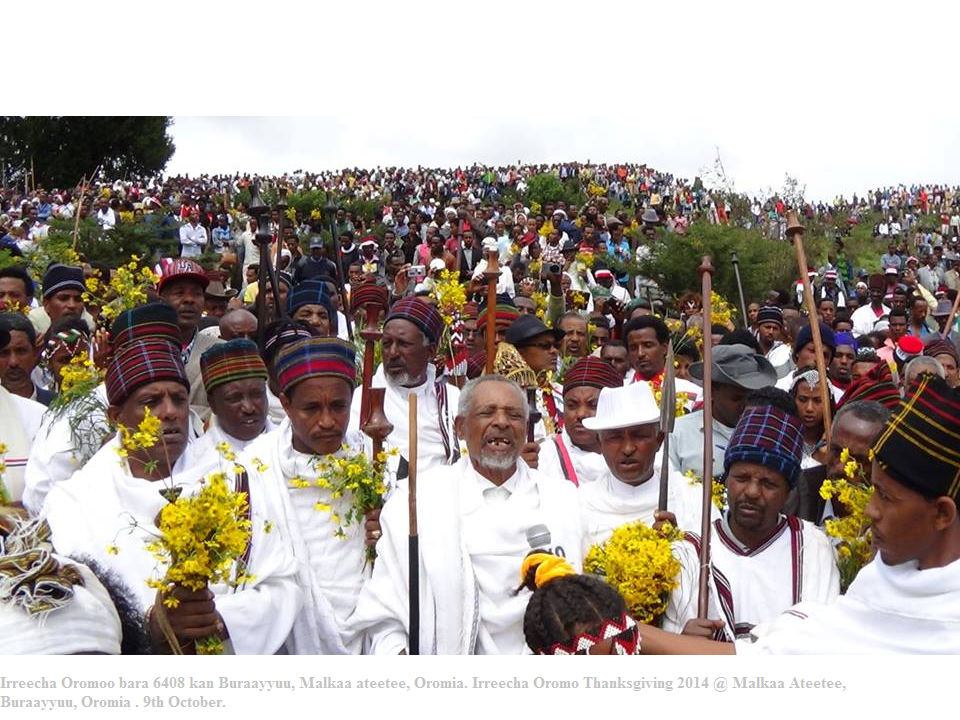

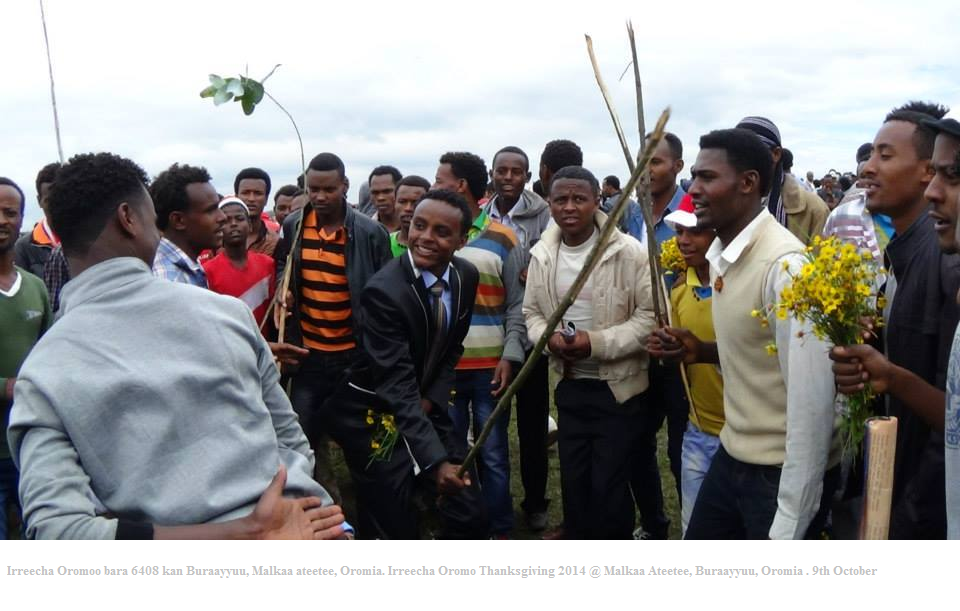

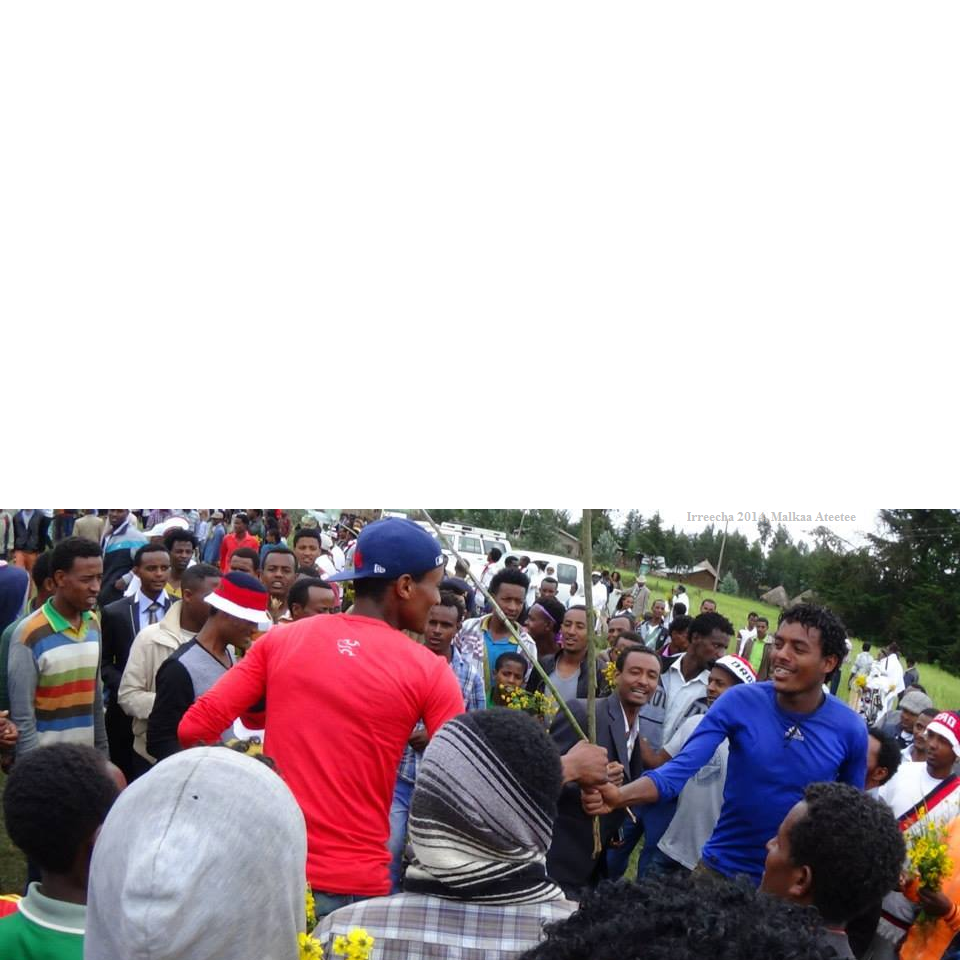
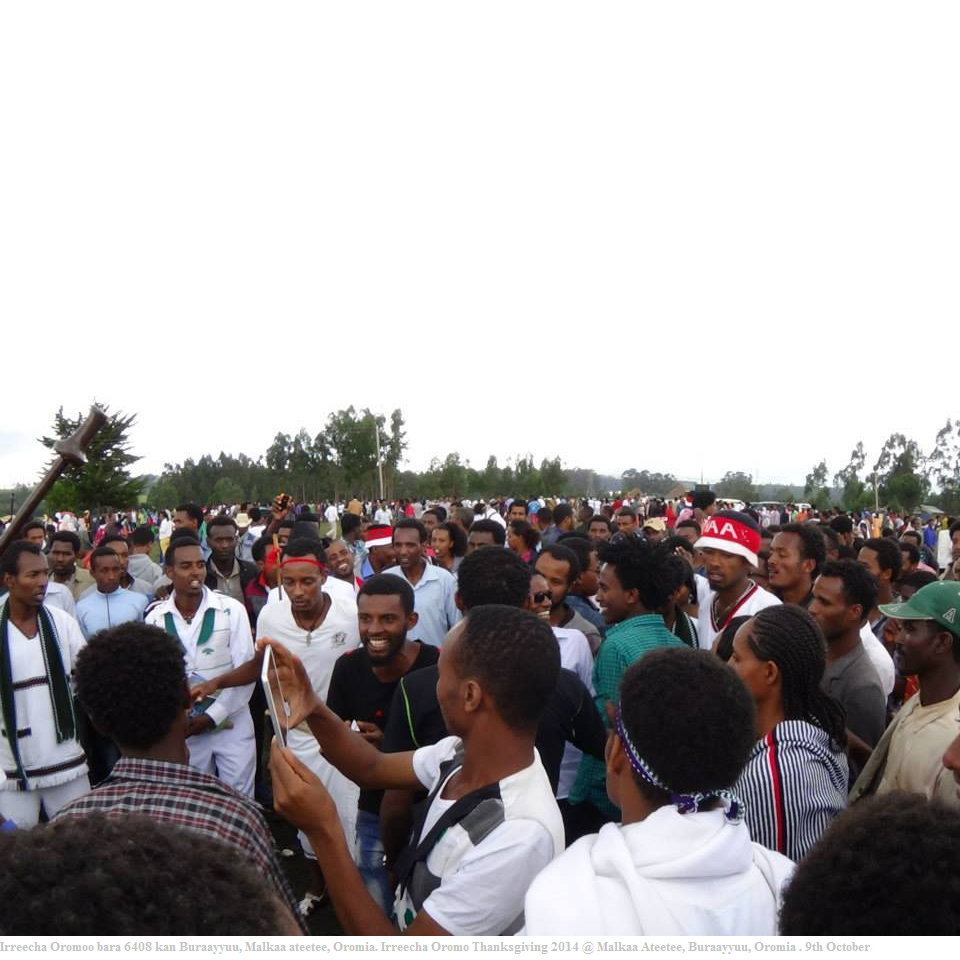


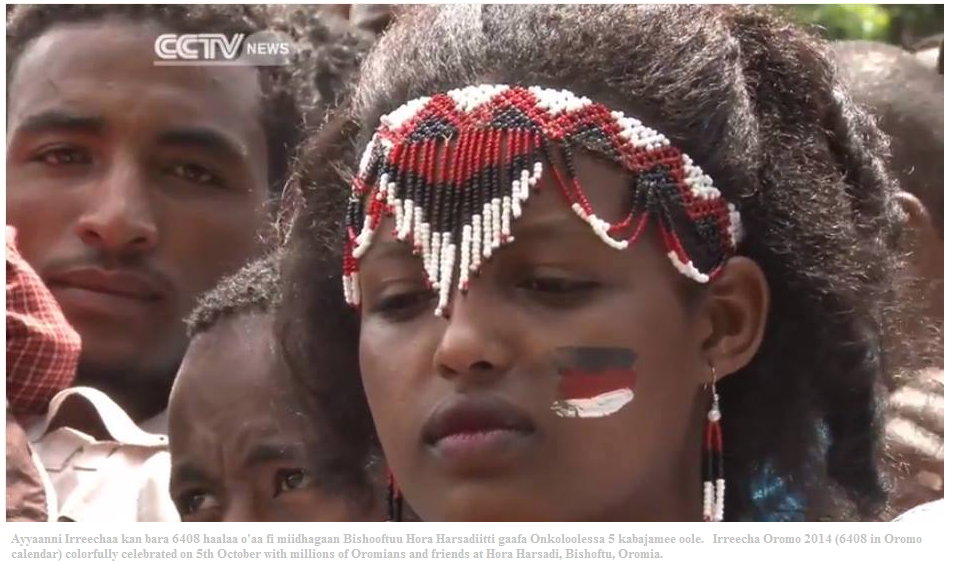

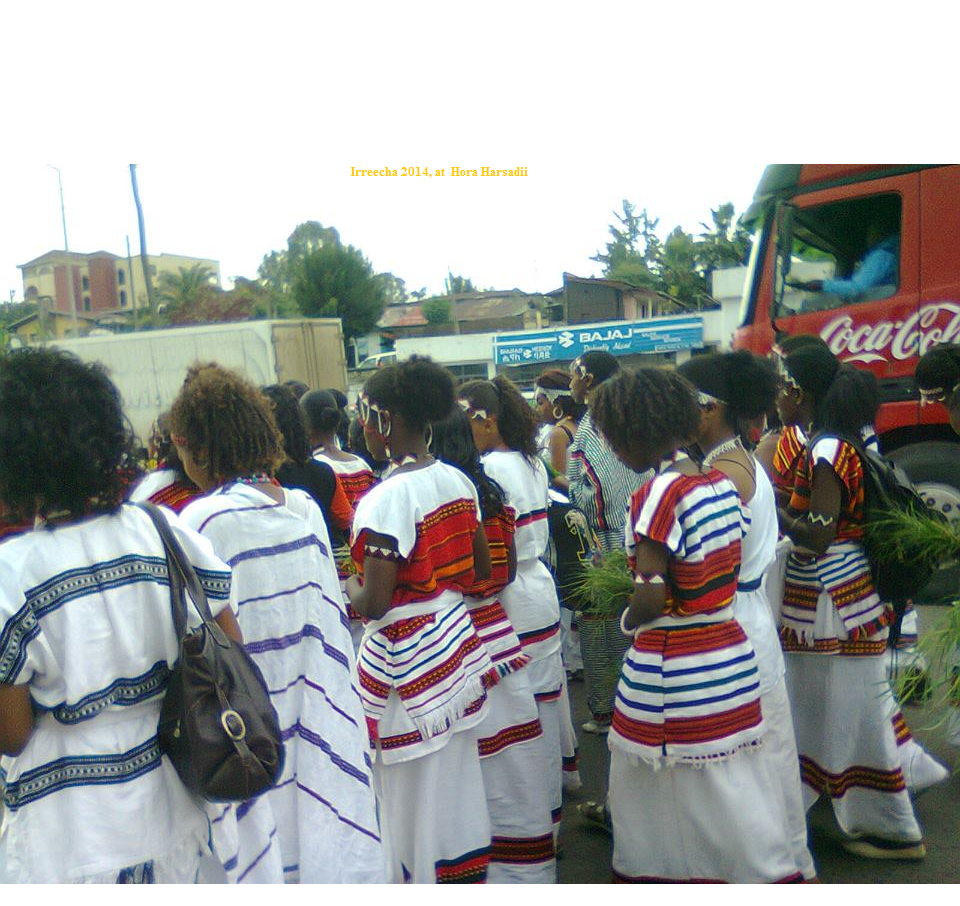
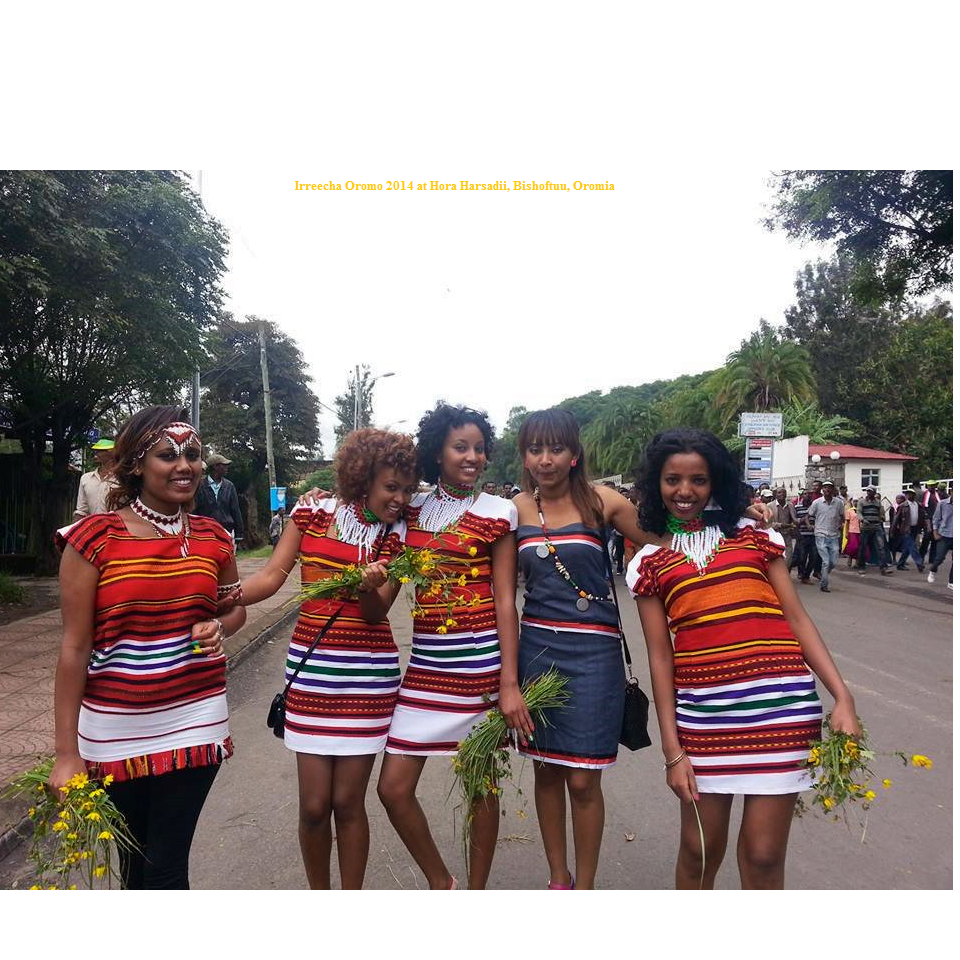
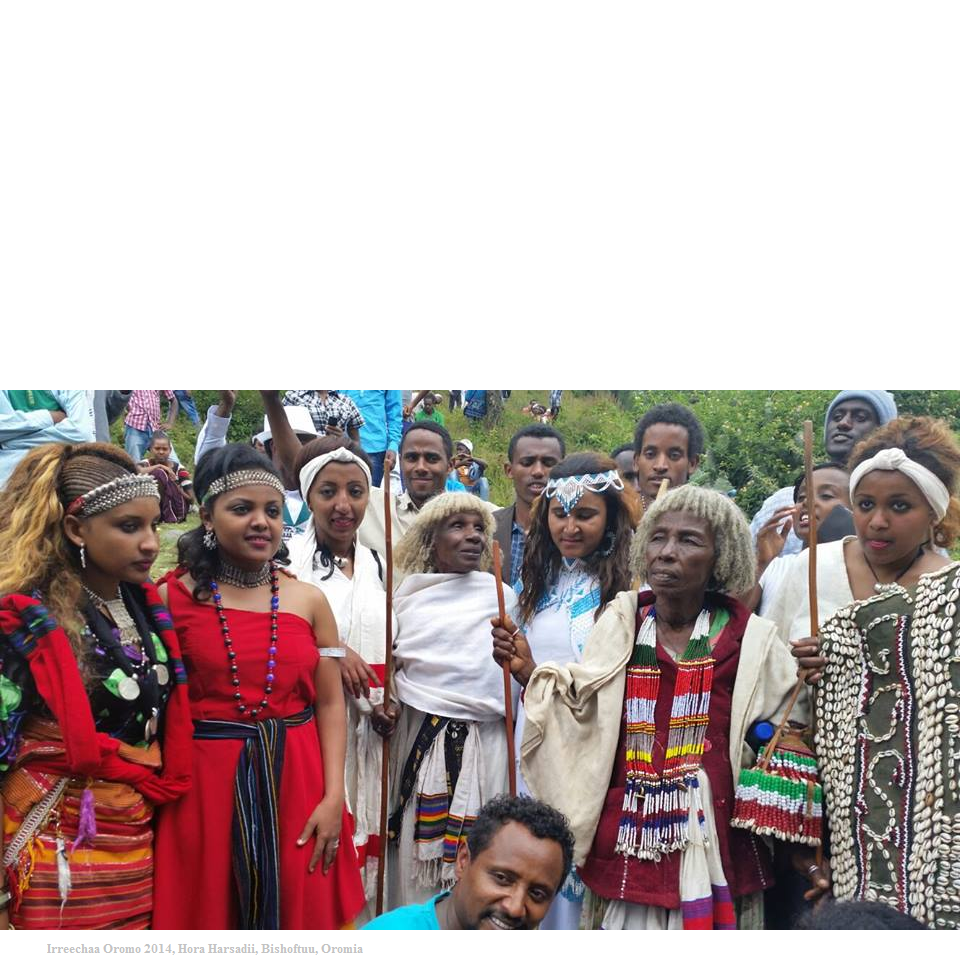


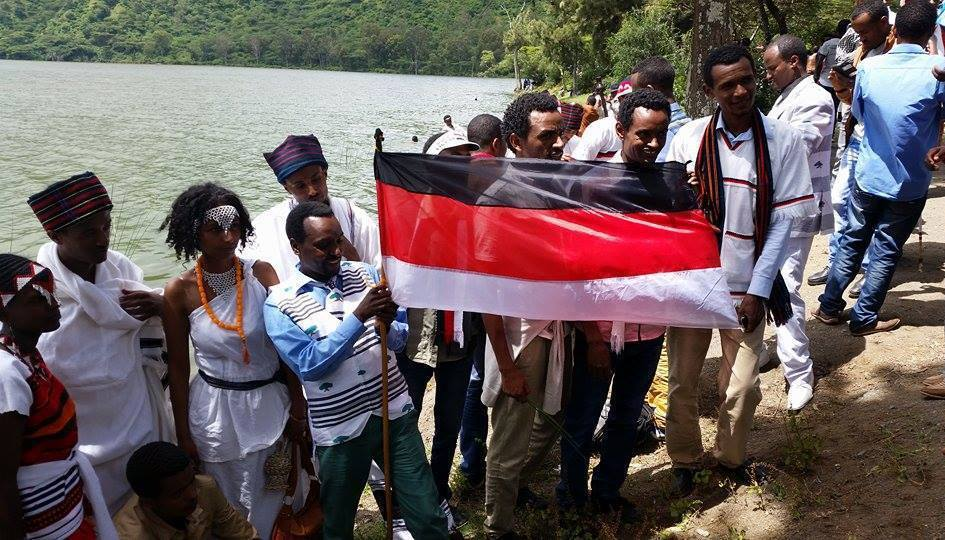

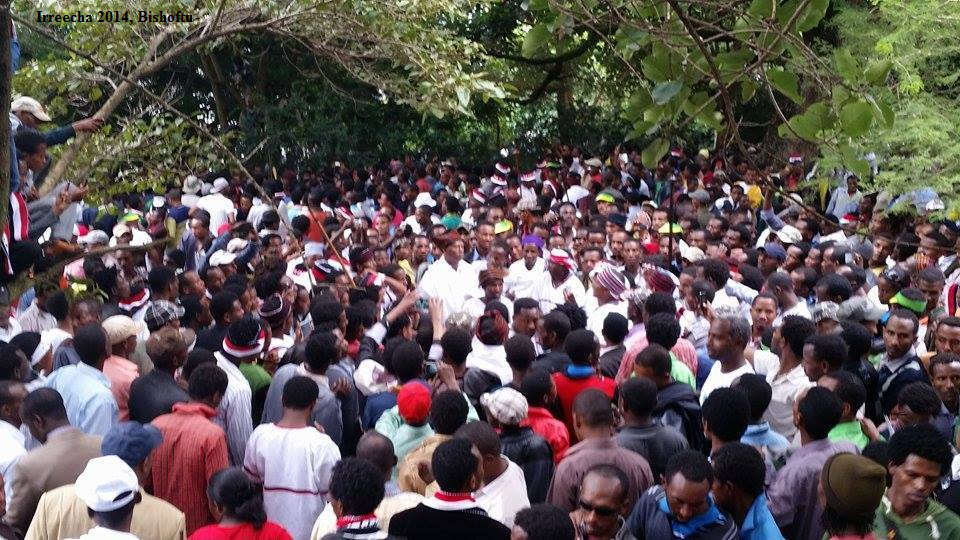
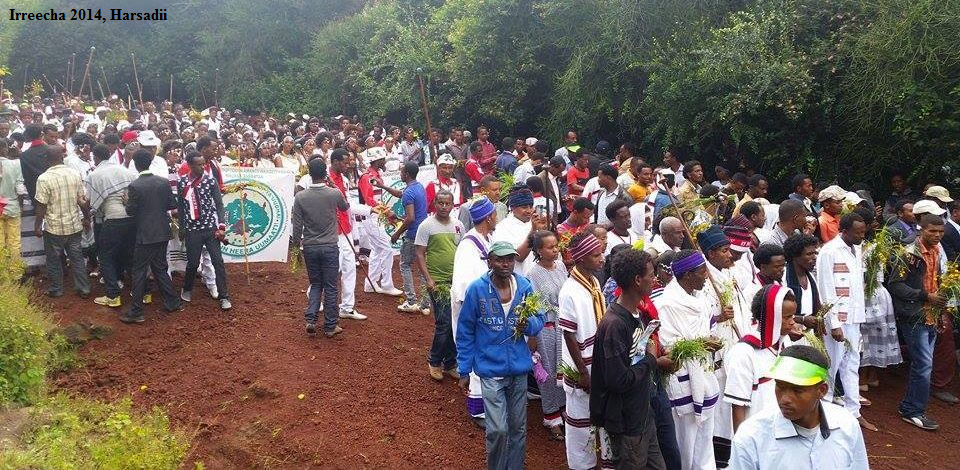

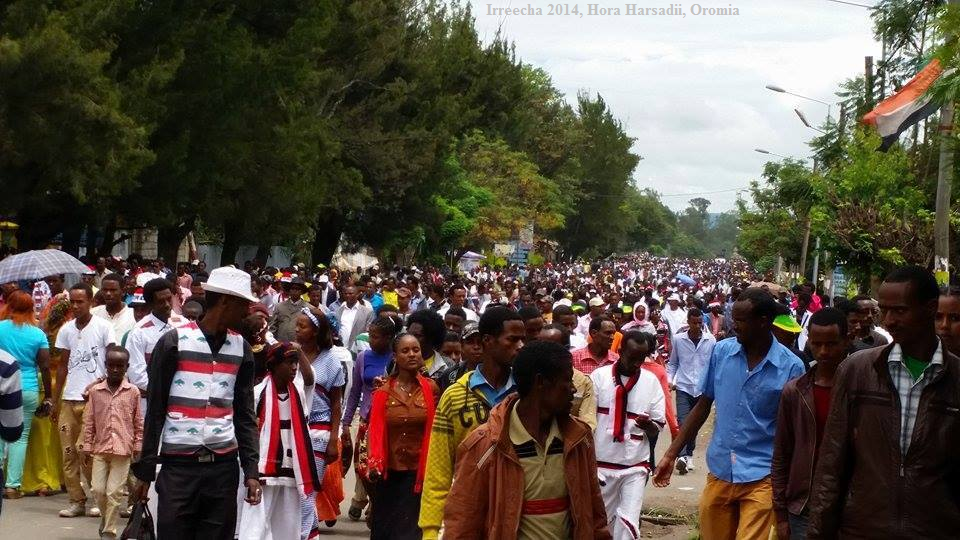
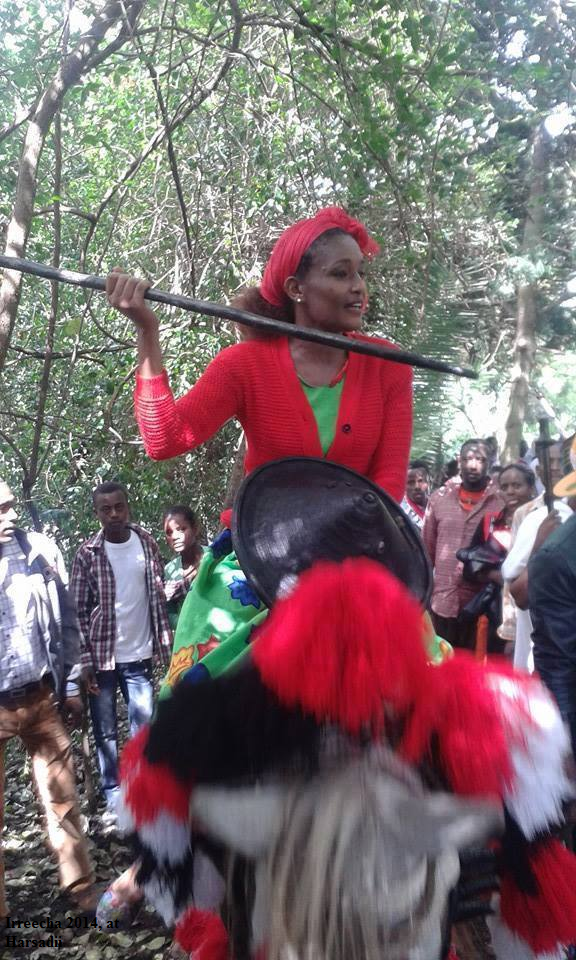
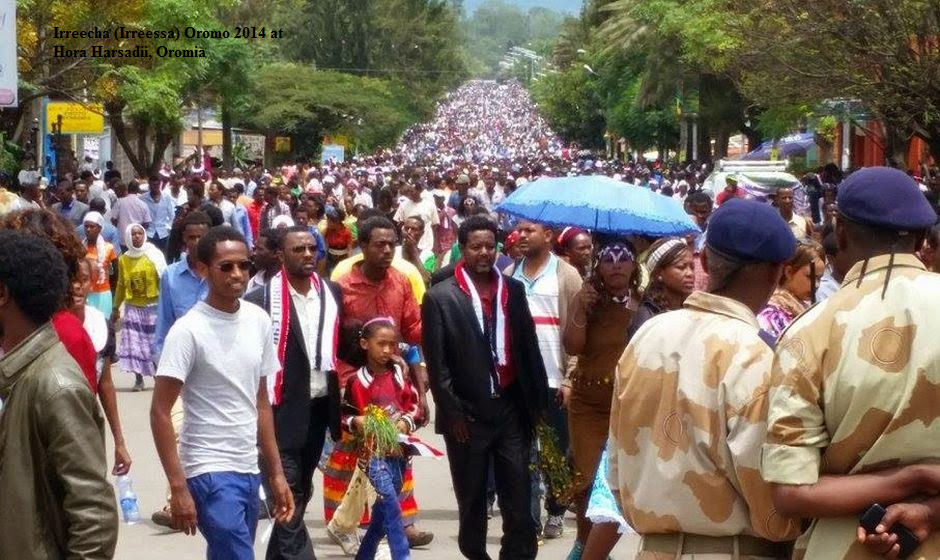
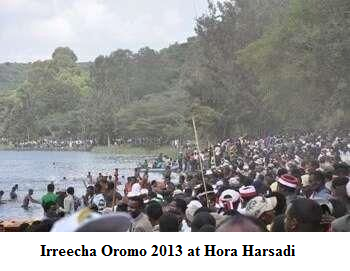
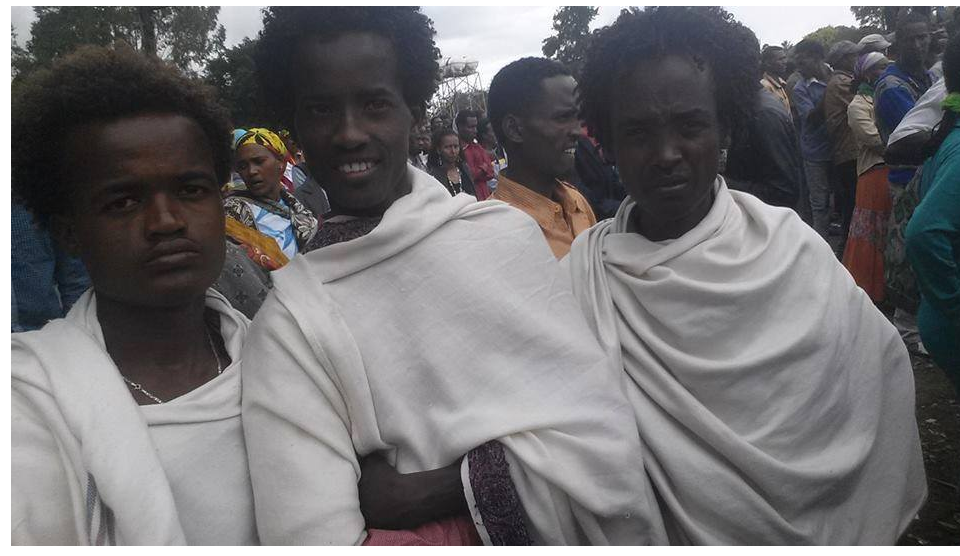
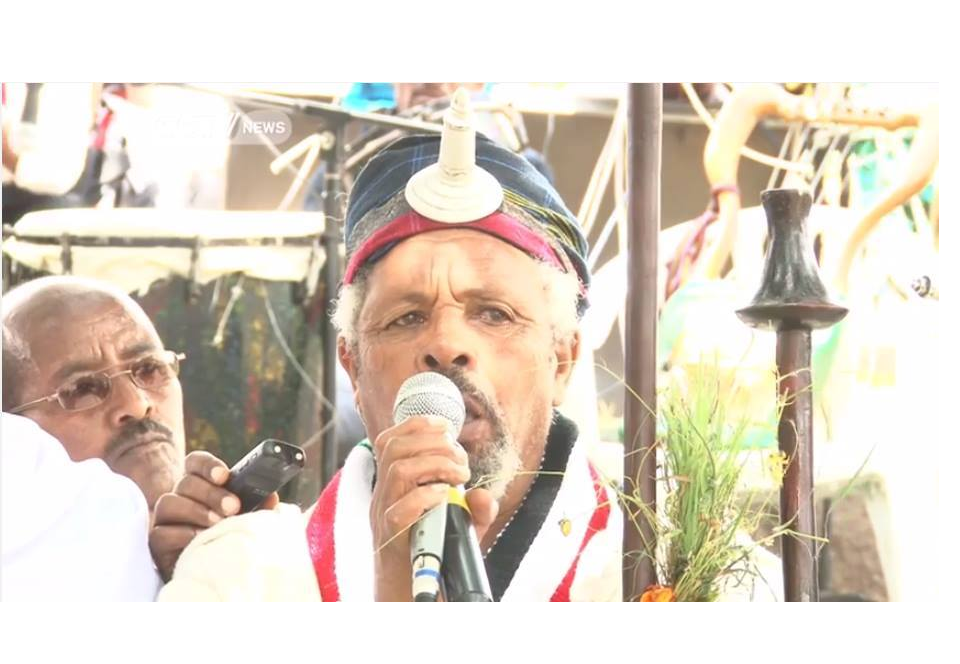




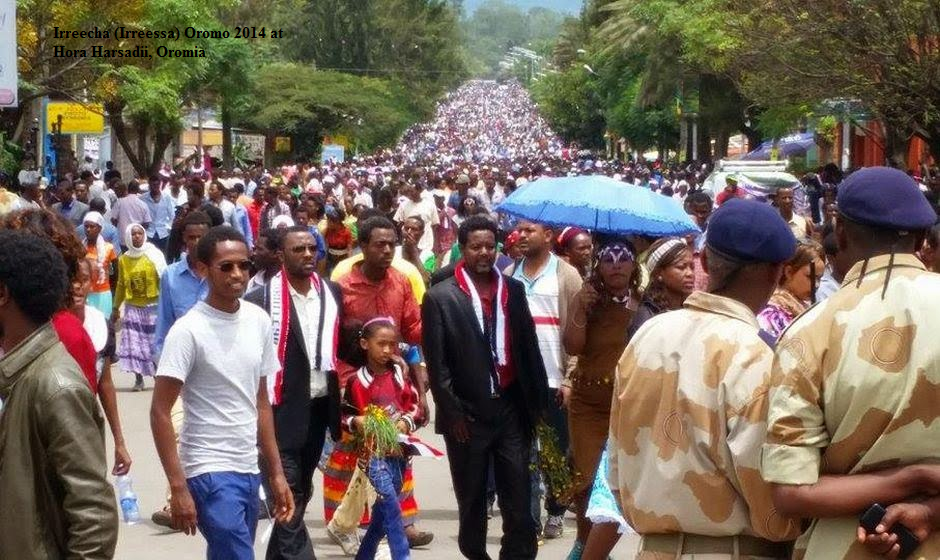


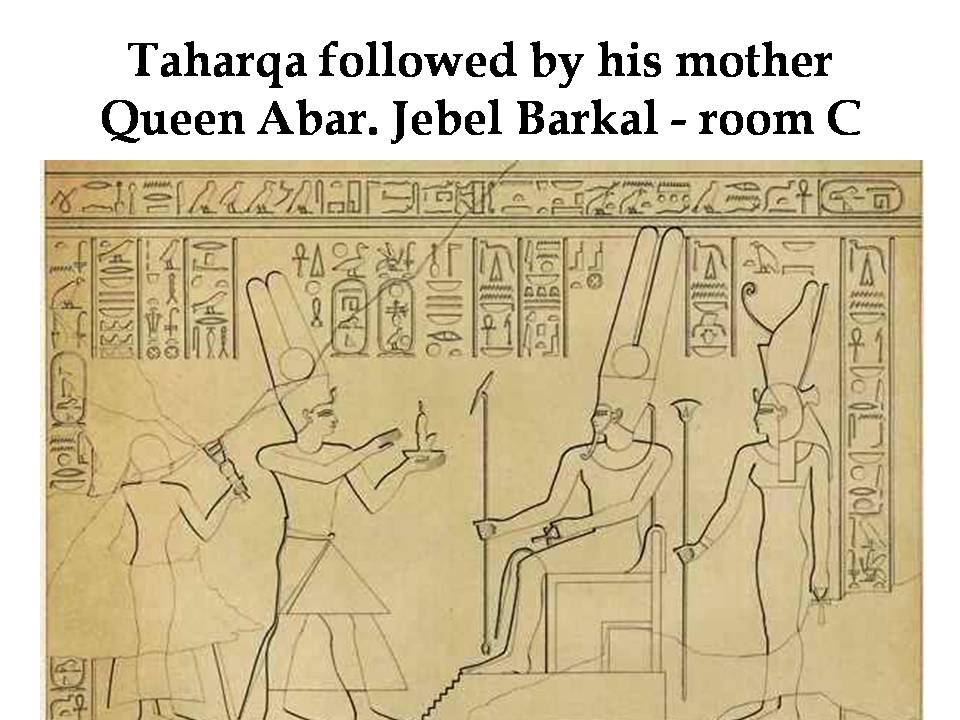
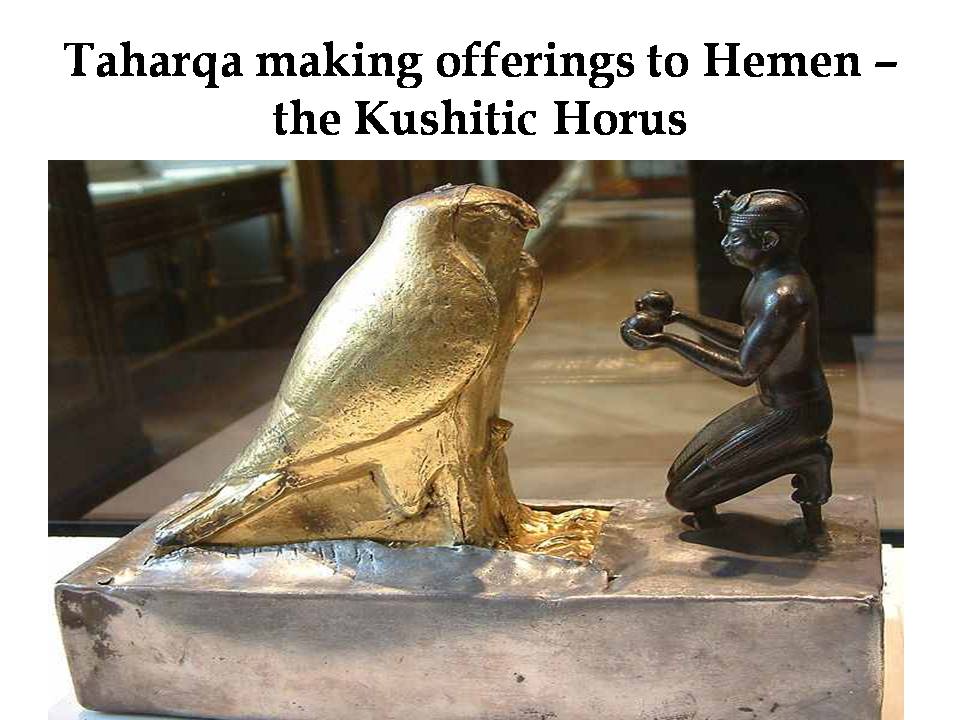

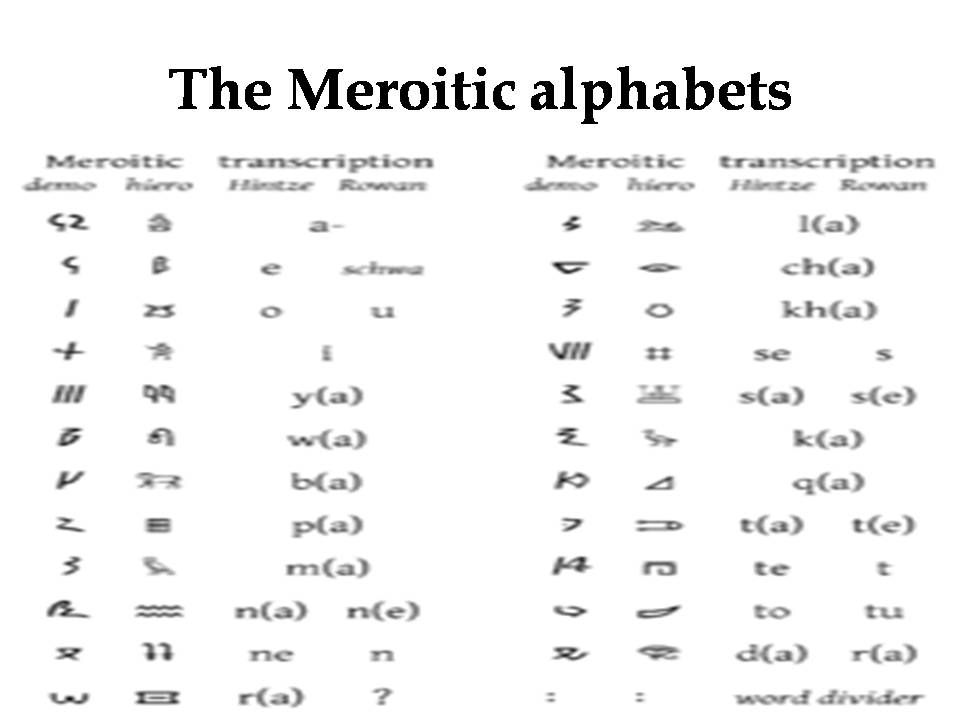


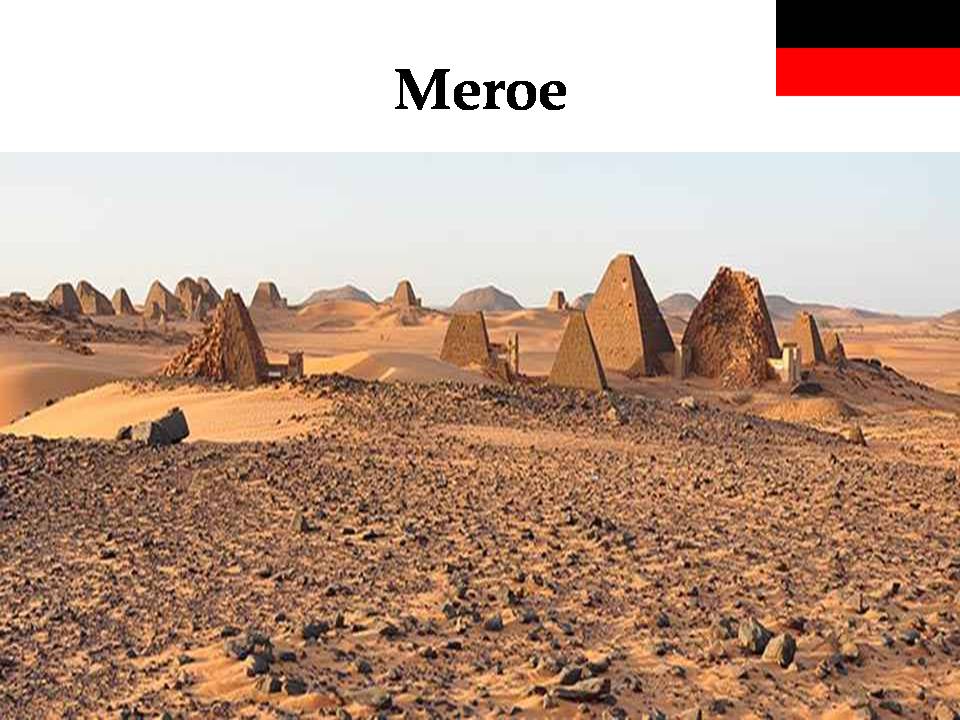

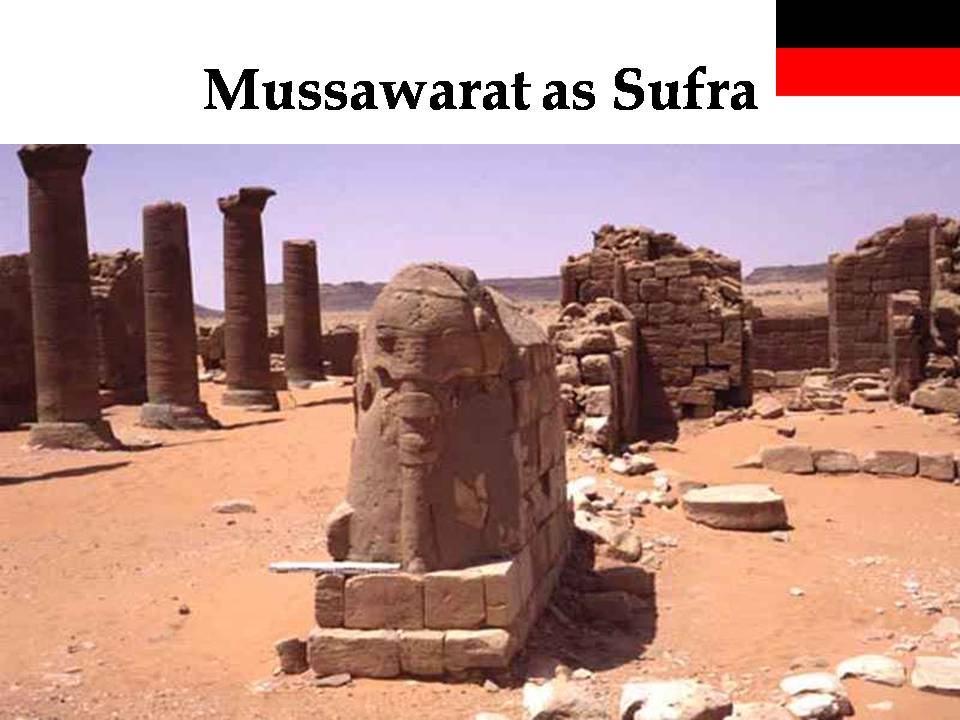
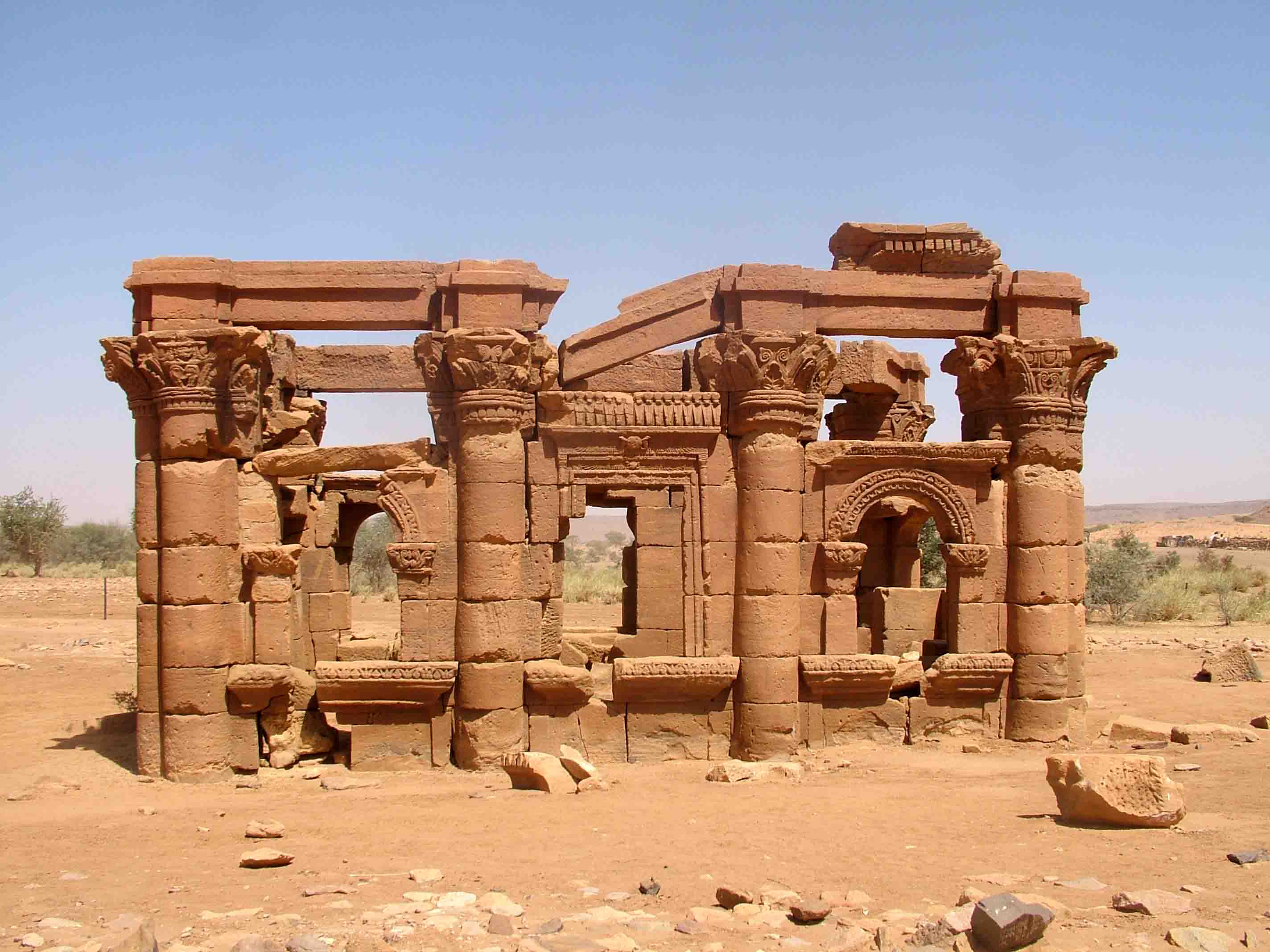


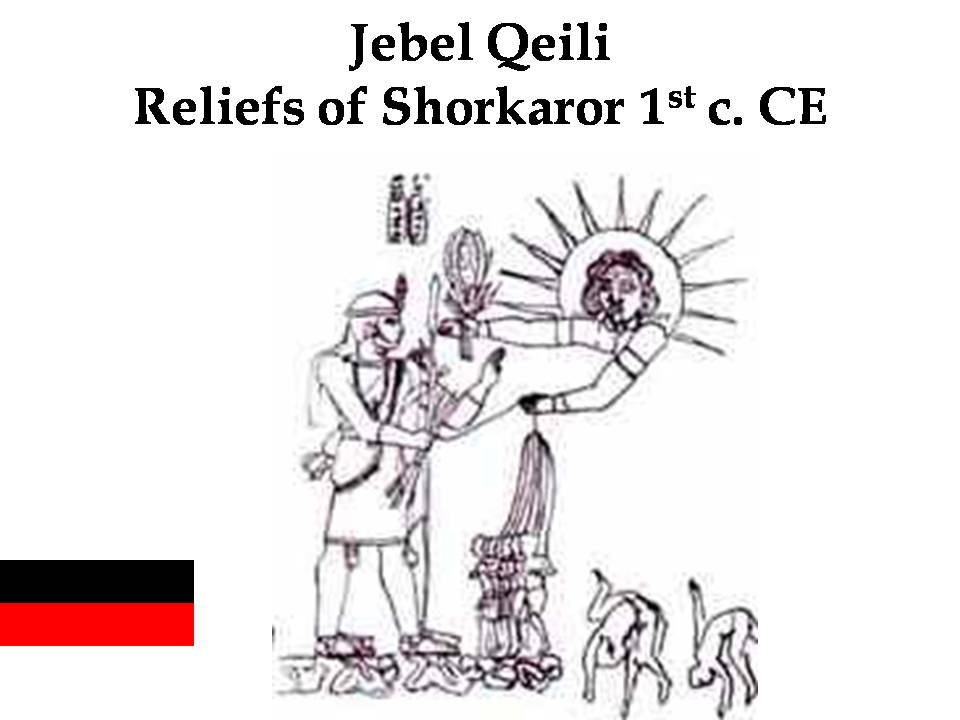

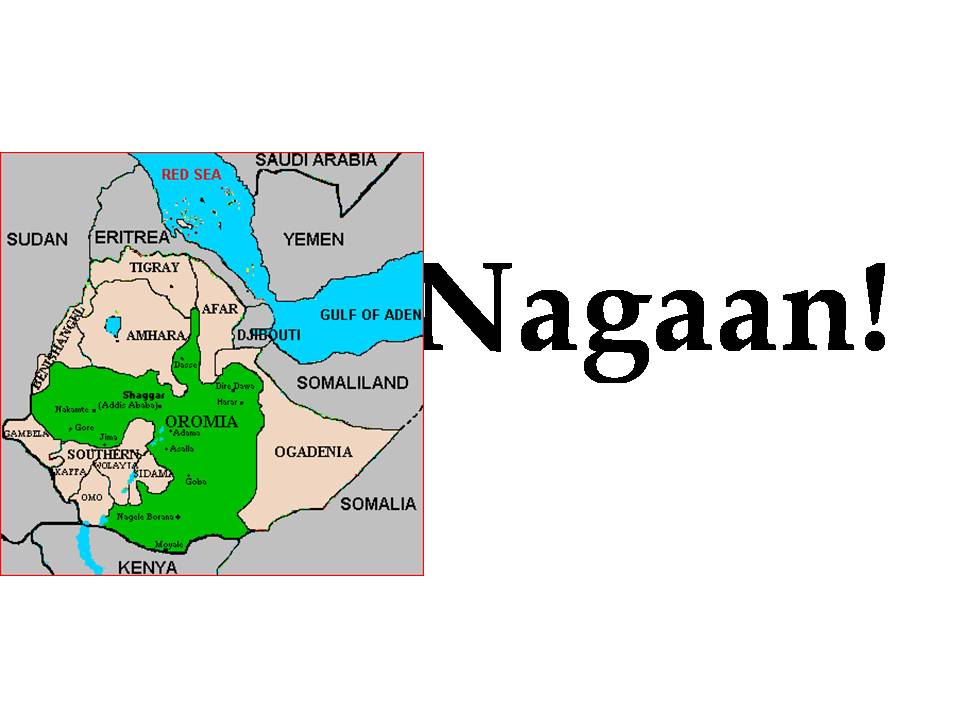


 Oromian Economist

You must be logged in to post a comment.